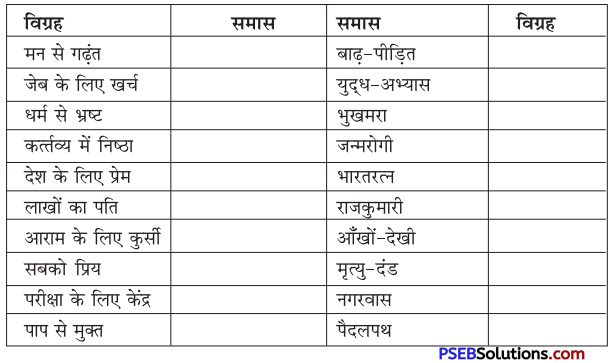
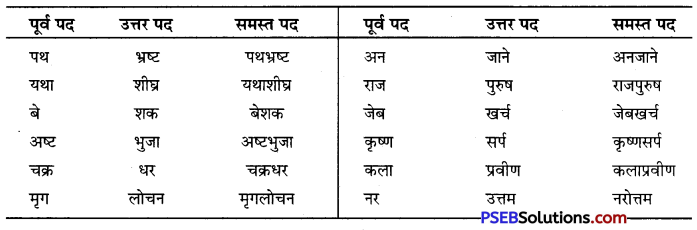
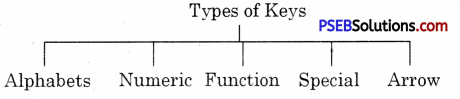
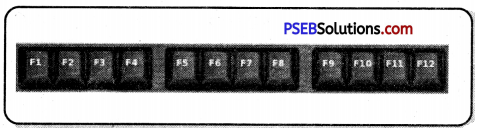
PSEB 10th Class Hindi Solutions Chapter 11.ii अहसास

Punjab State Board PSEB 10th Class Hindi Book Solutions Chapter 11.ii अहसास Textbook Exercise Questions and Answers.

PSEB Solutions for Class 10 Hindi Chapter 11.ii अहसास

Hindi Guide for Class 10 PSEB अहसास Textbook Questions and Answers

(क) विषय-बोध

I. निम्नलिखित प्रश्नों के उत्तर एक-दो पंक्तियों में दीजिएप्रश्न

प्रश्न 1.
स्कूल बस पर छात्र-छात्राएँ कहाँ जा रहे थे?
उत्तर:
स्कूल बस पर छात्र-छात्राएँ शैक्षिक भ्रमण के लिए रोज़ गार्डन जा रहे थे।

प्रश्न 2.
छात्राएँ बस में क्या कर रही थीं?
उत्तर:
छात्राएँ बस में अंताक्षरी खेल रही थीं।

PSEB 10th Class Hindi Solutions Chapter 11.ii अहसास

प्रश्न 3.
दिवाकर बस में बैठा क्या देख रहा था?
उत्तर:
दिवाकर बस में बैठकर खिड़की के बाहर वृक्षों को तथा दूर तक फैले आसमान को देख रहा था।

प्रश्न 4.
दिवाकर को अपने मन में अधूरेपन का अहसास क्यों होता था ?
उत्तर:
दिवाकर अपाहिज था और दूसरे बच्चों की भाँति उछल-कूद नहीं पाता था। इसलिए उसे अपने मन में अधूरेपन का अहसास होता था।

प्रश्न 5.
कार्यक्रम के दौरान छात्र-छात्राएँ क्या देखकर डर गए?
उत्तर:
कार्यक्रम के दौरान छात्र-छात्राएँ साँप को देखकर डर गए।

II. निम्नलिखित प्रश्नों के उत्तर तीन-चार पंक्तियों में दीजिए

प्रश्न 1.
दिवाकर की नए स्कूल में किसने मदद की?
उत्तर:
दिवाकर पिता की ट्रांसफर होने के कारण गाँव के स्कूल से शहर आया था। यहाँ शहर के स्कूल में वह स्वयं को अधूरा समझ रहा था। उसकी शारीरिक अपंगता उसे दूसरों से अलग करती थी। वह न ही उनके साथ खेल-कूद कर पाता था और न ही भाग-दौड़ पाता था। ऐसे समय में उसकी अध्यापिका नीरू ने अपने स्नेहपूर्ण व्यवहार से उसका हौसला बढ़ाया तथा समय-समय पर उसकी मदद भी की।

प्रश्न 2.
दिवाकर बैंच पर बैठकर क्या सोच रहा था?
उत्तर:
जिस समय सभी बच्चे रोज़ गार्डन में खेल-कूद रहे थे। झूला-झूल रहे थे। उस समय वहीं पास में एक बैंच पर बैठा दिवाकर अपनी पुरानी यादों में खोया हुआ था। वह दो साल पहले की घटना को याद कर, उसी में खोया था। उसे याद आता है कि दो साल पहले जब वह अपनी बड़ी मौसी के घर दिल्ली गया था तब उसने वहाँ फन सिटी में कितना मज़ा किया। उस समय फ़न सिटी में कितना खेला-कूदा था। वहाँ उसने खूब मस्ती की थी। यही सब विचार/ यादें उसके दिमाग में घूम रही थीं।

प्रश्न 3.
साँप को देखकर दिवाकर क्यों नहीं डरा?
उत्तर:
शहर में आने से पहले दिवाकर गाँव के स्कूल में पढ़ता था। वहाँ उसने खेतों में कई बार साँप और अन्य जानवरों को देखा था। उसके लिए साँप को देखना कोई नई और डर की बात नहीं थी। इसके साथ-साथ वह एक साहसी, निडर और कर्मशील बालक था। उसने अपनी सूझ-बूझ का परिचय देते हुए अपने विवेक और वैसाखी का सहारा लेकर सॉप को दूर फेंक दिया था।

प्रश्न 4.
दिवाकर ने अचानक साँप को सामने देखकर क्या किया?
उत्तर:
दिवाकर.अचानक साँप को देखकर तनिक भी घबराया नहीं जबकि अन्य छात्र-छात्राएँ डर के मारे काँप रहे थे। किसी को कुछ सूझ नहीं रहा था। ऐसे में दिवाकर ने बड़े ही धीरज से काम लिया। उसने बिना डरे और घबराए अपनी वैसाखी से साँप को उठाकर दूर फेंक दिया।

PSEB 10th Class Hindi Solutions Chapter 11.ii अहसास

प्रश्न 5.
दिवाकर को क्यों पुरस्कृत किया गया?
उत्तर:
दिवाकर को जब उसकी साँप को वैसाखी से दूर फेंकने संबंधी वीरता, साहस एवं सूझ-बूझ के लिए प्रात:कालीन सभा में प्राचार्य महोदय द्वारा सम्मानित किया गया तो उस समय वह स्वयं को अधूरा अथवा अपाहिज न समझकर स्वयं को पूर्ण समझ रहा था। अब उसे दूसरों को देखकर स्वयं में कोई कमी का अहसास नहीं हो रहा था।

प्रश्न 6.
लघुकथा ‘अहसास’ का उद्देश्य क्या है?
उत्तर:
‘अहसास’ एक सामाजिक लघुकथा है। इसमें लेखिका ने एक बालक को शारीरिक चुनौतियों का सामना करते हुए दिखाया है। लेखिका प्रायः यथार्थ की पृष्ठभूमि पर अपनी कहानियों की रचना करती हैं। मानवतावाद का समर्थन करना ही उनका प्रमुख उद्देश्य रहा है। उनकी लघु कथा ‘अहसास’ शारीरिक चुनौतियों का सामना करने वाले बच्चों में आत्म-विश्वास जगाने वाली एक प्रेरणादायक लघुकथा है। लेखिका का विचार है कि समाज में शारीरिक अक्षमता को किसी की कमी न समझकर उसका हौसला बढ़ाना चाहिए। अपनी लघुकथा में लेखिका उद्देश्य को स्पष्ट करने में पूर्णतया सफल रही है।

प्रश्न 7.
‘अहसास’ नामकरण की सार्थकता स्पष्ट करो।
उत्तर:
कहानी का शीर्षक प्राय: कहानी के मूलभाव तथा उसकी प्रभावोत्पादक शक्ति का परिचायक होता है। शीर्षक सम्पूर्ण कहानी का निचोड़ होता है। यह कहानी की मूलभावना का प्रतीक होता है। प्रस्तुत कहानी का शीर्षक ‘अहसास’ है। यह शीर्षक अत्यंत आकर्षक, भावपूर्ण तथा जिज्ञासामय है। कहानी में दिवाकर जब प्रात:कालीन सभा में प्राचार्य द्वारा सम्मानित होता है तो उसे स्वयं में पूर्णता का अहसास होता है। उसके नीरस जीवन में सरसता का संचार हो जाता है। उसके मन का बदला यह भाव और अहसास ही कथा का शीर्षक बना है। इस प्रकार लघुकथा का शीर्षक उपयुक्त तथा अनुकूल है। सारी लघुकथा शीर्षक ‘अहसास’ से ही जुड़ी है तथा केंद्रित भी है।

(ख) भाषा-बोध

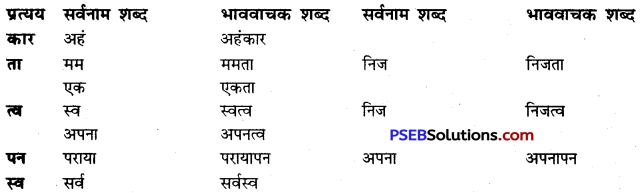
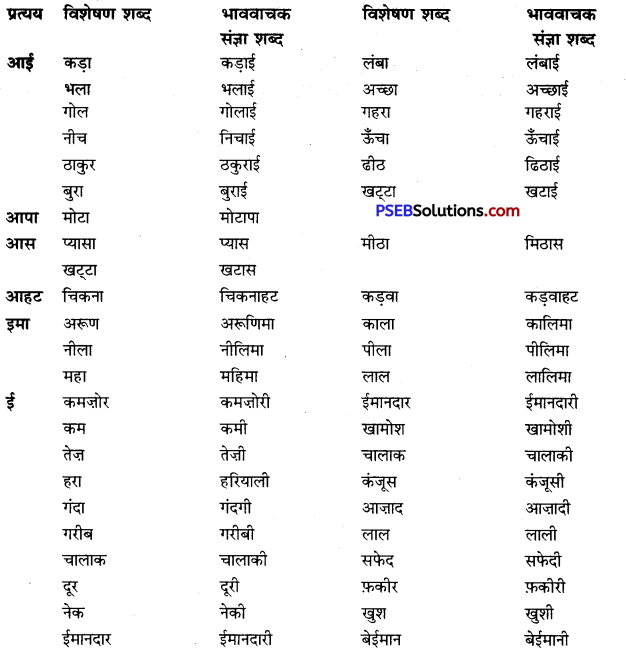
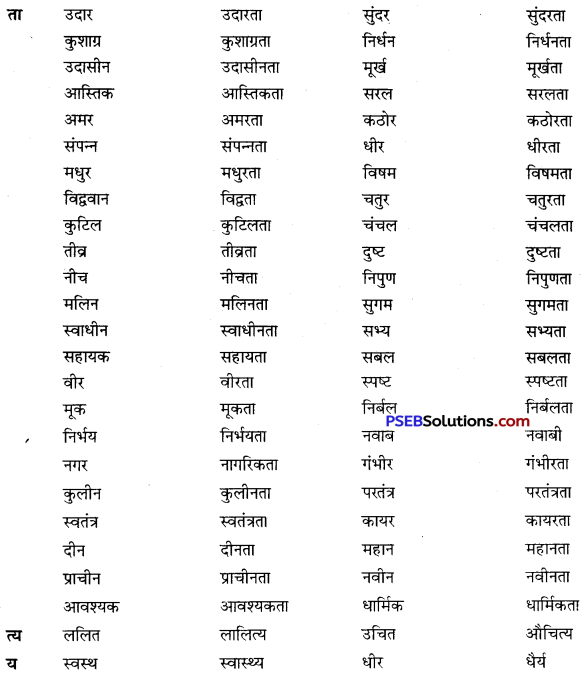
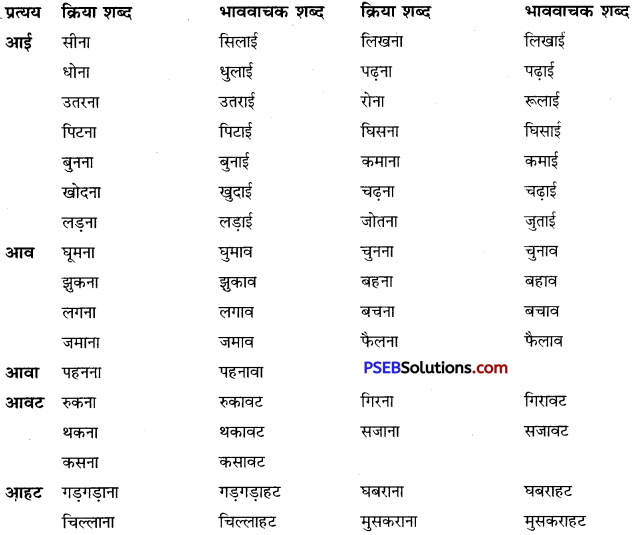
I. निम्नलिखित शब्दों के विशेषण शब्द बनाएँ

खामोश = ……………
व्यवहार = ………….
सम्मान = …………..
बहादुरी = …………..
रंग = ……………….
हिम्मत = ………………….
उत्तर:
खामोश = खामोशी
व्यवहार = व्यावहारिक
सम्मान = सम्मानित
बहादुरी = बहादुर
रंग = रंगीन
हिम्मत = हिम्मती

II. निम्नलिखित मुहावरों के अर्थ समझकर उनका वाक्यों में प्रयोग कीजिए

मुहावरा = अर्थ = वाक्य
i. चेहरे का रंग उड़ जाना = डर जाना = …………..
ii. पीठ थपथपाना = शाबास देना = ……………
iii. जान में जान आ जाना = राहत महसूस करना = ………………
उत्तर:
i. अपने कमरे में साँप को देखते ही रुचि के चेहरे का रंग उड़ गया था।
ii. पापा ने अनुज के परीक्षा में अंकों को देख पीठ थपथपाई थी।
iii. उस अंधेरी रात में घर पहुँच कर हम सबकी जान में जान आ गई थी।

(ग) रचनात्मक अभिव्यक्ति

‘प्रश्न 1.
आपने अपने सहपाठी की किसी प्रकार की मदद की हो तो अपने शब्दों में लिखिए।
उत्तर:
यह घटना पिछले वर्ष की है। हमारे विद्यालय में पारितोषिक वितरणोत्सव मनाया गया था। हमारी कक्षा में कई विद्यार्थी सांस्कृतिक कार्यक्रम प्रस्तुत करने के लिए चयनित हुए थे। उत्सव के दो दिन पहले मैं और मोहन हम दोनों विद्यालय से घर वापस जा रहे थे। तभी अचानक सड़क पार करते समय मोहन एक कार की चपेट में आ गया। उसके हाथ और पैर से खून निकल रहा था। मैंने तुरंत उसे उठाया और एक आटो रिक्शा में बैठा कर अस्पताल लेकर गया। वहाँ उसका इलाज करवाया। इसके बाद उसके माता-पिता को सारी घटना बताई। डॉक्टर ने कहा कि मैं सही समय पर मोहन को अस्पताल ले आया। यदि कुछ देर हो जाती तो उसकी जान पर खतरा बन सकता था। लेकिन मेरी सर्तकता और सूझ-बूझ के कारण उसकी जान बच गई।

PSEB 10th Class Hindi Solutions Chapter 11.ii अहसास

प्रश्न 2.
अपने स्कूल के किसी शैक्षणिक भ्रमण का वर्णन अपने शब्दों में कीजिए।
उत्तर:
ऐतिहासिक स्थलों की यात्रा विद्यार्थियों के लिए बड़ी लाभप्रद है। ऐतिहासिक स्थलों पर पहुँच कर हम स्वयं, मानो इतिहास का अंग बन जाते हैं। इतिहास जीवित होकर मानों हमारे सामने साकार हो उठता है। ऐसी यात्राओं के द्वारा हम अपने इतिहास को सही दृष्टि से देखते हैं। ऐतिहासिक स्थलों तथा इतिहास के प्रति हमारे ज्ञान में वृद्धि के लिए हमारे विद्यालय से शैक्षणिक भ्रमण का आयोजन हुआ। हमारी यह यात्रा भारत की राजधानी की थी। हमारी उस ऐतिहासिक यात्रा का वर्णन निम्न प्रकार से है-
लाल किला-फरवरी मास में हमें अपने विद्यालय की ओर से दिल्ली की यात्रा के लिए ले जाया गया। हम पचास छात्र थे, हमारे साथ थे हमारे इतिहास के अध्यापक। हमने अपना सामान ‘क्लॉक रूम’ में रखा और नाश्ता करके हम लाल किला देखने चल पड़े। लाल पत्थर का यह किला शाहजहां ने बनवाया था ऐसा माना जाता है। दिल्ली से पहले मुग़लों की राजधानी आगरा थी। यह लाल किला मुग़ल वंश के इतिहास के साथ तो जुड़ा ही है, स्वतंत्र भारत के लिए भी इसका महत्त्व कम नहीं है।

नेता जी सुभाष की याद-लाल किले को देखकर नेता जी सुभाष चंद्र बोस की याद ताज़ा हो उठी। उन्होंने इसी किले पर अपने राष्ट्र’ का ध्वज फहराने का संकल्प किया था और अब हर वर्ष स्वतंत्रता दिवस को प्रधानमंत्री तिरंगा झंडा फहरा कर यहीं से राष्ट्र के नाम अपने संदेश प्रसारित करते हैं। आज़ाद हिंद सेना के वीरों पर मुकद्दमा भी इसी किले में चलाया गया था। अब यहाँ राष्ट्रीय अजायब घर है, जिसमें ऐतिहासिक महत्त्व की अनेक वस्तुएँ प्रदर्शित की गई हैं।

चाँदनी चौक और कुतुबमीनार-लाल किले के सामने चाँदनी चौक है। यह भी मुग़लों के समय का महत्त्वपूर्ण बाज़ार है। इसका महत्त्व अब भी कम नहीं हुआ है। यहाँ से हम बस में बैठ कर कुतुबमीनार पहुँचे। बहुत से इतिहासकारों का मत है कि कुतुबमीनार कुतुबद्दीन ऐबक द्वारा निर्मित करवायी गई थी, किन्तु कुछ अन्य इतिहासकार इसे एक भारतीय सम्राट् द्वारा निर्मित ध्रुवस्तंभ मानते हैं। उनके मतानुसार इसका निर्माण ज्योतिष शास्त्र के नियमों के अनुसार नक्षत्रों और ग्रहों का अध्ययन करने के लिए करवाया गया था। वे इसका संबंध कुछ दूरी पर बनी ‘जंतर मंतर’ नामक खुली वेधशाला से जोड़ते हैं जहाँ नक्षत्रों आदि की गति जानने के लिए काफ़ी विशद् प्रबंध किये गए हैं। ‘जंतर-मंतर’ को देखकर हम अपने पूर्वजों की वैज्ञानिक दृष्टि पर आश्चर्यचकित रह गए।

बिरला मंदिर-अब हम लोग बिरला मंदिर गए। इसी मंदिर में प्रार्थना सभा में राष्ट्रपिता महात्मा गाँधी की हत्या की गई थी। इस मंदिर को सभी संप्रदायों के देवताओं और महापुरुषों से संबंधित करके राष्ट्रीय एकता का प्रतीक बनाने की कोशिश की गई है। यहीं हमने भोजन भी किया।

राष्ट्रपति भवन-अब हम लोग संसद् भवन, सचिवालय तथा राष्ट्रपति भवन देखने गए। सौभाग्य से राष्ट्रपति भवन के मुग़ल-बाग दर्शकों के लिए खुले थे। इन्हें केवल फरवरी मास में ही खोला जाता है। असंख्य फूलों से भरे इस उपवन ने हमारे मन मोह लिए। सुंदर मोर और हिरण यहाँ-वहाँ घूम रहे थे। लगभग एक घंटा वहाँ रुकने के बाद हम होटल लौट आए।

राजघाट तथा शांति वन-कुछ देर आराम करने के पश्चात् हम राजघाट तथा शांति वन गए। यहाँ क्रमश: महात्मा गाँधी तथा जवाहरलाल नेहरू को श्रद्धांजलि अर्पित की। स्वर्गीय लालबहादुर शास्त्री की समाधि देखने विजयघाट भी गए। लौटते समय हम जामा मस्जिद भी गए। यहाँ से सभी लोग स्कूटरों पर बैठ कर कनाट प्लेस चले। दिल्ली का सारा सौन्दर्य शाम को वहाँ उमड़ आता है। यहाँ हमने टी हाउस में चाय पी थी। भीड़ को देखकर तो हम एकदम ही दंग रह गए। हम वहाँ अधिक देर नहीं ठहर सके, क्योंकि रात की गाड़ी से हमें लौटना भी तो था।

दिल्ली भारत का ही नहीं विश्व का एक प्रमुख शहर है। यहाँ अनेक दर्शनीय स्थान हैं। मैं समझता हूँ दिल्ली के भ्रमण के लिए कम-से-कम एक सप्ताह का कार्यक्रम बनाया जाना चाहिए।

(घ) पाठ्येतर सक्रियता

(I) 26 जनवरी गणतंत्र दिवस पर बहादुर बच्चों का वृत्तांत इंटरनेट पर देखें-उनकी बहादुरी के किस्सों को पढ़ें और अपने मित्रों को सुनाएं।
(II) शारीरिक चुनौतियों का सामना करने वाले उन महान चरित्रों की सूची बनाएँ-जिन्होंने अपने आत्म-विश्वास के बल पर चुनौतियों का सामना करते हुए अपने जीवन के मकसद को हासिल किया-उनमें हैलन-कैलर का नाम गर्व से लिया जाता है जो देखने, बोलने और सुनने में असमर्थ होने के बावजूद भी शिक्षा के उच्चतम शिखर पर पहुँची। इसी तरह ‘सुधा चंद्रन’ प्रसिद्ध नर्तकी-जिसकी एक दुर्घटना में टांग चली गई थी, ने अपनी मेहनत और विश्वास के बलबूते पर नृत्य के क्षेत्र में अपना मुकाम हासिल किया इसी तरह के अन्य चरित्रों के बारे में इंटरनेट से जानकारी प्राप्त करें।
उत्तर:
अपने अध्यापक/अध्यापिका की सहायता से स्वयं कीजिए।

(ङ) ज्ञान-विस्तार

‘अहसास’ लघुकथा जीवन में निरंतर संघर्ष करते रहने की प्रेरणा देती है। हमारे जीवन में अनेक कठिनाइयां आती रहती हैं, यदि हम उनसे घबरा कर हाथ पर हाथ रखे बैठ जाएंगे तो कभी भी उन्नति नहीं कर सकते। इसलिए मुसीबतों तथा कठिनाइयों का डट कर सामना करना चाहिए। अष्टावक्र आठ स्थानों से टेढ़े होते हुए भी अपनी विद्वता से सब को अपना लोहा मना सके। सूरदास, मिल्टन आदि अंधे होकर भी महान कवि बने। लुई ब्रेल ने अंधों के लिए ब्रेललिपि का आविष्कार कर उन्हें पढ़ने-लिखने का अवसर दिया। ऐसे ही अनेक उदाहरण दिए जा सकते हैं जो आत्मविश्वास, दृढ़ निश्चय, सही सोच तथा संघर्षरत रहकर हमें अपना लक्ष्य प्राप्त करने की प्रेरणा देते हैं। इसलिए ‘ईश्वर भी उनकी सहायता करता है, जो अपनी सहायता स्वयं करते हैं’ कथन के अनुसार पहल स्वयं ही करनी होगी। जब हम कर्म करने के लिए तत्पर हो जाते हैं तो हमारे साथ केवल हमारे दो हाथ ही नहीं परमात्मा के हज़ारों हाथ भी साथ होते हैं।

PSEB 10th Class Hindi Guide अहसास Important Questions and Answers

प्रश्न 1.
‘अहसास’ शीर्षक कहानी किस तरह की कहानी है?
उत्तर:
‘अहसास’ शीर्षक कहानी शारीरिक चुनौतियों का सामना करने वाले बच्चों में आत्म विश्वास जगाने वाली एक प्रेरणादायक लघुकथा है।

प्रश्न 2.
परीक्षा के तुरंत बाद किस कार्यक्रम का आयोजन हुआ?
उत्तर:
परीक्षा के तुरंत बाद शैक्षिक भ्रमण के आयोजन का कार्यक्रम निश्चित किया गया।

प्रश्न 3.
दिवाकर की टाँग कैसे टूट गई थी?
उत्तर:
पिछले वर्ष हुई एक दुर्घटना में दिवाकर की टाँग टूट गई थी।

प्रश्न 4.
दो वर्ष पहले दिवाकर कहाँ गया था? वहाँ उसने क्या किया था?
उत्तर:
दो वर्ष पहले दिवाकर अपनी बड़ी मौसी के घर दिल्ली गया था। वहां उसने फन सिटी में खूब मस्ती की थी।

PSEB 10th Class Hindi Solutions Chapter 11.ii अहसास

प्रश्न 5.
सांस्कृतिक कार्यक्रम के दौरान लड़के और लड़कियाँ कहाँ बैठे थे?
उत्तर:
सांस्कृतिक कार्यक्रम के दौरान लड़के और लड़कियाँ वृक्षों के नीचे घर पर समूह बनाकर बैठे थे।

प्रश्न 6.
दिवाकर को अपनी पूर्णता का अहसास कैसे हुआ?
उत्तर:
प्रात:कालीन सभा में सम्मानित होने के बाद तालियों की गड़गड़ाहट में दिवाकर को अपनी पूर्णता का अहसास हुआ।

प्रश्न 7.
दिवाकर के लिए स्कूल नई जगह क्यों था?
उत्तर:
दिवाकर पहले गाँव के स्कूल में पढ़ता था। वह शहर के स्कूल में अभी कुछ दिन पहले ही आया था। इसलिए स्कूल उसके लिए नई जगह थी।

प्रश्न 8.
‘अहसास’ किस प्रकार की रचना है ? संक्षेप में बताइए।
उत्तर:
‘अहसास’ एक लघुकथा है। इसका कथानक अत्यंत छोटा है। छोटा कथानक होने के बावजूद इसका संदेश अत्यंत व्यापक एवं सटीक है। यह लघुकथा शारीरिक चुनौतियों का सामना करने वाले बच्चों में आत्म-विश्वास जगाने वाली प्रेरणादायक लघुकथा है।

प्रश्न 9.
लघुकथा ‘अहसास’ के आधार पर बताइए देश के सच्चे निर्माता कौन हैं?
उत्तर:
देश के सच्चे निर्माता देश के वे सभी लोग हैं जो अपने-अपने गांव-नगर में जन-सामान्य के प्रति मानवतापूर्ण व्यवहार करते हैं। वे प्रचार और प्रदर्शन की अपेक्षा चुपचाप दीन-हीन असहाय लोगों की सहायता करते हैं तथा उनका जीवन-स्तर ऊँचा उठाने में उनकी भरसक सहायता करते हैं। लघुकथा ‘अहसास’ में नीरू मैडम भी दिवाकर को समय समय पर हौसला तथा प्रेरणा देकर उसके जीवन को आगे बढ़ाने में उसकी सहायता करती हैं।

प्रश्न 10.
‘अहसास’ लघुकथा की भाषा-शैली पर प्रकाश डालिए
उत्तर:
प्रस्तुत लघुकथा की भाषा सरल तथा पात्रानुकूल है। आवश्यकतानुसार लेखिका ने अंग्रेजी के प्रचलित शब्दों-ट्रांसफर, स्कूल, रोज़-गार्डन, रिफ्रेशमैंट, सिटी आदि का प्रयोग किया है। भाषा विज्ञान की दृष्टि से इनका तत्सम शब्दों के प्रति विशेष लगाव है। इन्होंने यत्र-तत्र, विदेशी, तद्भव, देशज शब्दों का भी सहज रूप से प्रयोग किया है। इनकी भाषा में मुहावरों के प्रयोग से शक्ति वक्रता उत्पन्न हुई है।

एक पंक्ति में उत्तरात्मक प्रश्न

प्रश्न 1.
बेटे ने बसंती को पत्र में क्या लिखा था?
उत्तर:
उसकी तरक्की हो गई है और उसे कम्पनी की ओर से बहुत बड़ी कोठी मिली है, इसलिए वह उसके पास रहने के लिए आ जाए।।

प्रश्न 2.
बेटा माँ को नौकर के हवाले क्यों कर गया?
उत्तर:
बेटे की पत्नी काम पर तथा बच्चे स्कूल जा चुके थे।

प्रश्न 3.
स्कूल बस कहाँ के लिए रवाना हो चुकी थी?
उत्तर:
स्कूल बस एक दिवसीय शैक्षणिक भ्रमण के लिए रवाना हो चुकी थी।

PSEB 10th Class Hindi Solutions Chapter 11.ii अहसास

प्रश्न 4.
दिवाकर को किसने हिम्मत दी?
उत्तर:
दिवाकर को कक्षा अध्यापिका नीरू मैडम के स्नेहपूर्ण व्यवहार ने हिम्मत दी।

बहुवैकल्पिक प्रश्नोत्तरनिम्नलिखित प्रश्नों के उत्तर एक सही विकल्प चुनकर लिखें

प्रश्न 1.
तालियों की गड़गड़ाहट में दिवाकर को अपनी किस बात का अहसास हो रहा था?
(क) अपूर्णता
(ख) पूर्णता
(ग) विजय
(घ) पराजय।
उत्तर:
(ख) पूर्णता

प्रश्न 2.
शहर में नौकरों वाला कमरा किसे दिया गया था?
(क) रोशमा को
(ख) बसंती को
(ग) बचनी को
(घ) भागो को।
उत्तर:
(ग) बचनी को

प्रश्न 3.
दिवाकर ने बैसाखी से किसे उठाकर दूर फेंक दिया?
(क) साँप को
(ख) कुत्ते को
(ग) चूहे को
(घ) बिल्ली को।
उत्तर:
(क) साँप को

एक शब्द/हाँ-नहीं/सही-गलत/रिक्त स्थानों की पूर्ति के प्रश्न

प्रश्न 1.
बसंती को जिस कमरे में ठहराया गया, वह उसे कैसा लगा? (एक शब्द में उत्तर दें)
उत्तर:
स्वर्ग

प्रश्न 2.
वह डरती-डरती बैड पर बैठ गई। (हाँ या नहीं में उत्तर दें)
उत्तर:
नहीं

प्रश्न 3.
दिवाकर वैशाखियों के सहारे चलता था। (हाँ या नहीं में उत्तर दें)
उत्तर:
हाँ

प्रश्न 4.
छात्राएँ लुकन-छिपाई खेल रही थीं। (सही या गलत में उत्तर दें)
उत्तर:
गलत

प्रश्न 5.
बेटे की ज़िद के आगे बसंती की एक न चली। (सही या गलत में उत्तर दें)
उत्तर:
सही

प्रश्न 6.
बहुत ……….. गदे थे।
उत्तर:
नर्म

PSEB 10th Class Hindi Solutions Chapter 11.ii अहसास

प्रश्न 7.
नई ………… नए लोग।
उत्तर:
जगह

प्रश्न 8.
तुमने तो ………… कर दिया।
उत्तर:
कमाल।

अहसास कठिन शब्दों के अर्थ

अहसास = महसूस करना। भ्रमण = घूमना। फौरन = तुरंत। आसमा = आसमान। दिक्कत = परेशानी। अचानक = सहसा। पीठ थपथपाना = शाबाशी देना। निगाहें = नज़रें, दृष्टि। कमाल = एक दम अलग, अनोखा। प्रातः कालीन = सुबह का समय। प्राचार्य = प्रिंसीपल। चेहरे का रंग उड़ना = डर जाना। सम्मानित करना = आदर-सम्मान देना। पुरस्कृत करना = पुरस्कार देना। रिफ्रैंशमेंट = खाने के लिए कुछ देना। विकट = कठिन। सौहार्दपूर्ण व्यवहार = अच्छा एवं मधुर व्यवहार। रवाना होना = चले जाना। अन्ताक्षरी = एक प्रकार का संगीत से जुड़ा हुआ मनोरंजक खेल। शैक्षिक भ्रमण = शिक्षा संबंधी भ्रमण के लिए विद्यार्थियों का जाना।

अहसास Summary

अहसास लेखिका परिचय

जीवन परिचय-ऊषा० आर० शर्मा का जन्म 24 मार्च, सन् 1953 में मुंबई में हुआ था। इन्होंने भारत के विभिन्न राज्यों में अपने विद्यालय स्तर की शिक्षा प्राप्त की। पंजाब विश्वविद्यालय से दर्शन शास्त्र और लोक प्रशासन से एम० ए. की परीक्षा पास की। शिक्षा के प्रति इनका अत्यधिक लगाव था। इन्होंने शिक्षा विषय में स्नातक स्तर पर विशेष रूप से शिक्षा ग्रहण की। कई वर्षों तक इन्होंने भारतीय-प्रशासनिक सेवा (I.A.S.) की सदस्या के रूप में कार्य किया। इसके बाद वे शिक्षा और लेखन के क्षेत्र में निरंतर मार्गदर्शन का कार्य कर रही हैं। इनकी साहित्य और कला में गहरी रुचि थी। संगीत, नाटक तथा रंगमंच के कार्यक्रमों में भाग लेना इनकी इसी कला और प्रतिभा का साक्षात् उदाहरण है। पंजाब भाषा विभाग की ओर से इन्हें ज्ञानी संत सिंह पुरस्कार और सुदर्शन पुरस्कार दिए गए। इन्हें पंजाब साहित्य अकादमी के द्वारा ‘वीरेंद्र सारस्वत सम्मान’ प्रदान किया गया।

रचनाएँ-ऊषा आर० शर्मा बहुमुखी प्रतिभा की धनी हैं। इन्होंने विभिन्न विधाओं पर सफलतापूर्वक लेखनी चलायी है। इनकी प्रमुख रचनाएँ निम्नलिखित हैं-
एक वर्ग आकाश, पिघलती साँकलें, भोज पत्रों के बीच, दोस्ती हवाओं से, परिंदे धूप के, बूंद-बूंद अहसास, सूरज मेरा तुम्हारा और बीहड़ के फूल (सभी काव्य संग्रह) हाशिए पर बिंदु, क्यों न कहूँ आदि।
इनके कहानी-संग्रह, काव्य-संग्रह तथा कथा-संग्रह पर शोध कार्य का काम भी हो चुका है।

साहित्यिक विशेषताएँ-ऊषा आर० शर्मा जी ने गद्य एवं पद्य दोनों प्रकार की रचनाएँ लिखीं। ये लेखिका और कवयित्री के रूप में प्रतिष्ठित हुईं हैं। इनकी भाषा में तत्सम, तद्भव तथा विदेशी सभी प्रकार के शब्द मिल जाते हैं। उनकी शैली कवित्वपूर्ण, प्रेरणादायी एवं रोचक है। वे कम-से-कम शब्दों में छोटे-छोटे वाक्यों के माध्यम से अपनी बात कहने में सिद्धहस्त हैं।

अहसास कहानी का सार

‘अहसास’ ऊषा० आर० शर्मा द्वारा रचित एक लघुकथा है। इस कहानी में लेखिका ने शारीरिक चुनौतियों का सामना करने वाले एक अपाहिज बच्चे की कहानी द्वारा लोगों में एक अहसास जगाने का प्रयास किया है। विद्यालय में परीक्षाएँ समाप्त हो चुकी थीं। इसके तुरन्त बाद एक शैक्षिक भ्रमण का कार्यक्रम आयोजित किया गया। भ्रमण को लेकर बच्चों में गहरी रुचि थी। स्कूल बस में सभी के मन और तन हर्षित लग रहे थे। कोई अंताक्षरी खेल रहा था तो कोई मस्ती में झूम रहा था। लेकिन इन सबके बीच दिवाकर चुप-चाप, गुम-सुम सा बैठा हुआ था। वह बस की खिड़की से अंदर-बाहर देख रहा था। उसके पिता का ट्रांसफर हाल ही में हुआ था। पहले वह गाँव के स्कूल में पढ़ता था।

वह शारीरिक रूप से अपाहिज था। उसे वैशाखियों का सहारा लेकर चलना पड़ता था। उसकी अध्यापिका नीरू का व्यवहार तथा प्यार उसकी हिम्मत को बढ़ाता था। जल्दी ही रोज़ गार्डन आ गया। सभी छात्र-छात्राएँ खुशी से झूमते हुए पार्क में पहुँचे। पार्क में तरह-तरह के झूले थे। रंग-बिरंगे फूल खिले हुए थे। अध्यापिका नीरू बच्चों को रिफ्रेशमेंट बाँट रही थी। वहीं पास में दिवाकर एक बैंच पर बैठा हुआ था। वह अन्य छात्र-छात्राओं को झूला-झूलते हुए देख रहा था। उन्हें झूलते हुए देखकर उसे दो वर्ष पूर्व की घटना याद आ गई जब वह अपनी मौसी के घर दिल्ली गया था। उसने वहाँ फन सिटी में खूब मस्ती की थी। किंतु पिछले साल एक दुर्घटना में उसे अपनी टाँग खोनी पड़ी थी। अब वह स्वयं को अधूरा समझने लगा था।

PSEB 10th Class Hindi Solutions Chapter 11.ii अहसास

तभी मैडम नीरू सभी बच्चों को साथ लेकर एक सांस्कृतिक कार्यक्रम करने लगी। दिवाकर वहीं पास के बैंच पर बैठा वह सब देख रहा था। सहसा एक साँप झाड़ियों में से निकल कर बच्चों के सामने आ गया। अपने सामने साँप को देखकर सभी छात्र-छात्राएँ और अध्यापिका डर गईं। किंतु ऐसी कठिन परिस्थिति में दिवाकर ने बड़ी ही सूझ-बूझ से काम लेते हुए अपनी वैशाखी से उस साँप को उठाकर दूर फेंक दिया। सभी की जान में जान आ गई। मैडम नीरू ने दिवाकर को शाबाशी देते हुए कहा-“दिवाकर। तुमने आज हम सबकी जान बचाई है। तुमने तो कमाल कर दिया। तुम वाकई बहादुर हो-असली हीरो।”

अगली सुबह विद्यालय की प्रार्थना सभा में प्राचार्य महोदय के द्वारा दिवाकर को उसकी सूझ-बूझ और वीरता के लिए सम्मानित किया गया। उस दिन दिवाकर को स्वयं में पूर्णता का अहसास हो रहा था।

PSEB 9th Class Computer Notes Chapter 2 MS Excel Part-II

This PSEB 9th Class Computer Notes Chapter 2 MS Excel Part-II will help you in revision during exams.

PSEB 9th Class Computer Notes Chapter 2 MS Excel Part-II

A chart is a tool that is used to communicate data graphically. A chart can allow knowing the meaning behind data.

Charts:

Excel has various types of charts, so we can choose one that most effectively represents our data.

PSEB 9th Class Computer Notes Chapter 2 MS Excel Part-II

Types of Chart:

  1. Pie Chart
  2. Column Chart
  3. Line Chart
  4. Bar Chart
  5. Area Chart
  6. Scatter Chart.

Create a Chart

To create a line chart, the steps are as follows:
1. Type the data in our excel worksheet.
PSEB 9th Class Computer Notes Chapter 2 MS Excel Part-II 1
2. Select the range.
PSEB 9th Class Computer Notes Chapter 2 MS Excel Part-II 2
3. On the Insert tab, in the Charts group, choose Line, and select Line with Markers.
PSEB 9th Class Computer Notes Chapter 2 MS Excel Part-II 3

PSEB 9th Class Computer Notes Chapter 2 MS Excel Part-II

Change a chart type

We can easily change a chart type at any time. Following are the steps to change a chart type:
1. Select the chart.
PSEB 9th Class Computer Notes Chapter 2 MS Excel Part-II 4
2. On the Insert tab, in the Charts group, choose Column, and select Clustered Column.
PSEB 9th Class Computer Notes Chapter 2 MS Excel Part-II 5

Switch Row/Column

1. Select the chart. Chart Tools contextual tab is activated.
PSEB 9th Class Computer Notes Chapter 2 MS Excel Part-II 6
2. On the Design tab, click Switch Row/ Column.
PSEB 9th Class Computer Notes Chapter 2 MS Excel Part-II 7

Add chart Title

1. Select the chart.
2. On the Layout tab, click Chart Title, Above Chart.
PSEB 9th Class Computer Notes Chapter 2 MS Excel Part-II 8
3. We will see a caption (Chart Title) above our chart. Enter our desired title.
PSEB 9th Class Computer Notes Chapter 2 MS Excel Part-II 9

Elements of a Chart

  1. Chart area: A chart area contains everything inside the chart window, including all parts of the chart.
  2. Data marker: A data marker is a symbol on the chart that represents a single value in the worksheet. A data marker can be a bar in a bar chart, a pie in a pie chart, or a line on a line chart.
  3. Data series: It is a group of related values such as all the values in a single row in the chart.
  4. Axis: It is a line that is used as a major reference for plotting data in a chart.
  5. Tick mark: It is a small line intersecting an axis. A tick mark indicates a category, scale, or chart data series.
  6. Plot area: It is the area where our data is plotted and it includes the axes and all markers that represent data points.
  7. Gridlines: These are the optional lines extending from the tick marks across the plot area.
  8. Chart text: It is a label8- or title that we add to our chart. Attached text is a title or label that is linked to an axis such as the Chart Title.
  9. Legend: It is a key that identifies patterns, colors, or symbols associated with the markers of a chart data series. The legend shows the data series name corresponding to each data marker

PSEB 9th Class Computer Notes Chapter 2 MS Excel Part-II

Equations and Symbols

How to insert equations, symbols and special characters in excel:

Excel makes it easy to enter symbols, such as foreign currency marks, as well as special characters, like trademark and copyright symbols, into cells. These symbols are available in the Symbol dialog box.
PSEB 9th Class Computer Notes Chapter 2 MS Excel Part-II 10
1. Click the Insert tab and then click the Symbol button in the Symbols group. The Symbol dialog box appears.
PSEB 9th Class Computer Notes Chapter 2 MS Excel Part-II 11PSEB 9th Class Computer Notes Chapter 2 MS Excel Part-II 12
2. Select the desired symbol on the Symbols tab; or click the Special Characters tab and select the desired character.
3. Click Insert to insert the symbol or character.
4. Click close when we’re done adding symbols and special characters. The inserted symbols or characters appear in the worksheet.
5. Press Enter to complete the cell entry.

Pivot Table:

Insert Pivot Table

The data in a worksheet can be easily managed by using PivotTables. We can summarize the data. Pivot Table allows us to manipulate it in various ways. PivotTables are very helpful tool when we have to deal with large and complex spreadsheets.
PSEB 9th Class Computer Notes Chapter 2 MS Excel Part-II 13
A PivotTable is very helpful in doing these calculations. We can do calculations and summarize the data in a way that’s not only easy to read but also easy to manipulate.
PSEB 9th Class Computer Notes Chapter 2 MS Excel Part-II 14

PSEB 9th Class Computer Notes Chapter 2 MS Excel Part-II

How to create a PivotTable:

1. Select the table or cells – including column headers – containing the data we want to use.
2. From the Insert tab, click the PivotTable command.
PSEB 9th Class Computer Notes Chapter 2 MS Excel Part-II 15
3. The Create PivotTable dialog box will appear. Click OK.
PSEB 9th Class Computer Notes Chapter 2 MS Excel Part-II 16

Add fields to the Pivot Table:

1. Before using Pivot Table, first of all we’ll need to decide which fields to add to the PivotTable. Each field is a column header from the source data.
2. In the Field List, place a check mark next to each field we want to add.
PSEB 9th Class Computer Notes Chapter 2 MS Excel Part-II 17
3. The selected fields will be added to one of the four areas below the Field List.
PSEB 9th Class Computer Notes Chapter 2 MS Excel Part-II 18
4. The PivotTable now shows the change.

Data Tools:

Data Tools are simply tools which make it easy to manipulate data. Some of them are used to save our time by extracting or joining data and others perform complex calculations on data.

PSEB 9th Class Computer Notes Chapter 2 MS Excel Part-II

Convert Text to Columns:

Steps are as follows:
1. Type the data in our worksheet as:
PSEB 9th Class Computer Notes Chapter 2 MS Excel Part-II 19
2. Select the range with full names.
PSEB 9th Class Computer Notes Chapter 2 MS Excel Part-II 20
3. On the Data tab, click Text to Columns.
PSEB 9th Class Computer Notes Chapter 2 MS Excel Part-II 21
4. Choose Delimited and click Next.
PSEB 9th Class Computer Notes Chapter 2 MS Excel Part-II 22
5. Clear all the check boxes under Delimiters except for the Comma and Space check box.
PSEB 9th Class Computer Notes Chapter 2 MS Excel Part-II 23
6. Click Finish.

Data Validation:
Data validation is a powerful feature that is used to set up certain rules to dictate what can be entered into a cell.
PSEB 9th Class Computer Notes Chapter 2 MS Excel Part-II 24

PSEB 9th Class Computer Notes Chapter 2 MS Excel Part-II

How to Create Data Validation Rule:

To create a data validation rule, the steps are as follows:
1. Type the data in our excel worksheet.
2. Select cell D2.
3. On the Data tab, click Data Validation.
PSEB 9th Class Computer Notes Chapter 2 MS Excel Part-II 25
1. In the Allow list, click Whole number.
PSEB 9th Class Computer Notes Chapter 2 MS Excel Part-II 26
2. In the Data list, click between.
3. Enter the Minimum and Maximum values.
Input Message: Input messages appear when the user selects the cell and tell the user what to enter.

On the Input Message tabas below do the following:
1. Check ‘Show input message when cell is selected’.
PSEB 9th Class Computer Notes Chapter 2 MS Excel Part-II 27
2. Enter a title.
3. Enter an input message.

Error Alert:

If users ignore the input message and enter a number that is not valid, we can show them an error alert.
On the Error Alert tab do the following:
1. Check ‘Show error alert after invalid data is entered1.
2. Enter a title.
3. Enter an error message.
PSEB 9th Class Computer Notes Chapter 2 MS Excel Part-II 28
4. Click OK.

PSEB 9th Class Computer Notes Chapter 2 MS Excel Part-II

Data Validation Result:

To check our Data Validation result follows the steps as below:
1. Select cell C2.
PSEB 9th Class Computer Notes Chapter 2 MS Excel Part-II 29
2. Try to enter a number higher than 10.

What-If Analysis:

What-If Analysis in Excel allows us to try out different values (scenarios) for formulas. In MS Excel a scenario is a set of values that saves and can substitute automatically on our worksheet.
PSEB 9th Class Computer Notes Chapter 2 MS Excel Part-II 30
1. On the Data tab, click What-If Analysis and select Scenario Manager from the list.
PSEB 9th Class Computer Notes Chapter 2 MS Excel Part-II 31
2. The Scenario Manager Dialog box appears.
PSEB 9th Class Computer Notes Chapter 2 MS Excel Part-II 32
3. Type a name, select cell and click on OK.
PSEB 9th Class Computer Notes Chapter 2 MS Excel Part-II 33
4. Enter the corresponding value and click on OK again.
PSEB 9th Class Computer Notes Chapter 2 MS Excel Part-II 34
5. Next, add 4 other scenarios.
PSEB 9th Class Computer Notes Chapter 2 MS Excel Part-II 35

PSEB 9th Class Computer Notes Chapter 2 MS Excel Part-II

Scenario Summary:

After creating your required Scenarios, to easily compare the results of these scenarios following are the steps below:
1. Click the Summary button in the Scenario Manager.
PSEB 9th Class Computer Notes Chapter 2 MS Excel Part-II 36
2. Next, select cell for the result cell and click on OK.
PSEB 9th Class Computer Notes Chapter 2 MS Excel Part-II 37

Goal Seek?

The goal seek function is a part of what-if analysis tool set. It allows a user to use the desired result of a formula to find the possible input value necessary to achieve that result.
PSEB 9th Class Computer Notes Chapter 2 MS Excel Part-II 38
3. Type a name, select cell and click on OK.
PSEB 9th Class Computer Notes Chapter 2 MS Excel Part-II 39
4. Enter the corresponding value and click on OK again.
PSEB 9th Class Computer Notes Chapter 2 MS Excel Part-II 40
5. Next, add 4 other scenarios.
PSEB 9th Class Computer Notes Chapter 2 MS Excel Part-II 41
Scenario Summary: After creating your required Scenarios, to easily compare the results of these scenarios following are the steps below:
1. Click the Summary button in the Scenario Manager.
PSEB 9th Class Computer Notes Chapter 2 MS Excel Part-II 42
2. Next, select cell for the result cell and click on OK.
PSEB 9th Class Computer Notes Chapter 2 MS Excel Part-II 43

Goal Seek?
The goal seek function is a part of what-if analysis tool set. It allows a user to use the desired result of a formula to find the possible input value necessary to achieve that result.
PSEB 9th Class Computer Notes Chapter 2 MS Excel Part-II 44

PSEB 9th Class Computer Notes Chapter 2 MS Excel Part-II

Protection:
In simple words Protection means to keep our stuff safe from misuse from an authorised person. In Excel we can protect our workbook/worksheet.

Protect Worksheet

Steps to Protect Worksheet:
1. Right click a worksheet tab
PSEB 9th Class Computer Notes Chapter 2 MS Excel Part-II 45
2. Click Protect Sheet.
PSEB 9th Class Computer Notes Chapter 2 MS Excel Part-II 46
PSEB 9th Class Computer Notes Chapter 2 MS Excel Part-II 47

Protect Workbook

A workbook can be protected easily as we have protected a worksheet. A workbook can be protected such as:
Structure: If we protect the workbook structure, users cannot insert, delete, rename, move, copy, hide or unhide worksheets anymore.
Windows: If we protect the workbook windows, we cannot move, change the size and close windows anymore.
PSEB 9th Class Computer Notes Chapter 2 MS Excel Part-II 48
1. Open a workbook.
2. On the Review tab, click Protect Workbook.
PSEB 9th Class Computer Notes Chapter 2 MS Excel Part-II 49
3. Check Windows enter a password and click OK.
PSEB 9th Class Computer Notes Chapter 2 MS Excel Part-II 50
4. Re-enter the password and click on OK.
PSEB 9th Class Computer Notes Chapter 2 MS Excel Part-II 51

PSEB 9th Class Computer Notes Chapter 2 MS Excel Part-II

View Tab

PSEB 9th Class Computer Notes Chapter 2 MS Excel Part-II 52

Split

In Excel we can split the worksheet window into separate panes and scroll the worksheet in each pane so that we can easily compare data from two separate worksheet locations. We can make the panes in a workbook window disappear by double-clicking anywhere on the split bar that divides the window.
1. Click the split box above the vertical scroll bar.
2. Notice the two vertical scroll bars.
3. To remove the split, double click the horizontal split bar that divides the panes (or drag it up).
PSEB 9th Class Computer Notes Chapter 2 MS Excel Part-II 53

Freeze

Freeze option is very useful in some cases when we have a long table and want to see all. We need to scroll it while looking all the data. We will see that the table headings are also scrolled during scrolling, so it becomes difficult to understand the meaning of data without having its heading name hidden.

Freeze Top Row: To freeze the top row, execute the following steps.
1. On view tab, click Freeze Panes and then Freeze
PSEB 9th Class Computer Notes Chapter 2 MS Excel Part-II 54

2. Scroll down to the rest of the worksheet.
PSEB 9th Class Computer Notes Chapter 2 MS Excel Part-II 63

PSEB 9th Class Computer Notes Chapter 2 MS Excel Part-II

How to Unfreeze Panes of your worksheet

To unlock all rows and columns, execute the following steps.
1. On the View tab, click Freeze Panes, Unfreeze Panes.
PSEB 9th Class Computer Notes Chapter 2 MS Excel Part-II 64

How to Freeze Panes of a Worksheet

To freeze panes, execute the following steps.
1. Select row.
2. On the View tab, click Freeze Panes, Freeze Panes.
PSEB 9th Class Computer Notes Chapter 2 MS Excel Part-II 55
3. Scroll down to the rest of the worksheet.

Hide/Unhide Columns, Rows and Sheets:

Hiding Rows:

In desired spreadsheet select the rows (for multiple selection hold Ctrl key and keep selecting) we want to hide and navigate to Home tab.
From Cells group, click Format button. Now from Hide & Unhide options, click Hide Rows.
Upon click it will automatically hide the selected rows.
PSEB 9th Class Computer Notes Chapter 2 MS Excel Part-II 56

PSEB 9th Class Computer Notes Chapter 2 MS Excel Part-II

Hiding Columns:

For hiding the columns in specific sheet, following are the steps:
1. Select the columns we want to handle.
2. Now click on Format button in Cells group. Now Click on Hide & Unhide options then click Hide Columns.
PSEB 9th Class Computer Notes Chapter 2 MS Excel Part-II 57

How to Hide Worksheets

Following are the steps to do so:
1. Select the sheet which we want to hide.
2. Now Click Hide Sheet from Hide & Unhide options from Cell group in Home Tab.
3. Click on Hinde Sheet Option from Hide and Unhide.
PSEB 9th Class Computer Notes Chapter 2 MS Excel Part-II 58

Macro:

A macro is a series of commands that is grouped together so that we can run whenever we need to perform the specific task. We can use macros in Excel to save time by automating tasks that we perform frequently.

The easiest method for creating many macros is to use macro recorder. When we record a macro Excel stores the information about each step you take as you perform a series of commands. We then run the macro to repeat or playback the set of commands.
PSEB 9th Class Computer Notes Chapter 2 MS Excel Part-II 59
The macro recorder records every action we complete. So before we start the process of recording it is very important to plan macro- that what steps we need to record. To display the Developer tab, follow these steps:
1. Click the File tab and then click Options. The Excel Options dialog box
appears.
2. Click Customize Ribbon in the left pane, and then select the Developer check box under Main Tabs on the right side of the dialog box.
PSEB 9th Class Computer Notes Chapter 2 MS Excel Part-II 60
3. Click OK. The Developer tab appears in the Ribbon.
PSEB 9th Class Computer Notes Chapter 2 MS Excel Part-II 61

PSEB 9th Class Computer Notes Chapter 2 MS Excel Part-II

How to Record a macro:

Follow these steps to record a macro:
1. Choose Record Macro in the Code group of the Developer tab. The Record Macro dialog box appears.
2. Type a name for the macro in the Macro Name text box.
PSEB 9th Class Computer Notes Chapter 2 MS Excel Part-II 62
3. Assign a Shortcut Key.
4. From the Store Macro In drop-down list, select where we want to store the macro:

  • This Workbook: Save the macro in the current workbook file.
  • New Workbook: Create macros that we can run in any new workbooks created during the current Excel session.
  • Personal Macro Workbook: Choose this-option if you want the macro to be available whenever we use Excel, regardless of which worksheet we’re using.
  • Type a description of the macro in the Description text box.
  • Click OK. The Record Macro option on the Developer tab changes to Stop Recording.
  • Perform the actions you want to record.
  • Choose Stop recording in the Code group of the Developer tab.
  • The macro recorder stops recording keystrokes and the macro is complete.

PSEB 10th Class Science Important Questions Chapter 15 Our Environment

Punjab State Board PSEB 10th Class Science Important Questions Chapter 15 Our Environment Important Questions and Answers.

PSEB 10th Class Science Important Questions Chapter 15 Our Environment

Long Answer Type Questions

Question 1.
Differentiate the following :
(i) Ecosystem and Biome
Answer:

Ecosystem Biome
1. It is the self sustaining unit. 1. It is the group of ecosystems.
2, It is formed by living organisms and non living environment. 2. It has ecosystems with almost same climate and specific geographical conditions.
3. It is a comparatively small unit of the living world. 3. It is a huge form of living world.

(ii) Food Chain and Food Web
Answer:
Food Chain and Food Web

Food Chain Food Web
1. It is a food and energy flow in an ecosystem that shows which organism is consumed by the other organism. 1. It is a network of different inter connected food chains of an ecosystem.
2. It is a systematic straight chain of getting food. 2. It is a web composed by various interconnected food chains.
3. There are a few number of trophic levels. 3. There are large number of organisms in it that show natural balance in ecosystem.
4. It is limited and small.
PSEB 10th Class Science Important Questions Chapter 15 Our Environment 1
4. It is a web of many food chains.
PSEB 10th Class Science Important Questions Chapter 15 Our Environment 2

(iii) Carnivore and Omnivore
Answer:
Carnivore and Omnivore

Carnivore Omnivore
1. These are flesh eating animals e.g. lion, cheetah, etc. 1. These animals eat both flesh and plants e.g. human beings, eagle, etc.
2. These are given place on 3rd trophic level or above. 2. These are often given place on second trophic level.

Question 2.
Why it is said that flow of energy is always unidirectional?
Answer:
Flow of energy is always unidirectional in this world. Flow of energy begins with the solar energy. Green plants get this energy with the help of photosynthesis. The energy of sun enters the organisms through environment. Only those plants and animals absorb sunlight in which a green pigment called chlorophyll is present. After absorbing this energy, plants change it into chemical energy which is stored in the form of carbohydrates. A part of it is utilized by the plants for their grow’th and development and the rest of energy is released in the form of heat.
PSEB 10th Class Science Important Questions Chapter 15 Our Environment 3
Trophic level

Herbivores eat these plants as their food. Chemical energy stored in food enters herbivores w’hen they eat these plants. Organisms spend some part of energy in their normal activities and development and some of its part in respiratory activities. A part of energy, which is not being used, is released as heat. Carnivores eat herbivores organisms and first cycle of energy begins. Energy which is not being used is released as heat. Energy released in the form of heat cannot be reused in the process of photosynthesis by plants. This is why the energy flow is called unidirectional.

PSEB 10th Class Science Important Questions Chapter 15 Our Environment

Question 3.
Why does food chain become short?
Answer:
Energy flow’ is unidirectional and its transformation takes place at different levels. Energy is always transferred from lower level to the higher levels. Only 10% of the energy gets transferred ahvays when energy is transferred from one trophic level to the next. A lot of energy gets wrnsted if many transfers are present there in a food chain. Food chains should be small to save loss of energy.

Maximum energy is wasted if there are many trophic levels in a food chain. To save energy from getting wasted, food chain should be short. During energy transformation in food chain, maximum energy is present at producer level. Energy availability becomes low on moving towards right hand side in a food chain.
e.g. Grass → Grass Hopper → Frog → Snake → Peacock

If all frogs are killed in this chain, then it will be adversely affected. The following changes will be seen :

  • Population of grass hoppers will increase.
  • Population of snakes will decrease due to non-availability of frogs.
  • Population of peacocks will be affected due to less number of snakes.

Due to unwanted and unnecessary deeds of human beings the food chain becomes small and that creates imbalance in nature.

Question 4.
Can there be more than six trophic levels in a food chain? If not, why?
Answer:
Energy transformation takes place at every level of a food chain and energy starts decreasing. After three or four levels, energy remains almost negligible. During photosynthesis plants absorb only 1% of solar energy and rest of the energy goes waste in environment. When herbivores consume plants, only 10% of energy is absorbed by them. If we assume that energy trapped by the sun provides 1000 J then plants absorb only 10 J and herbivores get 1 J from it. In the same way, when carnivores eat herbivores, they trap only 0.01 J of energy. Hence, when level of food chain increases, energy availability becomes low that is why it results in that a food chain cannot have more than six levels. The availability of energy is maximum at producer level and then keeps on decreasing and is least at last level.

Question 5.
In the context of energy which level of food chain is considered beneficial for us? Why?
Answer:
At producer level of food chain, maximum energy is available. It means that closer we are to producer level (plants) more energy we get. That is why in concept of energy, two or three level food chains are considered very beneficial.
Two level food chain : Producer → Human.

Green vegetables etc. are comparatively more beneficial. We get more energy from the vegeterian habits that’s why we get more energy by eating vegetables directly.
Third level food chain : Producer → Goat → Human. The energy which we get from this food chain is less because some amount of energy is absorbed by goat and some amount is released as heat energy and human beings get less amount of energy. This is why we say that second and third level food chains are beneficial for us.

Question 6.
Write in brief the role of decomposers in recycling.
Answer:
All the organisms on earth are differentiated as producers, consumers and decomposers on the basis of their food habits. Decomposers are the organisms which can carry out breakdown of complex organic compounds into simple compounds. They help in decaying dead bodies of plants and animals. These are parasites because simple compounds can also be absorbed by them through their body surface.

Plants absorb minerals from soil through water and carbon-dioxide from air is used in the process of photosynthesis. Major elements which participate in this process are C, N, O, S and P. These elements move to other tropic levels. These elements are released when dead bodies of the plants and animals are decayed with the help of decomposers. These elements can be absorbed by plants and they become a part of cycle again.

Question 7.
What is meant by soil erosion? What are agents of soil erosion? Write effects of soil erosion.
Answer:
Soil Erosion: It is the removal of top, fertile, mineral rich soil layer by water and wind.
Agents of Soil Erosion. The agents of soil erosion are water and wind, each contributing a significant amount of soil loss every year in our country. Soil erosion may be a slow process that continues relatively unnoticed or it may occur at an alarming rate causing serious loss of top soil.

Worldwide erosion removes about 25.4 billion tons of soil each year.

Effects of soil erosion. It has several adverse effects :

  • Loss of productive land.
  • Loss of crop/pasture.
  • Reduced yield as fertilizers may also be washed out.
  • It may damage roads, bridges, trees and houses.

Short Answer Type Questions

Question 1.
Define environment. What are its major components?
Answer:
The immediate surroundings where we live is called our environment. The major components of it are biotic and abiotic.

Biotic components: All living organisms, plants and human beings are considered in biotic components.
Abiotic components: Physical or non-living components include air, water, soil. Air is used for respiration, water is used for drinking and soil (land) where we live. Apart from this there are climatic components like solar energy, heat, light, rain, humidity, air, etc.

Question 2.
What is environmental pollution? Write three examples of non- hiodegradables which are harmful for human beings.
Answer:
Environment is mainly comprised of physical and living components. Any unsuitable change in the natural conditions of these components is called pollution. Environmental pollution is mainly of three types—water pollution, soil pollution, air pollution.

Water pollution is mainly caused due to inorganic waste from various industries. This dirty liquid waste is made to flow in rivers which leads to pollution of river water. Various chemicals used in agricultural lands, excreation in open garbage, dead bodies, etc. are the main causes of soil pollution. Excess percentage of oxygen in air has no ill effect on air but the change in quantity of other gases in air makes it unfit for respiration. This is called air pollution. Decomposition of non-biodegradable substances is very slow and their life is long. e.g. DDT, compounds of arsenic, etc.

Question 3.
How does development affect our environment?
Answer:
Excessive developments always effects our environment. Imbalance in environment is the result of development made by we people. To meet the increasing needs and demands resources are always tapped. For this, we have to depend on environment. Our natural resources are limited. And their unjudicious use gives an adverse effect on environment. Environment gets polluted when land suitable for agriculture is used for making hotels and buildings. In this way development affects our environment.

Question 4.
Define Pollution.
Answer:
The appearance of unwanted and harmful changes in our biological, physical and chemical environment is called pollution. Mainly pollution is of three types—soil, air and water pollution.

Question 5.
Differentiate biodegradable and non-biodegradable pollutants. Classify the following under the above two categories : DDT, Paper, Cotton cloth, Plastics.
Answer:

Biodegradable pollutants Non-biodegradable pollutants
1. These pollutants can be broken down into non poisonous substances in nature by the action of living organisms such as bacteria, fungi. 1. These pollutants cannot be broken down into non poisonous substances by living organisms.
2. They get recycled thus do not need any dumping sites. 2. They cannot be recycled thus require dumping sites.
3. They cause minimum environmental pollution. Example : Paper and cotton cloth. 3. They cause environmental pollution. Example : DDT and plastics.

Question 7.
Define Biosphere.
Answer:
Biosphere means: ‘Sphere of living beings’. Land, water and air are present on earth. These help plants and animals to live. All these three combine together as a unit to help the survival of life on earth. It is the largest biological system and is called biosphere.

Question 8.
What happens when we add waste to the environment? Explain.
Answer:
Problems caused by the wastes

  • Solid waste is a great environmental hazard.
  • Plastic and their waste products such as carry bags, waste glasses, bottles, cups, plates are most dangerous as they choke in drain.
  • They cause soil pollution and degrade the soil.
  • They prevent growth of vegetation when dumped underground.
  • Water pollution will make the water non-potable.
  • The plastic waste when mixed with municipal waste make them unfit for recycling.
  • Non-biodegradable substances may be inert and simply persist in the environment for a long time and may harm various members of the ecosystem.

Question 9.
List the biotic and abiotic components of ecosystem.
Answer:
Differences between Biotic and Abiotic components of ecosystem

Biotic Components:

  • Biotic components of an ecosystem are those living substances which are different members of a community.
  • Biotic components of an ecosystem are :
    1. Producers
    2. Consumers
    3. Decomposers

Abiotic Components

  • Abiotic components are non-living factors.
  • It includes water, minerals, salts, humidity, light, temperature, pH, wind, topography and background.

Question 8.
Explain functions of ecosystem.
Answer:
Functions of ecosystem

  • Energy flow: The energy flow from producers to consumers. There is loss of energy at every trophic level.
  • Biogeochemical cycle: The cyclic flow of nutrients between non-living environment and living organisms is called biogeochemical cycles.

PSEB 10th Class Science Important Questions Chapter 15 Our Environment

Question 9.
List the key functional aspects of ecosystems.
Answer:

  • Productivity and energy flow.
  • Nutrient cycling.
  • Development and stabilization.

Question 10.
Differentiate between producers and consumers.
Answer:

Producers Consumers
1. The organisms which can prepare their own food by the process of photosynthesis are called producers. 1. The organisms which are dependent on other organisms for their food are called consumers.
2. Green plants are called producers. 2. All animals are called consumers.

Question 11.
How different levels will be affected if frogs are removed from the following food chain?
Grass → Grass Hopper → Frog → Snake → Peacock
Answer:

  • Number of grass hoppers will increase on removing frogs.
  • Grass will decrease due to increase in population of grass hoppers.
  • Due to less grass, there wall be struggle between grass hoppers for their survival.
  • Due to non-availability of frogs, snakes and peacocks will start consuming some different food for their survival.
  • Snakes and peacocks may change their place for getting their food.

Question 12.
Write food chains of various trophic levels. At which level energy will be maximum?
Answer:
Examples of food chain are :

  • Plants → human
  • Grass → deer → snake
  • Grass → insects → frog → snake
  • Alga → small organism → small fish → large fish
  • Grass → grass hopper → frog → snake → peacock.

In these food chains, first level is always of producers.

In these food chains :
1st is two-level, 2nd is three-level, 3rd and 4th are four-level and 5th is five-level food chain.

Question 13.
How does energy reach from environment to the consumer and in which form?
Answer:
Plants have green pigment in them called chlorophyll due to which they can trap solar energy. Energy from environment enters through photosynthesis. 1% of sunlight is used by the plants through photosynthesis. Plants change this energy to chemical energy and is stored in the form of carbohydrates. A part of this energy is used in respiration by the plants which helps in their growth and development. Chemical energy stored in the eatable goes to the first trophic level (herbivores) and is used for respiration and growth.

Question 14.
What will happen if all the decomposers are removed from the ecosys¬tem?
Answer:
If the decomposers are removed from the ecosystem :

  • Complex organic matter will not be broken. So nutrients will not return to nutrient pool.
  • Different nutrient cycles will be disturbed.
  • Balance in the eco-system will be disturbed.
  • Waste materials will get accumulated.

Question 15.
Write four characteristics of food web.
Or
What is food web?
Answer:
Characteristics of Food Web

  • Unlike food chains, food webs are never straight.
  • Food web is formed by inter-linking of food chains.
  • Food web helps in ecosystem development.
  • Food web provides alternative pathways of food availability. Example, if a particular species of producers is destroyed by a disease in the ecosystem the herbivores of that area can feed on other species of producers.

Question 16.
What results do you get from the transformation of energy?
Answer:
Energy transformation takes place from producer to consumer in a food chain. Following results are found from this transformation :

  • Energy is changed from one form to the other. During photosynthesis light energy changes to chemical energy. Only plants can transform energy from one form to another. This is why they are called as transformers.
  • Energy level during transformation continuously decreases from one trophic level to the other trophic level. Some part of energy is utilised by these for their growth and the remaining is released in the form of heat.
  • The energy available at any trophic level becomes less than the energy at producer level.

Question 17.
How do harmful insecticides concentrate in our bodies?
Answer:
Many pesticides are sprayed on crops to protect them from various pests and diseases. These chemicals get dissolved in water and by dripping through soil reach the underground water level. Plants absorb these with other minerals in the form of water received from the soil. In this way, they enter our food chain. During transformation of energy at different levels of food chain, these chemicals get concentrated in our bodies.
PSEB 10th Class Science Important Questions Chapter 15 Our Environment 4
These harmful chemicals are found in large amount in human bodies. Concentration of DDT is maximum in our bodies which is used as insecticide to kill mosquitoes.

Question 18.
How are human beings responsible for ecological imbalance?
Answer:
Various modern agricultural techniques are used by man which are responsible for ecological imbalance because of the following reasons :

  • Use of machinery and other impliments.
  • Use of fertilizers and harmful medicines.
  • Burning animal dung and other things.
  • Deep Mining.

Question 19.
(i) What is 10% law?
Answer:
According to this law only 10% of energy is transferred to the organisms of next trophic level from the previous one.

(ii) Which man will get more energy-vegetarian or meat eater? Give reason.
Answer:
By energy concept, herbivores are more benefitted.

Reason: Plants are at first trophic level. 10% of the energy is transferred to next level which clears that herbivores (vegetarians) get more energy as compared to carnivores (meat eaters).
Question 20.
Explain with the help of a diagram how is life on earth dependent on sun?
Answer:

In biosphere various organisms live and all these are dependent on sun for their various activities. Sun is the basic and ultimate source of energy. Solar energy enters the biosphere through photosynthesis.
PSEB 10th Class Science Important Questions Chapter 15 Our Environment 5
Life on Earth is dependent upon Sun.

Question 21.
How is ecological balance maintained?
Answer:
Food chains are connected in nature. Sometimes, a level of food chain comes to an end. Then that food chain connects itself to some other level of the food chains and stability remains maintained. The flow of food material and energy remains intact. If all deers living in a forest are destroyed, then lion will start killing some other animal as it’s alternative and will complete the cycle. Ecological balance is thus maintained by nature.

Question 22.
Name the chemicals which are considered responsible for hole in ozone layer.
Answer:

  • Aerosols
  • Modern fire extinguishers
  • Nuclear Explosion
  • Halogen
  • Sulphate aerosol
  • CFCs, (Chlorofluoro carbons), CBC (Chlorobromo carbons) etc. which are used in refrigeration.

PSEB 10th Class Science Important Questions Chapter 15 Our Environment

Question 23.
Name the activities of human beings those have caused much harm to environment.
Answer:

  • Rapidly increasing population
  • Industrialisation
  • Excessive use of fertilizers and pesticides
  • Deforestation
  • Mining of mountains
  • Excess use of fossil fuels
  • Misuse of fertile agricultural land
  • Unplanned and uncontrolled expansion of cities.

Question 24.
Name the problems created by human beings for whole of the world.
Answer:

  • Depletion of ozone layer
  • Acid rain
  • Rapid changes in environment
  • Natural disasters-Land slides, Floods
  • Mountain Slide
  • Green house effect
  • Irregular rainfall
  • Increase in Cancer, Heart diseases etc.
  • Drought and expansion of deserts.

Question 25.
Distinguish between decomposers and parasites.
Answer:

Decomposers Parasites.
1. These are often not harmful for living beings. 1. These cause harm to living beings.
2. These change complex carbonic material to simple carbon matter and absorb them. Example: Mushroom. 2. These get their food from the bodies of other living beings. Example: Ascaris, Taenea.

Question 26.
A food chain is given below :
Grass → Deer → Lion
What will happen if lion is removed from this food chain?
Answer:
If all lions are removed from this food chain the growth of deer will become uncontrolled and their number will increase very rapidly. They will graze the grass to its extinction and that area will change into a desert.

Question 27.
Think about the food chains given below :
(I) Plants → Rats → Snakes → Hawks
(II) Plants → Rats → Hawks
If in these two food chains 100 joule of energy is present in both at the producer level, write from which food chain will hawk get more energy and how much? Justify your answer.
Answer:
Hawks will get more energy from three steps food chain because hawks are comparatively nearer to the plants. According to 10% law, energy available to next level is 10% of the energy transferred from the previous level. Hawks will get more energy in second food chain and that will be (10 – 01) joule excess.

Question 28.
Explain with the help of a food chain how does bio-magnification of harmful chemicals take place.
Answer:
The entry of harmful chemicals in our food chain with the help of various methods and its continuous accumulation and concentration is called bio-magnification.

These chemicals can enter our bodies by many means. Suppose 0 02 ppm insecticide was there in water of a lake. 5 ppm of it got concentrated in phytoplankton and 240 ppm in fish. Consumed 1600 ppm insecticide was accumulated in those birds who consumed these fishes. It clearly shows that bio-magnification increases with the increase in food chain.
PSEB 10th Class Science Important Questions Chapter 15 Our Environment 6

Question 29.
If plants get 20,000 J of energy from sun, how much energy will be available to lion in the following food chain? Calculate.
Plants → Deer → Lion
Answer:
We know that 10% energy flow takes from one trophic level to the other.
∴ Lion will get only 20 J of energy.

Question 30.
Why do the food habits of first and third tropic levels differ?
Answer:
First trophic level is a result of producers. All green plants are related to first trophic level. They are autotrophs whereas third trophic level is of carnivores. They are second level consumers.
PSEB 10th Class Science Important Questions Chapter 15 Our Environment 7

Question 31.
How much joules of energy will be received by vulture in the chain of three living beings—vulture, snakes and paddy. Sun provides 10,000 J energy to Paddy.
Answer:
Food chain
Wheat → Mouse → Snake → Vulture
PSEB 10th Class Science Important Questions Chapter 15 Our Environment 8
According to 10% law, only 10% of energy will be available to next level. That’s why vulture will get 10 J of energy.

Question 32.
How does ecological pyramid represents the graphical representation of food system of living being in biosphere?
Answer:
Ecological pyramid shows the graphical representation of food chain and its various trophic levels. Ecological pyramid shows different trophic levels in such a way that base of it is shown by producer. As we move from base to upper direction the higher trophic levels are seen. The peak of pyramid is shown by extreme carnivores.
PSEB 10th Class Science Important Questions Chapter 15 Our Environment 9
Ecological pyramid of food system in living beings

Question 33.
How is ozone made in atmosphere? How is it depleting?
Answer:
O3 molecule is a result of combining three atoms of oxygen. The oxygen molecule has two atoms of oxygen. Oxygen is necessary for respiration of organisms. But ozone is deadly poisonous in nature. At higher levels of atmosphere ozone performs a vital role. It protects earth from ultra violet radiations coming from sun towards earth. U.V. radiations are extremely harmful for all organisms on earth. These radiations causes skin cancer. On the higher level of air U.V. radiations disintegrate O2 and produces free oxygen (O). The free atom of oxygen (O) combines with oxygen that results in the formation of ozone (O3).
PSEB 10th Class Science Important Questions Chapter 15 Our Environment 10

Question 34.
In railway trains, tea/coffee is served in earthen pots and disposal cups made of paper? What are the harms of it?
Answer:
Tea/Coffee is served in railway trains just because of two reasons-cleanliness and convenience. But soil of fertile lands is used for making these cups which is very harmful for the fertility of agricultural lands. Also disposal paper cups are made of paper which is made of wood. It is very difficult to recycle these. It will increase the process of deforestation. These cups also cause pollution.

Our environment will get disturbed because of this.

Question 35.
What is ozone hole? What is its significance?
Answer:
Ozone hole: It means a complete disappearance of ozone layer over a part of atmosphere. During the period 1956-1970 the spring time 03 layer thickness above Antarctica varied from 280-325 Dobson unit. Thickness was sharply reduced to 225 DU in 1979 and 136 DU in 1985. The decline in ozone layer thickness is called ozone hole. It was first noted in 1985 over Antarctica.

Cooling of the stratosphere (where ozonosphere is located) will produce bigger ozone hole not only over Antarctica but also over Arctic region. Ozone layer will further thin out
from rest of the stratosphere. It will be accompanied by major climatic changes all over the globe. Forests will be wiped out from many places. Radio communications will be disrupted.

Question 36.
Write the harmful effects of ozone depletion.
Answer:
Effects of ozone depletion

  • UV radiation striking the earth and these radiations cause skin cancer and damage to eye.
  • These damage defence (immune) system of body.
  • May lead to variations in global rainfall.
  • It causes ecological disturbances such as floods, shortage of food etc.

Question 37.
Explain global warming.
Answer:
Global Warming or Greenhouse Effect: Carbon dioxide content of the air is increasing due to deforestation and combustion in industries, automobiles and planes, and is likely to become double by 2020. This increase is affecting the atmospheric composition and balance gases, which are among the factors that control earth’s climate.
PSEB 10th Class Science Important Questions Chapter 15 Our Environment 11
Green house

Increase of carbon dioxide may cause rise in atmospheric temperature, producing what is called the greenhouse effect. A rise of global temperature by more than 2 or 3 degrees may melt glaciers and polar ice. This will cause rise in ocean level and consequent flooding of coastal towns and submission of islands. Rainfall pattern may also change, affecting agricultural output.

Question 38.
How is acid rain formed? Effect
Answer:
Acid rain: When S02 and S03 produced from incomplete combustion of fossil fuel and smelting of non-ferrous metals combine with water, form H2S03 and H2S04. They fall down in the form of rain, it is called acid rain.

Question 39.
What is global warming?
Answer:
The increase in global temperature due to rise in amount of C02 concentration in the atmosphere.

PSEB 10th Class Science Important Questions Chapter 15 Our Environment

Question 40.
List four common disposal methods.
Answer:

  1. Incineration: Reduction to ashes.
  2. Recycling: Recovery and processing to be used again.
  3. Composting: Converting into compost to be used as manure.
  4. Landfill: Bury the waste in low lying area.

Question 41.
Complete the sketch by labelling A, B, C, D to illustrate food web.
PSEB 10th Class Science Important Questions Chapter 15 Our Environment 12
Food Web
Answer:
Food web:
(A) Rats
(B) Frog
(C) Snake
(D) Vulture.

Question 42
Match the following :

Column I Column II
(a) Phyto planktons (i) Fish
(b) Larvae/Insects (ii) Bird
(c) Carnivore (iii) Primary Consumers
(d) Top Carnivore (iv) Producers.

Answer:

Column I Column II
(a) Phyto planktons (iv) Producers.
(b) Larvae/Insects (iii) Primary Consumers
(c) Carnivore (iii) Primary Consumers
(d) Top Carnivore (ii) Bird

Very Short Answer Type Questions

Question 1.
What do you mean by the word environment?
Answer:
Environment is the sum total of all external conditions and influences that affect the life and development of an organism i.e. the environment includes all physical or abiotic and biological or biotic factors.

Question 2.
Where do different countries discuss their problem based on environmental issues?
Answer:
Developed and developing countries discuss their issues regarding environmental problems in world conferences regularly.

Question 3.
In whi ch biogeochemical cycles do various interactions take place?
Answer:
Nitrogen, carbon, oxygen and water cycles.

Question 4.
Which substances are called waste substafices?
Answer:
Substances which become unuseful and remain of no worth for us are called waste substances.

Question 5.
What helps in digestion of food in our body?
Answer:
Enzymes.

Question 6.
Which substances are specific in their action?
Answer:
Enzymes.

Question 7.
Which man made material cannot be decomposed by bacteria and decomposers?
Answer:
Plastic.

Question 8.
Which physical conditions affect plastic?
Answer:
Heat and Pressure.

Question 9.
What are biodegradable sub-stances?
Answer:
The substances which get decomposed in their life cycle by decomposers are bio-degradable substances.

Question 10.
Give four examples of biodegrad-able substances.
Answer:
Peals of fruits and vegetables, paper, fodder, husk.

Question 11.
What are non-biodegradable substances?
Answer:
Those substances which cannot be decomposed throughout their life by the decomposers are called non-biodegradable substances.

Question 12.
Give two examples of non-biodegradable substances.
Answer:
Plastic, Glass.

PSEB 10th Class Science Important Questions Chapter 15 Our Environment

Question 13.
Give examples of natural ecosystem.
Answer:
Forest, ponds, lakes.

Question 14.
Give two examples of man made ecosystem.
Answer:
Garden, Agricultural field.

Question 15.
In which three categories are the organisms categorised?
Answer:
Producers, consumers and decomposers.

Question 16.
What are Producers?
Answer:
The organisms those convert inorganic substances into organic substance during photosynthesis with the help of sunlight and chlorophyll are called producers.

Question 17.
Give two examples of organisms which can do photo-synthesis.
Answer:
Green plants and blue green algae.

Question 18.
On what do all organisms directly or indirectly dependent for their food?
Answer:
Producers which means plants undergoing photosynthesis.

Question 19.
What are consumers?
Answer:
The organisms which depend directly or indirectly on producers for food are called consumers.

Question 20.
Give four examples of consumers.
Answer:
Human beings, Lion, Monkey, Sparrow.

Question 21.
Which two organisms decompose waste substances?
Answer:
Microbes and Fungi.

Question 22.
Why are micro-organisms called decomposers?
Answer:
Micro-organisms convert complex organic substances into simple inorganic substances which mix with the soil and are again used by plants.

Question 23.
Where are living organisms found?
Answer:
They are found in sea water, ice-covered regions, air and soil.

Question 24.
What is biosphere?
Answer:
All environmental regions found on earth and the organisms living there together form biosphere.

Question 25.
List four components which help in making biosphere a non-living component.
Answer:
Air, water, soil and minerals are non-living components of biosphere.

Question 26.
Do living and non-living components dependent on each other?
Answer:
Yes, they are dependent on each other and affect each other also.

Question 27.
List the living components of biosphere.
Answer:
Plants and organisms.

Question 28.
What is the main activity of decomposers?
Answer:
The micro-organisms decompose the dead remains of plants and animals. This category comprises microbes and fungi.

Question 29.
Give one example each of autotrophs and heterotrophs.
Answer:
Autotrophs—Green plants Heterotrophs—Human beings.

Question 30.
Is energy increased or decreased during transformation in food chain?
Answer:
Energy is decreased at every coming trophic level.

Question 31.
Grass → deer → lion.
Who is the producer and why?
Answer:
Grass is the producer because it traps sunlight to store food in form of carbohydrates.

PSEB 10th Class Science Important Questions Chapter 15 Our Environment

Question 32.
What are omnivores?
Answer:
Organisms which eat both plants and flesh of other animals are called omnivores, e.g. Man.

Question 33.
Name two ecosystems of this world.
Answer:
Forests and oceans.

Question 34.
Grass → insects → frog → birds → human.
In this food chain (i) Who gets maximum energy? (ii) Who gets minimum energy?
Answer:
Insects get maximum energy and human beings get least energy.

Question 35.
Give an example of food chain in water.
Answer:
Algae → small organisms → small fish → large fish.

Question 36.
What is formed when various food chains combine?
Answer:
Food web.

Question 37.
Who will get more energy-herbivores or carnivores?
Answer:
Herbivores.

Question 38.
What is the main activity of food chain?
Answer:
Transformation of food and energy are main activities of food chain.

Question 39.
What are planktons?
Answer:
Planktons are extremely small micro-organisms which float independently in ponds, sea, rivers, etc.

Question 40.
What are phytoplanktons?
Answer:
Phytoplanktons are producers those can easily float on the surface of water.

Question 41.
What are zooplanktons?
Answer:
These are very small living beings which feed on phytoplanktons e.g. Amoeba, Paramecium etc.

Question 42.
Which organisms produce food material?
Answer:
Green plants are the producers

Question 43.
Give an example of a producer of water food chain.
Answer:
Algae.

Question 44.
How is energy transferred?
Answer:
Energy enters through abiotic components and is released in the from of heat.

Question 45.
How are eagle and vultures important components of our environment?
Answer:
Eagle and vultures live by eating dead bodies of animals so they play a vital role in food chains.

Question 46.
What are trophic levels?
Answer:
The levels at which food is transferred in a food chain is called trophic levels.

Question 47.
Who forms food chain?
Answer:
Organisms participating at different levels of this chain, form the food chain.

Question 48.
What form trophic levels?
Answer:
Each level of a food chain forms a trophic level.

Question 49.
Who are related to first trophic level?
Answer:
Autotrophs or producers.

Question 50.
Who are the organisms of second trophic level?
Answer:
Herbivores or first level consumers.

Question 51.
Give two examples of third trophic level organisms.
Answer:
Lion, Cheetah (Jaguar).

Question 52.
How much amount of solar energy is trapped by green plants?
Answer:
10%.

Question 53.
How much percentage of food can be transferred to next trophic level?
Answer:
10%.

Question 54.
How many levels are there in normal food chain?
Answer:
Three or four levels.

Question 55.
At which level is the population maximum?
Answer:
Producer level.

Question 56.
In whose body of some living being is the most toxic chemical accumulated?
Answer:
Human’s body.

Question 57.
What is the reason of accumulation of the most harmful substances in human’s body?
Answer:
Biological magnification.

Question 58.
How many atoms of oxygen combine to form ozone?
Answer:
Three atoms.

Question 59.
From what does ozone layer protect earth?
Answer:
From U.V. radiations.

Question 60.
What harm can be caused to human beings by U.V. radiations?
Answer:
It causes skin cancer.

Question 61.
What decomposes atoms of oxygen (02) to free oxygen (O) at the higher level of air?
Answer:
U.V. radiations of higher energy.

Question 62.
Since when the level of ozone has started decreasing in atmosphere?
Answer:
Since 1980.

Question 63.
What is the root cause of depletion of ozone layer?
Answer:
Chlorofluorocarbons (CFC’s).

PSEB 10th Class Science Important Questions Chapter 15 Our Environment

Question 64.
Where are CFC’s mainly used?
Answer:
In refrigeraters and fire extinguishers.

Question 65.
What agreement was accepted by United Nations Environment Programme (UNEP) in 1987?
Answer:
Agreement to freeze CFC production at 1986 levels.

Question 66.
How improvement in our life style has affect garbage?
Answer:
Garbage has increased.

Question 67.
Which type of garbage has increased with the change in packaging material?
Answer:
Non-biodegradable waste has increased.

Question 68.
Name any two water pollutants.
Answer:

  1. Domestic sewage.
  2. Industrial effluents.

Multiple Choice Questions

Question 1.
Biotic components include:
(A) producers only
(B) consumers only
(C) producers and consumers only
(D) producers, consumers and decomposers.
Answer:
(D) producers, consumers and decomposers.

Question 2.
The word ecosystem was coined by:
(A) Writer
(B) Tansley
(C) Odum
(D) Darwin.
Answer:
(B) Tansley

Question 3.
Green plants are:
(A) autotrophs
(B) heterotrophs
(C) parasites
(D) saprophytes.
Answer:
(A) autotrophs

Question 4.
Which organism Is a decomposer?
(A) Vukure
(B) Fungus
(C) Fox
(D) Frog.
Answer:
(B) Fungus

Question 5.
Grass-insect-frog-snake-hawk. In this food chain the secondary consumers are:
(A) insects
(B) frog
(C) snake
(D) grass.
Answer:
(B) frog

PSEB 10th Class Science Important Questions Chapter 15 Our Environment

Question 6.
Which one is a primary consumer in a pond ecosystem?
(A) Green algae
(B) Zooplankton
(C) Snake
(D) Bacteria.
Answer:
(B) Zooplankton

Question 7.
The best arrangement of an energy system consisting of hawks, snakes, mice and grasses is:
(A) grass → mice → snake → hawks
(B) grass → snake → mice → hawks
(C) grass → mice — hawks → snakes
(D) mice → snake → hawks → grass.
Answer:
(A) grass → mice → snake → hawks

Question 8.
They can be put in the category of primary consumers:
(A) Eagles and tigers
(B) Fishes and whales
(C) Snakes and frogs
(D) Insects and cattles.
Answer:
(D) Insects and cattles.

Fill in the Blanks:

Question 1.
_________ and _________ are examples of non-biodegradables wastes.
Answer:
Plastics, metal.

Question 2.
_________ and _________ are examples of artificial ecosystem.
Answer:
Crop field, aquarium.

Question 3.
Plants prepare their own food by trapping solar energy and are called _________
Answer:
Producers.

Question 4.
_________ is a unit of environment and can be identified and studied.
Answer:
Ecosystem.

Question 5.
Each step in a food chain constitute _________
Answer:
Trophic level.

PSEB 10th Class Science Important Questions Chapter 15 Our Environment

Question 6.
Thinning in ozone layer allows harmful _________ rays to reach earth surface.
Answer:
UV.

Question 7.
Burning of waste in low lying area is called _________
Answer:
Land fill.

PSEB 9th Class Science Solutions Chapter 7 Diversity in Living Organisms

Punjab State Board PSEB 9th Class Science Book Solutions Chapter 7 Diversity in Living Organisms Textbook Exercise Questions and Answers.

PSEB Solutions for Class 9 Science Chapter 7 Diversity in Living Organisms

PSEB 9th Class Science Guide Diversity in Living Organisms Textbook Questions and Answers

Question 1.
What are the advantages of classifying organisms?
Answer:
Advantages of classification

  1. Classification makes the study of wide variety of organisms easy.
  2. Classification of organisms is responsible for description of species.
  3. It helps in understanding the interrelation among different groups of organisms.
  4. Classification of living beings recognises the basic taxonomic units of species.
  5. It helps in understanding the evolution of organisms.
  6. Exact identification of insects helps in controlling epidemic diseases like malaria, filaria, dengue fever, kala azar etc.

PSEB 9th Class Science Solutions Chapter 7 Diversity in Living Organisms

Question 2.
How would you choose between two characteristics to be used for developing a hierarchy in classification?
Answer:
Characteristic is a particular form or function. Many inter-related characteristics are used in order to classify all living organisms.

  • Nature of cell is basic characteristic of classification.
  • Number of cells.

Question 3.
Explain the basis for grouping organisms into five kingdoms.
Answer:

  1. Nature of cell. Prokaryotic or eukaryotic.
  2. Number of cells. Unicellular or multicellular.
  3. Mode of nutrition. Absorptive, autotrophic or holozoic.

Question 4.
What are the major divisions in kingdom Plantae? What are the basis for these divisions?
Answer:
Major divisions of Kingdom Plantae.
PSEB 9th Class Science Solutions Chapter 7 Diversity in Living Organisms 1

PSEB 9th Class Science Solutions Chapter 7 Diversity in Living Organisms

Question 5.
How are the criteria for deciding divisions in plants different from the criteria for deciding the subgroups among animals?
Answer:
Criteria for dividing plants: The eukaryotic multicellular organisms with cell wall and those which carry out photosynthesis are placed under kingdom plantae.

The first level of classification among plants depends on whether the plant body has well-differentiated, distinct components. The next level of classification is based on whether the differentiated plant body has special tissues for the transport of water and other substances within it. Further classification looks at tire ability to bear seeds and whether the seeds are enclosed within fruits.

Criteria for dividing animals into sub-groups: The eukaryotic multicellular heterotrophic and those which lack cell wall are placed in animal kingdom. They are further classified on the basis of extent and type of body design and differentiation presence.

Question 6.
Explain how animals in vertebrata are classified into further sub-groups.
Answer:
Classification of vertebrata
PSEB 9th Class Science Solutions Chapter 7 Diversity in Living Organisms 2

Science Guide for Class 9 PSEB Diversity in Living Organisms InText Questions and Answers

Question 1.
Why do we classify organisms?
Answer:
Classification helps in the study of broad group of organisms with a wide variety in a simple way.

PSEB 9th Class Science Solutions Chapter 7 Diversity in Living Organisms

Question 2.
Give three examples of the range of variations that you see in life forms around you.
Answer:
Different forms in which life occurs on earth

  1. Size. Microscopic bacteria a few micrometres in size at one end of the size-scale and ~ 30 metre long blue whale and ~ 100 metre tall red wood trees of California.
  2. Life Span. Pine trees live for thousands of years while insects such as mosquitoes die within few days.
  3. Colour. Colourless or transparent worms to brightly coloured birds and flowers.

Question 3.
Which do you think is more basic characteristic for classifying organism and why;
(a) the place where they live?
(b) the kind of cells they are made of?
Answer:
The kind of cells is more basic characteristic for classification of organisms. The cells may be prokaryotic or eukaryotic. The presence or absence of nucleus, or membrane bound organelles would reflect on every aspect of cell design and capacity to make a multicellular body.

Question 4.
What is the primary characteristic on which the first division of organism is made?
Answer:
Nature of Cell. Prokaryotic cell or eukaryotic cell.

Question 5.
On what bases plants and animals put into different categories?
Answer:

  1. Mode of nutrition. Plants prepare their own food by photosynthesis due to the presence of chlorophyll in chloroplasts and animals acquire ready made food.
  2. Plants are fixed whereas animals are motile.
  3. Plants show limited growth whereas animals stop growing after attaining a certain size.
  4. Plant cells are surrounded by cell wall and animal cells lack cell wall.

PSEB 9th Class Science Solutions Chapter 7 Diversity in Living Organisms

Question 6.
Which organisms are called primitive and how are they different from the so called advanced organisms?
Answer:

  • Primitive organisms: The organisms which have ancient body designs that have not changed very much. They are also called ‘lower’ organisms.
  • Advanced organisms: The group of organisms that have acquired their particular body design relatively recently. They are also called ‘higher’ organisms.

Question 7.
Will advanced organisms be the same as complex organisms? Why?
Answer:
Yes, complexity in design will increase over evolutionary time, hence older (primitive) organisms are simple while younger organisms are more complex.

Question 8.
What is the criterion for classification of organisms as belonging to kingdom monera or protista?
Answer:
The criterion for classification of monera and protista Nature and number of cell. Prokaryotes belong to kingdom monera and single celled eukaryotes belong to kingdom protista.

Question 9.
In which kingdom will you place an organism which is single celled eukaryotic and photosynthetic?
Answer:
Protista.

PSEB 9th Class Science Solutions Chapter 7 Diversity in Living Organisms

Question 10.
In the hierarchy of classification, which grouping will have the smallest number of organisms with a maximum of characteristics in common and which will have the largest number of organisms?
Answer:

  1. Species will have smallest number of organisms.
  2. Kingdom will have largest number.

Question 11.
Which division among plants has simplest organisms?
Answer:
Algae (Thallophytes).

Question 12.
How are pteridophytes different from phanerogams?
Answer:

  1. Phanerogams produce seeds while pteridophytes do not.
  2. Reproductive organs are hidden in pteridophytes but well developed in phanerogams.
  3. Pteridophytes have specialised tissue for the conduction of water whereas proper vascular tissues are present in phanerogams.

PSEB 9th Class Science Solutions Chapter 7 Diversity in Living Organisms

Question 13.
How do gymnosperms and angiosperms differ from each other?
Answer:
Differences between gymnosperms and angiosperms:

Gymnosperms Angiosperms
1. Seeds are naked. 1. Seeds are enclosed in fruits.
2. Reproductive organs sporophylls form cones. 2. Reproductive organs are flowers.
3. Ovules not enclosed in ovary. 3. Ovules are enclosed in ovary.
4. Xylern lack vessels. 4. Xylem contain vessels.
5. Companion cells are absent in phloem. 5. Companion cells are present.

Question 14.
How do poriferans animals differ from coelenterate animals?
Answer:
Differences between poriferans and coelenterates:

Poriferans Coelenterates
1. Numerous minute pores ostia for entry of water and single osculum for exit of water present. 1. The body bears a single pore.
2. Appendages absent. 2. Tentacles as appendages present.
3. Intercellular digestion. 3. Digestion is intracellular as well as intercellular.
4 Spicules or spongin fibres present. 4. Stinging cells called cnidoblasts present.

PSEB 9th Class Science Solutions Chapter 7 Diversity in Living Organisms

Question 15.
How do annelid animals differ from arthropods?
Answer:
Differences between annelids and arthropods

Annelids Arthropods
1. Jointed appendages absent.

2. Body covered with cuticle.

3. True coelom as body cavity present.

4. Closed type of circulatory system present.

1. Body bears jointed appendages.

2. Body covered with chitinous cuticle forming exoskeleton.

3. Haemocoel present.

4. Open type of circulatory system present

Question 16.
What are the differences between amphibia and reptilia?
Answer:
Differences between amphibia and reptilia:

Amphibia Reptilia
1. Body wall not covered with any kind of exoskeleton. 1. Scales or dermal plates present.
2. Body divided into head and trunk. 2. Body divided into head, neck, trunk and tail.
3. Fertilization is external. 3. Fertilization is internal.

PSEB 9th Class Science Solutions Chapter 7 Diversity in Living Organisms

Question 17.
What are the differences between animals belonging to the aves group and those in the mammalia group?
Answer:
Differences between aves and mammals:

Aves Mammals
1. Body covered with feathers. 1. Body covered with hair.
2. Wings present. 2. Wings absent.
3. Pinna absent. 3. Pinna present.
4. Diaphragm absent. 4. Diaphragm present.

PSEB 10th Class Science Important Questions Chapter 12 Electricity

Punjab State Board PSEB 10th Class Science Important Questions Chapter 12 Electricity Important Questions and Answers.

PSEB 10th Class Science Important Questions Chapter 12 Electricity

Long Answer Type Questions

Question 1.
(a) What is meant by Joule’s heating effect due to flow of current through a conductor?
Answer:
The conductors offer some resistance to the flow of current. If I is the current in ampere flowing for t second, then quantity of charge Q = I × t.

The work done in carrying a charge Q ( It). coulomb against a potential difference of
1 volt. W = V × Q
or W = V × It
= VIt joule

The whole of this energy is converted into heat.
∴ Heat produced, H = W = VIt joule ……….. (i)

Now V = IR
H = (IR)It joule
or H = I2Rt joule ………. (ii)
Again
I = \(\frac{V}{R}\)
∴ H = \(\frac{\mathrm{V}^{2}}{\mathrm{R}^{2}}\) Rt joule
or H = \(\frac{\mathrm{V}^{2}}{\mathrm{R}}\) t joule ………….. (iii)

Thus, when current is passed through a conductor, the heat produced is given by;
H = VIt = I2Rt = \(\frac{\mathrm{V}^{2}}{\mathrm{R}}\) t
and is called Joules heating effect.

(b) Define electric power and unit of electric power.
Answer:
Electric Power: The rate of doing electric work is called electric power. Suppose ‘V’ is the potential difference between the ends of a conductor and T is the current flowing through it,

Work done by flow of current T for ‘t’ second, W = VIt
PSEB 10th Class Science Important Questions Chapter 12 Electricity 1
Unit of Electric Power. We know P = V x I. If potential difference V is measured in volt and current T in ampere than power will be in watt.
1 watt = 1 volt x 1 ampere

The bigger unit of power is Kilowatt (kw)
1 kilowatt = 1000 watt.

(c) What do you mean by electric energy? Give the definition of its unit.
Answer:
Electric Energy: Total work done by electric current in a fixed time is called electric energy.

Suppose I ampere of current flows through a conductor for t seconds when the potential difference across the ends of a conductor is V, then total work done or electric energy consumed,
E = W = V × I × t

The unit of electric energy is joule or watt-second but this is a small unit.
The bigger unit of electric energy is watt hour.

Watt hour. The electric energy consumed in a circuit is said to be watt hour if 1 ampere of current flows for 1 hour and potential differenc across the ends is 1 volt.
1 watt-hour = 1 watt × 1 hr.
= 1 volt × l ampere × 1 hour 1 kilowatt hour (kwh) = 1000 watt hours
The bigger (commercial) unit of electric energy is kilowatt hour (kwh).

Question 2.
What is meant by resistance of a conductor? On what factors does the resistance of conductor depends?
Answer:
Resistance of Conductor. It is defined as the ratio of potential difference across its ends to the current flowing through the conductor is called resistance of the conductor. It is denoted by ‘R’.

If V is the potential difference between the ends of the conductor and T is the current flowing through the conductor, then
Resistance (R) = \(\frac{\text { Potential Difference }(\mathrm{V})}{\text { Current }(\mathrm{I})}\)

Unit of Resistance. S.I. unit of resistance is ohm.

Factors on which resistance of conductor depends.

  • Electric source (i.e. battery or cell)
  • Conductor
  • Switch (or key)
  • Any other instrument connected in the circuit.

Question 3.
Find experimentally the various factors on which resistance of conductor depends.
Answer:
On what factors the resistance of a conductor depends is shown by the following experiment :

Experiment: Arrange an electric circuit consisting of a battery, ammeter, connecting wire and conductor with the help of a switch (key). Press the switch and allow the current to flow through the circuit. Note the value of current from the ammeter. Now in place of this wire, connect another wire of place of this wire, connect another wire of same length and thickness and note the reading of ammeter. You will find that the value of current changes. This experiment shows that resistance of conductor depends upon the nature of material of wire i.e. at the same temperature the resistance of different conductors of same length and thickness is different.

Now take a wire of the same material as that of the first conductor and same diameter but of double length. Connect this wire in the same circuit and allow the current to flow through it. You will see this value is half of the first value. This shows that resistance is proportional to the length. If R is the resistance of the conductor and l the length then,
R ∝ l …(i)
Now take two wires of the same material but of different areas of cross section. At first connect a wire of small cross-section in the circuit and then replace it with a wire of large area of cross-section. Note the value of current I in two cases. You will see that more current flows in the second wire than in the first wire. It is clear that resistance of second wire is less than the first wire.
i.e. R ∝\(\frac{1}{A}\) ……(ii)

Combining (i) and (ii), we get
R ∝\(\frac{l}{A}\) …..(iii)
or R = ρ. \(\frac{l}{A}\) …(iv)
where ρ is a constant and is called resistivity of the conductor. Its value depends upon the nature of material of conductor (wire).

Question 4.
What is Ohm’s law? How can it be verified?
Or
Write ohm’s law. Draw a circuit diagram to prove it experimentally in the laboratory,
Answer:
Ohm’s law. It states that the current passing through a conductor is directly proportional to the potential difference across its ends provided the temperature and other physical conditions remains unchanged.
I ∝ Y
i.e. V ∝ I
or V = RI
Where R is a constant of proportionalty called resistance.

Resistance. It is the property of a conductor to oppose the flow of current. Resistance depends upon the nature of the conductor, its temperature and its dimensions (length, area).
R = \(\frac{V}{I}\)
or I = \(\frac{V}{R}\)
Experimental Verification of Ohm’s Law: Connect an ammeter, battery, key and rheostat as shown in Fig. 12.7(a). Put the plug in the key K. Read the values of potential difference across resistor R with the help of voltmeter V and the current flowing through the resistor with the help of ammeter.
PSEB 10th Class Science Important Questions Chapter 12 Electricity 2
Note the readings. Vary the current in the circuit by sliding contact of rheostat and go on noting reading in voltmeter and ammeter. Take the ratio potential difference (V) and corresponding value of current (I) each time. The ratio would be same, which proves Ohm’s law. Now plot a graph between V and I on graph paper. It will be straight line graph as shown in Figure (b) which also verifies that V ∝ I.

PSEB 10th Class Science Important Questions Chapter 12 Electricity

Question 5.
What is the need of combining different resistors? What is the resultant resistance when a number of resistances are connected in series?
Or
State Ohm’s law. Find the equivalent of resistances of the individual resistances connected in series.
Answer:
Ohm’s law: It states that the current passing through a conductor is directly proportional to the potential difference across its ends provided the temperature and other physical conditions remains unchanged.
I ∝ Y
i.e. V ∝ I
or V = RI
Where R is a constant of proportionalty called resistance.

Combination of Resistors: Resistors of all values of resistances are not available. Hence resistors are connected in a number of ways to increase or decrease the combined resistance. There are two distinct ways in which resistors can be connected. They are (i) resistors in series and (ii) resistors in parallel.

Resistors Connected In Series:
PSEB 10th Class Science Important Questions Chapter 12 Electricity 3
Resistors are said to be connected in series, if they are joined end to end so that the same current flows through each one of them in succession. Let the resistors R1( R2 and R3, be joined in series and let the current passing through them be I [Figure].

Let V1, V2, and V3 be the potential difference between the ends of the first, second and third resistor respectively.
By Ohm’s law,
V1 = IR1; V2 = IR2 and V3 = IR3

If V is the total potential difference between the ends A and D and R is the effective resistance of the combination of all the resistors, then
V = IRS
But V = V1 + V2 + V3.
or IRs = IR1 + IR2 + IR3
IRs = I(R1 + R2 + R3)
or Rs = R1 + R2 + R3

The above result holds good for any number of resistors joined in series.
Thus when resistors are joined in series, the total resistance is equal to the sum of individual resistances.

Question 6.
With the help of a diagram derive the formula for the equivalent resistance of three resistances connected in parallels.
Or
With the help of a labelled circuit diagram derive a formula to find combined resistance (R) when two or more resistances (R1, R2, R3) are connected in parallel taking symbols potential difference (V) and current (I).
Answer:
A circuit in which two or more resistors are connected across two common points so as to provide separate paths is called parallel circuit.
PSEB 10th Class Science Important Questions Chapter 12 Electricity 4
In this case, the same potential difference will be maintained between the two ends of every resistor and the current will divide itself in various branches.

Let the resistors R1; R2 and R3 be joined in parallel between the points A and B.
Let the current I reaching A divide itself into three parts I1; I2 and I3 along R1, R2 and R3 respectively. Let V be the potential difference between the points A and B.

The currents flowing in the individual resistors are then given by :
I1 = \(\frac{V}{R_{1}}\),
I2 = \(\frac{V}{R_{2}}\) and
I3 = \(\frac{V}{R_{3}}\)
Let Rp be the resistance of the combination,
PSEB 10th Class Science Important Questions Chapter 12 Electricity 5
The result holds good for any number of resistances.

Question 7.
What is meant by electric power? Give its units. Also give its SI unit.
Or
What is power? Give commercial unit of power.
Or
What is electric energy? What is its SI unit?
Answer:
Power is the rate of doing work. The electric power of an appliance is its rate of consumption of electric energy.
The power of an electric appliance is 1 W (watt) if it consumes 1 J (joule) of energy in 1 second.

If I ampere of the current flows for t second through a coil whose ends are maintained at a potential difference of V volt, then the energy consumed or the work done.
W = VIt joule

Power = \(\frac{\mathrm{W}}{t}\)
= \(\frac{\mathrm{VI} t \text { joule }}{t \text { second }}\)
or P = V × I joule/second
or = VI watt
∴ P (watt) = V (volt) × J (ampere)
or watt = volt × ampere

Bigger unit of power is usually kW (kilowatt)
1 kW = 1,000 W
P(in kW) = \(\frac{\text { watt }}{1,000}=\frac{\mathrm{V} \text { (volt) } \times \mathrm{I} \text { (ampere) }}{1,000}\)

Electric energy is the total amount of work done by the current in a given time or electric energy is the total amount of energy consumed in an electric circuit in a given time.
W (joule) = P(watt) × t (second)
or W = P\(\left(\frac{\mathrm{J}}{\mathrm{s}}\right)\) × t (s)
= P × t joule
But P = VI
∴ W = VIt joule

Practical Unit of Electric Energy: Practical unit of electric energy called kWh (kilowatt-hour) is usually used. This unit is also called B.O.T. (Board of Trade Unit).

The unit kWh is equal to the work done or energy consumed when a power of IkW is consumed for 1 hour.
Energy in kWh = \(\frac{\text { watt } \times \text { hour }}{1,000}\)
or
Energy in kWh = \(\frac{\text { volt } \times \text { ampere } \times \text { hour }}{1,000}\)

Short Answer Type Questions

Question 1.
What is the contribution of electricity in our daily life?
Answer:
Contribution of Electricity in our Life. Electricity finds great contribution in our life. It gives many facilities like its use in electric bulb and tubelight removes darkness at night, in summers with its use desert coolers and air conditioners keep our houses cool while in winters with its use in heaters we keep our houses warm. Besides this electricity is used in televisions, radios and cinemas for our entertainment. Electricity is also used to work the various machines the fields of agriculture, transport and industry.

Question 2.
What do you understand by static electricity?
Answer:
Static Electricity: When two bodies are rubbed against each other then they acquire a property to attract lighter bodies towards them that is they get static charge. Electricity produced by rubbing the two bodies with each other is called frictional electricity or static electricity. And the study of static charges is called electrostatics.

Example: When a plastic pen is rubbed with dry hair then the pen attracts small bits of paper towards itself. This is due to the electricity produced by rubbing.

PSEB 10th Class Science Important Questions Chapter 12 Electricity

Question 3.
What are positive and negative charges? How are these produced?
Answer:
Positive charge: The charge produced in glass rod when it is rubbed with silk cloth is called positive charge.
Negative charge: The charge produced on ebonite rod when it is rubbed with cat skin is called negative charge.

Question 4.
What is an electric circuit?
Answer:
Electric circuit. It is a closed path through which the electrons flow readily. When a conductor is connected to a battery, the electrons move from negative terminal of the battery to the positive terminal. However, conventionally, the current is considered to flow from positive to negative terminal of battery.

Question 5.
Distinguish between good conductors, resistors and insulators.
Answer:

  • Good Conductors: Those substances through which the current can flow freely.
  • Insulators: Those substances which do not allow the current to flow through them.
  • Resistors: These are objects which oppose the flow of current through them.

Question 6.
What is meant by electric potential? Distinguish between positive potential and negative potential.
Answer:

  • Electric Potential. It is the . specific electric state of conductor which tells us the directions of flow of charge when it is brought in contact with some other conductor. The potential of a conductor is determined relative to the potential of earth.
  • Positive Potential: If positive charge flows from a body to earth or the flow of electrons is from earth to the body then the potential of the body is said to be positive potential.
  • Negative Potential: The body is said to have negative potential if negative charge either flows from earth to body or electrons flow from body to earth.

Question 7.
What is electromotive force (emf) of a cell?
Answer:
Electromotive Force of Cell. The energy consumed by the cell connected in the circuit in making a unit charge to flow in the circuit is called electromotive force (emf) of the cell.
The S.I. unit of emf is volt.

Question 8.
What is the potential difference between two points in the electric field? Name and define its SI unit.
Answer:
Let a charge Q be moved from one point to another point, in the electric field and W be the work done, then the potential difference V between two points is given by :
V = \(\frac{\mathrm{W}}{\mathrm{Q}}\)
or W = VQ
If Q = + 1C, then V = W

Definition: The potential difference between two points in the electric field is defined as the amount of work done in moving a unit positive test charge from one point to the other against electrostatic force due to electric field.

SI units of P.D. is volt: Potential difference between two points is said to be 1 volt if 1 J of the work is done in moving a charge of 1 C from one point to the other.
Hence 1 volt = \(\frac{1 \text { joule }}{1 \text { coulomb }}\)
1 V =1 J/C
= 1 JC-1

Question 9.
Define Volt. It is a unit of which physical quantity?
Answer:
Volt: The potential difference between two points in an electric field is said to be 1 volt when 1 joule of work is done in carrying 1 coulomb of charge from one point to the other against the electric force.
1 volt = \(\frac{1 \text { joule }}{1 \text { coulomb }}\)

Volt is the unit of physical quantity, potential difference.

Question 10.
How can we say that electric current is due to flow of charge?
Answer:
If we connect an uncharged electroscope with a charged electroscope with the help of a wire then charge flows from a charged electroscope to an uncharged electroscope and the leaves of uncharged electroscope diverge. This flow continues up till the time the leaves of two electroscope become equally diverged. This flow of charge is called current.

Question 11.
What is meant by electric current?
Or
What is electric current?
Answer:
Electric Current: When two points at different potentials are connected with each other with a copper wire then charge begins to flow from point at a higher potential to a point at lower potential. This process continues till the potential of two points become same. If there remains a potential difference between two points then the flow of charge continues. In this way the flow of charge constitutes electric current.

PSEB 10th Class Science Important Questions Chapter 12 Electricity

Question 12.
How does electric current produce heat?
Answer:
In a metallic conductor there are present large number of free electrons moving freely in haphazard direction. When the conductor is connected to an electric source then free electrons flow from high potential to low potential when these electrons collide with atoms of the conductor. Due to this collision kinetic energy of electrons gets transferred to atoms of the conductor. This results in increase of kinetic energy of the atoms so as to increase the temperature of the conductor and hence heat is produced in the conductor.

Question 13.
Define resistance of conductor. Also give its units.
Or
What is meant by resistance of conductor. Define its units.
Answer:
Resistance of Conductor. It is defined as the ratio of potential difference across its ends to the current flowing through the conductor is called resistance of the conductor. It is denoted by ‘R’.

If V is the potential difference between the ends of the conductor and T is the current flowing through the conductor, then
Resistance (R) = \(\frac{\text { Potential Difference }(\mathrm{V})}{\text { Current }(\mathrm{I})}\)

Unit of Resistance. S.I. unit of resistance is ohm.

ohm: Resistance of a conductor will be 1 ohm if potential difference between its ends is 1 volt and the current flowing through it is 1 ampere.
That is, it is the resistance of a metallic cube whose each side is 1 m and current of 1 ampere flows perpendicularly across its opposite faces.

Question 14.
What is meant by resistivity? Write its S.I. unit and give its importance.
Answer:
Resistivity: From Ohm’s Law we know that,
R = ρ\(\frac{l}{A}\)
If I = lm and A = 1 m2, then
R = ρ

So, resistivity of a material of a conductor is the resistance offered by its material to the flow of current of 1A if the length of the conductor is 1 m and its area of cross section is 1 m2.
Its S.I. unit is ohm meter (Ω m).

Importance :

  • It changes with change in temperature.
  • The materials having high resistivity are bad conductors of electricity. Examples. Plastic, Rubber etc.
  • The materials having low resistivity are good conductors of electricity. Examples. Metals, Alloys etc.
  • Resistivity of an alloy is more than the resistivity of any of its constituents.

Question 15.
What is electric current ? Give its unit in S.I. system.
Answer:
Electric Current. The directed flow of electrons per unit time is called electric current. It is denoted by T.
Or
It is also defined as the ratio of flow of charge per unit time.
Electric current = \(\frac{\text { Charge }}{\text { rime }}\)
I = \(\frac{\mathrm{Q}}{t}\)

S.I unit of current is ampere (A)
1 ampere = \(\frac{1 \text { coulomb }}{1 \text { second }}\)
where 1C = \(\frac{1}{1.6 \times 10^{-19}}\) electrons
= 6.25 × 10¹⁸ electrons

Ampere: If 1 coulomb of charge is allowed to flow through a conductor in 1 second, then the current flowing through the conductor is said to be 1 ampere.

The smaller unit of current is milli 1 ampere
1 milliampere = \(\frac{1}{1000}\) ampere
= 10-3 ampere

Question 16.
Name and define unit for electric current?
Answer:
The unit of electric current is Ampere.
Ampere: If 1 coulomb of charge is allowed to flow through a conductor in 1 second, then the current flowing through the conductor is said to be 1 ampere.

The smaller unit of current is milli 1 ampere
1 milliampere = \(\frac{1}{1000}\) ampere
= 10-3 ampere

Question 17.
What is electric energy? What is its SI unit?
Answer:
Electric energy. It is the total amount of work done by the current in a given time or electric energy is the total amount of energy consumed in an electric circuit in a given time.
W (joule) = P(watt) × t (second)
or W = P\(\left(\frac{J}{s}\right)\) × t (s)
= Pt joule
But P = VI
∴ W = VIt joule

Practical Unit of Electric Energy: Practical unit of electric energy called KWh (kilowatt-hour) is usually used. This unit is also called B.O.T. (Board of Trade Unit).

The unit KWh is equal to the work done or energy consumed when a power of 1KW is consumed for 1 hour.
Energy in KWh = \(\frac{\text { watt } \times \text { hour }}{1,000}\)
or
Energy in KWh = \(\frac{\text { volt } \times \text { ampere } \times \text { hour }}{1,000}\)

Question 18.
Which instrument is used to measure current in the circuit? How is it connected in the circuit?
Answer:
Ammeter is used to measure current in a circuit. It is always connected in a circuit in such a way that total current may flow through it. It is, therefore, connected in series in a circuit. Ammeter has very small resistance and connected in series would not change current in the circuit.

PSEB 10th Class Science Important Questions Chapter 12 Electricity

Question 19.
Define unit of electric energy.
Or
Define 1 watt hour.
Answer:
The unit of electric energy is joule or watt second or watt hour.
Definition of watt hour: Electric energy consumed is said to be 1 watt hour when 1 ampare of current flows for 1 hour through a conductor whose ends are maintained at a potential difference of 1 volt.
1 watt hour = 1 watt × 1 hour
= 1 volt × l ampere × 1 hour.
The bigger unit of electric energy is kilowatt hour.
1 kilowatt hour (1 kwh) = 1000 watt hour.

Question 20.
How many joules are present in 1 kilowatt hour?
Or
Define kilowatt hour.
Answer:
Kilowatt-hour: If 1 kilowatt of electric power is used by an agent for 1 hour then the electric energy consumed is 1-kilowatt hour (1 kwh).
1 kwh = 1 kw × l h
= 1000 w × 3600 s
= 1000 \(\frac{j}{s}\) × 3600 s
1 kilowatt hour (1 kwh) = 36 × 105 J.

Question 21.
Why is it that very small amount of heat is produced in connecting wires whereas large amount of heat is produced in heating filament of electric bulbs?
Answer:
The resistane of filament of electric .bulb is very high as compared to that of connecting wires. Therefore, if same amount of current flows through both of them then the filament of the bulb due to its high resistance opposes the flow of current causing heat to be produced while in connecting wires this is just its opposite.

Question 22.
Give reasons for the following :
(a) If you connect ammeter in parallel it burns.
Answer:
The resistance of ammeter is comparatively zero with regard to resistance of other components of the circuit. When ammeter is connected in parallel then the total potential difference of the circuit applies between the terminals of the ammeter with the result high current flows through the ammeter. This results in producing large quantity of heat thus burning the ammeter.

(b) Resistivity of some materials if decreases suddenly to zero below a certain temperature.
Answer:
When the temperature of a conductor becomes less than the critical temperature then the material becomes super conductor and its resistances immediately reduces to zero.

Question 23.
What is the effect on resistance, if:
(а) The length of wire is increased
Answer:
Resistance is directly proportional to the length of wire. Therefore, on increasing length of wire, its resistance gets increased.

(b) The area of cross section is increased.
Answer:
Resistance of conductor is inversely proportional to the area of cross-section. In other words, resistance of thick wire (having more area of cross-section) is less than a thin wire. Therefore, if the area of cross-section is increased than its resistance further decreases.

Numerical Problems

Question 1.
Current of 100 mA flows through the filament of an electric hulb for 30 minutes. Calculate the charge that flows through the circuit.
Answer:
Given : Current, I = 100 mA
= 0.1 A
Time, t = 30 min = 30 × 60 s
1800 s

∴ Charge flowing through the circuit, Q = I × t
= 0.1 A × 1800 s
= 180 C

Question 2.
60 coulomb of charge flows through a circuit for 5 minutes. Calculate the current flowing in a circuit.
Answer:
Given : Time, t = 5 min
= 5 × 60 s
Charge, Q = 60 C
Current flowing in the circuit, I =?
We know, current, I = \(\frac{\text { Charge (Q) }}{\text { Time }(t)}\)
= \(\frac{60 \mathrm{C}}{300 \mathrm{~s}}\)
= \(\frac{1}{5}\) A
= 0.2 A

Question 3.
Calculate the area of cross-section of wire vrhose length is 1.0 m and resistance is 23 Ω. Take specific resistance of the material of wire as 1.84 × 10⁻⁶ ohm-m.
Answer:
Given : Length of wire (l) = 1.0 m
Resistance of wire, (R) = 23 Ω
Specific resistance of wire (ρ) = 1.84 × 10⁻⁶ Ω m
Area of cross-section of wire (A) =?
Using R = ρ × \(\frac{l}{A}\)
23 = 1.84 × 10⁻⁶ × \(\frac{l}{A}\)
or
A = \(\frac{1.84 \times 10^{-6} \times 1}{23}\)
A = 8 × 10⁻⁸ m2

Question 4.
Resistance of a metal wire of length 1 m is 26 Ω at 20°C. If the diameter of the wire is 0.3 mm, what will be the resistivity of the metal at that temperature? Using standard table of resistivity of various metals, predict the material of the wire.
Answer:
Given : Resistance of the wire (R) = 26 Ω
Diameter of the wire (d) = 0.3 mm
= 3 × 10⁻⁴ m
Length of the wire (l) = 1 m
∴ Resistivity of the wire (ρ) = \(\frac{RA}{l}\)
PSEB 10th Class Science Important Questions Chapter 12 Electricity 6
= 1.84 × 10⁻⁶ Q m

Question 5.
From the given labeled circuit diagram, find :
(a) Resultant resistance of the circuit
(b) Current flowing in the circuit.
PSEB 10th Class Science Important Questions Chapter 12 Electricity 7
Answer:
(a) Suppose R’ is the equivalent resistance of the parallel arrangement of resistors 3Ω, 3Ω and 3Ω between points B and C, then ;
\(\frac{1}{\mathrm{R}^{\prime}}=\frac{1}{3}+\frac{1}{3}+\frac{1}{3}\)
= \(\frac{1+1+1}{3}\)
= \(\frac{3}{3}\)
∴ R’ = 1 Ω
Let R be the total resistance of series combination of 4 Ω between A and B and R’ = 1 Ω between B and C, then
R = 4Ω + R’
= 4 Ω + 1 Ω
∴ R = 5 Ω
Therefore, resultant resistance of the circuit is 5 Ω

(b) Now, potential difference of the battery (V) = 6V
and total resistance of the circuit (R) = 5 Ω
Current flowing in the circuit (I) = \(\frac{\mathrm{V}}{\mathrm{R}}\)
I = \(\frac{6 \mathrm{~V}}{5 \Omega}\)
I = 1.2 A

PSEB 10th Class Science Important Questions Chapter 12 Electricity

Question 6.
(a) In an electric circuit, a battery of five cells each of 2V, resistors of 5 Ω, 10 Ω and 15 Ω and a key plug are connected in series arrangement. Draw its schematic diagram.
Answer:
Schematic Diagram of the Circuit
PSEB 10th Class Science Important Questions Chapter 12 Electricity 8

(b) Calculate the value of current flowing in this circuit when plug is introduced in the key.
Answer:
Three resistors of 5Ω, 10Ω and 15Ω when formed in series have resultant resistance R, then ;
R = R1 + R2 + R3
= 5 Ω + 10 Ω + 15 Ω
= 30 Ω
According to ohms law, I = \(\frac{\mathrm{V}}{\mathrm{R}}\)
I = \(\frac{10 \mathrm{~V}}{30 \Omega}\)
I = \(\frac{1}{3}\)A

Question 7.
An electric lamp, whose resistance is 20 Ω and a conductor of 4 Ω resistance are connected to a 6 V battery as shown in the figure. Calculate (a) total resistance of the circuit (6) the current through the circuit (c) the P.D. across the electric lamp and conductor.
Answer:
Given : Resistance of lamp R1 = 20 Ω
and Resistance of conductor R2 = 4 Ω
Pot. difference of battery V = 6V
(a) ∵ both the resistances are connected in series,
∴ Total resistance of the circuit R = R1 + R2
= 20 Ω + 4 Ω
= 24 Ω
PSEB 10th Class Science Important Questions Chapter 12 Electricity 9

(b) Total potential difference in the circuit V = 6 V
Total resistance in the circuit, R = 24 Ω
∴ Total current in the circuit, I = \(\frac{\mathrm{V}}{\mathrm{R}}\)
I = \(\frac{6 \mathrm{~V}}{24 \Omega}\)
I = 0.25 A

(c) Pot, difference across the lamp. V1 = 20 Ω × 0.25 A
V1 = 5V
and Pot, difference across the conductor, V2 = 4 Ω × 0.25 A
V2 = 1V

Question 8.
98 J of heat is produced each second in 2 resistor. Find the potential difference.
Answer:
Here, H = 98 J
R = 2Ω
t = Is
Potential difference, V = ?
Using H = I2Rt
98J = I2 × 2Ω × 1s
or I2 = \(\frac{98}{2 \times 1}\)
I = \(\sqrt{49}\)
=7A
∴ 1= 7A

Thus, potential difference across the resistor,
V = I × R
V = 7A × 2 Ω
V = 14 volt.

Question 9.
The rating of an electric heater is 1100 W; 220V. Calculate the resistance when it operates at 220 V. Also calculate the energy consumed in kWh in the month of November, if the heater is used daily for 4 hours at the rated voltage.
Answer:
Here P = 1100 W
V = 220 V
R =?
Number of days = 30
t = 4h × 30
PSEB 10th Class Science Important Questions Chapter 12 Electricity 10
Energy consumed by the heater in the month of November,
E = P × t
= 1100 W × (4 × 30 h)
= 132000 Wh
= 132 kWh

Question 10.
What is the (a) highest (b) lowest resistance that can be secured by combination of four Coils of resistance 4Ω, 8Ω, 10Ω and 20Ω?
Answer:
(a) For highest resistance, resistors are connected in series :
R = R1 + R2 + R3 + R4
= 4Ω + 8Ω + 10Ω + 20 Ω = 42 Ω

(b) The lowest resistance will be obtained when these are connected in parallel.
PSEB 10th Class Science Important Questions Chapter 12 Electricity 11

Question 11.
An electric bulb of power 40 W is lighted daily for 8 hours for 15 days. How many units of electric energy will be consumed? Also find the amount of electric bill if the rate of electricity consumption is ₹ 8.00 per unit.
Answer:
Given : Power, P = 40 W
Time each day = 8 hrs
No. of days = 15 days
∴ Total time for which bulb is lighted, t = 8 × 15 h
Now, electric energy consumed E = P × t
= 40 W × (8 × 15 h)
= 4800 Wh

∴ Electric energy consumed in units = \(\frac{4800}{1000}\)
= 4.8kWh
= 4.8 units

Amount of electric bill = No. of units × Rate
= 4.8 × 8.00
= ₹ 38.40

PSEB 10th Class Science Important Questions Chapter 12 Electricity

Question 12.
A household uses the following electric appliances :
(а) The refrigerator of rating 400 W for 10 hours each day
(b) Two electric fans of rating 80 W each for 12 hours each day
(c) Six electric tubes of rating 18 W each for 6 hours each day! Calculate the electricity bill of the household for the month of April if the cost per unit of electric energy is ₹ 4.00
Answer:
Electric energy consumed by all appliances working together each day = (400 × 10) + (2 × 80 × 12) + 6 × 18 × 6
= 4000 Wh + 1920 Wh + 648 Wh = 6568 Wh
= 6.568 kWh (units)
Total electric energy consumed in 30 days of April = 6.568 × 30 units
= 65.68 × 3
= 197.04

Electric Bill = 197.04 × 4
= ₹ 788.16

Question 13.
An electric motor takes 5 A current from 220 V line. Determine the power of the motor and energy consumed in 2 hours.
Answer:
Given, V = 220 volt ; I = 5 A ; t = 2 hour = 7,200 s
Power consumed VI = 220 V × 5 A
= 1,100 watts
Vlt = 220V × 5 A × 2 h
= 2,200 Wh
= 2.2 kWh
or Energy consumed in S.I units = 1100 × 5 × 7200 s
= 3.96 × 10⁷ J

Very Short Answer Type Questions

Question 1.
Define energy.
Answer:
Energy. It is the capacity to do work.

Question 2.
Define electric energy.
Answer:
Electric Energy. Work done is the electric energy used to produce heat energy in an electric circuit.

Question 3.
Define electric current and state its unit.
Answer:
Current. It is rate of flow of electric charge. Its unit is ampere.

Question 4.
Define a volt, whose unit is this?
Or
What is P.D.? Give SI unit.
Answer:
P.D. (Volt) is work done in moving 1 coulomb of + ve charge from one point to other. It is the unit of potential difference. SI unit of P.D. is JC-1 or volt.

Question 5.
Show the switch signs in circuit in (i) open (ii) closed circuit.
Answer:
Circuit Sign
PSEB 10th Class Science Important Questions Chapter 12 Electricity 12

Question 6.
Is electric potential a scalar or a vector quantity?
Answer:
It is a scalar quantity.

PSEB 10th Class Science Important Questions Chapter 12 Electricity

Question 7.
What is practical unit of power and electric energy?
Answer:
Practical unit of power is watt and that of electric energy is kWh (kilo watt hour).

Question 8.
Which one is having more resistance, 100 W bulb or a 50 W bulb?
Answer:
Resistance of 50 W bulb is twice that of 100 W bulb.

Question 9.
What constitutes the current?
Answer:
Flow of free electrons constitute the current.

Question 10.
What is SI unit of resistivity?
Answer:
It is ohm-m.

Question 11.
What is conductor of electricity? Give two examples.
Answer:
Conductor of electricity. A substance that allows the electric current to pass through it is called conductor of electricity.

Examples :

  • Copper
  • Silver
  • Human body.

Multiple Choice Questions:

Question 1.
V ∝ I law was given by:
(A) Faraday
(B) Watt
(C) Ohm
(D) Coulomb.
Answer:
(C) Ohm

Question 2.
The unit of Potential is:
(A) Ampere
(B) Volt
(C) Ohm
(D) Watt.
Answer:
(B) Volt

Question 3.
The unit of electric energy is:
(A) Ampere
(B) Volt
(C) Ohm
(D) Watt
Answer:
(D) Watt

Question 4.
Resistance of a conductor depends on:
(A) its length
(B) its area of cross section
(C) nature of its material
(D) All of these.
Answer:
(D) All of these.

PSEB 10th Class Science Important Questions Chapter 12 Electricity

Question 5.
What maximum resistance can be obtained by combining three resistances each of ___________
(A) \(\frac{1}{3}\) Ω
(B) 1Ω
(C) \(\frac{1}{9}\) Ω
(D) 3Ω.
Answer:
(B) 1Ω

Question 6.
By which unit electric current is represented?
(A) Coulomb
(B) Ampere
(C) Watt
(D) Kilowatt.
Answer:
(B) Ampere

Question 7.
Electric current in circuits is measured by:
(A) Ammeter
(B) Voltmeter
(C) Galvanometer
(D) Electric meter.
Answer:
(A) Ammeter

Question 8.
How is Ammeter always connected in circuits? :
(A) in series
(B) in parallel
(C) both in series and parallel
(D) None of these.
Answer:
(A) in series

Question 9.
How is potential difference between two points expressed?
(A) V = \(\frac{\mathrm{W}}{\mathrm{Q}}\)
(B) Q = VW
(C) W = \(\frac{\mathrm{V}}{\mathrm{Q}}\)
(D) V = \(\frac{\mathrm{Q}}{\mathrm{W}}\)
Answer:
(A) V = \(\frac{\mathrm{W}}{\mathrm{Q}}\)

Question 10.
How much work is done to carry 2 C of charge between two points?
(A) 2 J
(B) 6 J
(C) 24 J
(D) J.
Answer:
(C) 24 J

Question 11.
According to ohm’s law:
(A) R = \(\frac{\mathrm{I}}{\mathrm{V}}\)
(B) R = \(\frac{\mathrm{V}}{\mathrm{I}}\)
(C) V = \(\frac{\mathrm{R}}{\mathrm{I}}\)
(D) I = \(\frac{\mathrm{V}}{\mathrm{R}}\)
Answer:
(B) R = \(\frac{\mathrm{V}}{\mathrm{I}}\)

Fill in the blanks:

Question 1.
A stream of ________ moving through a conductor constitutes, electric current.
Answer:
electrons.

Question 2.
The SI unit of electric current is ________
Answer:
Ampere.

Question 3.
In an electric circuit ________ is always connected in parallel.
Answer:
Voltmeter.

PSEB 10th Class Science Important Questions Chapter 12 Electricity

Question 4.
The equivalent resistance of number of resistors will be lesser, if they are connected in ________
Answer:
parallel.

Question 5.
If the potential difference across the ends of a conductor is 1 volt and the current flowing through the conductor is 1 Ampere, then the resistance of the conductor is ________
Answer:
1 Ω.

PSEB 10th Class Hindi Solutions Chapter 11.i माँ का कमरा

Punjab State Board PSEB 10th Class Hindi Book Solutions Chapter 11.i माँ का कमरा Textbook Exercise Questions and Answers.

PSEB Solutions for Class 10 Hindi Chapter 11.i माँ का कमरा

Hindi Guide for Class 10 PSEB माँ का कमरा Textbook Questions and Answers

(क) विषय-बोध

I. निम्नलिखित प्रश्नों के उत्तर एक या दो पंक्तियों में दीजिये

प्रश्न 1.
बुजुर्ग बसंती कहाँ रह रही थी?
उत्तर:
बसंती अपने पुश्तैनी घर में रह रही थी।

प्रश्न 2.
बुजुर्ग बसंती को किस का पत्र मिला?
उत्तर:
बुजुर्ग बसंती को नगर में उच्च पद पर नौकरी करने वाले अपने पुत्र का पत्र मिला था।

PSEB 10th Class Hindi Solutions Chapter 11.i माँ का कमरा

प्रश्न 3.
बसंती की पड़ोसन कौन थी?
उत्तर:
बसंती की पड़ोसन रेशमा थी।

प्रश्न 4.
बसंती बेटे के साथ कहाँ आई थी?
उत्तर:
बसंती नगर में अपने पुत्र के घर आई थी।

प्रश्न 5.
कोठी में कितने कमरे थे?
उत्तर:
कोठी में तीन बैडरूम, एक ड्राईंग रूम और नौकरों के कमरे थे।

प्रश्न 6.
नौकर ने बसंती का सामान कहाँ रखा था?
उत्तर:
नौकर ने सामान बरामदे के साथ वाले कमरे में रखा था।

II. निम्नलिखित प्रश्नों के उत्तर तीन-चार पंक्तियों में दीजिये

प्रश्न 1.
बेटे ने पत्र में अपनी माँ बसंती को क्या लिखा?
उत्तर:
बेटे ने अपनी माँ को लिखे पत्र में लिखा था कि उसकी तरक्की हो गई है। उसे उसकी कंपनी ने रहने के लिए बहुत बड़ी कोठी दे दी है। वह अब रहने के लिए उसके पास शहर में आ जाए। उसे किसी तरह की कोई तकलीफ़ नहीं होगी।

प्रश्न 2.
पड़ोसन रेशमा ने बसंती को क्या समझाया?
उत्तर:
पड़ोसन रेशमा ने बसंती को समझाया था कि उसे बेटे के पास रहने के लिए नहीं जाना चाहिए। शहर में रहने वाले बहू-बेटे बड़े-बुजुर्गों को अपने पास रहने के लिए बुला तो लेते हैं पर उन्हें सम्मान से रखते नहीं। वे उनसे नौकरों वाले काम करवाते हैं। उन्हें ठीक तरह से खाने-पीने को भी नहीं देते। बुजुर्गों का जीवन तो कुत्तों के जीवन से भी बदतर हो जाता है।

प्रश्न 3.
बसंती क्या सोचकर बेटे के साथ शहर आई?
उत्तर:
बसंती को अपने पुत्र पर भरोसा था। फिर भी पड़ोसन के डराने से वह मन ही मन भयभीत थी। अगले दिन जब बेटा इसे ले जाने के लिए स्वयं कार ले कर आ गया तो वह उसकी ज़िद के कारण शहर जाने के लिए तैयार हो गई। उसने सोच लिया था कि ‘जो होगा देखा जावेगा।

PSEB 10th Class Hindi Solutions Chapter 11.i माँ का कमरा

प्रश्न 4.
बसंती के कमरे में कौन-कौन सा सामान था?
उत्तर:
बसंती को अपना कमरा तो स्वर्ग जैसा सुंदर लगा था। उसमें डबल-बैड बिछा हुआ था। टी०वी० पड़ा था। एक टेपरिकार्डर भी था। दो कुर्सियां पड़ी थीं। बैड पर बहुत नर्म गद्दे थे।

प्रश्न 5.
बसंती की आँखों में आँसू क्यों आ गए?
उत्तर:
बसंती की आँखों में खुशी के आँसू आ गए थे। उसे ऐसी संपन्नता भरा जीवन अब तक कभी नहीं प्राप्त हुआ था। वह अपने पुश्तैनी-पुराने घर में जैसे-तैसे अकेली जीवन काट रही थी। अब वह अपने बेटे और परिवार के साथ सुख पूर्वक रह सकेगी। उसका बुढ़ापा आराम से कट जाएगा। उसके पुत्र ने आज के कुछ स्वार्थी पुत्रों जैसा व्यवहार नहीं किया था।

प्रश्न 6.
‘माँ का कमरा’ कहानी का उद्देश्य क्या है ?
उत्तर:
‘माँ का कमरा’ एक सोद्देश्य पूर्ण लघु कथा है। आज के स्वार्थ भरे समय में नई पीढ़ी के अनेक पुत्र बुजुर्ग माता-पिता को अपने पास बुला कर उनसे नौकरों की तरह काम करवाते हैं। बूढ़े माँ-बाप का जीवन नरक-सा बन जाता है लेकिन अभी भी अनेक ऐसे युवक हैं जो अपने माता-पिता का सम्मान करते हैं। उनके प्रति अपनत्व का भाव रखते हैं। वे समझते हैं कि जैसे उनके बचपन में माता-पिता ने उन्हें अपना सब कुछ लगाकर बड़ा किया; पढ़ाया-लिखाया था उसी प्रकार अब उन्हें भी बूढ़े हो चुके माता-पिता की सेवा करनी चाहिए। उनके बुढ़ापे का सहारा बनना चाहिए। लेखक ने लघुकथा के माध्यम से बहुत बड़ा संदेश दिया है।

(ख) भाषा-बोध

I. निम्नलिखित पंजाबी गद्यांश का हिंदी में अनुवाद कीजिए

ਛੋਟੇ ਜਿਹੇ ਪੂਸ਼ਤੈਨੀ ਮਕਾਨ ਵਿੱਚ ਰਹਿ ਰਹੀ ਬਜ਼ੁਰਗ ਬਸੰਤੀ ਨੂੰ ਦੂਰ ਸ਼ਹਿਰ ਰਹਿ ਰਹੇ ਪੁੱਤਰ ਦਾ ਪੱਤਰ ਮਿਲਿਆ‘ਮਾਂ ਮੇਰੀ ਤਰੱਕੀ ਹੋ ਗਈ ਹੈ। ਕੰਪਨੀ ਵੱਲੋਂ ਮੈਨੂੰ ਰਹਿਣ ਨੂੰ ਬਹੁਤ ਵੱਡੀ ਕੋਠੀ ਮਿਲੀ ਹੈ, ਹੁਣ ਤਾਂ ਤੈਨੂੰ ਮੇਰੇ ਕੋਲ ਸ਼ਹਿਰ ਵਿੱਚ ਆ ਕੇ ਰਹਿਣਾ ਹੀ ਪਵੇਗਾ।
उत्तर:
अनुवाद-छोटे से पुश्तैनी मकान में रह रही बुजुर्ग बसंती को दूर शहर रह रहे बेटे का पत्र मिला-“माँ मेरी तरक्की हो गई है। कंपनी की ओर से मुझे रहने के लिए बहुत बड़ी कोठी मिली है, अब तो तुम्हें मेरे पास शहर में आकर रहना ही होगा।”

(ग) रचनात्मक अभिव्यक्ति

प्रश्न 1.
आप अपने घर या आस पड़ोस में बुजुर्गों की बेहतरी के लिए क्या-क्या करेंगे?
उत्तर:
हमें अपने घर या आस-पड़ोस में बुजुर्गों की बेहतरी के लिए काम करने चाहिए। हम उनके कहने पर उन्हें बाज़ार से घर का आवश्यक सामान लाकर देंगे। समय-समय पर उनके घर जाकर पूछेगे कि उन्हें किसी चीज़ की आवश्यकता तो नहीं। यदि आवश्यकता होगी तो उसे हम बाज़ार से लाकर देंगे। शाम के समय उन्हें पार्क में सैर के लिए ले जाएंगे। यदि वे घर में अकेले रहते हैं तो इन से बातें करेंगे। यदि वे चाहेंगे तो उनके साथ कैरम आदि खेलेंगे। आवश्यक होने पर उन्हें डॉक्टर के पास लेकर जाएंगे।

प्रश्न 2.
आप घर में अपनी माँ की मदद किस प्रकार करते हैं? कक्षा में चर्चा कीजिए।
उत्तर:
अपने अध्यापक की सहायता से कक्षा में सब मिलकर चर्चा कीजिए।

PSEB 10th Class Hindi Solutions Chapter 11.i माँ का कमरा

(घ) पाठ्येतर सक्रियता

प्रश्न 1.
पत्र-पत्रिकाओं में छपने वाली लघुकथाएं पढ़िए।
उत्तर:
स्वयं कीजिए।

प्रश्न 2.
विद्यालय की वार्षिक पत्रिका में लघुकथा लिखने का प्रयास कीजिए।
उत्तर:
स्वयं कीजिए।

प्रश्न 3.
‘माँ’ पर कविताओं का संकलन कीजिए।
उत्तर:
स्वयं कीजिए।

(ङ) ज्ञान-विस्तार

‘माँ का कमरा’ लघुकथा हमें सदा अच्छा सोचने की प्रेरणा देती है। हमें किसी के बारे में सदा गलत नहीं सोचना चाहिए क्योंकि यदि हम दूसरों के विषय में सदा यही सोचते रहें कि वह अच्छा नहीं है, उसमें बुराइयाँ ही बुराइयाँ हैं तो हमें कुछ भी अच्छा नहीं लगेगा, इसलिए कहा गया है कि-
बुरा जो देखन मैं चला बुरा न मिला कोई।
जो मन देखा अपना मुझसा बुरा न कोई॥
इसलिए सदा अच्छा सोचो, अच्छा देखो, अच्छा करो इसी से अपना तथा समाज का भला है।

PSEB 10th Class Hindi Guide माँ का कमरा Important Questions and Answers

प्रश्न 1.
बसंती का बेटा अपने पुश्तैनी घर से दूर क्यों रहता था?
उत्तर:
बसंती का बेटा शहर में कहीं नौकरी करता था इसलिए वह अपने पुश्तैनी घर से दूर रहता था।

प्रश्न 2.
पुत्र को कंपनी ने क्या दिया था?
उत्तर:
पुत्र को कंपनी ने रहने के लिए बहुत बड़ी कोठी दी थी।

प्रश्न 3.
बसंती की पड़ोसन ने किस महिला के पछताने की बात कही थी? क्यों?
उत्तर:
बसंती की पड़ोसन ने बचनी नामक महिला के पछताने की बात कही थी। उसे शहर में रहने के लिए बहूबेटे ने अपने पास बुला लिया था और नौकरानी की तरह उससे व्यवहार किया था। वे उसे न वक्त पर रोटी देते थे और न ही चाय। उसका जीवन तो कुत्ते से बुरा हो गया था।

प्रश्न 4.
बसंती शहर में किस तरह गई थी?
उत्तर:
बसंती का बेटा शहर से आया था और उसे अपनी कार में बिठा कर ले गया था।

प्रश्न 5.
बसंती का बेटा माँ को घर छोड़ कर कहाँ चला गया था?
उत्तर:
बसंती का बेटा माँ को घर छोड़ कर अपने किसी ज़रूरी काम को पूरा करने के लिए चला गया था।

PSEB 10th Class Hindi Solutions Chapter 11.i माँ का कमरा

प्रश्न 6.
बसंती की बहू और बच्चे घर क्यों नहीं थे?
उत्तर:
बसंती की बहू अपने काम पर चली गई थी और बच्चे स्कूल में पढ़ने के लिए गए हुए थे।

प्रश्न 7.
कोठी के तीन कमरों के बारे में बसंती ने क्या सोचा था?
उत्तर:
कोठी के तीन कमरों के बारे में बसंती ने सोचा था कि एक कमरा बहू-बेटे का होगा, दूसरा बच्चों का और तीसरा मेहमानों के लिए होगा।

प्रश्न 8.
पिछवाड़े में नौकरों के लिए बने कमरे कैसे थे?
उत्तर:
पिछवाड़े में नौकरों के लिए बने कमरे छोटे थे पर वे रहने योग्य अवश्य थे।

प्रश्न 9.
माँ क्या सोचकर बिस्तर से उठ बैठी थी?
उत्तर:
माँ यह सोचकर बिस्तर से उठ बैठी थी कि वापस आकर उसका बेटा कहीं उसे डाँटे नहीं कि वह उन नर्म गद्दों पर लेट क्यों गई थी।

प्रश्न 10.
बसंती किस बात को सुनकर आश्चर्यचकित रह गई थी?
उत्तर:
बसंती इस बात को सुनकर आश्चर्यचकित रह गई थी कि घर के तीन बड़े कमरों में से एक कमरा उसका था जिसमें डबल-बैड लगा हुआ था।

माँ का कमरा कठिन शब्दों के अर्थ

पुश्तैनी = जो कई पीड़ियों से चला आ रहा हो। बुजुर्ग = बड़ी आयु वाले। जून = जन्म (योनी)। तरक्की = उन्नति। तकलीफ = परेशानी; कष्ट। दुर्गति = बुरी दशा। वक्त = समय। सफर = यात्रा। पिछवाड़े = पिछला हिस्सा। टिका दिया = रख दिया। देख-रेख = निगरानी। आश्चर्यचकित = हैरान। पुनः = दुबारा । बेझिझक = बिना किसी झिझक के। आलिंगन = गले लगाया। सुखद = सुख देने वाला।

माँ का कमरा Summary

माँ का कमरा लेखक परिचय

जीवन परिचय- श्री श्याम सुंदर अग्रवाल पंजाब के प्रतिष्ठित लघुकथाकार हैं। इनका जन्म पंजाब राज्य के कोटकपूरा में 8 फरवरी, सन् 1950 ई० में हुआ था। बी०ए० तक की शिक्षा प्राप्त करने के पश्चात् ये लोक निर्माण विभाग में कार्यरत रहे। सन् 1988 ई० में इन्होंने पंजाबी पत्रिका ‘पिन्नी’ का संपादन कार्य आरंभ किया। यह पत्रिका त्रैमासिक है। अपनी नौकरी के दौरान ही इन्होंने हिंदी और पंजाबी में लघुकथा लेखन का कार्य आरंभ किया था। ये बाल-साहित्य की रचना भी करते हैं।

रचनाएँ-श्री अग्रवाल के फुटकर लघु कथनाओं के अतिरिक्त दो लघुकथा संग्रह अब तक प्रकाशित हुए हैं। उनके नाम हैं-‘नंगे लोका दा फिक्र’, ‘मारुथल दे वासी’।

साहित्यिक विशेषताएँ-श्री अग्रवाल वर्तमान युग की उस त्रासदी को अभिव्यक्त करने वाले कहानीकार हैं जिन्होंने युग बोध की सार्थकता को व्यक्त करने में सफलता प्राप्त की है। हर वस्तु के दो पक्ष होते हैं-अच्छा और बुरा। बुरा डराता है तो अच्छा मन में सद्भावों को उत्पन्न करता है। लेखक सद्भावों को जगाने में सक्षम है। वह दूर की गोटियां न उठा कर निकट से ही विषय को उठाते हैं। लेखक की भाषा सरल और सहज है। उसमें स्वाभाविकता है। गतिशीलता उसमें विद्यमान है।

PSEB 10th Class Hindi Solutions Chapter 11.i माँ का कमरा

माँ का कमरा कहानी का सार

बसंती अपने छोटे-से पुश्तैनी मकान में अकेली रहती थी। उसका पुत्र दूर शहर में नौकरी करता था। उसकी तरक्की हो गई थी। उसने अपनी माँ को शहर में आकर उसके साथ रहने के लिए पत्र लिखा। जब उसकी पड़ोसन को पता लगा तो उसने सलाह दी कि वह ऐसा बिल्कुल न करे। शहरों में प्राय: बहू-बेटे अपने बुजुर्ग माँ-बाप से नौकरों वाले काम कराने के लिए ही उन्हें अपने पास बुलाते हैं। वहाँ जाकर रहना तो कुत्तों से भी बुरी हालत में रहने के बराबर होता है। माँ चिंता में डूबी हुई थी।

उसका पुत्र अपनी कार में उसे लेने आ गया था। ‘जो होगा देखा जायेगा’ – सोचकर माँ पुत्र के साथ चली गई। लंबे सफर के बाद जब माँ वहाँ पहुँची तो उसने देखा कि घर बहुत बड़ा था। तीन कमरों में डबल बैड, एक बढ़िया सजा हुआ कमरा और पीछे नौकरों के कमरे। नौकर एक कमरे में उस का समान रख गया। घर में न तो दोनों बच्चे थे और न बहू। शाम को उसका बेटा वापस घर आया तो माँ ने उससे कहा कि उस का सामान भी उसके कमरे में रखवा देता। बेटे ने बताया कि उसका सामान उसी के कमरे में ही तो था। माँ के लिए ऐसा सुनना हैरान कर गया था। उसने झट उसे गले लगा लिया। खुशी से उसकी आँखें भर आयी थीं।

PSEB 10th Class Hindi Solutions Chapter 10 नर्स

Punjab State Board PSEB 10th Class Hindi Book Solutions Chapter 10 नर्स Textbook Exercise Questions and Answers.

PSEB Solutions for Class 10 Hindi Chapter 10 नर्स

Hindi Guide for Class 10 PSEB नर्स Textbook Questions and Answers

(क) विषय-बोध

I. निम्नलिखित प्रश्नों के उत्तर एक या दो पंक्तियों में दीजिए

प्रश्न 1.
महेश कितने साल का था?
उत्तर:
महेश छ: साल का था।

प्रश्न 2.
महेश कहाँ दाखिल था?
उत्तर:
महेश अस्पताल में दाखिल था।

PSEB 10th Class Hindi Solutions Chapter 10 नर्स

प्रश्न 3.
अस्पताल में मुलाकातियों से मिलने का समय क्या था?
उत्तर:
अस्पताल में मुलाकातियों से मिलने का समय शाम चार से छः बजे तक का था।

प्रश्न 4.
वार्ड में कुल कितने बच्चे थे?
उत्तर:
वार्ड में कुल बारह बच्चे थे।

प्रश्न 5.
सात बजे कौन-सी दो नर्से वार्ड में आईं?
उत्तर:
सात बजे. मरीडा और मांजरेकर नाम की दो नर्से वार्ड में आई थीं।

प्रश्न 6.
महेश किस सिस्टर से घुल-मिल गया था?
‘उत्तर:
महेश सिस्टर सूसान से घुल-मिल गया था।

प्रश्न 7.
महेश को अस्पताल से कितने दिन बाद छुट्टी मिली?
उत्तर:
महेश को तेरह दिन बाद अस्पताल से छुट्टी मिली।

II. निम्नलिखित प्रश्नों के उत्तर तीन-चार पंक्तियों में दीजिए

प्रश्न 1.
सरस्वती की परेशानी का क्या कारण था?
उत्तर:
सरस्वती का बेटा अस्पताल में दाखिल था। उसका ऑप्रेशन हुआ था। सरस्वती उससे मिलने अस्पताल आई थी। उसका बेटा उससे लिपटकर रो रहा था। सरस्वती का बेटा उसे वहाँ से जाने नहीं दे रहा था। बेटा सरस्वती की कोई बात सुनने को तैयार नहीं हो रहा था। बेटे का इस प्रकार रोना और तड़पना सरस्वती की परेशानी का कारण था।

प्रश्न 2.
सरस्वती ने नौ नम्बर बैड वाले बच्चे से क्या मदद माँगी?
उत्तर:
सरस्वती को नौ नम्बर बैड वाला बच्चा ज्यादा समझदार और अक्लमंद लग रहा था। वह शायद दस वर्ष का था। सरस्वती ने उसे पास बुलाकर कहा कि वह उसके बेटे महेश को बातों में लगाए, उसे कोई कहानी आदि सुनाए ताकि वह वहाँ से बाहर जा सके। लड़के ने सरस्वती की बात मान ली और उसकी मदद को तैयार हो गया। वह महेश के पास जाकर बात करने लगा और इसी बीच सरस्वती वहाँ से निकल कर बाहर आ गई।

प्रश्न 3.
सिस्टर सूसान ने महेश को अपने बेटे के बारे में क्या बताया?
अथवा
‘नर्स’ कहानी में सिस्टर सूसान ने महेश को अपने बेटे के बारे में क्या बताया?
उत्तर:
जब सिस्टर सूसान ने महेश को रोते देखा था तो उसने महेश को बताया कि उसका बेटा भी उसी की भाँति रोता है। वह बहुत शैतान है। उसका नाम भी महेश है। वह अभी तीन महीने का है। बिल्कुल छोटा-सा है। उसने महेश को यह भी बताया कि आया उससे जब खेलती है या गाना गाती है तो वह खुशी से हाथ-पैर ऊपर-नीचे करने लगता है जैसे नाच रहा हो। महेश के पूछने पर वह उसे बताती है कि उसके बेटे को अभी बोलना नहीं आता। इसलिए वह . अभी अंगू-अंगू ……गू, गूं…. बोलता है।

PSEB 10th Class Hindi Solutions Chapter 10 नर्स

प्रश्न 4.
दूसरे दिन महेश ने माँ को घर जाने की इजाजत खुशी-खुशी कैसे दे दी?
उत्तर:
महेश ने अपनी माँ को घर जाने की इजाज़त खुशी-खुशी दे दी थी क्योंकि सिस्टर सूसान के छोटे-से बच्चे की बातें सुनकर उसने अपनी माँ के बारे में सोचा था। उसे अपनी छोटी बहन मोना के रोने की चिंता की जिसे मम्मी पास वाले राजू के घर छोड़कर आई थी। वह नहीं चाहता था कि उसके रोने से माँ का कष्ट बड़े।

प्रश्न 5.
सरस्वती द्वारा सिस्टर सूसान को गुलदस्ता और उसके बबलू के लिए गिफ्ट पेश करने पर सिस्टर सूसान ने क्या कहा?
उत्तर:
सरस्वती द्वारा सिस्टर सूसान को गुलदस्ता और उसके बबलू के लिए गिफ्ट देने पर सिस्टर सूसान ने रंगबिरंगे फूलों वाला गुलदस्ता तो ले लिया पर अपने बबलू के लिए गिफ्ट नहीं लिया। उसकी न तो अभी शादी हुई थी और न ही उसकी कोई संतान थी। उसने तो महेश को बहलाने के लिए झूठ ही कहा था कि उसका छोटा-सा बबलू है।

III. निम्नलिखित प्रश्नों के उत्तर छह-सात पंक्तियों में दीजिए

प्रश्न 1.
सिस्टर सूसान का चरित्र-चित्रण अपने शब्दों में लिखिए।
उत्तर:
सिस्टर सूसान ‘नर्स’ कहानी की दूसरी प्रमुख पात्र है। आधी से ज्यादा कहानी उसी के इर्द-गिर्द घूमती है। वह एक नर्स है। एक नर्स होने के सभी गुण उसमें विद्यमान हैं। वह अपना कार्य बहुत ही मेहनत तथा ईमानदारी से करती है। सूसान सरल हृदय वाली नारी है। उसका चरित्र ममतामयी नारी का चरित्र है। कहानीकार ने उसे सरल हृदया, कर्मठ तथा विवेकशील नारी के रूप में चित्रित किया है। उसके चरित्र में सहजता तथा स्वाभाविकता है। वह अस्पताल के बच्चों को एक माँ के समान प्यार करती है। उसमें स्थितियों को समझने और उसके अनुसार स्वयं को ढालने की शक्ति है। वह महेश को रोता देख उसकी पीड़ा को समझकर उसकी मनोव्यथा को दूर करती है। वह बाल मनोविज्ञान को समझती है। अतः सूसान सही अर्थों में एक ममतामयी, सेवाभाव से युक्त तथा ममत्व से परिपूर्ण नारी है। वह ईमानदार है। यदि ऐसा न होता तो महेश की माँ से उपहार भी ले सकती थी लेकिन उसने ऐसा नहीं किया।

प्रश्न 2.
‘नर्स’ कहानी का उद्देश्य अपने शब्दों में लिखिए।
उत्तर:
कहानीकार का उद्देश्य उसकी रचना में ही समाहित है। उसने अपने वर्ण्य चरित्र का गुणगान करते समय उसकी विशेषताओं पर प्रकाश डाला है कि किस प्रकार नर्स सूसान बच्चों को चिकित्सा के अतिरिक्त अपनी ममता, स्नेह, दुलार, सोहार्द तथा भावों से भरी बातचीत से कैसे बच्चों का दिल जीत लेती है। उनका इलाज करती है। माँ न होते हुए भी उन्हें माँ की कमी महसूस नहीं होने देती। लेखक का उद्देश्य नर्स के सेवाभाव और ममत्व को रोगी के हितों के लिए प्रस्तुत करना रहा है। इसके साथ कहानीकार ने एक बच्चे के मनोभावों तथा माँ के हृदय की पीड़ा को बड़े ही सशक्त शब्दों में प्रस्तुत किया है।

(ख) भाषा-बोध

I. निम्नलिखित पंजाबी गद्यांशों का हिंदी में अनुवाद कीजिए

प्रश्न 1.
ਅੱਠ ਵਜੇ ਸਿਸਟਰ ਸੂਸਾਨ ਦੇ ਵਾਰਡ ਵਿੱਚ ਆਉਂਦੇ ਹੀ ਕਈ ਬੱਚਿਆਂ ਦੇ ਚਿਹਰੇ ਤੇ ਮੁਸਕਾਨ ਛਾ ਗਈ । ਇਕ ਤੇ ਨੌ ਨੰਬਰ ਵਾਲੇ ਬੱਚੇ ਤਾਂ ਉਸਦੇ ਸੁਆਗਤ ਲਈ ਬਿਸਤਰ ਤੋਂ ਉੱਠ ਕੇ ਬੈਠ ਗਏ । ਸਿਸਟਰ ਨੇ ਉਨ੍ਹਾਂ ਵਲ ਹੱਥ ਹਿਲਾਇਆ !
उत्तर:
आठ बजे सिस्टर सूसान के वार्ड में आते ही कई बच्चों के चेहरे पर मुस्कान छा गई। एक से नौ नंबर वाले बच्चे तो उसका स्वागत करने के लिए बिस्तर से उठकर बैठ गए। सिस्टर ने उनकी तरफ हाथ हिलाया।

प्रश्न 2.
ਰੰਗ ਬਿਰੰਗੇ ਸੁੰਦਰ ਫੁੱਲਾਂ ਵਾਲਾ ਇਹ ਗੁਲਦਸਤਾ ਤਾਂ ਮੈਂ ਖੁਸ਼ੀ ਨਾਲ ਲੈ ਰਹੀ ਹਾਂ ਬਾਕੀ ਇਹ ਗਿਫਟ ਕਿਸੀ ਇਹੋ ਜਿਹੀ ਔਰਤ ਨੂੰ ਦੇ ਦੇਣਾ ਜਿਸਦਾ ਕੋਈ ਬਬਲੂ ਹੋਏ । ਮੇਰਾ ਤਾਂ ਕੋਈ ਬਬਲੂ ਹੈ ਹੀ ਨਹੀਂ । ਮੈਂ ਤਾਂ ਹਾਲੇ ਤਕ ਸ਼ਾਦੀ ਹੀ ठी वीठी वै ।
उत्तर:
रंग बिरंगे सुंदर फूलों वाला यह गुलदस्ता तो मैं खुशी से ले रही हूँ। शेष यह गिफ्ट किसी ऐसी औरत को देना जिसका कोई बबलू हो। मेरा तो कोई बबलू है ही नहीं। मैंने तो अभी तक शादी ही नहीं की है।

(ग) रचनात्मक अभिव्यक्ति

प्रश्न 1.
आप अपने जीवन में क्या बनना चाहेगे ? इस विषय पर कक्षा में सभी विद्यार्थी चर्चा कीजिए।
उत्तर:
मनुष्य अनेक कल्पनाएँ करता है। वह अपने को ऊपर उठाने के लिए योजनाएँ बनाता है। कल्पना सबके लिए होती है लेकिन उस कल्पना को साकार करने की शक्ति किसी-किसी के पास होती है। सपनों में सब घूमते हैं। सभी अपने सामने कोई-न-कोई लक्ष्य रखकर चलते हैं। सभी महत्त्वाकांक्षा का मोती प्राप्त करना चाहते हैं।

विभिन्न व्यक्तियों के विभिन्न लक्ष्य होते हैं। कोई डॉक्टर बनकर रोगियों की सेवा करना चाहता है तो कोई इंजीनियर बनकर निर्माण करना चाहता है। कोई कर्मचारी बनना चाहता है तो कोई व्यापारी। कोई नेता बनना चाहता है तो कोई अभिनेता। मेरे मन में भी एक कल्पना है। मैं अध्यापक बनना चाहता हूँ। भले ही कुछ लोग इसे साधारण उद्देश्य समझें पर मेरे लिए यह गौरव की बात है। अध्यापक देश-सेवा और समाज-सेवा का सबसे बड़ा साधन होता है।

मैं व्यक्ति की अपेक्षा समाज और समाज की अपेक्षा राष्ट्र को अधिक महत्त्व देता हूँ। स्वार्थ की अपेक्षा परमार्थ को महत्त्व देता हूँ। मैं मानता हूँ कि जो ईंट नींव बनती है, महल उसी पर खड़ा होता है। मैं धन, कीर्ति और यश का भूखा नहीं। मेरे सामने तो राष्ट्र-कवि श्री मैथिलीशरण गुप्त का यह सिद्धांत रहता है ‘समष्टि के लिए समष्टि हों बलिदान’। विद्यार्थी देश की नींव हैं। मैं उस नींव को मज़बूत बनाना चाहता हूँ।

यदि मैं अध्यापक होता-अध्यापक बनने की मेरी इच्छा पूरी होगी अथवा नहीं इस विषय में मैं निश्चित रूप से पता नहीं कर सकता। यदि मैं अध्यापक होता तो क्या करता, यह बता देना मैं अपना कर्त्तव्य समझता हूँ। आज के अध्यापक को देखकर मेरा मन निराशा से भर जाता है। आज का अध्यापक अध्यापन को भी एक व्यवसाय समझता है। पैसे कमाने को ही वह अपना लक्ष्य समझ बैठा है। वह यह भूल गया है कि इस व्यवसाय में त्याग और बलिदान की ज़रूरत है। यदि मैं शिक्षक होता तो सबसे पूर्व अपने में उत्तम गुणों का विकास करता।

छात्रों को शिक्षा के महत्त्व से संचित कराकर उनमें शिक्षा के प्रति रुचि पैदा करता। आज बहुत से विद्यार्थी शिक्षा को बोझ समझते हैं। स्कूल से भाग जाना, काम से जी चुराना, अनुशासनहीनता का परिचय देना, बड़ों का अपमान करना उनके जीवन की साधारण घटनाएँ बन गई हैं। मैं उनमें अच्छे संस्कार पैदा कर उनकी बुराइयों को समाप्त करता।

मुझे जो भी विषय पढ़ाने के लिए दिया जाता उसे रोचक और सरल ढंग से पढ़ाता। शैक्षणिक भ्रमण की योजनाओं द्वारा इसमें ऐतिहासिक स्थानों के प्रति रुचि पैदा करता। उन्हें सच्चा भारतीय बनाता। मैं अपने विद्यार्थियों को अपने परिवार । के सदस्यों के समान समझता, उनकी कठिनाइयों को दूर करने की कोशिश करता। मैं यह कभी न भूलता कि यदि स्वामी दयानंद, विवेकानंद, शिवाजी जैसे महापुरुष पैदा करने हैं तो अपने व्यक्तित्व को भी ऊँचा उठाना पड़ेगा। आज भारत को आदर्श नागरिकों की आवश्यकता है। आदर्श शिक्षा द्वारा ही उच्चकोटि के व्यक्ति पैदा किए जा सकते है।

PSEB 10th Class Hindi Solutions Chapter 10 नर्स

प्रश्न 2.
नर्सिंग क्षेत्र के अतिरिक्त और किस-किस क्षेत्र में मानव-सेवा के भाव जिंदा हैं? कक्षा में इसकी चर्चा कीजिए।
उत्तर:
नर्सिंग के अतिरिक्त आज के युग में अन्य बहुत से ऐसे क्षेत्र हैं जहाँ मानव-सेवा भाव जिंदा है जैसे-विभिन्न प्रकार के समाज सेवी कार्य, अध्यापन का कार्य आदि। विद्यार्थी अपने विवेक के आधार पर स्वयं कक्षा में चर्चा करें।

प्रश्न 3.
अस्पताल के किसी वार्ड का वर्णन कीजिए।
उत्तर:
मैंने सरकारी अस्पताल के सामान्य वार्ड को एक बार तब देखा था जब मैं अपने घर काम करने वाले माली के पिता को देखने अपने पापा के साथ गया था। उस सामान्य वार्ड में लगभग बीस रोगी लेटे हुए थे। सब तरफ गंदगी बिखरी हुई थी। वहाँ न तो कोई डॉक्टर था और न ही नर्स। हर रोगी के साथ दो-तीन लोग थे। वह स्थान रोगियों के लिए वार्ड नहीं लग रहा था। कुछ रोगी तड़प रहे थे तो कुछ लेटे हुए थे। गर्मी के कारण सबका बुरा हाल था।

प्रश्न 4.
‘नर्स होना चुनौतीपूर्ण वचनबद्धता है’-इस विषय पर अनुच्छेद लिखिए।
उत्तर:
नर्स होना वास्तव में ही चुनौतीपूर्ण वचनबद्धता है। प्राय: सभी रोगी कष्ट की स्थिति में ही अस्पताल में भर्ती होते हैं। उनके साथ वहाँ आए लोग भी परेशान होते हैं। नर्स को रोगी की सहायता करनी होती है तो उसके साथ आए लोगों को समझाना पड़ता है। उसे सब से सभ्यतापूर्वक व्यवहार करना पड़ता है। उन्हें सांत्वना देनी होती है। साथ ही साथ सभी को समय पर दवाई देनी होती है, उनके आवश्यक टेस्ट कराने होते हैं। स्वयं कष्ट में होने पर भी सभी को मीठी भाषा में समझाना पड़ता है। निश्चित रूप से यह कार्य आसान नहीं है।

(घ) पाठ्येतर सक्रियता

  1. 12 मई को अंतर्राष्ट्रीय नर्स दिवस और 1 जुलाई को डॉक्टर्स-डे पर विभिन्न कार्यक्रम आयोजित किए जाते हैं। टी० वी० पर इन कार्यक्रमों को देखिए और समाचार-पत्रों से इसके बारे में जानकारी जुटाइए।
  2. विद्यालय में नर्सिंग सेवा भाव पर कोई नाट्य प्रस्तुति करें।
  3. सेवा भाव से दुनिया जीतने वाली मदर टेरेसा के चित्रों की एलबम तैयार कीजिए।

(ङ) ज्ञान-विस्तार

‘नर्सिंग’ शब्द नर्स से बना है। नर्स का अर्थ परिचारिका होता है, जो रोगियों की सेवा करती है। नर्सिंग का अर्थ रोगियों की सेवा करना है। प्रतिवर्ष 12 मई को अंतर्राष्ट्रीय नर्स दिवस फ्लोरेंस नाइटिंगेल के जन्म दिवस पर मनाया जाता है। इनका जन्म 12 मई, सन् 1820 ई० में ब्रिटेन में हुआ था। इनका मन दीन-दुखियों तथा समाज-सेवा में बहुत लगता था। इन्होंने क्रीमिया के युद्ध में सक्रिय योगदान घायलों की सेवा करके दिया। इन्होंने अक्तूबर सन् 1854 ई० में 38 महिलाओं का दल तुर्की घायलों की सेवा के लिए भेजा था। वे स्वयं रात को भी लालटेन लेकर रोगियों की सेवा करती थीं, जिस कारण इन्हें लेडी विद दी लैम्प कहा गया। इसी प्रकार से मदर टेरेसा ने सन् 1950 में कोलकाता में मिशनरी ऑफ चैरिटी स्थापित कर बीमारों, गरीबों, असहायों की पैंतालीस वर्षों तक सेवा की। इनके कार्यों के लिए इन्हें भारत रत्न तथा नोबेल शांति पुरस्कार भी मिला था।

PSEB 10th Class Hindi Guide नर्स Important Questions and Answers

प्रश्न 1.
‘नर्स’ कहानी में लेखक ने क्या बताना चाहा है?
उत्तर:
‘नर्स’ कहानी में लेखक ने नर्स के सेवाभाव तथा ममत्व को रोगी के हितों में प्रस्तुत किया है।

प्रश्न 2.
सरस्वती कौन थी?
उत्तर:
सरस्वती नन्हें छ: साल के उस बच्चे की माँ थी जिसका नाम महेश था।

प्रश्न 3.
नौ नंबर बैड वाले बच्चे के बारे में सरस्वती की क्या राय थी ?
उत्तर:
सरस्वती नौ नंबर बैड वाले बच्चे को समझदार मानती थी। उसके अनुसार वह दस साल का था। वह स्थिति को समझता था।

प्रश्न 4.
ऑपरेशन के बाद महेश ने क्या किया था ?
उत्तर:
ऑपरेशन के बाद जब महेश होश में आया तो वह मम्मी-मम्मी पुकारते हुए चिल्ला रहा था।

PSEB 10th Class Hindi Solutions Chapter 10 नर्स

प्रश्न 5.
सरस्वती चुपचाप चोरों की भाँति वार्ड से बाहर क्यों निकल गई ?
उत्तर:
सरस्वती अपने बेटे महेश से बहुत प्यार करती थी। महेश भी अपनी माँ से बहुत प्यार करता था। वह उसे छोड़ नहीं रहा था इसलिए वह चुपचाप चोरों की भाँति वार्ड से बाहर निकल गई।

प्रश्न 6.
पौने सात बजे वार्ड की क्या स्थिति थी ?
उत्तर:
पौने सात बजे सारे वार्ड में खामोशी छाई हुई थी। इस सारी खामोशी में महेश की हिचकी भरी मम्मी-मम्मी की रट सुनाई दे रही थी।

प्रश्न 7.
कौन-सा बैड सबसे सही जगह पर लगा हुआ था?
उत्तर:
चार नंबर का बैड सबसे सही जगह पर था क्योंकि वह खिड़की के पास था। वहाँ से बाहर का सारा दृश्य दिखता था।

प्रश्न 8.
‘नर्स’ कहानी के शीर्षक की सार्थकता स्पष्ट कीजिए।
उत्तर:
कहानीकार ने अपनी कहानी का शीर्षक ‘नर्स’ एक दम सटीक रखा है। सारी कहानी नर्स पर ही केंद्रित है। कहानी में नर्स के सेवाभाव तथा समर्पण को दर्शाया गया है। पाठक जैसे-जैसे कहानी को पढ़ता है वह शीर्षक के प्रति अग्रसर होता जाता है। अत: कहानी का शीर्षक ‘नर्स’ अत्यंत रोचक तथा जिज्ञासावर्धक है।

प्रश्न 9.
कहानीकार कलाप्रकाश की कहानी ‘नर्स’ की भाषा शैली पर प्रकाश डालिए।
उत्तर:
आधुनिक हिंदी साहित्य में कहानीकार कला प्रकाश का अपना विशेष स्थान है। उनकी कहानी ‘नर्स’ की भाषा सरल तथा पात्रानुकूल है। आवश्यकतानुसार लेखिका ने अंग्रेज़ी के प्रचलित शब्दों का भी प्रयोग किया है। छोटेछोटे वाक्य देखते ही बनते हैं। मुहावरों का सटीक प्रयोग हुआ है। इनकी भाषा में भावना एवं कल्पना के साथ-साथ अलंकारों का भी प्रयोग हुआ है।

प्रश्न 10.
महेश अस्पताल में किसे और क्या पुकार कर रो रहा था ?
उत्तर:
महेश अस्पताल में अपनी माँ को देखकर उससे लिपट रहा था। वह माँ-माँ पुकारता हुआ खूब रो रहा था। वह अपने पास से अपनी माँ को दूर नहीं जाने दे रहा था। वह माँ की कोई बात नहीं सुनता था। वह तो बस उससे चिपटा रहना चाहता था किंतु जब माँ चली गई तब भी वह रोता रहा था। वह माँ-माँ पुकारता रहा था।

एक पंक्ति में उत्तरात्मक प्रश्न

प्रश्न 1.
“चिल्लाओगे तो दर्द ज्यादा होगा”-महेश को यह किसने समझाया ?
उत्तर:
वार्ड में नौ नंबर वाले बच्चे ने महेश को यह समझाया।

प्रश्न 2.
किस नर्स के वार्ड में आते ही बच्चों के चेहरे पर मुस्कान छा जाती थी ?
उत्तर:
सिस्टर सूसान के वार्ड में आते ही बच्चों के चेहरे पर मुस्कान छा जाती थी।

प्रश्न 3.
दूसरे दिन सरस्वती जब घर जाने लगी तो महेश ने उससे क्या कहा ?
उत्तर:
महेश ने माँ को जल्दी घर जाने और राजू के घर से मोना को ले आने के लिए कहा।

PSEB 10th Class Hindi Solutions Chapter 10 नर्स

प्रश्न 4.
सूसान ने सरस्वती से बबलू के लिए गिफ़्ट क्यों नहीं लिया ?
उत्तर:
सूसान की अभी शादी नहीं हुई थी और उसका कोई बबलू भी नहीं था।

बहुवैकल्पिक प्रश्नोत्तरनिम्नलिखित प्रश्नों के उत्तर एक सही विकल्प चुनकर लिखें

प्रश्न 1.
अस्पताल के वार्ड से मुलाकातियों के जाने का समय क्या था?
(क) चार बजे
(ख) पाँच बजे
(ग) छह बजे
(घ) सात बजे।
उत्तर:
(ग) छह बजे

प्रश्न 2.
बच्चों के वार्ड में कितने पलंग थे?
(क) नौ
(ख) दस
(ग) ग्यारह
(घ) बारह।
उत्तर:
(घ) बारह

प्रश्न 3.
किस नंबर के बैड का बच्चा अपनी माँ को क्राइस्ट समझता होगा?
(क) तीन
(ख) पाँच
(ग) सात
(घ) नौ।
उत्तर:
(ख) पाँच

एक शब्द/हाँ-नहीं/सही-गलत/रिक्त स्थानों की पूर्ति के प्रश्न

प्रश्न 1.
सात बजे वार्ड में कितनी नर्से आईं? (एक शब्द में उत्तर दें)
उत्तर:
दो

प्रश्न 2.
मरीडा बोली-यहाँ तो मरने तक की फुर्सत नहीं, इन बच्चों के साथ किस वक़्त बैठकर बातें करें। (सही या गलत लिखकर उत्तर दें)
उत्तर:
गलत

प्रश्न 3.
सिस्टर सूसान महेश के बिस्तर के ऊपर खिलौने बांध देती हैं। (सही या गलत लिखकर उत्तर दें)
उत्तर:
गलत

प्रश्न 4.
“अस्पताल में नर्स ही मम्मी होती है।” सूसान ने महेश को बताया। (हाँ या नहीं में उत्तर लिखें)
उत्तर:
हाँ

PSEB 10th Class Hindi Solutions Chapter 10 नर्स

प्रश्न 5.
सूसान ने कहा-‘पति बहुत ही ईर्ष्यालु होते हैं।’ (हाँ या नहीं में उत्तर लिखें)
उत्तर:
हाँ

प्रश्न 6.
सरस्वती की भी ……… छूट गई।
उत्तर:
हँसी

प्रश्न 7.
बच्चे ने …………. उठाकर आंखें पोंछीं।
उत्तर:
नैपकिन

प्रश्न 8.
कैसी होगी ………… नाम की सोनपरी।
उत्तर:
सूसान।

नर्स कठिन शब्दों के अर्थ

ऑप्रेशन = चीरफाड, शल्य प्रक्रिया। तंग करना = परेशान करना। मुलाकाती = परिचित। बाँह = बाजू। कायदा = नियम। संतोष = शांति। पसीना आना = घबराहट होना। बेखबर = अनजान। सिस्टर = नर्स। पायताने = पाँयता। वह दिशा जिधर पैर फैलाकर सोया जाए। प्लीज = कृपया, फुर्सत = अवकाश। दिलासा देना = सांत्वना देना। अनसुना = जो सुना न गया हो। निगाहें = नजरें, शुक्रगुज़ार = एहसान मानने वाला। ख़्याल आना = ध्यान आना। इजाजत = अनुमति, आज्ञा। पुकार = आवाज़। आँखें बहना = रोना, ईर्ष्या = जलन। खामोश = चुपचाप। तुशी = तीखापन। आँखें पोंछना = आँसू पोंछना। सैड = उदास। विचलित = चंचल, अस्थिर।

नर्स Summary

नर्स लेखिका परिचय

जीवन-परिचय-श्रीमती कला प्रकाश सिंधी की सुप्रसिद्ध लेखिका हैं। उन्होंने हिंदी-साहित्य के लेखन में भी अपनी कुशलता को अच्छी तरह से प्रकट किया है। उनका जन्म 2 जनवरी, सन् 1934 ई० में कराची (पाकिस्तान) में हुआ था। उन्होंने एम० ए० तक की शिक्षा प्राप्त करने के पश्चात् महाराष्ट्र के उल्हास नगर के महाविद्यालय में प्राध्यापिका का कार्य किया। बाद में दुबई के विद्यालय में प्रधानाचार्या का कार्यभार सफलतापूर्वक निभाया। सन् 1953 ई० से अब तक इन्होंने सिंधी-साहित्य को संपन्नता प्रदान करने में सफलता प्राप्त की है। इनकी पहली कहानी ‘दोही बेदोही’ मुंबई की एक पत्रिका ‘नई दुनिया’ में छपी थी। .

रचनाएँ-
श्रीमती कला प्रकाश के रचित साहित्य है-
उपन्यास-‘हिक दिल हजार अरमान’, ‘शीशे जो दिल’, ‘हिक सपनों सुखन जी’, ‘हयाली होतन री’, ‘वक्त विथियू बिछोटिषु’, ‘आरसी अ-आड़ो’, ‘प्यार’, ‘पखन जी प्रीत’, ‘समुद्र-ए-किनारे’, ‘औखा पंथ प्यार जा’।
कहानी संग्रह–’मुर्क ए ममता’, ‘वारन में गुल’, ‘इंतजार’। .
काव्य संग्रह-‘ममता जूं लहरूं (1963)’, ममता जूं लहरू (2006)।
यात्रा वृत्तांत—’जे-हिअन्रे हुटन’।

साहित्यिक विशेषताएं-श्रीमती कला प्रकाश के लेखन की मुख्य दिलचस्पी महिलाओं से संबंधित विभिन्न विषयों में है। स्वयं नारी होने के कारण इन्हें नारी-संबंधी विषयों को प्रस्तुत करने में अपेक्षाकृत अधिक सफलता प्राप्त हुई है। इन्हें ‘आरसी-अ-आडो’ उपन्यास पर साहित्य अकादमी पुरस्कार प्रदान किया था। इनकी पुस्तक ‘ममता तू लहरूं’ को अखिल भारतीय सिंधी अकादमी ने ‘बेस्ट बुक ऑफ दा ईयर’ घोषित किया था। इनके पति भी लेखक हैं और इन दोनों पति-पत्नी को साहित्य अकादमी अवार्ड मिल चुका है।

कला प्रकाश का सारा साहित्य भावात्मक है। इनकी रचनाओं में जहाँ पाठक आत्म-विभोर होता है वहीं दूसरी ओर पाठकों का मनोरंजन भी होता है। उनके मन में समसामयिक समस्याओं के प्रति भावनाएँ भी उद्वेलित होती हैं। इन्होंने समाज के प्रत्येक वर्ग में व्याप्त विषमताओं को उजागर किया है। इन्होंने समाज में जागरूकता लाने का भी सफल प्रयास किया है। इनके साहित्य में भावात्मकता की प्रधानता है।

PSEB 10th Class Hindi Solutions Chapter 10 नर्स

नर्स कहानी का सार

कला प्रकाश द्वारा रचित ‘नर्स’ एक श्रेष्ठ कहानी है। यह कहानी एक नर्स के सेवाभाव और ममत्व को रोगी के हितों में प्रस्तुत करती है। इसमें बाल मनोविज्ञान की तरफ भी संकेत किया गया है।।
महेश छः साल का छोटा बच्चा था। उसका आप्रेशन हुआ था इसलिए वह अस्पताल में भर्ती था। अस्पताल में मरीज से मिलने का समय छ: बजे तक का था। लेकिन महेश की माँ सरस्वती समय पूरा हो जाने पर भी महेश की जिद्द के कारण वहाँ रुकी हुई थी। वह चाहकर भी जा नहीं पा रही थी। महेश अपनी माँ को अपने पास रोकना चाहता था। सरस्वती वार्ड में इधर-उधर देखने लगी। सभी बच्चे महेश को ताक रहे थे। सरस्वती को याद आया कि कुछ देर पहले नौ नंबर बैड वाले ने उसे बताया था कि ऑप्रेशन के बाद महेश माँ-माँ करके रो रहा था।

तब सरस्वती उस नौ नंबर बैड वाले बालक को महेश पास छोड़ कर जल्दी से अस्पताल के गेट के पास आ गई। उसकी आँखों से आँसू छलछला रहे थे। वार्ड में नौ नंबर वाला बच्चा महेश को समझा रहा था किंतु महेश कुछ सुनने को तैयार नहीं था। वह तो बस माँ की रट लगाए हुए था। कुछ देर बाद वह बच्चा वापस अपने बैड पर चला गया। थोड़ी देर बाद चारों ओर खामोशी छा गई। इस खामोशी में भी महेश की मम्मी-मम्मी की हिचकी गूंज रही थी। सात बजे मरीडा और मांजरेकर नाम की दो नर्से वार्ड में आईं। वे दोनों आपस में बातें कर रही थीं। मरीजों को दवाई खिला रही थीं। उनका बिस्तर ठीक कर रही थीं। चार नंबर बैड पर पहुँच कर मरींडा बच्चे से बोली कि उसका बिस्तर खिड़की के पास है और उसे बाहर का दृश्य देखना चाहिए न कि चादर में मुँह छिपाकर रोना चाहिए। मरीडा में बच्चों के प्रति अत्यंत लगाव और प्यार था। वह मांजरेकर से बच्चों के पास समय बिताने और बातें करने को कहती है लेकिन मांजरेकर यह कहकर टाल देती है कि साँस लेने तक की फुर्सत तो है नहीं बातें कब करेंगे।

दोनों नौं के जाने के बाद फिर से वार्ड में खामोशी समा गई। सभी के बैड एक जैसे थे। उनकी चादर तथा कंबल भी एक ही रंग के थे। बैड के साइड में एक कबर्ड भी था। उसे साइड टेबल की तरह काम में लिया जाता था। आठ बजे नर्स सूसान वार्ड में आई। उसे देखकर सभी बच्चों के चेहरों पर मुस्कान छा गई। नौ नंबर बैड का बच्चा तो उसके स्वागत में उठकर बैठ गया। वह बच्चों को दवाई पिलाने लगी। उनका बुखार चैक करने लगी। अंत में वह महेश के पास पहुँची। उससे प्यार से बातें करने लगी। उसने उसको बताया कि उसका भी एक बेटा है जिसका नाम महेश है किंतु वह अभी छोटा है केवल तीन महीने का है। वह उसे बहुत परेशान करता है। सूसान महेश को बातें बताती हुई सूप और दवाई पिला रही थी।

अपने ममत्व से उसने महेश को चुप करा दिया उसे दवाई भी पिला दी। महेश से रहा न गया और वह सूसान के बेटे के बारे में और जानने को उत्सुक होने लगा। उसने पूछा वह और क्या करता है। सूसान ने कहा वह अभी बोल नहीं सकता। लेकिन अगं, अगूं… गू, गूं आदि स्वर निकालता रहता है। सूसान बबलू के समान मुँह फुलाकर आवाजें निकालकर महेश को दिखाने लगी। महेश हँस पड़ा। सूसान ने महेश को कहा अब उसे जाना है जब ज़रूरत हो वह उसे बुला सकता है। दूसरे दिन जब सरस्वती महेश से मिलने अस्पताल आई तो वह बहुत विचलित थी कि उसका बेटा कैसा होगा? मम्मी को देखते ही महेश ने उसे गले से लगा लिया। उसने माँ से अपनी बहन मोना के बारे में पूछा क्या वह उसके आने पर रो रही थी ? माँ ने उसे बताया नहीं वह मोना को राजू के पास छोड़कर आई है।

तब महेश ने माँ को बताया कि सिस्टर सूसान का बेटा उसके आने पर बहुत रोता है। वह बहुत शैतान है। माँ के दिल पर सूसान का नाम छप गया। उसने महेश को बड़ा प्यार और दुलार जो दिया था। बाद में जब माँ को सूसान से पता लगा कि वह तो अभी अविवाहित थी और उसने महेश को सहज बनाने के लिए झूठ ही अपने विवाह की बात कही थी तो माँ उसके स्वभाव और बालमनोविज्ञान की समझ पर मुग्ध हो उठी थी।

PSEB 10th Class Hindi Solutions Chapter 9 दो कलाकार

Punjab State Board PSEB 10th Class Hindi Book Solutions Chapter 9 दो कलाकार Textbook Exercise Questions and Answers.

PSEB Solutions for Class 10 Hindi Chapter 9 दो कलाकार

Hindi Guide for Class 10 PSEB दो कलाकार Textbook Questions and Answers

(क) विषय-बोध

I. निम्नलिखित प्रश्नों के उत्तर एक-दो पंक्तियों में दीजिए

प्रश्न 1.
छात्रावास में रहने वाली दो सहेलियों के नाम क्या थे?
उत्तर:
छात्रावास में रहने वाली दो सहेलियों के नाम अरुणा और चित्रा थे।

प्रश्न 2.
चित्रा कहानी के आरंभ में अरुणा को क्यों जगाती है?
उत्तर:
चित्रा कहानी के आरंभ में अरुणां को अपने द्वारा बनाया हुआ चित्र दिखाने के लिए जगाती है।

PSEB 10th Class Hindi Solutions Chapter 9 दो कलाकार

प्रश्न 3.
अरुणा चित्रा के चित्रों के बारे में क्या कहती है?
उत्तर:
अरुणा चित्रा के चित्रों को देखकर कहती है कि “कागज़ पर इन बेज़ान चित्रों को बनाने की बजाय दोचार की ज़िंदगी क्यों नहीं बना देती।”

प्रश्न 4.
अरुणा छात्रावास में रात को देर से लौटती है तो शीला उसके बारे में क्या कहती है?
उत्तर:
शीला अरुणा के बारे में कहती है कि वह बहुत गुणी है। वह दूसरों के बारे में सोचने वाली समाज सेविका है।

प्रश्न 5.
चित्रा के पिता जी ने पत्र में क्या लिखा था?
उत्तर:
चित्रा के पिता जी ने जो पत्र भेजा उसमें लिखा था कि जैसे ही उसकी पढ़ाई खत्म हो जाएगी, वह विदेश जा सकती है।

प्रश्न 6.
अरुणा बाढ़ पीड़ितों की सहायता करके स्वयंसेवकों के दल के साथ कितने दिनों बाद लौटी?
उत्तर:
अरुणा बाढ़ पीड़ितों की सेवा के लिए स्वयंसेवकों के दल के साथ सहायता पंद्रह दिन बाद लौटी।

प्रश्न 7.
विदेश में चित्रा के किस चित्र ने धूम मचायी थी?
उत्तर:
विदेश में भिखमंगी और दो अनाथ बच्चों के चित्र ने खूब धूम मचायी।

II. निम्नलिखित प्रश्नों के उत्तर तीन-चार पंक्तियों में लिखें

प्रश्न 1.
अरुणा के समाज सेवा के कार्यों के बारे में लिखिए।
उत्तर:
अरुणा अपने विद्यार्थी जीवन से ही समाज सेवा के कार्यों से जुड़ी हुई थी। वह बेसहारा लोगों को सहारा देने का काम करती हैं। वह अपनी सेवा के खूबसूरत रंगों से लोगों की बेरंगी जिंदगी में रंग भरने का काम करती है। वह दाइयों, चपरासियों आदि के बच्चों को पढ़ाती है। फुलिया के बच्चे की मृत्यु उसे अत्यधिक आहत करती है। भिखारिन के मरने के बाद वह उसके दोनों बच्चों का पालन-पोषण करती है।

प्रश्न 2.
मरी हुई भिखारिन और उसके दोनों बच्चों को उसके सूखे शरीर से चिपक कर रोते देख चित्रा ने क्या किया?
उत्तर:
मरी हुई भिखारिन और उसके दोनों बच्चों को उसके सूखे शरीर से चिपक कर रोते देख चित्रा का हृदय करुणा से भर गया। वह चाह कर भी स्वयं को वहां से दूर नहीं कर पाई। वह वहीं रुकी और उस दृश्य को देखकर उसने उनका चित्र कागज़ पर उतारा। यह उसके अंदर का कलाकार था जो चित्र के रूप में उभर कर हमारे सामने आया।

प्रश्न 3.
चित्रा की हॉस्टल से विदाई के समय अरुणा क्यों नहीं पहुँच सकी?
उत्तर:
जब चित्रा की हॉस्टल से विदाई हो रही थी तब अरुणा वहाँ नहीं पहुँच सकी थी। चित्रा बार-बार हॉस्टल के फाटक पर खड़ी हो उसे इधर-उधर ढूँढ़ रही थी लेकिन वह वहाँ कहीं नहीं थी। अरुणा उस समय उन दो अनाथ बच्चों के पास पहुँच गई थी जिनकी तस्वीर चित्रा ने तब बनाई थी जब उनकी माँ पेड़ के नीचे मरी पड़ी थी। वह उन अनाथ बच्चों को संभालने के कारण समय पर नहीं पहुँच सकी थी।

प्रश्न 4.
प्रदर्शनी में अरुणा के साथ कौन-से बच्चे थे?
उत्तर:
प्रदर्शनी में अरुणा के साथ वे दो बच्चे थे जो भिखारिन के मरने के बाद बेसहारा रह गए थे। अरुणा ने उन्हें पाला-पोसा था। अब वह माँ की तरह उन दोनों की देखभाल करती थी।

III. निम्नलिखित प्रश्नों के उत्तर छह या सात पंक्तियों में दीजिए।

प्रश्न 1.
दो कलाकार कहानी का उद्देश्य स्पष्ट कीजिए।
उत्तर:
मन्नू भंडारी रचित ‘दो कलाकार’ एक उद्देश्यपूर्ण कहानी है जिसमें यह दर्शाया गया है कि कला विशेष के अनन्य साधक या साधिका को कलाकार मानना परंपरागत रूप में यथार्थ है किंतु कलाकार वह भी है जिसमें मानवोचित गुणों का समुचित विकास हो भले ही वह किसी कला का अभ्यासी न हो। सच तो यह है कि मानव मूल्यों का संपोषक उस कलाकार से बड़ा है जो मनुष्य समाज के प्रति अपने दायित्व से विरक्त होकर केवल कला की साधना में ही लीन रहता है। लेखिका ने चित्रा को आत्म-सुख, अपनी उन्नति, अपनी चित्रकला में लीन दिखा कर तथा अरुणा को समाज के लिए दया, करुणा, सहानुभूति आदि बांटते हुए दिखाकर यही सिद्ध किया है कि अरुणा चित्रा से महान् कलाकार है क्योंकि उसमें उच्च मानवीय गुण विद्यमान हैं।

प्रश्न 2.
दो कलाकार के आधार पर अरुणा का चरित्र-चित्रण करें।
उत्तर:
मन्नु भंडारी द्वारा रचित कहानी ‘दो कलाकार’ में अरुणा को एक समर्पित समाज-सेविका के रूप में चित्रित किया गया है। वह निर्जीव चित्र बनाने की अपेक्षा किसी का जीवन संवार देना अधिक उचित मानती है। चित्रा के प्रति उसके मन में मित्रता का भाव है। वह अध्ययन से भी अधिक दीन-दुखियों की सेवा को महत्त्व देती है। पर दुःख कातरता के कारण ही वह मृत भिखारिन के बच्चों का पालन-पोषण करती है। फुलिया दाई के बीमार बच्चे की सेवा करती है। वह अत्यंत भावुक भी है। इसी कारण दाई के बच्चे के मर जाने पर वह खाना भी नहीं खाती है। वह अपने कर्तव्य पालन में इतनी लीन रहती है कि वह चित्रा को विदा करने भी नहीं आ पाती। वह अपनी जैसी विचारधारा वाले मनोज को पति के रूप में पाना चाहती है क्योंकि वह मानती है कि जो व्यक्ति समाज के प्रति अपने उत्तरदायित्व को जानता हो वही उसका पति बन सकता है। इस प्रकार अरुणा एक ऐसी आदर्शवादी युवती है जिसने अपना समस्त जीवन-सेवा में अर्पित कर दिया है।

PSEB 10th Class Hindi Solutions Chapter 9 दो कलाकार

प्रश्न 3.
चित्रा एक मंझी हुई चित्रकार है। आप इससे कहाँ तक सहमत हैं?
उत्तर:
हाँ, चित्रा एक मंझी हुई चित्रकार है। उसे चित्रकला का बहुत शौक है। वह चित्र बनाने के लिए सदैव नवीन प्रेरणाओं की तलाश करती है। उसकी मेहनत उसे विश्व प्रसिद्ध चित्रकार बना देती है। वह आधुनिक चित्रकला के नियमों के अनुसार अपने चित्रों को बनाती है। उसकी कला जीवन के सुख-दुःख से जुड़ी हुई थी। उसके द्वारा बनाया गया भिखमंगी तथा उसके दोनों बच्चों का चित्र उसकी मंझी कलाकार होने का सबूत हैं।

प्रश्न 4.
‘दो हाथ’/’दो कलाकार’ कहानी के शीर्षक की सार्थकता को स्पष्ट कीजिए।
उत्तर:
‘दो हाथ’/ दो कलाकार’ कहानी का शीर्षक एक उचित शीर्षक है क्योंकि इसमें एक कलाकार, एक चित्रकार तथा दूसरी कलाकार एक समाज सेवी महिला है। दोनों की कलाओं की तुलना करते हुए लेखिका ने दोनों को समान रूप से सच्ची संवेदना प्रदान की है। दूसरों की पीड़ा से अनुप्रेरित होने के कारण समाज सेवा सौंदर्यपरक चित्रकला की भाँति है। अतः इस कहानी का शीर्षक ‘दो कलाकार’ बिल्कुल उचित है।

(ख) भाषा-बोध

I. निम्नलिखित मुहावरों के अर्थ समझ कर इनका अपने वाक्यों में प्रयोग कीजिए

मुहावरा = अर्थ = वाक्य
राह देखना = बेसब्री से इंतज़ार करना रोब खाना = ————–
रोब खाना = प्रभाव या हस्ती मानना = ————
आँखें छलछला आना = आँसू निकल आने = ———–
पीठ थपथपाना = हौसला शाबाशी देना = ————–
धूम मचना = प्रसिद्धि होना = ————–
उत्तर:
राह देखना = बेसब्री से इंतज़ार करना
वाक्य = बूढ़े माता-पिता अपने इकलौते पुत्र की कई घंटों से राह देख रहे थे।
रोब खाना = प्रभाव या हस्ती मानना
वाक्य = सिकंदर की वीरता का रोब शीघ्र ही सारे संसार में फैल गया था।
आँखें छलछला आना = आँसू निकल आने
वाक्य = बालक की मृत्यु का समाचार सुनाते-सुनाते अरुणा की आँखें छलछला आईं।
पीठ थपथपाना = हौसला, शाबाशी देना
वाक्य = विद्यार्थी द्वारा अच्छे अंक लाने पर अध्यापक ने विद्यार्थी की पीठ थपथपाई।
धूम मचना = प्रसिद्धि होना
वाक्य = आजकल सारे देश में क्रिकेट की धूम मची हई है।

II. निम्नलिखित शब्दों के विपरीत शब्द लिखें

बेवकूफी
गुण
निरक्षरता
आदर्श
जिंदगी
बंधन
शोहरत
बीमार
धनी
विदेश
उत्तर:
शब्द = विपरीत शब्द
बेवकूफी = समझदारी
गुण = अवगुण
निरक्षरता = साक्षरता
आदर्श = अनादर्श
जिंदगी = मौत
बंधन = मुक्त
शोहरत = बदनामी
बीमार = स्वस्थ
धनी = निर्धन
विदेश = स्वदेश।

III. निम्नलिखित का हिंदी में अनुवाद कीजिए

प्रश्न 1.
‘भेटे से गठ, ठेठ विमरे। प्टिर उडी रिउता भगमी चै, लभमडे व भायटी भगमी ” मठा ठे भारत (वन) ठिा।
उत्तर:
“मेरे बच्चे हैं, और किसके। यह तुम्हारी चित्रा मासी है, नमस्ते करो अपनी मासी को” अरुणा ने आदेश (हुक्म) दिया।

प्रश्न 2.
ਸੱਚ ? ਹੈਰਾਨੀ ਨਾਲ ਬੱਚੀ ਬੋਲ ਪਈ । ਫਿਰ ਤਾਂ ਮਾਸੀ, ਤੁਸੀਂ ਜ਼ਰੂਰ ਚਿੱਤਰਕਲਾ ਵਿੱਚ ਪਹਿਲਾ ਨੰਬਰ ਲਿਆਉਂਦੀ हेगी। मैं ही पग्लिा ठप्पत प्लिभारिटी गां।
उत्तर:
सच? हैरानी से बच्ची बोल पड़ी। फिर तो मासी, आप अवश्य चित्रकला में प्रथम स्थान लाती होंगी। मैं भी प्रथम स्थान लाती हूँ,

प्रश्न 3.
उिता हुँ ठगी, निउता? हेवट माप्टी मी। ई उ प्टिवर उप्ल ती ताप्टी।
उत्तर:
चित्रों को नहीं, चित्रा को देखने आई थी। तुम तो एकदम भूल ही गई।

(ग) रचनात्मक अभिव्यक्ति

प्रश्न 1.
क्या आप ने भी अरुणा की तरह किसी ज़रूरतमंद या बेसहारा की मदद की है-अगर की है तो उस प्रसंग को लिख कर अपने अध्यापक को दिखाएं या कक्षा में सुनाएं।
उत्तर:
पिछले रविवार की बात है मैं अपने मित्र के साथ सुबह-सुबह सैर करने माल रोड पर गया। वहाँ बहुत से स्त्री-पुरुष और बच्चे भी सैर करने आये हुए थे। जब से दूरदर्शन पर स्वास्थ्य संबंधी कार्यक्रम आने लगे हैं। अधिकसे-अधिक लोग प्रातः भ्रमण के लिए इन जगहों पर आने लगे हैं। रविवार होने के कारण उस दिन भीड़ कुछ अधिक थी। तभी मैंने वहाँ एक युवा दंपत्ति को अपने छोटे बच्चे को बच्चा गाड़ी में बिठा कर सैर करते देखा। अचानक लड़कियों के स्कूल की ओर एक तांगा आता हुआ दिखाई पड़ा। उसमें चार पाँच सवारियाँ भी बैठी थीं। बच्चा गाड़ी वाले दंपत्ति ने तांगे से बचने के लिए सड़क पार करनी चाही। जब वे सड़क पार कर रहे थे तो दूसरी तरफ से बड़ी तेज़ गति से आ रही एक कार उस तांगे से टकरा गई।

तांगा चलाने वाला और दो सवारियाँ बुरी तरह से घायल हो गये थे। बच्चा गाड़ी वाली स्त्री के हाथ से बच्चा गाड़ी छूट गयी किंतु इससे पूर्व कि वह बच्चे समेत तांगे और कार की टक्कर वाली जगह पर पहुँच कर उनसे टकरा जाती मैंने और मेरे साथी ने भागकर उस बच्चा गाड़ी को संभाल लिया। कार चलाने समय फ़ोन करके मैंने एंबुलैंस को बुलवाया। हम सबने घायलों को उठा कर एंबुलैंस में लिटाया। कार चालक को पुलिस ने पकड़ लिया था। दूसरी तरफ बच्चे को बचाने के लिए मेरे मित्र तथा मेरे द्वारा चुस्ती-फुर्ती की लोग खूब प्रशंसा कर रहे थे।

PSEB 10th Class Hindi Solutions Chapter 9 दो कलाकार

प्रश्न 2.
स्कूल में हुई किसी चित्र प्रदर्शनी या प्रतियोगिता का अपने शब्दों में वर्णन करें।
उत्तर:
विद्यार्थी अपने अनुभव के आधार पर स्वयं लिखें।

(घ) पाठ्येतर सक्रियता

(1) सभी विद्यार्थी मिलकर अपनी चित्रकला की प्रदर्शनी का आयोजन करें। यह आयोजन दीवाली आदि त्योहार पर किया जा सकता है।
(2) अपने विद्यालय या शहर में आयोजित होने वाली चित्रकला को देखने जायें और चित्रकला से संबंधित ज्ञान प्राप्त करें।
(3) समाज भलाई का काम करने वाले प्रसिद्ध चरित्र मदर टेरेसा, फलोरेंस नाइटगेल, स्वामी दयानंद आदि के जीवन के बारे में पढ़ें तथा इंटरनेट पर सहायतार्थ कार्य करने वालों के बारे में जानकारी प्राप्त करें।

(ङ) ज्ञान-विस्तार

चित्रकला के क्षेत्र में विश्व भर में प्रसिद्ध अमृता शेरगिल का जन्म हंगरी के बुडापेस्ट नगर में 30 जनवरी, सन् 1913 ई० को हुआ था। इनके पिता उमराव सिंह, संस्कृत-फ़ारसी के विद्वान् थे। इनकी माता मेरी एंटोनी गोट्समन हंगरी की यहूदी तथा ओपेरा गायिका थीं। इनके पति का नाम डॉ० विक्टर इगान था। इन्हें भारतीय पुरातात्विक सर्वेक्षण ने सन् 1976 और 1979 में भारत के नौ सर्वश्रेष्ठ कलाकारों में सम्मलित किया था। दिल्ली की नेशनल आर्ट गैलरी में इनके चित्र सुरक्षित हैं। सबसे कम आयु की एशियाई चित्रकार के रूप में इन्हें पेरिस की एसोसिएशन ऑफ़ दी ग्रैंड सैलून में अपनी कलाकृति ‘यंग गर्ल्स’ के माध्यम से पहुँचने का अवसर मिला था। इनका 5 दिसंबर, सन् 1941 ई० को लाहौर में निधन हो गया था।

PSEB 10th Class Hindi Guide दो कलाकार Important Questions and Answers

प्रश्न 1.
‘दो कलाकार’ कहानी किसके द्वारा लिखी गई है?
उत्तर:
‘दो कलाकार’ कहानी लेखिका मन्नू भंडारी द्वारा लिखी गई है।

प्रश्न 2.
‘दो कलाकार’ कहानी में लेखिका ने किस चीज़ का विश्लेषण करने का प्रयास किया है?
उत्तर:
‘दो कलाकार’ कहानी में लेखिका ने एक महिला चित्रकार तथा एक महिला समाज सेविका की सोच का विश्लेषण किया है।

प्रश्न 3.
चित्रा विदेश क्यों जाना चाहती थी?
उत्तर:
चित्रा पढ़ाई समाप्त कर कला के विशेष अध्ययन के लिए विदेश जाना चाहती थी।

प्रश्न 4.
अरुणा और चित्रा में कैसा संबंध था?
उत्तर:
अरुणा और चित्रा दोनों सहेलियां थीं। दोनों छात्रावास के एक ही कमरे में रहती थी। दोनों का आपस में गहरा प्रेम था।

प्रश्न 5.
अरुणा को कौन-सा काम सबसे अधिक पसंद आता था?
उत्तर:
अरुणा को चपरासियों के बच्चों को पढ़ाने, किसी बीमार की सेवा करने आदि में बहुत आनंद आता था।

प्रश्न 6.
किस दुर्घटना ने अरुणा को विचलित कर दिया था?
उत्तर:
अरुणा फुलिया दाई के बीमार बच्चे की सेवा कर रही थी, किंतु अथाह प्रयास के बाद भी वह उस बच्चे को बचा न सकी। इस घटना ने उसे विचलित कर दिया था।

प्रश्न 7.
बच्चे की मृत्यु के बाद अरुणा की क्या दशा थी?
उत्तर:
बच्चे की मृत्यु के बाद अरुणा बहुत उदास थी। उसकी मृत्यु के दिन अरुणा ने खाना भी नहीं खाया। वह दो-तीन दिन तक उदास और गुमसुम रही।

प्रश्न 8.
चित्रा किससे मिलने गई थी और कब लौट कर आई?
उत्तर:
चित्रा विदेश जाने से पहले गुरु जी से मिलने गई थी और उनसे मिलकर वह साढ़े चार बजे हॉस्टल के फाटक पर आई।

प्रश्न 9.
चित्रा की आँखें किसे ढूँढ़ रही थीं?
उत्तर:
चित्रा की आँखें अरुणा को ढूँढ़ रही थीं। वह रह-रहकर भीड़ में अरुणा को ही खोज़ रही थी।

PSEB 10th Class Hindi Solutions Chapter 9 दो कलाकार

प्रश्न 10.
लेखक ने चित्रकला की अपेक्षा किसे अच्छा और सार्थक काम बताया है?
उत्तर:
लेखक ने चित्रकला की अपेक्षा अशिक्षितों को पढ़ाना अधिक अच्छा और सार्थक काम बताया है।

प्रश्न 11.
‘दो कलाकार’ कहानी की मूल संवेदना क्या है?
(क) कला केवल कला के लिए होती है।
(ख) कला का अंतिम प्रयोजन यश प्राप्त करना है।
(ग) जीवन के सुःख-दुःख से सीधे जुड़ कर ही कला उत्कृष्ट बनती है।
(घ) सच्ची कला धन-संपदा प्रदान करती है।
उत्तर:
(ग) जीवन के सुःख-दुःख से सीधे जुड़ कर ही कला उत्कृष्ट बनती है।

प्रश्न 12.
‘रहने दे चित्रा मैं खाऊंगी नहीं, मुझे ज़रा भी भूख नहीं है’-अरुणा द्वारा भोजन करने से इन्कार करने का क्या कारण था?
उत्तर:
फुलिया दाई का बच्चा बड़ा बीमार था। अरुणा दोपहर से ही उसकी देख-भाल में लगी हुई थी। अनेक प्रयत्न करने पर भी उसे बचाया न जा सका और उसकी मृत्यु हो गई। बच्चे की मृत्यु से दुःखी होने के कारण ही अरुणा ने भोजन करने से इन्कार कर दिया था।

प्रश्न 13.
‘किस काम की ऐसी कला जो आदमी को आदमी न रहने दे’-इस कथन का तात्पर्य क्या हैं?
उत्तर:
जो कला मनुष्य को मानवीय गुणों से वंचित कर उसे स्वार्थी चित्रकार ही बना दे वह कला निरर्थक है। मनुष्य की कला को तो मानव जीवन के सुख-दुःख से जुड़ा होना चाहिए।

प्रश्न 14.
अरुणा के इस कथन में कि ‘तू हर घड़ी हर जगह और हर चीज़ में से अपने चित्रों के लिए मॉडल खोजती रहती है।’ चित्रा की किस मनोवृत्ति पर व्यंग्य किया गया है?
उत्तर:
अरुणा के इस कथन से स्पष्ट है कि चित्रा को अपनी चित्रकला के अतिरिक्त मानव जीवन के सुख-दुःखों से कोई संबंध नहीं है। वह कला को केवल-कला मानती है तथा चित्रकला के प्रति उसका स्वार्थी मनोवृत्ति का भी इस कथन से ज्ञात होता है।

प्रश्न 15.
‘दोनों कलाकारों की कलाओं में अंतर है एक में मात्र कला है तो दूसरे में जीवन’-आपकी दृष्टि से दोनों में कौन श्रेष्ठ है और क्यों?
उत्तर:
मेरी दृष्टि में वह कला श्रेष्ठ है जो जीवन से जुड़ी हुई होती है। जिस कला में जीवन न हो वह मानव मन में किसी प्रकार की भावनाएँ नहीं उत्पन्न कर सकतीं। जिस कलाकृति को देखकर दर्शक का मन उसमें रम जाए वही कलाकृति श्रेष्ठ कही जा सकती है। अतः जीवन के सुख-दुःख से सीझे जुड़ कर ही कला उत्कृष्ट बनती है। इस दृष्टि में समाज-सेविका की कला श्रेष्ठ है।

प्रश्न 16.
‘जब तक समाज का सारा ढांचा नहीं बदलता तब तक कुछ होने का नहीं।’ लेखिका के इस कथन से आप कहाँ तक सहमत हैं? तर्क सहित उत्तर दीजिए।
उत्तर:
लेखिका के इस कथन से हम पूरी तरह सहमत नहीं हैं क्योंकि जब तक समाज की रूढ़ियों से ग्रस्त परंपराओं को धीरे-धीरे बदला नहीं जाएगा तब तक समाज का सुधार भी नहीं हो सकता। यह परिवर्तन एकदम तथा अपने आप नहीं हो सकता। इसके लिए हममें से कुछ लोगों को पहल करनी होगी तथा हमारे नये कदमों की आलोचना करने वालों की चिंता न करते हुए हमें समाज में परिवर्तन लाने का प्रयास करना होगा। जैसे बूंद-बूंद से घड़ा भर जाता है उसी प्रकार से हम में से एक-एक व्यक्ति के द्वारा किया गया समाज सुधार का प्रयास समस्त समाज को भी बदल सकता है। जैसे इस कहानी में अरुणा ने चपरासियों के अनपढ़ बच्चों को पढ़ा कर साक्षर बनाया गया तथा दो अनाथ बच्चों को अपनी सन्तान के समान पाल-पोस कर बड़ा किया। अतः समाज को बदलने के लिए धीरे-धीरे किए गए प्रयास भी महत्त्वपूर्ण होते हैं।

प्रश्न 17.
अपने चित्र के जीवित मॉडल देख कर चित्रा हतप्रभ क्यों हो गई?
उत्तर:
चित्रा हतप्रभ रह गई थी क्योंकि उसे यह आशा नहीं थी कि मृत भिखारिन के बच्चों को अरुणा अपने बच्चों के समान पाल-पोस कर बड़ा करेगी। वह तो यह सोचती थी कि भिखारिन के बच्चे मर गए होंगे अथवा कहीं भिखारी के रूप में अपना जीवन व्यतीत कर रहे होंगे।

प्रश्न 18.
दोनों बच्चों की जानकारी हो जाने के बाद चित्रा की दोनों बच्चों और अरुणा के प्रति क्या प्रतिक्रिया हुई होगी? अपनी कल्पना से बताइए।
उत्तर:
चित्रा को जब यह ज्ञात हुआ कि अरुणा ने मृत भिखारिन के अनाथ बच्चों को अपने बच्चों के समान पालापोसा है तो वह विस्मित रह गई। वह सोचने लगी कि वह कितनी स्वार्थी है जो उस समय वह मृत भिखारिन और उसके दोनों बच्चों का स्केच ही बनाती रही तथा उन बच्चों के प्रति उसके मन में कोई भी विचार क्यों न आया। अपनी इस स्वार्थी मनोवृत्ति पर उसे बहुत ग्लानि हुई होगी। दूसरी ओर वह अरुणा की मन ही मन प्रशंसा कर रही होगी कि अरुणा ने दुनिया की चिंता न करके इन अनाथ बच्चों का अपने बच्चों के समान पालन-पोषण किया तथा इन्हें जीवन दान दिया। वह अरुणा को बहुत ही महान् त्यागी, दयावान् तथा करुणाशील महिला मान रही थी।

प्रश्न 19.
दो कलाकार कहानी के आधार पर ‘चित्रा’ का संक्षिप्त चरित्र-चित्रण कीजिए।
उत्तर:
चित्रा मन्नू भंडारी द्वारा रचित कहानी ‘दो कलाकार’ की एक प्रमुख पात्रा है। वह अभिजात्य वर्ग में उत्पन्न एक संपन्न युवती है। उसके पिता अत्यंत धनी व्यक्ति हैं। उसे चित्रकला का बहुत शौक है। वह चित्रकला में निपुण बन कर विश्व प्रसिद्ध चित्रकार बनना चाहती है। वह चित्र बनाने के लिए सदा नवीन प्रेरणाओं को तलाश करती रहती है। अरुणा के प्रति उसके मन में सद्भाव है तथा उसे वह अपनी सच्ची सखी मानती है। विचारशील होने के कारण वह अपने भावी जीवन के संबंध में स्वयं ही निर्णय लेती है। अपनी मेहनत से ही वह विश्व प्रसिद्ध कलाकार बन जाती है। वह परिस्थितियों के साथ समझौता भी कर लेती है। कहानी के अंत में अपने चित्र के अनाथ बच्चों को अरुणा द्वारा पाला-पोसा जान कर वह जीवन और कला में सामंजस्य को स्वीकार कर लेती है। अत: हम कह सकते हैं कि चित्रा विचारशील, महत्त्वाकांक्षिणी कला अनुरागिणी एवं सत्यनिष्ठ सखी भाव से युक्त युवती है।

प्रश्न 20.
चित्रा एवं अरुणा की संवेदना में अंतर स्पष्ट कीजिए।
उत्तर:
चित्रा को दूसरों से कोई मतलब नहीं, बस चौबीस घंटे अपने रंग और तालिका में डूबी रहती है। दुनिया में बड़ी-से-बड़ी घटना हो जाए पर यदि उसमें चित्र के लिए कोई ‘आइडिया’ नहीं, तो उसके लिए वह घटना कोई महत्त्व नहीं रखती। वह बाढ़ पीड़ितों तथा अनाथ बच्चों के प्रति संवेदना शून्य, जड़ बनी रहती है। हां, उनके चित्र अवश्य बना डालती है। अरुणा की दीन-दुःखियों के प्रति संवेदना-सहानुभूति बड़ी गहरी है। वह बाढ़ पीड़ितों की सहायता के लिए अपना अध्ययन भी स्थगित कर देती है तथा अनाथों का जिक्र सुनते ही उनकी सहायता के लिए चल पड़ती है। चित्रा की संवेदना मात्र मौखिक है किंतु अरुणा की हार्दिक एवं मर्मस्पर्शिणी है। इसी कारण वह मृत भिखारिन के बच्चों का पालन-पोषण करती है।

PSEB 10th Class Hindi Solutions Chapter 9 दो कलाकार

प्रश्न 21.
आधुनिक चित्रकला के संबंध में अरुणा के क्या विचार हैं?
उत्तर:
जब चित्रा अरुणा को नींद से उठाकर अपना नवीन चित्र दिखाती है तो उसने आधुनिक चित्रकला के नियमों के अनुसार बनाया था। अरुणा को चित्रा की यह कलाकृति बिल्कुल भी समझ में नहीं आती इसलिए वह उसे कहती है कि तेरा यह चित्र मेरी समझ में बिल्कुल नहीं आ रहा क्योंकि इससे यह पता ही नहीं चलता कि चौरासी लाख योनियों में से तुमने यह किस जीव का चित्र बनाया है।

प्रश्न 22.
चित्रा और अरुणा के जीवन में क्या अंतर था?
उत्तर:
लेखिका के अनुसार चित्रा और अरुणा दोनों के रहन-सहन, सोचने-विचारने, आचरण तथा रुचियों में बहुत अंतर था। चित्रा चित्रकला के कल्पना लोक में विचरण करती थी जबकि अरुणा यथार्थ जीवन के सुख-दुःखों को महत्त्व देते हुए दीन-दुःखियों की सेवा करना अपना मुख्य लक्ष्य मानती थी। इस प्रकार से दोनों की रुचियों में मूल रूप में अंतर होते हुए भी दोनों में बहुत अधिक प्रेम है।

प्रश्न 23.
कौन-सी कला निरर्थक होती है?
उत्तर:
अरुणा चित्रा को निरंतर चित्रकला में लीन देख कर कहती है कि वह कला निरर्थक है जो मनुष्य को मनुष्य ही न रहने दे। जो व्यक्ति दुनिया के सुख-दुःख से दूर केवल अपने रंगों और बुशों में ही डूबा रहे वह मानव कहलाने के योग्य नहीं है क्योंकि कला जीवन के सुख-दुःख से जुड़कर ही उत्कृष्ट बनती है। जो कला मानवता के विरुद्ध आचरण करना सिखाए वह कला कहलाने योग्य नहीं है।

प्रश्न 24.
चित्रा क्या देखकर विस्मित रह जाती है?
उत्तर:
विदेश जाकर चित्रा अपनी कला की साधना में लीन हो गई। भिखमंगी तथा दो अनाथ बच्चों का उसका चित्र बहुत प्रशंसित हुआ। कुछ दिन उसका अरुणा से पत्र-व्यवहार होता रहा फिर वह भी बंद हो गया। तीन वर्ष बाद वह भारत आई तो उसका बहुत स्वागत हुआ। दिल्ली में उसके चित्रों की प्रदर्शनी लगी तो अरुणा उससे मिलने आई। उसके साथ आठ और दस साल के दो बच्चे भी थे। चित्रा के पूछने पर उसने उन बच्चों को अपने बच्चे बताया तथा स्वयं चित्रा के साथ बातचीत करती है। चित्रा उससे फिर उन बच्चों के विषय में पूछती है तो अरुणा उसे बताती है कि ये बच्चे चित्र में मरी हुई भिखारिन के अनाथ बच्चे हैं तो चित्रा विस्मित रह जाती है।

प्रश्न 25.
‘चित्रा’ और ‘अरुणा’ में से आपको किसने अधिक प्रभावित किया और क्यों?
उत्तर:
‘चित्रा’ और ‘अरुणा’ में से मुझे अरुणा ने अधिक प्रभावित किया है। अरुणा और चित्रा दोनों अभिन्न सखियाँ हैं। अरुणा समाज सेवा को प्रमुखता देती है तथा चित्रा सदा चित्रकला में ही डूबी रहती है। चित्रा अरुणा को अपना एक आधुनिक कला पर आधारित चित्र दिखा कर उसकी व्याख्या कर रही है कि तभी अरुणा से पढ़ने आये बच्चों ने आकर उसे बताया कि पढ़ने वाले सभी बच्चे आ गए हैं तो अरुणा उन्हें जैसे ही पढ़ाने के लिए जाने लगती है कि चित्रा उसके समाज सेविका होने पर व्यंग्य करती है जो निरंतर निम्न वर्ग की सेवा में लगी रहती है तथा अपनी कोई चिंता नहीं करती। वह उस पर आक्षेप करती है कि वह उसकी तरह बेकार में लकीरें खींचकर समय तो व्यर्थ नहीं गंवाती। अत: स्पष्ट है कि चित्रा की अपेक्षा अरुणा का कार्य और सोच अत्यधिक प्रभावित करने वाली है।

एक पंक्ति में उत्तरात्मक प्रश्न

प्रश्न 1.
रूनी किसका नाम है?
उत्तर:
प्नी अरुणा का नाम है।

प्रश्न 2.
अरुणा किसके बीमार बच्चे के लिए परेशान थी?
उत्तर:
अरुणा फुलिया दाई के बीमार बच्चे के लिए परेशान थी।

प्रश्न 3.
चित्रा को किस चित्र पर अनेक प्रतियोगिताओं में पहला ईनाम मिला था?
उत्तर:
चित्रा को ‘अनाथ’ शीर्षक चित्र पर अनेक प्रतियोगिताओं में पहला ईनाम मिला था।

PSEB 10th Class Hindi Solutions Chapter 9 दो कलाकार

प्रश्न 4.
“तेरी बेवकूफी का/आयी है बड़ी प्रतीक वाली”-ये कथन किसने किसे कहा है?
उत्तर:
यह कथन अरुणा ने चित्रा को कहा है।

बहुवैकल्पिक प्रश्नोत्तरनिम्नलिखित प्रश्नों के उत्तर एक सही विकल्प चुनकर लिखें

प्रश्न 1.
“तेरे मनोज की चिट्ठी आई है” यह कथन किसका है?
(क) शीला का
(ख) चित्रा का
(ग) अरुणा का
(घ) सविता का।
उत्तर:
(ख) चित्रा का

प्रश्न 2.
चित्रा कितने वर्षों बाद भारत लौटी
(क) दो
(ख) चार
(ग) तीन
(घ) पाँच।
उत्तर:
(ग) तीन

प्रश्न 3.
अरुणा के साथ आए लड़के की क्या उम्र थी?
(क) आठ
(ख) दस
(ग) बारह
(घ) पाँदहु
उत्तर:
(ख) दस

एक शब्द/हाँ-नहीं/सही-गलत/रिक्त स्थानों की पूर्ति के प्रश्न

प्रश्न 1.
भारत के किस शहर में चित्रा के चित्रों की शानदार प्रदर्शनी हुई? (एक शब्द में उत्तर दें)
उत्तर:
दिल्ली

प्रश्न 2.
विदेश जाने से पहले स्टेशन पर चित्रा को विदा करने अरुणा भी आई। (सही या गलत लिखकर उत्तर दें)
उत्तर:
गलत

प्रश्न 3.
अरुणा चित्र बनाती थी तथा चित्रा समाज सेवा करती थी। (सही या गलत लिखकर उत्तर दें)
उत्तर:
गलत

प्रश्न 4.
चित्रा धनी पिता की इकलौती बेटी थी। (हाँ या नहीं में उत्तर लिखें)
उत्तर:
हाँ

प्रश्न 5.
चित्रा की मनोज से शादी होने वाली थी। (हाँ या नहीं में उत्तर लिखें)
उत्तर:
नहीं

प्रश्न 6.
हॉस्टल में उसे बड़ी ………. विदाई मिली थी।
उत्तर:
शानदार

PSEB 10th Class Hindi Solutions Chapter 9 दो कलाकार

प्रश्न 7.
चित्रा ने माचिस लेकर ……… जलाया।
उत्तर:
लालटेन

प्रश्न 8.
तू लिखा करना …………… चिट्ठियाँ।
उत्तर:
रसभरी।

दो कलाकार कठिन शब्दों के अर्थ

उल्लास = हर्ष, खुशी। तनिक = थोड़ी। फरमाइश = इच्छा। प्रेरणा = प्रोत्साहन। अनुमति = आज्ञा। दिनचर्या = दैनिक कार्य। मेस = होस्टल का भोजन कक्ष। कमबख्त = बदकिस्मत। निरर्थक = व्यर्थ। तमन्ना = इच्छा, कामना। विराट् = भव्य, बहुत अधिक। आश्चर्य = हैरानी। छात्रावास = होस्टल। प्रतियोगिता = मुकाबला। घनचक्कर = जंजाल। खिझलाहट = खीझ से भरी हुई। हुनर = कला। बड़-बड़ = प्रलाप। प्रतीक = चित्र, प्रतिरूप। कन्फ्यूज़न = भ्रम। सृजन = रचना, निर्माण। असहन = न सहने योग्य। शोहरत = प्रसिद्धि। ठाट = मज़े, आनन्द। पंडिता = विदुषी।

दो कलाकार Summary

दो कलाकार लेखिका परिचय

सुप्रसिद्ध कथा लेखिका श्रीमती मन्नू भंडारी का जन्म 3 अप्रैल, सन् 1931 ई० को मध्य प्रदेश के भानपुरा नामक स्थान में हुआ था। सन् 1949 में कलकत्ता विश्वविद्यालय से स्नातक स्तर की परीक्षा पास करने के बाद एम० ए० हिंदी में शिक्षा प्राप्त कर वे कलकत्ता तथा दिल्ली में अध्यापन कार्य करती रही हैं। इन्होंने उपन्यास तथा कहानियाँ लिखी हैं। इनकी रचनाओं में सामाजिक जीवन का यथार्थ चित्रण प्राप्त होता है। पारिवारिक एवं नारी जीवन की विसंगतियों को इन्होंने मार्मिक रूप से प्रस्तुत किया है। अपने पात्रों के मनोवैज्ञानिक विश्लेषण में ये अधिक सफल रही हैं। इनका विवाह हिंदी के प्रसिद्ध कथाकार श्री राजेंद्र यादव के साथ हुआ था। मन्नू भंडारी ने अपने पति के साथ मिलकर ‘एक इंच मुस्कान’ की रचना की थी। इनकी कहानियाँ मानव-मन को बहुत गहरे से छू लेती हैं। लेखिका को सन् 2008 में व्यास सम्मान प्रदान किया गया था।

रचनाएँ-कहानी संग्रह-मैं हार गई, एक प्लेट सैलाब, यही सच है, तीन निगाहों की तस्वीर।
उपन्यास-आपका बंटी, स्वामी, महाभोज।

श्रीमती मन्नू भंडारी छठे दशक की प्रतिष्ठित कथाकार हैं। इस दशक में हिंदी कहानी में जो मोड़ आया, मन्नू भंडारी जी का उसमें योगदान उल्लेखनीय रहा है। उनकी कहानियों में घटनाओं का विस्तार कम तथा पात्रों का मानसिक विश्लेषण अधिक मिलता है। इनकी कहानियाँ अनेक प्रकार की हैं, कुछ कहानियों में जीवन की विसंगतियों को उभारा गया है, किन्हीं कहानियों में नारी जीवन का वर्णन है जो किन्हीं अन्य कहानियों में पारिवारिक जीवन को अभिव्यक्ति मिली है। इनके उपन्यास ‘यही सच है’ पर आधारित ‘रजनी गंधा’ फ़िल्म बनी थी जिसे फ़िल्मफेयर अवार्ड में सर्वश्रेष्ठ फ़िल्म घोषित किया गया था। इन्होंने ‘स्वामी’ फ़िल्म के संवाद भी लिखे थे जो बासु चैटर्जी के द्वारा निर्देशित की गई थी।

दो कलाकार कहानी का सार

‘दो कलाकार’ कहानी लेखिका के “मैं हार गई” कहानी संग्रह से इस संकलन में संकलित किया गया है। इस कहानी में लेखिका ने एक महिला चित्रकार तथा एक महिला समाज सेविका की सोच का विश्लेषण करते हुए यह बताने का प्रयास किया है कि जीवन के सुख-दुःख सीधे जुड़कर ही कला उत्कृष्ट बनती है। चित्रा और अरुणा दो सहेलियाँ थीं तथा छात्रावास के एक ही कमरे में रहती थीं। चित्रा को चित्रकला का बहुत शौक था तथा अरुणा की समाज-सेवा में रुचि थी। चित्रा जब भी अपना कोई चित्र बनाती तो सबसे पहले अरुणा को दिखाती थी। अरुणा को चपरासियों के बच्चों को पढ़ाने, किसी बीमार की सेवा करने आदि में ही अधिक आनन्द आता था। एक बार फुलिया दाई का बच्चा बीमार हुआ तो अरुणा उसकी देखभाल में लगी रही और जब उस बच्चे की मृत्यु हो गई तो उसकी मृत्यु के दिन अरुणा ने खाना भी न खाया और दो-तीन दिन तक बहुत उदास भी रही थी।

चित्रा पढ़ाई समाप्त कर कला के विशेष अध्ययन के लिए विदेश जाना चाहती थी जबकि अरुणा यहीं रहना चाहती थी। वह कागज़ पर निर्जीव चित्र बनाने के स्थान पर समाज सेवा द्वारा कुछ लोगों के जीवन को सुधारना श्रेष्ठ मानती थी। अरुणा परीक्षा के दिनों में भी बाढ़ पीड़ितों की सहायता के लिए भटकती रहती थी। दोनों के आचार-विचार, रहनसहन, रुचियों आदि में पर्याप्त भिन्नता होते हुए भी जो स्नेह था उससे समस्त छात्रावास की छात्राओं को ईर्ष्या थी। अन्त में चित्रा का विदेश जाने का दिन भी आ गया। छात्रावास में उसे शानदार विदाई पार्टी मिली।

अरुणा ने सुबह से ही उसका सामान ठीक कर दिया था। चित्रा गुरु जी से मिलने गई तो तीन बजे तक न लौटी। पांच बजे की गाड़ी से उसे जाना था। अरुणा उसे खुद जाकर देखने का विचार बना ही रही थी कि तभी हड़बड़ाती-सी चित्रा आ गई और अपनी देरी का कारण बताते हुए कहने लगी की गर्ग स्टोर के सामने पेड़ के नीचे जो भिखारिन बैठती थी वह मर गई थी तथा उसके दोनों बच्चे उसके सूखे शरीर से चिपक कर बुरी तरह रो रहे थे–वह उसी दृश्य का स्कैच बनाने के लिए वहाँ रुक गई थी। चित्रा का यह कथन सुनते ही अरुणा वहाँ से चुपके से खिसक गई थी और फिर वह चित्रा को विदा करने न आ सकी थी।

PSEB 10th Class Hindi Solutions Chapter 9 दो कलाकार

विदेश जाकर चित्रा अपनी कला की साधना में लीन हो गई। भिखमंगी तथा दो अनाथ बच्चों का उसका चित्र बहुत प्रशंसित हुआ। कुछ दिन उसका अरुणा से पत्र-व्यवहार होता रहा फिर वह भी बंद हो गया। तीन वर्ष बाद वह भारत आई तो उसका बहुत स्वागत हुआ। दिल्ली में उसके चित्रों की प्रदर्शनी लगी तो अरुणा उससे मिलने आई। उसके साथ आठ और दस साल के दो बच्चे भी थे। चित्रा के पूछने पर उसने उन बच्चों को अपने बच्चे बताया। चित्रा ने बच्चों को प्रदर्शनी दिखाई और अंत में वे उसी चित्र के पास पहुँचे जिसमें भिखारिन और दो बच्चे थे। चित्रा ने अरुणा को बताया कि इसी चित्र ने उसे इतनी प्रसिद्धि दिलाई थी। बच्चे इस चित्र में मृत भिखारिन को देखकर उसके बच्चों के बारे में सोचने लगे थे। अरुणा ने बच्चों को अपने पति के साथ प्रदर्शनी देखने के लिए भेज दिया तथा स्वयं चित्रा के साथ बातचीत करने लगी। चित्रा ने उससे फिर उन बच्चों के विषय में जब पूछा तो अरुणा ने उसे बताया कि वे बच्चे चित्र में मरी हुई भिखारिन के अनाथ बच्चे थे तो चित्रां आश्चर्यचकित रह गई।

PSEB 9th Class Computer Notes Chapter 5 Introduction to MS-Access

This PSEB 9th Class Computer Notes Chapter 5 Introduction to MS-Access will help you in revision during exams.

PSEB 9th Class Computer Notes Chapter 5 Introduction to MS-Access

Data has become an important part of human life. It has increased the need of data management. This need has given birth to various software. MS Access is one of the most common software in this category.

PSEB 9th Class Computer Notes Chapter 5 Introduction to MS-Access

MS-Access:

Access is a Relational Database Management System (RDBMS). It is used for database creation and management. MS-Access Allow user to perform basic tasks such as opening and closing database, Creating tables, Forms, queries and Reports. If we want to understand Access, Firstly we must have to understand databases.

It is part of the MS Office software suite. It is used in millions of corporate firms across the globe and in homes also.

MS Access is used to store and retrieve large amounts of data. It can be used for something simple such as keeping a record of your books collection or for something larger such as invoicing/ stock management.

Relational Database:

Relational database was proposed by Edgar Codd around 1969. It has since become the dominant database model for commercial applications.

A relational database organizes data in tables. A table is made up of rows and columns. A row is also called a record. A column is also called a field.

MS-ACCESS is a relational database management system. Relational databases allow you to organize your data into tables; each table focuses on a specific topic; the various tables can then be linked to each other for inquiry and reporting purposes.

PSEB 9th Class Computer Notes Chapter 5 Introduction to MS-Access

Guidelines to design a Database:

  1. Identify all the fields needed by you to produce the required information
  2. Organize each piece of data into its smallest useful part to make the design perfect.
  3. Make group related fields into tables
  4. Determine each table’s primary key which will uniquely identified.
  5. You will have to Include a common field in related tables.

Some Technical Words of Access:

Access arranges and divided database as under:

  1. Database file: The database file is the main file of database which consists the whole data of the document.
  2. Table: A table is the basic element of a Database and contains the data entered by users. Each row (or record) contains information about a particular item.
  3. The record is made up of several fields; each field contains one piece of information relating to the item.
  4. Fields: A field is an individual set of data items that are of the same type.
  5. Data Types: Databases consist of tables, tables consist of fields and fields are of a certain data type.

Components of MS Access:

  1. Table: Tables are the data storage facilities in MS Acfcess. Each table contains rows called records and columns called fields. A record is a collection of facts about a particular person or an organization. Each record in a table should be unique.
  2. Queries: A query that copies or changes data. Queries include append, delete, make-table, and update queries. A query that asks a question about the data stored in your tables and returns a result set in the form of a datasheet, without changing the data.
  3. Forms: Forms provides us friendly environment to view the data in which it shows a single record at a time.
  4. Reports: Reports provide a means of organizing and summarizing data. A report can be a simple list, a student’s report or a school report.
  5. Macros: Macro is an automatic action that should be performed to an object of the data. It allow users to their work automatically.
  6. Modules: A module is collection of procedure statement and declaration which are stores as unit. Module are verv similar to macros.
  7. Database objects: Databases in Access 2010 are composed of four objects: tables, queries, forms, and reports.

Data Types:

In access many types of data types can be used the data type is decided before creating a table. We know there are different data types of table. Some of the important data types of access are given below:

Data types Size/Format Storage Capacity Functions
Text Up to 255 characters Text – including numeric text (eg phone numbers) Text consists of digits/ numbers, letters or their combination. It can have maximum of 255 letters.
Number Long Integer Integer Single and double bytes Whole numbers Numbers been used only from the prescribed size which we will declare in document.
Data types General Both date & time It is used for date and time. The data can vary from 100 to 9999. it is 8 byte long
Yes/no Yes/No True/False On/Off N.A For data with only 2 possible values. It is used for logical values.
Currency Currency Scientific, percentage Up to 15 figures It can also be use in mathematics or scientific functions.
Auto Number N.A Automatic counter- incremented by 1 for each record It is used in all numeric programs it automatically give increment to a number.
Memo Up to 65535 characters Longer pieces of text Memo is used in where we have to enter a longer text
OLE
Object video
N.A For pictures, sound, videos, word/excel, documents or any other docs. It is been used to insert picture, sound, videos, word/excel, documents
Hyperlink N.A N.A It is used For links to the WWW or e-mail
Calculated N.A N.A This data type allow you to create a field that is based on a calculation of other fields in the same table

PSEB 9th Class Computer Notes Chapter 5 Introduction to MS-Access

Advantages of Access:

  1. Convenient storage capacity: A Microsoft Access database can hold up to 2 GB of data. *
  2. Easy installation and work: Access gives data managers a fully functional, relational database management system.
  3. Easy to participate: Access works well with many of the developing software programs based in Windows like Microsoft SQL Server and non-Microsoft products like Oracle and Sybase.
  4. Importing data: Microsoft Access allow user to import their important data.
  5. Multi-user support: More About ten users in a network can use an Access application.
  6. Popular Rdbms: Microsoft Access is the most popular desktop Relational database system in the world.
  7. Saves your money: Microsoft Access is more economical than other larger systems; offering the same functions and usage.
  8. Secure Database: MS access is secure database system information is secure which you saved on it.

Starting access:

To start access 2010 from the start menu:
Click the start button, click all programs, click Microsoft office, and then click Microsoft access 2010. The new page of the backstage view opens, displaying thumbnails of the available templates and template categories.
PSEB 9th Class Computer Notes Chapter 5 Introduction to MS-Access 1
Another shortcut way to open access is Press windows kev with R it will open run command window on Run command type MS access is blank box.
PSEB 9th Class Computer Notes Chapter 5 Introduction to MS-Access 2

After the open of MS access you have to click on the blank database available Under templates.
PSEB 9th Class Computer Notes Chapter 5 Introduction to MS-Access 3

PSEB 9th Class Computer Notes Chapter 5 Introduction to MS-Access

Working with Tables:

A table is a database object that vou define and use to store data update DATA. A table consists of records and fields. Every record contains data about one instance of the subject.

Creating and Modifying tables:

When you create a new table, you have complete control over the number of fields, the names of the fields, and what sort of data they can store. You can create a new table in the either datasheet view or design view.
PSEB 9th Class Computer Notes Chapter 5 Introduction to MS-Access 4

Creating tables in datasheet view

To create a table in datasheet view:

On the create tab, in the tables group, click the table button. A new blank table opens in the object window in datasheet view.

Adding fields by entering data:

Whenever you add a new column to the datasheet, a new field is defined in the table.

  1. Click in the first cell in the click to add COLUMN, ENTER the first item of data for the new record, and then press the tab or enter key to move the first cell in the column to the right.
  2. Access AUTOMATICALLY ASSIGNS the value 1 to the id field.
  3. WHEN THE record has been changed, but has not yet been saved.
  4. Click the pencil icon in the row selector. This saves the first record with the value 1 assigned to the id field; subsequent records will be numbered sequentially.
  5. Continue entering items of data in consecutive cells, and pressing the tab or enter key.
  6. When you finish entering all the data for the first record, click anywhere in the row below to save the record.
  7. After entering so many records as per your requirement you have to save the table

PSEB 9th Class Computer Notes Chapter 5 Introduction to MS-Access

Creating Tables in design view:

In Design view, the Object window consists of two panes. The field Entry pane, located at the top of the window, is used to enter each field’s name, data type, and description. The field properties pane, located at the bottom of the window, is used to specify the field’s properties. The properties available in the Field properties pane depend on the data type assigned.
PSEB 9th Class Computer Notes Chapter 5 Introduction to MS-Access 5

To create a table in Design view:

On the create tab, in the Table Design button. A New, blank table opens in the object window in Design view.
PSEB 9th Class Computer Notes Chapter 5 Introduction to MS-Access 6
1. In the field name column, type a name for the first field. Field names can be up to 64 characters long. They can include any combination of letters, numbers, spaces, and brackets etc.
2. In the data type column click the down arrow and select a data type from the list).
3. In the description column, type a description for the field.
4. Repeat steps 2 through 4 to add additional fields to the table. After entering the all fields save the table.

Setting a primary key:

A primary key consists of one or more fields that uniquely identify each record in the table there are several advantages to setting a primary key.

To set a primary key follow these steps:
1. Click the row selector of the field you want to designate as the primary key.
PSEB 9th Class Computer Notes Chapter 5 Introduction to MS-Access 7
2. In the design tab, in the tools group, click the primary key button. A key icon appears to the left of the field that you specify as the primary key.

PSEB 9th Class Computer Notes Chapter 5 Introduction to MS-Access

Saving tables:

To save a table for the first time:
1. On the quick access toolbar, click the save button. The save as dialog box opens
2. In the table name box, type a name for the table.
PSEB 9th Class Computer Notes Chapter 5 Introduction to MS-Access 8
Click the ok button. The table appears in the tables list in the navigation pane.

Closing database
To close a database:
Click the file tab, and then click close database.

Exiting access
To exit access 2010:
1. Click the file tab, and then click exit. Or, click the close button in the upper- right corner of the program window.
2. Another option is to exit Access is Press ALT+F4 key together. With this option you will exit from access in very easy way

Forms:

Forms are used for entering, modifying, and viewing records. The reason forms are used so often is that they’re an easy way to guide people into entering data correctly.

Creating forms:

It is always very convenient to work in forms. It is more comfortable easier and popular to enter data by forms that by datasheet view. Forms can be prepared by following two methods.

Create a form to display your data
1. To create a quick screen in MS Access 2010 simply go to the navigation pane and click to highlight the table you wish to base the form on.
2. Now click on the create tab.
PSEB 9th Class Computer Notes Chapter 5 Introduction to MS-Access 9
3. In the forms section click on the button named ‘Form’.
PSEB 9th Class Computer Notes Chapter 5 Introduction to MS-Access 10
4. MS Access creates a nice simple form. Click on any of the text boxes to position the cursor and edit the data.
At the bottom you have navigation buttons to move you from record to each record

PSEB 9th Class Computer Notes Chapter 5 Introduction to MS-Access

Sorting:

1. Result could be sorted by Name or by the marks of the students who were appear in exam
2. Students could be sorted by name or by the roll no.
3. Students could be sorted by class.
You can sort both text and numbers in two ways: in ascending order and descending order. Ascending means going up, so an ascending sort will arrange numbers from smallest to largest and text from A to Z.

Descending means going down, or largest to smallest for numbers and Z to A for text. The default ID number sort that appears in your tables is an ascending sort, which is why the lowest ID numbers appear first.
PSEB 9th Class Computer Notes Chapter 5 Introduction to MS-Access 11

Steps to sort student table are as follows:
1. Select a field in the cell you want to sort by. In student table, we will sort by student name.
2. Click the Home tab on the Ribbon, and locate the Sort & Filter group.
3. Sort the field by selecting the Ascending or Descending command.
(a) Select Ascending to sort text A to Z or to sort numbers from smallest to largest.
(b) Select Descending to sort text Z to A or to sort numbers from largest to smallest.
PSEB 9th Class Computer Notes Chapter 5 Introduction to MS-Access 12
The table will now be sorted by the selected field.
To save the new sort, click the Save command on the Quick Access toolbar.

Data Filters:

Filters is the concept in MS-Access which allow you to view only the data you want to see. The filter then searches all of the records in the table, finds the ones that meet your search criteria, and temporarily hides the other data.

Filters are useful because they allow you to look upon on specific records without any distraction by the uninterested data. Viewing this data with a filter would be far more convenient than searching for it in a large table.
PSEB 9th Class Computer Notes Chapter 5 Introduction to MS-Access 13
Follow these steps to apply filter:
To create a filter
1. Click the drop-down arrow next to the field you want to filter by.
(A drop-down menu with a checklist will appear. Only checked items will be included in the filtered results. Use the following options to determine which items will be included in your filter)
1. Select and deselect items one at a time by clicking their check boxes.
Here, we will deselect all of the options except for Class .
2. Click Select All to include every item in the filter. Clicking Select All a second time will deselect all items.

2. Click Blank to set the filter to find only the records with no data in the selected field.
Click OK. The filter will be applied.

PSEB 9th Class Computer Notes Chapter 5 Introduction to MS-Access

Reports:

Reports allow you to print assembled data in a custom layout. You can create reports based on tables and/ or queries. There are several methods for creating a report. We will focus on the Reports wizard.

To create a report:
(i) Click on the Create tab and then select Report Wizard from the Reports group.
PSEB 9th Class Computer Notes Chapter 5 Introduction to MS-Access 14
1. Click on the down arrow beside the Tables/Queries selection window and choose the table or query you’re basing your report on.

2. Add fields – (All the fields from your selected tables/ queries appear in the Available Fields: window.)
1. To add fields to the Selected Fields window, one-at-a-to move all available fields into the Selected Fields window at once.
2. To remove individual fields from Selected Fields, click on each field and press to remove all fields, press
3. When done, click Next.
PSEB 9th Class Computer Notes Chapter 5 Introduction to MS-Access 15
3. When done, click Next.
(You can select a sort order for up to four fields. Click on the down arrow to select a field and then choose ascending or descending order.)
PSEB 9th Class Computer Notes Chapter 5 Introduction to MS-Access 16
4. When done, click Next and select layout options.
PSEB 9th Class Computer Notes Chapter 5 Introduction to MS-Access 17
5. Click Next and add title to the form.
PSEB 9th Class Computer Notes Chapter 5 Introduction to MS-Access 18
PSEB 9th Class Computer Notes Chapter 5 Introduction to MS-Access 19
6. Click finish to finish the repeat.
PSEB 9th Class Computer Notes Chapter 5 Introduction to MS-Access 20

PSEB 10th Class Science Important Questions Chapter 14 Sources of Energy

Punjab State Board PSEB 10th Class Science Important Questions Chapter 14 Sources of Energy Important Questions and Answers.

PSEB 10th Class Science Important Questions Chapter 14 Sources of Energy

Long Answer Type Questions

Question 1.
Draw a labelled diagram of a Box Type Solar Cooker. Also give its working and advantages.
Answer:
Construction: Box type solar cooker consists of an insulated box (wooden or plastic) which is painted black from inside. A plane mirror reflector is attached to the box (figure). The food to be cooked is placed in containers which are also painted black from outside.
PSEB 10th Class Science Important Questions Chapter 14 Sources of Energy 1
A Box Type Solar Cooker

Working: The containers with food to be cooked are placed in the box and the box is covered with thick glass sheet. The cooker is kept in the sunlight and the position of the reflector is adjusted such that a strong beam of sunlight
falls over the glass sheet. These rays pass through the transparent glass sheet cover and are absorbed by the cooker box and the containers and also heat radiations are not allowed to escape. The use of black surface of the box and containers is due to the fact that a black surface absorbs more heat than any other colour. Therefore, the box and the containers absorb maximum amount of infra-red radiations from the sunlight falling on it. As a result, the temperature inside the box rises to about 100°-140°C in two to three hours and this heat cooks the food.

Limitation of Solar Cooker: This type of solar cooker can be used to prepare only food items which require slow heating and cannot be used for baking and frying purposes.

Advantages of a Solar Cooker: The important advantages of a solar cooker are given ahead :

  • The use of solar cooker for cooking food materials saves fuel.
  • It is an economical method of cooking food since no fuel is used.
  • It does not cause any pollution because this does not give out any smoke.
  • In this method, food is cooked at comparatively lower temperature therefore, the nutrients of food do not get destroyed during cooking.

Question 2.
With the help of a labelled diagram, describe how electricity is generated in a nuclear power plant?
Answer:
Nuclear Power Plant. It consists the following parts :
1. Nuclear Reactor ‘R’: It is a device in which energy is produced by a controlled nuclear fission of U-235. The reactor R is enclosed in a concrete chamber ‘AT having thick whlls to protect the outside world from nuclear radiations.
The nuclear reaction consists of steel vessel ‘Y having graphite blocks which act as a moderator. The graphite core has number of enriched U-235 rods which act as a fuel. These are marked as ‘A’. In between the uranium rods are inserted cadmium or boron rods and which can be lowered or raised from outside. These rods will keep the fission under control.

2. Heat Exchanger ‘H’: The reactor ‘R’ is connected to a heat exchanger ‘H’ by pipes. The heat exchanger is a sort of bioler which contains water. The heat produced in the reactor is carried to water through coiled pipes.

3. Steam Turbine ‘T’: The heat exchanger is connected to a steam turbine T and its shaft is connected to an electric generator ‘G’. The electricity produced by the generator is sent for transmission.

Working. After the uranium enriched rods are placed in position, the reactor is sealed. The cadmium or boron rods in the beginning are put inside so that they may absorb all neutrons emitted by U-235 and prevent fission all at once. The controlling rods of cadium
PSEB 10th Class Science Important Questions Chapter 14 Sources of Energy 2
Nuclear Power Plant

or boron are withdrawn till they emit desirable number of neutrons. At this stage a controlled reaction takes place. The heat produced is withdrawn by circulating sodium. When sodium passes through the coil in the exchange it transfers heat to water. Now the water changes into steam which is passed into turbine chamber ‘T’. The turbine rotates the coil of the generator ‘G’ when electricity is generated.

Question 3.
Draw diagram of Fixed Dome Type Biogas Plant and describe how biogas can be produced with this plant?
Answer:
Fixed Dome Type Biogas Plant. The plant consists of underground tank made of bricks called digester. The roof of the digester is dome-shaped made of cement and bricks. It acts as a storage tank for biogas. In the mixing tank, cattle dung is mixed with water to prepare slurry. This slurry is then fed into the inlet chamber for onward supply to digester through inlet T. At the bottom of digester and just opposite to the inlet there is outlet ‘O’ taking spent us slurry to the outlet chamber. There is a gas outlet ‘S’ at the top of dome for the supply of bio-gas.
PSEB 10th Class Science Important Questions Chapter 14 Sources of Energy 3
Fixed Dome Type Biogas Plant

Working of Plant: Animal waste and water are mixed in equal proportions in the mixing tank to form a slurry. The slurry is fed into the digester tank through the inlet chamber. The tank is closed for about two months. During this period, the animal waste undergoes fermentation by anaerobic bacteria. As a result of fermentation, biogas is formed and collected in the dome. As more and more biogas gets collected in the dome, it exerts pressure on the slurry in the digestion tank and forces it to go into the over flow tank through the outlet chamber.

The spent slurry being rich in nitrogen and phosphorus can be used as a manure. Whenever required the biogas collected in the dome can be taken out through a pipe ‘S’ Once the biogas plant starts functioning, more and more slurry may be fed into the digester to get a continuous supply of the biogas.

PSEB 10th Class Science Important Questions Chapter 14 Sources of Energy

Question 4.
Explain the working of Floating Gas Holder Type Biogas Plant with the help of a neat labelled diagram.
Answer:
Construction of Floating Gas Holder Type Biogas Plant. The plant consists an underground well shaped tank made of bricks. It is called digester. A drum shaped gasholder made of steal meant for collecting gas is kept in the inverted position floating over cattle dung slurry on the digester tank. The up and down movement of gasholder is controlled by a pipe. At the top of the gasholder there is an outlet for gas. The digester tank is divided into two parts with a partition wall. On the left side of the digester tank there is an inlet pipe. The inlet pipe is connected to the mixing tank through which slurry is allowed to get into the digester. On the right side of the digester tank there is an outlet pipe which is connected to the overflow tank.
PSEB 10th Class Science Important Questions Chapter 14 Sources of Energy 4
Floating Gas Holder type Bio-gas Plant

Working: Cattle dung and water are mixed in equal proportions in the mixing tank to make slurry. The slurry is then introduced into the digester tank through the inlet pipe. It is left for about 2 months during which dung undergoes anaerobic fermentation producing biogas. The biogas so produced starts collecting in the gas holder when more and more gas is produced, the gas holder starts rising. The spent up slurry left over is used as manure.

Question 5.
Describe a wind mill and give its functions?
Answer:
Wind mill. A wind-mill is a machine which works with the energy of wind and converts kinetic energy of wind into mechanical energy or electricity. It consists of large fan like blades to catch the wind. When the wind strikes against these blades, the blades start rotating. This motion is then passed onto connected crankshaft and is used to draw water from wells and to run flour mills for grinding grains. The pictures of wind-mill drawing water from tube wells. [Figure] and wind will grinding grains (Figure) are shown ahead.
PSEB 10th Class Science Important Questions Chapter 14 Sources of Energy 5
A wind-mill drawing water from the under ground.
PSEB 10th Class Science Important Questions Chapter 14 Sources of Energy 6
Wind mill used to grind grains.

Functions of Wind Mill.

  • Wind mill is used for drawing water from tube wells.
  • Wind mill for grinding grains. Windmill is being used to grind grains by suitable arrangement of toothed wheel and shaft.

Question 6.
What is a Solar Cell? What is its working principle? Write short note on the making of solar cells and also give its uses.
Answer:
Solar Cell. It is a device which converts solar energy directly into electricity.

Working Principle. Semi conductors (substances whose conductivity lies between metal and insulator) possess very low electrical conductivity. Silicon (Si), Gallium (Ga) and Germanium (Ge) are some examples of semi-conductors. In fact, semi-conductors are neither conductor nor insulator. However, it has been found that their conductivity increases when they are mixed with phosphorus or arsenic. Since the efficiency of such solar cells made of silicon and gallium was very low (10% to 15%) whereas the efficiency of modern cells is as high as 25%.

Making of Solar Cells. To make a solar cell thin wafers of semi-conducting materials containing impurities are arranged in such a way that when solar light falls on them, a potential difference develops between two areas of the semi-conductor. This potential difference results in producing current. A single solar cell produces an elective current of 60 mA (milli-amperes).

Uses of Solar Cells: The important uses of solar cells are given below :

  • It is used for generating electricity for operating on board artificial sattelites and spaceprobes.
  • Solar cells are used to provide electricity to “light houses” situated in the sea and off-shore oil drilling platform.
  • Solar cells are used for operating electronic watches and calculators.
  • Solar cells are used for street lighting, for operating water pumps and working of television in remote areas where electricity is not available.

Question 7.
What is solar cell panel? Describe with the help of a suitable diagram.
Or
How is solar panel prepared? Explain with diagram.
Answer:
Solar Cell Panel: A single solar cell consisting of thin wafer of silicon-arsenic or silicon-boron produces a very weak current. In order to get sufficiently high current so as to be capable of lifting water from deep well or to light a house, a large number of solar cells are joined together in a definite pattern to get solar cell panel.
PSEB 10th Class Science Important Questions Chapter 14 Sources of Energy 7
Solar cell Panel being used for operating a water pump

The above figure depicts a simple arrangement of a solar cell panel. In this solar cell panel hundreds of solar cells are joined together. The electric power produced by this solar cell panel is stored in battery B. This battery runs an electric motor M which drives water pump P to take out water from underground.

Question 8.
What is Nuclear Fission? Explain this phenomenon with the help of an example.
Answer:
Nuclear Fission: The process in which an unstable nucleus of a heavy radioactive atom (like Uranium-235) splits up into two or more fragments of medium weight nuclei when bombarded by slow moving neutrons (possessing low energy) with the release of enormous amount of energy is called Nuclear fission.

In this process there is always a small loss of mass which appears as energy.
Example of Nuclear Fission. When uranium-235 (U-235) atoms are bombarded with slow moving neutrons, the heavy uranium atom breakes up producing two medium weight atoms Barium (Ba) and krypton-94 with the emission of three neutrons and release of a great amount of energy.

The fission reaction can be represented in the form of following nuclear reaction :
PSEB 10th Class Science Important Questions Chapter 14 Sources of Energy 8
In the fission of uranium some mass of uranium is lost which results in the production of large amount of energy. The energy can be made use of for generating electricity.

Question 9.
What is Nuclear Fusion? Explain this phenomenon with the help of an example.
Or
Describe the process by which energy is released by the Sun.
Answer:
Nuclear Fusion: The process in which two nuclei of light atoms (hydrogen atom) combine to form a heavy and more stable atom (helium atom) with the liberation of a large amount of energy is called Nuclear Fusion.

This process is carried out by heating the light atoms to a very high temperature when some loss of mass occurs. This produces a large amount of energy. The energy produced in fusion reaction is much more than in a fission reaction.

Example of Nuclear Fusion. When Deuterium atoms (isotopes of heavy hydrogen atoms of mass number 2) are heated to an extremely high temperature, then two deuterium nuclei combine together to form a heavy nucleus of Helium and enormous energy is released. This nuclear reaction can be represented by the following equation :
PSEB 10th Class Science Important Questions Chapter 14 Sources of Energy 9

  • Energy from salinity gradient in seas: The concentration of salts in the waters of different seas is different. The difference in salt concentrations in the water of two different seas is called salinity gradien t. This difference in concentration of salt, where waters from two different seas meet, can be used to obtain energy in usable form.
  • Energy from sea vegetation or bio-mass: Sea vegetation or biomass is also an indirect source of energy. For example, the vast sea weed plantation may provide an endless supply of methane fuel in future.
  • Energy from the nuclear fusion of deuterium present in oceans: The oceans are also a source of deuterium (heavy hydrogen). Attempts are being made to produce energy by carrying out the controlled nuclear fusion of deuterium.

Question 10.
Write three points to distinguish between nuclear fission and nuclear fusion.
Answer:
Differences between Nuclear Fission and Nuclear Fusion.

Nuclear Fission Nuclear Fusion
1. In a fission reaction, a heavy nucleus breaks up to form two lighter nuclei. 1. In a fusion reaction two light nuclei combine to form a heavy nucleus.
2. Nuclear fission is a chain reaction. 2. Nuclear fusion is not a chain reaction.
3. Fission reactions are carried out by bombarding the heavy nuclei with neutrons. 3. Fusion reactions are carried out by heating the light atoms to an extremely high temperature.
4. Nuclear fission reactions can be controlled to generate electricity. 4. Nuclear fusion reactions have not been controlled so far.
5. Nuclear fission produces a large amount of energy. 5. The energy produced in a nuclear fusion reaction is much more than that produced during fission.

Short Answer Type Questions

Question 1.
What are fossils?
Answer:
Fossils: The hard parts of animals and plants or their ancient imprints on rocks which are found during excavation of rocks, are called fossils. As for example bones of animals, their skeletons, their foot prints are all fossils. This helps in the study of evolution and growth of organisms.

Question 2.
What are fossil fuels? What will happen if fossil fuels are used up at a fast rate? Give reasons for your answer.
Answer:
Fossil Fuels. These are the energy-rich compounds of carbon which were originally made by the plants with the help of solar energy. Fossil fuels like coal, petroleum and natural gas are formed under the earth over a long period of millions of years. So, if we continue to consume fossil fuels at this rapid rate, then all the fossil fuels will be exhausted one day. But the earth will not recreate fossil fuels so rapidly.

PSEB 10th Class Science Important Questions Chapter 14 Sources of Energy

Question 3.
Why is L.P.G. considered an ideal fuel?
Answer:
L.P.G. an Ideal Fuel. Because of the following qualities, L.P.G. is considered as an ideal fuel :

  • L.P.G. has high calorific value.
  • L.P.G. has low ignition temperature.
  • L.P.G. on combustion does not produce toxic gases and as such does not cause pollution.
  • L.P.G. has balanced rate of combustion.
  • L.P.G. contains much less incombustible substance.
  • The combustion of L.P.G. is complete. Therefore, it does not leave behind any residue.

Question 4.
State the advantages of the nuclear fusion reactions over nuclear fission reactions. Also state one disadvantage.
Answer:
Advantages of Nuclear Fusion over Nuclear Fission.

  • The amount of energy liberated in a fusion reaction is much more than that in a fission reaction.
  • The products of a fusion reaction are not radioactive. They are harmless and hence can be disposed off easily.
  • On the other hand, the products and by-products of fission reactions are radioactive and hence harmful. So the problem of their disposal arises.

Disadvantage. It has not been possible to have a controlled fusion reaction so far.

Question 5.
How is hydroelectricity generated at hydroelectric power plant? Give its advantages and disadvantages.
Answer:
The basic principle of hydroelectric power is that the potential energy of the water stored in the dams is converted into kinetic energy by allowing the water to fall
PSEB 10th Class Science Important Questions Chapter 14 Sources of Energy 10
Outline of a hydroelectric power station.

from a height on turbines placed at the bottom of dam. The falling water makes the blades of turbines to rotate which in turn rotates the coil of generator placed in a magnetic field. This results in the production of electricity.

Limitations of Water Energy: The flowing water is not available in plenty everywhere to turn the turbines to produce electricity. Therefore, useful work can be obtained from water energy only at limited places where the flow of water is more.

Advantages and Disadvantages of Generating Hydroelectricity
Advantages:

  • The use of water energy does not cause any pollution.
  • It is an economical and renewable source of energy which will never get exhausted.

Disadvantages:
It causes a number of environmental problems. These are given below :

  • The construction of dams on rivers results into a variety of ecological changes in the downstream area of the river. As a result a vast variety of flora and fauna (plants and animals) are destroyed and many people become homeless.
  • The soil in the downstream area may become barren because there were no annual floods to deposit nutrient rich silt on the banks of the river. Therefore, there may be ecological imbalance.
    Therefore, while constructing the high-rise dams to generate hydroelectricity, special care should be taken to study its impact on the environment and social life.

Question 6.
What is biogas? Give any four uses.
Answer:
Biogas: The mixture of Methane (CH4), Carbon dioxide (CO2) Hydrogen (H2), Nitrogen (N2) and Hydrogen Sulphide (H2S) obtained by degradation of plants and animals wastes in the presence of water due to anaerobic fermentation is called biogas. Its main constituent is Methane (50% – 70%).

Composition of Biogas

Methane 50% – 70%
Carbon dioxide 30% – 40%
Hydrogen 5% – 10%
Nitrogen 1% – 2%
Hydrogen sulphide very small quantity

Uses of Biogas:

  • It is used as fuel for cooking food.
  • It is used as a fuel to run engines.
  • It is used for street-lighting.

Question 7.
Biogas is considered to be a boon to the farmers. Give reasons.
Answer:
Biogas is considered as a boon to the farmers because :

  • They can produce clean fuel from wastes.
  • They use spent up slurry as manure.
  • They can generate electricity from biogas.

Question 8.
Give two reasons for using gobar (cow dung) in Biogas plant.
Answer:
Use of Gobar in Biogas Plant. The use of cow dung in biogas plants to prepare biogas is preferred because of the following reasons :

  • When cow dung is used in biogas plant, the residue left after taking gas from the plant is still rich in nutrients and is used as manure.
  • Biogas burns without producing any smoke, so it is a clean fuel and does not cause pollution.

Question 9.
Write the general principle involved in generating nuclear energy. Name one fuel used in a nuclear reactor.
Answer:

  • Nuclear energy is generated by a process called nuclear fission.
  • In this process nucleus of a heavy atom is bombarded with slow moving neutrons to split it and release a large amount of energy.
  • Nuclear Fuel: Uranium, plutonium, thorium are used as nuclear fuels.

Question 10.
What is natural gas? What are its advantages over other fuels?
Answer:
Natural gas: It is a fossil fuel. It consists mainly of methane and small quantities of ethane and propane. Thus, methane is the principal constituent of natural gas (upto 97%). It occurs deep under the earth either alone or along with oil above of the petroleum deposits.

Question 11.
Which way of using cow-dung as fuel for domestic use is better : use of cow-dung cakes or use of cow-dung in a bio-gas plant? Give three reasons in support of your answer.
Answer:
When cow-dung cakes burn, they produces a lot of smoke, which causes air pollution. However, the use of cow-dung in biogas plant is better because of the following reasons :

  • bio-gas burns without smoke.
  • bio-gas produces a large amount of heat.
  • the residue (slurry) left in the plant is rich in nitrogenous and phosphorus compounds and can be used as a useful manure.

Question 12.
Why burning firewood in traditional chulhas is not considered advantageous?
Answer:
Air pollution produced in atmosphere due to smoke in the absence of chimneys and so this is wastage of fuel as efficiency is low and calorific value is not so good. Carbon mono oxide produced due to partial burning of fuel is very much poisonous.

Question 13.
Expand LPG. What are its uses?
Answer:
LPG (Liquefied Petroleum Gas). The petroleum gas liquefied under pressure is called liquefied petroleum gas (LPG). It consists of mainly butane and small amounts of propane and ethane. This is a domestic gas which we ordinarily use.

Uses of LPG:

  • It has a high calorific value.
  • It does not produce any poisonous gases on burning.
  • It is easy to handle and convenient to use.
  • It does not cause pollution.

Question 14.
Explain why :
(a) Solar cookers are covered with glass plate.
Answer:
To attain the high temperature the solar cookers are covered with glass plate. This plate focuses the sun rays to a point and temperature inside the box is increased.

(b) The solar cooker is painted black from inside.
Answer:
The black surface of the solar cooker absorbs more heat as compared to white surface.

Question 15.
Write any two limitations of solar heating devices.
Answer:
Limitations of Solar Heating Devices:

  • It saves fuel.
  • The nutrients of food do not get destroyed during cooking.
  • If does not produce pollution.
  • Its maintenance cost is low.
  • It is easy to handle and there is no danger of any mishap.

Question 16.
Why is it not possible to make use of solar cells to meet all our energy needs? State at least three reasons to support your answer.
Answer:
Solar cells do not meet all our energy needs due to :

  • High cost of installation.
  • Limited availability of special grade silicon to make solar cells.
  • Unavailability of efficient system to store electrical energy generated by solar panels.

Question 17.
Write four areas where solar cell is used as source of energy?
Answer:
Uses of Solar Cells:

  • It is used for generating electricity for operating on board artificial sattelites and spaceprobes.
  • Solar cells are used to provide electricity to “light houses” situated in the sea and off shore oil drilling platform.
  • Solar cells are used for operating electronic watches and calculators.
  • Solar cells are used for street lighting, for operating water pumps and working of television in remote areas where electricity is not available.

PSEB 10th Class Science Important Questions Chapter 14 Sources of Energy

Question 18.
Hydrogen gas has high calorific value but it is not used as a domestic fuel. Why?
Answer:
Though hydrogen has very high calorific value, yet it is not used as a domestic fuel because of the following reasons :

  • It is highly combustible gas and its combustion cannot be controlled.
  • Its transportation is difficult.
  • Its cost of production is high.

Question 19.
What is sind mill? Write its two advantages.
Answer:
Windmill: A wind-mill is a machine which works with the energy of wind and converts kinetic energy of wind into mechanical energy or electricity. It consists of large fan like blades to catch the wind. When the wind strikes against these blades, the blades start rotating. This motion can then be passed on to connected crankshaft and is used to draw water from wells and to run flour mills for grinding grains.

Advantages of Wind Mill.

  • Wind mill is used for drawing water from tube wells.
  • Wind Mill for Grinding Grains. Wind mill is used to grind grains by suitable arrangement of toothed wheel and shaft.

Question 20.
On what basis would you classify energy sources as :
(а) renewable and non-renewable?
(b) exhaustible and inexhaustible?
Are the options given in (a) and (6) same?
Answer:

  • Sources of energy that will get depleted some day are said to be exhaustible sources or non-renewable sources of energy.
  • Sources from which we can be assured of constant supply of energy at a particular rate i.e., the sources which can be regenerated are called renewable sources of energy.
  • Inexhaustive or renewable energy is one for which the depletion of the reservoir because of extraction of useable energy is practically negligible.
  • We are getting energy from sun for last five billion years and we go on getting it for another five billion years, therefore we can say solar enegy is inexhaustible or renewable.
  • Coal reserve with us are for about 200 years whereas it will take millions year for it to form again, hence coal may be said to be exhaustible or non-renewable source of energy.
  • Thus inexhaustible is renewable and exhaustible is non-renewable.

Question 21.
What are fossil fuels? How are they formed? Why are they non¬renewable sources of energy?
Answer:
Fossil fuels. Fossil fuels are the energy rich compounds of carbon which are formed in many-many years from the remains of dead plants and animals in the absence of oxygen under the combined effect of pressure, temperature and bacteria.

Examples. Coal, petroleum and natural gas.
Formation of Fossil fuels. The plants and animals which died millions of years ago got buried deep under the earth away from reach of oxygen. The cover of sediments prevented their oxidation and they got squeezed due to the weight of sediments and got converted into water and volatile materials. Thus in the absence of oxygen and under the combined effect of high pressure, high temperature and bacteria. The remains of plants and animals were converted into fossil fuels. The fossils of smaller plants and animals got converted into oil and gas while the fossils of large plants got converted into coal.

Fossil fuel is non-renewable source of energy since it takes millions of years to form these fuels. It should be used only when it is needed.

Question 22.
What is greenhouse effect? Explain in detail.
Answer:
Greenhouse Effect. Carbon dioxide content of the air is increasing due to deforestation and combustion in industries, automobiles and planes, and is likely to become double by 2020. This increase is affecting the atmospheric composition and balance of gases, which are among the factors that control earth’s climate. Increase of carbon dioxide causes rise in atmospheric temperature, producing what is called the Greenhouse Effect. A rise of global temperature by more than 2 or 3 degrees may melt glaciers and polar ice. This will cause rise in ocean level and consequent flooding of coastal towns and submersible of islands. Rainfall pattern may also change, affecting agricultural output.

Question 23.
Differentiate between renewable and non-renewable sources of energy.
Answer:
Non-renewable sources of energy. Wood, fossil fuels like coal petroleum, natural gas, alcohol etc; Also called conventional sources of energy. Fossil fuels if consumed at the present speed are not going to last beyond 2050 AD. It takes millions of years to form fossil fuel. Such sources which cannot be formed again are called non-renewable sources of energy. Consumption of non-renewable sources cause high concentration of harmful gases. This has also led to depletion of ozone layer and global warming. Pollution caused by vehicles cause huge health hazards.

Renewable sources of energy. These sources are called non-conventional or renewable sources of energy. The sun, hydel (water) and wind energies can never get exhausted. All the renewable sources of energy are non-polluting and absolutely safe.

Geothermal energy derived from hot rocks, magma and hot water natural geyser, ocean thermal energy derived from waves and tidal waves are absolutely safe. Fuel cells use hydrogen and oxygen to produce electricity. Nuclear energy is the other source of non-conventional energy but it is very hazardous to harness.

Question 24.
“Oceans are vast store of energy”. Justify this statement.
Or
What is ocean thermal energy (OTE)?
Answer:
Oceans and seas are sources of large amount of energy. The following are factors responsible for energy production.

  • Kinetic energy of sea waves can produce electricity.
  • Tides and ebbs caused by moon and sun attraction can rotate turbines to produce electricity.
  • Sea vegetation can be used as fuel.

Question 25.
What are solar reflectors and solar concentrators?
Answer:
Solar Reflectors. Those devices in which the sun rays are reflected by plane mirrors and let rays fall on containers which are black in colour. These containers absorb rays due to their black surface and get heated up, are called solar reflectors.

Solar Concentrators. When high temperature is needed, the sun rays are concentrated by parabolic mirror or converging lens at a point.

Main Components of a Solar cooker

  • Blackened surface.
  • Ordinary glass sheet.
  • Suitable arrangement of mirrors.
  • Insulated box.

Very Short Answer Type Questions

Question 1.
What are constituents of coal gas?
Answer:
It is a mixture of 55% hydrogen, 30% of methane, 10% of carbon monoxide and 5% of ethylene.

Question 2.
Write two examples of fossil fuels.
Answer:
Fossil fuels are those which are present inside earth’s crust as remains of animals and plants. Coal, petroleum, natural gas etc., form fossil fuels.

Question 3.
What is the range of temperature which can be attained in a box type solar cooker in two to three hours exposure to sun?
Answer:
100°C to 140°C.

Question 4.
Name the device which directly converts solar energy into electrical energy.
Answer:
Solar cell.

Question 5.
What is biogas?
Answer:
Biogas. It is a mixture of gases such as methane, carbon dioxide, hydrogen and hydrogen sulphide produced by the decay of biomass in the absence of air.

Question 6.
Name the main constituent of biogas.
Answer:
The main constituent of biogas is methane.

Question 7.
Name two main components of biogas.
Answer:
Methane (CH4) and hydrogen.

PSEB 10th Class Science Important Questions Chapter 14 Sources of Energy

Question 8.
List two nutrients in which the slurry left behind in the digester is rich?
Answer:
It is rich in nitrogenous and phosphorus compounds.

Question 9.
What type of energy is possessed by huge waves near the seashore?
Answer:
Kinetic energy.

Question 10.
What is tidal energy?
Answer:
The energy possessed by the rising and falling water in tides.

Question 11.
Define energy.
Answer:
Energy. The ability to do work is energy.

Question 12.
Define kinetic energy.
Answer:
Kinetic energy. The energy possessed by a body due to its motion is called kinetic energy.

Question 13.
Name three fossil fuels.
Answer:
Coal, Petroleum and Natural gas.

Question 14.
Define Solar Energy.
Answer:
Solar Energy. The energy produced by sun is called solar energy.

Question 15.
What is calorific value of a fuel?
Answer:
Calorific value. The heat produced by full burning of unit mass of fuel is called calorific value of the fuel.

Question 16.
From which substances is biogas obtained?
Answer:
It is obtained from plants and animals waste, cattle dung, domestic waste, wastes from poultry.

Question 17.
Name the constituents of Biogas.
Answer:
CH4, CO2 and H2S. The percentage of methane is 65%.

Question 18.
Name any two materials used for making of solar cells.
Answer:
Selenium, gallium, silicon etc.

Question 19.
Define wind energy.
Answer:
Wind energy. The energy possessed by moving air (wind) is called wind energy. Wind possesses kinetic energy due to its motion.

Question 20.
What is biomass? Write its uses.
Answer:
Biomass is the decomposed mass of animals and plants. It is the total matter present in the bodies of plants and animals.

Uses:

  • It is used as a biofuel.
  • These give energy by burning.

Question 21.
Which type of mirror is most suitable in the device shown in figure below?
PSEB 10th Class Science Important Questions Chapter 14 Sources of Energy 11
Answer:
Plane Mirror.

PSEB 10th Class Science Important Questions Chapter 14 Sources of Energy

Question 22.
Name the device shown in the given diagram. What is being prepared in it?
PSEB 10th Class Science Important Questions Chapter 14 Sources of Energy 12
Answer:
The device shown in the figure is Fixed Dome type Biogas Plant. In this plant Biogas is being Prepared.

Question 23.
Label 1 and 2 in the given figure.
PSEB 10th Class Science Important Questions Chapter 14 Sources of Energy 13
Answer:
1 – Plane mirror
2 – Wooden Box

Multiple Choice Questions

Question 1.
Non-renewable source ________
(A) Solar energy
(B) Wind energy
(C) Natural gas
(D) Water.
Answer:
(C) Natural gas

Question 2.
________ is used in Hydro-electric power station.
(A) Wind energy
(B) Energy of running water
(C) Energy produced from burning coal
(D) All of these.
Answer:
(B) Energy of running water

Question 3.
________ is used in thermal power station.
(A) Wind energy
(B) Energy of flowing water
(C) Energy produced from burning fossil fuel
(D) All of these.
Answer:
(C) Energy produced from burning fossil fuel

Question 4.
The temperature range of Box Type solar cooker kept in the sun for 2-3 hours will be ________
(A) 60° C – 80° C
(B) 80° C – 100° C
(C) 100° C – 140° C
(D) 140° – 180° C.
Answer:
(C) 100° C – 140° C

Question 5.
________ converts solar energy into electric energy
(A) Solar water heater
(B) Solar cell panel
(C) Solar furnace
(D) Solar cooker.
Answer:
(B) Solar cell panel

Question 6.
________ is used in making solar cell
(A) Carbon
(B) Silicon
(C) Sodium
(D) Cobalt.
Answer:
(B) Silicon

PSEB 10th Class Science Important Questions Chapter 14 Sources of Energy

Question 7.
The device that converting energy into mechanical energy is called ________
(A) Solar cooker
(B) Solar cell
(C) Engine
(D) All the above.
Answer:
(C) Engine

Question 8.
Which of the following is not a source of Bio-mass energy?
(A) Wood
(B) Gobar gas
(C) Coal
(D) Nuclear energy.
Answer:
(D) Nuclear energy.

Question 9.
Which one of the following is not a solid fuel?
(A) Coal
(B) Wood
(C) Coke
(D) Kerosene.
Answer:
(D) Kerosene

Question 10.
Which one is a non-renewable / source of energy?
(A) Wind
(B) Sun
(C) Fossil fuel
(D) Water.
Answer:
(C) Fossil fuel

Question 11.
The main source of energy is ________
(A) Sun
(B) Water
(C) Uranium
(D) Fossil fuel.
Answer:
(A) Sun

Question 12.
Slurry obtained from Biogas Plant contains maximum quantity of ________
(A) Sulphur, Phosphorus
(B) Carbon, Sodium
(C) Nitrogen, Oxygen
(D) Phosphorus, Nitrogen.
Answer:
(D) Phosphorus, Nitrogen

Question 13.
Which country is called the country of Winds?
(A) India
(B) Italy
(C) France
(D) Denmark.
Answer:
(D) Denmark

Question 14.
The combination of solar cells is called ________
(A) Solar Panel
(B) Solar Band
(C) Solar Circle
(D) Solar Plate.
Answer:
(A) Solar Panel

Question 15.
The element used in manu¬facturing solar cells is ________
(A) Copper
(B) Tungsten
(C) Sulphur
(D) Silicon.
Answer:
(D) Silicon

Question 16.
The vast source of energy on the earth is ________
(A) Wood
(B) Coal
(C) Sun
(D) Moon.
Answer:
(C) Sun

Question 17.
Natural gas is mostly :
(A) Methane
(B) Ethane
(C) Propane
(D) Pentane.
Answer:
(D) Pentane.

Question 18.
Solar water heater cannot be used to get hot water on :
(A) Sunny day
(B) Cloudy day
(C) Hot day
(D) Windy day.
Answer:
(A) Sunny day.

Question 19.
Which one of the following energies are freely available?
(A) Bio gas
(B) Sunlight
(C) Water gas
(D) Hydrogen.
Answer:
(B) Sunlight.

Question 20.
Which of the following is needed for formation of biogas from cow dung?
(A) Water
(B) Oxygen
(C) Carbon dioxide
(D) Hydrogen.
Answer:
(B) Oxygen

Fill in the blanks:

Question 1.
Non-renewable sources of energy must be used ________ as possible.
Answer:
rarely.

Question 2.
Sun produces huge amount of energy due to nuclear ________
Answer:
fusion.

Question 3.
The slurry left behind in a biogas plant is a good ________
Answer:
manure.

PSEB 10th Class Science Important Questions Chapter 14 Sources of Energy

Question 4.
The fuels obtained from under the earth are called ________ fuels.
Answer:
fossil.

Question 5.
A black surface absorbs ________ heat as compared to white surface.
Answer:
more.