How Much Land Does A Man Need? Question Answer Class 10 English Literature Book Chapter 5 PSEB Solutions

Punjab State Board PSEB 10th Class English Book Solutions English Literature Book Chapter 5 How Much Land Does A Man Need? Textbook Exercise Questions and Answers.

Class 10th English Literature Book Chapter 5 How Much Land Does A Man Need? Question Answers

How Much Land Does A Man Need? Class 10 Questions and Answers

Question 1.
What did the two women discuss ? Were they related to each other ?
Answer:
The two women discussed about town life and village life. Both of them were sisters. The elder one spoke in praise of town life. The younger one praised country life.

उन दोनों औरतों ने शहरी जीवन और ग्रामीण जीवन के बारे में विचार-विमर्श किया। वे दोनों बहनें थीं। बड़ी ने शहरी जीवन की प्रशंसा की। छोटी ने ग्रामीण जीवन की प्रशंसा की।

PSEB 10th Class English Literature Book Solutions Chapter 5 How Much Land Does A Man Need?

Question 2.
What did one woman say in defence of rural life ? What was the counter argument ?
Answer:
She said that rural life could be rough, but it was free from anxiety. Villagers might never grow rich, but they always had enough to eat. But the other woman boasted of the town life.

उसने कहा कि ग्रामीण जीवन कठिनाई-पूर्ण हो सकता है, परन्तु यह चिन्ता मुक्त होता है। ग्रामीण. लोग चाहे कभी धनी न बन सकें, परन्तु उनके पास खाने के लिए सदा काफी रहता है। परन्तु दूसरी औरत ने शहरी जीवन की डींग मारी।

Question 3.
Pakhom listened to the women’s chatter. He started brooding and reached a conclusion. What was the conclusion ?
Answer:
Pakhom did not have enough land. He thought that if he had plenty of land, he would not fear the Devil himself. And he decided to buy some more land.

पाखोम् के पास पर्याप्त ज़मीन नहीं थी। उसने सोचा कि यदि उसके पास काफ़ी ज़मीन हो जाए तो वह स्वयम् शैतान से भी नहीं डरेगा। और उसने कुछ और ज़मीन खरीदने का मन बनाया।

Question 4.
What did the Devil decide when he heard Pakhom’s musings?
Answer:
The Devil decided to give Pakhom enough land. And by means of that land, he decided to get Pakhom into his power.

शैतान ने पाखोम् को काफी ज़मीन देने का फैसला किया। और इस भूमि के द्वारा उसने पाखोम् को अपने पंजे में करने का फैसला किया।

Question 5.
The estate-owner, on whose land Pakhom was a tenant, sold her land. Who bought the land ?
Answer:
One of Pakhom’s neighbours bought fifty acres of the land. Pakhom also arranged to buy forty acres of that land.

पाखोम् के एक पड़ोसी ने उस ज़मीन के पचास एकड़ खरीद लिए। पाखोम ने भी चालीस एकड़ खरीदने का प्रबन्ध कर लिया।

PSEB 10th Class English Literature Book Solutions Chapter 5 How Much Land Does A Man Need?

Question 6.
How did Pakhom manage to put together the money for buying the land ?
Answer:
Pakhom sold his colt and one half of his bees. He hired out one of his sons as a labourer and took his wages in advance. He also borrowed some money from his brother-in-law.

पाखोम् ने अपना बछेड़ा (घोड़े का बच्चा) और आधी मधुमक्खियां बेच दी। उसने अपने पुत्र को कहीं मज़दूर लगवा दिया और उसका वेतन पेशगी ले लिया। उसने अपने बहनोई से भी कुछ पैसा उधार लिया।

Question 7.
Pakhom met a stranger one day. Who was this stranger ? What information did he give to Pakhom ?
Answer:
This stranger was a peasant. He told Pakhom that he had come from beyond the Volga. He said that the land there was very fertile. The rye sown on it grew as high as a horse.

यह अजनबी एक किसान था। उसने पाखोम् को बताया कि वह वोल्गा नदी के पार से आया था। उसने कहा कि वहां पर की जमीन बहुत उपजाऊ थी। इस पर उगाई गई राई एक घोड़े जितनी ऊंची हो जाती थी।

Question 8.
A trader told Pakhom something about the land of Bashkirs. What was it ?
Answer:
He told Pakhom that the Bashkirs had plenty of land. It was near a river and was very fertile. They sold it at a very low price – 13,000 acres for only 1,000 roubles.

उसने पाखोम् को बताया कि बशकीर लोगों के पास काफ़ी ज़मीन थी। यह एक नदी के नज़दीक थी और बहुत उपजाऊ थी। वे इसे बहुत कम कीमत पर बेच देते थे -.13,000 एकड़ केवल 1,000 रूबल में।

Question 9.
Who were the Bashkirs ? How did Pakhom make friends with them ?
Answer:
The Bashkirs were very simple people. They lived in tents. They had plenty of land. Pakhom made friends with them by giving them various gifts.

बशकीर लोग बहुत सीधे-सादे थे। वे तम्बुओं में रहते थे। उनके पास काफ़ी ज़मीन थी। पाखोम् ने उन्हें विभिन्न उपहार देकर उनसे मित्रता कर ली।

Question 10.
Bashkirs wanted to repay Pakhom for his gifts. What did Pakhom want from them ?
Answer:
Pakhom wanted from them their land. It was for this purpose only that he had come there.

पाखोम् उनसे उनकी ज़मीन चाहता था। वह केवल इसी उद्देश्य के लिए वहां पर आया था।

Question 11.
‘Our price is always the same : one thousand roubles a day, the chief said. What did he mean ?
Answer:
The Bashkirs did not sell their land by acres. They sold it by the day. It meant one could have for one thousand roubles as much land as one could walk round in one day.

बशकीर लोग अपनी ज़मीन एकड़ों के हिसाब से नहीं बेचते थे। वे इसे दिन के हिसाब से बेचते थे। इसका मतलब था कि व्यक्ति एक हज़ार रूबल में उतनी ज़मीन प्राप्त कर सकता था, जितनी ज़मीन का वह पैदल चल कर एक दिन में चक्कर काट सकता था।

PSEB 10th Class English Literature Book Solutions Chapter 5 How Much Land Does A Man Need?

Question 12.
On what condition did the chief agree to sell land to Pakhom ?
Answer:
For one thousand roubles, Pakhom could have as much land as he could walk round in a day. But there was one condition. He had to come back to the starting point before sunset.

एक हज़ार रूबल देकर पाखोम् एक दिन में जितनी भी जगह का चलकर चक्कर काट सकता था, उसे प्राप्त कर सकता था। परन्तु वहां एक शर्त थी। उसे सूर्यास्त से पहले उसी जगह पर वापस आना था, जहां से वह चला था।

Question 13.
What is the moral of the story ?
Answer:
Man’s physical needs on this earth are not many. Yet he keeps hungering for them all his life. He never feels satisfied till he meets his end.

इस धरती पर मनुष्य की भौतिक आवश्यकताएं अधिक नहीं होती हैं। फिर भी वह सारा जीवन उनके लिए तड़पता रहता है। वह सन्तुष्ट नहीं होता जब तक उसकी मृत्यु नहीं हो जाती।

Objective Type Questions

Question 1.
The two women discussing about village and town life were
(i) friends
(ii) sisters
(iii) neighbours
(iv) enemies.
Answer:
(ii) sisters

Question 2.
The Bashkirs had plenty of ……………
(i) cattle
(ii) money
(iii) land
(iv) gold.
Answer:
(iii) land

Question 3.
How much land did Pakhom manage to buy from the estate owner ?
Answer:
Forty acres

Question 4.
Pakhom was a very …………… man.
(i) helpful
(ii) greedy
(iii) kind
(iv) selfish.
Answer:
(ii) greedy

Question 5.
Pakhom was dead in the end. (True/False)
Answer:
True

Question 6.
Pakhom borrowed some money from his brother-in-law. (True/False)
Answer:
True

Question 7.
Pakhom met a stranger who was a peasant. (True/False)
Answer:
True

Answer each of the following in one word / phrase / sentence :

Question 1.
Who is the writer of the story ?
Answer:
Leo Tolstoy.

Question 2.
What is the story about ?
Answer:
About the sin of greed.

Question 3.
Were the two women discussing about the town and village life ?
Answer:
Yes, they were.

PSEB 10th Class English Literature Book Solutions Chapter 5 How Much Land Does A Man Need?

Question 4.
How were the two women related to each other ?
Answer:
Both of them were sisters.

Question 5.
What did Pakhom decide ?
Answer:
To buy some more land.

Question 6.
Who purchased the estate-owner’s land ?
Answer:
Pakhom.

Question 7.
How did Pakhom arrange to buy the land ?
Answer:
By selling his colt and half of his bees.

Question 8.
Who told Pakhom something about the land of Bashkirs ?
Answer:
A trader.

Question 9.
Who were Bashkirs ?
Answer:
They were very simple people.

Question 10.
What sum was agreed upon to sell land to Pakhom ?
Answer:
One thousand roubles.

Complete the following:

1. The elder woman spoke ……….. .. town life.
2. Pakhom thought if he had plenty of land, he would not fear …………..
3. The Devil decided to give Pakhom ….
4. The stranger told that he had come from beyond …………..
5. One of Pakhom’s neighbours bought ……………… acres of land.
6. Pakhom was supposed to come back to the starting point before the sun had …
7. Pakhom met a stranger one day. The stranger was a ………..
Answer:
1. in favour of
2. the Devil
3. enough
4. the Volga
5. fifty
6. set
7. peasant.

Write True or False against each statement :

1. Pakhom did not have enough land.
Answer:
True

2. The younger woman praised town life.
Answer:
False

3. Pakhom purchased the estate-owner’s land.
Answer:
True

4. The Bashkirs lived in palaces.
Answer:
False

5. The Bashkirs did not sell their land by acres.
Answer:
True

6. Man never feels satisfied till his death.
Answer:
True

Choose the correct option for each of the following:

1. Man wants more and more of ……………..
(a) greed
(b) wealth
(c) education
(d) satisfaction.

2. What were the two women discussing ?
(a) The town life and village life.
(b) Domestic problems
(c) Military life.
(d) Kashmir issue.

3. Pakhom borrowed money from his …..
(a) maternal uncle
(b) neighbour
(c) colleague
(d) brother-in-law.

4. Pakhom wanted from the Bashkirs ……………
(a) their land
(b) their clothes
(c) their guns
(d) their horses.

PSEB 10th Class English Literature Book Solutions Chapter 5 How Much Land Does A Man Need?

How Much Land Does A Man Need? Summary & Translation in English

How Much Land Does A Man Need? Introduction:
This story by Leo Tolstoy is about the sin of greed. Man’s material needs on this earth are not many. Yet he troubles himself all his life. He wants more and more of wealth. He runs from one sin to the other till he meets his end. Tolstoy has illustrated this idea through the story of Pakhom. Pakhom had an insatiable greed for land.

The more land he had, the more greedy he grew. Once he said, “If I had plenty of land, I shouldn’t fear the devil himself.” On hearing this, the devil decided to try his strength against Pakhom. He thought that he would give Pakhom as much land as he desired, and thus get him into his power. In course of time, Pakhom came to have 125 acres of land, yet he was not satisfied.

He came to know about the land of Bashkir people. There he could get for 1000 roubles as much land as he could go round on his feet in one day. In his greed, he exerted himself too much. Yet he did not stop. He fell down dead just when he had completed the circuit. A grave was dug for him. Six feet from head to heels was all that Pakhom needed. Thus Tolstoy shows that greed brings man’s ruin.

How Much Land Does A Man Need? Summary & Translation in Hindi

How Much Land Does A Man Need? Introduction:
लियो टालस्टाए द्वारा लिखित यह कहानी लालच की बुराई के सम्बन्ध में है। इस धरती पर मनुष्य की भौतिक आवश्यकताएं अधिक नहीं होती हैं। फिर भी वह आयु-भर अपने आप को तड़पाता रहता है। वह अधिकाधिक दौलत प्राप्त करना चाहता है। वह एक पाप से दूसरे पाप की ओर भागा चला जाता है तथा अन्त में अपने अन्त को प्राप्त हो जाता है। टालस्टाए ने इस विचार को पाखोम् की कहानी द्वारा स्पष्ट किया है। पाखोम् के मन में ज़मीन प्राप्त करने के लिए न सन्तुष्ट हो सकने वाला लालच भरा हुआ था।

उसके पास जितनी अधिक ज़मीन होती जाती, वह उतना ही अधिक लालची होता जाता। एक बार उसने कहा, “यदि मेरे पास बहुत-सी ज़मीन हो जाए, तो मैं स्वयम् शैतान से भी नहीं डरूंगा।” यह सुनकर शैतान ने अपनी शक्ति उस पर आज़माने का निश्चय किया। उसने सोचा कि वह पाखोम् को जितनी भी ज़मीन वह चाहेगा, दे देगा और इस प्रकार उसे अपने शिकंजे में फंसा लेगा। कुछ समय के बाद पाखोम् के पास 125 एकड़ भूमि हो गई, परन्तु फिर भी वह सन्तुष्ट न हुआ। उसे बशकीर लोगों की जमीन के विषय में पता लगा।

वहां पर वह 1000 रूबल में उतनी ज़मीन प्राप्त कर सकता था जितनी ज़मीन का वह पैदल चल कर एक दिन में चक्कर काट सकता था। अपने लालच में उसने स्वयम् को बहुत थका लिया। परन्तु वह फिर भी नहीं रुका। ठीक उसी समय, जब उसने अपना चक्कर पूरा कर लिया था, वह मर कर गिर पड़ा। उसके लिए कब्र खोदी गई। सिर से पांव तक पाखोम् को केवल छः फुट की ज़रूरत थी। इस प्रकार टालस्टाए यह दिखाता है कि लालच मनुष्य का विनाश ले आता है।

How Much Land Does A Man Need? Summary & Translation in Hindi:

कहानी का विस्तृत सार

दो बहनें थीं। बड़ी का विवाह शहर में एक व्यापारी के साथ हुआ था। छोटी का विवाह गांव में एक किसान के साथ हुआ था। एक बार बड़ी बहन अपनी छोटी बहन से मिलने के लिए उसके गांव में आई। दोनों बहनें चाय पीते हुए बातें करने लगीं। बड़ी बहन ने शहरी जीवन के लाभों के बारे में डींगें मारनी शुरू कर दी। उसने कहा कि वे शहर में खाने और पहनने को बहुत अच्छी चीजें प्राप्त कर सकते थे। वहां मनोविनोद के बहुत- से साधन थे।

छोटी बहन को बहुत बुरा महसूस हुआ। उसने बदले में एक व्यापारी के जीवन में दोष निकालने शुरू कर दिए तथा उसकी अपेक्षा एक किसान के जीवन को बेहतर ठहराया। उसने यह स्वीकार किया कि शहरी लोग अधिक धन कमा सकते हैं, किन्तु उनका जीवन चिन्ताओं से भरा होता है। उसने कहा कि यद्यपि किसान का शरीर मोटा नहीं होता, किन्तु उसका जीवन लम्बा अवश्य होता है। उसने कहा, “हम कभी धनी तो नहीं बन सकते हैं, किन्तु हमारे पास खाने के लिए सदा पर्याप्त रहेगा।”

छोटी बहन का पति, जिसका नाम पाखोम् (Pakhom) था, पास बैठा दोनों बहनों की बातें सुन रहा था। अपनी पत्नी के मुंह से किसान के जीवन की जोरदार प्रशंसा सुन कर उसे बहुत गर्व महसूस हुआ। वह एक किसान के जीवन से पूरी तरह सन्तुष्ट था। यद्यपि किसान का जीवन व्यस्त तथा कठिन परिश्रम वाला होता है, किन्तु यह प्रत्येक प्रकार की बुराई से मुक्त होता है। पाखोम् ने अपने मन में सोचा, “हमारी एकमात्र कठिनाई यह है कि हमारे पास पर्याप्त भूमि नहीं है। यदि मेरे पास बहुत-सी ज़मीन होती, तो मैंने स्वयं शैतान से भी नहीं डरना था।” इस सारे समय के दौरान शैतान पाखोम् के पिछली ओर बैठा हुआ था। उसने वे सब बातें सुन ली जो वहां की जा रही थीं। उसे इस बात पर बहुत प्रसन्नता हुई कि किसान की बीवी ने अपने पति के मन में घमंड पैदा कर दिया था। शैतान ने पाखोम् पर अपनी शक्ति परखने का निश्चय कर लिया। उसने सोचा कि वह पाखोम् को बहुत-सी ज़मीन दे देगा और इस प्रकार उसे अपने पंजे में फंसा लेगा।

पाखोम् के गांव के समीप ही एक औरत रहती थी। उसके पास 300 एकड़ ज़मीन की जायदाद थी। वह एक बहुत भद्र और दयालु-हृदय स्त्री थी। एक शीत-ऋतु के दिनों में यह समाचार फैल गया कि वह औरत अपनी ज़मीन बेच रही थी। पाखोम् को बहुत ईर्ष्या महसूस हुई जब उसे पता चला कि उसका पड़ोसी पचास एकड़ जमीन खरीद रहा था। उसके पास केवल एक सौ रूबल (रूस में प्रचलित मुद्रा) थे। उसने अपनी एक घोड़ी और आधी मधुमक्खियां बेच दीं। उसने अपने लड़कों में से एक को कहीं नौकर लगवा दिया और उसका वेतन पेशगी ले लिया। शेष धन-राशि उसने अपने एक सम्बन्धी से उधार ले ली।

यह सब करने के बाद पाखोम् उस औरत के पास गया। उसने 40 एकड़ भूमि के एक टुकड़े के लिए उसके साथ सौदा कर लिया। उसने आधे पैसे नकद दे दिए और शेष राशि दो वर्ष के अन्दर चुकता करने का वचन दे दिया। इस प्रकार पाखोम् के पास अब अपनी निजी भूमि हो गई। उसने कहीं से बीज उधार ले लिए और ज़मीन में बो दिए। फसल बहुत अच्छी हुई और एक ही वर्ष के भीतर पाखोम् ने पूरा ऋण चुकता कर दिया।

एक दिन पाखोम् अपने घर में बैठा हुआ था कि वहां एक किसान आया। पाखोम्. ने किसान को अपने पास रात गुजारने की इजाजत दे दी। उसने किसान को भोजन भी खिलाया। किसान ने पाखोम् को बतलाया कि वह एक किसान था तथा वोल्गा नदी के दूसरी ओर से आया था। बहुत-से लोग वहां आ कर बस रहे थे। कोई भी व्यक्ति जिसके पास धन हो, वह दो शिलिंग प्रति एकड़ की दर से जितनी ज़मीन चाहे, खरीद सकता था। उसने बताया कि वहां ज़मीन इतनी उपजाऊ थी कि इस पर बोये हुए अनाज की फसल एक घोड़े जितनी ऊंची उग आती थी।

पाखोम के दिल में प्रबल इच्छा भर आई। उसने अपना मकान, अपने पश तथा अपनी सारी ज़मीन बेच डाली। वहां उसने नई भूमि खरीदी। यह भूमि अनाज की उपज के लिए बहुत अच्छी थी। पाखोम् ने वहां अपनी आवश्यकतानुसार इमारत खड़ी कर ली और पशु भी खरीद लिए। वह अब पहले की अपेक्षा दस गुणा धनी हो गया था।

PSEB 10th Class English Literature Book Solutions Chapter 5 How Much Land Does A Man Need?

आरम्भ में तो पाखोम् अपने नए जीवन से बहुत प्रसन्न था। किन्तु जब वह इस का आदी हो गया तो वह सोचने लग गया कि यहां भी उसके पास पर्याप्त ज़मीन नहीं थी। वह गेहूं बोने के लिए अधिक, तथा और अधिक जगह प्राप्त करना चाहता था। हर वर्ष वह अन्य लोगों से ज़मीन किराए पर ले लेता था। मौसम ठीक होने के कारण उसे फसलें बहुत अच्छी प्राप्त हुईं। उसने पैसे बचाने शुरू कर दिए। किन्तु पाखोम् हर वर्ष अन्य लोगों की ज़मीन किराए पर लेने की मजबूरी से तंग आ गया। उसने गेहूं बोने के लिए अधिक भूमि खरीदने का निश्चय कर लिया। अचानक उसे एक ऐसा किसान मिल गया जो अपनी 1300 एकड़ जमीन बेचना चाहता था। पाखोम् ने सौदा कर लिया और 1500 रूबल पर मूल्य निश्चित हो गया। इस में से कुछ राशि नकद तथा शेष राशि बाद में दी जानी थी।
ठीक जिस समय सौदा पक्का किया जाना था, उस गांव में से एक व्यापारी गुजरा। वह अपने घोड़ों के वास्ते चारा प्राप्त करने के लिए पाखोम् के यहां आ कर रुका। उसने पाखोम् के साथ बैठ कर चाय पी, और उन्होंने

एक-दूसरे से बातें कीं। व्यापारी ने पाखोम् को बतलाया कि वह बशकीर लोगों के प्रदेश से आ रहा था जहां उसने केवल 1000 रूबल में 13000 एकड़ जमीन खरीदी थी। पाखोम् ने तुरन्त बशकीर लोगों के प्रदेश जाने का निश्चय कर लिया। उसने अपनी पत्नी को घर की देखभाल करने के लिए छोड़ा, और एक नौकर को साथ लेकर अपनी यात्रा पर निकल पडा।

पाखोम् तथा उसका नौकर सात दिन तक यात्रा करते रहे। अन्त में वे बशकीर लोगों के प्रदेश में पहुंच गए। ज्योंहि बशकीर लोगों ने पाखोम को देखा वे अपने तम्बुओं में से बाहर निकल आए। वे बहुत प्रसन्न लग रहे थे। उन्होंने अपने अतिथि का बड़े स्नेह से स्वागत किया। पाखोम् ने कुछ उपहार अपने छकड़े में से निकाले और बशकीर लोगों में बांट दिए। इसी दौरान बशकीर मुखिया भी वहां आ पहुंचा। पाखोम् ने कुछ सुन्दर उपहार मुखिया को भी दिए। फिर उसने उन लोगों को अपने वहां आने का उद्देश्य समझाया। मुखिया ने पाखोम् से कहा कि वह 1000 रूबल प्रति दिन के हिसाब से जितनी ज़मीन चाहे, खरीद सकता था। पाखोम् को मुखिया की 1000 रूबल प्रति दिन के हिसाब वाली बात समझ में न आई।

उसने मुखिया से पूछा, “जमीन मापने की यह कौन-सी इकाई होती है ? इसमें कितने एकड होते हैं ?” मुखिया ने उत्तर दिया कि उन्हें एकड़ों में मापना नहीं आता था। इसलिए वे दिनों के हिसाब से ज़मीन बेचते थे। मुखिया ने अपनी बात को इस प्रकार से कह कर स्पष्ट किया, “तुम अपने पैरों से चल कर एक दिन में जितनी भी जगह का चक्कर काट लोगे, वह तुम्हारी हो जाएगी, इसकी कीमत 1000 रूबल प्रति दिन होगी। किन्तु इसमें एक शर्त है। यदि तुम उसी दिन उस स्थान पर वापस पहुंच नहीं पाते जहां से तुम चले थे तो तुम्हारे पैसे ज़ब्त कर लिए जाएंगे। तुम जितना बड़ा चक्कर चाहो, काट सकते हो किन्तु सूर्य डूबने से पहले तुम्हें उस स्थान पर लौटना होगा जहां से तुम चले थे। वह सारी ज़मीन, जिस का तुम चक्कर काट लोगे, तुम्हारी हो जायेगी।” __ पाखोम् को यह सब सुन कर बहुत प्रसन्नता हुई। यह फैसला हो गया कि अगली प्रातः पाखोम् चलना शुरू करेगा। पाखोम् इतना उत्तेजित था कि उस रात को वह सो न सका। वह अपने मन में यही हिसाब-किताब लगाता रहा कि वह कितनी जगह का चक्कर काट पाएगा। वह रात-भर जागता रहा और प्रभात होने से थोड़े ही समय पहले उसकी आंख लग गई। सुबह उसने तुरन्त अपने नौकर को जगाया और बशकीर लोगों को बुलाने के लिए चल पड़ा।

वे सभी एक पहाड़ी पर पहुंच गए। चारों और असीमित भूमि फैली थी जो अति उपजाऊ थी। मुखिया ने पाखोम् से कहा, “जितनी दूरी तक तुम्हारी आंखें देख रही हैं, यह सब जगह हमारी है। तुम इसका जो भी भाग चाहो, ले सकते हो।” पाखोम् की आंखें चमकने लगीं। मुखिया ने टोपी उतारी, इसे ज़मीन पर रखा तथा कहने लगा, “यह निशान होगा। यहां से शुरू हो जाओ और लौट कर यहीं पहुंच जाओ। जितनी भी जगह का तुम चक्कर काट लोगे, तुम्हारी हो जाएगी।”

पाखोम ने अपने पैसे निकाल कर टोपी पर रख दिए। ज्योंहि सूर्य क्षितिज से ऊपर उठा, उसने चलना शुरू कर दिया। उसने अपने साथ कुछ रोटी और पानी की एक सुराही ले ली। ज़मीन के हर मोड़ पर निशान खोदने के लिए उसने अपने साथ एक फावड़ा भी ले लिया। आरम्भ में पाखोम् न तो बहुत धीरे और न ही बहुत तेज़ चला। एक हज़ार गज़ चलने के बाद उसने एक गड्ढा खोदा। इस निशान को और अधिक नज़र आ सकने योग्य बनाने के लिए उसने वहां घास वाली मिट्टी की एक ढेरी बना दी। पाखोम् ने अब अपनी गति और तेज कर दी।

गरमी बढ़ रही थी। उसने अपना कोट उतार कर कन्धे पर रख लिया। पाखोम् तीन मील तक चलता गया। फिर उसने मुड़ कर पीछे देखा। वह पहाड़ी मुश्किल से ही दिखाई दे रही थी। इस पर खड़े लोग काली चींटियों जैसे लग रहे थे। पाखोम् ने एक गड्ढा खोदा और वहां घास वाली मिट्टी की एक और ढेरी बना दी।

पाखोम् को अब थकावट महसूस होने लगी।
उसने सूर्य की ओर देखा तो पता चला कि अब दोपहर हो गई थी। वह कुछ आराम करने के लिए बैठ गया। बाद दोपहर पाखोम् ने शेष दूरी सीधी रेखा में दौड़ कर पूरी करने का निश्चय कर लिया।

पाखोम् ने जल्दी से एक गड्ढा खोदा और फिर सीधा पहाड़ी की ओर चल पड़ा।
वह अब मुश्किल से ही चल पा रहा था। गर्मी की वजह से उस का बुरा हाल हो गया था। उसके पैर कट गये थे और उनमें घाव हो गए थे। उसकी टांगें जवाब देने लगीं और उसे यह भय हो गया कि कहीं थकावट से उसकी मौत न हो जाए। फिर भी पाखोम् रुका नहीं। उसने अपना कोट, अपने बूट, अपनी सुराही और अपनी टोपी – सब फेंक दिए। उसने अपने पास केवल फावड़ा ही रखा क्योंकि इससे उसे चलने में सहारा मिलता रहा था। जब वह पहाड़ी के समीप पहुंचा तो सूर्य डूबने ही वाला था। पाखोम् ने एक लम्बी सांस भरी और पहाड़ी के ऊपर की ओर दौड़ पड़ा।

पाखोम् चोटी पर पहुंच गया और उसने वहां पड़ी हुई टोपी देखी। वह आगे की ओर गिर पड़ा और उसके हाथ टोपी तक पहुंच गये। मुखिया ने चिल्ला कर कहा, “वाह, कितना अच्छा आदमी है। उसने बहुत सारी जगह हासिल कर ली है।”

PSEB 10th Class English Literature Book Solutions Chapter 5 How Much Land Does A Man Need?

पाखोम् का नौकर दौड़ता हुआ आगे आया। उसने अपने स्वामी को ऊपर उठाने की कोशिश की, किन्तु पाखोम् तो मर चुका था। उसके मुंह से खून बह रहा था।

नौकर ने फावड़ा लिया और इतनी बड़ी कब्र खोदी जिसमें पाखोम् को दफनाया जा सके।
फिर उसने अपने स्वामी को इस में दफना दिया। पाखोम् को अपने सिर से लेकर एड़ियों तक के लिए केवल छ: फुट जगह की ही ज़रूरत थी।

Class 10th English Literature Book PSEB Supplementary Reader

A Hole in the Fence Question Answer Class 7 English Solutions Chapter 7 PSEB Solutions

Punjab State Board PSEB 7th Class English Book Solutions Chapter 7 A Hole in the Fence Textbook Exercise Questions and Answers.

Class 7th English Solutions Chapter 7 A Hole in the Fence Question Answers

A Hole in the Fence Class 7 Questions and Answers

Activity 1.

Look up the following words/phrases in a dictionary. You should seek the following information about the words and put them in your WORDS notebook.
1. Meaning of the word as used in the story (adjective/noun/verb, etc.)
2. Pronunciation (The teacher may refer to the dictionary or the mobile phone for correct pronunciation.)
3. Spellings

fence advised control hammer accept
decrease discover temper scar wound

Vocabulary Expansion

Activity 2

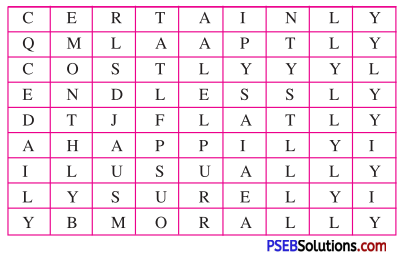
Solve the crossword puzzle given below. Read the hints (meanings) for the words given under ‘Across’ and ‘Down’. The words are from the story.
PSEB 7th Class English Solutions Chapter 7 A Hole in the Fence 1
Answer:
PSEB 7th Class English Solutions Chapter 7 A Hole in the Fence 2
Across →
5. able to manage
6. find something new
8. to take something
9. barrier
10. a mark on the skin

Down ↓
1. hit something hard
2. a tear in the skin
3. become lesser or smaller
4. guiding someone
5. a state of being angry or calm

PSEB 7th Class English Solutions Chapter 7 A Hole in the Fence

Activity 3.

Answer the following questions as briefly as you can.

Question 1.
Why did the boy have no friends ?
लड़के के दोस्त क्यों नहीं थे ?
Answer:
The boy had no friends because he always used a bad language in a fit of anger.

Question 2.
Why were his parents worried ?
उसके माता-पिता क्यों चिंतित थे ?
Answer:
His parents were worried because he had a bad temper.

Question 3.
Whạt task did his father give him to do ?
उसके पिता ने उसे कौन-सा कार्य करने को दिया ?
Answer:
His father gave him a bag of nails and hammer and said, “Every time you lose your temper you must hammer a nail into the back of the fence.

Question 4.
How did it help the boy ?
इसने लड़के की मदद कैसे की ?
Answer:
By hammering nails, he discovered that it was easier to control the anger than to drove nails.

Question 5.
What did his father tell him after he had taken out all the nails ?
जब लड़के ने सभी कील निकाल दिए तो पिता ने उस बच्चे को क्या बताया ?
Answer:
The father told him that a wound given with the words is as bad as the one given with a knife.

Question 6.
What is the moral of the story?
कहानी से क्या शिक्षा मिलती है ?
Answer:
We should be polite to others and use kind words.

Activity 4.

Write ‘True’ or ‘False’ in the space given against each statement.

1. The boy had many friends. — (False)
2. He had a habit of using bad language. — (True)
3. His mother came up with a plan to help him. — (False)
4. The boy hammered nine nails into the fence on his first day — (False)
5. The boy never learned to control his temper — (False)

PSEB 7th Class English Solutions Chapter 7 A Hole in the Fence

Activity 5

Select the correct option and fill it in the given blank.

Question 1.
The little boy was …………………. by other boys.
(a) popular
(b) liked
(c) disliked.
Answer:
(c) disliked.

Question 2.
The boy had no friends because ………….
(a) he used bad language
(b) he bullied other boys
(c) he would hit small boys.
Answer:
(a) he used bad language

Question 3.
His father thought of a/an …..
(a) advice to give him
(b) task to give him
(c) reason for his behaviour.
Answer:
(a) advice to give him

Question 4.
The father asked the boy to … whenever he felt angry.
(a) count from 1-10
(b) drive a nail into the fence
(c) pull out a nail from the fence.
Answer:
(b) drive a nail into the fence

Question 5.
The father was able to …. ….. him a lesson about good behaviour.
(a) show
(b) teach
(c) make.
Answer:
(b) teach.

Learning Language

Sentence and its Types

Read the following sentences or groups of words.
1. Amit is a good actor.
2. Where are you going?
3. Seema works very hard.
4. What a beautiful day!
5. Chandigarh is the capital of Punjab.
Please note that all these sentences:
1. begin with capital letters
2. end with a full stop (.), a question mark (?) or an exclamation mark (!)
Notice that these groups of words make complete sense.
Sentence शब्दों का सार्यक समूह होता है।
Now, read the following group of words:
pot flowers The are in
इस शब्द समूह का कोई अर्थ नहीं है।
Now read the same words in another order :
The flowers are in the pot.
यह शब्द समूह पूरा अर्थ देता है | इसलिए यह राक sentence है

PSEB 7th Class English Solutions Chapter 7 A Hole in the Fence

Activity 6.

Rearrange the following groups of words and punctuate to make meaningful sentences

Question 1.
ferocious lions animals are.
Answer:
Lions are ferocious animals.

Question 2.
love grandparents a my me lot.
Answer:
Grandparents love me a lot.

Question 3.
is my best Rajan friend.
Answer:
Rajan is my best friend.

Question 4.
Mercury system in is the hottest the planet solar.
Answer:
Mercury is the hottest planet in the solar system.

Question 5.
is the Ganges sacred a river.
Answer:
The ganges is a sacred river.

Activity 7

Make meaningful sentences by using the following words.

1. building – This is a tall building.
2. chair – The chair is made of wood.
3. dance – She likes to dance.
4. walk – Morning walk is good for health.
5. dictionary – I have an English, Punjabi dictionary.

Types of Sentences.

Sentences are of four types: Declarative, Interrogative, Imperative and Exclamatory.

1. Declarative sentences tell something or make a statement. A full stop (.) is used at the end of such sentence.
2. Interrogative ये वाक्य कोई प्रशन पूछते है | इनके अन्त question mark (?) “INT GIRI
3. Imperative : These sentences are either requests or commands. They tell someone to do something. They also end with a full stop.
4. Exclamatory : These sentences show a feeling and exclamation mark (!) mark is used at the end of such sentence.

Activity 8

Identify the type of sentence and write it in the given space.

1. Will the guests be late ? — Interrogative
2. She scored a century. — Declarative
3. I have completed my work. — Declarative
4. Read this book now. — Imperative
5. The trip was exciting ! — Exclamatory
6. Who went to Delhi ? — Interrogative
7. Shut the door. — Imperative
8. What a cute dog ! — Exclamatory
9. Butter is better than jam. — Declarative
10. Brush your teeth. — Imperative I

Activity 9

Identify each type of sentence and explain your answer.

1. The students went on an educational trip.
Type : Declarative.
Reason : It is a statement.

2. Shall we go to the Thunder Zone Theme Park ?
Type : Interrogative.
Reason : It asks a question.

PSEB 7th Class English Solutions Chapter 7 A Hole in the Fence

3. We must try to be on our best behaviour for the next two months.
Type : Declarative
Reason : It is a statement.

4. The dog ate the biscuit.
Type : Declarative.
Reason : It is a statement.

5. Wow, I have won the lottery !
Type : Exclamatory
Reason : This shows a feeling and uses an exclamation mark at the end.

6. How far away is the park from the school ?
Type : Interrogative
Reason : It asks a question and has a question mark at the end.

7. Let’s go back soon or we will miss the train !.
Type : Exclamatory
Reason : This gives a suggestion and warning.

8. Stop asking questions.
Type : Imperative
Reason : It gives a command.

9. Let’s go to the party!
Type : Exclamatory
Reason : It gives a suggestion.

10. The students wondered why they were going to the amusement park.
Type : Declarative.
Reason : It is a statement.

Learning to Listen

Activity 10

Listen to your teacher’s instructions on how to grow a plant. Try to write as you listen. After 5 minutes, your teacher will speak again. Complete your activity while listening to the process the second time.
You will need
1. seeds of your choice such as pumpkin seeds, sunflower seeds, lima beans or pinto beans
2. good quality soil
3. a container to hold the soil and your seeds
4. water
5. light and heat Now write all the steps with their description in the grid given below.
Description de Take some seeds of pumpkin or sunflower Use good quality soil. Take a container to hold the soil and seeds. Water the soil and the seeds.
Put the container in the open for light and heat. Learning to Speak
Answer:

Steps Description
1. Take some seeds of pumpkin or sunflower
2. Use good quality soil.
3. Take a container to hold the soil and seeds.
4. Water the soil and the seeds.
5. Put the container in the open for light and heat.

Activity 11 (Pairwork) 

Based on your listening activity and your notes in the grid above, discuss with your partner the process of how a seed becomes a plant. You can also take hints from the diagram given below.
PSEB 7th Class English Solutions Chapter 7 A Hole in the Fence 3
Answer:
1. Fill the container with soil.
2. Plant the seeds in the soil.
3. Keep the container at a warm place. Sunlight is good but try to avoid too much direct sunlight. A window sill is a good spot.
4. Keep the soil moist by watering it every day.
5. Be careful not to use too much water.
6. Record your observations as the seeds germinate and seedlings begin to sprout from the seeds.

PSEB 7th Class English Solutions Chapter 7 A Hole in the Fence

Learning to Write

Personal Letters

Letters written to one’s parents, relatives and friends are called personal letters.

Format of Personal Letters

1. The Heading (your address and date):
13 Mall Road Ludhiana
15 June 20_ _
2. The Salutation: Dear Anu, Dear Daddy, Dear Brother, etc.
3. The Body: whatever your want to tell
4. The Ending: (For parents and siblings) Yours affectionately/
Your affectionate son; Yours lovingly/Your loving son ;
(For friends or known)Yours sincerely

Specimen of a Personal Letter

Write a letter to your friend inviting him to attend the wedding party of your elder brother.
PSEB 7th Class English Solutions Chapter 7 A Hole in the Fence 4

Activity 12.

Imagine that you are Neeraj. Write a letter to your cousin telling him/her how you helped a friend used to overcome his habit of using bad language. You may share with your friend the idea you used to stop him from using bad language.
Answer:
105 The Mall,
Amritsar,
June, 20, 2020.
Dear Navjot,
I received your letter yesterday. I want to tell you about a friend of mine who had a bad temper. He used bad words even in his routine talks. This bad habit earned him a bad name. No one liked to talk to him. So I hit upon a plan to reform him. Whenever he used a bad word, I objected to it and made him to say ‘sorry’. Gradually, he got tired of his sorries. He began to control his speech. Within a week, he was speaking a kindly and softly. It was a great change which made both of us happy and surprised.
Your loving brother
Neeraj

Learning to Use Language

Activity 13

Look at the picture given below. In the given space, describe what is happening in the picture.
PSEB 7th Class English Solutions Chapter 7 A Hole in the Fence 5
Water-Cycle
The picture shows the water-cycle in nature. Water in oceans, ponds, rivers and other water evaporates due to heat. The vapour gets mixed with the air. The air becomes light and goes up. Clouds are formed.

PSEB 7th Class English Solutions Chapter 7 A Hole in the Fence

Trees cool down the clouds and the vapour get condensed into water drops, hailstones etc. They being heavy drop down on earth. It is called precipitation. All this is water. It flows down on the ground and get collected in the water bodies again. Hence, the completion of the cycle.

Comprehension Of Passages

Read the following passages carefully and answers the questions that follow each :

(1) Once there was a little boy who lived with his parents in a small village. His parents were worried because he had a bad temper. He had no friends because he always used bad language in a fit of anger. His parents advised him many times to control his anger but he did not pay attention.

The father kept thinking and then he got an idea. The next day, his father gave him a bag of nails and a hammer. He said to him, “Every time you lose your temper, you must hammer a nail into the back of the fence.” The boy accepted the task happily.

1. Why were the boy’s parents worried ?
लड़के के माता-पिता चिंतित क्यों थे ?

2. What task did his father gave him ?
उसके पिता ने उसे क्या काम करने को दिया ?

3. Choose true and false statements and write them in your note book.
(a) The boy refused to do the job.
(b) His boy lived in a small village ?

PSEB 7th Class English Solutions Chapter 7 A Hole in the Fence

4. Complete the sentences according to the meaning of the passage.
(a) He always used bad language in ………..
(b) Her father gave him a ………….. and a hammer.

5. Match the words with their meanings.

(a) temper idea
(b) accepted agreed to
nature.

Answer:
1. The boy’s Parents were worried because he had a bad temper.
2. His father asked him to hammer a nail into the back of the fence every time he lost his temper.
3.
(a) False
(b) True.
4.
(a) He always used bad language in a fit of angers.
(b) His father gave him a bag of nails and a hammer.
5.
(a) temper – nature
(b) accepted – agreed to

(2) Every time, the boy felt angry, he ran to the fence and drove a nail into it. The first day, the boy had driven thirty nails into the fence. After a few days, the number of nails started decreasing. Over the next few weeks, he discovered that it was easier to control his anger than to drive those nails into the fence. Finally, the day came when the boy did not lose his temper at all.

He had not hammered any nail into the fence. He told his father about it. The father gave him one more task to do. He asked the boy to pull out one nail for each day that he was able to hold his temper. The days passed and the little boy was finally able to tell his father that all the nails were gone.

1. How many nails did the boy push into the fence the first day?
पहले दिन लड़के ने दीवार में कितने कील गाड़े ?

2. What did the boy discover after a few weeks?
कुछ सप्ताह बाद लड़के को क्या पता चला ।।

3. Choose true and false statements and write them in your notebook.
(a) The boy could not control his anger?
(b) Pulling out of a nail meant no anger.

PSEB 7th Class English Solutions Chapter 7 A Hole in the Fence

4. Complete the sentence according to the meaning of the passage.
(a) The boy finally told his father that ………. were gone.
(b) After a few day, the number of nails

5. Match the words with their meaning.

(a) discovered control
(b) hold realized
push

Answer:
1. The first day, the boy pushed thirty nails into the fence.
2. He discovered that it was easier to control his anger than to drive nails into the fence.
3.
(a) False
(b) True.
4.
(a) The boy finally told his father that all the nails were gone.
(b) After a few days the number of nails started decreasing
5.
(a) discovered-realized
(b) hold-control

(3) The father led the little boy to the fence. He said, “You have done well, my son. Now, look at these holes in the fence. The fence will never be the same again.” The boy looked at his father and said, “I did it because you asked me to.

“I know”, said the father, “when you say things in anger, they leave a scar just like this one. You can put a knife in a man and draw it out. It won’t matter how many times you say you are sorry, the wound will always be there. A wound given with your words is as bad as the one given with a knife.”

1. What did the father show his son ?
पिता ने अपने पुत्र को क्या दिखाया ?

2. What lesson did the father teach his son ?
पिता ने अपने पुत्र को क्या सबक दिया ?

3. Choose true and false statements and write them in your note book.
(a) The fence will never be the same again.
(b) The father led to little boy to school.

4. Complete the sentence according to the meaning of the passage.
(a) When you say things in …………., they …………. a scar.
(b) The wound will ………….

PSEB 7th Class English Solutions Chapter 7 A Hole in the Fence

5. Match the words with their meanings :

(a) wound mark
(b) Scar bad words
Injury

Answer:
1. The father showed holes in the fence to his son.
2. The father tought his son that a wound given with words is as a bad as the one given with
a knife.
3.
(a) True
(b) False.
4.
(a) When you say things in anger, they leave a scar.
(b) The wounds will always be there.
5.
(a) wound-injury
(b) scar –mark

Use Of Words/Phrases In Sentences

1. Pay attention (listen to)—
Pay attention to what I say.
मैं जो कहता हूँ उसकी ओर ध्यान दो।

2. Scar (mask, spot)
Hammer this nail into the door.
यह कील दरवाजे में गाड़ दो।

3. Hammer (v) (Push)
Hammer this nail into the door.
यह कील दरवाजे में गाड़ दो।

4. Decrease (lesser)
His pain decreased after some time.
उसकी दर्द कुछ देर बाद कम हो गई।

5. Hold (Contol, put a check on –
Hold your tongue.
अपनी जुबान सम्भालो।

6. Control (hold)
Try to control your anger.
अपने गुस्से पर काबू पाने की कोशिश करो।

7. To say sorry (to regret) —
You must say sorry when you misbehave.
गंदा व्यवहार करने पर तुम्हें खेद जताना चाहिए।

8. Accept (acknowledge)
you must accept your mistake.
तुम्हें अपनी गलती स्वीकार कर लेनी चाहिए।

9. Advise (to suggest) —
I advised him to work hard.
मैंने उसे परिश्रम करने का सुझाव दिया।

Word Meaning.
PSEB 7th Class English Solutions Chapter 7 A Hole in the Fence 6

A Hole in the Fence Summary in Hindi

Once there was ………………. nails were gone.

एक बार एक छोटा-सा लड़का था जो अपने माता-पिता के साथ एक छोटे से गाँव में रहता था। उसके माता पिता उसके बुरे स्वभाव के कारण चिंतित थे। उसका कोई मित्र नहीं था क्योंकि वह क्रोध में आकर अभद्र भाषा का प्रयोग करता था। उसके माता-पिता ने उसे क्रोध पर अंकुश लगाने के लिए बहुत बार समझाया।

PSEB 7th Class English Solutions Chapter 7 A Hole in the Fence

परन्तु वह कोई ध्यान नहीं देता था। पिता निरंतर सोचते रहते थे और तभी उन्हें एक विचार सूझा। अगले दिन उसके पिता ने उसे कीलों का एक थैला और हथौड़ा दिया। उन्होंने उससे कहा, “जितनी बार भी तुम्हें क्रोध आये तुम बाड़ (गेट की दीवार) के पीछे कील लगा देना।” बच्चे ने यह काम खुशी-खुशी स्वीकार कर लिया। जब भी बच्चे को क्रोध आता वह गेट की दीवार की ओर भाग कर जाता और उसमें एक कील गाड़ देता।

पहले दिन बच्चे ने चार दीवारी में तीस कील गाड़े। कुछ दिनों बाद कीलों की संख्या कम होने लगी। अगले कुछ सप्ताह में उसने अनुभव किया कि क्रोध पर नियंत्रण पाना कील गाड़ने से अधिक आसान था। अन्ततः एक दिन ऐसा आया जब बच्चे को बिल्कुल भी क्रोध नहीं आया। उसने दीवार में कोई भी कील नहीं गाड़ा था।

उसने इसके बारे में अपने पिता को बताया। उसके पिता ने उसे एक और काम करने के लिए दिया। उन्होंने कहा जिस किसी दिन तुम क्रोध पर काबू रखो, उस दिन एक कील निकाल लेना। दिन बीतते गए और छोटा लड़का अपने पिता की आखिरकार यह बताने के योग्य हो गया कि सभी कील निकल गए हैं। .

The father led ………….. words be kind !

पिता छोटे लड़के को दीवार की ओर ले गए। उन्होंने कहा, “मेरे बच्चे, तुमने बहुत अच्छा काम किया है। अब, दीवार में सुराखों को देखो। यह दीवार कभी-भी पहले जैसी नहीं हो सकती।” लड़के ने अपने पिता को देखा और कहा, “मैंने यह काम इसलिए किया क्योंकि आपने मुझे ऐसा करने को कहा था।” पिता ने कहा, “मैं जानता हूँ। जब तुम क्रोध में होते तो तुम जो कुछ भी कहते हो, वह इसी तरह निशान छोड़ जाता है।

तुम एक आदमी को चाकू मार दो और बाहर निकाल लो। इससे कोई फ़र्क नहीं पड़ेगा कि तुमने उससे कितनी बार माफ़ी मांगी, क्योंकि घाव सदा वहीं रहेगा। शब्दों से दिए गए घाव उतने ही बुरे हैं जितने कि चाकू से दिए गए घाव।” क्या आपको नहीं लगता, कि पिता ने लड़के को एक अच्छा उपदेश दिया ? मित्रों और प्रिय दोस्तों का हमारे जीवन में बहुत महत्त्व है जैसे कि तुम हमारे लिए हो। वे तुम्हें मुस्कराहट तथा हंसी देते हैं। यदि तुम अपने मित्रों को खोना नहीं चाहते तो अपने शब्दों का चुनाव सावधानीपूर्वक करो। आपके शब्द विनम्र होने चाहिएं।

PSEB 7th Class English Solutions Chapter 7 A Hole in the Fence

Retranslation Of Isolated Sentences :

1. His parents were worried because he had a bad temper. — उसके माता-पिता उसके बुरे स्वभाव के कारण चिंतित थे।
2. They advised him many times to control his anger. — उन्होंने उसे अपने क्रोध पर अंकुश लगाने के लिए कई बार समझाया।
3. He got an idea. — उन्हें (उसे) एक विचार सूझा।
4. The boy accepted the task happily. — लड़के ने वह काम खुशी-खुशी स्वीकार कर लिया।
5. The number of nails started decreasing. — कीलों की संख्या घटने लगी।
6. It was easier to control the anger. — क्रोध पर नियंत्रण पाना अधिक आसान था।
7. The father gave him one more task to do. — पिता ने उसे एक और काम करने को दिया।
8. I did it because you asked me to. — मैंने यह काम इसलिए किया क्योंकि आपने मुझे ऐसा करने के लिए कहा।
9. A wound given with your words is as bad as the one given with knife. — शब्दों से दिया गया घाव उतना ही बुरा है जितना कि चाकू से दिया गया घाव।
10. They make you smile and laugh. — वे तुम्हें मुस्कराहट और हंसी प्रदान करते हैं।
11. Let your words be kind. — आपके शब्द विनम्र होने चाहिएं।

English Guide for Class 7 PSEB Prose
The Dying Detective Question Answer Class 10 English Literature Book Chapter 4 PSEB Solutions

Punjab State Board PSEB 10th Class English Book Solutions English Literature Book Chapter 4 The Dying Detective Textbook Exercise Questions and Answers.

Class 10th English Literature Book Chapter 4 The Dying Detective Question Answers

The Dying Detective Class 10 Questions and Answers

Question 1.
Who was Mrs. Hudson ? Why did she go to Watson’s house ?
Or
Who was Mrs. Hudson ? Where did she go ? Why did she go there ?
Answer:
Mrs. Hudson was Sherlock Holmes’ landlady. She went to Watson’s house to tell him that his friend, Sherlock Holmes, was critically ill. She wanted Watson to come and save his friend’s life.

श्रीमती हडसन शरलॉक होम्ज़ की मकान-मालकिन थी। वह वाटसन के घर उसे यह बताने के लिए गई कि उसका मित्र, शरलॉक होम्ज़, सख्त बीमार था। वह चाहती थी कि वाटसन आए और अपने मित्र की जान बचाए।

PSEB 10th Class English Literature Book Solutions Chapter 4 The Dying Detective

Question 2.
Where did Holmes get the illness from ? When did he get it ?
Answer:
Holmes got the illness from some Chinese sailors. He got it when he was working on a case at a place near a river. But as we know, it was all a made-up story.

होम्ज़ को यह बीमारी कुछ चीनी नाविकों से लगी। उसे यह तब लगी जब वह एक नदी के समीप किसी जगह पर एक मामले पर काम कर रहा था। किन्तु जैसा कि हम जानते हैं, यह सब एक गढ़ी हुई कहानी थी।

Question 3.
What was Holmes’ condition when Watson saw him ?
Answer:
Holmes’ eyes had the brightness of fever. There was red flush on his cheeks. His thin hands were twitching all the time.

होम्ज़ की आंखों में बुखार वाली चमक थी। उसके गालों पर लाली थी। उसके पतले हाथ लगातार फड़क रहे थे।

Question 4.
Why did Holmes not let Watson examine him ?
Answer:
Holmes’ illness was a feigned one. Watson was a doctor by profession. He would have known the truth if he had examined Holmes. That was why, Holmes did not let Watson examine him.

होम्ज़ की बीमारी बनावटी थी। वाटसन व्यवसाय से डॉक्टर था। उसे सच्चाई का पता चल जाता यदि वह होम्ज़ की जांच कर लेता। इसी कारण से होम्ज़ ने वाटसन को खुद की जांच न करने दी।

PSEB 10th Class English Literature Book Solutions Chapter 4 The Dying Detective

Question 5.
Till when was Watson asked to stay in Holmes’ house ?
Answer:
He was asked to stay in there till 6 o’clock.

उसे वहां छ: बजे तक रुकने के लिए कहा गया।

Question 6.
Why did Holmes not let Watson touch his things ? What did Watson think about Holmes then ?
Answer:
Watson picked up an ivory box. Holmes knew it had a poisonous spring in it. Therefore, Holmes told him to put it down. He said that he hated to have his things touched. Watson thought that illness had affected Holmes’ mind.

वाटसन ने हाथीदांत की बनी एक डिबिया उठा ली। होम्ज़ जानता था कि इसमें एक ज़हरीला स्प्रिंग लगा था। इसलिए होम्ज़ ने उसे इसे नीचे रखने के लिए कहा। उसने कहा कि उसे पसन्द नहीं था कि उसकी चीजें छुई जाएं। वाटसन ने सोचा कि बीमारी ने होम्ज़ के दिमाग पर असर डाल दिया था।

Question 7.
What did Holmes ask Watson to do before leaving his room ?
Answer:
He asked Watson to light the gas-lamp, but only half on. Then he asked him to put on the table some letters, paper and the ivory box and the tongs.

उसने वाटसन से कहा कि वह गैस-लैंप को जला दे, किन्तु केवल आधी रोशनी पर। फिर उसने उसे मेज पर कुछ पत्र, कागज़, हाथीदांत वाली डिब्बी और चिमटी रखने को कहा।

Question 8.
Who was Culverton Smith ? Why did Holmes want him for the treatment of his disease ?
Answer:
Culverton Smith was a resident of Sumatra and a tea planter. Holmes wanted him for the treatment of his disease only to have him in his trap.

कल्वर्टन स्मिथ सुमात्रा का रहने वाला और चाय-बागानों का मालिक था। होम्ज़ उसे केवल अपने जाल में फंसाने के लिए उससे अपनी बीमारी का इलाज करवाना चाहता था।

PSEB 10th Class English Literature Book Solutions Chapter 4 The Dying Detective

Question 9.
What did Holmes ask Watson to say to Mr. Smith ?
Answer:
Holmes asked Watson to tell Mr. Smith how critically Holmes was ill and was at the point of death. Holmes wanted Watson to persuade Mr. Smith to come to Holmes’ house.

होम्ज़ ने वाटसन से कहा कि वह मिस्टर स्मिथ को बताए कि होम्ज़ कितना भयानक बीमार था और मरने के किनारे पर था। होम्ज चाहता था कि वाटसन मिस्टर स्मिथ को होम्ज़ के घर पर आने को सहमत करवा ले।

Question 10.
Did Smith welcome Watson calling on him ? How do you know ?
Answer:
No, Smith did not welcome Watson calling on him. He asked his butler to tell Watson that he was not at home.

नहीं, स्मिथ ने वाटसन के आने का स्वागत न किया। उसने अपने खानसामे से कहा कि वह वाटसन से कह दे कि वह (स्मिथ) घर पर नहीं था।

Question 11.
Why did Watson not come back with Smith ?
Answer:
Watson did not come with Smith because Holmes had asked him to do so. Watson pretended that he had some other appointment.

वाटसन स्मिथ के साथ इसलिए न आया क्योंकि ऐसा करने के लिए उसे होम्ज़ ने कहा था। वाटसन ने बहाना बना दिया कि उसे कोई दूसरा काम था।

Question 12.
What did Smith ask Watson when he finally met him ?
Answer:
Smith asked Watson if he was coming from Holmes’. He also asked him how Holmes was.

स्मिथ ने वाटसन से पूछा कि क्या वह होम्ज़ के यहां से आ रहा था। उसने उससे यह भी पूछा कि होम्ज़ का क्या हाल था।

Question 13.
Did Smith go near Holmes to examine him ? How do you know ?
Answer:
No, Smith did not go near Holmes to examine him. He well knew what had happened and only wanted Holmes to die.

नहीं, स्मिथ होम्ज़ के नज़दीक उसकी जांच करने के लिए नहीं गया। वह अच्छी तरह जानता था कि क्या हुआ था और केवल यही चाहता था कि होम्ज़ की मृत्यु हो जाए।

Question 14.
Who was Victor Smith ? What had happened to him and how ?
Answer:
Victor was Culverton Smith’s nephew. He had been murdered by Culverton Smith by the use of a poisonous spring.

विक्टर कल्वर्टन स्मिथ का भतीजा था। उसकी हत्या कल्वर्टन स्मिथ ने एक जहरीले स्प्रिंग का प्रयोग कर के कर दी थी।

PSEB 10th Class English Literature Book Solutions Chapter 4 The Dying Detective

Question 15.
“You did it. I’ll forget everything,” Holmes said to Smith. What did Smith do and how ? Did Holmes really mean what he said ? Give examples in support of your answer.
Answer:
Smith had conspired to kill Holmes by sending him a poisoned spring-box by post. Holmes did not really mean what he said. He was not ill at all. He was only laying a trap for Smith and trying to make him confess his crime.

स्मिथ ने डाक द्वारा एक जहरीले स्प्रिंग वाली डिब्बी होम्ज़ को भेज कर उसे मारने की योजना बनाई थी। होम्ज़ का वास्तव में वह अर्थ नहीं था जो उसने कहा। वह बिल्कुल भी बीमार नहीं था। वह स्मिथ के लिए केवल एक जाल बिछा रहा था और उससे उसका अपराध स्वीकार करवाने की कोशिश कर रहा था।

Question 16.
Why did Smith send an infected sharp spring in an ivory box ?
Answer:
Smith had killed his nephew. Holmes knew this fact. He was gathering evidence to prove it. That was why Smith sent him an infected spring to kill him.

स्मिथ ने अपने भतीजे को मार डाला था। होम्ज़ यह बात जानता था। वह इसे सिद्ध करने के लिए सबूत इकट्ठे कर रहा था। इसी कारण से स्मिथ ने उसे मारने के लिए एक संक्रमित स्प्रिंग भेज दिया।

Question 17.
Why did Holmes ask Smith to turn up the gas ?
Answer:
Holmes asked Smith to turn up the gas. It was, in fact, a signal for Inspector Morton to come in and arrest Smith.

होम्ज़ ने स्मिथ को गैस तेज़ करने को कहा। वास्तव में यह इंस्पैक्टर मार्टन के लिए एक इशारा था कि वह अन्दर आए और स्मिथ को गिरफ्तार कर ले।

Question 18.
Who arrested Smith ? What were the charges against him ?
Answer:
Inspector Morton arrested Smith. The charges against Smith were the murder of Victor and the attempted murder of Sherlock Holmes.

इंस्पैक्टर मार्टन ने स्मिथ को गिरफ्तार किया। उसके विरुद्ध आरोप थे – विक्टर की हत्या और शरलॉक होम्ज़ की हत्या का प्रयास।

Question 19.
Why did Holmes pretend to be ill ? What did he do and say to appear ill ?
Answer:
Holmes’ pretended illness was all a trap laid for Mr. Smith. In order to look ill, he did not eat for three days. He also applied a little make-up on his face. He also talked deliriously.

होम्ज़ की बीमारी का बहाना मिस्टर स्मिथ के लिए बिछाया गया मात्र एक जाल था। बीमार दिखने के लिए उसने तीन दिन तक कुछ न खाया। उसने अपने चेहरे पर थोड़ा-सा मेकअप भी लगाया। उसने
बड़बड़ाते हुए बातें भी की।

Question 20.
Should Holmes have spoken so rudely to Watson ? Why ?
Answer:
Holmes’ show of rudeness was a dramatic necessity. It was necessary to make Watson believe that Holmes was really critically ill and at the point of death.

होम्ज़ द्वारा उद्दण्डता का दिखावा करना एक नाटकीय आवश्यकता थी। यह वाटसन को विश्वास दिलाने के लिए ज़रूरी थी कि होम्ज़ सचमुच भयानक रूप से बीमार था और मरने के किनारे पर था।

Objective Type Questions

Question 1.
What was Watson by profession ?
Answer:
Watson was a doctor by profession

Question 2.
Holmes got the illness from some …
(i) Chinese sailors
(ii) Indian sailors
(iii) English sailors
(iv) Russian sailors.
Answer:
(i) Chinese sailors

Question 3.
Smith sent Holmes an infected sharp spring in …..
(i) a silver box
(ii) an ivory box
(iii) a golden box
(iv) a red box.
Answer:
(ii) an ivory box

PSEB 10th Class English Literature Book Solutions Chapter 4 The Dying Detective

Question 4.
Victor smith killed Culverton Smith. (True/False)
Answer:
False

Question 5.
Holmes did not want Watson to touch his things. (True/False)
Answer:
True

Question 6.
Who was charged with the murder of his nephew ?
(i) Mrs Hudson
(ii) Morton
(iii) Smith
(iv) Watson.
Answer:
(iii) Smith

Answer each of the following in one word / phrase / sentence :

Question 1.
Who wrote the story, ‘The Dying Detective’ ?
Answer:
Arthur Conan Doyle.

Question 2.
Who was the detective in this story ?
Answer:
Sherlock Holmes.

Question 3.
Give the name of Sherlock Holme’s landlady ?
Answer:
Mrs Hudson.

Question 4.
Who was Dr Watson ?
Answer:
Sherlock Holmes’ friend.

Question 5.
Where did Sherlock get the illness from ?
Answer:
From some Chinese sailors.

Question 6.
Sherlock did not let the doctor examine him. Why ?
Answer:
Because his illness was a feigned one.

Question 7.
Who was asked to stay in Sherlock’s house till 6 o’clock ?
Answer:
Dr Watson.

Question 8.
Who had murdered Victor Smith ?
Answer:
Culverton Smith.

Question 9.
Who was Victor Smith ?
Answer:
Culverton’s nephew.

Question 10.
What were the charges against Culverton Smith ?
Answer:
The charges were the murder of Victor and the attempted murder of Sherlock.

Complete the following :

1. Culverton Smith was a resident of ………..
2. Victor was a nephew of ………..
3. Holmes asked Watson to tell Culverton …….
4. …… arrested Culverton Smith.
5. The ivory box contained an ……………..
6. Holmes was the only person who knew that Culverton ………….
Answer:
1. Sumatra
2. Culverton Smith
3. about his illness
4. Inspector Morton
5. infected spring
6. had killed Victor.

PSEB 10th Class English Literature Book Solutions Chapter 4 The Dying Detective

Write True or False against each statement :

1. Holmes’ show of rudeness was a dramatic necessity.
2. Smith had not murdered his nephew
3. Culverton Smith did not go near Holmes to examine him.
4. Watson came back with Smith.
5. Holmes was a doctor by profession.
6. Holmes requested Dr Watson to examine him.
Answer:
1. True
2. False
3. True
4. False
5. False
6. False.

Choose the correct option for each of the following :

Question 1.
Dr Watson did not come back with Culverton Smith because ……..
(a) he had to go to his clinic
(b) Sherlock had asked him to do so
(c) he was not feeling well
(d) he went to meet Mrs. Hudson.
Answer:
(b) Sherlock had asked him to do so

Question 2.
Watson was asked to stay in Holmes’ house till …………
(a) 9 o’clock
(b) 8 o’clock
(c) 6 o’clock
(d) 4 o’clock.
Answer:
(c) 6 o’clock

Question 3.
Culverton Smith confessed before Holmes that
(a) he had killed Victor
(b) he had sent Holmes an ivory box by post
(c) the ivory box contained a killer spring
(d) all of these three.
Answer:
(d) all of these three.

Question 4.
Holmes wanted Watson to persuade Smith to …………
(a) come to Holmes’ house
(b) confess his crime
(c) go back to Sumatra
(d) kill Victor Smith.
Answer:
(a) come to Holmes’ house

Question 5.
Victor Smith had been murdered by Culverton Smith by the use of ……….
(a) a poisonous ring
(b) an ivory box
(c) a poisonous spring
(d) a sharp spring.
Answer:
(d) a sharp spring.

The Dying Detective Summary & Translation in English

The Dying Detective Introduction:
Sherlock Holmes was a detective. He had a friend named Dr Watson. One day, Holmes’ landlady came to Watson’s house and told him that Holmes was critically ill. Watson lost no time in coming to the flat where Holmes lived. He found Holmes lying in bed and feeling very restless. He tried to know about Holmes’ disease and its symptoms. But Holmes didn’t let Watson come near him. He said that it was a horribly contagious disease and Watson knew nothing about it. So he asked Watson to fetch one Mr. Culverton Smith who, he said, had all the knowledge of this disease. Then he told him to come back to him before Mr. Smith reached there. “This is very important,” he said. “Make any excuse so as not to come back with him. Don’t forget, Watson.”

Watson met Mr. Smith and told him about Holmes’ trouble. Mr. Smith at once agreed to go with Watson. But Watson remembered what Holmes had said. So he made an excuse that he had another appointment. When Watson came back, Holmes asked him to go to another room. While Watson was hiding there, he heard the footsteps upon the stairs.

PSEB 10th Class English Literature Book Solutions Chapter 4 The Dying Detective

Then he heard the opening and closing of the door. It was Mr. Smith who had come into the room. He felt quite delighted on seeing Holmes in a critical condition. Holmes was the only person who knew that Mr. Smith had killed his nephew Victor, but he had not been able to prove it. Now seeing Holmes dying, Smith confesses it to him that Victor had died the same way Holmes was dying now. He confesses that he had sent Holmes an ivory box by post. The box contained a killer spring. While talking thus, Mr. Smith picks up the box and puts it into his pocket.

At once, Holmes gives up his pretence of a dying man. He applauds his successful acting. This acts as a signal for Inspector Morton who at once comes in. He arrests Mr. Smith on the charges of Victor’s murder and Holmes’ attempted murder. Mr. Smith tries to deny his confession to Holmes, but there is Watson who has witnessed the entire drama.

The Dying Detective Summary & Translation in Hindi

The Dying Detective Introduction:
शरलॉक होम्ज एक जासूस था। उस का डॉक्टर वाटसन नाम का एक मित्र था। एक दिन होम्ज़ की मकान-मालकिन वाटसन के घर पर आई और उसे बतलाया कि होम्ज़ बहुत सख़्त बीमार था। वाटसन ने उस फ्लैट पर पहुंचने में कोई देरी न की जहां होम्ज़ रहता था। उसने देखा कि होम्ज़ बिस्तर पर पड़ा हुआ था और बहुत बेचैन था। उसने होम्ज़ की बीमारी और इसके लक्षणों के बारे में जानने की कोशिश की। किन्तु होम्ज़ ने उसे अपने नज़दीक न आने दिया। उसने कहा कि यह एक भयानक छूत का रोग था और वाटसन इसके बारे में कुछ नहीं जानता था। इसलिए उसने वाटसन को कलवर्टन स्मिथ नामक एक व्यक्ति को बुला लाने को कहा जो उसके अनुसार उस बीमारी के सम्बन्ध में सब कुछ जानता था। फिर उसने उससे कहा कि वह मिस्टर कलवर्टन स्मिथ के वहां पहुंचने से पहले ही वापस उसके पास आ जाए। “यह बहुत ज़रूरी है,” उसने कहा। “उसके सामने कोई भी बहाना बना देना। वाटसन, भूलना नहीं।”

वाटसन मिस्टर कलवर्टन स्मिथ से मिला और उसे होम्ज़ की बीमारी के बारे में सब कुछ बता दिया। मिस्टर स्मिथ वाटसन के साथ जाने को तुरन्त सहमत हो गया। किन्तु वाटसन को याद था कि होम्ज़ ने क्या कहा था। इसलिए उसने बहाना बना दिया कि उसे किसी दूसरी जगह जाना था। जब वाटसन वापस आया तो होम्ज़ ने उसे वहां से दूसरे कमरे में जाने को कहा। जब वाटसन वहां छिपा हुआ था तो उसे सीढ़ियों पर कदमों की आवाज़ सुनाई दी। फिर उसे दरवाज़े का खुलना और बन्द होना सुनाई दिया। यह कलवर्टन स्मिथ था जो कमरे में आया था। होम्ज़ को नाजुक हालत में देखकर उसे बहुत खुशी महसूस हुई। होम्ज़ एकमात्र व्यक्ति था जो जानता था कि स्मिथ ने अपने भतीजे विक्टर का वध किया था, किन्तु वह इसे साबित करने में असफल रहा था।

अब होम्ज़ को मरते हुए देखकर स्मिथ उसके सामने स्वीकार करता है कि विक्टर की मृत्यु उसी तरह से हुई थी जैसे अब होम्ज़ मर रहा था। वह स्वीकार करता है कि उसने होम्ज़ को डाक द्वारा एक डिबिया भेजी थी। इसमें एक जानलेवा स्प्रिंग लगा हुआ था। इस तरह बातें करते हुए स्मिथ मेज़ पर से वह डिबिया उठा लेता है और इसे अपनी जेब में डाल लेता है। वह कहता है कि सबूत का मात्र यही एक अंश था जो उसके विरुद्ध जा सकता था।

तुरन्त होम्ज़ एक मरते हुए आदमी वाला अपना नाटक समाप्त कर देता है। वह अपने सफल अभिनय पर तालियां बजाता है। इन्स्पेक्टर मार्टन के लिए यह एक इशारे का काम करता है, जो तुरन्त अन्दर आ जाता है और स्मिथ को विक्टर के वध और होम्ज़ के वध की कोशिश के दोष में गिरफ्तार कर लेता है। स्मिथ होम्ज़ के सामने अपना अपराध स्वीकार करने की बात से इन्कार करने की कोशिश करता है, किन्तु वहां वाटसन है जो पूरे नाटक की गवाही दे सकता है। कठिन शब्दार्थ तथा सम्पूर्ण कहानी का हिन्दी अनुवाद

The Dying Detective Summary & Translation in Hindi:

(Page 25-26)
Mrs. Hudson, the ……………… back !” he cried.

Word-meanings : 1. sinking-कमज़ोर होता जा रहा है; 2. last-चल सकना, जीवित रहना; 3. stand -सहन करना; 4. horrified-डर से भर गया; 5. details-विस्तृत विवरण; 6. foggy-कोहरे से भरी; 7. gloomy-अन्धेरा, उदासी-भरा; 8. gaunt-पतला, मरियल; 9. chill-ठण्डक, डर; 10. flushed—लाल पड़े हुए थे; 11. twitch-फड़कना; 12. listless-निर्जीव-सा, उत्साहहीन।

अनुवाद- श्रीमती हडसन, शरलॉक होम्ज़ की मकान-मालकिन, मेरे पास आई और बोली, “मिस्टर होम्ज़ मर रहा है, मिस्टर वॉटसन। तीन दिनों से वह कमज़ोर होता जा रहा है, और मुझे सन्देह है कि वह एक भी दिन और जिन्दा रह पाएगा। वह मुझे किसी डॉक्टर को भी लाने नहीं देता था। मैंने उससे कह दिया कि अब मैं ज़्यादा सहन नहीं कर सकती और एक डॉक्टर को ले ही आऊंगी। उसने उत्तर दिया, “ठीक है, फिर वह डॉक्टर वॉटसन ही होना चाहिए।’

मैं डर से भर उठा क्योंकि मैंने उससे पहले उसकी बीमारी के विषय में नहीं सुना था। मैं जल्दी से अपना हैट और कोट लेने भागा। जब हम कार में वापस जा रहे थे तो मैंने श्रीमती हडसन से पूरा ब्यौरा मांगा। “ज़्यादा कुछ नहीं जो आप को मैं बता सकू, श्रीमान। वह (पिछले कुछ समय से) नदी के पास स्थित रौदरहाइथ में एक मामले को सुलझाने के लिए काम करता रहा है और वहीं से यह बीमारी अपने साथ ले आया है। बुधवार को उसने बिस्तर पकड़ लिया और तभी से वह वहां से हिला तक नहीं है। तीन दिनों से कोई भोजन या पेय उसके होंठों से नहीं गुज़रा है।”

“आपने किसी डॉक्टर को क्यों नहीं बुलाया?” मैंने पूछा। “वह मुझे लाने नहीं देता था, श्रीमान। उसका कहना न मानने की हिम्मत मैं नहीं कर पाई।” होम्ज़ को देखना सचमुच बहुत कष्टदायक था। नवम्बर के एक कोहरे-भरे दिन की धुन्धली रोशनी में वह रोगी-कक्ष एक उदास कर देने वाला स्थान था किन्तु बिस्तर से एक मरियल-सा चेहरा मेरी तरफ़ टकटकी बांध कर देख रहा था जिसने मेरे मन को डरा कर रख दिया। उसकी आंखों में बुखार वाली चमक थी, उसके गाल लाल हो रहे थे और उसके हाथ लगातार फड़क रहे थे। वह निर्जीव-सा पड़ा हुआ था। “मेरे प्रिय मित्र!” उसके नज़दीक पहुंचते हुए मैं चीखा। “पीछे खड़े रहो! बिल्कुल पीछे ही खड़े रहो!” वह चिल्लाया।

(Page 26-27)
“But why …….. in his bed.

Word-meanings : 1. for your own sake-तुम्हारे ही भले के लिए; 2. deadly-जानलेवाः 3. contagious-छूत की, संक्रामक; 4. good heavens-हे ईश्वर; 5. advancing-आगे बढ़ते हुए; 6. give in-हार मान लेना; 7. aroused—जागृत हो उठी थी; 8. symptoms—लक्षण, निशानियां; 9. ignorant-अज्ञानी; 10. groan-कराहट; 11. admitted—स्वीकार कर लिया; 12. bolt—छलांग लगाकर जाना।

अनुवाद- “परन्तु क्यों? मैं तो तुम्हारी मदद करना चाहता हूं,” मैंने कहा। “वह मैं मानता हूं वाटसन, परन्तु यह सब मैं तुम्हारे ही भले के लिए कर रहा हूं।” “मेरे भले के लिए?” मैं चकित हो उठा।
“मैं जानता हूं कि मुझे क्या हुआ है। यह बीमारी सुमात्रा से आई है। यह बहुत जानलेवा है और यह छूत की बीमारी है, वॉटसन, सचमुच यह छूने मात्र से अन्य व्यक्ति को लग जाती है।”
“हे ईश्वर, होम्ज़! क्या तुम सोचते हो कि यह सुनकर मैं रुक जाऊंगा?” मैंने उसकी तरफ़ बढ़ते हुए कहा।

“यदि तुम वहीं खड़े रहोगे तभी मैं तुमसे बात करूंगा। अगर नहीं, तो तुम्हें कमरे से जाना होगा,” मेरे उस्ताद ने कहा। मैं हमेशा होम्ज की इच्छाओं के सामने सिर झुकाता रहा हूं। किन्तु उस समय मेरी डॉक्टरों वाली भावनाएं जाग उठीं। कम-से-कम रोगी-कक्ष में मैं उससे ऊंचा दर्जा रखता था। “होम्ज़,” मैं बोला, “तुम अपने आपे में नहीं हो, तुम चाहे इसे पसन्द करो या न करो। मैं तुम्हारे लक्षणों की जांच करूंगा और तुम्हारा इलाज करूंगा।”

“यदि मझे किसी डॉक्टर ने देखना ही है.” उसने कहा, “तो मेरे पास कम-से-कम कोई ऐसा डॉक्टर लाओ जिस पर मुझे विश्वास हो।”
“तो मुझ पर तुम्हारा कोई विश्वास नहीं है?”

“तुम्हारी दोस्ती पर निश्चित रूप से हैं। परन्तु सच्चाई सच्चाई होती है, वॉटसन। तुम एक सामान्य डॉक्टर मात्र हो, इस बीमारी के स्पेशलिस्ट नहीं हो।” “यदि ऐसा है तो मुझे सर जैस्पर मीक या पैनरोज़ फिशर को लाने दो या फिर लंन्दन के किसी अन्य सर्वोत्तम डॉक्टर को।” “तुम कितने अज्ञानी हो! वॉटसन,” एक कराह के साथ उसने कहा, “तुम टारपौनली बुखार या ब्लैक फारमोसा प्लेग के बारे में क्या जानते हो?”
“मैंने इन बीमारियों के बारे में कभी नहीं सुना,” मैंने स्वीकार किया।

“पूर्वी देशों में बीमारी की बहुत-सी समस्याएं हैं। मैंने हाल में किए गए अपने अनुसन्धानों से इतना ही सीखा है। और उसी दौरान इस बीमारी ने मुझे जकड़ लिया,” वह बोला।

“फिर मैं डॉक्टर आइनस्ट्री को ले आता हूं,” दरवाज़े की तरफ जाते हुए मैंने कहा। मुझे आज तक इतना घोर आश्चर्य नहीं हुआ था जब वह मरता हुआ आदमी छलांग लगाकर दरवाजे पर पहुंचा और उसे ताला लगा दिया और चाबी अपने हाथ में ले ली। अगले ही क्षण वह अपने बिस्तर में वापस पहुंच गया।

PSEB 10th Class English Literature Book Solutions Chapter 4 The Dying Detective

(Page 27-28)
“You won’t have ………. with him, watson.”

Word-meanings : 1. by force-बलपूर्वक, ज़बरदस्ती; 2. choice-पसन्द, चुनाव; 3. settle down to reading-पढ़ने में मन लगाना; 4. ‘mantelpiece-अंगीठी के ऊपर की तरफ़ सजावटी चीजें रखने की जगह; 5. ivory-हाथीदांत; 6. sliding-एक तरफ़ को हटाया जा सकने वाला; 7. dreadful डरावनी;

“उसका क्या हाल है?” उसने पूछा। “वह सख़्त बीमार है,” मैंने जवाब दिया। मैं मिस्टर कलवर्टन स्मिथ के घर पहुंच गया। खानसामा दरवाज़े पर दिखाई दिया। आधे-खुले दरवाजे से मैंने एक आवाज़ को खानसामा से कहते सुना, “मैं घर पर नहीं हूं, ऐसा कह दो।” मैं धक्का देकर खानसामा से आगे चला गया और कमरे में घुस गया। मैंने एक गंजे सिर वाले दुबले-पतले व्यक्ति को बैठे हुए देखा। “मुझे अफ़सोस है,” मैंने कहा, “किन्तु ऐसे मामले में देर नहीं की जा सकती। मिस्टर शरलॉक होम्ज ………..”

उसके नाम को सुनने मात्र से ही उस व्यक्ति पर एक भिन्न प्रभाव पड़ा। “क्या तुम होम्ज़ के पास से आ रहे हो? वह कैसा है?” उसने पूछा। “वह सख़्त बीमार हैं। इसी कारण से मैं यहां आया हूं। मिस्टर होम्ज़ आपके विषय में बहुत ऊंची धारणा रखते हैं और वह सोचते हैं कि लन्दन में आप एकमात्र व्यक्ति हैं जो उसकी मदद कर सकते हैं।”

वह छोटे कद का व्यक्ति चौंक उठा। “वह ऐसा क्यों सोचता है?” उसने पूछा। “पूर्वी देशों की बीमारियों के विषय में आप के ज्ञान के कारण,” मैंने उत्तर दिया। “उसे यह बीमारी कैसे लगी?” उससे पूछा। मैंने उसे सब कुछ बता दिया। वह मुस्कराया और आने के लिए सहमत हो गया। यह बहाना बनाते हुए कि मुझे कोई दूसरा ज़रूरी काम था, मैं उसके घर से निकल आया। मन-ही-मन में घबराते हुए मैं होम्ज़ के कमरे में पहुंचा। मैंने उसे बता दिया कि मिस्टर स्मिथ आ रहा था। “बहुत अच्छा किया! वॉटसन,” उसने कहा। “तुमने वह हर काम कर दिया है जो एक अच्छा दोस्त कर सकता था। अब तुम जल्दी से अगले कमरे में चले जाओ। और कुछ भी न बोलना और यहां मत आना।”

(Page 29-30)
I heard the ……….. “What’s all this per

Word-meanings : 1. footsteps-कदमों की आवाज़; 2. whispered-धीमी आवाज़ में बोला; 3. coincidence-संयोग; 4. indeed—सचमुच; 5. groaned—कराहा; 6. my mind is gone-मेरा दिमाग़ काम नहीं कर रहा; 7. pleaded—विनय की, बिनती की; 8. sharp-तीखा, नुकीला; 9. evidence -सबूत।

अनुवाद-मैंने कदमों की आवाज़ सुनी। मैंने एक आवाज़ को कहते सुना, “होम्ज! होम्ज़! क्या तुम मेरी आवाज़ सुन सकते हो?”
“क्या यह आप हैं, मिस्टर स्मिथ?” होम्ज़ ने बहुत धीमी आवाज़ में कहा। “आप अच्छी तरह जानते हैं कि मुझे क्या बीमारी है। लन्दन में आप ही एक अकेले व्यक्ति हैं जो मेरा इलाज कर सकते हैं।” . “क्या तुम्हें लक्षणों का पता है?” स्मिथ ने पूछा। “हां, बहुत अच्छी तरह, मिस्टर स्मिथ,” और उसने लक्षणों का वर्णन किया।

“ये लक्षण बिल्कुल वैसे ही हैं, होम्ज,” स्मिथ ने कहा। “बेचारा विक्टर (इस बीमारी से) चौथे दिन ही मर गया था – वह एक शक्तिशाली और स्वस्थ युवक था। सचमुच कैसा संयोग है!” “मैं जानता हूं कि तुमने ही वह सब किया था,” होम्ज़ बोला।
“ठीक है, लेकिन तुम इसे साबित नहीं कर सकते।” “कृपया मुझे पानी दो,” होम्ज़ कराहा।। “लो,” मैंने स्मिथ की आवाज़ सुनी।
“मुझे ठीक कर दो, कृपा करके। अब विक्टर सैवेज की मृत्यु के विषय में (बात करें)। तुम्हीं ने उसे मारा था। मैं इस विषय में सब कुछ भूल जाऊंगा, लेकिन मुझे रोगमुक्त कर दो। मैं वह सारा मामला भूल जाऊंगा।”

“तुम उसे भूल जाओ या याद रखो, जैसा चाहो, वैसा करो। अब मेरे लिए इस बात का कोई महत्त्व नहीं है कि मेरा भतीजा कैसे मरा। वॉटसन ने बताया था कि तुम्हें यह बीमारी चीनी नाविकों से लगी है। क्या इसका और भी कोई कारण हो सकता है?” “मैं सोच-विचार नहीं कर सकता। मेरा दिमाग बिल्कुल भी काम नहीं कर रहा, मेरी मदद करो,” होम्ज़ ने बिनती की।
“क्या कोई चीज़ डाक से आई थी? एक डिब्बा, संयोग से? बुधवार को?”

“हां. मैंने वह डिबिया खोली और उसके अन्दर एक तीखा स्प्रिंग था। शायद वह एक मज़ाक मात्र था। उस स्प्रिंग ने मेरा खन निकाल दिया,” होम्ज़ बोला।
“नहीं, वह मज़ाक नहीं था। ऐ बेवकूफ़ आदमी, तुम्हें वही बीमारी लग गई है। तुम्हें किसने कहा था कि मेरे रास्ते में आओ? तुम विक्टर की मौत के बारे में बहुत कुछ जान गए थे। तुम्हारा अन्त निकट आ पहुंचा है, होम्ज। अब मैं इस डिबिया को अपनी जेब में डालकर ले जाऊंगा। यही एक आखिरी सबूत बचा है !”

“गैस (की रोशनी) को तेज़ कर दो, स्मिथ,” होम्ज़ ने अपनी स्वाभाविक आवाज़ में कहा।
“हां, मैं रोशनी को तेज़ कर दूंगा ताकि मैं तुम्हें बेहतर ढंग से देख सकू।” उसके बाद खामोशी छा गई। फिर मैंने स्मिथ को कहते सुना, “यह सब क्या है?”

(Page 30)
“successful acting, said …………. Watson,” he said.

Word-meanings : 1. charge-आरोप; 2. scuffle-झगड़ा, हाथापाई; 3. rude-अशिष्ट; 4. undermine-कम कर के आंकना; 5. capability-योग्यता, सामर्थ्य; 6. fasting-भूखे रहना; 7. signal-इशारा।

अनुवाद- “एक सफल अभिनय,” होम्ज़ बोला, “तीन दिन से मैंने किसी चीज़ का स्वाद नहीं लिया है -न भोजन का, और न ही किसी पेय का।” बाहर से कदमों की आवाज़ आई। दरवाजा खुला और मैंने इंस्पैक्टर मार्टन की आवाज़ सुनी। “मैं तुम्हें हत्या के आरोप में गिरफ्तार करता हूं,” उसने कहा।

“और शरलॉक होम्ज की हत्या करने के प्रयास के आरोप में भी,” होम्ज़ ने हंसते हुए कहा। फिर इधर-उधर भागने और हाथापाई की आवाजें आई, फिर उसके बाद लोहे की खनक और अचानक पीडा की आवाज़ सुनाई दी। हथकड़ियों को बन्द करने का खटका हुआ। होम्ज़ ने मुझे अन्दर आने के लिए आवाज़ दी।

“मुझे अफ़सोस है, वॉटसन, मैंने तुम्हारे साथ बहुत अशिष्टता की। मैंने एक डॉक्टर के रूप में तुम्हारी योग्यता का मजाक उड़ाया था। वह स्मिथ को यहां लेकर आने की एक चाल मात्र थी। और मैं नहीं चाहता था कि तुम्हें पता लग जाए कि मैं वास्तव में बीमार नहीं था।”
“किन्तु आपकी वह शक्ल ……..?” मैंने पूछा।

“वह तीन दिन भूखे रहने और सही मेक-अप का ही कमाल था और मॉर्टन को अन्दर आने का इशारा देने के लिए गैस को तेज़ किया गया था।” “और वह सिक्कों वाली बातें?”

PSEB 10th Class English Literature Book Solutions Chapter 4 The Dying Detective

“ओह! वह सिर्फ इस बात को सिद्ध करने के लिए की गईं थीं कि मैं उन्मादी प्रलाप (बीमारी में अनाप-शनाप बोलना) कर रहा था,” वह हंसा। “अब मुझे कुछ खाने की ज़रूरत है, वॉटसन। मिस्टर स्मिथ ने अपने भतीजे की हत्या की थी और कैद से बचने के लिए मुझे भी उसी तरीके से मार देना चाहता था। अब मुझे खाने की ज़रूरत महसूस हो रही है, वॉटसन। और तुम्हारा बहुत धन्यवाद है, वॉटसन,” वह बोला।

Class 10th English Literature Book PSEB Supplementary Reader

One Thousand Dollars Question Answer Class 10 English Literature Book Chapter 3 PSEB Solutions

Punjab State Board PSEB 10th Class English Book Solutions English Literature Book Chapter 3 One Thousand Dollars Textbook Exercise Questions and Answers.

Class 10th English Literature Book Chapter 3 One Thousand Dollars Question Answers

One Thousand Dollars Class 10 Questions and Answers

Question 1.
Who gave $ 1,000 to Robert Gillian ? Who did the money belong to ? Why was it given to him ?
Answer:
Lawyer Tolman gave the money to Robert Gillian. This money belonged to Gillian’s uncle. Robert was asked to spend the amount and then give an account of how he had spent it.

वकील टॉलमैन ने राबर्ट गिलियन को यह पैसे दिए। ये पैसे गिलियन के अंकल के थे। उससे कहा गया कि वह इस पैसे को खर्च करे और फिर इस बात का ब्योरा दे कि उसने ये पैसे कैसे खर्च किए थे।

PSEB 10th Class English Literature Book Solutions Chapter 3 One Thousand Dollars

Question 2.
Why was Bobby Gillian not happy with the money given to him ?
Answer:
Bobby Gillian was the only heir of his uncle’s property. This property was worth half a million dollars. But Bobby got only one thousand out of it. Naturally, he was not happy.

बॉबी गिलियन अपने अंकल की धन-दौलत का एकमात्र वारिस था। यह सम्पत्ति पांच लाख डॉलर की थी। परन्तु बॉबी को इसमें से केवल एक हज़ार मिले। स्वाभाविक रूप से वह खुश नहीं था।

Question 3.
What was the condition laid down by the lawyer ?
Answer:
The lawyer asked Bobby to spend the one thousand dollars and then give an account of how he had spent it. Only then the full contents of the will could be shown to him.

वकील ने बॉबी से कहा कि वह एक हज़ार डॉलर खर्च कर ले और फिर इस बात का ब्योरा दे कि उसने ये कैसे खर्च किए थे। केवल तभी वसीयत का पूरा ब्योरा उसे बताया जा सकता था।

Question 4.
Who else got the money and how much ?
Answer:
The others who got the money were the butler, the housekeeper and Miss Hayden who was the ward of Robert’s uncle. Each of them got ten dollars.

अन्य लोग जिन्हें पैसे मिले. वे थे – खानसामा, घर का नौकर और मिस हेडन जो राबर्ट के अंकल की एक आश्रिता थी। उनमें से प्रत्येक को दस डॉलर मिले।

PSEB 10th Class English Literature Book Solutions Chapter 3 One Thousand Dollars

Question 5.
Why was Old Bryson not serious in giving suggestions to Gillian ? What were the suggestions given ?
Answer:
Old Bryson did not like Gillian. Therefore, he was not serious in giving his suggestions. He suggested that Gillian could buy a house, provide milk for babies, spend in art galleries, spend for someone’s education, or buy a diamond pendant for Miss Lotta.

ओल्ड बायसन गिलियन को पसन्द नहीं करता था। इसलिए वह सुझाव देने के प्रति गम्भीर नहीं था। उसने सुझाव दिया कि गिलियन एक मकान खरीद सकता था, बच्चों के लिए दूध प्रदान कर सकता था, आर्ट गैलरियों में खर्च कर सकता था, किसी की शिक्षा पर खर्च कर सकता था, अथवा मिस लौटा के लिए हीरों का हार खरीद सकता था।

Question 6.
Which suggestion did Gillian accept? What did he do then ?
Answer:
Gillian accepted the suggestion to give a diamond pendant to Miss Lotta. He phoned for a cab, and asked the driver to take him to the Columbine Theatre.

गिलियन ने मिस लौटा को हीरों का हार देने का सुझाव स्वीकार कर लिया। उसने एक बग्घी के लिए फोन किया और चालक से कहा कि वह उसे कोलम्बाइन थियेटर ले चले।

Question 7.
Who was Miss Lotta Lauriere ? Did she welcome Gillian’s coming ? Was she happy with his offer ? Give reasons for your answer.
Answer:
Miss Lotta was an actress. She did not welcome Gillian’s coming. She was not happy with Gillian’s offer. She wanted a much costlier pendant.

मिस लौटा एक अभिनेत्री थी। उसने गिलियन के आने का स्वागत न किया। उसे गिलियन की पेशकश पर प्रसन्नता न हुई। वह इससे कहीं अधिक कीमत का हार चाहती थी।

Question 8.
What did Gillian ask the driver of the cab ? Did he like his answer ? How do you know ?
Answer:
Gillian asked the cab driver what he would do if he had a thousand dollars. The driver said that he would open a saloon. At this Gillian said, “Oh, no.” It shows that he did not like the cab driver’s answer.

गिलियन ने बग्घी-चालक से पूछा कि यदि उसके पास एक हजार डॉलर होते तो वह क्या करता। चालक ने उत्तर दिया कि वह एक शराबखाना खोल लेता। इस पर गिलियन ने कहा, “अरे, नहीं।” इससे पता चलता है कि उसे बग्घी-चालक का उत्तर पसन्द न आया।

Question 9.
Who did Gillian talk to next ? Why ?
Answer:
Gillian next talked to a blind man, who was selling pencils. He wanted to know from him what he would do if he had a thousand dollars.

इसके बाद गिलियन ने एक अन्धे आदमी से बात की जो पेन्सिलें बेच रहा था। वह उससे जानना चाहता था कि वह क्या करता यदि उसके पास एक हज़ार डॉलर होते।

PSEB 10th Class English Literature Book Solutions Chapter 3 One Thousand Dollars

Question 10.
Why did Gillian give his money to Miss Hayden ? What did he ask her to give him and why ?
Answer:
Gillian gave his money to Miss Hayden because he wanted to spend the money in a lump and save himself the trouble of keeping accounts. He asked Miss Hayden to give him a piece of paper to write a note.

गिलियन ने अपने पैसे मिस हेडेन को इसलिए दे दिए क्योंकि वह पूरे पैसे एक ही बार में खर्च करना चाहता था और स्वयं को हिसाब रखने की मुसीबत से बचाना चाहता था। उसने मिस हेडन से कागज़ का एक टुकड़ा कुछ लिखने के लिए मांगा।

Question 11.
What did Gillian write in his note ?
Answer:
He wrote that he had paid one thousand dollars to the best and dearest woman on earth. He added that it would give him eternal happiness.

उसने लिखा कि उसने एक हजार डॉलर धरती पर की सबसे बढ़िया और प्यारी औरत को दे दिए थे। उसने यह भी लिखा कि इससे उसे अनन्त प्रसन्नता प्राप्त होगी।

Question 12.
Why did Gillian go to the lawyers again ?
Answer:
He went to the lawyers to give them the account of how he had spent the one thousand dollars.

वह वकीलों के पास यह हिसाब देने गया कि उसने एक हजार डॉलर कैसे खर्च किए थे।

Question 13.
What had Gillian’s uncle written in the postscript of his will ?
Answer:
He had written that if Robert had spent the money wisely, he would get another five thousand dollars. Or else, this amount would go to Miss Hayden.

उसने लिखा था कि यदि राबर्ट ने पैसे समझदारी से खर्च किए तो उसे पाँच हजार डॉलर और मिल जाएंगे। अन्यथा ये पैसे मिस हेडन को मिल जाएंगे।

Question 14.
Why did Gillian not get the rest of the money ? Was he sorry for his action ?
Answer:
Gillian told the lawyers falsely that he had lost the thousand dollars on the races. Thus he lost his right to the other five thousand dollars. But he was not at all sorry for it. Rather he was happy that the money would go to the lady he loved so much.

गिलियन ने वकीलों को झूठ ही कह दिया कि वह एक हज़ार डॉलर घुड़दौड़ों में हार गया था। इस प्रकार वह अन्य पांच हज़ार डॉलर पर अपना अधिकार खो बैठा। किन्तु उसे उस बात का बिल्कुल कोई खेद नहीं था। इसके विपरीत उसे तो खुशी थी कि पैसे उस औरत को मिल जाएंगे जिसे वह इतना प्यार करता था।

Objective Type Questions

Question 1.
Robert lost the money on races.(True/False)
Answer:
True

Question 2.
To whom did Bobby Gillian give his one thousand dollars ?
(i) Butler
(ii) Miss Hayden
(iii) Lawyers
(iv) Miss Lotta Lauriere.
Answer:
(ii) Miss Hayden

Question 3.
Robert Gillian offered a ……………. to Miss Lotta Lauriere.
Answer:
pendant worth one thousand dollars

PSEB 10th Class English Literature Book Solutions Chapter 3 One Thousand Dollars

Question 4.
Robert Gillian received one million dollars from his uncle’s will. (True/False)
Answer:
False

Question 5.
The blind man was selling …………. on the walkside.
(i) books
(ii) pencils
(iii) pens
(iv) notebooks.
Answer:
(ii) pencils

Question 6.
Who was Miss Lotta Lauriere ?
Answer:
She was an actress.

Answer each of the following in one word / phrase / sentence :

Question 1.
Who wrote the story, ‘One Thousand Dollars’?
Answer:
O’Henry.

Question 2.
From where did Robert Gillian receive one thousand dollars ?
Answer:
From his uncle’s will.

Question 3.
What was the condition with the money which Gillian had received from his uncle’s will ?
Answer:
He had to spend that money sensibly.

Question 4.
Who was Miss Lotta Lauriere ?
Answer:
She was an actress.

Question 5.
What did Robert Gillian offer Miss Lotta ?
Answer:
He offered her a pendant worth one thousand dollars.

Question 6.
What did Gillian ask the cab driver ?
Answer:
He asked the cab driver what he would do if he had a thousand dollars.

Question 7.
What did Gillian want to ask the blind man who was selling pencils ?
Answer:
He wanted to ask the blind man what he would do if he had a thousand dollars.

Question 8.
What did Gillian ask Miss Hayden to give him ?
Answer:
A piece of paper to write a note.

Question 9.
Why did Robert Gillian go to the lawyers again ?
Answer:
To give them the account of how he had spent one thousand dollars.

Question 10.
Who got the rest of the money, i.e. five thousand dollars ?
Answer:
Miss Hayden.

Complete the following :

1. Robert Gillian was the only heir of …………..
2. …….. was the ward of Robert’s uncle.
3. Gillian asked the cab driver to take him to
4. The property of Gillian’s uncle was worth ……………..
5. Gillian accepted the suggestion to give ……………….. to Miss Lotta.
6. ….. said that he would open a saloon if he had one thousand dollars.
Answer:
1. his uncle’s property
2. Miss Hayden
3. the Columbine Theatre
4. half a million dollars
5. a diamond pendant
6. The cab driver.

Write True or False against each statement :

1. Gillian told the lawyers that he had lost the thousand dollars on the races.
Answer:
True

2. Miss Lotta was happy with Gillian’s offer.
Answer:
False

3. Miss Hayden worked at the Columbine Theatre as an actress.
Answer:
False

PSEB 10th Class English Literature Book Solutions Chapter 3 One Thousand Dollars

4. Gillian lost his right to other five thousand dollars.
Answer:
True

5. Robert’s uncle had a ward named Miss Lotta.
Answer:
False

6. Bobby was the only heir of his father’s property.
Answer:
False

Choose the correct option for each of the following :

Question 1.
Who gave ten thousand dollars to Robert Gillian ?
(a) Lawyer Tolman.
(b) Miss Heydan.
(c) Old Bryson.
(d) Miss Lotta.
Answer:
(a) Lawyer Tolman.

Question 2.
Miss Hayden was ……….
(a) Gillian’s beloved
(b) Miss Lotta’s sister
(c) Bryson’s wife
(d) Tolman’s client.
Answer:
(a) Gillian’s beloved

Question 3.
What was Robert’s nickname ?
(a) Tony.
(b) Robin.
(c) Harry.
(d) Bobby
Answer:
(d) Bobby

Question 4.
Old Bryson did not like ……
(a) Robert’s uncle
(b) Robert Gillian
(c) Lawyer Tolman
(d) Miss Hayden.
Answer:
(b) Robert Gillian

Question 5.
Old Bryson suggested that Gillian could
(a) buy a house
(b) spend in art galleries
(c) spend for someone’s education
(d) all of these three.
Answer:
(d) all of these three.

One Thousand Dollars Summary & Translation in English

One Thousand Dollars Introduction:
Robert Gillian receives one thousand dollars from his uncle’s will. But there is also a condition. He has to spend this money sensibly. He goes to Old Bryson for his advice. But Bryson is in no mood of giving him any advice. He talks to Gillian in a satirical tone. Robert offers Miss Lotta Lauriere to buy her a pendant worth one thousand dollars.

But she wants a much more expensive one. He asks a cab driver what he would do with a thousand dollars. He replies that he will open a saloon with it. Robert’s uncle had a ward, Miss Hayden. Perhaps Robert loves her. He gives the entire amount to her and makes a detail about it. Then he goes to the office of his uncle’s lawyers. He tells them that he has spent the money.

They tell him if he has spent the money sensibly, he would get another 5,000 dollars otherwise this amount will go to Miss Hayden. Hearing this, Robert Gillian tears the account of spending money. He tells the lawyers that he has lost the entire money on races. Saying this he leaves the office.

One Thousand Dollars Summary & Translation in Hindi

One Thousand Dollars Introduction:

राबर्ट गिलियन को अपने अंकल की वसीयत से एक हजार डॉलर मिलते हैं। परन्तु वहां एक शर्त भी है। उसे यह पैसे समझदारी से खर्च करने हैं। वह ओल्ड बायसन के पास उसकी सलाह लेने के लिए जाता है। परन्तु ब्रायसन कोई सलाह देने के मूड में नहीं है। वह गिलियन से व्यंग्यात्मक ढंग से बात करता है। राबर्ट मिस लौटा लौरियर को एक हजार डॉलर का एक हार खरीद कर देने की पेशकश करता है। परन्तु वह इससे काफ़ी अधिक महंगा चाहती है। वह एक बग्घी-चालक से पूछता है कि वह एक हजार डॉलर से क्या करेगा। वह कहता है कि वह इससे एक शराबखाना खरीदेगा।

राबर्ट के अंकल पर आश्रित एक लड़की थी, मिस हेडन। शायद राबर्ट उससे प्यार करता है। वह सारा पैसा उसे दे देता है और इसका विवरण बना देता है। इसके बाद वह अपने अंकल के वकीलों के दफ्तर में जाता है। वह उन्हें बताता है कि उसने पैसे खर्च कर दिए हैं। वे उसे बताते हैं कि यदि उसने पैसे समझदारी से खर्च किए हैं तो उसे और भी 5,000 डॉलर मिलेंगे अन्यथा यह पैसे मिस हेडन को मिल जाएंगे। यह सुन कर राबर्ट गिलियन पैसे खर्च करने वाला लेखा फाड़ डालता है। वह कहता है कि वह सारे पैसे घुड़दौड़ों में हार गया है। यह कह कर वह दफ्तर छोड़कर चला जाता है। कठिन शब्दार्थ तथा सम्पूर्ण कहानी का हिन्दी अनुवाद

PSEB 10th Class English Literature Book Solutions Chapter 3 One Thousand Dollars

One Thousand Dollars Summary & Translation in Hindi:

(Page 18-19)
“One thousand dollars,” ……………. a thousand dollars pour

Word-meanings :
1. solemnly-गम्भीरतापूर्वक; 2. severely-कठोरता से, रूखे ढंग से; 3. details –ब्यौरा; 4. comply with-का पालन करना; 5. thrust-घुसा देना, ठूसना; 6. calm-शांत स्वभाव वाला; 7. sighed-लंबी सांस ली; 8. laid down-रख दी; 9. wake up-ध्यान से सुनो। 10. usual—सामान्य, साधारण।

अनुवाद- “एक हज़ार डॉलर,” वकील टॉलमैन ने गम्भीरतापूर्वक और रूखे ढंग से दोहराया, “और यह रही रकम।” __ युवा गिलियन हंस दिया जब उसने एक डॉलर वाले नोटों की गड्डी को छुआ। “यह तो इतनी छोटी-सी रकम है,” उसने वकील से कहा।

“तुमने अपने चाचा की वसीयत पढ़ने के वक्त सब-कुछ सुना था,” वकील टॉलमैन ने एक रूखे स्वर में कहना जारी रखा। “मैं नहीं जानता कि तुमने वसीयत की छोटी-छोटी बातों पर गौर किया था या नहीं। मैं तुम्हें बता दूं कि तुम्हें इन एक हज़ार डॉलरों के खर्च करने के तरीके का पूरा ब्यौरा देना होगा, जैसे ही तुम उन्हें खर्च कर · चुके होगे। मुझे विश्वास है कि तुम स्वर्गीय मिस्टर गिलियन की इच्छाओं का पालन करोगे।” ___ “आप भरोसा रखिए,” उस जवान आदमी ने नम्रतापूर्वक कहा, “परन्तु मुझे शायद एक सेक्रेटरी रखना पड़े। मैं हिसाब-किताब में कभी भी कुशल नहीं था।” गिलियन ने नोटों की गड्डी को अपनी जेब में ढूंसा और क्लब चला गया। वहां वह उस व्यक्ति को ढूंढने लगा जिसे वह ओल्ड ब्राइसन कह कर बुलाता था।

ओल्ड ब्राइसन एक शांत स्वभाव वाला चालीस वर्ष का व्यक्ति था। वह एक कोने में बैठा हुआ एक किताब पढ़ रहा था और जब उसने गिलियन को आते देखा तो उसने लम्बी सांस ली, अपनी किताब नीचे रख दी और अपना चश्मा उतार दिया।
“ओल्ड ब्राइसन, ध्यान से सुनो,’ गिलियन बोला, “मेरे पास तुम्हें सुनाने के लिए एक हास्य-जनक कहानी है।”
“मेरी इच्छा है कि तुम अपनी कहानी बिलियर्ड रूम में किसी को सुनाओ, गिलियन,” ओल्ड ब्राइसन ने कहा।
“यह कहानी उन सामान्य कहानियों से बेहतर है,” गिलियन कागज़ से एक सिगरेट बनाते हुए बोला, “और मैं तुम्हें ही सुनाने जा रहा हूं। यह इतनी दुःखदायी और (साथ में) हास्यजनक है कि खेलते हुए इसे नहीं सुना जा सकता। मैं अभी-अभी अपने चाचा के वकीलों के कार्यालय से आया हूं। मेरे चाचा ने (वसीयत में) मेरे लिए एक हजार डॉलर छोड़े हैं। अब, कोई व्यक्ति केवल एक हजार डॉलरों से संभवतया क्या कर सकता है?”

(Page 19-20)
thought;” ………….. in a ranch.”

Word-meanings : 1. was worth-की हैसियत थी; 2. microbe – जीवाणु; 3. bacillus – जीवाणु; 4. rest-बाकी बचा; 5. doing away—मार डालने के लिए; 6. butler-खानसामा, रसोइया; 7. housekeeper-घर की देखरेख करने वाला; 8. seal ring – मोहर लगाने वाली अंगूठी; 9. fairy godmother – बहुत कृपालु और खुले दिल वाला व्यक्ति; 10. allowance खर्चे के लिए दिया गया पैसा; 11. heir-उत्तराधिकारी, वारिस; 12. frowned-भौंहें टेढ़ीं की; 13. ward-ऐसा व्यक्ति जो किसी के संरक्षण में हो; 14. offensive अपमान करने वाला; 15. art gallery-कला दीर्घा; 16. ambitious – महत्त्वाकांक्षी; 17. moralise-उपदेश देना; 18. gentle laugh-हल्की हंसी; 19. sensible-समझदारी वाली; 20. pendant- (हार की) लटकन; 21. ranch-एक बड़ा फार्म जहां गाएं-भैंसें, भेड़ें, इत्यादि पाले जाते हैं।

अनुवाद- “मैं तो सोचता था,” ओल्ड ब्राइसन बोला, “कि स्वर्गीय सैप्टिमस गिलियन की हैसियत लगभग पांच लाख डॉलरों की थी।” “बिल्कुल थी,” गिलियन ने प्रसन्न स्वर में कहा, “और यहीं वह हास्य-जनक बात आती है। वह अपनी लगभग सारी दौलत को एक जीवाणु के लिए छोड़ गया है। मतलब यह कि उसकी वसीयत का कुछ हिस्सा उसे मिलेगा जो एक नया जीवाणु खोजेगा और बाकी का सारा धन उस अस्पताल को जाएगा जो उस जीवाणु को मारने में समर्थ होगा। खानसामा और घर की देखभाल करने वाले को एक-एक मोहर लगाने वाली अंगूठी और दस डॉलर मिलेंगे। उसके भतीजे को (केवल) एक हज़ार डॉलर मिले हैं।”

“तुम्हारे पास तो हमेशा ही खर्च करने के लिए बहुत सारे पैसे रहे हैं,” ओल्ड ब्राइसन ने कहा।
“हां, हां, कई टन,” गिलियन बोला। “चाचा जी बहुत कृपालु और खुले दिल वाले थे जहां तक खर्चा-पानी देने का सम्बन्ध है।”
“कोई अन्य वारिस?” ओल्ड ब्राइसन ने पूछा।
“कोई भी नहीं,” गिलियन ने भौंहों पर बल डालते कहा और बेचैनी से दीवान को ठोकर लगा दी। “एक मिस हेडन है, मेरे चाचा के संरक्षण में रहने वाली एक लड़की, जो घर में ही रहा करती थी। मैं तुम्हें बताना भूल गया कि उसे भी एक मोहर लगाने वाली अंगूठी और दस डॉलर मिले हैं। कैसी मज़े वाली बात है ! अपमान न करना, ओल्ड ब्राइसन – बताओ कि कोई व्यक्ति एक हजार डॉलर से क्या कर सकता है?”

ओल्ड ब्राइसन ने अपने चश्मे को साफ़ किया और मुस्करा दिया। और जब वह मुस्कराया तो गिलियन को विश्वास हो गया कि वह पहले से भी ज्यादा अपमान-जनक बनने वाला था। “एक हज़ार डॉलर,” उसने कहा, “का अर्थ कम या ज्यादा दोनों ही है। कोई इतनी रकम से एक अच्छासा घर खरीद सकता है। एक हजार डॉलर जून, जुलाई और अगस्त में एक सौ बच्चों के लिए शुद्ध दूध खरीदने में समर्थ होंगे और उनमें से पचास बच्चों के जीवन की रक्षा कर सकेंगे। किसी कला दीर्घा में आप आधे घण्टे का मौज-मज़ा ले सकते हैं। इससे किसी महत्त्वाकांक्षी लड़के को शिक्षा मिल सकेगी। तुम न्यू हैंपशायर के किसी नगर में जाकर रह सकते हो और इतने पैसों में दो साल तक सम्मानपूर्वक रह सकते हो।”

“लोग तुम्हें पसन्द करने लगेंगे अगर तुम उपदेश देना बन्द कर दो। मैंने सिर्फ तुमसे यह बताने के लिए कहा था कि मैं उन एक हजार डॉलर से क्या कर सकता हूं,” गिलियन ने कहा। “तुम?” ओल्ड ब्राइसन ने हल्की हंसी के साथ कहा। “हां तो बॉबी गिलियन, सिर्फ एक ही समझदारी वाला काम है जो तुम कर सकते हो। तुम मिस लौटा लौरियर को हीरों की एक लटकन खरीद कर दे सकते हो और अपना बाकी का समय तुम किसी पशु-फ़ार्म में बिता सकते हो। मैं इसलिए तुम्हें भेड़ों के फ़ार्म की सलाह दे रहा हूं क्योंकि मुझे भेड़ें बिल्कुल अच्छी नहीं लगती।”

PSEB 10th Class English Literature Book Solutions Chapter 3 One Thousand Dollars

(Page 20)
“Thanks,” ………………. he told the driver.

Word-meanings : 1. lump—एकमुश्त; 2. cab-टैक्सी या किराए की कोई अन्य बग्घी; 3. let him in—उसे अन्दर ले आओ; 4. perform-प्रदर्शन करना; 5. cipher-शून्य; 6. saloon-मधुशाला, शराबखाना; 7. curiosity–उत्सुकता; 8. sidewalk —पटरी, फुटपाथ।

अनुवाद- “धन्यवाद,’ गिलियन ने उठते हुए कहा। “मैंने सोचा था कि मैं तुम पर भरोसा कर सकता हूं, ओल्ड ब्राइसन। तुमने मुझे सही सलाह दी है। मैं पैसों को एकमुश्त खर्च करना चाहता था। अब कोई विस्तृत हिसाब-किताब रखने की कोई ज़रूरत नहीं है। मैं वैसा करना सख़्त नापसन्द करता हूं।”

गिलियन ने फोन करके एक टैक्सी बुलवाई और ड्राइवर को कोलंबाइन थियेटर चलने को कहा। मिस लौटा लौरियर शो के लिए लगभग पूरी तरह तैयार थी जब वस्त्र-सज्जा करने वाली स्त्री ने मिस्टर गिलियन के आने की सूचना दी। “उसे अन्दर ले आओ,” मिस लौरियर ने कहा। “अब क्या बात है, बॉबी?” उसने बोर होते हुए कहा। “मैं दो मिनट में प्रदर्शन करने वाली हूं।”

“मैं दो मिनट भी नहीं लूंगा,” गिलियन बोला। “एक लटकन के विषय में तुम्हारा क्या विचार है? मैं तीन शून्यों के पहले एक अंक लगाने जितनी रकम कर सकता “ओह, जैसा तुम कहो। बॉबी, क्या तुमने वह हार देखा था जो उस रात को डैला स्टैसी ने पहना हुआ था? वह दो हज़ार दो सौ डॉलर में आया था,” वह बोली। और वह अपने प्रदर्शन के लिए चली गई। गिलियन टैक्सी की तरफ़ गया। “तुम क्या करते अगर तुम्हारे पास एक हज़ार डॉलर होते?” उसने ड्राइवर से पूछा। “मैं तो एक शराब-घर खोल लेता,” ड्राइवर ने झट से जवाब दिया। “मैं दोनों हाथों से पैसा बनाता। क्या तुम सोच रहे हो

“ओह, नहीं,” गिलियन ने कहा, “मैंने केवल उत्सुकतावश पूछा था। चलो, चलते रहो, जब तक मैं तुम्हें रुकने को न कहूं।”
ब्राडवे पर आठ ब्लाक आगे, गिलियन ने पटरी पर एक अन्धे आदमी को पैंसिलें बेचते हुए देखा। गिलियन टैक्सी में से बाहर निकला ओर उसके सामने खड़ा हो गया।

“क्षमा करना,” उसने कहा, “लेकिन मुझे बताओ कि तुम क्या करते अगर तुम्हारे पास एक हजार डॉलर होते?”
“क्या आप अभी-अभी टैक्सी से उतरे हैं? ज़रा इस पर नजर डालिए, अगर आप – पसन्द करें,” उस अन्धे आदमी ने कहा और अपनी जेब से एक छोटी-सी किताब निकाली। गिलियन ने उसे खोला और पाया कि वह बैंक की एक पास-बुक थी। पास-बुक के अनुसार अन्धे आदमी के खाते में 1785 डालर जमा थे। गिलियन ने पास-बुक वापस की और टैक्सी में बैठ गया। “टॉलमैन एन्ड शार्प, ब्राडवे चलो,” उसने ड्राइवर से कहा।

(Page 21)
“I beg your ……. Tolman & sharp.

Word-meanings : 1. cheerful —प्रसन्नतापूर्ण; 2. slender-दुबली-पतली, छरहरी; 3. postscript-अनुलेख; 4. loosened a bit-थोड़ा नर्म पड़ा; 5. light-heartedly-खुशमिजाज़ी से; 6. bowed-सिर झुकाया। __ अनुवाद- “क्षमा कीजिएगा,” गिलियन ने प्रसन्नतापूर्ण स्वर में कहा, “किन्तु क्या मैं एक प्रश्न पूछ सकता हूं? मुझे आशा है कि आप बुरा नहीं मानेंगे। क्या मिस हेडन को मेरे चाचा जी की वसीयत में अंगूठी और दस डॉलर के अलावा भी कुछ मिला था?”

“नहीं, कुछ नहीं,” मिस्टर टॉलमैन ने कहा। “आपका बहुत-बहुत धन्यवाद है, श्रीमान,” गिलियन ने कहा और बाहर निकल कर टैक्सी में बैठ गया।
जब गिलियन अपने चाचा के घर पहुंचा तो मिस हेडन लाइब्रेरी में बैठकर पत्र लिख रही थी। वह छोटे कद की दुबली-पतली स्त्री थी और उसने (शोक-सूचक) काले वस्त्र पहने हुए थे। “मैं अभी-अभी टॉलमैन के कार्यालय से आया हूं,” उसने कहा। “उन्हें वसीयत में हस्ताक्षरों के बाद लिखा हुआ एक सन्देश मिला है। ऐसा लगता है कि चाचा जी दुबारा सोच-विचार करने के बाद थोड़े नर्म पड़े और आपके नाम एक हज़ार डॉलर की . वसीयत और कर दी। क्योंकि मैं इधर से गुजर रहा था, टॉलमैन ने मुझे वह पैसे आपको देने को कहा।

यह रहे पैसे।” गिलियन ने पैसे मेज़ पर रख दिए। मिस हेडन सफ़ेद पड़ गई। “ओह! मुझे अफ़सोस है,” पैसे उठाते हुए मिस हेडन ने कहा। “मुझे अफ़सोस है,” उसने दुबारा कहा। “क्या इसका कोई फायदा नहीं है?” गिलियन ने लगभग खुशमिजाजी से कहा। “क्या मैं एक नोट लिख सकता हूं?” गिलियन ने एक मुस्कराहट के साथ पूछा। मिस हेडन ने उसे एक पन्ना दिया और फिर से अपने काम में व्यस्त हो गई। गिलियन ने अपने एक हजार डॉलर के खर्च के ब्यौरे के तौर पर यह शब्द लिख दिए“अपने परिवार के एक कलंक, रॉबर्ट गिलियन, द्वारा एक हजार डॉलर, अमर प्रसन्नता के लिए पृथ्वी की सर्वोत्तम और प्रियतम् स्त्री को दिए गए।” गिलियन ने अपने लिखे को एक लिफ़ाफ़े में सरकाया, सिर झुकाया और अपने रास्ते चला गया। – उसकी टैक्सी टॉलमैन एण्ड शार्प के कार्यालय पर रुकी।

(Page 21-22)

“I have spent ………………… room whistling.

Word-meanings : 1. slipped-सरकाया; 2. tossed-उछाल दिया, फेंका; 3. bequest-उत्तराधिकार में मिला; 4. gist-सारांश; 5. examine-जांच करना; 6. in regard to-के सम्बन्ध में; 7. bother -परेशान करना; 8. disgust-विरुचि, घृणा।

अनुवाद- “मैंने एक हजार डॉलर खर्च कर दिए हैं,” उसने प्रसन्नतापूर्ण स्वर में मिस्टर टॉलमैन से कहा, “और मैं आप को हिसाब देने आया हूं।” उसने लिफ़ाफे को मेज़ पर फेंक दिया। लिफ़ाफे को छुए बिना मिस्टर टॉलमैन दरवाज़े की तरफ़ गया और उसने साझीदार, शार्प, को बुलाया। दोनों आपस में किसी चीज़ के बारे में विचार-विमर्श करते रहे। अन्त में मिस्टर टॉलमैन ने कहा, “मिस्टर गिलियन, आप के चाचा ने एक और लिफ़ाफा भी रखवाया था जिसे आपको उत्तराधिकार में मिले एक हज़ार डॉलर के खर्च का आप के द्वारा हिसाब दे दिए जाने के बाद खोलने का निर्देश दिया गया था।

क्योंकि आप ने हिसाब दे दिया है, मेरे साझीदार और मैंने उस लिफ़ाफ़े में लिखे हुए को पढ़ लिया है। हम आप को विस्तार में नहीं बताएंगे। परन्तु उसका सारांश यह है कि अगर आपने वे एक हजार डॉलर अक्लमंदी से खर्च किए हैं तो हमें आपके लिए रखे गए पांच हज़ार डॉलर की रकम को आप को दे देने का अधिकार है। परन्तु यदि आपने उस रकम को उसी तरह खर्च किया है जिस तरह आप अतीत में करते थे तो वे पांच हजार डॉलर मिरियम हेडन, स्वर्गीय मिस्टर गिलियन के संरक्षण में पलने वाली वह लड़की, को दे दिए जाएंगे।

PSEB 10th Class English Literature Book Solutions Chapter 3 One Thousand Dollars

अब, मिस्टर गिलियन, अब हम उन हजार डॉलर के खर्चे के हिसाब की जांच करेंगे।” मिस्टर टॉलमैन ने अपना हाथ उस लिफ़ाफे की तरफ़ बढ़ाया। गिलियन ने उससे भी ज्यादा तेज़ी दिखाकर लिफ़ाफे को उठा लिया। उसने उस हिसाब को तथा लिफ़ाफ़े को फाड़ डाला और उन चिंदियों को अपनी जेब में डाल लिया। “कोई बात नहीं,” उसने मुस्करा कर कहा, “आप को इसके द्वारा परेशान होने की कोई ज़रूरत नहीं है। कुछ भी हो, मैं उन एक हज़ार डॉलरों को घुड़दौड़ में गंवा चुका हूं। नमस्कार, सज्जनो।” टॉलमैन तथा शार्प ने घृणा में अपने सिर हिलाए और एक-दूसरे की तरफ़ देखा, और उन्होंने गिलियन को सीटी बजाते हुए कमरे से बाहर जाते हुआ सुना।

Class 10th English Literature Book PSEB Supplementary Reader

The Hunter and the Deer Question Answer Class 7 English Solutions Poem Chapter 2 PSEB Solutions

Punjab State Board PSEB 7th Class English Book Solutions Poem 2 The Hunter and the Deer Textbook Exercise Questions and Answers.

Class 7th English Solutions Poem Chapter 2 The Hunter and the Deer Question Answers

The Hunter and the Deer Class 7 Questions and Answers

Activity 1.

1. Meaning of the word as used in the poem (adjective/noun/verb, etc.)
2. Pronunciation (The teacher may refer to the dictionary or the mobile phone for correct pronunciation.)
3. Spellings :

Journey plea buck
doe fawn beast

Vocabulary Expansion

Activity 2.

Pick up words from the poem that match the rhyme of the following words.
PSEB 7th Class English Solutions Poem 2 The Hunter and the Deer 3

Activity 3.

Read the words in the following table and do as directed.
PSEB 7th Class English Solutions Poem 2 The Hunter and the Deer 1
Answer:
PSEB 7th Class English Solutions Poem 2 The Hunter and the Deer 2

PSEB 7th Class English Solutions Poem 2 The Hunter and the Deer

Activity 4

Read the poem and select the appropriate option to fill in the given blanks.

Question 1.
The hunter went on a journey to find some …………………..
(a) deer meat
(b) dog meat
(c) horse meat
Answer:
(a) deer meat

Question 2.
The hunter found …………………
(a) a dog
(b) a buck
(c) a bear
Answer:
(b) a buck

Question 3.
The other word for a male deer is ………..
(a) doe
(b) fawn
(c) buck
Answer:
(c) buck

Question 4.
The poet thought that the buck was begging for ………
(a) the fawn’s life
(b) his own life
(c) the doe’s life
Answer:
(b) his own life

PSEB 7th Class English Solutions Poem 2 The Hunter and the Deer

Question 5.
A female deer is called a ………
(a) doe
(b) fawn
(c) buck
Answer:
(a) doe

Question 6.
A young deer is called a …………
(a) doe
(b) fawn
(c) buck
Answer:
(b) fawn

Question 7.
The hunter remembered what he came for and raised his ……….
(a) hand
(b) gun
(c) head
Answer:
(b) gun

Question 8.
A …….. came out of nowhere.
(a) doe
(b) fawn
(c) buck
Answer:
(b) fawn

Question 9.
The hunter felt that he could not the buck.
(a) kill
(b) raise
(c) look at
Answer:
(a) kill

Question 10.
The hunter gathered__for feeding the deer.
(a) fruits
(b) leaves
(c) nuts.
Answer:
(c) nuts.

Activity 5.

Write answers to the following questions.

Question 1.
What did the hunter want to eat ?
शिकारी क्या खाना चाहता था ?
Answer:
The hunter wanted to eat some deer meat.

Question 2.
What did the hunter see ?
शिकारी ने क्या देखा ?
Answer:
The hunter saw a buck.

PSEB 7th Class English Solutions Poem 2 The Hunter and the Deer

Question 3.
Why did the hunter not kill the buck ?
शिकारी ने हिरण को क्यों नहीं मारा ?
Answer:
The hunter did not kill the buck because he saw a plea of mercy in his eyes. He begged for his life.

Question 4.
What did the hunter do ?
शिकारी ने क्या किया ?
Answer:
The hunter gathered some nuts and fed the buck.

Question 5.
How did the buck feel after eating nuts ?
नट्स खा कर हिरण ने कैसा महसूस किया ?
Answer:
After eating nuts, the buck felt himself out of fear.

Activity 6.

Explain the following statements in your own words.

1. And if he killed the buck he’d feel like a beast.
2. And something grew in him.
3. And he felt the deer’s lack of fear.
Answer:
1. Killing is a beastly act.
2. A feeling of mercy arose in him.
3. He felt that the deer had lost his fear.

Learning Language

Determiners

Let us look at the following sentences :

1. The rabbit found its hole.
2. I ate the vanilla cake in the evening.
3. The metal cans are recyclable.

PSEB 7th Class English Solutions Poem 2 The Hunter and the Deer 6

The italicized words above are determiners.
Determiners are words like ‘the’, ‘an’, ‘this’ or ‘some that always come before a noun or before any other adjectives used for the noun.

PSEB 7th Class English Solutions Poem 2 The Hunter and the Deer

There are four different types of determiners in English :
(1) Articles
(2) Demonstratives
(3) Quantifiers and
(4) Possessives.

1. Articles बहुत ही महत्त्वपूर्ण Determiners हैं। ये तीन हैं-a, an, तथा the. इनका प्रयोग Singular nouns gent Adjectives on the IT Articles are among the most common of the determiners. There are three singular articles: ‘a’, ‘an’, and ‘the’. Articles specify (or determine) which noun the speaker is referring to. ‘A’ and ‘an’ are indefinite articles. They are used when you are talking about a general version of the noun.
For example:
1. A cat is a cute animal.
2. An eagle can see the ground from the sky.

‘A’ is used before words that begin with the sound of a consonant such as ‘p’, ‘l’, ‘d’, ‘s’, and ‘an’ is used before words beginning with the sound of a vowel such
as ‘a’, ‘e’, ‘i’, o’, ‘u’.
Examples : Consonant sound
1. a cat
2. a pan.
3. a European :
4. a cow
5. a hen
PSEB 7th Class English Solutions Poem 2 The Hunter and the Deer 7
Examples : Vowel sound
1. an apple
2. an honest man
3. an umbrella
4. an hour
5. an egg
PSEB 7th Class English Solutions Poem 2 The Hunter and the Deer 8

“The’ is a definite article. It is used before a specific noun, as-
1. He went to the best restaurant in the city.
2. The kitten is meowing too loudly.
Here the speaker is talking about a particular (विशेष) kitten and a particular restaurant.

PSEB 7th Class English Solutions Poem 2 The Hunter and the Deer

Activity 7.

In the following sentences, choose one of the three options and put a tick on the right one.
1. I have a/an/the/good idea.
2. That is a/an/the/interesting toy!
3. I have kept the bag in alan/the/cupboard.
4. Do the Sharmas have a/an/the/blue car ?
5. The water in a/an/the/river is dirty.
6. He had a/an/the/piece of chocolate.
7. I like to eat a/an/the/egg everyday.
8. She has a/an/the/good habit of brushing her teeth twice a day.

PSEB 7th Class English Solutions Poem 2 The Hunter and the Deer 9

9. Raghav likes to walk in a/an/the/rain.
10. Radha plays a/an/the game of chess everyday.
Answer:
1. a
2. an
3. the
4. a
5. the
6. a
7. an
8. the
9. the
10. the.

2. Demonstrative adjectives : are also used as determiners in English. They are – “this”, “that, “these’ and ‘those’. Demonstratives are used in a situation in which the speaker can point to an item.
PSEB 7th Class English Solutions Poem 2 The Hunter and the Deer 10
For example:
1. Do you want this piece of cake ?
2. I don’t want to watch that movie.
3. These black grapes are sour.
4. He wanted to hire those boys for the job.
“This’ and ‘these’ point to the items close to us; “that and those’ refer to items far away. Note also “this’ and ‘that are singular while these’ and ‘those’ are plural.

PSEB 7th Class English Solutions Poem 2 The Hunter and the Deer

Activity 8.

Let us help Richard describe his office.
PSEB 7th Class English Solutions Poem 2 The Hunter and the Deer 11

Write ‘this’ or ‘these for things that are near him, and that’ or ‘those’ for things that are not near him. One has been done for you.
1. This laptop is new.
2. ………….. wooden cabinet is for his papers.
3. ………….. books are about business.
4. ………….. computer is also new.
5. ………….. dustbin is very good
6. ……….. curtains are very old.
7. ………… plant is beautiful.
8. …………… wooden horses are nice.
9. …………. cage does not have a real bird.
10. ……….. drawers need repair.
Answer:
2. This
3. These
4. This
5. That
6. These
7. That
8. These
9. This
10. These.

3. Quantifiers: Quantifiers are determiners that indicate how much or how little of the noun is being talked about. They include words such as ‘all’, “a few’, and many’.
For example :
1. She read all the books.
2. She liked all the sweets equally.
3. A few children like beans, so the school canteen stopped serving beans to them.
4. Many kittens are taught to hunt by their mothers.

PSEB 7th Class English Solutions Poem 2 The Hunter and the Deer

Activity 9.

In the following sentences choose one of the options and put a tick on the right one.

PSEB 7th Class English Solutions Poem 2 The Hunter and the Deer 12

1. There are only ……………… bananas left in the box.
(a) a few
(b) a little

2. We need ……………. butter for this cake.
(a) a few
(b) a little

3. There are only ……….. days left to give the reports.
(a) a few
(b) a little

4. I bought …………. apples from this shop.
(a) a few
(b) a little

5. …………….. people live in your city ?
(a) How much
(b) How many

6. …………… water is there in the sea ?
(a) How much .
(b) How many

7. We need …………… bananas.
(a) some
(b) any

8. You can’t buy …………….. oranges in this shop.
(a) some
(b) any

9. There is a bus ……………… 2 hours.
(a) each
(b) every

10. We enjoyed …………….. minute of our holidays.
(a) each
(b) every
Answer:
1. (a) a few
2. (b) a little
3. (a) a few
4. (a) a few
5. (b) How many
6. (a) How much
7. (a) some
8. (b) any
9. (b) every
10. (a) each.

4. Possessive Adjectives: When talking about a noun that belongs to someone or something, we use possessive adjectives to show ownership. Possessive adjectives include ‘my’, ‘your’, ‘his’, ‘her’, ‘its’, ‘our’ and their’. For example :
1. Where is your mother ?
2. The dog growled and showed its teeth.
3. My best friend loves cats.
4. Which one is his car ?
5. Speaking the truth is her best quality.
6. In the autumn season, trees shed their leaves.
7. It’s our house.
The possessive adjective (determiner) comes before the noun.

Activity 10

Complete the following letter written by Ashok to Deepak. Fill in the correct possessive adjectives.

Hello Deepak
…….1. ….. name is Ashok. This is ……. 2……….. friend Satish. He is thirteen years old …….. 3. ……. sister is nine. They have got a pet. ……. 4. ……. pet is a dog. …… 5. ……. name is Caesar. Satish and I go to the same school. There are 600 boys and girls in ……. 6. ……. school. Satish’s class teacher’s name is Mrs. Sharma. She has got a pet, too. ……. 7. ……. pet is a cat. Our class teacher is Mr. Gupta. I like ……. 8……… lessons. He has three dogs. The dogs love to play in …….. 9. ……. garden. Now I have a question for you. What is ……. 10. ……. pet ?
Yours
Ashok

PSEB 7th Class English Solutions Poem 2 The Hunter and the Deer 13
Answer:
1. My
2. my
3. His
4. Their
5. His/Its
6. our
7. Her
8. his
9. his/their
10. your.

PSEB 7th Class English Solutions Poem 2 The Hunter and the Deer

Learning to Listen

Activity 11.

Your teacher will speak five words. You will listen to him/her carefully and write the words in the space provided. Thereafter, you will write three rhyming words for each in the space given under each word. An example is given :

Example Word Light
fight
kite
white

PSEB 7th Class English Solutions Poem 2 The Hunter and the Deer 14

नोट – कृपया अपने अध्यापक से अन्य शब्द लेकर rhyming words लिखने का अभ्यास करें। हमने यहां अपनी ओर से ये शब्द दिए हैं।

S.No. Word 1
hit
Word 2
book
Word 3
sing
Word 4
peep
Word 5 behind
1. hit shook ring deep find
2. sit took bring sleep kind
3. fit hook king keep bind

Learning to Speak (Pairwork)

Kindness to other people and animals is very important for human beings. We must be kind to others. In our life, many people have been kind to us. Do you remember any kind act done to you by your neighbour, friend, mother, uncle or a stranger ?

Activity 12.

Tell your partner about how someone was kind to you/how you were kind to someone (a human being/an animal).
Some useful words/phrases

1. my neighbour/friend
2. kindness
3. sympathy
4. virtue
5. made me smile
6. generosity
7. greatest gift
8. won my heart
9. I can’t forget
Answer:
Yesterday it was very cold. I saw an old and weak beggar by the roadside. He was poorly clothed and was shivering badly. But I was in full winter dress, i.e., all woollen. I had a blanket too. I took it off and put it on the beggar. His body stopped shaking soon. Had I not given him the blanket, he would have surely died. He blessed and blessed me. It made me smile. I felt great within me. Really the acts of kindness fetch true happiness. Sympathy is divine.

PSEB 7th Class English Solutions Poem 2 The Hunter and the Deer

Learning to Write

Application

Study the following format of writing an application for fee concession.

Addressed to
The Principal [Name of the school]
[Address]
[Date]
Subject
Subject : Application for Fee Concession
Salutation
Sir/Madam
Body of Application
I beg to say that I am a student of class 7 in this school. I am a good student. I always stand 1st in the class. My parents are poor. They are unable to pay full fees. Therefore, I request you to kindly grant me a concession in my fee. I shall be very thankful to you.
Closing
Thanking you
Yours obediently
[Your Name]
[Class and section] [Roll No.]

Activity 13

Write an application to your Principal requesting him/her to grant you sick leave for three days.

The Headmaster
SD High School
Sangrur
Sir
I beg to say that I am a student of VIIth class. I am ill. My whole body is aching. So I cannot come to school. Kindly grant me leave for three days.
I shall be thankful to you for this kind act.
Yours obediently
XYZ
February 19, 20……

Learning to Use Language

Read the following example of a four line poem.

My Home
My home is a brick house
Where it’s warm and safe to be ;
I wish all the world’s children
Could be lucky, like me. — Trevor Harvey

PSEB 7th Class English Solutions Poem 2 The Hunter and the Deer 15

Activity 14.

Use some of the following words/phrases or any other you like to write your own four line poem.

I, see, blue, violet, red, rainbow, colours, flowers, evening, breeze, trees, swaying, dance

Look ! A colourful garland in the sky,
A beautiful rainbow, necklace of a bride.
After the rain all fresh and gay,
Among dancing flowers, she wears it with pride.

PSEB 7th Class English Solutions Poem 2 The Hunter and the Deer

Stanzas For Comprehension

Read the following stanzas carefully and answer the questions that follow each :

(1) The Hunter and the Deer
The Hunter went on a journey
To find some deer meat
He saw a buck and looked into his eyes
He saw a plea, the buck begging for his life
A doe and a fawn came from behind
Needing the buck in their lives.

1. What did the hunter see in the buck’s eye ?
शिकारी ने हिरण की आंखों में क्या देखा ?

2. Who needed the buck in their lives?
जीवन में हिरण की ज़रूरत किसे थी ?

3. Name the poem and the poet ?
कविता और कवि का नाम बताएं।
Answer:
1. The hunter saw an appeal of mercy for life in the buck’s eyes.
2. His family members, the doe and the fawn, needed the buck in their lives.
3. The name of the poem is ‘The hunter and the Deer’. Its poet is anonymous

(2) The hunter knew what he came for and raised his gun
But out of nowhere, he saw the buck’s son
It was cute, to say the least
And if he killed the buck he’d feel like a beast
The hunter looked at the deer again
And something grew in him.

1. How did the buck’s son look ?
हिरण का पुत्र कैसा लगता था ?

2. What feeling arrested the hunter ?
शिकारी के मन में क्या भावना आई ?

3. What is the central idea of the poem ?
कविता का केंद्रीय भाव क्या है ?
Answer:
1. The buck’s son looked very cute.
2. He felt that if he killed the buck, he would be no better than an animal.
3. Mercy and pity for animals is the central idea of the poem. Having pity on the weak and innocent is a great virtue. The art of kindness gives real happiness.

(3) He gathered some nuts and fed the deer
And he felt the deer’s lack of fear
He smiled a great big smile
He stayed with the deer for a while
And he went home feeling great

1. How did he feed the deer ?
उसने हिरण को भोजन कैसे कराया ?

2. Why did he smile a big smile ?
वह खुल कर क्यों मुस्कराया ?

3. Write the rhyming words in the Stanza. Two or three pairs.
पद्य में से लय वाले शब्द लिखें। दो या तीन जोड़े।
Answer:
1. He collected some nuts and fed the deer.
2. He smiled a big smile to see the buck without fear.
3. deer – fear; smile – while.

PSEB 7th Class English Solutions Poem 2 The Hunter and the Deer

Word Meanings
PSEB 7th Class English Solutions Poem 2 The Hunter and the Deer 16

The Hunter and the Deer Summary in Hindi

यह कविता पशुओं के प्रति दया और प्रेम का व्यवहार करने का पाठ पढ़ाती है। एक शिकारी हिरण का मांस प्राप्त करने के लिए वन में शिकार करने गया। उसने एक हिरण को देखा और उसे मारना चाहा। परंतु उसने उसकी आँखों में अपनी याचना के भाव देखे जो जिंदगी की भीख मांग रहे थे। इतने में एक हिरणी और उसका बच्चा भी आ गए। वे चाहते थे कि शिकारी हिरण को उनकी खातिर छोड़ दे। शिकारी तो शिकार के लिए आया था।

इसलिए उसने अपनी बंदूक उठाई। तभी हिरण का बच्चा (पुत्र) आगे आ गया जो बहुत ही प्यारा था। उसे देखकर शिकारी के विचार बदल गए। उसने सोचा कि किसी की जान लेना तो जानवरों का काम है। अत: उसने कुछ नट्स इकट्ठे करके हिरण को खिलाए। हिरण खुश हो गया और उसका डर जाता रहा। परंतु दयावान शिकारी उससे भी अधिक प्रसन्न था क्योंकि उसने नेकी का एक महान् कार्य किया था।

Class 7 PSEB Solutions Poetry

Where the Mind is Without Fear Question Answer Class 10 English Main Course Book Poem Chapter 5 PSEB Solutions

Punjab State Board PSEB 10th Class English Book Solutions English Main Course Book Poem 5 Where the Mind is Without Fear Textbook Exercise Questions and Answers.

Class 10th English Main Course Book Poem Chapter 5 Where the Mind is Without Fear Question Answers

Where the Mind is Without Fear Class 10 Questions and Answers

Question 1.
Give the central idea of the poem.
Answer:
The poet prays to God to turn his country into a heaven of freedom. He prays that his countrymen should give up all that is evil. They should not be narrow-minded. Only then can his country gain freedom in the real sense.

कवि ईश्वर से प्रार्थना करता है कि वह उसके देश को स्वतन्त्रता का एक स्वर्ग बना दे। वह प्रार्थना करता है कि उसके देशवासी वह सब त्याग दें जो बुरा हो। वे संकीर्ण विचारों के न हों। तभी उसका देश वास्तविक अर्थों में स्वतंत्रता प्राप्त कर पाएगा।

PSEB 10th Class English Main Course Book Solutions Poem 5 Where the Mind is Without Fear

Question 2.
Write a summary of the poem.
Answer:
The poet wants his country to be a heaven of freedom. He wants it to be free from all evils. People should be free from the narrow thoughts of caste and creed. They should ever strive for perfection.

कवि चाहता है कि उसका देश स्वतन्त्रता का एक स्वर्ग बने। वह इसे सब प्रकार की बुराइयों से मुक्त चाहता है। लोग जात-पात के तंग विचारों से मुक्त हों। वे श्रेष्ठ बनने के लिए सदा प्रयत्नशील रहें।

Question 3.
What is the meaning of the line ‘where knowledge is free’?
Answer:
The poet wants that knowledge should be free in his country. It should be free for one and all. It should not be sold in schools and colleges. Everyone should have the right to free education.

कवि चाहता है कि ज्ञान उसके देश में बिना किसी शुल्क के हो। यह सभी के लिए निःशुल्क हो। यह स्कूलों और कालिजों में बेचा न जाए। प्रत्येक को निःशुल्क शिक्षा का अधिकार होना चाहिए।

Question 4.
Why is the world broken by narrow domestic walls ? What can we do about it ?
Answer:
The walls of religion, caste and creed divide the world. These walls exist everywhere in the world. We can pull them down only through love and non-violence.

धर्म, जाति और पंथ की दीवारें संसार को बांटे हुए हैं। ये दीवारें संसार में सभी जगह हैं। हम उन्हें केवल प्यार और अहिंसा के द्वारा गिरा सकते हैं।

Question 5.
What does the poet desire for his country ?
Answer:
The poet wants his country to be a true heaven of freedom. He wants that knowledge should be free in his country. People should be broad-minded. They should follow truth and reason. They should be self-respecting.

कवि चाहता है कि उसका देश स्वतन्त्रता का एक वास्तविक स्वर्ग बने। वह चाहता है कि उसके देश में ज्ञान निःशुल्क हो। लोग उदार हों। वे सत्य और तर्क के मार्ग पर चलें। वे आत्म-सम्मान वाले हों।

Objective Type Questions

Question 1.
Everyone should have right to education. (True/False)
Answer:
True

Question 2.
The poet prays for a land where the ………….. is without fear.
(i) mind
(ii) body
(iii) knowledge
(iv) truth.
Answer:
(i) mind

Question 3.
To whom does the poet pray in this poem ?
(i) People
(ii) King
(iii) God
(iv) None of them.
Answer:
(iii) God

PSEB 10th Class English Main Course Book Solutions Poem 5 Where the Mind is Without Fear

Reading Comprehension

(1) Where the mind is without fear and the head is held high;
Where knowledge is free;
Where the world has not been broken up into fragments
by narrow ‘domestic walls.

1. Name the poem and the poet.
2. What does the poet mean by ‘narrow domestic walls’ ?
3. Why does the poet want knowledge to be free ? 4. What kind of life does the poet want for his people ?
Answer:
1. The name of the poem is ‘Where the Mind is Without Fear’ and its. poet is Rabindranath Tagore.
2. By narrow domestic walls, the poet means the walls of narrow-mindedness.
3. Knowledge is essential to make the country truly free. That is why the poet wants it to be free.
4. The poet wants his people to live a life of self respect with no fear in their heart.

(2) Where the clear stream of reason
has not lost its way into the dreary desert sand of dead habit;
Where the mind is led forward by Thee
Into ever-widening thought and action Into that Heaven of freedom, my Father, let my country awake.

1. What is ‘dreary desert sand’ that the poet speaks of ?
2. What does the poet want ?
3. Who leads the people into the Heaven of freedom ? How ?
Answer:
1. ‘Dreary desert sand’ is the bad course of useless customs and dead habits.
2. The poet wants that the people should be guided by reason. They should not be led by dead habits and outdated customs. They should be broad-minded.
3. God leads the people into the heaven of freedom. He does so by kindling the light of truth and reason in the people.

Answer each of the following in one word / phrase / sentence :

Question 1.
Who wrote the poem, ‘Where the Mind is Without Fear ?
Answer:
Rabindranath Tagore.

Question 2.
What divides the world ?
Answer:
The walls of religion, caste and creed.

Question 3.
Why does Tagore want knowledge to be free ?
Answer:
Because knowledge is essential to make the country truly free.

Question 4.
What kind of life, according to the poet, should his people live ?
Answer:
They should live a life of self-respect with no fear in their heart.

PSEB 10th Class English Main Course Book Solutions Poem 5 Where the Mind is Without Fear

Question 5.
What should man strive for ?
Answer:
For perfection.

Complete the following :

1. According to the poet, ‘narrow domestic walls’ are, in fact, the walls of ……………………
2. Knowledge should be ……………… in the country.
3. Tagore wants his country to be a true heaven of …….
Answer:
1. narrow-mindedness
2. free
3. freedom.

Write True or False against each statement :

1. The walls of religion, caste and creed exist everywhere in the world.
2. Tagore wants his country to be a heaven of love..
3. People should be free from the narrow thoughts of caste and creed.
Answer:
1. True
2. False
3. True.

Choose the correct option for each of the following:

Question 1.
The clear stream of reason takes us ……
(a) out of dead customs
(b) out of bad habits.
(c) both (a) and (b)
(d) neither (a) nor (b).
Answer:
(c) both (a) and (b)

Question 2.
We can pull down the walls of religion, caste and creed only through ………………….
(a) love and violence
(b) hate and violence
(c) love and non-violence
(d) hate and non-violence
Answer:
(c) love and non-violence

Where the Mind is Without Fear Poem Summary in English

Where the Mind is Without Fear Introduction:
In this poem, the poet makes a prayer to God to turn his country into a heaven of freedom. He wants his country to be free from all evils. He wants it to be a country where there is no fear in the minds of people. It should be a place where knowledge is free. People should not be divided by narrow thoughts of caste and creed. The poet prays that his countrymen should give up all that is evil, and absorb all that is good. They should work tirelessly towards perfection. They should be guided by reason alone. They should not follow dead habits and useless customs. They should be broadminded. They should be generous in their thoughts and actions. The poet prays that God should lead his countrymen into such a heaven of freedom.

Where the Mind is Without Fear Summary in English:

Tagore wants his country to be free from all evils. The poet prays that his countrymen should be fearless. They should be brave and courageous. They should have no fear in their minds. They should be honourable. They should be able to hold their heads high with honour. They should do nothing that is mean or low. The poet wants his country to be a place where knowledge is free. It should be a place where people live in love and unity. They should not be divided by the narrow considerations of caste and creed. It should be a casteless society. People should love truth. Their words should spring from the depth of their hearts. They should be truthful in their thoughts and actions. Truth should be their only guide.

PSEB 10th Class English Main Course Book Solutions Poem 5 Where the Mind is Without Fear

The poet prays that his countrymen should strive towards perfection. They should become ideal human beings. They should give up all that is evil and imbibe all that is good. They should be guided by reason. They should not be led astray by dead habits and useless customs. They should give up harmful customs.

The poet prays that his countrymen should become broad-minded. They should not · be narrow-minded. They should be generous in their thoughts and actions. The stream of their thoughts should be ever-widening.

Where the Mind is Without Fear Poem Summary in Hindi

Where the Mind is Without Fear Introduction:

इस कविता में कवि ईश्वर से प्रार्थना करता है कि वह उसके देश को स्वतन्त्रता रूपी स्वर्ग में बदल दे। वह चाहता है कि उसका देश सभी बुराइयों से मुक्त हो। वह इसे एक ऐसे देश के रूप में देखना चाहता है जहां पर लोगों के मन भय-रहित हों। यह ऐसा स्थान बने जहां ज्ञान मुफ्त बांटा जाए। लोग जात-पात के संकीर्ण विचारों के कारण आपस में बंटे हुए न हों। कवि प्रार्थना करता है कि उसके देशवासी उन सभी चीजों का त्याग कर दें जो बुरी हों, और उन सभी चीजों को अपना लें जो अच्छी हों। वे अपने आपको आदर्श रूप बनाने के लिए अथक प्रयास करते रहें। वे केवल तर्क का ही सहारा लें। वे घिसी-पिटी आदतों और बेकार के रीति-रिवाजों में न फंसें। वे विशालहृदय वाले बनें। वे अपने विचारों और कर्मों में उदार बनें। कवि प्रार्थना करता है कि ईश्वर उसके देशवासियों को स्वतन्त्रता के एक ऐसे स्वर्ग में ले जाए।

Where the Mind is Without Fear Summary in Hindi:

कविता का विस्तृत सार इस कविता में रबिन्द्रनाथ टैगोर ईश्वर से प्रार्थना करता है कि वह उसके देश को स्वतन्त्रता का एक स्वर्ग बना दे। वह चाहता है कि उसका देश प्रत्येक प्रकार की बुराई से मुक्त हो। कवि यह प्रार्थना करता है कि उसके देशवासी निडर हों। वे वीर तथा उत्साही हों। उनके मन में कोई भी भय न हो। वे सम्मान योग्य हों। वे अपने सिरों को सम्मान सहित ऊंचा रखने के योग्य हों। वे ऐसा कोई काम न करें जो घटिया अथवा निम्न स्तर का हो। कवि चाहता है कि उसका देश एक ऐसा स्थान बने जहां पर ज्ञान नि:शुल्क हो। यह एक ऐसा स्थान हो जहां लोग एक-दूसरे के साथ प्यार और एकता में रहते हों। वे जात-पात के संकीर्ण विचारों के कारण आपस में बंटे हुए न हों। यह एक ऐसा समाज हो जो जाति के भेद-भावों से रहित हो। लोग सच्चाई से प्यार करने वाले हों। उनके शब्द उनके दिलों की गहराइयों से निकलते हों। वे अपने विचारों और कामों में सत्यपूर्ण हों। केवल सच्चाई ही उनकी एकमात्र पथ-प्रदर्शक हो। कवि यह प्रार्थना करता है कि उसके देशवासी श्रेष्ठता की ओर अग्रसर होने का प्रयत्न करने वाले बनें। वे आदर्श मानव बनें। वे उन बातों को छोड़ दें जो बुरी हैं तथा उन सब चीज़ों को अपना लें जो अच्छी हैं। वे तर्क का सहारा लेने वाले हों। वे घिसी-पिटी आदतों और बेकार के रीति-रिवाजों के कारण कुमार्ग पर न पड़ें। वे हानिकारक रिवाजों को छोड़ दें। कवि यह प्रार्थना करता है कि उसके देशवासी विशाल हृदय वाले बनें। वे संकीर्ण विचारों के न हों। वे अपने विचारों तथा कार्यों में उदार हों, तथा उनके विचारों रूपी नदी लगातार विशाल बनती रहे। इस प्रकार कवि ईश्वर से सच्चे दिल से प्रार्थना करता है कि वह उसके देशवासियों को प्रकाश दिखलाए। उसकी प्रार्थना है कि उसके देशवासी अपनी धरती को स्वतन्त्रता के एक स्वर्ग के रूप में बदल दें।

Where the Mind is Without Fear Poem Translation in Hindi

(1) Where the mind is without fear and the head is held high;
Where knowledge is free;
Where the world has not been broken up into fragments by narrow domestic walls;
Where words come out from the depth of truth,

Word-meanings :
1. held-रखे होना; 2. broken up-बंटे होना; 3. fragments-छोटेछोटे टुकड़े; 4. narrow domestic walls-तंगदिली के कारण घर के अन्दर पड़ी हुई दीवारें या विभाजन; 5. depth of truth-पूरी तरह से शुद्ध और सच्चा दिल।

व्याख्या-कवि ईश्वर से प्रार्थना करता है कि वह उसके देश को एक स्वर्ग में बदल दे। यह एक ऐसा स्वर्ग हो जहां उसके देशवासी निडर हों। वह चाहता है कि वे वीर और उत्साहवान बनें। वे अपने सिरों को सम्मानसहित ऊंचा रखने के योग्य हों। वे ऐसा कोई काम न करें जो तुच्छ अथवा घटिया हो। कवि चाहता है कि उसका देश एक ऐसा स्थान बने जहां ज्ञान नि:शुल्क हो। यह एक ऐसा स्थान हो जहां लोग प्यार और एकता में रहते हों। वे जात-पात के संकीर्ण विचारों के कारण आपस में बंटे हुए न हों। लोग सत्यवादी हों। उनके बोल दिलों की गहराइयों से निकलते हों। संक्षेप में, उसके देश के लोग सभी बुराइयों से मुक्त हों। वे आदर्श मानव हों। कवि चाहता है कि उसका देश एक ऐसा ही स्वर्ग बने।

PSEB 10th Class English Main Course Book Solutions Poem 5 Where the Mind is Without Fear

2. Where tireless strivingl stretches its arms towards perfection;
Where the clear stream of reason has not lost its way into the dreary desert sand of dead habit;
Where the mind is led forward by Thee into ever-widening thought and action
Into that Heaven of freedomo, my Father, let my country awake.

Word-meanings :
1. tireless striving-अथक या असीमित यत्न; 2. perfection—बिना किसी दोष वाली श्रेष्ठतम स्थिति; 3. dreary-रूखा और सूखा; 4. dead habit-पुराने बेकार के रीतिरिवाज; 5. Thee-तुम अर्थात् ईश्वर; 6. heaven of freedom—एक ऐसा स्वर्ग जो सभी बुराइयों से मुक्त हो।

व्याख्या-कवि ईश्वर से प्रार्थना करता है कि वह उसके देश को वास्तविक स्वतन्त्रता का एक स्वर्ग बना दे। वह चाहता है कि उसका देश प्रत्येक बुराई से मुक्त हो जाए। यह श्रेष्ठता का प्रतीक बने। उसके सभी देशवासी उस श्रेष्ठता को प्राप्त करने के लिए अथक रूप से यत्न करें। वे केवल तर्क से ही काम लें। वे किसी अन्ध-विश्वास में न पड़ें। वे घिसी-पिटी आदतों और रीति-रिवाजों के कारण कुमार्ग पर न पड़ें। कवि चाहता है कि उसके देशवासी खुले विचारों के हों। वे अपने विचारों और कार्यों में उदार बनें। उनके विचार और उनके काम सदा सदा के लिए विशाल बनते जाएं। वे अपने विचारों और अपने कृत्यों में संकीर्ण न रहें। कवि सच्चे हृदय से प्रार्थना करता है कि ईश्वर उसके देशवासियों के लिए मार्ग को रोशन कर दे। वह प्रार्थना करता है कि उसका देश स्वतन्त्रता का एक सच्चा स्वर्ग बन जाए।

Class 10th English Main Course Book Solutions PSEB Poetry

Half A Rupee Worth Question Answer Class 10 English Literature Book Chapter 2 PSEB Solutions

Punjab State Board PSEB 10th Class English Book Solutions English Literature Book Chapter 2 Half A Rupee Worth Textbook Exercise Questions and Answers.

Class 10th English Literature Book Chapter 2 Half A Rupee Worth Question Answers

Half A Rupee Worth Class 10 Questions and Answers

Question 1.
How did Subbiah manage to get rice during the drought ?
Answer:
During the drought, Subbiah would go round the countryside and collect as much rice as he could. He would sell it at a very high rate and earn huge profits.

सूखे के दौरान सुब्बिया चावल प्राप्त करने के लिए ग्रामीण प्रदेश का चक्कर काटता और जितने चावल सम्भव हो सकता, इकट्ठे कर लेता। इन्हें वह बहुत ऊंचे दामों पर बेच देता और ऊंचे मुनाफ़े कमाता।

PSEB 10th Class English Literature Book Solutions Chapter 2 Half A Rupee Worth

Question 2.
Those were the days when Subbiah loathed the rice bags.’ Which were those days ? Why did he dislike the rice then ?
Answer:
Subbiah was then a young boy. Like other boys, he longed to go and enjoy life in the open. But his father would not allow him to leave the shop. Naturally, Subbiah loathed the rice bags.

सुब्बिया तब एक छोटा लड़का हुआ करता था। दूसरे लड़कों की तरह वह खुले में जा कर जीवन का आनन्द लेना चाहता था। परन्तु उसका पिता उसे दुकान छोड़ने नहीं देता था। स्वाभाविक रूप से सुब्बिया चावलों की बोरियों से घृणा करता था।

Question 3.
What is the meaning of the statement ‘Rice was in his blood.’ ?
Answer:
Subbiah had spent all his days with his father in his rice shop. Thus he knew all about rice, and the rice business. It could be said that rice was in his blood.

सुब्बिया ने अपने सब दिन अपने पिता के साथ उसकी चावलों की दुकान में बिताए थे। इस प्रकार वह चावलों और चावलों के व्यापार के बारे में सब कुछ जानता था। ऐसा कहा जा सकता था कि चावल उसके खून में था।

Question 4.
How did Subbiah’s profits increase during the war ? Did he follow the rules laid down by the government ? How did he tackle the officers ? Answer:
During the war, there was a scarcity of rice. Subbiah sold his stock at very high rate and made big profit. He followed the rules only on paper, not in practice. He bribed the officers who came to check his stock and accounts.

युद्ध के दौरान चावलों की बहुत कमी हो गई। सुब्बिया अपने भण्डार बहुत ऊंचे भाव पर बेचता और भारी लाभ कमाता। वह केवल कागजों पर ही नियमों का पालन करता, असल में नहीं। जो अफ़सर उसका भण्डार या लेखा जांचने आते, वह उन्हें रिश्वत दे देता।

PSEB 10th Class English Literature Book Solutions Chapter 2 Half A Rupee Worth

Question 5.
Besides selling rice, what else did Subbiah do to earn more ?
Answer:
Subbiah lent money at very high rates of interest. If people failed to pay back his money, he would acquire their houses. Thus he earned more and more money.

सुब्बिया ब्याज की बहुत ऊंची दरं पर पैसा उधार देता। यदि लोग उसका पैसा वापस न कर पाते तो वह उनके मकानों पर कब्जा कर लेता। इस प्रकार वह अधिकाधिक धन कमाता गया।

Question 6.
Who came to buy rice one evening when Subbiah was about to go home ? Did he give rice to him ? What did he say
Answer:
A person came to buy some rice. Subbiah refused to give him any. He said that he had some other business. But then he agreed to give the rice, but only half a seer for eight annas.

एक व्यक्ति कुछ चावल खरीदने आया। सुब्बिया ने उसे चावल देने से इन्कार कर दिया। उसने कहा कि उसे कोई अन्य काम था। परन्तु फिर वह उसे चावल देने के लिए सहमत हो गया किन्तु आठ आने में केवल आधा सेर।

Question 7.
How much rice did Subbiah agree to sell the man and for how much ?
Answer:
Subbiah agreed to sell him half a seer of rice for half a rupee.

सुब्बिया उसे आधा सेर चावल आठ आने में बेचने को सहमत हो गया।

Question 8.
Why did Subbiah ask the man to wait ? What reasons did he give ?
Answer:
Subbiah did not want anyone to know about his secret godown. So, he asked the man to wait. He said that he would have to go and bring rice from some other man.

सुब्बिया नहीं चाहता था कि उसके गुप्त गोदाम के बारे में किसी दूसरे को पता चले। इसलिए उसने उस आदमी को इन्तजार करने को कहा। उसने उससे कहा कि उसे किसी अन्य व्यक्ति के पास जा कर चावल लाने होंगे।

Question 9.
Where did Subbiah go to get the rice ?
Answer:
He went to his secret godown to get the rice. This godown was situated in a back street.

वह चावल लेने के लिए अपने गुप्त गोदाम में गया। यह गोदाम एक पिछली गली में स्थित था।

Question 10.
Did the man wait for Subbiah for long ? How.do you know ?
Answer:
Yes, the man waited for a very long time. He came in the evening and waited till morning. Then he went to Subbiah’s wife who took him to the godown.

हां, उस आदमी ने बहुत लम्बे समय तक प्रतीक्षा की। वह सायंकाल आया और प्रातः तक प्रतीक्षा करता रहा। फिर वह सुब्बिया की पत्नी के पास गया जो उसे गोदाम पर ले गई।

PSEB 10th Class English Literature Book Solutions Chapter 2 Half A Rupee Worth

Question 11.
Where did the man go after waiting for Subbiah for a long time ? Where was he taken and by whom ?
Answer:
The man went to Subbiah’s home. There he asked Subbiah’s wife about him. The wife took the man to Subbiah’s godown.

हवह आदमी सुब्बिया के घर गया। वहां उसने सुब्बिया की पत्नी से उसके बारे में पूछा। पत्नी उसे सुब्बिया के गोदाम पर ले गई।

Question 12.
How did Subbiah die ?
Answer:
Subbiah tried to take out some rice from a heap of bags. While he was doing so, the bags fell on him. He was buried under the bags and killed.

सुब्बिया ने बोरों के एक ढेर में से कुछ चावल निकालने का यत्न किया। जब वह ऐसा कर रहा था तो बोरे उसके ऊपर आ गिरे। वह बोरों के नीचे दब गया और मारा गया।

Objective Type Questions

Question 1.
Subbiah was a rice merchant. (True/False)
Answer:
True

Question 2.
Subbiah had …………….. children.
(i) two
(ii) three
(iii) four
(iv) five.
Answer:
(iv) five.

Question 3.
Where did Subbiah’s wife take the man ?
Answer:
She took the man to the secret godown

Question 4.
Subbiah died in a road accident. (True/False)
Answer:
False

Question 5.
Subbiah’s profit ………… during the war.
(i) increased
(ii) decreased
(iii) went down
(iv) did not change.
Answer:
(i) increased

PSEB 10th Class English Literature Book Solutions Chapter 2 Half A Rupee Worth

Question 6.
Subbiah was buried under the bags and died. (True/False)
Question
True

Answer each of the following in one word / phrase / sentence :

Question 1.
Who wrote the story, ‘Half a Rupee Worth?
Answer:
R.K. Narayan.

Question 2.
Who was Subbiah ?
Answer:
A rich merchant.

Question 3.
What sort of a man was Subbiah ?
Answer:
A shrewd businessman.

Question 4.
Where had Subbiah spent all his days ?
Answer:
With his father in rice shop.

Question 5.
For how much did Subbiah agree to sell half a seer of rice ?
Answer:
For half a rupee.

Question 6.
What was the government rate of rice at that time ?
Answer:
Three seers of rice for a rupee.

Question 7.
What did Subbiah’s wife have to tell the people when Subbiah did not return by the next morning even ?
Answer:
She had to tell them about their secret godown also.

Question 8.
Where was Subbiah’s secret godown situated ?
Answer:
In a back street adjoining Subbiah’s house.

Question 9.
How was the main door of the secret godown opened by the people ?
Answer:
They first broke open the front ventilator and then a boy slipped through it to open the main door.

Question 10.
Where did they find Subbiah eventually ?
Answer:
He lay buried under a heap of rice bags.

Complete the following :

1. Subbiah kept ………………… prized cows and buffaloes.
2. Subbiah owned ………………… acres of land.
3. During the war, there was a …………….. of rice.
4. Subbiah …………… all about rice and the rice business.
5. To earn more, he lent money at ……………….. of interest.
6. When Subbiah died, there was ………. in his hand.
Hints :
1. five
2. thirty
3. scarcity
4. knew
5. a very high rate
6. a half-rupee coin.

Write True or False against each statement :

1. Subbiah loathed the rice bags in his boyhood.
Answer:
True

2. Subbiah’s profits increased during the war.
Answer:
True

3. Subbiah followed the rules only on paper.
Answer:
True

4. When Subbiah’s father died, he took over his father’s business.
Answer:
True

5. Subbiah’s wife did not know about his secret godown.
Answer:
False.

6. Besides selling rice, Subbiah used to sell and buy lands also.
Answer:
False.

Choose the correct option for each of the following :

Question 1.
‘Boys should be horsewhipped if they are not to become brigands.’ Who practised this theory of child training ?
(a) Subbiah.
(b) Subbiah’s father.
(c) Subbiah’s son.
(d) Subbiah’s mother.
Answer:
(b) Subbiah’s father.

PSEB 10th Class English Literature Book Solutions Chapter 2 Half A Rupee Worth

Question 2.
Subbiah would bribe the government officials and thus
(a) sell the rice to the ration depot.
(b) buy the rice from the ration depot.
(c) sell the rice in the black market.
(d) buy the rice from the black market.
Answer:
(c) sell the rice in the black market.

Question 3.
When the man had waited for Subbiah for three hours, …………
(a) he went to Subbiah’s godown.
(b) he called at Subbiah’s house.
(c) he went back to his house.
(d) none of these three.
Answer:
(b) he called at Subbiah’s house.

Question 4.
…………………. became very anxious when Subbiah did not return by six next morning.
(a) Subbiah’s mother
(b) Subbiah’s father
(c) Subbiah’s wife
(d) Subbiah’s children.
Answer:
(c) Subbiah’s wife

Half A Rupee Worth Summary & Translation in English

Half A Rupee Worth Introduction:
This is the story of a rich rice merchant, Subbiah. In his shop, there were all varieties of rice. Subbiah was a very shrewd businessman. He survived all ups and downs of his trade. He had five children. He provided them good education. His house was quite big and his wife had a lot of gold ornaments. He would lend money to people on high rates of interest.

And if people failed to pay back the money, he would acquire their houses. During the War, his profits piled up. But after the War, the government introduced price and food control. But Subbiah also found solution to this problem. He would bribe the government officials and thus sell the rice in the black market. At his shop, he would measure short and thus save a considerable quantity of rice.

He converted one of his houses into a big godown. He would sell his rice to his known customers only. One evening as he had just closed his shop, a person came to him. He requested him to give him rice worth half a rupee. At first Subbiah refused. But after much request, Subbiah agreed to give him only half a seer of rice although the government rate was three seers for a rupee. He took the coin from the man and told him to wait there. The man waited for Subbiah for three hours but he did not come.

He called at Subbiah’s house. Subbiah’s wife opened the door. She became very anxious when Subbiah did not come by six next morning. Now Subbiah was looked for in his godown. They saw his dead body under the fallen bags of rice. There was a half-rupee coin in his hand.

PSEB 10th Class English Literature Book Solutions Chapter 2 Half A Rupee Worth

Half A Rupee Worth Summary & Translation in Hindi

Half A Rupee Worth Introduction:
यह एक धनी चावल व्यापारी सुब्बिया की कहानी है। उसकी दुकान में सभी प्रकार के चावल थे। सुब्बिया एक चतुर व्यापारी था। वह व्यापार के सभी उतार-चढ़ावों के बावजूद कायम रहा था। उसके पांच बच्चे थे। उसने उन्हें अच्छी शिक्षा दिलवाई। उसका घर काफी बड़ा था और उसकी पत्नी के पास सोने के बहुत से गहने थे। वह लोगों को ब्याज की ऊंची दरों पर पैसे उधार दिया करता था। यदि लोग उसके पैसे वापस करने में असफल रहते तो वह उनके घरों पर कब्जा कर लेता। विश्व युद्ध के दौरान उसके मुनाफे बहुत बढ़ गए।

परन्तु युद्ध के बाद सरकार ने ‘मूल्य और भोजन पर नियन्त्रण कानून’ लागू कर दिया। परन्तु सुब्बिया ने इस समस्या का भी समाधान खोज लिया। वह सरकारी अफसरों को रिश्वत दिया करता और चावलों की कालाबाजारी किया करता। अपनी दुकान पर वह कम तौला करता और इस प्रकार काफी मात्रा में चावल बचा लिया करता। उसने अपने मकानों में एक को बड़े गोदाम में बदल दिया। वह अपने चावलों को केवल जान-पहचान वाले ग्राहकों को ही बेचा करता। एक शाम जब उसने अपनी दुकान को अभी बन्द किया ही था कि एक व्यक्ति उसके पास आया।

उसने उससे आठ आने के चावल देने का अनुरोध किया। पहले तो सुब्बिया ने मना कर दिया। परन्तु काफी मिन्नत के बाद सुब्बिया उसे केवल आधा सेर चावल देने को सहमत हो गया जबकि सरकारी भाव एक रुपये में तीन सेर था। उसने उस आदमी से अठन्नी ली और उसे वहीं इन्तजार करने के लिए कहा। वह आदमी तीन घण्टे तक सुब्बिया का इन्तजार करता रहा, परन्तु वह नहीं आया। वह सुब्बिया के घर पर गया। सुब्बिया की पत्नी ने दरवाज़ा खोला। वह बहुत चिन्तित हो गई जब सुब्बिया अगली सुबह छः बजे तक भी नहीं आया। अब सुब्बिया को उसके गोदाम में तलाश किया गया। उसका मृत शरीर चावलों की बोरियों के नीचे दबा पड़ा था। उसके हाथ में एक अठन्नी थी।

Half A Rupee Worth Summary & Translation in Hindi:

(Page 11-12)
Subbiah sold rice ………………. Business prospered.

Word-meanings : 1. heaped-ढेर लगे हुए; 2. wicker basket-बाँस की टोकरी; 3. varieties-किस्में; 4. coarse-मोटा, सस्ता; 5. jasmine-चमेली; 6. slender-छरहरा, पतला, 7. stuffy-दम घोंटने वाला; 8. gunny sack-बोरा; 9. husk-भूसी, 10. flourish-फलना-फूलना; 11. drought-सूखा, अनावृष्टि; 12. scour-छान डालना; 13. harvest-फ़सल; 14. depressionनीचे जाना, अवनति होना; 15. survive-बच जाना, जीवित रहना; 16. apprentice-किसी काम को सीखने वाला, प्रशिक्षु; 17. loathe-घृणा करना, 18. more or less-लगभग, मानो; 19. horsewhipped-घोड़ों की तरह चाबुक से पीटे जाएं; 20. brigand-डाकू, बदमाश; 21. steadfastness-दृढ़ता, स्थिरता; 22. slid in-की जगह ले ली; 23.prosper-फलना-फूलना।

अनुवाद- सुब्बिया बाज़ार के गेट पर चावल बेचता था। उसकी दुकान में आप को बांस के टोकरों में ढेर लगी हुई सभी किस्में मिल सकती थीं। कंकड़ों से भरे मोटे चावल से लेकर दिल्ली संबा (एक बढ़िया किस्म) तक, जिसके दाने चमेली जैसे सफ़ेद और सुई जैसे पतले होते थे। उसकी दुकान दमघोंटू और अन्धेरी थी परन्तु वह दुकान की हर चीज़ को पसन्द करता। उसे बोरों, चावलों और भूसी की गंध बहुत अच्छी लगती थी। अच्छे और बुरे, सभी दिनों में वह फलता-फूलता रहा।

ऐसे भी सूखे के दिन आए जब धान की फ़सल नहीं हई और चावल-मिलें खामोश रहीं और जब लोगों की आंखें खोखली दिखती थीं और वे अधमरे दिखते थे। परन्तु उन दिनों में भी वह अपनी दुकान कभी बन्द नहीं करता था। यदि उसे बीस टोकरों जितना माल न मिलता तो वह आसपास का सारा क्षेत्र छान डालता और कम से कम दो टोकरे भर लेता और उन्हें बेच देता। ऐसे समय भी आए जब फसल इतनी भरपूर हुई कि वह उस अनाज का एक चौथाई भी स्वीकार न कर पाता जो उसे खरीदने के लिए प्रस्तुत किया जाता और तब चावल बेचना बेवकूफी वाला व्यापार समझा जाता। अगर आप दिन-रात लगा कर चावल बेचें तो आपको पचास रुपये का मुनाफा भी होने की कोई आशा नहीं होती। ऐसे समय को वे लोग ‘कारोबार की अवनति’ कहते हैं।

परन्तु सुब्बिया सभी उतार-चढ़ावों के बावजूद कायम रहा। चावल उसके खून में था। अपने पिता के शासन (जब वह दुकान का मालिक हुआ करता था) में सुब्बिया एक अवैतनिक प्रशिक्षु के रूप में दुकान पर बैठता था। वह ऐसे दिन थे जब सुब्बिया चावल के बोरों को घृणा की दृष्टि से देखता था। वह भीड़ से भरी सड़कों, सिनेमाघरों, फुटबाल के मैचों और कुश्ती की प्रतियोगिताओं के लिए लालायित रहता था जिन्हें वह भीड़-भरी दुकान के दरवाजे में से देखा करता था। परन्तु उसका पिता मानो उसे दुकान के साथ जंजीर से बांध कर रखता और उसकी बाहर की रुचियों को हतोत्साहित करता था। “लड़कों को घोड़ों की तरह चाबुक से मारना चाहिए यदि हम नहीं चाहते कि वे डाकू या बदमाश बनें।” वह शिशु-शिक्षा के इस सिद्धान्त पर इतनी दृढ़ता से पालन करता था कि समय बीतने पर उसी छोटे-से व्यक्ति को चावल और बाजार के सिवाय कुछ दिखाई नहीं देता था। जब उसके पिता की मृत्यु हुई, तो उसने काम को इतनी अच्छी तरह संभाल लिया कि किसी को कोई फर्क नहीं दिखा। ज्यादातर लोगों को लगता कि वह बूढ़ा अभी भी वहीं था और नकदी की गिनती कर रहा था। व्यापार फलता-फूलता गया।

PSEB 10th Class English Literature Book Solutions Chapter 2 Half A Rupee Worth

(Page 12)
Subbiah kept we ………… mess of things.

Word-meanings : 1. prized—कीमती; 2: round-गोल-मटोल; 3. owned का मालिक था; 4. survey-देखना; 5. intact-साबुत, ठीक-ठाक; 6. exorbitant-बहुत ऊंचे; 7. acquired—कब्जे में ले लेता था; 8. swollen with money-बहुत धनवान हो गया; 9. brocaded-ज़री से युक्त, 10. draped-वस्त्रों से सज्जित; 11. gaudy-भड़कीली; 12. gilt-जिस पर मुलम्मे का काम हुआ हो, सुनहरा; 13. shove-धकेलना; 14. eternity-अनंत काल तक; 15. shock–सदमा, धक्का ; 16. piled up-ढेर लगाते गए; 17. flocked-भीड़ लगा कर आते थे; 18. beneficial-लाभ देने वाली; 19. hoax-नकली, कृत्रिम, झांसा; 20. make a mess-अव्यवस्थित करना।

अनुवाद- सुब्बिया के पास पांच अमूल्य गाएं और भैंसें थीं जिनका दूध, दही और मक्खन वह, उसकी पत्नी और उसके पांच बच्चे दिन-रात खाते थे जिसके कारण से वे सब गोल-मटोल और गुब्बारे की तरह हो गए। नजदीक के गांव में उसके पास 30 एकड़ जमीन थी और वह अपनी सम्पत्तियों को देखने और यह सुनिश्चित करने के लिए, कि वे ठीक-ठाक थीं, महीने में एक बार वहां जाया करता था। वह ब्याज की बहुत ऊंची दर पर पैसे उधार दिया करता था और यदि लोग पैसे वापस करने में असफल रहते तो वह उनके घरों पर कब्ज़ा कर लिया करता था। वह बहुत धनवान हो गया। वह अपने बच्चों को स्कूल भेजता था और उन्हें ज़री की टोपियां और मखमल के कोट खरीद कर देता था और घर में पढ़ाने वाले एक अध्यापक को पैसे देता था ताकि वह हाल में एक दिए की रोशनी में बैठकर पाठों को अपनी सबसे ऊंची आवाज में चिल्ला-चिल्ला कर बोले।

उसने अपनी पत्नी को गहनों से लाद दिया और उसे बनारसी रेशम की भड़कीली साड़ियां पहनने को दी, उसने अपने मकान में दो और मंजिलें और कई हाल-कमरे बढ़ा लिए और सभी दीवारों पर गहरे नीले रंग का पेंट करवा लिया और उन को सुनहरी फ्रेमों वाले देवताओं के सैंकड़ों चित्रों से ढक दिया। सारा दिन वह अपनी लोहे की अलमारी के पास बैठा रहता और उसमें पैसे धकेलता रहता, साथ ही अपने सहायकों को बोरों में चावल नापते हुए गौर से देखता रहता; वह एक संतोषजनक जीवन बिता रहा था। कोई कारण नहीं दिखाई देता था कि यह सब अनंत काल तक न चलता रहे – वही गतिविधियां और काम धन्धे चलते रहें और उसका एक. या दूसरा बेटा उसी की आकृति ग्रहण करे और परिवार के व्यापार को आगे बढ़ाए। यह सब कुछ शायद चलता रहता यदि युद्ध न शुरू हो जाता। शुरू-शुरू में तो ऐसा लगा मानो सभ्यता का अन्त आ गया हो, किन्तु पहले सदमे के बाद कुछ भी हो, वह इतना बुरा भी सिद्ध नहीं हुआ।

उसके मुनाफ़े इस तरह बढ़ते चले गए जैसे पहले कभी भी नहीं बढ़े थे। मैगोन और बर्मा ने चावल भेजना बन्द कर दिया और उसका अर्थ यह था कि उस स्टॉक, जो उसके पास था, का मूल्य अपने वजन के सोने के मूल्य के बराबर हो गया था। लोग हर समय झुंडों में उसकी दुकान पर आने लगे। उसने साथ लगता एक बड़ा मकान गोदाम के रूप में इस्तेमाल करने के लिए खरीद लिया, और फिर उससे आगे वाला, फिर उससे आगे वाला भी, और उसके बाद उसने एक दर्जन अन्य गांव खरीद लिए। कुल मिलाकर, ऐसा लगता था कि युद्ध एक बहुत लाभकारी शक्ति था जब तक कि ‘मूल्य तथा भोजन नियन्त्रण कानून’ नहीं लागू हो गया। अपने जीवन में पहली बार वह चिंतित हो गया। वह नहीं समझ पा रहा था कि किसी भी व्यक्ति को यह अधिकार कैसे था कि वह बताए कि सुब्बिया को क्या बेचना चाहिए और किस दर पर। उसे खुशी महसूस हुई जब उसने किसी को कहते सुना, ‘खाद्य विभाग एक झांसा ही है। सरकार सब चीज़ों में अव्यवस्था पैदा कर रही है।’

(Page 13-14)
He soon found ………….. on these things nowadays.

Word-meanings : 1. survive-बचे रहना; 2. garb—वेश, वस्त्र; 3. groan-कराहना; 4. surrender-त्याग देना, समर्पित करना; 5. peasants-किसान; 6. atrocious-नृशंस, भद्दी; 7. outward—बाहर दिखती हुई; 8. screen-सुरक्षित कर लेना; 9. prying eyes-खोज-बीन करने वाली नज़रें; 10. boon-वरदान; 11. appreciation-प्रशंसा, सम्मान; 12. gradually-धीरे-धीरे; 13. deft-दक्ष, निपुण; 14. accumulate-इकट्ठा होना; इकट्ठा करना; 15. vast—विशाल; 16. rags चिथड़े; 17. count on—पर भरोसा करना।

अनुवाद- जल्दी ही उसे पता लग गया कि एक नए वेश में वह अभी भी बचा रह सकता था। अधिकारियों के सामने गिड़गिड़ा कर, और लोगों से मिलकर, और कई तरह के फार्म भर कर शीघ्र ही उसे अपने व्यापार को ‘उचित मूल्य का खाद्यान्न डिपो’ के रूप में जारी रखने की आज्ञा मिल गई। वह अप्रसन्नता से कराह उठा जब उसे पता चला कि उसे अपना वह सारा चावल, जो उसके मज़दूर-किसान उसके गांव के खेतों में उगाते थे, त्याग देना होगा। वह सारा मामला उसे बहुत निर्दयतापूर्ण लगा। “वे मेरी फ़सल की कीमत तय करेंगे ! वे मुझे उस चीज़ को लेने की आज्ञा देंगे जो मैं स्वयं उगाता हूं !” परन्तु उसने उस स्थिति को बिना किसी बाहरी विरोध के स्वीकार कर लिया।

उसे नींद बहुत कम आने लगी और उसे भोजन से अरुचि हो गई। अंधेरी रातों में पूरे वक्त वह अपनी इस समस्या के विषय में सोचता रहता। अंत में उसे एक हल सूझ गया। वह ऊंचे स्वर में स्वयं से बोला, “अभी भी खेतों में मेरे पास चावल हैं और अभी भी मेरे गोदाम में बोरे पड़े हैं, आखिर सरकार क्या चाहती है ? कागज़ों में चीजें व्यवस्थित रूप में हों ? उन्हें यह अवश्य मिलेगा।’ उसने वह सारा चावल रख लिया जो वह बेचना तथा अपने निजी प्रयोग के लिए चाहता था परन्तु छिपा कर और बिना काग़ज़ों में दिखाए।

उसे उन लोगों को बहुत सारे पैसे देने पड़े जो उसके खातों और स्टॉक का निरीक्षण करने के लिए आते थे। यदि उसे किसी ऐसे अवसर पर दस रुपये का एक नोट देना पड़ जाता तो उसका अर्थ यह होता था कि उसने उन छानबीन करने वाली आंखों से एक हज़ार रुपये का अनाज छिपा लिया था। जब उसने इस सब पर विचार किया तो उसकी समझ में आ गया कि वे सारे नियन्त्रण वास्तव में वरदान थे। हफ़्ते में एक बार वह कुछ आने दान करने लगा और अपने मामलों में ईश्वर द्वारा रुचि लेने के सम्मान में वह मन्दिर में हर शुक्रवार को एक नारियल फोड़ने लगा। धीरे-धीरे, तजुर्बा होने पर, वह अपनी स्थिति का मालिक बन गया। अपने डिपो पर वह निपुण हाथों से चावल इस प्रकार तौलता था कि दिन के अन्त में चावलों की काफ़ी सारी मात्रा इकट्ठी हो जाती थी जो किसी की भी नहीं होती थी और उसके बाद वह देर लगाता और इस प्रकार से दुकान को खोलता, बन्द करता, और फिर से खोल देता कि लोगों को कई बार उसके पास आना पड़ता, इससे पहले कि वे उससे कुछ भी चावल ले सकें : जब उनके पास पैसे होते तो उसके पास स्टॉक न होता, अथवा जब उसके पास चावल होते तो उनके पास (खरीदने के लिए) पैसे न होते।

यह सब कर के वह हर हफ्ते चावल की एक विशाल मात्रा बचा लेता, और फिर गांव की उसकी फ़सल का एक छोटा-सा अंश ही खाद्यान्न विभाग में पहुंचता। बहुत कम समय में ही उसने पिछली गली में स्थित अपने एक मकान को गोदाम में बदल लिया और वहां फर्श से ले कर छत तक चावलों के बोरे एक के ऊपर एक करके रख दिए। (लोगों की नजरों में) वह रद्दी कागज़ों और चिथड़ों का एक स्टोर था जिन्हें वह कागज़ के कारखाने के लिए जमा किया करता था।

वह हमेशा अपने चावल को छोटी मात्राओं में और अपने परिचित ग्राहकों को ही बेचता था। वह उनसे पैसे पेशगी ले लेता था और उन्हें बाद में आने को कहता था। वह हमेशा एक सन्देह वाली बात भी उछाल दिया करता था, ‘एक आदमी था तो सही, जिसके पास थोड़े-से चावल थे। मुझे नहीं पता कि अभी भी उसके पास हैं या नहीं। चलो कोई बात नहीं, पैसे मेरे पास छोड़ जाओ।’ कभी-कभी वह पैसों को यह कहते हुए वापस कर देता, ‘मुझे अफ़सोस है कि चावल मिल नहीं पाए। उस आदमी ने कहा तो था कि उसके पास थे, पर तुमको पता ही है कि आजकल हम इन चीज़ों पर कभी भी भरोसा नहीं कर सकते।

PSEB 10th Class English Literature Book Solutions Chapter 2 Half A Rupee Worth

(Page 14)
One evening ………. know will demand.

Word-meanings :
1. halted-रुका; 2. starving-भूखे मर रहे हैं; 3. exhausted—समाप्त हो गया था, वैध नहीं रहा था; 4. empty-handed-खाली हाथ; 5. seer-सेर (तौल की पुरानी इकाई); 6. contempt-तिरस्कार; 7. nonsense-मूर्खता की बात; 8. enraged-अत्यन्त क्रोधित; 9. perhaps-शायद।

अनुवाद- एक दिन शाम के वक्त जैसे ही उसने दुकान बन्द की और चाबी को जेब में रख कर चलने वाला था, एक व्यक्ति उसके सामने आकर रुका और बोला ‘ओह ! दुकान बन्द हो चुकी है। चलो, मेरी किस्मत ही ऐसी थी।’ ‘मुझे एक अन्य ज़रूरी काम है, मेरे पास रुकने और बातें करने के लिए कोई वक्त नहीं है,’ सुब्बिया ने कहा। वह उस व्यक्ति के पास से हो कर चल दिया। दूसरा व्यक्ति उसके पीछे-पीछे चलने लगा। उसने सुब्बिया को बांह से पकड़ा और चिल्लाया, ‘तुम्हें दुकान खोलनी होगी और मुझे चावल देने होंगे। मैं तुम्हें जाने नहीं दे सकता।’ सुब्बिया सोच में पड़ गया। वह व्यक्ति फिर बोल उठा, ‘मेरे दो बच्चे भोजन के लिए रो रहे हैं। वे और मेरी बूढ़ी मां भूख से मरे जा रहे हैं।

मेरा राशन कार्ड तीन दिन पहले खत्म हो गया था। मैं उन्हें उस हालत में और नहीं देख सकता। ‘कृपा करके किसी भी तरह मुझे थोड़े-से चावल दे दो। मैं पूरे शहर में बार-बार चक्कर काटता रहा हूं, किन्तु मुझे कहीं से एक दाना भी नहीं मिल सका। घर पर वे सोच रहे होंगे कि मैं कुछ न कुछ लेकर लौटूंगा। यह तो ईश्वर ही जानता है कि वे क्या करेंगे जब वे मुझे खाली हाथ लौटते हुए देखेंगे।’
‘तुम्हें कितने चावल चाहिएं ?’ ‘मुझे एक सेर दे दो। घर में मुझे छः व्यक्तियों को खिलाना है।’

‘तुम्हारे पास कितने पैसे हैं ?’ दूसरे व्यक्ति ने अठन्नी (आधा रुपया) का सिक्का सामने दिखाया। सुब्बिया ने सिक्के को तिरस्कार से देखा। तुम आशा करते हो कि इतने पैसों में तुम्हें एक सेर चावल मिल जाएंगे ?’ ‘किन्तु चावल तो एक रुपये में तीन सेर मिलते हैं, हैं कि नहीं ?’ ‘यह सब बातें अब मत करो। तुम भूखे ही मर जाओगे अगर तुम नियंत्रित मूल्य और इसी प्रकार की मूर्खता भरी बातें करते रहोगे।’ उसे बहुत गुस्सा आ गया। ‘यदि तुम्हारे पास आठ आने और भी हैं तो शायद तुम्हें एक सेर चावल मिल जाएंगे,’ सुब्बिया ने कहा। – दूसरे व्यक्ति ने ‘न’ में सिर हिलाया और कहा, “इस समय महीने के आखिरी दिन चल रहे हैं, देखो, मेरे पास इतने ही पैसे हैं।’ ‘तुम्हें केवल आधा सेर चावल मिल पाएंगे। यही वह मूल्य है जो वह आदमी, जिसे मैं जानता हूं, मांगेगा।’

(Page 15)
All right; ………… fallen bags.

Word-meanings : 1. suspicious-शक करने वाला; 2. had gone by-बीत चुके थे; 3. deepened-गहरा चुकी थी, काफ़ी बीत चुकी थी; 4. pretend-बहाना बनाना, दिखावा करना; 5. wander-भटकना; 6. anxious-चिंतित, 7. nervous-घबरा जाना, अधीर हो जाना; 8. whereaboutsपता-ठिकाना; 9. bylanes-छोटी गलियां, 10. bolted—(काबले से) बंद था; 11. ventilator-रोशनदान; 12. a little off-थोड़ी ही दूर; 13. stick out-निकला हुआ दिखाई दे रहा था।

अनुवाद- ‘चलो ठीक है,’ दूसरे व्यक्ति ने कहा, ‘कुछ न होने से तो बेहतर होगा।’ ‘मुझे वह सिक्का दो,’ सब्बिया ने कहा। उसने सिक्का पकड़े रखा। ‘मेरे पीछे मत आओ, वह व्यक्ति बहत शक्की है। वह उसी पल ‘न’ कह देगा जब मेरे साथ किसी को देखेगा। तुम यहीं इंतजार करो, मैं वापस आऊंगा किन्तु मैं (चावल ला देने का) वायदा नहीं करता। यदि वह ‘न’ कह देता है तो यह तुम्हारा दुर्भाग्य होगा, केवल इतना ही समझ लो। चलो, मुझे सिक्का दो।’

वह आठ आने ले कर वहां से चला गया और वह दूसरा व्यक्ति गली के एक मोड़ पर खड़ा हो गया। रात गहरा चुकी थी। वह व्यक्ति बार-बार स्वयं से बुदबुदाने लगा, ‘हैं ? क्या हुआ होगा, वह कहां है ? वह कहां गया है ? अब मैं कब घर जाऊंगा और चावल पकाऊंगा ? मेरे बच्चे, ओह, मेरे बच्चे।’ वह घूमा और उस दिशा में चलने लगा जिसमें सुब्बिया गया था परन्तु वह कहीं भी न पहुंच सका क्योंकि सुब्बिया ने उस तरफ जाने का दिखावा भर किया था ताकि उसके गुप्त गोदाम का पता न चल सके, और वास्तव में वह मुड़ गया था और किसी और दिशा में चला गया था।

वह व्यक्ति खामोश गलियों में इधर-उधर भटकता रहा और वापस मुख्य दुकान पर आ गया, इस आशा के साथ कि शायद वह वहां हो। वह वहां भी नहीं था। दरवाज़े पर अब भी ताला लटक रहा था, ठीक उसी प्रकार से जैसे उसने उसे पहले देखा था। फिर वह सुब्बिया के घर गया। उसने दरवाज़े को खटखटाया। सुब्बिया की पत्नी ने दरवाज़ा खोला। उस व्यक्ति ने पूछा, ‘क्या सुब्बिया घर पर है ?’ – ‘नहीं ! वह घर तो बिल्कुल भी नहीं आया।’ वह बहुत चिंतित लग रही थी। अगली प्रातः छः बजे तक वे अधीर हो उठे और उस हालत में वह कहे बिना न रह सकी, “क्या तुमने उसे उस दूसरे गोदाम में ढूंढा ?’ ‘वह (गोदाम) कहां है ?’

PSEB 10th Class English Literature Book Solutions Chapter 2 Half A Rupee Worth

उसे बताना पड़ा क्योंकि वही अकेली व्यक्ति थी जो उस गोदाम का पता-ठिकाना जानती थी। वे चल पड़े। कुछ छोटी-छोटी गलियों में से होते हुए वे उस मकान पर आ पहुंचे। दरवाज़े को अन्दर से कुंडी लगी हुई थी। उन्होंने दरवाजे को खटखटाया। अंत में उन्हें सामने वाले रोशनदान को तोड़ना पड़ा, एक लड़के को उस में से घुसाना और फिर मुख्य द्वार को खुलवाना पड़ा। सुबह की धुंधली रोशनी उस टूटे हुए रोशनदान से आ रही थी। एक कोने में उन्होंने फर्श पर पड़ी हुई एक टार्च को देखा, और फिर उन्हें आठ आने का एक सिक्का, और थोड़ी ही दूरी पर गिरे हुए बोरों के ढेर के बीच में से निकलता हुआ एक हाथ दिखाई दिया।

Class 10th English Literature Book PSEB Supplementary Reader

Don’t Quit Question Answer Class 8 English Solutions Poem Chapter 2 PSEB Solutions

Punjab State Board PSEB 8th Class English Book Solutions Poem 2 Don’t Quit Textbook Exercise Questions and Answers.

Class 8th English Solutions Poem Chapter 2 Don’t Quit Question Answers

Don’t Quit Class 8 Questions and Answers

Activity 1.

Look up the following words in a dictionary. You should seek the following information about the words and put them in your WORDS notebook.

1. Meaning of the word as used in the poem (adjective/noun/verb. etc.)
2. Pronunciation (The teacher may refer to the dictionary or a mobile phone for correct pronunciation.)
3. Spellings.

PSEB 8th Class English Solutions Poem 2 Don’t Quit

trudging care queer twists and turns
stuck out blow faint and faltering victor
golden crown tint after hardest

Activity 2.

Make a list of five pairs of rhyming words in the poem.

1. will — hill
2. bit — quit
3. turns — learns
4. up — cup
5. down — crown

Learning to Read and Comprehend

Activity 3.

Answer the following questions.

Question 1.
What is the poem about?
कविता किसके बारे में है ?
Answer:
The poem is about the importance of determination and tenacity in life.

Question 2.
What is hard about going uphill?
ऊपर पहाड़ी पर जाने में क्या कठिनाई है ?
Answer:
The journey is full of difficulties.

Question 3.
What is meant by ‘funds are low’?
‘funds are low’ का क्या अर्थ है?
Answer:
It means nominal resources.

PSEB 8th Class English Solutions Poem 2 Don’t Quit

Question 4.
What does the poet mean by ‘twists and turns’?
‘Twists and turns’ से कवि का क्या अभिप्राय है?
Answer:
‘Twists and turns’ mean ups and downs in life.

Question 5.
Do you think sudden ‘twists and turns in life can be beneficial to us ?
क्या आपके विचार में हमारे जीवन में अचानक आने वाले उतार-चढ़ाव हमारे लिए किस तरह लाभदायक हैं ?
Answer:
Yes, sudden twists and turns in life can be beneficial to us. as failure has the seed of success in life.

Question 6.
Why does the poet say ‘you have to sigh’?
कवि क्यों करता है ‘you have to sigh’?
Answer:
The poet says so because one sometimes faces failure when one is very close to success.

Question 7.
What does another blow’ mean?
another blow’ का क्या अर्थ है ?
Answer:
Another blow means very next effort that bring success.

PSEB 8th Class English Solutions Poem 2 Don’t Quit

Question 8.
How long do you try to do something before you turn to do something else ?
कोई और काम करने से पहले आप अपने काम को पूरा करने के लिए कब तक प्रयास करते हैं ?
Answer:
I never quit and go on making endless efforts for success.

Activity 4.

Read the stanzas and answer the questions that follow.

1. Life is queer with its twists and turns,
As everyone of us sometimes learns,

And many a failure turns about,
When he might have won had he stuck it out.

(a) What is life full of ?
जीवन किस चीज़ से भरा है ?
Answer:
Life is full of twists and turns.

(b) What does everyone of us sometimes learn?
हममें से प्रत्येक जीवन में कभी न कभी कुछ सीखता क्या है ?
Answer:
It is that failure changes its direction all at once and there is success.

(c) Find the synonym of ‘strange from the stanza.
Stanza में ‘Strange’ का समानार्थक बताएं।
Answer:
Queer.

2. And you never can tell just how close you are,
It may be near when it seems afar;
So stick to the fight when you’re hardest hit
It’s when things seem worst that you must not quit.

(a) Name the poem and the poet.
कविता तथा कवि का नाम बताओ |
Answer:
The name of the poem is ‘Don’t Quit’ and that of the poet is Edgar A. Guest.

(b) What do you understand by ‘sticking to the fight when hardest hit ?
‘Sticking ……… hardest hit’ से क्या अभिप्राय है
Answer:
We must stick to the fight when everything seems to be going wrong.

PSEB 8th Class English Solutions Poem 2 Don’t Quit

(c) What should not be done when things seem worst ?
जब सब कुछ खराब होता दिखाई दे तो हमें क्या नहीं करना चाहिए ?
Answer:
We must not quit our fight or stop fighting.

Learning Language

Formation of Comparative and Superlative Degrees.

An adjective is a word which qualifies a noun or a pronoun. In other words, an adjective adds something to the meaning of a noun or a pronoun.
Examples :
किसी Noun या Pronoun की विशेषता या उसके बारे में कुछ बताने वाला शब्द Adjective कहलाता है।

(a) a black horse
(b) some money
(c) thirty books
(d) this noble man
(e) a clever boy

Formation of Degrees of Adjectives

Rules

I. Most adjectives generally form the comparative degree by adding suffix ‘-er’ and the superlative degree by adding the suffix ‘-est’ to the possitive degree of Adjective.

Positive Comparative Superlative
noble nobler noblest
near nearer nearest
able abler ablest
sane saner sanest
clean cleaner cleanest
dear dearer dearest
bright brighter brightest
bold bolder boldest
clever cleverer cleverest
short shorter shortest
deep                ‘ deeper deepest
tall taller tallest
few fewer fewest
fast faster fastest
great greater greatest
hard harder hardest
high higher highest
keen keener keenest
kind kinder kindest
light lighter lightest
strong stronger strongest
weak weaker weakest
poor poorer poorest
rare rarer rarest
pure purer purest
rich richer richest
safe safer safest
sweet sweeter sweetest

II. In the case of longer adjectives of three or more syllables, comparative and superlative degrees are formed by adding the word ‘more and most’ before the positive degree.

Positive Comparative Superlative
beautiful more beautiful most beautiful
courageous more courageous most courageous
brilliant more brilliant most brilliant
capable more capable most capable
difficult more difficult most difficult
wonderful more wonderful most wonderful
interesting more interesting most interesting
ignorant more ignorant most ignorant
diligent more diligent most diligent

PSEB 8th Class English Solutions Poem 2 Don’t Quit

III. Adjectives of two syllables follow one or the other of the above rules. Those ending in ‘-ful’, ‘-er’ ‘-ve’ usually take ‘more’ and ‘most’.

Positive Comparative Superlative
active more active most active
doubtful more doubtful most doubtful
careful more careful most careful
harmful more harmful most harmful
proper more proper most proper
obscure more obscure most obscure
secure more secure most secure

IV. Those ending in ‘-y or ‘-ly add ‘-ier’ and ‘-est’ after the removal of ‘-y’.

Positive                        Comparative Superlative
pretty prettier prettiest
happy happier happiest
heavy heavier heaviest
easy easier easiest
jolly jollier jolliest
busy busier busiest
holy holier holiest

V. When a consonant comes after a short vowel sound, it doubles itself and adds ‘-er’ and ‘-est’ in comparative and superlative forms.

Positive Comparative Superlative
big bigger biggest
hot hotter hottest
fat fatter fattest
sad sadder saddest
wet wetter wettest
thin thinner thinnest
red redder reddest
mad madder maddest

VI. Miscellaneous Adjectives

Positive Comparative Superlative
bad worse worst
far farther farthest
good better best
late latter/later last/latest
little less least
low lower lowest
much more most
old older/elder oldest/eldest
up upper uppermost/upmost

PSEB 8th Class English Solutions Poem 2 Don’t Quit

1. He is a ………………….. student. (tall)
2. The Taj is a ………………….. building. (beautiful)
3. My table is the …………………….. of all. (big)
4. Her sweatshirt is ……………………… than her jeans. (soft)
5. Teena’s hair is ………………….. than Leena’s hair. (long)
6. Saumya is ………………. than Vijaya. (funny)
7. Haridwar is one of the …………………….. places for the Hindus. (holy)
8. Gold is .. ………………. than silver. (expensive)
9. Ravinder is ………………….. than Parul. (smart)
10. This is the ……………………… book I have ever read. (good)
Answer:
1. tall
2. beautiful
3. biggest
4. softer
5. longer
6. funnier
7. holiest
8. more expensive
9. smarter
10. best.

Make comparative forms of the word given in the brackets by adding ‘-er’ or ‘more” to it.

1. Cats are ……………………. (affectionate) than goats.
2. Sheena is …………………… (old) than Gagan.
3. China is ……………………… (large) than Poland.
4. My Hindi class is … …… (boring) than my Maths class.
5. In the UK, the streets are generally ……. …….. …… (narrow) than in the USA.
6. Delhi is ……………………… (busy) than Chandigarh.
7. Jyoti is …………………….. (quiet) than her sistęs.
8. Kiran is ………………….. (ambitious) than her brother.
9. My garden is a lot ……………………… (colourful) than this park:
10. My house is a bit . ………………….. (comfortable) than a hotel.
Answer:
1. more affectionate
2. older
3. larger
4. more boring
5. narrower
6. busier
7. quiter
8. more ambitious
9. more colourful
10. more comfortable.

Learning to Listen

Activity 6.

Listen carefully to your teacher telling you about an unsinkable ship and fill in the gaps provided.

The Titanic was a British passenger ship that sank to the bottom of the ……….1…….. during its first voyage. The ship was constructed during the 1900s by a transportation ………….2…………. known as White Star. With this they wanted to introduce a new set of luxury passenger …………3………….. that would transport wealthy people across the …….4……. Ocean. White Star finished building the Titanic in …………5………….. . At that time, it was the ……….6…………… ship that had ever been ………….7……….. The Titanic was designed with ……….8………….. compartments that could fill up with …….9……. if any issues occurred. For this reason, many people …………10………… that the Titanic was unsinkable. In April………11 ……., the Titanic began its first voyage from England to the ………..12…………. , carrying over 2,000 passengers. While at sea, the ship collided with an ……….13…………… and began to overflow. The passengers and the ……….14………….. evacuated the ship, but there were not enough ……….15………… to save everyone. Out of 2,000 passengers, only 705 ……16…… The sinking of the Titanic is one of the ………17………….. tragedies of the 20th century.
Answer.
1. ocean
2. company
3. ships
4. Atlantic
5. 1911
6. biggest
7. built
8. safety
9. water
10. believed
11. 1912
12. United States
13. iceberg
14. crew
15. boats
16. survived
17. greatest

PSEB 8th Class English Solutions Poem 2 Don’t Quit

Learning to Speak (Groupwork)

Activity 7.

One student from each group will be given a picture. The student will see it carefully and place it face down so that the rest of the students cannot see the picture card. Describe the picture for other students to draw. The student will speak for two minutes using adjectives. (The teacher will get some pictures for students so that pictures are unseen for them.)
Answer:
विधार्थी स्वयं करें

Learning to Write

Activity 8.

Write a story using the following hints. Also give a heading to the story.

a stage …………….. drinking water ………………. saw the reflection ……………… beautiful horns . ……………….. felt proud ……………. saw reflection of his legs ………………. felt ashamed …………….. heard the barking …………… hunter’s dog ……………. started running ……………… his horns ……………… entangled in a bush ……………… tried his best to untangle horns ……………….. succeeded with great difficulty ……………… dogs reached …….. used thin legs to escape ………………… understood importance of ugly looking legs.
Answer.
‌Once‌ ‌there‌ ‌was‌ ‌a‌ ‌stage.‌ ‌One‌ ‌day‌ ‌he‌ ‌was‌ ‌very‌ ‌thirsty.‌ ‌He‌ ‌went‌ ‌to‌ ‌a‌ ‌pool.‌ ‌He‌ ‌was‌ ‌drinking‌ ‌water.‌ ‌The‌ ‌water‌ ‌was‌ ‌very‌ ‌clear.‌ ‌He‌ ‌saw‌ ‌his‌ ‌own‌ ‌reflection‌ ‌in‌ ‌the‌ ‌water.‌ ‌He‌ ‌saw‌ ‌his‌ ‌horns.‌ ‌They‌ ‌were‌ ‌very‌ ‌beautiful.‌ ‌He‌ ‌feels‌ ‌proud‌ ‌for‌ ‌them.‌ ‌Then‌ ‌he‌ ‌saw‌ ‌his‌ ‌legs.‌ ‌They‌ ‌were‌ ‌thin‌ ‌and‌ ‌ugly.‌ ‌He‌ ‌felt‌ ‌ashamed‌ ‌to‌ ‌see‌ ‌them.‌ ‌Soon‌ ‌he‌ ‌saw‌ ‌a‌ ‌hunter.‌ ‌He‌ ‌had‌ ‌hounds‌ ‌with‌ ‌him.‌ ‌The‌ ‌stage‌ ‌was‌ ‌in‌ ‌danger.‌ ‌He‌ ‌ran‌ ‌very‌ ‌fast.‌ ‌His‌ ‌legs‌ ‌helped‌ ‌him.‌ ‌He‌ ‌passed‌ ‌by‌ ‌the‌ ‌bushes.‌ ‌His‌ ‌beautiful‌ ‌horns‌ ‌were‌ ‌caught‌ ‌in‌ ‌a‌ ‌bush.‌ ‌He‌ ‌tried‌ ‌his‌ ‌best‌ ‌to‌ ‌free‌ ‌himself.‌ ‌He‌ ‌freed‌ ‌his‌ ‌horns‌ ‌with‌ ‌great‌ ‌difficulty.‌ ‌Soon‌ ‌the‌ ‌hounds‌ ‌reached‌ ‌there.‌ ‌His‌ ‌ugly‌ ‌legs‌ ‌helped‌ ‌to‌ ‌save‌ ‌him.‌ ‌He‌ ‌understood‌ ‌the‌ ‌importance‌ ‌of‌ ‌ugly‌ ‌looking‌ ‌legs.‌ ‌
Moral.‌ ‌All‌ ‌that‌ ‌glitters‌ ‌is‌ ‌not‌ ‌gold.‌ ‌

Learning‌ ‌to‌ ‌Use‌ ‌the‌Language‌ ‌(Pairwork)‌ ‌

Activity‌ ‌9‌ .

Write‌ ‌short‌ ‌notes‌ ‌on‌ ‌your‌ ‌positive‌ ‌self‌ ‌talking‌ ‌information‌ ‌from‌ ‌the‌ ‌picture‌ ‌given‌ ‌below.‌ ‌
After‌ ‌you‌ ‌have‌ ‌made‌ ‌your‌ ‌notes,‌ ‌talk‌ ‌to‌ ‌your‌ ‌partner‌ ‌(one‌ ‌minute)‌ ‌about‌ ‌yourself.‌
PSEB 8th Class English Solutions Poem 2 Don’t Quit 1

My Positive Self-Talk I am proud of what I am. I believe in myself and my abilities. I am bold enough to face any difficulty and any situation I am put in. Today is going to be an awesome day. I am going to play the role of the leader of my class. I am confident of my success. I am happy too. But I can successfully control my happiness while playing my role.

PSEB 8th Class English Solutions Poem 2 Don’t Quit

Comprehension of Stanzas

Read the following stanzas (extracts) and answer the questions given below each :

(1) When things go wrong as they sometimes will,
When the road you’re trudging seems all up hill,
When the funds are low and the debts are high.
And you want to smile, but you have to sigh,
When care is pressing you down a bit.
Rest, if you must, but don’t you quit.

1. Mention two odd situations you are faced with in life?
जीवन में अपने सामने आने वाली दो विषम स्थितियों का वर्णन करें।

2. What should one do in such situation ?
ऐसी स्थिति में आदमी को क्या करना चाहिए ?

3. Name the poem and its poet.
कविता और इसके कवि का नाम लिखें।
Answer:
1.
(a) The road we are walking on seems to be very long.
(b) The funds are low, but the debts are high.
Or
You want to smile, but you have to sigh.
2. One should rest for some time. We must not quit.
3. The name of the poem is ‘Don’t Quit’ and that of the poet is Edgar A. Guest.

(2) Often the goal is nearer than,
It seems to a faint and faltering man;
Often the struggler has given up
When he might have captured the victor’s cup;
And he learned too late when the night came down,
How close he was to the golden crown,
Success is failure turned inside out.

1. When does a struggler often give up ?.
संघर्ष करने वाला व्यक्ति प्रायः कब आत्म समर्पण कर देता है ?

2. What is success in reality?
सफलता वास्तव में क्या है

3. Name the poem and its poet.
कविता और इसके कवि का नाम लिखें।
Answer:
1. A struggler often gives up when he is about to win or succeed.
2. Success in reality is failure in disguise. It is failure turned inside out.
3. The name of the poem is ‘Don’t Quit. Its poet is Edgar A. Guest.

PSEB 8th Class English Solutions Poem 2 Don’t Quit

Word Meanings

PSEB 8th Class English Solutions Poem 2 Don’t Quit 2

Don’t Quit Poem Summary in English

Don’t Quit Summary in English

This is an inspirational poem. It demands us to be firm in our efforts. We should never lose heart and quit. The struggle must go on. Sometimes in life, we are faced with odd situations. Our job seems to us an uphill task. We wish to smile, but we have to sigh. Our cares press us down. We look for good days but bad luck surrounds us. There are so many other such situations like this too.Man often quits in hard times. He leaves his efforts when

Don’t Quit Summary in Hindi

यह एक प्रेरणादायक कविता है । यह हमसे चाहती है कि हम अपने प्रयासों में स्थिर रहें। हमें कभी धैर्य छोड़ कर पीछे नहीं हटना चाहिए। संघर्ष जारी रहना चाहिए। .. हमें जीवन में कभी-कभी विषम परिस्थितियों का सामना करना पड़ता है। हमें अपना कार्य बहुत ही मुश्किल लगता है। हम मुस्कुराना चाहते हैं, परन्तु हम निराशाभरी गहरी सांस लेकर रह जाते हैं। हमारी चिन्ताएं हमें दबा लेती हैं। हम अच्छे दिन खोजते हैं, परन्तु हम बुरे भाग्य से घिर जाते हैं। ऐसी कई अन्य परिस्थितियां भी आती हैं। आदमी मुश्किल वक्त में प्रायः हार मान लेता है।

PSEB 8th Class English Solutions Poem 2 Don’t Quit

वह उस समय अपने प्रयास बन्द कर देता है, जब सफलता उसके दरवाज़े पर खड़ी होती है। वह केवल एक ही और प्रयास से सफल हो सकता है। उसे याद रखना चाहिए कि जब सफलता दूर लगती है, यह नज़दीक हो सकती है। सफलता वास्तव में उलटा दी गई असफलता ही होती है। इसलिए हमें उस समय अपने संघर्ष पर अटल रहना चाहिए जब हम बुरी तरह मुसीबत में घिर जाएं। इस समय परिस्थिति बहुत ही खराब लगती है परन्तु यही वह समय होता है, जब हमें पीछे नहीं हटना चाहिए।

Central Idea Of The Poem

This poem is based on the idea that life is not all success. It is mostly failure. But we must not quit if we fail in our efforts. Failure has the seeds of success in it. Success, infact is failure turned inside out. Struggle must go on. Our very next blow may shower flowers of success on us.

Class 8 PSEB Solutions Poetry

Rent for Water Question Answer Class 7 English Solutions Chapter 1 PSEB Solutions

Punjab State Board PSEB 7th Class English Book Solutions Chapter 1 Rent for Water Textbook Exercise Questions and Answers.

Class 7th English Solutions Chapter 1 Rent for Water Question Answers

Rent for Water Class 7 Questions and Answers

Activity 1.

Look up the following words in a dictionary. You should seek the following information about the words and put them in your WORDS notebook.
1. Meaning of the word as used in the chapter (adjective/noun/verb, etc.)
2. Pronunciation (The teacher may refer to the dictionary or the mobile phone for correct pronunciation.)
3. Spellings

arguing draw bowing pleaded justice

नोट :-
1. विद्यार्थी Lesson के आरंभ में दिए गए Word-Meanings पढ़ें।
2. Pronunciation के लिए अपने अध्यापक से निर्देश लें।
3. दिए गए शब्दों की Spellings याद करें और इन्हें बार-बार सीखने का अभ्यास करें।

PSEB 7th Class English Solutions Chapter 1 Rent for Water

Vocabulary Expansion

1. draw water (to take out water from a well)
I am thirsty. — Please let me draw water from your well.

2. Your Majesty (respectful words used when talking to or about a king or a queen)
(i) “Your Majesty ! I am a poor farmer. Please help me.”
(ii) His Majesty will soon arrive at the palace.

3. get justice (to be treated justly)
(i) People go to the court to get justice.
(ii) The farmer understood that he will get justice in the court.

4. instead of (in place of)
(i) There were green small lanes instead of busy streets.
(ii) There were big trees instead of tall buildings.
(iii) I think I will have tea instead of coffee today.

Activity 2.

Insert instead of in the following sentences, wherever needed :

1. Today, I will have butter jam on my bread.
2. By mistake, Sahib went to the railway station airport to pick up his friend.
3. I want to buy Samsung mobile Apple.
4. I wore blue socks red.
5. Rajinder had fresh cream custard.
Answer:
1. Today I will have butter instead of jam on my bread.
2. By mistake, Sahib went to the railway station instead of airport to pick up his friend.
3. I want to buy Samsung mobile instead of Apple.
4. I wore blue socks instead of red.
5. Rajinder had fresh cream instead of custard.

PSEB 7th Class English Solutions Chapter 1 Rent for Water

Learning to Read and Comprehend

Activity 3.

Answer the following questions :

Question 1.
Why did the farmer buy the well ?
किसान ने कुआँ क्यों खरीदा ?
Answer:
The farmer bought the well to water his fields.

Question 2.
Who did he buy it from ?
उसने इसे किससे खरीदा ?
Answer:
He bought it from his neighbour.

Question 3.
What was the argument between the farnier and his neighbour about ?
किसान और उसके पड़ोसी के बीच किस बात का झगड़ा था ?
Answer:
The argument between the two was about the water in the well. The farmer wanted to take out water. But his neighbour would not allow him.

Question 4.
Where did they go to solve the issue ?
इस मामले को सुलझाने के लिए वे कहां गए ?
Answer:
They went to the court of King Krishna Dev Rai.

Question 5.
What did the king do to solve their case ?
राजा ने उनके मामले को सुलझाने के लिए क्या किया ?
Answer:
The king asked the wisest minister of his court Tenali Raman to solve the case.

Question 6.
How did Tenali Raman solve the case ?
तेनाली रमन ने मामले को किस प्रकार सुलझाया ?
Answer:
He solved the case by doing justice to the farmer. He asked the neighbour to pay rent for his water in the farmer’s well.

PSEB 7th Class English Solutions Chapter 1 Rent for Water

Activity 4.

Read and answer the questions that follow :

1. The farmer bought the well so that he could water his fields.
Who is ‘he’ in the sentence ? ……………….

2. ‘I have sold you the well, not the water, so you cannot draw the water from it.’
What does ‘it’ mean in the sentence ? ……………….

3. They went to the court of King Krishna Dev Rai.
Who are ‘they’ in the sentence ? ……………….

4. He was listening to the complaints of the people of his Kingdom.
Who is ‘he’ in the sentence ? ……………….

5. I bought a well from him to water my fields.
Who is ‘him’ in the sentence ? ……………….
Answer:
1. The farmer
2. well
3. The farmer and his neighbour
4. King Krishna Dev Rai
5. The neighbour.

Activity 5.

Read the sentences taken from the story. Answer the questions that follow in the given blanks.

Question 1.
They decided to take the issue to the king.
What was the issue ?
Answer:
The problem of water in the well.

Question 2.
Why are you looking sad ?
Who was looking sad and why ?
Answer:
The farmer was looking sad because his neighbour would not let him take out water from the well.

PSEB 7th Class English Solutions Chapter 1 Rent for Water

Question 3.
I want justice, Your Majesty!
What was the farmer’s argument ?
Answer:
The farmer’s argument was that he had paid for the well so the water in the well was his.

Question 4.
Tenali Raman had solved this tricky situation.
How did Tenali Raman solve the problem ?
Answer:
He solved the case by doing justice to the farmer. He asked the neighbour to pay rent for his water in the farmer’s well.

PSEB 7th Class English Solutions Chapter 1 Rent for Water

Learning Language

The Noun : Revision
A noun is the name of a person, place, animal, thing, etc.
किसी व्यक्ति, स्थान, पशु, वस्तु आदि के नाम को Noun कहते हैं।
Let us look at some sentences.

  • Divyam is a good dancer.
  • New York is a big city.
  • Animals are important for the existence of human beings.

The words in bold are nouns. They are the names of a person, place, animal or a thing.

PSEB 7th Class English Solutions Chapter 1 Rent for Water 1

Nouns के प्रकार – The ‘thing’ mentioned above may be concrete (a bag, a pencil, a pen – something that we can taste sight see and touch) or abstract (peace, honesty, goodness – something that we can only feel but cannot see or touch).

नोट:
1. जिन वस्तुओं को हम देख तथा छू सकते हैं उनके नाम Concrete Nouns कहलाते हैं।
2. जिन वस्तुओं को हम छू या देख नहीं सकते केवल अनुभव कर सकते हैं, उनके नाम Abstract Nouns कहलाते हैं।

Look at the picture given below :
PSEB 7th Class English Solutions Chapter 1 Rent for Water 2
In the picture above, the word “glee’ is an Abstract Noun. “The dog?, ‘the ball”, “the grass’ and ‘the sky’ that we can see are Concrete Nouns.

Examples (उदाहरण) of Concrete Nouns
1. people (जनसाधारण) — (man, woman, dentist, teacher)
2. animals (जानवर) — (cat, dog, bird, eagle)
3. objects (वस्तुएां) — (book, pencil, pen, blanket)
4. places and geographical features (स्थान तथा भौगोलिक विशेषतएां) — (mountain, valley, Punjab, India)

Examples ( उदाहरण ) of Abstract Nouns
1. qualities and characteristics — (beauty, kindness, wisdom)
2. emotions and states of mind — (love, happiness, anger)
3. concepts and ideas — (justice, freedom, truth)
4. events and processes — (progress, Friday, Diwali)

Collective Nouns are words that describe a group of people, animals or things.

bunch bevy class commitee  litter

PSEB 7th Class English Solutions Chapter 1 Rent for Water 3

PSEB 7th Class English Solutions Chapter 1 Rent for Water 4

A particular type of Collective Nouns is called “Nouns of Assembly’. These are phrases that describe a group of animals, such as
‘Nouns of Assembly’
1. a pride of lions
2. a murder of crows
But sometimes people also make up funny or clever new ones such as
‘Nouns of Assembly’ एक विशेष प्रकार के Collective Noun होते हैं | ये प्रायः पशुओं के समूह को व्यक्त करते है, जैसे
3. a blister of shoes
4. a forest of books

PSEB 7th Class English Solutions Chapter 1 Rent for Water

Activity 6

Read the sentences below and underline the Concrete Nouns and encircle the Abstract Nouns.

C = Concrete, A = Abstract.

1. I felt pain when the surgeon put stitches on my arm.
2. I fell in love with that little puppy.
3. After lunch, Seema went to the market.
4. My mom will pick me up from school every week.
5. The kitten jumped upon the table and ate the cake.
6. Sanya’s childhood was painful.
7. I have full trust in my maid.
8. She is planting flowers in the garden.
9. That girl is very beautiful.
10. A dog is a loyal animal.
नोट : शेष विद्यार्थी Hints के अनुसार स्वयं करें।
Answer:
2. love (A), puppy (C)
3. lunch (C), Seema (C), market (C)
4. mom (C), school (C), week (A)
5. kitten (C), table (C), cake (C)
6. Sanya (C), childhood (A)
7. trust (A), maid (C)
8. flowers (C), garden (C)
9. girl (C), beautiful (A)
10. dog (C), animal (C).

Activity 7

Given below are two boxes. Match the words in box 1 with their collective nouns in box 2. (The teacher can also convert it into a group game by cutting out the word labels in both the boxes and asking the students to match them.)
PSEB 7th Class English Solutions Chapter 1 Rent for Water 5

नोट :-Box 1 के शब्दों का Box 2 के Collective Nouns से मेल कराएं।
Answer:
1. an army – of frogs
2. a colony – of rabbits
3. a herd – of cattle
4. a litter – of puppies
5. a bouquet – of flowers
6. a deck – of cards
7. a lounge – of lizards
8. a range – of mountains
9. a bunch – of grapes
10. a fleet -of ships
11. a pack – of wolves
12. a school – of fish
13. a company – of actors
14. a flock – of birds
15. a swarm of bees
16. a pride of lions

PSEB 7th Class English Solutions Chapter 1 Rent for Water

Learning to Listen

Activity 8

The teacher will read a story twice. You must number the sentences given below as the events happen in the story. You will mark the sequence in the space given after each sentence. Number one has been done for you.
Answer:
1. Ram said that the mango tree was his; while Sham said he owned it. (2)
2. Birbal understood- the situation. (4)
3. Unable to find a way out, they decided to ask Birbal for help. (3)
4. Upon hearing Birbal, Ram nodded and said he agreed to the suggestion (5)
5. He said, “The tree belongs to Sham because the very thought of cutting it down troubled him.” (8)
6. Someone who has cared for it for three years won’t cut it down. (9)
7. He told the brothers to remove all the mangoes, share them between the two brothers and then cut the tree in two equal halves. (5)
8. Birbal found out who the real owner of the tree was. However, Sham pled not to cut the tree for he had nurtured it for three whole years. (7)
9. Once, two brothers, Ram and Sham, were fighting over the ownership of a mango tree. (1)

Learning to Speak

Activity 9

Look at the words given below. They are commonly mispronounced. Learn to pronounce them well. Repeat the words after your teacher.
(The teacher must check the pronunciation before teaching.)

PSEB 7th Class English Solutions Chapter 1 Rent for Water 6

1. clothes – क्लोद्ज़
2. monkey – माँकि
3. picture – पिक्च्अ
4. bury – बरि
5. dengue – डेंगू
6. donkey – डंकी
7. village – विल्जि
8. heart – हॉट
9. tomb – टाँब
10. Wednesday – वेड्ज़डे
11. women – वुमेन्
12. develop – डिवेल्प
13. plumber – प्लम्ब्अ
14. truth – टूथ
15. coupon – कूपन

PSEB 7th Class English Solutions Chapter 1 Rent for Water

Learning to Write

Activity 10.

Look at the picture given below. Describe the picture in your own words in the given space. You can use the following words to describe the picture.

park children playing trees green slides seesaw clouds sky

PSEB 7th Class English Solutions Chapter 1 Rent for Water 7

This is a lovely park. There are two tall trees with green leaves. Near them there are some little plants and small trees. Many children have come. They are having fun in their own way. Some are playing. A child is walking with his father. Two girls are going up and down on a sea-saw. Some boys are enjoying themselves on slides. The weather is fine. Some clouds are sailing in the sky. The scene is lively and fresh.

Word-meanings : Enjoying-आनंद उठा रहे, Lively-जीवित, Weather-मौसम, Sailing-चल रहे।

Learning to Use Language

Activity 11

Giving Directions Read the following phrases :

1. Go straight ….. सीधे जाइए।
2. Take a right/left turn ……. दाएं/बाएं मुड़ जाएं।
3. Turn left/right …………….. बाएं/दाएं मुड़िए।
4. Go along the road……….सड़क के साथ-साथ चलते जाएं।
5. Go down this street …….. इस गली/ सड़क में (पर) जाएँ
6. Walk down ……….. पैदल चलते जाएं।
7. Next to the …………………. इसके आगे
8. Go past. ……………… (वहाँ से) गुजर जाएां
9. Until you come to the …………… जब तक आप (वहां तक) पहुंच नहीं जाते।
10. For about 1 kilometre …………. लगभग 1 कि०मी० तक
11. About three buildings away …. लगभग तीन भवन आगे

Study the following road map of Malad Mumbai. Give directions to Nanika standing on the Palm Court side of the Link Road to reach Goregaon Railway Station using the above mentioned phrases.
PSEB 7th Class English Solutions Chapter 1 Rent for Water 8
Answer:
1. Take the Link Road.
2. Go along it till you reach Chincholi Bunder Road.
3. Turn to the left and then to the right.
4. At a little distance, you will see a flyover bridge. Cross it and you are at Goregaon Railway Station.

Comprehension Of Passages

Read the given passages and answer the questions that follow each :

(1) Once upon time a man sold his well to a farmer. The farmer bought the well so that he could water his fields. The next day when the farmer went to draw water from that well, the man did not allow him to draw the water from it. He said, “I have sold you the well not the water, so you cannot draw the water from it.” They started arguing. When they could not solve the problem, they decided to take the issue to the king. They went to the court of King Krishna Dev Rai.

King Krishna Dev Rai was sitting in his courtroom. He was listening to the complaints of the people of his kingdom. The man and the farmer came inside the courtroom of the king and greeted the king by joining their hands and bowing in front of him. The farmer looked very sad. King Krishna Dev Rai asked him.“Why are you looking sad ? What is your problem ?”

PSEB 7th Class English Solutions Chapter 1 Rent for Water

1. Why did the farmer buy the well ?
किसान ने कुआँ क्यों खरीदा?

2. Why did the man not allow the farmer to draw water from the well ?
आदमी ने किसान को कुएँ से पानी निकालने की अनुमति क्यों नहीं दी ?

3. Choose true and false statements and write them in your answer book.
(a) They decided to take the issue to Tenali Raman.
(b) The King was listening to the complaints.

4. Complete the sentences according to the meaning of the passage.
(a) The man and the farmer came inside ………….
(b) The two men greeted the king by ……

5. Match the words with their meanings.

(a) problem objection
(b) complaint agreement
difficulty

Answer:
1. The farmer bought the well so that he could water his fields.
2. The man did not allow it because he said that he had sold the well, not the water.
3.
(a) False
(b) True.
4.
(a) The man and farmer came inside the courtroom of the king.
(b) The two men greeted the king by joining their hands and bowing in front of him.
5.
(a) problem — difficulty
(b) complaint — objection

(2) The farmer replied, “This man is my neighbour. I needed water for my fields. I bought a well from him to water my fields.” The king said, “Did you not pay him the money ?” The farmer said, “I did, Your Majesty ! With great difficulty. I had collected money to buy a well. I bought the well from him by giving him the money he had asked for.”

The King asked the man, “Did the farmer give you the money for the well ?”! The man said, “Yes, Your Majesty”. The king asked the farmer, “So what is the argument about, then ?”. The farmer said, “Now, he’s asking me to pay the money for the water too. The water in the well is mine now. Why should I pay him more ? I want justice, Your Majesty !

The king asked the neighbour, “What is this ? Is it true?”’ The neighbour also pleaded, “Yes, Your Majesty! I sold him the well, but not the water inside it.” The king found the problem very interesting and asked Tenali Raman, the wisest minister of his court, to solve it. Tenali Raman then, said to the neighbour,“ We understand that you sold your well to the farmer but not the water.”’

1. How much money did the farmer pay for the well ?
किसान ने कुएँ के लिए कितना पैसा दिया?

2. What did the neighbour say about the water ?
पड़ोसी ने पानी के बारे में क्या कहा ?

3. Choose true and false statements and write them in your answer book.
(a) The farmer collected the money easily.
(b) The neighbour wanted extra money for the water in the well.

4. Complete the sentences according to the meaning of the passage.
(a) The king found the problem ……
(b) Tenali Raman was the

5. Match the words with their meanings :

(a) argument hardships
(b) interesting logic
funny

Answers
1. The farmer paid as much money as his neighbour had asked for.
2. The neighbour said that he had not sold the water.
3.
(a) False
(b) True
4.
(a) The king found the problem very interesting.
(b) Tenali Raman was the wisest minister of the king’s court.
5.
(a) argument — logic
(b) interesting – funny.

PSEB 7th Class English Solutions Chapter 1 Rent for Water

(3) The wise minister looked at the farmer and said. “So, the well belongs to you and the water to your neighbour”. “Yes, Sir”, “said the farmer. “So is he giving you the rent for keeping his water in your well ?”’ asked Tenali Raman. “No, Sir”, said the farmer, smilingly. He had understood that he would get justice.

Tenali Raman said to the man, “Since you have kept your water in the well, you should pay the rent to the farmer or take out your water immediately. If you do not take out your water from this man’s well, you must pay two gold coins as rent to the farmer for keeping your water in the farmer’ well. And the farmer will pay you one gold coin every month for drawing the water from the well for his fields.”

King Krishna Dev Rai started smiling at how Tenali Raman had solved this tricky situation and done justice too. Tenali Raman proved that greed is not good and punished the neighbour for his dishonesty.

1. Was the neighbour paying rent for the water ?
क्या पड़ोसी कुएँ के पानी का किराया दे रहा था?

2. What did Tenali Raman prove ?
तेनाली रमन ने क्या सिद्ध किया ?

3. Choose true and false statements and write them in your answer book.
(a) The farmer understood that he would get justice.
(b) The king had solved the tricky situation.

4. Complete the sentences according to the meaning of the passage :
(a) Tenali Raman had solved the tricky situation and …..
(b) The rent for keeping water in the well was …………….

5. Match the words with their meanings :

(a) immediately at once
(b) rent gladly
fee

Answers:
1. No, he was not paying any rent.
2. Tenali Raman proved that greed (लालच) is not good.
3.
(a) True
(b) False
4.
(a) Tenali Raman had solved the tricky situation and done justice too.
(b) The rent for keeping water in the well was two gold coins.
5.
(a) immediately – at once
(b) rent — fee.

Use Of Words/Phrases In Sentences

1. Well (a water body)
We draw water from a well.
हम एक कुएं से पानी निकालते हैं।

2. Neighbour (person living nearby)
Sh. Maan Singh is my neighbour.
श्री मानसिंह मेरे पड़ोसी हैं।

3. Argument (reason, logic)
I don’t agree to your argument.
मैं तुम्हारे तर्क से सहमत नहीं हूँ।

4. In front of (before)
Our house is in front of a park.
हमारा मकान एक पार्क के सामने है।

5. Decide (resolve)
We decided to go for a picnic.
हमने पिकनिक पर जाने का फैसला किया।

6. Kingdom (a state)
Ashoka had a large kingdom.
अशोक का राज्य विशाल था।

7. Complaint (objection)
The officer did not listen to my complaint.
अफ़सर ने मेरी शिकायत नहीं सुनी।

8. Problem (trouble)
Tell me your problem.
मुझे अपनी समस्या बताइए।

9. Tricky (difficult/knotty)
I was caught in a tricky situation.
मैं एक कठिन परिस्थिति में फंस गया।

10. Collected (gathered)
Many people collected round the magician.
जादूगर के चारों ओर बहुत-से लोग इकट्ठे हो गए।

11. Looked at (saw)
The hunter looked at the bird and took aim.
शिकारी ने पक्षी देखा और उस पर निशाना बांधा।

12. Understood (knew/realized)
I understood his problem and helped him.
मैं उसकी समस्या समझ गया और उसकी सहायता की।

PSEB 7th Class English Solutions Chapter 1 Rent for Water

Word Meanings
PSEB 7th Class English Solutions Chapter 1 Rent for Water 10

Rent for Water Summary in Hindi

Once upon a time, …………………………………… is your problem ?

एक समय की बात है एक आदमी ने अपना कुआँ एक किसान को बेचा। किसान ने कुआँ इसलिए खरीदा था ताकि वह अपने खेतों को पानी दे सके। अगले दिन जब किसान कुएँ से पानी निकालने गया तो आदमी ने उसे पानी नहीं निकालने दिया। उसने कहा, “मैंने कुऔं बेचा है, पानी नहीं, इसलिए तुम इसमें से पानी नहीं निकाल सकते।” वे बहस करने लगे। जब वे अपनी समस्या का कोई हल नहीं निकाल पाए तो उन्होंने निर्णय लिया कि वे मामला राजा के पास ले जाएंगे। वे राजा कृष्ण देव राय की अदालत (दरबार) में गए।

राजा कृष्ण देव राय अपनी दरबारी अदालत में बैठे थे। वे अपने राज्य के लोगों की समस्याएं सुन रहे थे। आदमी और किसान राजा के दरबार में आए और उन्होंने उनके सामने हाथ जोड़कर तथा झुककर उनका अभिवादन किया। किसान बहुत उदास था। राजा कृष्ण देव राय ने उससे पूछा, “तुम उदास क्यों लग रहे हो ? तुम्हारी क्या समस्या है ?”

The farmer narrated ………….. the water inside it.

किसान ने राजा को सारी बात बताई। उसने दुःखी आवाज़ में कहा, “महाराज! मैं एक गरीब किसान हूँ। मेरे लिए दो वक्त का खाना जुटाना भी कठिन है। कृपया मेरी सहायता कीजिए।” राजा ने कहा, “ठीक है, मुझे अपनी समस्या बताओ।” किसान ने उत्तर दिया, “यह आदमी मेरा पड़ोसी है। मुझे अपने खेतों के लिए पानी चाहिए था। मैंने इससे अपने खेतों को पानी देने के लिए एक कुआँ खरीदा था।” राजा ने कहा, “क्या तुमने इसे कुएँ का भुगतान नहीं दिया।”

किसान ने कहा, “कर दिया था, महाराज! बड़ी मुश्किल से मैंने कुआँ खरीदने के लिए रुपया इकट्ठा किया था। इसने जितना रुपया मांगा था मैंने वो रुपया देकर इससे कुआँ खरीदा था।” राजा ने आदमी से पूछा, “क्या किसान ने तुम्हें कुएँ के बदले पैसे दिए थे ?” आदमी ने कहा, “हां, महाराज।” राजा ने आदमी से पूछा, “तो फिर बहस किस बात की है ?” किसान ने कहा, “अब यह मुझसे पानी के लिए भी पैसे मांग रहा है, कुएँ का पानी अब मेरा है। मैं इसे और पैसे क्यों दूँ ? महाराज! मुझे न्याय चाहिए।” राजा ने पड़ोसी से पूछा, “यह क्या कह रहा है ? क्या यह सच है ?” पड़ोसी ने भी जोर देते हुए कहा, “हाँ, महाराज! मैंने इसे कुआँ बेचा है, परन्तु उसका पानी नहीं।” .

The king found ……………… for his dishonesty.

राजा को यह समस्या बड़ी रोचक लगी और उसने दरबार के बुद्धिमान दरबारी तेनाली रमन से हल खोजने के लिए कहा। तेनाली रमन ने तब पड़ोसी से कहा, “हम समझ गए हैं कि तुमने अपना कुआँ किसान को बेचा है, परन्तु पानी नहीं।” आदमी ने कहा, “हाँ, श्रीमान।” तेनाली रमन ने कहा, “परन्तु तुमने कुआँ बेचा था और उसकी कीमत ले ली थी।” आदमी ने कहा, “हाँ श्रीमान्!” बुद्धिमान दरबारी ने किसान की ओर देखा और कहा, “तो कुआँ तुम्हारा है और उसका पानी तुम्हारे पड़ोसी का है।”किसान ने कहा, “हाँ, श्रीमान्।” तेनाली रमन ने पूछा, “तो क्या यह तुम्हें कुएँ में अपना पानी रखने के लिए किराया दे रहा है?” किसान ने मुस्कराते हुए कहा, “नहीं, श्रीमान्।” वह समझ गया कि अब उसे न्याय मिलेगा।

तेनाली रमन ने आदमी से कहा, “क्योंकि तुमने अपना पानी कुएँ में रखा हुआ है, इसलिए तुम्हें किसान को किराया देना होगा अथवा तुरंत अपना पानी बाहर निकालना होगा। यदि तुम इस आदमी के कुएँ से अपना पानी बाहर नहीं निकालोगे, तो तुम्हें किसान को उसके कुएँ में पानी रखने के लिए किराए के रूप में दो स्वर्ण मुद्राएँ देनी होंगी और किसान तुम्हें एक स्वर्ण मुद्रा प्रति मास अपने खेतों के लिए पानी निकालने के लिए देगा।” राजा कृष्ण देव राय मुस्कराने लगे कि किस प्रकार तेनाली रमन ने इस कठिन परिस्थिति को सुलझाया है और न्याय भी किया है। तेनाली रमन ने सिद्ध किया कि लालच अच्छा नहीं होता और पड़ोसी को उसकी बेईमानी के लिए दंड दिया।

PSEB 7th Class English Solutions Chapter 1 Rent for Water

Retranslation Of Isolated Sentences

1. The farmer bought the well so that he could water his fields. — किसान ने कुआँ इसलिए खरीदा था ताकि वह अपने खेतों को पानी दे सके।
2. When they could not solve the problem, they decided to take the issue to the king. — जब वे अपनी समस्या का कोई हल नहीं निकाल पाए तो उन्होंने निर्णय लिया कि वे मामला राजा के पास ले जायेंगे।
3. King Krishna Dev Rai was sitting in his courtroom. — राजा कृष्ण देव राय अपनी दरबारी अदालत
में बैठे थे।
4. The farmer looked very sad. — किसान बहुत उदास था।
5. The farmer narrated everything to the king. — किसान ने राजा को सारी बात कह बताई।
6. It is very difficult for me to get two meals everyday.– मेरे लिए दो वक्त का खाना जुटाना भी कठिन है।
7. I needed water for my fields. — मुझे अपने खेतों के लिए पानी चाहिए था।
8. I had collected money to buy a well. — मैंने कुआँ खरीदने के लिए रुपए इकट्ठे किए थे।
9. The water in the well is mine now. — कुएँ का पानी अब मेरा है।
10. The king found the problem very interesting. — राजा को यह समस्या बड़ी रोचक लगी।
11. He had understood that he would get justice. — वह समझ गया कि अब उसे न्याय मिलेगा।
12. Tenali Raman proved that greed is not — तेनाली राम ने सिद्ध किया कि लालच अच्छा नहीं होता।

English Guide for Class 7 PSEB Prose
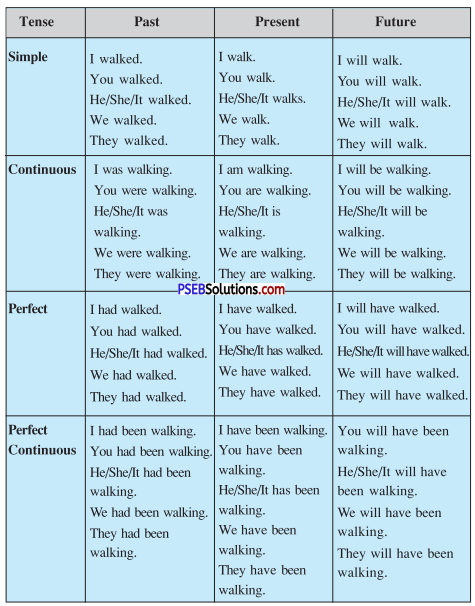
Budgeting Your Time Question Answer Class 9 English Main Course Book Chapter 3 PSEB Solutions

Punjab State Board PSEB 9th Class English Book Solutions English Main Course Book Chapter 3 Budgeting Your Time Textbook Exercise Questions and Answers.

Class 9th English Main Course Book Chapter 3 Budgeting Your Time Question Answers

Budgeting Your Time Class 9 Questions and Answers

Answer the following questions in brief:

Question 1.
Why is money considered so important ?
(पैसे को इतना महत्त्वपूर्ण क्यों माना जाता है ?)
Answer:
It is said that money makes the mare go. That is why money is considered important.
ऐसा कहा जाता है कि दाम बनाए काम। यही कारण है कि पैसा महत्त्वपूर्ण माना जाता है।

Question 2.
What do people believe about the power of money ?
(लोग पैसे की शक्ति के बारे में क्या विश्वास रखते हैं ?)
Answer:
They believe that the power of money is great.
उनका विश्वास है कि पैसे की शक्ति महान् होती है।

PSEB 9th Class English Main Course Book Solutions Chapter 3 Budgeting Your Time

Question 3.
Does time wait for anyone ?
(क्या समय किसी की प्रतीक्षा करता है ?)
Answer:
No, time doesn’t wait for anyone.
नहीं, समय किसी की प्रतीक्षा नहीं करता।

Question 4.
What type of precious moment should not be lost ?
(किस तरह का कीमती पल नष्ट नहीं किया जाना चाहिए ?)
Answer:
There is sometimes a moment that can make or mar person’s whole future. Such a moment is precious. It should not be lost.
कई बार ऐसा पल आता है जो किसी व्यक्ति के पूरे भविष्य को बना या मिटा सकता है। ऐसा पल कीमती होता है। इसे खोया नहीं जाना चाहिए।

Question 5.
What do we mean by saying : Art is long and time is fleeting?
(इस कहावत का क्या अर्थ होता है- कला लम्बी है और समय तेज़ी से भाग रहा है ?)
Answer:
Art here means the work that one has to do in one’s life. Man has a lot of work to do in his life. But the time with him is running out fast.
कला का यहां अर्थ है वह काम जो व्यक्ति को अपने जीवन में करना होता है। व्यक्ति को अपने जीवन में ढेरों काम करने होते हैं। किन्तु उसके पास जो समय है, वह तेज़ी से समाप्त होता जा रहा है।

Question 6.
Which is the most important time for doing something?
(कोई काम करने के लिए सबसे महत्त्वपूर्ण समय कौन सा होता है ?)
Answer:
The present is the most important time to do anything.
कोई भी काम करने के लिए वर्तमान सबसे महत्त्वपूर्ण समय होता है।

Question 7.
Why must one be punctual ?
(आदमी को समय का पाबन्द क्यों होना चाहिए ?)
Answer:
An opportunity once missed is lost for ever. Time once lost can never be regained. Therefore, one must be punctual.
एक बार हाथ से निकला अवसर सदा के लिए खो जाता है। एक बार खो गए समय को दबारा प्राप्त नहीं किया जा सकता। इसलिए व्यक्ति को समय का पाबन्द अवश्य होना चाहिए।

PSEB 9th Class English Main Course Book Solutions Chapter 3 Budgeting Your Time

Question 8.
Is it useful to cry over the spilt milk or blame our stars for our failures ?
(क्या बह गए दूध पर रोना अथवा अपनी असफलताओं के लिए अपने ग्रहों को दोषी ठहराना कोई लाभदायक होता है ?)
Answer:
No, it is useless to do so if we are ourselves responsible for our failure.
नहीं, ऐसा करना बेकार होता है यदि हम स्वयं ही अपनी असफलता के लिए जिम्मेदार हों।

Answer the following questions in your own words:

Question 1.
What should be the guiding principle of our life, and why?
(हमारे जीवन का मुख्य सिद्धान्त क्या होना चाहिए और क्यों ?)
Answer:
“Now or never’ should be the guiding principle of our life. Time is always fleeting. Time once lost can never be regained. Therefore, we should always act in the present. We should never put off till tomorrow what we can do today.

अभी या कभी नहीं’ यही हमारे जीवन का मुख्य सिद्धान्त होना चाहिए। समय सदा भागता चला जाता है। एक बार खोया समय दोबारा कभी हाथ नहीं आता है। इसलिए हमें सदा वर्तमान में ही क्रिया करनी चाहिए। हमें आज का काम कल पर कभी नहीं छोड़ना चाहिए।

Question 2.
Why is the budgeting of time important ?
(समय-रूपी आय-व्यय का हिसाब रखना क्यों ज़रूरी होता है ?)
Answer:
We have very limited time at our disposal. But the work we have to do is very long.Life today has become very fast. Every moment has become precious. Therefore, the budgeting of time is important.

हमारे पास समय बहुत सीमित है। किन्तु जो काम हमें करना है वह बहुत लम्बा है। आज का जीवन बहुत तेज़ हो गया है। प्रत्येक पल कीमती हो गया है। इसलिए समय का बजट बनाना महत्त्वपूर्ण हो
गया है।

Question 3.
Reproduce, in your own words, the dialogue between the Yaksha and Yudhishthira.
(यक्ष तथा युधिष्ठिर के मध्य हुए वार्तालाप को अपने शब्दों में लिखिए।)
Answer:
Yaksha was a god. He asked Yudhishthira what the best time for doing a thing was. Yudhishthira replied that Now or the Present was the most important time to do a thing.

यक्ष एक देवता था। उसने युधिष्ठिर से पूछा कि कोई काम करने के लिए सर्वोत्तम समय क्या होता है। युधिष्ठिर ने उत्तर दिया कि अब अथवा वर्तमान कोई भी काम करने के लिए सर्वोत्तम समय
होता है।

PSEB 9th Class English Main Course Book Solutions Chapter 3 Budgeting Your Time

Tick (✓) the correct choice :

Question 1.
The power of ‘Time’ is :
(a) little.
(b) nil.
(c) great.
(d) dangerous.
Answer:
(c) great.

Question 2.
Every moment is :
(a) useless.
(b) good.
(c) precious.
(d) long.
Answer:
(c) precious.

Question 3.
To get success :
(a) time should be wasted.
(b) we need not be punctual.
(c) we should budget time.
(d) we should postpone things.
Answer:
(c) we should budget time.

Textual Vocabulary & Grammar

Question 1.
Match the words in column A with their synonyms in column B :
Answer.
1. wealth = money
2. significant = important
3. wasted = squandered
4. tough = hard
5. valuable = precious
6. detrimental = harmful
7. single = lonely

Match the words in column A with their meanings in column B :

1. believe = to have faith
2. whole = complete
3. trickle = to flow in drops
4. lag = to remain behind
5. crucial = very important
6. principle = law or rule
7. pine = to feel sad or distressed
8. put off = to postpone

Fill in the blanks with the words given in the box :

mare; power; regained; tough; journey; mar; future; admission; repent; excellent

1. The patient ……………. consciousness after a few hours.
2. Success is a …………… not a destination.
3. His …………… is not secure.
4. No …………… without permission.
5. He showed an ……………. result.
6. The question paper was very …………
7. He has only one …………….. in his stable.
8. You are not aware of his ……………
9. Your bad habits will …………….. your life.
10. You should ……….. of what you have done.
Answer:
1. regained
2. journey
3. future
4. admission
5. excellent
6. tough
7. mare
8. power
9. mar
10. repent.

Change the voice in the following sentences :

1. The boy ate the mango.
2. I do not know him.
3. Your conduct surprises me.
4. This pot contains milk.
5. Your action annoyed him.
6. We should help the poor.
7. The police have arrested the thief.
8. He has finished his work.
Answer.
1. The mango was eaten by the boy.
2. He is not known to me.
3. I am surprised at your conduct.
4. Milk is contained in this pot.
5. He was annoyed at your action.
6. The poor should be helped.
7. The thief has been arrested.
8. His work has been finished by him.

PSEB 9th Class English Main Course Book Solutions Chapter 3 Budgeting Your Time

Fill in the following blanks with suitable Articles:

1. She has …………… beautiful look.
2. ……………. sun rises in ……………. east.
3. I read …………….. Tribune daily.
4. He is …………… honest person.
5. I need ………….. new uniform.
6. Haridwar is …………….. holy place.
7. Iron is …………….. useful metal.
8. It is raining; I need ……………. umbrella.
Answer:
1. a
2. The, the
3. The
4. an
5. a
6. a
7. a
8. an.

Fill in the following blanks with suitable Prepositions :

1. It is no use crying ……………. spilt milk.
2. He died …………….. cholera.
3. He looks ……………. the child in the absence of his mother.
4. They went deep …. …. the jungle.
5. John was made ……………. steel.
6. He congratulated me ………….. my success.
7. He is not aware . ……………. his shortcomings.
8. I have no faith …………….. you.
9. It is very kind ………….. you to help me.
10. Please remember me …………….. your parents.
Answer:
1. over
2. of
3. after
4. into
5. of
6. on
7. of
8. in
9. of
10 to.

Give one word for each of the following:

1. One who never dies — immortal
2. One who believes in God — theist
3. One who is present everywhere — omnipresent
4. Government by the people — democracy
5. One who makes gold ornaments — goldsmith

Pronunciation Practice

Say the following words aloud:
PSEB 9th Class English Main Course Book Solutions Chapter 3 Budgeting Your Time

Creative Writing and Extended Reading

1. Make a list of various virtues. Think and write how they are important for us.
2. How do you spend your leisure? Write in ten lines.

Objective Type Questions

Answer the following in one word / phrase / sentence :

Question 1.
Name the author of the chapter, ‘Budgeting Your Time’.
Answer:
D.V. Jindal.

Question 2.
What is generally considered the most important thing in life ?
Answer:
It is money.

Question 3.
Whose power is greater than that of money ?
Answer:
Time is definitely more powerful.

PSEB 9th Class English Main Course Book Solutions Chapter 3 Budgeting Your Time

Question 4.
What cannot be regained once it is lost ?
Answer:
It is time.

Question 5.
How can we make the best use of time ?
Answer:
By saving every second of our life.

Question 6.
Where is every passing moment taking us to ?
Answer:
To our grave.

Question 7.
What happens to those who are behind time?
Answer:
They are left behind others.

Question 8.
Should we blame the stars when we fail ?
Answer:
No, we ourselves are responsible for our actions.

Question 9.
What importance should we give to ‘Now or never’ ?
Answer:
We should make it our guiding principle.

Question 10.
What must we do with the time at our disposal ?
Answer:
We must budget it carefully.

Complete the following

1. ………………. makes the mare go.
2. Power of …………………. is greater than that of …………..
3. Time can ……………… or ………………. our whole future.
4. Every ……………….. in our life is important.
5. An opportunity ………………. is an ……………….. lost for ever.
6. In the chapter, ………………. put in a question to Yudhishthira.
Answer:
1. Money
2. time, money
3. make, mar
4. second
5. missed, opportunity
6. Yaksha.

Write True or False against each statement :

1. The famous proverb is ‘Time makes the mare go’.
2. Time is more powerful than money.
3. Lost time can be regained with a little effort.
4. A second, a very small unit of time, should be ignored.
5. The habit of punctuality helps us a lot.
6. Crying over the spilt milk is a sign of intelligence.
Answer:
1. False
2. True
3. False
4. False
5. True
6. False.

PSEB 9th Class English Main Course Book Solutions Chapter 3 Budgeting Your Time

Choose the correct option for each of the following :

Question 1.
Money makes the ……………. go.
(a) horse
(b) world
(c) mare
(d) universe.
Answer:
(c) mare

Question 2.
……… is not as important as time.
(a) Money
(b) Punctuality
(c) A mare
(d) A man.
Answer:
(a) Money

Question 3.
We should ……………… our time very carefully.
(a) budget
(b) while away
(c) waste
(d) fritter.
Answer:
(a) budget

Question 4.
……………… should be the guiding principle of our life.
(a) Budget-making
(b) Money
(c) Our possessions
(d) Punctuality.
Answer:
(d) Punctuality.

Use Of Textual Words /Phrases

1. Money makes the mare go —Saving money is very important as it makes the mare go.
2. Take time by the forelock — You must take time by the forelock if you want to reach the top.
3. Doyen — William Shakespeare is called as the doyen of English literature.
4. Tide — You must make use of this title, otherwise, you’ll repent.
5. Pine — It is no use pining now; you did not action time.
6. Make or mar — Some decisions are really important; they can make or mar our lives.
7. Squandered — John has squandered all the money left by his other.
8. Crucial — You must take your doctor’s advice seriously; it is crucial.
9. Prosperous —  She is the daughter of a prosperous bank officer.
10. Detrimental — Smoking is detrimental to health.

Budgeting Your Time Summary in English

Budgeting Your Time Introduction:

In this chapter, the writer brings out the importance of budgeting our time. We have to budget a thing if its availability is limited in relation to its expenditure. The time at our disposal is also very limited. But the work we have to do in our life is very long. Therefore, we must budget our time. We have to take notice of every moment that is passing. Present is the most important time to do a thing. Time once lost can never be regained. Therefore, we must be punctual in our life. Every moment is precious. Those who forget it, have to repent later when no remedy is possible.

Budgeting Your Time Summary in English:

Money is said to be the most important thing in life. Money makes the mare go. The power of money is great, but the power of time is still greater. Money once lost can be regained. But time once lost is lost for ever. If you do not make the best use of time, you are sure to be doomed. There come some moments in life that can make or mar a person’s whole future. We must take notice of such moments.

PSEB 9th Class English Main Course Book Solutions Chapter 3 Budgeting Your Time 1

They are very precious. One must act in time before it is too late. Those who take no notice of time, have to repent later when there is no remedy. Every second in life is important. Therefore, we must save every second and thus make the best use of time. Man’s life is very short. But he has a lot to do. Every moment is taking us nearer to the grave. Therefore, we must make the best use of our time.

We must be punctual in all our activities. Those who are behind time, are left behind in their life also. An opportunity missed once is missed for ever. It is no use crying over spilt milk. We should not blame the stars when we are ourselves responsible for our failure. Once Yaksha, a god, asked Yudhishthira, “What is the best time for doing a thing ?” Yudhishthira replied, “Now !” The work in hand is the most important work to do. And the present is the most important time to do it. “Now or Never must be the guiding principle in our life. We should never put off till tomorrow what we can do today.

PSEB 9th Class English Main Course Book Solutions Chapter 3 Budgeting Your Time

Life in the present age has become very fast. A slip of even a second can result in doom for us.. Therefore, every single second has its importance. Every moment of life is precious. Any carelessness towards the importance of time can prove very harmful to any society. Therefore, we must learn to budget our time. We can hope for a good tomorrow only if we know the value of today. Therefore we should never forget the value of NOW in our life.

Budgeting Your Time Summary in Hindi

Budgeting Your Time Introduction:

पाठ का संक्षिप्त परिचय इस लेख में लेखक अपने समय का हिसाब रखने के महत्त्व को दिखाता है। हमें ऐसी चीज़ का हिसाब रखना पड़ता है जिसकी उपलब्धि इसके खर्च के मुकाबले में सीमित हो। हमारे पास समय की उपलब्धि भी बहुत सीमित है। किन्तु वह काम जो हमें अपने जीवन में करना है बहुत लम्बा है। इसलिए हमें अपने समय का हिसाब अवश्य रखना चाहिए। हमें प्रत्येक पल को ध्यान में रखना होता है जो गुज़र रहा है। किसी काम को करने के लिए वर्तमान सब से महत्त्वपूर्ण समय होता है। एक बार खोए हुए समय को दोबारा कभी प्राप्त नहीं किया जा सकता है। इसलिए हमें अपने जीवन में समय का पाबन्द होना चाहिए। प्रत्येक पल कीमती होता है। वे जो इसे भूल जाते हैं, उन्हें बाद में पछताना पड़ता है जब कोई इलाज सम्भव नहीं होता।

Budgeting Your Time Summary in Hindi:

पैसे को जीवन में सब से महत्त्वपूर्ण चीज़ कहा जाता है। दाम बनाए काम। पैसे की ताकत बहुत होती है, किन्तु समय की ताकत उससे भी बड़ी होती है। पैसा एक बार खो जाए तो उसे दोबारा प्राप्त किया जा सकता है। किन्तु एक बार खोया हुआ समय सदा के लिए खो जाता है। यदि आप समय का सर्वोत्तम इस्तेमाल नहीं करेंगे, तो आपका निश्चित ही विनाश हो जाएगा। जीवन में कुछ ऐसे अवसर आते हैं जो किसी व्यक्ति के सम्पूर्ण भविष्य को बना या बिगाड़ सकते हैं। हमें ऐसे अवसरों का ज़रूर ध्यान रखना चाहिए।

वे बहुत कीमती होते हैं। व्यक्ति को समय रहते क्रिया करनी चाहिए इससे पहले कि बहुत देर हो जाए। वे लोग जो समय की तरफ कोई ध्यान नहीं देते, उन्हें बाद में पछताना पड़ता है जब वहां कोई इलाज नहीं रहता है। जीवन का हर पल महत्त्वपूर्ण होता है। इसलिए हमें प्रत्येक पल बचाना चाहिए और इस तरह समय का सर्वोत्तम प्रयोग करना चाहिए। मनुष्य का जीवन बहुत छोटा है। किन्तु उसे बहुत काम करना होता है। हर पल हमें हमारी कब्र के नजदीक ले जा रहा होता है। इसलिए हमें अवश्य ही अपने समय का सर्वोत्तम इस्तेमाल करना चाहिए।

हमें अपनी सभी क्रियाओं में समय का पाबन्द होना चाहिए। वे लोग जो समय के पीछे रह जाते हैं, वे अपने जीवन में भी पीछे रह जाते हैं। ऐसा अवसर जो एक बार हाथ से निकल जाता है, वह सदा के लिए निकल जाता है। दूध गिर जाने पर रोने का कोई लाभ नहीं होता। हमें अपने ग्रहों को दोष नहीं देना चाहिए जब हम स्वयं ही अपनी असफलता के लिए जिम्मेदार हों। .. एक बार यक्ष जो एक देवता था, उसने युधिष्ठिर से पूछा, “कोई काम करने के लिए सर्वोत्तम समय क्या होता है..?”

युधिष्ठिर ने कहा, “अब का समय!” हाथ में लिया काम करने को सबसे महत्त्वपूर्ण काम होता है, तथा इसे करने का सबसे महत्त्वपूर्ण समय वर्तमान का होता है। ‘अभी या कभी नहीं’-यह हमारे जीवन का मुख्य सिद्धान्त होना चाहिए। हमें आज का काम कल पर कभी नहीं छोड़ना चाहिए।

PSEB 9th Class English Main Course Book Solutions Chapter 3 Budgeting Your Time

वर्तमान युग में जीवन बहुत तेज़ गति वाला हो गया है। एक पल की भी चूक हमारे लिए प्रलयकारी हो सकती है। इसलिए प्रत्येक पल का अपना ही महत्त्व होता है। जीवन का प्रत्येक पल कीमती होता है। समय के महत्त्व के प्रति कोई भी लापरवाही किसी भी समाज के लिए बहुत हानिकारक हो सकती है। हम एक प्रसन्नतापूर्ण भविष्य की केवल तब आशा कर सकते हैं यदि हम आज के महत्त्व को जानते होंगे। इसलिए हमें अपने जीवन में ‘अब’ के महत्त्व को कभी नहीं भूलना चाहिए।

Budgeting Your Time Translation in Hindi

(Page 31) Money, they say ……………. is no remedy.

कठिन शब्दार्थ-1. age old – बहुत पुरानी ; 2. regained – दोबारा प्राप्त किया जाना ; 3. Time and tide wait for none – समय और भाग्य किसी की प्रतीक्षा नहीं करते ; 4. forelock – माथे के ऊपर के बाल ; 5. take time by the forelock – समय को हाथ से निकलने न देना ; 6. destined – भाग्य में लिखा होना ; 7. doomed – सत्यानाश होना ; 8. doyen – पितामह ; 9. tide at the flood – ज्वार, उठती हुई लहर ; 10. shallows – तट के समीप कम गहरा पानी ; 11. mar – नष्ट करना ; 12. rarely – विरले ही ; 13. pine – दुःखी होना।

Text

Money, they say, is the most important thing in life. Money makes the mare go, is an age old saying. The power of money, people believe, is great. But greater still is the power of TIME. Money once lost can be regained time once lost is lost for ever. Time and tide wait for none. If you do not make the best use of time and do not take time by the forelock, you are destined to be doomed. Shakespeare, the doyen of English literature, wrote : There is a tide in the affairs of men, Which, taken at the flood, leads on to fortune; Omitted, all the voyage of their life

Is bound in shallows and in miseries. (Shakespeare : Julius Caesar) During the tough course of the journey of life, rarely comes the time which can make or mar a person’s whole future. Such a precious moment must not be allowed to go unnoticed. One must act in time before it is too late. This can be possible only if we are alive and alert to the importance of every single second in our lives. Those who waste time and let it pass unnoticed, have to repent and pine, only बिना when there is no remedy.

अनुवाद

कहते हैं कि पैसा जीवन में सबसे महत्त्वपूर्ण चीज़ होता है। दाम बनाए काम, यह एक बहुत पुरानी कहावत है। लोग ऐसा विश्वास करते हैं कि पैसे की शक्ति बहुत होती है। किन्तु उससे भी बड़ी शक्ति समय की होती है। पैसा एक बार खो जाए तो इसे फिर से प्राप्त किया जा सकता है; समय एक बार खो जाए, तो सदा के लिए खो जाता है। समय और भाग्य किसी की प्रतीक्षा नहीं करते। यदि आप समय का सर्वोत्तम इस्तेमाल नहीं करते और समय को पूरा काबू नहीं करते, तो आपका अन्तिम भाग्य में सत्यानाश ही होगा। अंग्रेजी साहित्य के पितामह शेक्सपियर ने लिखा था मनुष्यों के जीवन में एक ज्वार-भाटा आता है। जिसे यदि इसकी चरम सीमा पर पकड़ लिया जाए तो तकदीर बन जाती है। निकल जाने दिया जाए, तो उनके जीवन-रूपी पूरी यात्रा बन्ध जाती है दलदल और दुःखों में।

(शेक्सपियर के ‘जूलियस सीज़र’ से) जीवन की यात्रा के कठिन मार्ग के दौरान विरले ही कोई ऐसा अवसर होता है जो किसी व्यक्ति के पूरे भविष्य को बना सकता है या बिगाड़ सकता है। ऐसे कीमती पल को बिना ध्यान दिए निकलने नहीं देना चाहिए। व्यक्ति को अवश्य ही समय पर क्रिया करनी चाहिए, इससे पहले कि बहुत देरी हो जाए। ऐसा केवल तभी सम्भव है यदि

हम अपने जीवन में एक-एक पल के महत्त्व के प्रति सजग और सचेत हों। ऐसे लोग जो समय को नष्ट करते हैं और इसे बिना ध्यान दिए निकल जाने देते हैं, उन्हें पछताना और दुःखी होना पड़ता है, केवल जब वहां इस का कोई इलाज नहीं रहता है।

(Page 32) ‘Every second in life ….. lives today.

कठिन शब्दार्थ-1. add up to – जमा हो कर बन जाते हैं ; 2. trickle – बूंद ; 3. mickle – एक भारी मात्रा ; 4. squandered – गंवाया जाना ; 5. drain – नाली ; 6. for nothing – व्यर्थ ही ; 7. fleeting – जल्दी से भागती हुई ; 8. traverse — पार करना, तय करना ; 9. at our disposal – हमारे अधिकार में ; 10. imperative – अत्यावश्यक ; 11. available – उपलब्ध ; 12. punctual – समय का पाबन्द ; 13. crucial — निर्णायक ; 14. globalisation – वैश्वीकरण ; 15. space travel – अन्तरिक्ष यात्रा ; 16. fraction – छोटा अंश ; 17. spell – परिणाम निकलना ; 18. disaster – घोर विपत्ति ; 19. budgeting – के प्रयोग में सावधान, बचत करना ; 20. apathy – उदासीनता ; 21. detrimental – हानिकारक ; 22. bequeathe – वसीयत में देना।

PSEB 9th Class English Main Course Book Solutions Chapter 3 Budgeting Your Time

Text
Every second in life is important. Seconds add up to minutes, hours, days and months.Many a trickle makes a mickle. Why not then save every second to make the best use of time ? If you do not do that, a lot of time is squandered down the drain for nothing. Life is short and uncertain.

‘Art is long and time is fleeting,’ said a poet. We’ve a lot to do, a long road to traverse but time at our disposal is very short. Who knows when God Almighty may send a call ? In fact, every beat of our heart is taking us a step nearer to the grave. Therefore, it is imperative that one should make the best use of the time available.

One must learn to be punctual in all one’s activities. Those who are behind time, lag behind in their life too. An opportunity missed is an opportunity lost for ever. By being late, you may miss an important train, a crucial flight, a career-making job or an admission to an excellent course. It is no use crying over spilt milk or blaming the stars when you are yourself responsible for your failure.Yaksha, a god, asked Yudhishthira :

“What is the best time for doing a thing?” The wise son of Kunti said, “Now !” The work in hand is the most important work and the PRESENT is the most important time to do it. ‘Now or Never’ must be our guiding principle in life. Never put off till tomorrow, they say, what you can do today.

In this age of globalisation, super-computers and space travel, life is moving so fast that a slip of even a fraction of a second can spell doom and disaster. Every single second has, therefore, its own importance. That is why the concept of budgeting one’s time is fast catching up. Every moment of life is precious and any careless attitude or apathy towards the importance of time can prove highly detrimental to any society. We can hope for a good tomorrow only if we know the value of today. We are duty-bound to bequea the a happy and prosperous future to the coming generations. This is possible only if we know the value of NOW in our lives today.

अनुवाद

हमारे जीवन में प्रत्येक पल महत्त्वपूर्ण होता है। सैकण्ड जुड़ कर मिनट, घण्टे, दिन और महीने बन जाते हैं। बूंद बूंद से घड़ा भर जाता है। तो फिर समय का सर्वोत्तम इस्तेमाल करने के लिए प्रत्येक पल को क्यों न बचाया जाए? यदि तुम ऐसा नहीं करोगे, तो बहुत-सा समय व्यर्थ ही नाली में बह जाएगा। जीवन छोटा है और अनिश्चित ‘काम बहुत है और समय तेज़ी से भाग रहा है,’ एक कवि ने कहा था। हमें करने को बहुत काम है, एक लम्बी सड़क पार करनी है, किन्तु हमारे पास समय बहुत कम है।

कौन जानता है कि कब सर्वशक्तिमान ईश्वर बुलावा भेज दे? वास्तव में हमारे दिल की प्रत्येक धड़कन हमें एक कदम हमारी कब्र के और नज़दीक ले जा रही है। इसलिए यह अत्यावश्यक है कि व्यक्ति उपलब्ध समय का सर्वोत्तम इस्तेमाल करे। व्यक्ति को अपनी सभी क्रियाओं में समय का पाबन्द होना सीखना चाहिए। वे लोग जो समय से पीछे रह जाते | हैं, वे अपने जीवन में भी पीछे रह जाते हैं। एक बार खोया हुआ अवसर सदा के लिए खोया जाता है। देरी हो जाने से आप किसी महत्त्वपूर्ण गाड़ी, किसी निर्णायक उड़ान, किसी जीवन बना देने वाली नौकरी अथवा किसी शानदार

कोर्स में दाखिले के अवसर से चूक सकते हैं। चिड़ियों द्वारा खेत चुग लिए जाने पर रोने का अथवा ग्रहों को दोष देने का कोई लाभ नहीं होता यदि आप अपनी असफलता के लिए स्वयं ही ज़िम्मेदार हैं। यक्ष जो एक देवता था, उसने युधिष्ठिर से पूछा, “कोई काम करने के लिए सर्वोत्तम समय कौन-सा होता है?” कुन्ती के बुद्धिमान पुत्र ने कहा, “अब का समय!” जो काम हाथ में हो, वह सबसे महत्त्वपूर्ण काम होता है, तथा वर्तमान का समय इसे करने के लिए सब से महत्त्वपूर्ण समय होता है।

अभी या कभी नहीं’-हमारे जीवन का मुख्य सिद्धान्त होना चाहिए। कहते हैं कि आज का काम कल पर कभी नहीं छोड़ना चाहिए। वैश्वीकरण, सुपर-कम्प्यूटरों और अन्तरिक्ष-यात्रा के इस युग में जीवन इतनी तेज़ गति से चल रहा है कि एक सैकण्ड का कुछ अंश भी हाथ से निकल जाने पर सर्वनाश अथवा महा-विपत्ति आ सकती है। इसलिए एक-एक सैकण्ड का अपना ही महत्त्व होता है। इसी कारण अपने समय का बजट बनाने सम्बन्धी विचार ज़ोर पकड़ता जा रहा है।

PSEB 9th Class English Main Course Book Solutions Chapter 3 Budgeting Your Time

जीवन का प्रत्येक पल कीमती है तथा समय के महत्त्व के प्रति कोई भी लापरवाही वाला व्यवहार अथवा उदासीनता किसी भी समाज के लिए बहुत हानिकारक ह सकता है। हम एक अच्छे कल की केवल तब आशा कर सकते हैं यदि हमें आज के मूल्य का ज्ञान हो। हम कर्तव्य बद्ध हैं कि आने वाली पीढ़ियों के लिए एक प्रसन्नतापूर्ण और प्रगतिशील भविष्य छोड़ कर जाएं। ऐसा केवल तब सम्भव है यदि हम आज के अपने जीवनों में वर्तमान के महत्त्व को पहचानें।

English Main Course Book Class 9 Solutions PSEB Prose