PSEB 9th Class SST Solutions Civics Chapter 4 India’s Parliamentary Democracy

Punjab State Board PSEB 9th Class Social Science Book Solutions Civics Chapter 4 India’s Parliamentary Democracy Textbook Exercise Questions and Answers.

PSEB Solutions for Class 9 Social Science Civics Chapter 4 India’s Parliamentary Democracy

SST Guide for Class 9 PSEB India’s Parliamentary Democracy Textbook Questions and Answers

I. Fill in the blanks :

Question 1.
_________ appoints the judges of the Supreme Court.
Answer:
The President.

Question 2.
The President of India exercises all his powers only on the advice of _________
Answer:
Prime Minister and his Council of Ministers.

II. Multiple Choice Questions :

Question 1.
Which is the final authority for making laws in India?
(i) The Cabinet
(ii) The Parliament
(iii) The Lok Sabha
(iv) The President.
Answer:
(ii) The Parliament.

Question 2.
Who chairs the cabinet meetings?
(i) The President
(ii) The Governor
(iii) The Prime Minister
(iv) The Party President.
Answer:
(iii) The Prime Minister

III. Write T (for True) and F (for False) statements :

Question 1.
The Prime Minister is the Constitutional Head of our country.
Answer:
False.

PSEB 9th Class SST Solutions Civics Chapter 4 India’s Parliamentary Democracy

Question 2.
Indian Parliament comprises the Lok Sabha, the Rajya Sabha and the President of India.
Answer:
True.

IV. Very Short Answer Type Questions

Question 1.
In India which form of the government has been adopted in centre and states?
Answer:
In India parliamentary form of government has been adopted at central and state level.

Question 2.
In parliamentary system, who is the real executive of the country?
Answer:
Prime Minister and his Council of Ministers.

Question 3.
Who is nominal executive in India?
Answer:
The President is the nominal executive in India.

Question 4.
Who is included in the electoral college for the Indian President?
Answer:
The elected members of Lok Sabha, Rajya Sabha (M.P.’s) and State Legislative Assemblies (including Delhi and Puducherry.)

PSEB 9th Class SST Solutions Civics Chapter 4 India’s Parliamentary Democracy

Question 5.
Name any two features of the Parliamentary system.
Answer:

  1. In the Parliamentary system, there is a nominal head of the country.
  2. After elections whichever party gets clear cut majority in Parliament (Lok Sabha) forms the government.

Question 6.
What is called the lower house of the Parliament?
Answer:
Lok Sabha is called the lower house of the Parliament.

Question 7.
How many members can be nominated by the President in the Rajya Sabha?
Answer:
12 members are nominated by the President to the Rajya Sabha.

Question 8.
What is the tenure of the members of the Rajya Sabha?
Answer:
Rajya Sabha members are elected for six years but one third retire after every two years.

Question 9.
What is the name of the Head of the State in Canada and Australia?
Answer:
Governor General is the Head of State in Canada and Australia.

Question 10.
Who makes an oath to the Prime Minister and other ministers?
Answer:
The President makes an oath to the Prime Minister and other ministers.

Question 11.
Who presides over the meetings of the cabinet?
Answer:
Prime Minister presides over the meetings of the cabinet.

Question 12.
Give the names of two forms of Govt; on the basis of relationship between executive and legislative.
Answer:

  1. Parliamentary Govt.: In this Council of Ministers is responsible to Legislature for its actions.
  2. Presidential form of Govt.: In this executive cannot be removed by Legislature.

Question 13.
From which country Parliamentary system in India has been taken?
Answer:
Parliamentary form of Government is taken from the Constitution of England.

PSEB 9th Class SST Solutions Civics Chapter 4 India’s Parliamentary Democracy

Question 14.
What is the name of the lower and upper house of Parliament in England?
Answer:

  • Lower House-House of Commons.
  • Upper House-House of Lords.

V. Short Answer Type Questions

Question 1.
How is the Prime Minister elected?
Answer:
After the general elections of Lok Sabha whichever party or group gets majority, elects its leader who is called by the President to form the government. The President appoints him the Prime Minister and on his advice he also appoints the Council of Ministers.

Question 2.
What is the meaning of the collective responsibility of the ministers?
Answer:

  1. The council of ministers is responsible towards the Parliament or legislature. It means that it does not matter whether any minister is happy with the decision of council of ministers or not, he is required to support the decision in the Parliament.
  2. If the Parliament (Lok Sabha) passes no-confidence motion against any minister, it is considered no confidence against the whole council of ministers. In this case Prime Minister and his council of ministers are bound to resign.
  3. Members of parliament can ask ministers any question regarding their departments.

Question 3.
How does the legislature control over the activity of ministers?
Answer:

  1. The council of ministers is responsible towards the Parliament or legislature. It means that it does not matter whether any minister is happy with the decision of council of ministers or not, he is required to support the decision in the Parliament.
  2. If the Parliament (Lok Sabha) passes no-confidence motion against any minister, it is considered no confidence against the whole council of ministers. In this case Prime Minister and his council of ministers are bound to resign.
  3. Members of parliament can ask ministers any question regarding their departments.

PSEB 9th Class SST Solutions Civics Chapter 4 India’s Parliamentary Democracy

Question 4.
Explain briefly any three duties of the Prime Minister.
Answer:

  1. Prime Minister creates the Council of Ministers.
  2. He distributes different portfolios to different ministers.
  3. He acts as a link between the President and Council of Ministers.
  4. He can advise the President to dissolve the Lok Sabha even before the completion of his term.
  5. He presides over the meetings of Council of Ministers.

Question 5.
Write a short note on the structure of the parliament.
Answer:
The two Houses of the Parliaments are :

  1. Lok Sabha and
  2. Rajya Sabha.

Term of the Lok Sabha: The Lok Sabha is elected for 5 years. But the President can dissolve it earlier too. During emergency due to external aggression or internal insurrection its term can be extended.

Term of the Rajya Sabha: Rajya Sabha is a permanent house. But after every two years one third (l/3rd) of its members retire and new ones are elected in their place. Thus every member is elected for a term of six years.

Question 6.
How are the members of the Rajya Sabha elected?
Answer:
The maximum strength of the Rajya Sabha can be 250. Out of these 12 members are nominated by the President. The remaining 238 members represent the States and Union Territories. The representatives of the States are elected by the elected members of their Legislative Assemblies and in case of Union Territories are chosen in such a manner as the Parliament may by law determine. At present Rajya Sabha consists of 245 members.

Question 7.
Describe any four powers of the President.
Answer:

  1. The President can Summon, prorogue the Parliament and dissolve the Lok Sabha.
  2. He can address the two Houses of the Parliament jointly or he may address them independently.
  3. He nominates 12 members to the Rajya Sabha and two members to the Lok Sabha.
  4. No bill passed by the Parliament can become an Act without the assent of the President.
  5. He gives approval to many bills passed by the State Legislatures.

Question 8.
Write a note on the structure of the council of ministers.
Answer:
Article 75 of the Constitution says that the President shall appoint the Prime Minister and on his advice, he shall also appoint the Council of Ministers. But he cannot appoint any of the minister of his own. It is the discretionary power of the Prime Minister as to whom he wants to get appointed as minister.

There are three types of ministers.

  1. Cabinet Ministers. They are the most trustworthy ministers and are given independent charge of an important portfolio.
  2. Minister of State. They may or may not be given independent charge of any portfolio or can be asked to assist any cabinet minister.
  3. Deputy Minister. They are not given any independent charge but are asked either to assist any cabinet minister or minister of state.

VI. Long Answer Type Questions

Question 1.
Write a brief note on the structure of Rajya Sabha.
Answer:
The maximum strength of the Rajya Sabha can be 250. Out of these 12 members are nominated by the President. The remaining 238 members represent the States and Union Territories. The representatives of the States are elected by the elected members of their Legislative Assemblies and in case of Union Territories are chosen in such a manner as the Parliament may by law determine. At present Rajya Sabha consists of 245 members.

PSEB 9th Class SST Solutions Civics Chapter 4 India’s Parliamentary Democracy

Question 2.
Write a brief note on the leadership of Prime Minister in the Parliamentry system.
Answer:
As a leader the Prime Minister has following powers :
(a) Leader of the Cabinet. The Prime Minister is the leader of the Cabinet.

(b) Powers regarding Appointment. He exercises very vast powers of patronage which are the following :

  • Appointment of Ministers.
  • Appointment of Ambassadors.
  • Appointment of Governors.
  • Appointment of Attorney General.
  • Appointment of C.A.G.
  • Appointment of various Commissions and Committees.

(c) Powers regarding the Parliament. He has many important powers by which he controls the Parliament :

  • To recommend to the President about summoning and proroguing of the Parliament.
  • To advise the President to dissolve Lok Sabha.
  • To issue ordinances and propose Legislation.
  • To make details of skeleton Laws made by the Parliament.
  • To act as a Leader of the Parliament.

(d) Powers regarding the Party. The Prime Minister is the leader of the majority party. He guides the policy formulation of his party.

Pt. Nehru combined in himself the powers of a party chief and the leader of the majority party.

  • He is the leader of his party.
  • He popularises his party among the masses.
  • He cares that the opposition does not have any complaint against him.

(e) Powers as an Advisor. The Prime Minister exercises a good deal of advisory powers :

  • He is the Chief Advisor of the President.
  • He exercises practically all the powers of the President.
  • He serves as a link between the President and the Council of Ministers.

Question 3.
Explain in brief qualifications, election and tenure for the President of India.
Answer:
Election. The President is elected indirectly by an electoral college. Elected members of both the Houses of Parliament and elected members of Legislative Assemblies of States (including Delhi and Puducherry) constitute the Electoral College. The voting is held on the basis of proportional representation by the single transferable vote system.

Qualifications :

  • He should be a citizen of India.
  • He must have completed the age of 35 years.
  • He must be qualified to be elected as member of the Lok Sabha.
  • He must not hold any office of profit under the Government of India or any State Government or local authosrity.

Tenure: The President is elected for a period of five years. The President can be removed from office by impeachment only. He can be impeached for violation of the Constitution. The impeachment charge may be initiated by either House of Parliament. If a resolution is passed by a two-third majority of the total membership of the House then the resolution is sent to the other House. If the other House also passes the resolution by a two-third majority then the President is removed from his office.

PSEB 9th Class SST Solutions Civics Chapter 4 India’s Parliamentary Democracy

Question 4.
What do you mean by the collective and individual responsibility of the Council of Ministers?
Answer:
Collective Responsibility-Article 75 (3) of the Indian Constitution clearly says that the council of ministers is collectively responsible towards Lok Sabha. Council of Ministers can remain on their post till they have majority in Lok Sabha or they have confidence of Lok Sabha. If the majority of Lok Sabha votes against them, they all collectively will have to resign. Council of Ministers acts as a unit and if no confidence motion is passed against any minister, they all will have to resign. It has been said that the “Council of Ministers swim and sink together.”

Individual Responsibility. If all the ministers are collectively responsible then they also have some individual responsibilities. All the ministers are individually responsible for their departments. If any department is unable to function in a better way, Prime Minister can ask for the resignation of the concerned minister. If he refuses to resign, Prime Minister can get him removed by the President.

PSEB 9th Class Social Science Guide India’s Parliamentary Democracy Important Questions and Answers

Multiple Choice Questions :

Question 1.
Indian Parliament consists of _________
(a) 1
(b) 2.
(c) 3
(d) 4
Answer:
(b) 2.

Question 2.
Upper House of the Parliament is known as
(a) Rajya Sabha
(b) Lok Sabha
(c) Vidhan Sabha
(d) Vidhan Parishad.
Answer:
(a) Rajya Sabha.

Question 3.
Lower House of the Parliament is known as
(a) Rajya Sabha
(b) Vidhan Sabha
(c) Lok Sabha
(d) Vidhan Parishad.
Answer:
(c) Lok Sabha.

Question 4.
Who is the President of India?
(a) Narendra Modi
(b) Pranav Mukherjee
(c) Pratibha Patil
(d) Ramnath Kovind.
Answer:
(d) Ramnath Kovind.

Question 5.
Who is the Prime Minister of India?
(a) Narendra Modi
(b) Manmohan Singh
(c) Rahul Gandhi
(d) Pranav Mukherjee.
Answer:
(a) Narendra Modi.

Question 6.
Who appoints the Prime Minister of India?
(a) President
(b) Speaker
(c) Governor
(d) Vice President.
Answer:
(a) President.

PSEB 9th Class SST Solutions Civics Chapter 4 India’s Parliamentary Democracy

Question 7.
Who was elected as the speaker of 17th Lok Sabha in 2019?
(a) Om Birla
(b) Hamid Ansari
(c) Sonia Gandhi
(d) P. Thambi Durai.
Answer:
(a) Om Birla.

Question 8.
Who appoints the judges of the Supreme Court?
(a) Prime Minister
(b) Speaker
(c) President
(d) Vice President.
Answer:
(c) President.

Question 9.
Who protects the fundamental rights of the citizens?
(a) President
(b) Supreme Court
(c) Speaker
(d) Prime Minister.
Answer:
(b) Supreme Court.

Fill in the Blanks :

Question 1.
In India _________ is known as the Head of country.
Answer:
President

Question 2.
After the elections of Lok Sabha in 2014, _________ formed the government.
Answer:
Narendra Modi

Question 3.
In India real powers are in the hands of _________
Answer:
Prime Minister

Question 4.
Lok Sabha, Rajya Sabha and _________ are included in Parliament.
Answer:
President

Question 5.
Lok Sabha can have maximum _________ members.
Answer:
552

PSEB 9th Class SST Solutions Civics Chapter 4 India’s Parliamentary Democracy

Question 6.
Rajya Sabha can have maximum _________ members.
Answer:
250

Question 7.
The President can appoint 2 members of,_________ community to Lok Sabha.
Answer:
Anglo-Indian

Question 8.
The age of _________ years is required to become the President of India.
Answer:
35.

True/False:

Question 1.
There is presidential form of govt, in India.
Answer:
False

Question 2.
After the passing of No Confidence Motion, government needs to resign.
Answer:
True

Question 3.
It is not compulsory to be a member of parliament to become a minister.
Answer:
False

Question 4.
Lok Sabha is just like house of commons in England.
Answer:
True

PSEB 9th Class SST Solutions Civics Chapter 4 India’s Parliamentary Democracy

Question 5.
The President can nominate 12 members to Rajya Sabha.
Answer:
True

Question 6.
Head of Lok Sabha is known as the Speaker.
Answer:
True

Question 7.
For ordinary bill, prior permission of the President is required.
Answer:
False.

Very Short Answer Type Questions

Question 1.
Name the two Houses of Parliament.
Answer:
Lower House is called Lok Sabha and Upper House is called Rajya Sabha.

Question 2.
What constitutes the Indian Parliament?
Answer:
The President,, Lok Sabha and Rajya Sabha.

Question 3.
Who is represented by Rajya Sabha?
Answer:
Rajya Sabha respresents the States.

Question 4.
What is the maximum strength of Rajya Sabha? What is the present strength of Rajya Sabha?
Answer:
Rajya Sabha can have maximum of 250 members. Presently it has 245 members.

Question 5.
How many members can the President nominate to Rajya Sabha?
Answer:
The President an nominate 12 members Cb Rajya Sabha.

Question 6.
What is the tenure of Rajya Sabha members?
Answer:
6 years but one third members retire after every two years.

PSEB 9th Class SST Solutions Civics Chapter 4 India’s Parliamentary Democracy

Question 7.
Who is the presiding officer of Rajya Sabha?
Answer:
The Vice President is ex-officio chairman of Rajya Sabha.

Question 8.
Who calls the session of Lok Sabha?
Answer:
The President calls the session of Lok Sabha.

Question 9.
Which house of the parliament is more powerful?
Answer:
Lok Sabha.

Question 10.
In which house can an ordinary bill be first introduced?
Answer:
An ordinary bill can be introduced in any of the house.

Question 11.
In which house can a money bill be first introduced?
Answer:
Lok Sabha.

Question 12.
Who is the presiding officer of Lok Sabha?
Answer:
Speaker is the presiding officer of Lok Sabha.

Question 13.
What is the term of Lok Sabha?
Answer:
The members of Lok Sabha are elected for a tenure of 5 years.

Question 14.
Give one power of the parliament.
Answer:
The parliament makes laws for the country.

Question 15.
What is the maximum strength of Lok Sabha? What is its present strength?
Answer:
Lok Sabha can have a maximum strength of 552. Presently it is 545.

Question 16.
Give one function of the presiding officer of Rajya Sabha.
Answer:
He presides over the meetings of Rajya Sabha.

PSEB 9th Class SST Solutions Civics Chapter 4 India’s Parliamentary Democracy

Question 17.
Give a restriction on the supremacy of Parliament.
Answer:
Indian Constitution is written which restricts the supremacy of the Parliament.

Question 18.
Under which conditions, a joint session of Parliament is called?
Answer:
To resolve a dispute between both the houses, a joint session can be called. Question 19. Give one qualification to become the member of Rajya Sabha. Answer:The person must have minimum age of 30 years.

Question 20.
Give one special power of Rajya Sabha.
Answer:
It can declare a subject of state list as of national importance and can authorise the parliament to make laws on the subject.

Question 21.
Give one qualification to become the member of Lok Sabha.
Answer:
The person must have the age of 25 years.

Question 22.
Is Rajya Sabha a nominal house? Give one reason in its favour.
Answer:
Rajya Sabha is not given any power concerning money.

Question 23.
What is the difference between the elections of Lok Sabha and Rajya Sabha?
Answer:
Members of Lok Sabha are directly elected whereas the members of Rajya Sabha are indirectly elected.

Question 24.
Give one equal power of Lok Sabha and Rajya Sabha.
Answer:
For the passing of an ordinary bill, both the houses have equal power.

Question 25.
Give one special power of Lok Sabha.
Answer:
Bypassing no-confidence motion, Lok Sabha can remove the government.

PSEB 9th Class SST Solutions Civics Chapter 4 India’s Parliamentary Democracy

Question 26.
Give one function of the Speaker of Lok Sabha.
Answer:
He regulates the proceedings of the housfe

Question 27.
How is the Speaker of Lok Sabha elected?
Answer:
He is elected by the members within themselves.

Question 28.
Who was elected as the Speaker of 16th Lok Sabha in 2014?
Answer:
Sumitra Mahajan.

Question 29.
Give one difference between money bill and an ordinary bill.
Answer:
An ordinary bill can be introduced in any of the house but money bill can only be introduced in Lok Sabha.

Question 30.
What is meant by collective responsibility?
Answer:
It means that ministers are collectively responsible towards parliament. If no confidence motion passes against one minister, whole of the council of ministers need to resign.

Question 31.
Which government system is adopted in India?
Answer:
India has adopted parliamentary form of government.

Question 32.
How can the Parliament remove the Council of Ministers?
Answer:
By passing no confidence motion in Lok Sabha.

Question 33.
Who can dissolve Lok Sabha?
Answer:
The President can dissolve Lok Sabha on the advice of Prime Minister.

Question 34.
Who decides whether a bill is a money bill or an ordinary bill?
Answer:
The Speaker of Lok Sabha.

Question 35.
Who are included in the central executive?
Answer:
In the central executive, the President, Vice President, Prime Minister and his Council of Ministers are included.

Question 36.
Who elects the President of India?
Answer:
The President is elected by an electoral college.

PSEB 9th Class SST Solutions Civics Chapter 4 India’s Parliamentary Democracy

Question 37.
Who are included in the electoral college?
Answer:
The elected members of parliament (Lok Sabha and Rajya Sabha) and the elected members of state legislative assemblies (including Delhi and Puducherry).

Question 38.
What is the tenure of President? Can he be elected again?
Answer:
The tenure of President is 5 years and he can be re-elected.

Question 39.
Name the first and present President of India.
Answer:
The first President of India was Dr. Rajendra Prasad and the present President of India is Ramnath Kovind.

Question 40.
Who appoints the Prime Minister of India?
Answer:
The Prime Minister of India is appointed by the President.

Question 41.
Who appoints the minister?
Answer:
The ministers are appointed by the President on the advice of Prime Minister.

Question 42.
What is the tenure of Prime Minister?
Answer:
Prime Minister does not have a definite tenure. His tenure depends upon the majority of Lok Sabha.

Question 43.
What is the salary of the President of India?
Answer:
The Indian President gets ₹ 5 lac per month.

PSEB 9th Class SST Solutions Civics Chapter 4 India’s Parliamentary Democracy

Question 44.
When can the President declare national emergency?
Answer:
The President can declare national emergency in case of war, foreign attack or an armed rebellion.

Question 45.
How many types of emergencies are there?
Answer:
Emergency is of three types.

Question 46.
When can the President issue an ordinance?
Answer:
In case of recess of the Parliament the President can issue an ordinance. Question 47. How many members can the President nominate to Lok Sabha? Answer:The President can nominate two Anglo Indian members to Lok Sabha.

Question 48.
Give one executive power of the President.
Answer:
He appoints the leader of majority party as the Prime Minister of’India.

Question 49.
Give one legislative power of the President.
Answer:
He signs the bills passed by the parliament.

Question 50.
Give one financial power of the President.
Answer:
He gives prior sanction to the money bill before its introduction to Lok Sabha.

Question 51.
Give one feature of the council of ministers.
Answer:
There is a great relation between parliament and the council of ministers.

PSEB 9th Class SST Solutions Civics Chapter 4 India’s Parliamentary Democracy

Question 52.
Give one function of the central council of ministers.
Answer:
It makes internal and external policy of India.

Short Answer Type Questions

Question 1.
Explain the membership of Lok Sabha and Rajya Sabha.
Answer:
The maximum membership of Lok Sabha is 552 but presently it is 545. Out of these 545, 543 are the directly elected members and 2 are nominated by the President from Anglo-Indian Community. The maximum strength of Rajya Sabha is 250 but presently it is 245. Out of 245 members. 233 are elected by the state legislative assemblies and 12 are nominated by the President.

Question 2.
Give any three functions of the chairman of Rajya Sabha.
Answer:

  1. He presides over the meetings of Rajya Sabha.
  2. He is responsible to maintain peace in the house and also to carry on its smooth functioning.
  3. He permits the members to speak in the Rajya Sabha.

Question 3.
What is the difference between the elections of Lok Sabha and Rajya Sabha?
Answer:
The members of Lok Sabha are directly elected by the people and every citizen with the age of 18 years or more have the right to vote. One candidate is elected from a parliamentary constituency and whosoever gets maximum votes is declared as the winner. The members of Rajya Sabha are elected by the elected members of state legislative assemblies. In this way, the members of Rajya Sabha are indirectly elected.

Question 4.
Give three powers of Lok Sabha.
Answer:

  1. By passing no confidence motion, it can remove the government.
  2. Money Bill can only be introduced in Lok Sabha.
  3. In case of any deadlock between both the houses on any ordinary bill, a joint session of parliament is called in which Lok Sabha’s will prevails due to its more numerical strength.

Question 5.
What are the qualifications of the members of Lok Sabha?
Answer:

  1. He must b§ a citizen of India.
  2. He must have completed 25 years of ago.
  3. He must not hold any office of profit under the Government of India or the Government of any State.
  4. He must possess such other qualifications as may he prescribed by the parliament.
  5. No person can be a member of both Houses of Parliament.

Question 6.
What are the qualifications required for the membership of Rajya Sabha?
Answer:

  • He must be a citizen of India.
  • He must have completed 30 years of ago.
  • He must possess such other qualifications as are prescribed by the Parliament.
  • He should not hold any office of profit under the government of India or any State government.

Question 7.
Write a note on the Speaker.
Answer:
The Speaker is the presiding officer of the Lok Sabha. He is elected by the members of the Lok Sabha from among themselves. The Speaker presides over the meetings of the House ; maintains order in the House and conducts the business of the House in accordance with the rules of the House. The Constitution also provides for the office of the Deputy Speaker.

PSEB 9th Class SST Solutions Civics Chapter 4 India’s Parliamentary Democracy

Question 8.
What do you understand by the supremacy of the Parliament?
Answer:
The meaning of the supermacy of the Parliament is that the ultimate authority of making laws in the country lies in the hands of the Parliament. The bill passed by the Parliament is signed by the President. It makes laws on the subjects of union list, concurrent list, residuary powers and in case of emergency from the state list as well. It takes part in the process of election of the President and Vice President. It can request the President to remove any judge of the Supreme Court and the High Courts. It keeps control over the income and expenditure of the government. It can amend the Constitution. Except this, it keeps control over the government through different methods. So, it is clear that the Parliament is supreme in the country.

Question 9.
What is meant by Parliament? Name its houses and their tenure.
Answer:
The central legislature is known as parliament. It has two houses Lok Sabha and Rajya Sabha. It is the institution which make laws on the subjects of national importance. Laws made by the parliament are implemented in whole of the country.

  • Tenure of Lok Sabha. Lok Sabha is elected for five years but it can be dissolved by the President (on the advise of P.M.) even before the completion of its term. During emergency, its tenure can be increased.
  • Tenure of Rajya Sabha. Rajya Sabha is a permanent house which cannot be dissolved in any case. Its members are elected for six years but one third of the total members retire after every two years.

Question 10.
What is meant by No-confidence Motion?
Answer:
No-confidence means that the leader of the House has lost the confidence of the majority of members and is no longer wanted to lead the party and the government. The no-confidence motion is a formal resolution tabled in the houses to see whether the leader enjoys the confidence of the members of the house. If the motion is passed the leader resigns and is replaced by the new incumbent.

Question 11.
Explain the election process of the members of Lok Sabha.
Answer:
Lok Sabha is the lower house of the Indian Parliament. Its member are directly elected by the people. Every Indian citizen with the age of 18 years or more has the right to vote during Lok Sabha election. Few seats in Lok Sabha are reserved for scheduled castes and scheduled tribes. If the President feels that the Anglo Indian community is not represented in Lok Sabha, he can nominate 2 Anglo Indians to Lok Sabha.

Members of Lok Sabha are elected on the basis of population. For the purpose of elections, whole of the country is divided into equal parts. That’s why larger states send more members to Lok Sabha.

Question 12.
Give financial powers of Lok Sabha.
Answer:

  • Budget and money bill can only be introduced in Lok Sabha.
  • Rajya Sabha can delay a money bill maximum upto 14 days or it will be considered automatically passed.
  • Money of the country is kept under the control of the Lok Sabha.

Question 13.
Give three powers of Rajya Sabha.
Answer:
Under the Constitution, the Rajya Sabha has been vested with two special and exclusive powers.

They are :

  1. Under Article 249 the Rajya Sabha may declare by resolution, passed by two-third majority of its members present and voting, that it is necessary or expedient in the national interest that Parliament should make laws with respect to any matter enumerated in the State List.
  2. Rajya Sabha is competent to create one or more All India Services if it passes a resolution by two-thirds majority.
  3. Rajya Sabha alone can initiate the proposal for removing the Vice-President.

PSEB 9th Class SST Solutions Civics Chapter 4 India’s Parliamentary Democracy

Question 14.
How is the Indian President elected?
Answer:
The President is elected indirectly by an electoral college. Elected members of both the houses of Parliament and elected members of Legislative Assemblies of States constitute the Electoral College. The voting is held on the basis of proportional representation by the single transferable vote system.

Question 15.
The President is the nominal head of the state. How?
Answer:
Whole of the administration runs on the name of the President but he is the nominal head of the country. There is parliamentary form of government in India where the President is given enormous powers but he cannot use them of his own. He can use these powers on the advice of Prime Minister and his Council of Ministers. Actual powers are in the hands of Council of Ministers. The President is the constitutional but nominal head of the country.

Question 16.
Write down the legislative powers of the President.
Answer:

  • The President can convene, prorogue and dissolve the parliament.
  • He can address the two Houses of the parliament jointly or he may address them independently.
  • He nominates 12 persons to the Rajya Sabha and two persons to the Lok Sabha.
  • No bill passed by the Parliament can become an act without the assent of the President.

Question 17.
Can the President become a dictator?
Answer:
The President cannot become a dictator. Even during the times of emergency, he cannot become a dictator. Its major reason is that the parliamentary system of government is adopted in India in which he is the nominal head. Actually his powers are used by the Prime minister and his council of ministers. If he tries to work according to his wish, he can be removed through £he process of impeachment. He can declare emergency only on the written advice of the cabinet. Parliament can remove emergency only by passing a resolution with simple majority.

Question 18.
Whom does the President appoint as the Prime Minister?
Answer:
The President appoints the Prime Minister. He invites the leader of the majority party in the Lok Sabha and appoints him the Prime Minister. If no single party has a majority, many parties may form a coalition to make a majority and elect a leader. Then the leader of the coalition will be appointed as the Prime Minister.

Question 19.
Mention any two functions of the Prime Minister.
Answer:
1. Formation of the Council of Ministers. First and important function of the Prime Minister is the formation of the Council of Ministers. He prepares the list of the ministers according to his sweet will. Nobody can be appointed a minister against the wishes of the Prime Minister.

2. Distribution of Portfolios. Another major function of the Prime Minister is to distribute portfolios among the ministers. He decides what department is to be allotted to a particular Minister.

PSEB 9th Class SST Solutions Civics Chapter 4 India’s Parliamentary Democracy

Question 20.
Why it is said that the Prime Minister is at the head of the Council of Ministers?
Answer:
The Prime Minister is at the head of the Council of Ministers because the Council of Ministers has no existence without the Prime Minister. He can make or unmake the Council of Ministers. The resignation or death of the Prime Minister leads to the dissolution of the Council of Ministers.

Question 21.
What is the relationship between the President and the Prime Minister in our country?
Answer:
India has Parliamentary form of government. Therefore, the Prime Minister enjoys a better position than the President. The President is the head of Executive but all of his powers are exercised by the Prime Minister. According to 42nd Amendment it has become binding on the President to accept the Prime Minister’s advice. The Prime Minister submits his list of Ministers to the President and the President appoints them. The Prime Minister keeps the President informed of the proceedings of the cabinet. Thus, he serves as a link between the President and the Cabinet.

Question 22.
Discuss about the types of Ministers.
Answer:
There are three types of ministers.

  1. Cabinet Ministers. They are the most trustworthy ministers and are given independent charge of an important portfolio.
  2. Minister of State. They may or may not be given independent charge of any portfolio or can be asked to assist any cabinet minister.
  3. Deputy Minister. They are not given any independent charge but are asked either to assist any cabinet minister or minister of state.

Question 23.
Give any three functions of the cabinet.
Answer:
Following are the functions of the cabinet :

  1. Making national policy: The most important function of the cabinet is to make internal policy and to formulate the policy of public welfare.
  2. Regulating foreign relations: Cabinet forms the foreign policy and regulates the relations with other countries.
  3. Control over administration: Every department is under the control of a minister and the concerned minister tries to run the administration in a proper way.

Question 24.
Give three features of the Indian cabinet.
Answer:
Following are the features of the Indian cabinet :

  1. Nominal head. The President is the nominal head. Whole of the country’s administration is run on the name of the President but actually, it is run by the cabinet.
  2. Relation between executive and legislature. In parliamentary form of government, council of ministers is the executive and it has close relations with the legislature.
  3. Prime Minister Leader. Indian cabinet works under the guidance of the Prime Minister. Every minister has to accept the order of the Prime Minister or he can be removed.

Question 25.
Can the Prime Minister become a dictator?
Answer:
The Prime Minister cannot become a dictator because :

  1. He is responsible towards the Parliament which can remove him if he tries to do so.
  2. Parliament (Lok Sabha) can remove him by passing a no-confidence motion.
  3. He cannot work against the public opinion.
  4. He is required to care about the opposition party.

Question 26.
Discuss the mutual relations between the Prime Minister and the Council of Ministers.
Answer:
The Prime Minister is the leader of the majority party in Lok Sabha. He gets the Council of Ministers appointed by the President and distributes them different portfolios. He presides over the meetings of the council of Ministers. If any minister does not work according to the Prime Minister, he can be asked to resign. If any minister refuses to resign, he can dissolve whole of the Council of Ministers and can create it again sans that minister.

Question 27.
Give judicial powers of the President.
Answer:

  1. The President appoints the Chief Justice and other judges of the Supreme Court and High Courts.
  2. The President has the powers to grant pardon or reduce the sentence awarded to a criminal.
  3. The President has the power to reprieve (temporarily suspend) the sentence.

Long Answer Type Questions

Question 1.
Describe the powers of the Union Parliament.
Answer:
Following are the main powers of the Union Parliament :

  1. Legislative Powers. The Parliament can frame laws on the subjects mentioned in the Union List and Concurrent List. Under certain special circumstances the Parliament gets the right to frame laws on the subjects mentioned in the State List.
  2. Financial Powers. The Parliament controls the finances of the country. The budget is passed by the Parliament.
  3. Executive Power’s. The Prime Minister and the Council of Ministers are responsible to the Parliament for their actions and policies. The Parliament has the power to remove the Council of Ministers by passing a vote of no-confidence.
  4. Judicial Powers. The Parliament can remove the President from office through impeachment. The Parliament can remove the judges of the High Courts and Supreme Court by passing a resolution to that effect.
  5. Electoral Powers. The elected members of Parliament participate in the election of the President. The Vice President is elected by the members of both the Houses of Parliament.
  6. Amendment of the Constitution. Under Article 368 .the Parliament can make any amendment in the Constitution but it has no. power to change the basic structure of the Constitution.

PSEB 9th Class SST Solutions Civics Chapter 4 India’s Parliamentary Democracy

Question 2.
Write down the Executive powers of the President.
Answer:
The President is the Chief Executive or Head of the State. According to Art. 53 (1) of the Constitution, the executive powers of the Union have been vested in the President. He may exercise these powers himself or get them exercised through officers subordinate to him.
1. Administration is run in the name of the President. The entire administration of India is conducted in his name and all government decisions are formally announced as his decisions. Laws passed by the Parliament are promulgated in his name.

2. Appointments. (i) He appoints the Prime Minister and other ministers on the advice of the Prime Minister, (ii) He appoints the Attorney General, the Comptroller and the Auditor General. Judges of the Supreme Court and the High Courts, the Chairman and Members of the Union Public Service Commission, the Chairman and Members of Joint Public Service Commission, the Election Commission, Finance Commission, the Official Language Commission and Commission for the Scheduled Castes. Scheduled Tribes, Backward Classes, etc. He also appoints the State Governors, Lt. Governors and Chief Commissioners of the Union Territories. He also sends and receives diplomatic representatives.

3. Military Powers. The President is the Supreme Commander of the Defence Forces, but the exercise of military powers of the President is regulated by the Parliament. The President cannot declare war or employ forces without the sanction of the Parliament or in anticipation of the sanction by the Parliament.

4. Powers Relating to Foreign Affairs. The President has extensive diplomatic powers. He represents his country in International affairs. He appoints Indian representatives to foreign countries and also receives diplomatic representatives of other states which have been recognised by the Parliament.

5. Power of Direction, Control and Co-ordination. The President has the power of direction, control and co-ordination of the work in the states. He can issue directions to the states for the compliance of union law.

Question 3.
Explain the .legislative powers of the Indian President.
Answer:
Following are the legislative powers of the Indian President provided by Art. 123 of the Constitution.
1. Power to Summon, Prorogue and Dissolve the Parliament. The President can convene, prorogue and dissolve the Parliament. He can order fresh elections to the Lok Sabha on the recommendation of the Prime Minister. He must call the session of the Parliament within 6 months.

2. Address to the Parliament. He can address the two Houses of the Parliament jointly or he may address them independently. The first session of the Parliament after the General elections is inaugurated by the President. He also addresses the first session of the Parliament every year. In his address the President explains the policy of the Government- to the House.

3. Nominates the Members to the Parliament. He nominates 12 persons to the Rajya Sabha. These persons must have distinguished themselves in the fields of art, literature, science and social service. He can nominate two persons of the Anglo-Indian community to the Lok Sabha if he feels that the community has not got adequate representation.

4. Assent on Bills. No bill passed by the Parliament can become an Act without the assent of the President. He can reject an ordinary bill only once and when passed for the second time, the President is to give his assent.

5. Approval to Money Bills. He gives approval to money bills passed by the State Legislatures.

6. Joint Session. He can call a joint session of the two Houses of the Parliament. If the two Chambers differ on an ordinary bill, only then he calls a joint session.

7. Power to Send Messages. He can send messages to any House from time to time.

8. Ordinance. During the intervals of the session of the Parliament, he can issue ordinances. These ordinances have the force of laws.

Question 4.
Discuss the Legislative’s control over the Executive.
Answer:
Our country has adopted the parliamentary form of government. Parliament can keep control over the Council of Ministers in many ways. It can force the Council of Ministers to work in its way.

  • Questions: The members of parliament can ask any question to any minister regarding the functioning of their department and it is must for the concerned ministers to reply.
  • Discussion: Parliament can discuss the presidential address to the parliament and can criticise all of its policies.
  • Adjournment Motion: To discuss any serious problem, members of parliament can raise adjournment motion. Its aim is to stop the normal preceedings and firstly discuss that problem. In this government can be criticised.
  • To remove the Council of Ministers: If parliament is not satisfied with the working of the council of ministers, it can remove whole of the council by passing no-confidence motion in Lok Sabha.

PSEB 9th Class SST Solutions Civics Chapter 4 India’s Parliamentary Democracy

Question 5.
Give a few features of the parliamentary form of government.
Answer:
The parliamentary form of government is a system in which the council of ministers is responsible towards the parliament for its political policies and functions. The Head of the state is the nomical head and is not responsible towards parliament.

Features:

  • Nominal Executive. In a parliamentary system, the head of the country i.e. the President is the nominal head because real powers lie in the hands of the prime minister and his council of ministers.
  • Clear Majority. In parliamentary form, the government is run by the political party which gets the majority in elections. This party elects its leader who is called by the President to form the government.
  • Compulsory Membership of Parliament. To become a minister, it is a must for a person to be a member of parliament. If anyone is not a member of parliament, on the advice of the Prime Minister, the President can make him a minister. But it is a must for him to acquire the membership within 6 months or he will have to leave his post.
  • Collective Responsibility. The council of ministers is collectively responsible towards the legislature. They can be asked any question within the parliament. If parliament (Lok Sabha) passes a no-confidence motion against them, they can be removed from their post.
  • The leadership of the Prime Minister. In the parliamentary form of government, Prime Minister is the leader of the council of ministers. The President appoints different ministers on the advice of the Prime Minister. Prime Minister looks after the functioning of different ministers and tries to maintain balance among them.

PSEB 9th Class SST Solutions Civics Chapter 1 History, Development and Expansion of the Modern Democracy

Punjab State Board PSEB 9th Class Social Science Book Solutions Civics Chapter 1 History, Development and Expansion of the Modern Democracy Textbook Exercise Questions and Answers.

PSEB Solutions for Class 9 Social Science Civics Chapter 1 History, Development and Expansion of the Modern Democracy

SST Guide for Class 9 PSEB History, Development and Expansion of the Modern Democracy Textbook Questions and Answers

I. Fill in the Blanks :

Question 1.
The smallest unit of administration during the Cholas Reign was ________
Answer:
Urr.

Question 2.
________ led the socialistic party in Chile.
Answer:
Salvador Allende.

II. Multiple Choice Questions:

Question 1.
Which of the following countries inspired other countries of the world to adopt Parliamentary system?
(i) Germany
(ii) France
(iii) England
(iv) China.
Answer:
(iii) England.

PSEB 9th Class SST Solutions Civics Chapter 1 History, Development and Expansion of the Modem Democracy

Question 2.
Which of the following country doesn’t have the Veto Power?
(ii) India
(ii) U.S.A
(iii) France
(iv) China.
Answer:
(i) India.

III. Write T (for True) and F (for False) Statements :

Question 1.
India is a permanent member of the Security Council of UNO.
Answer:
F-False

Question 2.
Democracy is surviving continuously in our neighboring country- Paskistan.
Answer:
T-True.

IV. Very Short Answer Type Questions

Question 1.
Which form of ruling system is being adopted in majority of the nations of the world these days?
Answer:
These days, most of the nations adopt democratic setup of government.

Question 2.
Give the names of ideologies remained in Italy and Germany and were responsible for the set hack of democarcy after 1st World War.
Answer:
Fascism in Italy and Nazism in Germany.

Question 3.
When was Allende elected President of Chile?
Answer:
Salvador Allende was elected the President of Chile in 1970 A.D.

PSEB 9th Class SST Solutions Civics Chapter 1 History, Development and Expansion of the Modem Democracy

Question 4.
When did the reinstallation of democracy take place in Chile?
Answer:
In Chile, democracy was installed again in 1990 A.D.

Question 5.
Who led the strike for demand of democratic rights in Poland?
Answer:
Lech Walesa led the strike for the demand of democratic rights in Poland.

Question 6.
When did the election take place in Poland for Presidentship? Who was elected President?
Answer:
In 1990, the elections were held for the post of President and Lech Walesa was elected the President of Poland.

Question 7.
WTien was the universal adult franchise given to the citizens of India?
Answer:
In 1950, with the implementation of the Indian Constitution, Universal Adult Franchise was given to the Indian Citizens.

Question 8.
Which two big continents were fell prey to Colonialism?
Answer:
Asia and Africa were the victims of colonialism.

Question 9.
When did Ghana-a country of South Africa continent become independent?
Answer:
Ghana became an independent country in 1957 A.D.

Question 10.
Which military dictator took hold of the elected Government in 1999 in our neighbouring country Pakistan?
Answer:
General Parvez Musharraf.

PSEB 9th Class SST Solutions Civics Chapter 1 History, Development and Expansion of the Modem Democracy

Question 11.
Give the names of two international organisations.
Answer:
United Nations Orgnisation and International Monetary Fund.

Question 12.
What is the function of International Monetary Fund?
Answer:
It provides loan to various countries for development projects.

Question 13.
How many countries are members of the UN?
Answer:
UN has 193 member countries.

Question 14.
Give the names of different ruling system prevailing in the world.
Answer:
Monarchy, totalitarianism, authoritarianism, dictatorship, military dictatorship and democracy.

V. Short Answer Type Questions

Question 1.
What do you mean by adult Franchise?
Answer:
All the Indian citizens, irrespective of their caste, gender, varna, race etc after attaining a fixed age, are given a right to vote in elections. It is known as Universal Adult Franchise. In India, citizens after attaining the age of 18 years, without any discrimination, are given right to vote.

Question 2.
Write a note on the democracy at local level in Chola Kingdom.
Answer:
To run the administration smoothly, Chola rulers divided whole of their kingdom into different units and such administrative units had independent rights. To run the local administration they started a Samiti system which was known as ‘Wariam System’. Different Samitis were formed for different purpose. The smallest unit of administration was ‘Urr’ and to run its administration a samiti of 30 members were elected by the adults of Urr for one year. Each Urr was divided into wards whose members were elected by the people.

Question 3.
What is the meaning of ‘Veto Power’? Give the names of countries having Veto Power.
Answer:
The meaning of Veto Power is to ‘say no’. It means that who so ever is given the right to use Veto Power, no resolution can be passed without its approval. Five members of the Security Council of U.N.O. have the right to use veto power. If any of the five members of the Security Council uses veto, against any resolution, it cannot be passed. The Countries with veto power are-United States of America, England, Russia, France and China.

PSEB 9th Class SST Solutions Civics Chapter 1 History, Development and Expansion of the Modem Democracy

Question 4.
Write a brief note on the history of democracy in our neighbouring country Pakistan.
Answer:
Pakistan was formed in 1947 by dividing India and its history of democracy is not good. Army in Pakistan is quite powerful and it is quite influential in its politics. In 1958, Prime Minister Firoz Khan Noon was removed by the Army head General Ayub Khan who became head of the country. After this, in 1977, popular and elected Prime Minister Zulfikar Ah Bhuto was again removed by Army General Zia-Ul-Haq and declared himself as the President of Country. In the same way, in 1999, elected Prime Minister Nawaz Sharif was overthrown through a military coup by then Army General Parvez Mussharaf. In 2002, MusshaTaf declared himself as the President of Pakistan. In this way from time to time democratic governments were overthrown by the Army Generals.

Question 5.
Write brief note on the history of democracy in Chile.
Answer:
Chile is a South American country in which Salvador Allende’s Socialist party won President’s elections in 1970. Allende became the President of Chile and he started doing many welfare works for the people, brought many reforms in education and did many works which were opposed by the multi-national companies. On 11 September, 1973, Army head General Augusto Pinochet overthrew the government in which Allende was killed. Power came in the hands of General Pinochet. After ruling the country for 17 years, Pinochet conducted a referendum in which people voted him out of power. In 1990, elections were conducted in the country and democracy was restored in the country.

Question 6.
Who played a great role for the freedom of Ghana-a country of African continent? What was the influence of freedom of Ghana on other countries of African continent?
Answer:
Ghana got independence from the British in 1957 A.D., A person Kwame Nkrumah played the most important role in its freedom struggle. During the freedom

struggle, he along with the people, got the country independent. He became the first Prime Minister and later on the President of country. Ghana’s freedom had a great impact on the other African countries which got motivated by its independence. They along with the passage of time also got freedom from other colonial countries.

VI. Long Answer Type Questions

Question 1.
Write a note on International Monetary Fund.
Answer:
International Monetary Fund and the World Bank are known? Brentton Wood institutions. International Monetary Fund started its economic operations in 1947 A.D. The decision making process of these institutions is controlled by the western countries. U.S.A. holds the major voting rights of I.M.F. and the World Bank.

This institution gives credit to different countries. It has 188 members and each country has voting rights. The power of giving vote for each country is fixed by the monetary contribution given by it to the institution. 52% voting rights of I.M.F. are controlled only by 10 countries and these are U.S.A., Japan, Germany, France, England, China, Italy, Saudi Arabia, Canada and Russia. As a result, 178 members have very less rights of taking decisions in the institution. In this way we can say that the decision making process in this institution is not democratic.

Question 2.
Write a note on United Nations Organization.
Answer:
United Nations Organization is an international organization which was formed after second world war on 24th October, 1945. It had 51 original members and India was one of them. United Nations was a result of those efforts which were made by keeping in mind the world peace and to stop further wars. Presently it has 193 members.

United Nations has a Parliament which is known as United Nations General Assembly. Here each country is given equal voting rights and members here discuss all the issues related to the problems of world. The meeting of general Assembly is presided over by the Chairman. United Nations has one Secretriate whose head is known as ‘Secretary General’. All the decisions are taken by consulting the concerned members. It has six organs and these are General Assembly, Security Council, Economic and Social Council, Trusteeship Council, International Court of Justice and the Secretriate.

PSEB 9th Class SST Solutions Civics Chapter 1 History, Development and Expansion of the Modem Democracy

Question 3.
Explain in brief the development of democracy in ancient period of Greece and Romans.
Answer:
If we look at the beginning of democracy in the whole world, it begin in the Greece and Roman republics. During ancient times, the cities of Greece had direct democracy, population of these states was quite less. The administrative decisions of the state were directly taken by the people. All the citizens of the state took part in the decision making process of making laws to solve economic, political and social problems, to pass annual budget of the state and to frame public policy.

But this democracy was a limited democracy because a large part of population of the state was of slaves. Slaves were not allowed to take part in the administrative functions of the state. Although the Roman Kings were elected by the people but they run the administration according to their will. Theoretically kings represented whole of the population but practically they run the administration according to their wish.

Question 4.
“Multinational Companies are posing a threat to democracy in the modern era.” Explain the statement.
Answer:
The present age is of globalisation and there has been an increased inter dependency between different countries. Many multinational companies have come forward which work and trade in different countries. But the question arises whether such companies are a threat to democracy?

Presently, most of the doveloping and under developed countries have adopted globalisation and open market policy. Under this policy, multinational companies are doing their business. The major motive of such companies is to earn more and more profit and consequently they continuely increase the price of their products. Such companies always try to exploit the people in one way or the other which is actually against the spirit of democracy.

Although our governments call themselves democratic but they are actually run by business sector. These multinational companies are completely controlled by business sector and they make government policies in ther favour. That’s why rich are becoming more rich and poor are becoming more poor. But this is actually exactly opposite to the spirit of democracy. In this way, such companies are a threat to democracy.

PSEB 9th Class Social Science Guide History, Development and Expansion of the Modem Democracy Important Questions and Answers

Multiple Choice Questions:

Question 1.
Democracy exists :
(a) In 70 countries
(b) In Europe only
(c) In the majority countries of the world
(d) In the whole world.
Answer:
(c) In the majority countries of the world.

Question 2.
Who was the President of Chile, when his government was overthrown on 11 Sept. 1973?
(a) Salvador Allende
(b) Michelle Bachelet
(c) General Augusto Pinochet
(d) Lech Walesa.
Answer:
(a) Salvador Allende.

Question 3.
Military coup took place in Chile on :
(a) 11 September 1975
(b) 21 September 1976
(c) 11 September 1973
(d) 11 September 1974.
Answer:
(c) 11 September 1973.

PSEB 9th Class SST Solutions Civics Chapter 1 History, Development and Expansion of the Modem Democracy

Question 4.
Poland had its first election in :
(a) April 1989
(b) October 1990
(c) April 1990
(d) October 1992.
Answer:
(b) October 1990.

Question 5.
Who was elected the President of Poland in 1990?
(a) General Augusto Pinochet
(b) Salvador Allende
(c) Michelle Bachelet
(d) Lech Walesa.
Answer:
(d) Lech Walesa.

Question 6.
In which year referendum was held in Poland on Pinochet’s military dictatorship?
(a) 1995
(b) 1988
(c) 1992
(d) 1982.
Answer:
(b) 1988.

Question 7.
In 1980 in Poland which was the ruling party?
(a) Solidarity Party
(b) Polish Socialist Party
(c) Communist Party
(d) Polish United Workers’ Party.
Answer:
(d) Polish United Workers’ Party.

PSEB 9th Class SST Solutions Civics Chapter 1 History, Development and Expansion of the Modem Democracy

Question 8.
Which one of the following was the feature of Walesa government of Poland?.
(a) No interference in economic affairs
(b) Foreign intervention in domestic affairs
(c) Govt, .control on all big industries
(d) None of the above.
Answer:
(a) No interference in economic affaris.

Question 9.
Which of the following was the feature of Allende government of Chile?
(a) Widespread corruption
(b) Free Market
(c) Govt, control on big industries
(d) Foreign Intervention in domestic affairs.
Answer:
(c) Govt, control on big industries.

Question 10.
Which of the following was the common feature of Allende government of Chile and Michelle’s Chile?
(а) Power was exercised by the military rulers
(б) Direct democracy
(c) Rule of few persons
(d) Power was exercised by government elected by the people.
Answer:
(d) Power was exercised by government elected by the people.

Question 11.
Which of the following is a feature of Democracy?
(a) Franchise based on Property qualification
(b) Frachise based on educational qualification
(c) Landlords are the voters
(d) Universal Adult Franchise.
Answer:
(d) Universal Adult Franchise.

Fill in the Blanks:

Question 1.
Democracy begin in ________ the ________ and republics.
Answer:
Greece, Roman

Question 2.
The system of running the local administration under the Chola rulers was known as ________
Answer:
Wariam

Question 3.
________ said that the democracy is a govt, of the people, for the people and by the people.
Answer:
Abraham Lincoln

PSEB 9th Class SST Solutions Civics Chapter 1 History, Development and Expansion of the Modem Democracy

Question 4.
A new country ________ was formed by dividing India in 1947.
Answer:
Pakistan

Question 5.
In Poland ________ was dismissed from the job in 1976 for demanding higher wages.
Answer:
Lech Walesa

Question 6.
In ________, Allende was elected as the President of Chile.
Answer:
1970

Question 7.
Universal Adult Frenchise was given in ________ with the implementation of its constitution.
Answer:
India.

True/False:

Question 1.
Iraq gained independence in 1932 from the American colonialism.
Answer:
False

Question 2.
The 52% voting rights of I.M.F. are with the 10 countries.
Answer:
True

Question 3.
America became the only superpower in 1991 with the disintegration of U.S.S.R.
Answer:
True

Question 4.
15 members of the security council hag the veto power.
Answer:
False

PSEB 9th Class SST Solutions Civics Chapter 1 History, Development and Expansion of the Modem Democracy

Question 5.
There were 100 primary members of the united nations.
Answer:
False

Question 6.
United Nations Organisation has 193 members.
Answer:
True

Very Short Answer Type Questions

Question 1.
When the government of President Salvador Allende was over thrown and who was the leader of military coup?
Answer:
The government was overthrown by General Augusto Pinochet on 11 Sept. 1973.

Question 2.
Does army has the right to arrest any one?
Answer:
No, army does not have the right to arrest anyone.

Question 3.
When did General Pinochet in Chile conduct referendum?
Answer:
General Pinochet conducted referendum in 1990 in Chile.

Question 4.
When was political freedom restored in Chile?
Answer:
In 1990.

Question 5.
Which party ruled Poland in 1980?
Answer:
Polish United Workers party ruled Poland in 1980.

PSEB 9th Class SST Solutions Civics Chapter 1 History, Development and Expansion of the Modem Democracy

Question 6.
Was there any other political party in Poland except Polish United Workers party?
Answer:
No, as no other party was allowed in Poland.

Question 7.
Who was elected as the President of Chile in January 2006?
Answer:
Michelle Bachelet.

Question 8.
Which trade union did strike in Poland in 1988?
Answer:
Solidarity did strike in Poland in 1988.

Question 9.
Give one feature of a non-democratic government.
Answer:
Here government is not elected by the people.

Question 10.
In 19th century, democracy in which country was constantly changed and was re-established again?
Answer:
In France, there was a complete turmoil during whole of the 19th century.

Question 11.
Name the two countries where non-democratic governments still exist.
Answer:

  1. North Korea
  2. China.

Question 12.
Which form of government mostly prevails in most of the countries?
Answer:
Presently, most of the countries prefer democratic form of government.

Question 13.
Which country was disintegrated in 1991 and it formed 15 independent countries?
Answer:
In 1991, U.S.S.R. was disintegrated and there formed 15 independent nations.

Question 14.
In which Asian country, a democratically elected government was dismissed in 2005?
Answer:
In 2005, the new king of Nepal dismissed her democratic government.

Question 15.
When was United Nations Organisation established?
Answer:
On 24th October, 1945.

PSEB 9th Class SST Solutions Civics Chapter 1 History, Development and Expansion of the Modem Democracy

Question 16.
Write names of all the organs of the United Nations.
Answer:
General Assembly, Security Council, Economic and Social Council, Trusteeship Council, International Court of Justice and the Secreteriate.

Question 17.
Give one basic objective of the United Nations.
Answer:
United Nations was established on the theory of equality among nations.

Question 18.
Name the permanent members of the Security Council.
Answer:
USA, U.K., Russia, France and China.

Question 19.
How many members of the United Nations are there?
Answer:
United Nations has 193 members.

Question 20.
Who gives credit to the members of U.N. if any need arises?
Answer:
International Monetai’y Fund and the World Bank gives credit to the members of U.N. if any need arises.

Question 21.
Which organ of the United Nations have the real power?
Answer:
Security Council.

Question 22.
What is Referendum?
Answer:
Referendum is the process in which laws made by the parliament are kept in front of public to know their opinion. Law will be applicable only if it is approved by the public.

Question 23.
What do you mean by the coalition government?
Answer:
When many political parties come together to form the government, it is called the coalition government.

PSEB 9th Class SST Solutions Civics Chapter 1 History, Development and Expansion of the Modem Democracy

Question 24.
What do you mean by coup?
Answer:
When a government is illegally thrown out of power, it is called coup.

Question 25.
What is the meaning of strike?
Answer:
When workers stop working to get their demands met it is called strike.

Question 26.
What do you understand by Trade Union?
Answer:
Group or union of workers is called trade union. It works for the welfare of workers.

Question 27.
When did workers strike at Lenin shipyard in Poland ?
Answer:
They did strike on 14th August, 1980.

Question 28.
Why did workers of Lenin shipyard do strike?
Answer:
The workers of Lenin shipyard did strike for illegally removing a woman Crane worker.

Question 29.
Presently, which type of government is there in Nepal and Pakistan?
Answer:
Presently there are democratic governments in Nepal and Pakistan.

Short Answer Type Questions

Question 1.
Which political work you were not allowed to do during the regime of Polish Workers Union Party of 1980 which you can do in your country?
Answer:
In 1980, few political functions were not allowed in Poland:

  • In Poland, it was not allowed to start a political party as it was ruled by a single party.
  • People had no right to elect the leader of the communist party according to their wish.
  • People had no freedom to elect and criticise the government.
  • People had no freedom of speech and to express their views.

PSEB 9th Class SST Solutions Civics Chapter 1 History, Development and Expansion of the Modem Democracy

Question 2.
Do you think it is good to elect someone as the President for life? Or is it better to hold regular elections after every few years?
Answer:
It is not good to elect someone as the President for life. This is not democratic. Someone elected as the President for life become dictator and corrupt. The best example is of Ghana’s president N, Krumah. The elections of the President must be held after a regular interval of 4 or 5 years, so that people must elect their ruler freely at regular interval.

Question 3.
Do you think that the American invasion of Iraq encourages democracy? Give reasons in support of your answer.
Answer:

  • The American invasion of Iraq in no way encourages democracy.
  • No country has the right to interfere in the internal matters of other countries. Invasion cannot led to the establishment of democracy.
  • No external force can establish democracy in the other state for a longer period of time. People have to struggle themselves for the establishment of democracy.

Question 4.
Give four important features of democracy.
Answer:

  1. People elect their rulers themselves.
  2. Elections to elect the rulers are held after a fixed period of time.
  3. Democracy gives us a chance to correct our mistakes.
  4. People have the freedom of speech, to express their views and to form associations.

Question 5.
Write a short essay on the life of Aung San Suu Kyi.
Answer:
Myanmar (Burma) got freedom in 1948 and became a democratic country. But the democratic government was overthrown in 1962 and military rule was established. Elections were held in 1990. Aung San Suu Kyi was the national leader of Myanmar. Suu Kyi was the leader of National League for democracy. National League for democracy won the election under the leadership of Suu Kyi.

But military ruler instead of handing over the government to the elected leader, put all the leaders including Suu Kyi under house arrest. However Suu Kyi continued her campaign for democracy. According to her, “The quest for democracy in Myanmar is the struggle of the people to live whole, meaningful lives as free and equal members of the world community. She has been awarded the Nobel Peace Prize.”

Question 6.
“At the end of 19th century and the beginning of 20th century, few countries were not completely democratic.” Give two reasons in its favour.
Answer:
On the following two basis we can say that at the end of the 19th century and the beginning of 20th century few countries *Were not completely democratic :

  1. Females had no voting rights in the countries like Switzerland, England, France.
  2. In the United States of America, Black people had no voting right.

Question 7.
How was democracy restored in Poland?
Answer:

  1. In 1988, to keep power with himself, Chile’s military rulers conducted a referendum.
  2. Democracy and the welfare works done by Allende were still fresh in the minds of the people. That’s why Pinochet lost the referendum.
  3. In Chile, President’s elections were held after 17 years and an elected person became the President of the country.

Question 8.
Explain the process of establishment of democracy in Poland?
Answer:

  1. In 1980, workers of Lenin Shipyard went on strike and the government was forced to sanction the strike.
  2. Workers formed their union called solidarity.
  3. Workers again conducted a strike again in 1988 which greatly pressurised the government.
  4. Finally government decided to hold elections in which communist government was defeated and solidarity formed the government.

Question 9.
What do you know about solidarity?
Answer:

  1. Solidarity was a worker’s organization formed by the workers of Poland.
  2. This organization was formed after a treaty signed between the workers and government.
  3. Within one year of its establishment, its members increased upto one crore.
  4. In 1989, elections were held in Poland in which solidarity won 99 out of 100 seats. Its leader Lech Walesa formed the government.

Question 10.
What was the impact of the end of colonialism on the newly independent nations after the cold war?
Answer:

  1. Newly independent countries had to face lot of problems in the establishment of their government and political institutions.
  2. Most of the newly independent countries adopted the democratic form of government but democracy did not get a success in these countries.
  3. In most of these countries, military rule was established and democracy came to an end.

PSEB 9th Class SST Solutions Civics Chapter 1 History, Development and Expansion of the Modem Democracy

Question 11.
What do you know about the decline of the U.S.S.R.?
Answer:

  1. After 1917, a communist government was formed in Russia. Due to many of its policies, U.S.S.R. was disintegrated in 1991 and divided into 15 independent nations.
  2. These newly independent countries adopted democratic system to remove communist system of government.
  3. Most of these republics recognised and adopted the multi party system.
  4. The impact of U.S.S.R. on the Eastern Europe completely came to an end.

Question 12.
Give some ways to establish a democratic set up at the international level.
Answer:

  • For the establishment of a democratic set up at the International level, there is a need to make international institutions more democratic.
  • People must be given political, social and economic rights so that they can live a happily life.
  • From time to time, independent and impartial elections must be conducted.
  • People must have the freedom of speech and expression.

Question 13.
Why did President Allende continually talk about the laborers? Why were rich people not happy with him?
Answer:
President Allende continuely talked about the interests of the labourers. He made many laws in the interests of labourers such as change in the educational system, distribution of land to peasants and providing free milk to children. For their welfare, he continuely to talk with the workers. Rich people were not happy with president Allende because they did not like his policies of public welfare.

Question 14.
Why did most of the countries gave right to vote quite late? Why did this not happen in India?
Answer:
Most of the countries gave females the right to vote quite late because they were not considered equal to males. In India, they took part in the freedom struggle along with males. During this time, many positive and democratic values came forward in India. In these values, females were considered equal to males. That’s why females got voting rights straight away with the formation of the constitution.

Question 15.
Why is direct democracy not possible in the present age?
Answer:
In modern times, direct democracy is not possible. Its reason is that the modern states are large in size and their population is in crores. It is not possible to adopt direct democracy in such countries. In a country like India, such a system is not possible because having a referendum is not an easy task and laws cannot be made by asking questions. It takes crores to conduct general elections in the country and it is a time-consuming process as well. That’s why it is not possible to implement the institution of direct democracy over here.

Question 16.
What do you mean by Adult Franchise?
Answer:
The meaning of universal Adult Franchise is the right to vote to the adult citizens of the country in an impartial and free manner. The age of achieving adulthood is fixed, by the state Initially this age was 21 years in England but later on they changed it to 18 years. This is also 18 years in the U.S.A. and Russia. In India also, initially, it was 21 years but by the 61 Constitutional Amendment, it was changed to 18 years.

Question 17.
Give two reasons in favour of Universal Adult Franchise.
Answer:

  1. Power is in the hands of the people. In democracy, power is in the hands of the people and administration is run with the wish and welfare of the public. So, everyone should have the right to vote.
  2. Everyone is under the effect of laws.’ Whichever laws are made in the state, they influence everyone equally. That’s why everyone should have the right to make laws.

Long Answer Type Questions

Question 1.
“Democracy has continually progressed during the 20th century.” Explain the statement.
Answer:
The present age is the age of democracy. Democracy in most countries has been evolved throughout the 20th century. There is no part of the world in which democracy has not been progressed.

Europe, Asia, Africa, South America everywhere democracy has been established.

  1. Britain. It has been said that democracy in Britain was established with the Glorious Revolution in 1088. But actually, it was established in the 20th century. The adult franchise was implemented in England in 1928 A.D.
  2. France. French revolution took place in 1789 A.D. but democracy was established gradually in phases. During the 18th and 19th centuries, gradually the powers of kings and Feudal Lords were reduced. A maximum number of people were given the right to vote. But the actual democratic setup was established in 1944 A.D. with the implementation of adult franchise.
  3. The U.S.A. America declared itself independent in 1776 A.D. With the freedom of other states, the United States of America was formed. The Constitution in the U.S.A. come into force in 1787 and democracy was established. Adult franchise in the U.S.A. was established in 1965.
  4. New Zealand. Adult franchise, in New Zealand, come into force in 1893.
  5. End of Colonialism. After the second world war, many of the Asian and African countries gained freedom from British imperialism. India gained independence on 15th August 1947 and then democracy was established over here. In the same way, democracy was also established in Pakistan, Sri Lanka, and Ghana.
  6. The disintegration of U.S.S.R.. In 1991, the elsewhere USSR was disintegrated USSR was divided into 15 independent nations, and democracy was established over there.
    Presently more, than 140. countries are democratic countries but many countries have military dictatorship or rule of one party.

PSEB 9th Class SST Solutions Civics Chapter 1 History, Development and Expansion of the Modem Democracy

Question 2.
What did Augusto Pinochet do after becoming the President of Chile?
Answer:
After becoming the president of Chile, Augusto Pinochet did many non-democratic functions :

  • Pinochet established his dictatorship in Chile.
  • He killed many of the supporters of Allende.
  • Pinochet arrested the wife and daughter of General Bachelet, Airforce chief, and send them to Jail.
  • He killed Airforce head General Bachelet and other officials.
  • He killed almost 3000 innocent persons.

PSEB 8th Class Social Science Solutions Chapter 27 Parliament – Structure, Role and Importance

Punjab State Board PSEB 8th Class Social Science Book Solutions Civics Chapter 27 Parliament – Structure, Role and Importance Textbook Exercise Questions and Answers.

PSEB 8th Class Social Science Solutions Civics Chapter 27 Parliament – Structure, Role and Importance

SST Guide for Class 8 PSEB Parliament – Structure, Role and Importance Textbook Questions and Answers

I. Fill in the Blanks :

Question 1.
The total number of members in the Lok Sabha is _________
Answer:
545

Question 2.
The total number of members in the Rajya Sabha is _________
Answer:
250

Question 3.
_________ members are elected for the Lok Sabha from Punjab.
Answer:
13

PSEB 8th Class Social Science Solutions Chapter 27 Parliament - Structure, Role and Importance

Question 4.
_________ years of age is necessary to become the President of India.
Answer:
35

Question 5.
Parliamental form of government is also known as _________ government.
Answer:
Democratic

Question 6.
The Finance Bill can only be presented in the _________
Answer:
Lok Sabha.

II. Put a tick against the Right (✓) and a cross against the wrong (✗) :

Question 1.
1/3rd of the members of the Rajya Sabha retire every two years.
Answer:
(✓)

Question 2.
There is a deep relationship between the executive and the judiciary in parliament Form of Government.
Answer:
(✓)

Question 3.
Prime Minister is National Head in a Parliamentary Form of Government.
Answer:
(✓)

PSEB 8th Class Social Science Solutions Chapter 27 Parliament - Structure, Role and Importance

Question 4.
The laws enacted by the Parliament are supreme.
Answer:
(✓)

III. Multiple Choice Questions :

Question 1.
How many members can be nominated for the Rajya Sabha by the President?
(A) 8
(B) 12
(C) 2
(D) 10.
Answer:
(B) 12.

Question 2.
How many members are elected for the Rajya Sabha from the Punjab?
(A) 11
(B) 13
(C) 7
(D) 2.
Answer:
(C) 7.

Question 3.
Who resolves the differences between both the Houses of Parliament?
(A) Speaker
(B) Prime Minister
(C) President
(D) Vice President.
Answer:
(C) President.

IV. Answer the following questions in not more than 15 words :

Question 1.
Write the word meaning of the Parliament.
Answer:
Word Parliament is an English word which has been taken from a French word ‘Parler’. Its meaning is to have conversation. In this way Parliament is an institution where people sit and communicate with each other to national and international issues.

Question 2.
Why is the government responsible to the’Parliament?
Answer:
Government is responsible towards Parliament for all of its functions and activities. Government can remain on its post until it has the m’ajority in the Parliament (legislative). If it looses the majority and comes in minority in Parliament then it has to resign immediately.

PSEB 8th Class Social Science Solutions Chapter 27 Parliament - Structure, Role and Importance

Question 3.
How is law formed in the Parliament?
Answer:
Simple bill can be introduced in any house of the Parliament. When this bill is passed by both the houses then it is sent to the President for his sanction on that bill. That bill becomes the law after the signature of the President.

Question 4.
How is the government formed after the Lok Sabha elections?
Answer:
Whichever political party wins majority in the elections of Lok Sabha, makes the government. If any single party is unable to win majority in the elections then coalition government comes into existence.

Question 5.
Write the main features of the Parliamentary government.
Answer:

  • Parliamentary government is considered as the supreme type of government.
  • Features of both responsibility and stability exist in the Parliamentary system.
  • Parliamentary government can be changed at any time. That’s why it cannot become despotic.
  • In actual sense, Democracy is established by the Parliamentary government.

Question 6.
What is meant by hung parliament?
Answer:
When single political party does not get a complete majority in the Lok Sabha elections, then the Hung parliament comes into being.

V. Answer the following questions in 50-60 words :

Question 1.
Why has only the parliamentary form of government been implemented in India?
Answer:
The parliamentary system in India was implemented due to following reasons :
1. Knowledge of people about the parliamentary system: Indian people are very much familiar with a parliamentary system. It is known as the best government. The constitutional government in India was established through the acts of 1861, 1892, 1919 and 1935.

2. Support by members of the Constituent assembly: Framers of the Indian Constitution also supported the parliamentary rule. The Chairman of Drafting Committee of the constitution, Dr. B.R. Ambedkar said that this system consists features of both responsibility and stability. That’s why it is the best type of government.

Question 2.
Discuss the role uf the President and the Prime Minister in a Parlimentary form of government.
Answer:
The President is the constitutional head of the country. But he is the head only by name. It cannot use his legal, executive and judicial powers by his will. Actually all of his powers are used by the Prime Minister and his Council of Ministers.

Role of the Prime Minister in Parliamentary system is very important. He is the actual head of the government. All the powers of government are used by the Prime Minister and his Council of Ministers. All the ministers run the government according to the policies of the Prime Minister.

Question 3.
Write the responsible factors for the fall of the position of Parliament.
Answer:

  1. Indian Parliament passes up to 10 laws in a day without debate which, causes a serious threat to its credibility.
  2. From 1989 till 2014, no party was able to get clear majority in the Lok Sabha which leads to advent of the coalition government. Such government cannot run properly.
  3. Absence of members, decline of the committee system, rively amongst members are a few reasons for its decline.

Question 4.
Give necessary suggestions for the improvement of the position of parliament.
Answer:

  1. First of all people must give clear mendate in favour of a single party in the Lok Sabha elections so that it can form a government of its own.
  2. Committee system in the Parliament should be strengthened to enhance the credibility of the Parliament.
  3. All the issues and bills must be debated in the Parliament so that people must come to know about their pros and cons.
  4. Rivalry between members should be discouraged to increase the credibility of the Parliament.

PSEB 8th Class Social Science Solutions Chapter 27 Parliament - Structure, Role and Importance

Question 5.
Write the composition of Indian Parliament.
Answer:
There are two houses of Parliament : Lok Sabha and Rajya Sabha. Lok Sabha is known as Lower House and Rajya Sabha is known as Upper House. Members of Lok Sabha are directly elected through the process of Universal Adult Franchise. Its two members are nominated by the President. 238 members of Rajya Sabha out of 250 are elected by states and Union Territories. Rest of the 12 members are nominated by the President.

PSEB 8th Class Social Science Guide Parliament – Structure, Role and Importance Important Questions and Answers

Multiple Choice Questions :

Question 1.
The Indian Parliament is :
(a) Unicameral
(b) Three Houses
(c) Bicameral
(d) Four Houses.
Answer:
(c) Bicameral.

Question 2.
The Lower House of the Indian Parliament is known as :
(a) Rajya Sabha
(b) Lok Sabha
(c) Legislative Assembly
(d) Council of States.
Answer:
(b) Lok Sabha.

Question 3.
The Upper House of the Indian Parliament is known as :
(a) Lok Sabha
(b) Rajya Sabha
(c) Council of Ministers
(d) Legislative Council
Answer:
(b) Rajya Sabha.

PSEB 8th Class Social Science Solutions Chapter 27 Parliament - Structure, Role and Importance

Question 4.
The tenure of the members of the Rajya Sabha is :
(a) 5 years
(b) 4 years
(c) 6 years
(d) 3 years.
Answer:
(c) 6 years.

Question 5.
The tenure of the Lok Sabha in normal time is :
(a) 6 years
(b) 5 years
(c) 4 years
(d) 3 years.
Answer:
(b) 5 years.

Question 6.
How many present members are there in Rajya Sabha?
(a) 545
(b) 552
(c) 541
(d) 550.
Answer:
(a) 545.

PSEB 8th Class Social Science Solutions Chapter 27 Parliament - Structure, Role and Importance

Question 7.
How many total members of Rajya Sabha are there?
(a) 235
(b) 245
(c) 250
(d) 255.
Answer:
(c) 250.

Question 8.
Who was the first President of India?
(a) Dr. Rajendra Prasad
(b) Jawahar Lai Nehru
(c) Mahatma Gandhi
(d) Sardar Patel.
Answer:
(a) Dr. Rajendra Prasad.

Question 9.
Who makes laws for the country?
(a) Lok Sabha
(b) Parliament
(c) Rajya Sabha
(d) State Assembly.
Answer:
(b) Parliament.

Question 10.
Kuldeep Kaur lives in Ludhiana. She has been married in Patiala. Now she want to get her vote prepared in Patiala. For this purpose, which officer she should meet?
(a) Bank Manager
(b) Head of the Police Station?
(c) B.L.O.
(d) Sarpanch.
Answer:
(c) B.L.O.

Question 11.
Yashvardhan got his new vote. He went to cast his vote with great excitement. His younger brother wants to know the name of the machine by which he casted his vote. Which of the following machines he will name :
(a) A.T.M.
(b) E.V.M.
(c) E.C.G.
(d) L.P.G.
Answer:
(b) E.V.M.

Fill In The Blanks :

Question 1.
Total members of Lok Sabha are _________
Answer:
552

PSEB 8th Class Social Science Solutions Chapter 27 Parliament - Structure, Role and Importance

Question 2.
Total members of Rajya Sabha are _________
Answer:
250

Question 3.
_________ members of Lok Sabha are elected from Punjab,
Answer:
13

Question 4.
Age of _________ years is must to get elected as the Indian President.
Answer:
35

Question 5.
Parliamentary government is also known as _________ government.
Answer:
responsible

Question 6.
Money Bill can only be introduced in Lok Sabha.
Answer:
Lok Sabha

Question 7.
Present members of Lok Sabha are _________
Answer:
545.

Tick the Right (✓) or Wrong (✗) Answer:

Question 1.
1/3rd members of Rajya Sabha retire after every 2 years.
Answer:
(✓)

Question 2.
There is a great relation of Legislature and Executive m Parliamentary form of Government.
Answer:
(✓)

Question 3.
In Parliamentary form of Government, Prime Minister is the nominal head.
Answer:
(✗)

PSEB 8th Class Social Science Solutions Chapter 27 Parliament - Structure, Role and Importance

Question 4.
Laws made by the Parliament are supreme.
Answer:
(✓)

Match the Following :

Question 1.

A B
1. Legislature (i) Lok Sabha
2. Lawmaking body in India (ii) Rajya Sabha
3. House of People (iii) Parliament
4. Permanent House (iv) An organ of Government

Answer:

A B
1. Legislature (iv) An organ of Government
2. Lawmaking body in India (iii) Parliament
3. House of People (i) Lok Sabha
4. Permanent House (ii) Rajya Sabha

Very Short Answer Type Questions

Question 1.
What type of Democratic administrative system exists in India?
Or
What is the feature of indirect democratic administrative system?
Answer:
Indirect democratic system is implemented in India. Government is run by the elected representatives of the people in this type of system. They are answerable to the public for the acts done by them.

Question 2.
How many members of Lok Sabha are elected from the Punjab?
Answer:
13 members of Lok Sabha are elected from the Punjab.

PSEB 8th Class Social Science Solutions Chapter 27 Parliament - Structure, Role and Importance

Question 3.
How can you say that Rajya Sabha is a permanent house?
Answer:
Rajya Sabha cannot be dissolved completely. One third of its members retire exactly after every two years and they are replaced by newly elected members. In this way this house remains active all the times.

Question 4.
Which three forms (parts) of government are there?
Answer:

  1. Legislative
  2. Executive and
  3. Judiciary.

Question 5.
When did the President calls for joint session of both the houses of Parliament?
Answer:
Sometimes disagreement occurs in both the houses on any bill. In this case, President calls the joint session of both the houses so that disagreement could be removed.

Question 6.
How Parliament keeps control over the Government?
Answer:

  • By asking questions from the ministers
  • Non-confidence motion
  • Confidence motion
  • Adjournment motion.

Question 7.
What is the need of strengthening the Parliament?
Answer:
There is a need of strengthening the Parliament so that laws of better quality could be framed. There is also a need of strengthening the Parliament to strengthen the position of Parliament.

PSEB 8th Class Social Science Solutions Chapter 27 Parliament - Structure, Role and Importance

Question 8.
Consider that the Indian Government has passed a bill regarding railway. Who will sign it in the end to make this bill a law?
Answer:
The President.

Short Answer Type Questions

Question 1.
What is the position of Prime Minister according to the Constitution? Why his position is dwingling in present time?
Answer:
The Position of Prime Minister is the most important in the country according to the Constitution. He is the leader of Lok Sabha and Council of Ministers. All the policies and laws of the country have been made according to the advice given by him. He selects all the ministers for his Council of Ministers. No minister can remain on his post against his wish. Dr. B.R. Ambedkar has equated his position with the President of U.S.A.

But at present time, single political party (BJP) has got majority in the elections of Lok Sabha. Before 2014 Hung Parliament was existed. During that time the Position of the Prime Minister was dwindling.

Question 2.
Who were Dr. Rajendra Prasad and Pandit Jawaharlal Nehru? What were their views about Strong Central Government?
Answer:
Dr. Rajendra Prasad was the first President of India and Pandit Jawaharlal Nehru was the first Prime Minister of India. They both were great leaders.

Views of Dr. Rajendra Prasad. Dr. Rajendra Prasad was in favour of giving more powers to the post of the President. He wanted to strengthen the Centre because India got freedom after such a long time.

Views of Pandit Jawaharlal Nehru. Pandit Nehru was also in favour of strengthening the centre. He wanted to give more powers to Prime Minister and his Council of Ministers.

Question 3.
“Indian Parliament was a very strong institution at certain times. But now it is loosing its importance.” Clarify the statement.
Answer:
The Parliament is the supreme institution of making laws in the country. It was a very strong institution at the times of Pt. Jawaharlal Nehru, Lai Bahadur Shastri and Indira Gandhi. But now it is loosing its importance day by day. Just within one day, it passes many bills. Members hardly communicate with each other on any bill. The method of giving actual form to law has been changed.

The given ahead factors are responsible for loosing importance of the Parliament :

  • Making of Hung Parliament.
  • Politics of Stubbornness.
  • Absence of members in the house.
  • Reducing number of meetings of house.
  • Weakening of committee system.
  • Doubt over the impartiality of the Speaker.

Question 4.
Write about the role of the President and the Prime Minister in Parliamentary system of government.
Answer:
Two types of executive are there in Parliamentary system—formal executive and the real executive. The President is the Constitutional head of country. He has been given the legal, executive and judicial powers. But it cannot use his powers with his wish because he is the formal head.

All of his powers are used by the Prime Minister and his Council of Ministers because they belong to real executive the Prime Minister and his Council of Ministers are appointed by the President. Generally the leader of the majority party in Lok Sabha is appointed as the Prime Minister. But present age is of coalition government and that’s why it is very important to take decision regarding appointment of the Prime Minister.

PSEB 8th Class Social Science Solutions Chapter 27 Parliament - Structure, Role and Importance

Question 5.
Write about the position of the Parliament.
Answer:
The Parliament in Parliamentary government is considered as the supreme institution.

  • Supreme laws for the country are made by Parliament.
  • The Prime Minister and his Council of Ministers are appointed out of the members of the Parliament.
  • Members of Parliament control the executive by asking questions and by non-confidence motion.
  • The Prime Minister and his Council of Ministers can remain on their posts while Parliament have faith in them or they have majority in the Parliament.
  • Members of Parliament take part in the election of the President.

Question 6.
Explain the position of the Parliament.
Answer:
The Parliament in a Parliamentary system is the supreme. Executive (government) is responsible towards the Parliament for its functions and activities. The Parliament controls the government in different ways like—asking questions to ministers, zero hour, no-confidence motion, adjournment motion, etc.

Question 7.
Write ahout meaning and composition of Parliament.
Answer:
The word ‘Parliament’ is an English word. This English word has been taken from a French word ‘Parler’ whose meaning is to have conversation. In this way Parliament is that institution where people sit and communicate with each other on national and international issues.

Establishment. There are two houses of Parliament—Lok Sabha and Rajya Sabha.
1. Lok Sabha. Lok Sabha is the house of the people. It is known as the lower house. At present, 545 members of Lok Sabha are there. Out of these, 543 members are directly elected by all the adults of the country. Rest of the members are nominated by the President. Seats for scheduled castes and scheduled tribes are reserved in Lok Sabha. It is a temporary house which can be dissolved by the President, according to the Constitution.

2. Rajya Sabha. Members of Rajya Sabha are elected by elected members of Legislative Assemblies of states and union territories. It has a total of 250 members out of which 238 members are elected by states and union territories. Rest of the 12 members are nominated by the President. Rajya Sabha is a permanent house. It cannot be dissolved completely. But one third of the total members of Rajya Sabha retires after every two years. New members are elected after their retirement.

Question 8.
Write important points about Parliamentary System of government.
Answer:

  • There is a lot of difference in actual executive and formal executive in it.
  • Executive and legislative are greatly related in it.
  • Executive is responsible towards legislative.
  • Government runs under the leadership of Prime Minister.
  • Term of executive is indefinite.
  • Opposition party is legally sanctioned.

Question 9.
Write meaning and composition of the executive and legislative assembly.
Answer:
Meaning. Legislature and executive are two parts of Parliamentary government. Legislative is that part of government which makes the law. Function of executive is to implement the laws made by the legislative.

Organization. There are two houses of Legislative—Lok Sabha and Rajya Sabha. Lok Sabha is known as Lower House and it is a temporary house. Contrary to it Rajya Sabha is known as Upper House and it is a permanent house. There are 545 members of Lok Sabha and the members of Rajya Sabha are 250.

The President, Prime Minister and his Council of Ministers are included in executive. The President is the head of executive only by name but actual excutive is Prime Minister and his Council of Ministers.

All the powers of the President are used by Prime Minister and his Council of Ministers. They are appointed from the legislature. The President is elected indirectly.

PSEB 8th Class Social Science Solutions Chapter 27 Parliament - Structure, Role and Importance

Question 10.
Explain the role of the Parliament in the making of laws.
Answer:
The Parliament is the supreme institution of making laws in our country. Laws made by it are supreme. It makes laws of both-general and related to the money of the country. A simple bill is introduced in any house of the Parliament. Bill is passed by both the houses. For this, the bill has to go through many stages. The passed bill is being sent to the President for his approval. That bill becomes law after the approval of the President.

PSEB 10th Class SST Solutions Civics Chapter 4 Indian Democracy at Work

Punjab State Board PSEB 10th Class Social Science Book Solutions Civics Chapter 4 Indian Democracy at Work Textbook Exercise Questions and Answers.

PSEB Solutions for Class 10 Social Science Civics Chapter 4 Indian Democracy at Work

SST Guide for Class 10 PSEB Indian Democracy at Work Textbook Questions and Answers

I. Answer the following questions in brief:

Question 1.
What do you understand by democracy?
Answer:
According to Lincoln, “Democracy is the government of the people, for the people and by the people.” In other words, democracy means that form of government in which people rule themselves either directly or indirectly.

Question 2.
Explain Etymological meaning of democracy.
Answer:
The word ‘Democracy’ has been derived from two Greek words, ‘Demos’ and ‘Kratos’. Demo means “The people’ and Kratos means ‘The power’. Democracy, in this way, is a form of government in which the ruling power is vested in the hands of the people.

Question 3.
Describe the one main condition for the success of democracy.
Answer:
Main condition necessary for the success of democracy is :

  • Educated and good citizens.
  • Free and impartial press and judiciary.
  • Well-organised political parties.
  • Co-operation and toleration among the citizens. (Any. one)

Question 4.
How many types of election systems are there in the world?
Answer:
There are two types of methods of elections: (i) Direct election (ii) Indirect election. In the direct election, the citizens themselves elect the members of the Legislature. In the indirect election, the representatives of the citizens elect the members of the Legislature.

Question 5.
What do you mean by public opinion?
Answer:
Public opinion means the opinion of people on a’particular matter of public interest. People’s voice is the voice of God. A government that ignores the public opinion cannot be stable.

PSEB 10th Class SST Solutions Civics Chapter 4 Indian Democracy at Work

Question 6.
When and under whom the Indian National Congress was formed?
Answer:
The Indian National Congress was founded in 1885. It was founded by an English officer named Mr. AO. Hume. Its first session was presided over by Mr. Womesh Chandra Banerji (W.C. Banerji).

Question 7.
When and under whom the Shiromani Akali Dal was formed?
Answer:
The Shiromani Akali Dal was established in 1920 A.D. to bring about reforms in the Sikh Gurudwaras. It was formed under the twin leadership of Master Tara Singh and Sardar Kharak Singh.

Question 8.
Why is India a Secular State?
Answer:
India is a Secular State because India has no state religion.

Question 9.
Describe the ideological base of Shiromani Akali Dal.
Answer:

  • To bring about the reforms in the Gurudwaras and their management.
  • To maintain belief among the Sikhs that their Panth is independent.
  • To end poverty and hunger.
  • To make economic set-up more just.

Question 10.
Write a brief note on National Political Parties of India.
Answer:
There are seven National Political Parties—Indian National Congress, Bhartiya Janata Party, Communist Party of India, Marxist Communist Party of India, Bahujan Smaj Party, National Congress Party, Trinmool Congress Party.

Question 11.
Explain ideology of Indian National Congress.
Answer:

  • Promotion of Secularism and Socialism
  • Non-alignment
  • Reforms in industrial field
  • Modernisation of agriculture.

Question 12.
Describe the ideological base of the Bhartiya Janata Party.
Answer:

  1. The party has pledged itself to defend the unity and integrity of India.
  2. The party stands? for positive Secularism.

Question 13.
Explain the ideology of the Communist Party of India (Marxist).
Answer:
This party believes in the ideology of Karl Marx and Lenin. Its aims is to uplift the working class and make it the ruling class.

II. Answer the following questions in short:

Question 1.
Describe the main features of Indian Democracy.
Answer:
Following are the main important features of the Indian democracy :

  1. The Indian Constitution provides for a democratic set-up in the country. Its preamble describes the importance of democracy.
  2. The Indian Constitution grants Right to Equality to all citizens. This right is similar to the principle of democratic equality.
  3. Freedom is the main principle of democracy. The Indian Constitution grants Right to Freedom to all the citizens of India.
  4. The Preamble of the Indian Constitution lays stress on promoting fraternity among all citizens.
  5. The Indian Constitution provides for adult franchise in India which is the soul of democracy.
  6. The Constitution also provides for joint electoral system which ensures equality to the people of all castes, religions and races.
  7. Political rights are the demands of democracy. The Indian Constitution grants political rights to all Indians without any kind of discrimination.
  8. Independence of Judiciary, Secularism and Republican system have strengthened the foundations of democracy.

PSEB 10th Class SST Solutions Civics Chapter 4 Indian Democracy at Work

Question 2.
Explain briefly the electoral process in India.
Answer:
In India election procedure is as follows :

  1. Constituencies. The first important task in the process of election is the delimitation of the constituencies.
  2. Election Notification. The process of election begins with the notification of election. For the elections of the Lok Sabha and the Rajya Sabha, notification is issued by the President.
  3. Filing of the Nomination Papers. The Election Commission fixes a last date for filing the nomination papers.
  4. Scrutiny of Nomination Papers. On the fixed date, nomination papers are scrutinised by the. Returning Officer and the names of the eligible candidates are announced.
  5. Election Campaign. With the announcement of election, political parties and independent candidates start election propaganda and try to influence the voters.
  6. Polling. On the day of the polling, holiday is declared so that each voter can cast his vote.
  7. Counting of votes and declaration of result. On the fixed date, EVMs are opened in the presence of the representatives of the candidates and votes are counted. A candidate getting the highest number of votes is declared elected. Every candidate is expected to submit the details of his expenses in the election, within 45 days after the election is over.

Question 3.
Name the main means of formation and expression of the Public Opinion.
Answer:
The main means of formation and expression of the public opinion are given below :

  1. Public Meetings. Public meetings stimulate and create public interest in great political, social and economic questions through speeches delivered by men in the domain of public life.
  2. Educational Institutions. It is in the schools, colleges and universities that the life of the would be citizens is moulded.
  3. Role of Newspapers. Newspaper is a very important source of formulating public opinion.
  4. Television. Television moulds public opinion by broadcasting news and comments. It makes the people politically conscious.
  5. Press. Public opinion is formed by newspapers, by presenting news and views on matters of public importance of national and international character.
  6. Political Parties. Political parties help to create public interest without which there can be no public opinion.

Question 4.
Describe the role and importance of Public Opinion.
Answer:
The role of the public opinion in democracy is very important. Public welfare is the basis of public opinion. It always reminds the government of its duties. The fact is that public opinion is the soul of democracy. The source of power of a democratic government is public opinion. The public opinion is the foundation which makes a government stable. The Government always tries its best to mould the public opinion in its favour. The Government implements its policies keeping in view the will and directions of the public opinion. The Government, which ignores the public opinion, becomes dictatorial and puts democracy into danger. Such a government loses the confidence of the people. As a result, it faces a defeat in the elections. That is why the Government tries not to go against the public opinion.

Write a short note on the following :

Question 1.
Main objectives of Shiromani Akali Dal.
Answer:
1. Main objectives of Shiromani Akali Dal. (Pb. 2016 I) The Shiromani Akali Dal was founded in 1920. A constitution of the party was approved in the meeting of its executive on September 2, 1974. According to it, the following are the objectives of the Akali Dal:

  • To bring about reforms in the Gurudwaras and look after them properly.
  • To maintain belief among the Sikhs that their Panth is independent.
  • To end poverty and hunger. To make economic set up more just and to reduce economic inequality between the rich and the poor.
  • To put an end to illiteracy, untouchability and discrimination.
  • To make arrangements for public health and security.

PSEB 10th Class SST Solutions Civics Chapter 4 Indian Democracy at Work

Question 2.
Emergence/Formation of Bhartiya Janata Party.
Answer:
Emergence/Formation of Bhartiya Janata Party.
The Bhartiya Janata Party was organised on April 6, 1980. Today, this party is very active in Indian politics.

Following is the description of its policies and programmes :

  1. The B.J.P. believes that centre-state relations should be improved and it favours the implementation of the main recommendations of the Sarkaria Commission.
  2. For free and fair elections, the B.J.P. will update and adopt the Goswami Committee Report.
  3. The B. J.P. will appoint a Lok Pal to entertain complaints of corruption against anybody holding public office including the Prime Minister.
  4. For better Local self-government at the village level, the B. J.P. will make changes in the Constitution and further strengthen the Panchayati Raj system.
  5. The B.J.P. will set up regional councils for Kashmir, Jammu and Laddakh.
  6. The B.J.P. will set up a National Security Council.

Question 3.
Foreign Policy of Indian National Congress.
Answer:
Foreign Policy of Indian National Congress. The Indian National Congress was founded in 1885. Even today this party is very active in Indian politics.

Following is the description of the policies and programmes of this party :

  • Firm faith in secularism and democracy.
  • To promote socialism along with economic liberalism.
  • To give the status of industry to agriculture. To grant loans to the farmers at low rates of interest.
  • To exempt the industry from licence system and end “the inspector Raj”. To encourage foreign investment.
  • To provide jobs to the unemployed. To improve the economic condition of the working class, to give financial aid to the backward and weak classes to raise their standard of living.
  • To improve the condition of the minorities and the women.
  • To frame foreign policy based on Non-alignment.

Question 4.
Formation of Communist Party of India.
Answer:
Formation of Communist Party of India. In the beginning of the 20th century, a group of redical youth within Indian National Congress was not satisfied with its policies. Russian Revolution inspired under the leadership of inspired Indian Youth for attaining independence through revolution. These disgruntled youth formed many Marxist organisations and assembled at Kanpur 1924 under the leadership of Manvinder Nath Rai. this led to the formation of the Communist Party of India.

PSEB 10th Class SST Solutions Civics Chapter 4 Indian Democracy at Work

Question 5.
Role of the Opposition.
Answer:
Role of the Opposition. (Pb. 2003 D) In a democratic country like India opposition performs many functions and the most important ones are as follow:

  1. Criticism of the Government. One of the most important functions of the opposition is to criticise the Government. The opposition points out the drawbacks in the laws, policies, plans and programmes of the government.
  2. Suggestions to Government. The opposition not only criticises the policies of the Government but also gives suggestions and proposals to remove its drawbacks.
  3. Alternative Programmes. The opposition provides drafts of alternative laws, policies, plans and programmes to ensure the social, economic and cultural welfare of the people.
  4. The opposition plays an important role in the working of democratic set-up. It makes democracy real and effective. It exposes the lapses of the government before the people.
  5. The opposition parties safeguard the interests and liberties of the people by checking the despotism of the government.
  6. The opposition provides a ready alternative government.

Question 6.
Essential condition for the success of Indian Democracy.
Answer:
An essential condition for the success of Indian Democracy.

  1. A democratic society is necessary for the success of a democracy or democratic country in which there must be political equality.
  2. There has to be earth presence of equal and open thinking in society and it is very much necessary for the success of democracy.
  3. Economic equality must be provided. It means that everyone should be provided equal opportunities for development. It is a guarantee of the success of democracy.
  4. Educated citizens must be there. Democracy is a system that involves a continues and active movement of the people in the political process. That’s why it is essential that literary should be widespread.

Question 7.
Main Principles of Indian Democracy.
Answer:
Main Principles of Indian Democracy;
Following are the main important. features of the Indian democracy:

  1. The Indian Constitution provides for a democratic set-up in the country. Its preamble describes the importance of democracy.
  2. The Indian Constitution grants Right to Equality to all citizens. This right is similar t.o the principle of democratic equality.
  3. Freedom is the main principle of democracy. The Indian Constitution grants Right to Freedom to all the citizens of india.
  4. The Preamble of the Indian Constitution lays stress on promoting fraternity among all citizens.
  5. The Indian Constitution provides for adult franchise in India which is the soul of democracy.
  6. The Constitution also provides, for joint electoral system which ensures equality to the people of all castes, religions and races.
  7. Political rights are the demands of democracy. The Indian Constitution grants political rights to nil Indians without any kind of discrimination.
  8. Independence of Judiciary, Secularism and Republican system have strengthened the foundations of democracy.

Question 8.
Indian Democracy at work.
Answer:
Indian Democracy at work. Indian democracy is working quite successfully. India is having indirect democracy in which decisions are taken by the elected representatives of the people. Democracy is completely dependent upon elections and free and fair elections are held India by an independent Election Commission. All the political parties are free to work in society to create public opinion in their favour. Many political parties exist in India which give great contribution in making Indian democracy a great success. So, we can say that Indian democracy is successfully working.

PSEB 10th Class Social Science Guide Indian Democracy at Work Important Questions and Answers

Answer the following questions in one line or one word :

Question 1.
Why are modern democracies indirect or representative?
Answer:
Because modern states are large in size, having a large area with huge population.

Question 2.
What is an election manifesto?
Answer:
It is a document which tells the programme, principles, objectives and promises of a party or a candidate.

Question 3.
Why are election symbols allotted to political parties in India?
Answer:
To facilitate uneducated voters to instantly recognise the party of their choice.

PSEB 10th Class SST Solutions Civics Chapter 4 Indian Democracy at Work

Question 4.
What is the meaning of Secret Ballot?
Answer:
The Secret Ballot system means the casting of vote by a voter remains a secret process.

Question 5.
How are the representatives of people kept under check in democracy?
Answer:
The representatives who do not work well can be removed through election.

Question 6.
What is meant by ‘Rule of Law’?
Answer:
By Rule of Law we mean that the government rules according to the law of the land.

Question 7.
What is the meaning of Communalism?
Answer:
Communalism is an ideology which emphasizes the separate identity of a religious group in relation to other groups.

Question 8.
What is the importance of democracy in the modern age?
Answer:
The people get all opportunities of making progress only in a democracy.

Question 9.
Describe any one obstacle in the way of public opinion.
Answer:
Illiteracy. An illiterate person cannot form a sound.public opinion.

Question 10.
How does cinema express the public opinion?
Answer:
Films throw light on the failures and achievements of the government.

Question 11.
Give any one point showing the importance of political parties.
Answer:
A political party, after winning the elections, comes to power and forms the government.

PSEB 10th Class SST Solutions Civics Chapter 4 Indian Democracy at Work

Question 12.
How are the ideas of democracy and citizenship interlinked with each other?
Answer:
The success of democracy depends on enlightened, honest and vigilant citizens.

Question 13.
Write any one essential condition for the free expression of public opinion.
Answer:
Press and other means of communication should be free and impartial.

Question 14.
Name any one agency through which public opinion is usually expressed.
Answer:
Newspapers or the Press.

Question 15.
After coming to power, the government cannot ignore the public opinion. Why?
Answer:
It is pushed out of power in the next elections.

Question 16.
What is meant by Adult Franchise?
Answer:
The adult franchise means the right of voting is granted to all the adults.

Question 17.
What is the importance of free and impartial elections in democracy?
Answer:
The people elect the representatives of their own choice.

Question 18.
What is an election process?
Answer:
The process by which the citizens cast their votes and elect their representatives.

PSEB 10th Class SST Solutions Civics Chapter 4 Indian Democracy at Work

Question 19.
What do you mean by the Universal Adult Franchise?
Answer:
The right of voting granted to ail the adults

Question 20.
Mention one feature of an election manifesto.
Answer:
It tells the voters about the policies, of the political parties.

Question 21.
Describe any one technique of an election campaign.
Answer:
Political parties arrange public meetings and processions to win over the voters in their favour.

Question 22.
Mention three functions of the Election Commission.
Answer:

  1. Conducting the elections
  2. Counting of votes
  3. Declaring the results of elections.

Question 23.
What is a political party?
Answer:
It is group of citizens having common views on public questions and is organised as a political unit to obtain control of the government.

Question 24.
What do you understand by single-party system?
Answer:
A single party system is that system where only one party functions in the whole of the state.

Question 25.
What do you understand by two party system?
Answer:
Where there are two major political parties in a country.

Question 26.
What do you understand by Multi-Party system?
Answer:
When there are more than two well-organised political parties in a country.

Question 27.
What is a regional party?
Answer:
A party that is organised in a particular region or a state is called a regional party.

PSEB 10th Class SST Solutions Civics Chapter 4 Indian Democracy at Work

Question 28.
Mention any one difference between a regional party and a national party.
Answer:
A national party has influence all over the country whereas the influence of a regional party is limited to a particular region or a state.

Question 29.
Describe any one function of the opposition party in a democracy.
Answer:
It points out the faults of the government.

Question 30.
What do you mean by proportional representation?
Answer:
It is an electoral device designed to ensure representation of all sections of public opinion in proportion to their voting strength.

Question 31.
What is meant by election symbol?
Answer:
In elections, a special symbol is allotted to every candidate. It is called an election symbol.

Question 32.
What do you mean by simple majority system?
Answer:
A candidate who secures the highest number of votes against his rivals is declared elected.

Question 33.
What kind of Democratic Government is in India? (Pb. 2002A)
Answer:
Parliamentary form of government.

Fill in the blanks :

Question 1.
Democracy is of two types direct and _________
Answer:
indirect

Question 2.
_________ is a key for the success of democracy.
Answer:
Enlightened citizens

PSEB 10th Class SST Solutions Civics Chapter 4 Indian Democracy at Work

Question 3.
India has a _________ government.
Answer:
democratic

Question 4.
Equality and liberty are the basic principles of _________
Answer:
democracy

Question 5.
In India all adult citizens who have attained the age of _________ have been given right to vote.
Answer:
18

Question 6.
An important pillar of Indian democracy is an independent _________
Answer:
judiciary

Question 7.
Political fights are heart and soul of _________
Answer:
democracy

Question 8.
Public meetings are important means for formation of _________
Answer:
public opinion

Question 9.
Indian National Congress was established in _________
Answer:
1885

Question 10.
Bhartiya Janata Party was established in _________
Answer:
1980.

Choose the correct answer :

Question 1.
Which of these is not a good reason to say that Indian elections are democratic?
(a) India has the largest number of voters in the world.
(b) India’s Election Commission is very powerful.
(c) In India, everyone above the age of 18 has a right to vote.
(d) In India the losing parties accept the verdict.
Answer:
(a) India has the largest number of voters in the world.

PSEB 10th Class SST Solutions Civics Chapter 4 Indian Democracy at Work

Question 2.
The Communist Party of India was formally founded in the year :
(a) 1924
(b) 1885
(c) 1925
(d) 1906.
Answer:
(a) 1924

Question 3.
Bharatiya Janata Party was founded in :
(a) 1952
(b) 1977
(c) 1980
(d) 1984.
Answer:
(c) 1980

Question 4.
Which of the following is a National Party?
(a) Akali Dal
(b) Janata Party
(c) National Conference
(d) Indian National Congress.
Answer:
(d) Indian National Congress.

Question 5.
The Chief Election Commissioner is appointed by :
(a) Parliament
(b) President
(c) Prime Minister
(d) Governor.
Answer:
(b) President

Question 6.
Which of the following is a regional political party?
(а) Shiromani Akali Dal
(b) National Democratic Alliance
(c) Communist Party of India
(d) Indian National Congress.
Answer:
(а) Shiromani Akali Dal

Question 7.
Which of the following is responsible for conducting free and fair elections?
(a) Parliament
(b) Election Commission
(c) President
(d) Speaker.
Answer:
(b) Election Commission

Short Answer Type Questions

Question 1.
What do you mean by democracy in modern times?
Answer:
Modem age is an age of democracy. By democracy we mean the government in which the supreme power of the state is vested in the people. The people directly or indirectly take part in the administrative affairs of the state. The representatives of people make and implement laws keeping in view the welfare of the people. The public can unseat a representative in case he does not work upto their expectations. In fact, democracy is a government of the people, for the people and by the people.

PSEB 10th Class SST Solutions Civics Chapter 4 Indian Democracy at Work

Question 2.
What do you mean by the principle of Political Equality?
Answer:
By political equality, we mean that all the people should enjoy equal democratic rights. According to this principle, we must not classify the citizens under different categories. So it is clear that political equality means equality before law. All the citizens should hold their positions according to their capability and efficiency. There should be no discrimination on the-basis of caste, colour and creed.

Question 3.
Differentiate between direct and indirect democracy.
Answer:
Democracy can be classified into two categories :

  1. Direct Democracy.
  2. Indirect Democracy.

1. Direct Democracy. In direct democracy, all the citizens of the state directly participate in the administrative affairs of the state. Every citizen takes part in the making and implementation of laws and levying taxes, in deciding the policy of the government and all other important affairs of the state. Even the representatives could be asked to resign if they did not work to their satisfaction.

2. Indirect Democracy. Under indirect democracy, the citizens do not take direct part in the state affairs. They, on the other hand, elect their representatives who run the government on their behalf.

Question 4.
How is the public opinion formed? How can it be expressed?
Answer:
It is the age of democracy and public opinion is the backbone of democracy. A strong public opinion is not formed by itself. Political parties, rulers, leaders, press etc. contribute to its formation.

The following means are used in the formation and expression of public opinion :

  1. The political leaders put their views before the. people in public meetings and assemblies. They explain the policy of their party. Thus people come to know about the various problems and their solutions. This helps in the formation and expression of public opinion.
  2. The press is the main instrument of formation and expression of public opinion. Through the press, the people can express their opinions freely.
  3. The radio, television, literature, cinema, educational institutions and religious institutions all help in the formation and expression of public opinion.

Question 5.
Explain the hurdles in the way of democracy.
Answer:
Democracy for its successful working demands awakened citizens, high calibers, good character leaders with a sense of responsibility and keen interest in the success of democracy. Social conditions are political and economic equality; co-operative and tolerant citizens, well organised political parties, independent judiciary and free press. Absence of these essential conditions is the main hurdle in the way of democracy.

Question 6.
How can obstacles in the way of democracy be removed? Give any two remedies.
Answer:
The obstacles in the way of democracy can be removed in the following two ways :

  1. Spread of Education. Only educated and able citizens can make democracy successful. So education should be wide-spread. All citizens should be educated. Primary education should be made free and compulsory.
  2. Free and Honest Press. A sound public opinion is the backbone of democracy. Press (newspapers) is an effective instrument of public opinion. So it is very necessary to have an honest and free press for the success of democracy. The press should not be controlled either by the government or big industrialists.

Question 7.
Why are modern democracies indirect?
Answer:
Modern states are very large. The number of citizens runs into crores. It is not possible for them to run the government of a country directly. They cannot even assemble at one place. Moreover, we need an organised body, and not a crowd for running the government. The voters elect their representatives to the legislatures or other offices. The number of elected representatives is not very large. This can run the government smoothly and efficiently. That is why, modern democracies are indirect.

PSEB 10th Class SST Solutions Civics Chapter 4 Indian Democracy at Work

Question 8.
What is the importance of Representation in Democracy?
Answer:
In the modern age, democratic governments are representative governments. It means all depends upon the representation. Modern states have grown in size and population, making it impossible for the people to participate in the affairs of the state. Thus, the system of representation helps them in electing their representatives to run the government. Moreover, the government can know the views of the people and their difficulties and this helps the government in framing right policies to run the administration. Thus the government functions according to the will of the people through their representatives. Thus we see that representation in democracy has great importance.

Question 9.
What is meant, by the responsible government?
Answer:
By responsible government, we mean the governments which were established after the revolutions in England and France. These governments could not be despotic. They had to function according to the law of the land. They were quite different from the democratic governments of today. In modern democratic age, all adults have the right to vote. The government is directly responsible to the legislature and indirectly to the people. But at that time, all the people did not participate in the elections of responsible governments. Such governments were elected by a small number of people.

Question 10.
What is an election manifesto? What are its benefits?
Answer:
An election manifesto is a document which tells the voters about the programme, principles, objectives and promises for which the party stands. An election manifesto is an important document of a political party.

It has the following benefits :

  1. The people judge the political parties by their election manifestoes.
  2. The people are able to form opinion about the aims and objects of the political parties and exercise their franchise accordingly.
  3. The voters are able to know the differences between the different political parties through the election manifestoes.
  4. The political party which comesout successful at the polls tries to implement the programmes published in its election manifesto. If it does not do so, the people can put pressure on it to act according to its manifesto.

Question 11.
Explain simple majority system.
Answer:
In simple majority system, the candidate who secures the highest number of votes against his rival/rivals is declared elected. In this system, the elected candidate may or may not get the majority of votes. According to democratic rules, a candidate must be a representative of majority (more than 50%) votes. But sometimes an elected candidate gets less than 50% votes but is still declared elected. Such a candidate cannot be called a real representative of the people. Sometimes a political party getting majority votes sits in opposition in the Legislature and the other party representing minority votes comes to power.

PSEB 10th Class SST Solutions Civics Chapter 4 Indian Democracy at Work

Question 12.
What is the importance of adult franchise?
Answer:
The universal adult franchise means the right of voting granted to every adult— male or female, without any discrimination. A person above a certain age is called an adult. In India a person of 18 years is an adult. In India every person above 18 years enjoys the right to vote. This right is given to every man and woman without distinction of caste, religion, property or education. In a democracy, people rule themselves or the government is run through their chosen representatives. So universal adult franchise becomes very important. It provides an opportunity to the largest number of people to take part in the functioning of the government.

Question 13.
What is the importance of election campaign?
Answer:
Election campaign has great importance in democracy. Through election campaign, people come to know; the different problems of the country. Political parties try to mould the public opinion in their favour. The opposition parties tell the people about their policies and programmes. They throw light on the wrong policies of the government. They promise that after coming to power, they will do everything for the welfare of the public. Similarly, the ruling party presents before the public its achievements and further plans. All these points make it clear that election campaign has great importance.

Question 14.
Does the electorate have real control over its representatives?
Answer:
In a democracy, people elect their representatives. The electorate has real control over their representatives. The representatives have fear in their minds that the electorate will turn against them and push them out of power if they do nothing for the welfare of the electorate. It is thus clear the electorate has control over their representatives. In some countries, the electorate is entitled to recall their representatives if they do not work upto its expectations.

Question 15.
Why have the political parties so much importance in democracy?
Answer:
Political parties have a special role in democracy. They perform the following functions :

  1. Political parties set their programmes. During elections they prepare their manifestoes and present them before the people. Through them, people come to know the national problems and then form their own opinions.
  2. Political parties help in the formulation of the public opinion.
  3. They contest elections.
  4. The party that secures a majority in the election, forms the government.
  5. The party with minority membership forms the opposition.
  6. The political parties give political education and training to the people.

PSEB 10th Class SST Solutions Civics Chapter 4 Indian Democracy at Work

Question 16.
What is the importance of elections in democracy? What role do political parties play in elections?
Answer:
Elections are very important in a democracy :

  1. Through the elections, the people choose their representatives to the legislature central or state.
  2. The elections give stability to the government.
  3. People control the government through elections and stop it from becoming despotic.
  4. People change their governments through the elections.

Political parties play a very important role in the elections :

  • They put political problems before the people.
  • They suggest to the people various ways of solving these problems.
  • They give political education to the people;
  • They make people aware of their rights.

Question 17.
Mention the defects of the ‘simple majority’ election system.
Answer:
The representative are generally elected by simple majority. In this system, the candidate who secures the highest number of votes against his rivals is declared elected.

There are many defects in this system:

  • The elected representative is not always the choice of the majority. He is generally elected by a minority,
  • The majority party in the legislature represents only minority votes,
  • All parties do not get representation according to the number of their votes,
  • A large number of votes go waste. They do not elect any representative at all.

Question 18.
What is the importance of Secret Ballot System?
Answer:
The Secret Ballot System has great importance in the election process. The following points make it clear :

  • The system of Secret Ballot ensures just and impartial election.
  • The voters are free from outside pulls and pressures in casting their votes.
  • No outside force or fear can influence the voter to cast his vote under the system of Secret Ballot.
  • This system brings the desired result without creating any ill-feeling.

Question 19.
What is the importance of the opposition in democracy?
Or
What are the functions of an opposition party?
Answer:
In a democracy, an opposition party is a great blessing for the people. It has an important role to play :

  • A strong opposition does not allow the government to become despotic. It points out the faults of the government.
  • It brings the people’s grievances to the notice of the government.
  • It brings to the notice of the people the wrong deeds of the government.
  • It provides alternative government to the country.

PSEB 10th Class SST Solutions Civics Chapter 4 Indian Democracy at Work

Question 20.
What are the advantages of the two-party system (bi-party system)?
Answer:
The two-party system or the bi-party system is the best type of party system. It helps in the smooth functioning of a democratic government.

This system has the following advantages :

  1. Both the parties have clear manifestoes, programmes and policies. The electors are able to make up their mind in the exercise of their franchise much before the date of the election.
  2. It also provides stability to the government. The party which gets the absolute majority, forms the government. The other party acts as an opposition party.
  3. Under the two-party system, the government is able to implement long-term measures of reforms and development.
  4. The opposition party keeps the government alert. It exposes the acts of omission .and commission of the government.

PSEB 8th Class Social Science Solutions Chapter 26 Fundamental Rights, Directive Principles and Fundamental Duties

Punjab State Board PSEB 8th Class Social Science Book Solutions Civics Chapter 26 Fundamental Rights, Directive Principles and Fundamental Duties Textbook Exercise Questions and Answers.

PSEB Solutions for Class 8 Social Science Civics Chapter 26 Fundamental Rights, Directive Principles and Fundamental Duties

SST Guide for Class 8 PSEB Fundamental Rights, Directive Principles and Fundamental Duties Textbook Questions and Answers

I. Fill in the Blanks :

Question 1.
_______ Fundamental Rights has been included in the Constitution of India.
Answer:
six

Question 2.
The Fundamental Rights are included in Article of the Constitution of India.
Answer:
14-32

Question 3.
Article 25 of Constitution prohibits _______
Answer:
discrimination

Question 4.
The first fundamental right is _______
Answer:
Right to Equality

PSEB 8th Class Social Science Solutions Chapter 26 Fundamental Rights, Directive Principles and Fundamental Duties

Question 5.
Freedom of Press has been given under _______
Answer:
Right to Freedom.

II. Put a tick against the Right (✓) and a cross against the wrong (✗):

Question 1.
We all are equal before the Constitution.
Answer:
(✓)

Question 2.
There is no relation between Right and the Duty.
Answer:
(✗)

Question 3.
Judiciary is the defender of the fundamental rights.
Answer:
(✓)

Question 4.
Right to education is a fundamental right.
Answer:
(✓)

Question 5.
Admission can be denied in a government institution on the basis of Religion, Caste and Colour.
Answer:
(✗)

III. Multiple Choice Questions :

Question 1.
From which class is the right to free and compulsory Education Implemented.
(A) Fifth
(B) Eight
(C) Tenth
(D) Eleventh.
Answer:
(A) Fifth.

PSEB 8th Class Social Science Solutions Chapter 26 Fundamental Rights, Directive Principles and Fundamental Duties

Question 2.
Under which right to the selling of man prohibited.
(A) Right to provision of Constitution
(B) Right to Equality
(C) Right against Exploitation
(D) None of the above.
Answer:
(C) Right against exploitation.

Question 3.
Since when is the Right to Education has been implemented in India.
(A) August 4, 2009
(B) December, 2002
(C) 1st April, 2010
(D) 1st April, 2009.
Answer:
(C) 1st April; 2010.

Question 4.
Under which Article of the Constitution does the Right to Education fall 0?
(A) Article 21
(B) Article 21-A
(C) Article 20
(D) None of the Above.
Answer:
(B) Article 21-A.

IV. Answer the following questions in not more than 15 words :

Question 1.
What is meant by rights?
Answer:
Rights are the facilities given to us by society. In simple words, rights are those conditions of social life which are necessary for all-round development of an individual. Rights are sanctioned by state and society.

Question 2.
Write the meaning of Primary Right.
Answer:
Primary rights are the rights which are required by all the citizens of a country to live a happy and better life. There are very much necessary for all round development of an individual.

PSEB 8th Class Social Science Solutions Chapter 26 Fundamental Rights, Directive Principles and Fundamental Duties

Question 3.
Write two duties connected with any two rights.
Answer:

  1. To value and preserve the rich heritage of our composite culture. Cultural and educational right.
  2. To defend the country and render national service when called upon to do so.

Question 4.
What is meant by the Right to the Provision of the Constitution?
Or
What is meant by right against Exploitation?
Answer:
This right says that if any one, even government, tries to take away one’s fundamental rights then he can approach the court to take back his right. In this case court will direct the authorities to guarantee his rights.

Question 5.
By which rule has the untouchability been done away with?
Answer:
Untouchability has been done away with Article 17 of the Constitution.

V. Answer the following questions in 50-60 words :

Question 1.
Write a short note on the Right to Education.
Answer:
Right to Education has been given to all the citizens. An Article 21A has been added in the Fundamental rights. Now every child has been given the right to get free and compulsory education between the age group of 6 to 14. An act was passed by the Indian Parliament in 2009 to provide free and compulsory education for the children in the age group of 6-14 years. This law is implemented in 2010.

Question 2.
Why fundamental rights are included in the Constitution?
Answer:
Some rights are necessary for the physical, mental, moral and cultural development of the person. All-round development of the person is not possible without these. They are known as Fundamental Rights. These rights are included in the Constitution to give guarantee of these rights of the citizens. Not only this but these rights are given the security through the Right of Constitutional Remedies. If state or any person violates these rights, the victim can take shelter of the court.

PSEB 8th Class Social Science Solutions Chapter 26 Fundamental Rights, Directive Principles and Fundamental Duties

Question 3.
‘Right and Duties are the sheep of the coin flock’. How?
Answer:
Rights and duties are the two sides of the same coin. Both these supplement each other. Right without duties and duties without rights are meaningless. Therefore, it is usually said that the rights of a citizen are duties of the others. If we enjoy our rights but do not perform our duties, it will mean that we are denying the rights to other citizens. For example, a citizen has the right to defend his life, therefore, it is his duty that he should not harm others. Therefore it is very clear that rights and duties are closely related.

Question 4.
Explain the Right against Exploitation.
Or
What is meant by right against exploitation?
Answer:
Poor people, women and children, in our society, are being exploited from the ages. So to remove this thing, a system of rights against exploitation has been kept in the Constitution.

According to this :

  1. Trade of humans and taking work without paying salary has been highly restricted. Violater of this rule can be punished by law.
  2. Children of age of less than 14 years cannot be employed in factories, mines or in risky jobs. Actually they cannot be used in any such work which could create obstacle in their development.

Question 5.
How can be defend the Fundamental Right?
Answer:
Right of religious freedom has been implemented in our Constitution in following way :

  • Every one has the right to adopt any religion, to propagate his religion and to worship his religion.
  • People are free to Jstablish religious and welfare institutions, and can run their administration.
  • No citizen will be forced to pay such tax whose objective will be propaganda of any specific religion.
  • Students in educational institutions will not be forced to take education of any particular religion.

PSEB 8th Class Social Science Guide Fundamental Rights, Directive Principles and Fundamental Duties Important Questions and Answers

Multiple Choice Questions :

Question 1.
In which part of the Indian Constitution, the fundamental rights are given?
(a) Part-III
(b) Part-IV
(c) Part-V
(d) Part-VI.
Answer:
(a) Part-III.

Question 2.
Under which articles the fundamental rights are given?
(a) 13-36
(b) 12-36
(c) 14-32
(d) 14-40.
Answer:
(c) 14-32

PSEB 8th Class Social Science Solutions Chapter 26 Fundamental Rights, Directive Principles and Fundamental Duties

Question 3.
Originally how many fundamental rights were give in the Indian Constitution?
(a) Five
(b) Six
(c) Seven
(d) Eight.
Answer:
(c) Seven.

Question 4.
Presently how many fundamental rights are given to the Indian citizens?
(a) Five
(b) Six
(c) Seven
(d) Eight.
Answer:
(b) Six.

Question 5.
Which right is given under Articles 14-18?
(a) Right to Equality
(b) Right to Freedom
(c) Right against Exploitation
(d) Cultural and Educational Right.
Answer:
(a) Right to Equality.

Question 6.
Which right is given under Articles 14-18?
(a) Right to Equality
(b) Right to Constitutional Remedies
(c) Right against Exploitation
(d) Right to Freedom.
Answer:
(b) Right to Constitutional Remedies.

Question 7.
In which part of the Constitution, the Directive principle of State Policy are given?
(a) Part-III
(b) Part-IV
(c) Part-V
(d) Part-VI.
Answer:
(b) Part-IV.

PSEB 8th Class Social Science Solutions Chapter 26 Fundamental Rights, Directive Principles and Fundamental Duties

Question 8.
In which part of the Constitution, Fundamental Duties are given?
(a) Part-IV A
(b) Part-V A
(c) Part-VI A
(d) Part VII A.
Answer:
(a) Part-IV A.

Question 9.
This right was given in 2002 through 86th constitutional Amendment. An Act was passed in 2009 to implement it. It was implement in April 2010. Which of the following is this right? (From Board M.Q.P.)
(a) Right to Information
(b) Right to Education
(c) Right to Life
(d) Right to Equality.
Answer:
(a) Right to Information.

Question 10.
Jaiveer takes work from his employee Ravi at his tailoring shop from 8 a.m. to 8 p.m. which right of Ravi is violated.
(a) Right to Equality
(b) Right against Exploitation
(c) Educational Right
(d) Right to Freedom of Religion.
Answer:
(b) Right against Exploitation.

Question 11.
Raminder works in a tailoring shop. He works from 8 a.m. to 9 p.m. but he does not get enough money. Which of his following right is violated?
(a) Right against Exploitation
(b) Right to Equality
(c) Right to Education
(d) Right to Freedom.
Answer:
(a) Right against Exploitation.

Question 12.
When Indian Constitution was made, citizens were given seven fundamental rights but now they are six in number. Which one of the following rights people do not enjoy right now?
(a) Right to Freedom of Religion
(b) Right to Equality
(c) Right to Property
(d) Right to Information.
Answer:
(c) Right to Property.

Question 13.
Ram Singh was arrested by the police without any reason. Which of his following right is violated?
(a) Right to Equality
(b) Right to Freedom
(c) Right Against Exploitation
(d) Right to Life.
Answer:
(b) Right to Freedom.

PSEB 8th Class Social Science Solutions Chapter 26 Fundamental Rights, Directive Principles and Fundamental Duties

Question 14.
This was added in the Constitution in 1978 through 44th Constitutional Amendment:
(a) Fundamental Rights
(b) Fundamental Duties
(c) Powers of President
(d) Powers of Prime Minister.
Answer:
(b) Fundamental Duties.

Question 15.
If any one’s rights are violated then with which right, his rights can be given back?
(a) Right to Equality
(b) Right to Constitutional Remedies
(c) Right to Freedom
(d) Right to Religious Freedom.
Answer:
(b)Right to Constitutional Remedies.

Fill in the Blanks :

Question 1.
_______ fundamental rights were added in the Indian Constitution.
Answer:
seven

Question 2.
Fundamental Rights are given from _______ to _______ articles of the Indian Constitution.
Answer:
14, 32

Question 3.
Article 25 of gives us _______
Answer:
Right to freedom of religion

Question 4.
First fundamental right is _______
Answer:
Right to equality

PSEB 8th Class Social Science Solutions Chapter 26 Fundamental Rights, Directive Principles and Fundamental Duties

Question 5.
Freedom of Press is given under _______
Answer:
Right to Freedom.

Tick the Right (✓) or Wrong (✗) answer:

Question 1.
Everyone is equal in front of law.
Answer:
(✓)

Question 2.
There is no relation of rights and the duties.
Answer:
(✗)

Question 3.
Judiciary protects fundamental rights.
Answer:
(✓)

Question 4.
Right to education is a fundamental right.
Answer:
(✓)

PSEB 8th Class Social Science Solutions Chapter 26 Fundamental Rights, Directive Principles and Fundamental Duties

Question 5.
Anyone can be denied admission in educational institution on the basis of caste, colour, race, gender etc.
Answer:
(✗)

Match the Following :

Question 1.

A B
1. Rights (i) Given in the Constitution
2. Fundamental Rights (ii) Demands of Humans
3. Right to Freedom (iii) To go to Judiciary
4. Right to Constitutional Remedies (iv) To Express Opinion

Answer:

A B
1. Rights (ii) Demands of Humans
2. Fundamental Rights (i) Given in the Constitution
3. Right to Freedom (iv) To Express Opinion
4. Right to Constitutional Remedies (iii) To go to Judiciary

Very Short Answer Type Questions

Question 1.
In which articles of the Indian Constitution, Fundamental Rights are included? On what basis they are included?
Answer:
Fundamental Rights are given from Article 14 to 32 of the Indian Constitution. These rights are included in the Indian Constitution on the basis of the Constitution of United States of America.

Question 2.
What is meant by Human Rights?
Answer:
Those rights are known as human rights which make the human life a better one. These rights help the person to live a respectful life.

Question 3.
What is Right of Equality?
Answer:
Right of Equality is a very important fundamental right. According to it, all citizens are equal in front of law. There shall be no discrimination with any citizen on the basis of his wealth, colotir, caste, creed, religion, race, etc.

PSEB 8th Class Social Science Solutions Chapter 26 Fundamental Rights, Directive Principles and Fundamental Duties

Question 4.
Which duty is associated with the right of religion?
Answer:
We should not criticise any religion or religious place to maintain our right of religion. Our duty is to give respect to every religion.

Question 5.
What has been written in Articles 15 and 25 of the Constitution to maintain the right of equality?
Answer:

  1. According to Article 15 of the Constitution, there shall be no discrimination with any citizen on the basis of religion, caste, sex and race.
  2. According to Article 25 of the Constitution, discrimination with any person on the basis of religion is prohibited.

Question 6.
What is the literal meaning of fundamental rights?
Answer:
Fundamental Rights are those rights of citizens which are given in the Constitution of the country. They are given security through constitutional remedies. These rights are necessary for all-round development of a person.

Question 7.
How many fundamental rights are there in our Constitution?
Answer:
Six Fundamental Rights are given in the Constitution.

Question 8.
What is the relationship between rights and duties?
Answer:
Rights and duties are closely related to each other. They are the two sides of a same coin. One man’s right is other man’s duty. Actually rights are meaningless without duties.

PSEB 8th Class Social Science Solutions Chapter 26 Fundamental Rights, Directive Principles and Fundamental Duties

Question 9.
Mention duties associated with any of the two rights.
Answer:

  1. Every one is equal before the law. So it is our duty not to discriminate with any one.
  2. We have the right of freedom of different types. The duty which is associated with this right is that we should take care about freedom of others.

Question 10.
What do you mean by right of the Constitutional Remedies?
Answer:
According to the right of Constitutional Remedies, fundamental rights of any person cannot be snatched by the state. If fundamental rights of any person are violated then that person can take the help of the court to get back his rights.

Short Answer Type Questions

Question 1.
Explain cultural and educational rights and duties associated with it.
Answer:
Citizens have the right to secure their language, script and the culture. No citizen can be restricted, on the basis of language or race, to take admission ih those educational institutions which are running with the help of government aid.

So it is our duty to respect this right. We should not restrict any one to take admission in government’s educational institution. In fact, we should respect all the scripts, cultures, languages and religions. No discrimination shall be made while giving financial aid to any institution.

Question 2.
Explain any four Fundamental Rights of Indian citizens.
Answer:

  1. Right of Freedom: Indian citizens are free to move anywhere, to express their views and to adopt any occupation.
  2. Religious Freedom: Indian citizens are free to adopt any religion and to leave any religion. They can establish and run their religious institutions as well.
  3. Right of Education: Indian citizens are given the right to read any language and to secure their culture and script.
  4. Right of Equality: All the citizens are given the right of equality. Every type of discrimination has been eliminated. Any person can achieve higher post with the help of his ability.

Question 3.
Mention the Fundamental Rights incorporated in our Constitution.
Answer:
The following Fundamental Rights are incorporated in the Constitution :

  1. Right of Equality
  2. Right of Freedom
  3. Right against Exploitation
  4. Right of Religious Freedom
  5. Cultural and Educational Right
  6. Right of Constitutional Remedies.

Scope of Right of Education became wider through a constitutional amendment in Dec. 2002.

PSEB 8th Class Social Science Solutions Chapter 26 Fundamental Rights, Directive Principles and Fundamental Duties

Question 4.
Does our country still discriminate on the basis of caste, creed, colour or religion?
Answer:
The Indian Constitution has eliminated every type of discrimination, on the basis of religion, colour, caste, creed, etc from our society. But actually it has not been able to eliminate this discrimination from our society. Even today people of higher castes and classes hate other castes and classes. People of lower castes are badly treated by people of higher castes. So, it is necessary to take some special steps. People should be told about the laws made against such discrimination. These laws should be strictly implemented.

Question 5.
Why is it that till today our society discriminates against people on the basis of caste, colour, creed, or religion? How can we remove this from our society?
Answer:
It is right that people in our society are still discriminated against on the basis of caste, colour, or religion. It is so because this thing is going on for ages and our minds are set in a way that we don’t want change in this aspect. We always talk about equality but practically we don’t do anything to remove discrimination. If we move into the interiors of the country this process is continually going on. This process could be removed by making strict laws, changing our mindsets, and making people aware of their rights. If this could be done then discrimination can be removed from our society.

PSEB 9th Class SST Solutions Civics Chapter 2 Democracy: Meaning and Importance

Punjab State Board PSEB 9th Class Social Science Book Solutions Civics Chapter 2 Democracy: Meaning and Importance Textbook Exercise Questions and Answers.

PSEB Solutions for Class 9 Social Science Civics Chapter 2 Democracy: Meaning and Importance

SST Guide for Class 9 PSEB Democracy: Meaning and Importance Textbook Questions and Answers

I. Fill in the Blanks :

Question 1.
According to “Democracy is a government in which everyone has a share.”
Answer:
Sealey.

Question 2.
The word Democracy has been derived from two Greek words ________ and ________
Answer:
Demos, Croatia.

II. Multiple Choice Questions :

Question 1.
Which of the following conditions apply for the success of democracy?
(i) Enlightened citizens
(ii) literate citizens
(iii) Universal adult franchise
(iv) Above all.
Answer:
(iv) Above all.

PSEB 9th Class SST Solutions Civics Chapter 2 Democracy: Meaning and Importance

Question 2.
Etymological meaning of democracy is :
(i) Rule of one man
(ii) Bureaucracy
(iii) Military dictatorship
(iv) Rule of people.
Answer:
(iv) Rule of people.

III. Read the statements carefully and write True/False against every statement:

Question 1.
There is no liberty to express different opinion in democracy.
Answer:
False.

Question 2.
Democracy clearly condemns use of means of violence although it may be used for the welfare of society.
Answer:
True.

Question 3.
In democracy citizens are entitled different types of rights.
Answer:
True.

Question 4.
Awareness of citizens is essential for democracy.
Answer:
True.

IV. Very Short Answer Type Questions

Question 1.
Explain Etymological meaning of democracy.
Answer:
Democracy is made of two Greek words ; Demos and Cratia. The meaning of Demos is people and of Cratia is rule. So its literal meaning is ‘rule of people’.

PSEB 9th Class SST Solutions Civics Chapter 2 Democracy: Meaning and Importance

Question 2.
Why democratic form of government is popular?
Answer:

  1. It gives its citizens the right to express their views.
  2. In this, people have the participate in electing their government.

Question 3.
Write any two hurdles in the way of democracy.
Answer:
Regionalism, Casteism, Communalism are hurdles in the way of democracy.

Question 4.
Give any one definition of democracy.
Answer:
According to Dicey, “Democracy is a form of government in which the governing body to comparatively a large fraction of the entire nation.”

Question 5.
Mention any two conditions essential for democracy.
Answer:
Political freedom and economic equality are the two conditions essential for democracy.

Question 6.
Write any two principal of democracy.
Answer:

  1. In democracy, people have the right to express their ideas.
  2. Democracy is based on the principal of tolerance.

PSEB 9th Class SST Solutions Civics Chapter 2 Democracy: Meaning and Importance

Question 7.
What is the source of power in a democracy?
Answer:
People are the source of power in a democracy.

Question 8.
Which are the two forms of democracy?
Answer:
Democracy is of two types-direct:

  1. Democracy and
  2. Indirect democracy.

V. Short Answer Type Questions

Question 1.
Explain any two conditions for the success of democracy.
Answer:

  1. Political freedom: For the success of democracy, people must have political freedom. They must have the right to speech, to form association, to express ideas and to criticise wrong policies of the government.
  2. Moral Characters: To make democracy a success, people must have high moral character. If people and leaders will be corrupt then democracy will not be able to successfully do its work.

Question 2.
How poverty is a threat to democracy? Describe in brief.
Answer:
There is no denying the fact that poverty is an obstacle in the way of successful democracy. First of all people do not caste their vote because its more important for them to earn money instead of giving vote. Along with this, many times a poor person is forced to sell his vote. Rich people buy his vote to win the elections. A poor person even cannot express his ideas.

PSEB 9th Class SST Solutions Civics Chapter 2 Democracy: Meaning and Importance

Question 3.
How illiteracy is a challenge for democracy? Describe in brief.
Answer:
One of the major enemy of democracy is illiteracy. An* illiterate person, who does not know the meaning of democracy, cannot play a part in its successful functioning. That’s why there is a decline of democratic value that every one participates in it. An illiterate person hardly knows about the political, economic and social problems of the country. That’s why he becomes a victim of false promises done by the leaders and is unable to cast his vote for the right candidate.

Question 4.
“Political equality is essential for democracy.” Explain this statement.
Answer:
It is true that the political equality is essential for the success of democracy. For the success of democracy, people must have the freedom of speech and freedom to form association. Along with this, they must have the right to criticise wrong policies of the government and freedom to express their views. All these freedom are available only in democracy because of which it becomes successful.

Question 5.
How the existence of political party is essential for democracy? Explain this statement.
Or
‘Political parties are wheels of democracy.’ Explain.
Answer:
The existence of political parties is very much necessary for democracy. Actually political parties are the means of a particular ideology and different political parties came into existence because of different ideas. Different views give way to the birth of political parties. Political parties keep public views in front of the government. They act as a link between the people and government. Except this we need political parties to- contest elections without them, elections are not possible in democracy.

Question 6.
How decentralization of power is essential for democracy?
Answer:
One of the basic feature of democracy is division of powers and the meaning of decentralisation is division of powers among all the levels of government. If there will be no decentralisation, powers will remain concentrated in few hands. There will come a danger of the advent of dictatorship in the country. If there will be division of powers, there will be no danger of dictatorship and the system will run smoothly so, decentralization of powers is very much necessary for democracy.

PSEB 9th Class SST Solutions Civics Chapter 2 Democracy: Meaning and Importance

Question 7.
Explain any two principles of democracy.
Answer:

  1. Democracy is based on the concept of tolerance. In democracy, every one has the freedom to express his views.
  2. Democracy helps in enhancing the dignity of an individual. This is the reason that people have different rights in democracy.

VI. Long Answer Type Questions

Question 1.
Explain in brief the basic principles of democracy.
Answer:
Democracy is based on the following democratic principles :

  1. The sovereignty of the people: Sovereignty resides in the people and the administration is run to accordance with the wishes of the people.
  2. Rule of People: The administration is run by the people other directly or indirectly.
  3. Rulers are Elected. Rulers are elected by the people. Final decision-making power must lie with those elected by the people.
  4. Free and Fair Election: Democracy must be based on a free and fair election. The ruling party should have a fair chance of defeat.
  5. Adult Franchise: In a democracy each adult citizen must have one vote and each vote must have one value.
  6. Interest of People: The administration is run in the best interests of the people.
  7. Rule of Law: Democracy is based on rule of law. Law is supreme. No body is above the law.
  8. Equality: Equality is a basic principle of democracy. Everybody enjoys the right of equality and liberty.
  9. Fundamental Rights: In a democracy citizens enjoy fundamental rights which are protected by the Judiciary.

Question 2.
Explain in brief the main obstacles in the way of democracy.
Answer:
In the whole world, democracy is the most prevalent form of government but there are few obstacles in the way of its successful functioning which are given below :

  1. Casteism and Communalism: Giving preference to one’s caste and considering one’s religion superiors than the other creates hurdles in the way of successful democracy.
  2. Regionalism: The meaning of regionalism is giving preference to own region over the other or country. It leads to conservation of human mentality and one never care about the national interests. It can become a danger to national integrity.
  3. Illiteracy: Illiteracy is also one of the obstacle is the way of democracy. As illiterate person cannot understand the importance of democratic values and his vote. Cousequently either he does not caste his vote or sells his vote. It raises doubts on the success oLdemocracy.
  4. Unhealthy people: If citizens of the country are not healthy then they cannot contribute towards the progress of the nation. Such people do not keep any interest in the public and political activities.
  5. Indifferent attitude: If people are indifferent in their attitude or they do not care about their social and political responsibilities, they are definitely obstacles in the way of democracy. They even are unable to use their right to vote in a proper way. They do not show interest in listening to the leaders and this is exactly opposite to the principles of democracy.

Question 3.
Describes any five conditions of the success of democracy.
Answer:
In order that democracy may work successfully in any state there are certain conditions which must be satisfied.

  1. Enlightened citizenship: The citizens should remain alert and protect their rights. They should perform their duties in a sincere manner.
  2. Education: Citizens should be educated. It is only the educated electorates that will elect the right type of persons to government,
  3. Local self-government: It is quite essential for the success of democracy that the administration should be decentralized one.
  4. Protection of Fundamental Rights: In a democratic state people should be given fundamental rights and their rights should be protected by the Constitution.
  5. Economic Equality and Security: Economic equality and security is also essential condition for the success of democracy. There should not be too much gulf between the rich and the poor.
  6. Social Equality: No discrimination should be made on the basis of caste, colour, race, sex, religion etc.
  7. High Moral Character: A high moral character of the people is very essential for the success of democracy.
  8. Free and Fair Election: For the success of democracy elections should he held free and fair.
  9. Freedom of Press: Democracy cannot flourish best without the freedom of press.

PSEB 9th Class SST Solutions Civics Chapter 2 Democracy: Meaning and Importance

Question 4.
Give one definition of the democracy system and explain in brief the importance of democracy.
Answer:
Definitions of Democracy:

  1. According to Dicey, “Democracy is a government in which the governing body is comparatively a large fraction of entire nation.”
  2. According to Seeley, ‘Democracy is a government in which everyone has a share.”
  3. According .to Abraham Lincoln, “Democracy is a government of the people, by the people and for the people”.

Importance of Democracy : Presently, most of countries have adopted the democratic form of government and that’s why the importance of democracy has increased.

The importance of democracy is given below ;

  1. Equality. In democracy, no one is discriminated on any bases as it is based on equality. In this everyone is given equal rights and value of every one’s vote is same.
  2. Representative of Public Opinion. Actually democracy is representative of the public opinion. Democratic government is elected by the people and it forms the law on the basis of public opinion. If the government does not work according to public opinion, it can be removed.
  3. Protector of Individual Liberty. Only democracy is a type of government in which individual liberties of the public are protected. In democracy, people have the right to express their opinion, to criticize and to form associations. Even the freedom of press is also protected in this system.
  4. Political Awareness. In democracy, elections are held on regular basis with which people become politically aware. Different political parties form public opinion and they continually evaluate the government. It leads to the development of political consciouness among the people.
  5. Development of Moral Qualities. Out of all the governments’ only democracy helps in the development of moral qualities among the people. It also helps in building their high character. It develops the qualities to co-operate, tolerence etc, among the people.

PSEB 9th Class Social Science Guide Democracy: Meaning and Importance Important Questions and Answers

Multiple Choice Questions :

Question 1.
The term democracy is derived from which of the following Greek words :
(a) Demos and Kratia
(b) Casta
(c) Famulus
(d) Pocta.
Answer:
(a) Demos and Kratia.

Question 2.
“Democracy is government of the people, for the people and by the people.” Who gave this definition?
(a) A.B. Hal
(b) Abraham Lincoln
(c) Aristotle
(d) Herodotus.
Answer:
(b) Abraham Lincoln.

Question 3.
Which of the following is the basis of democracy?
(a) Equality
(b) Liberty
(c) Fraternity
(d) All the above.
Answer:
(d) All the above.

PSEB 9th Class SST Solutions Civics Chapter 2 Democracy: Meaning and Importance

Question 4.
Who is the real source of power in a democratic country?
(a) People
(b) Educated People
(c) Aristocratic people
(d) King.
Answer:
(a) People.

Question 5.
Which of the following is an obstacle in the way of democracy?
(а) Distinctions on the basis of caste, colour and creed.
(b) Lack of education
(c) Communication
(d) All the above.
Answer:
(d) All the above.

Question 6.
Direct democracy is that government in which :
(a) All the citizens cannot participate in administration
(b) All the citizens directly take part in the administration
(c) All the citizens indirectly participate in administration.
(d) The representatives of the public run the administration.
Answer:
(6) All the citizens directly take part in administration.

Question 7.
Which of the following conditions are necessary for the success of democracy?
(а) Citizens should be educated.
(b) There should be economic equality in society.
(c) There should be no distinction on the basis of caste, colour and creed.
(d) All the above.
Answer:
(d) All the above.

PSEB 9th Class SST Solutions Civics Chapter 2 Democracy: Meaning and Importance

Question 8.
Direct democracy exists in :
(a) India
(b) U.K.
(c) Switzerland
(d) U.S.A.
Answer:
(c) Switzerland.

Question 9.
In India exists :
(a) Indirect democracy
(b) Direct Democracy
(c) Referendum
(d) Initiative
Answer:
(a) Indirect democracy.

Question 10.
Which one of the following is not the method of direct democracy?
(a) Referendum
(b) Initiative
(c) Landsgemeinde
(d) Political parties.
Answer:
(d) Political parties.

Question 11.
Which one of the following is not a hindrance in the path of democracy?
(a) Poverty
(b) Illiteracy
(c) Ignorance
(d) Election.
Answer:
(d) Election.

Question 12.
Which of the following is a hindrance in the path of democracy?
(a) Illiteracy
(b) Education
(c) Equality
(d) Rule of Law.
Answer:
(a) Illiteracy.

Fill in the Blanks

Question 1.
Damos and Kratia are the ________ words.
Answer:
Greek

Question 2.
In ________ rulers run the system as the representatives of the people.
Answer:
democracy

PSEB 9th Class SST Solutions Civics Chapter 2 Democracy: Meaning and Importance

Question 3.
Political parties are the tools of ________
Answer:
ideologies

Question 4.
Practically, democracy is the rule of ________
Answer:
majority

Question 5.
In ________ A.D., males and females were given equal rights.
Answer:
1950

Question 6.
In China, elections are held after every ________ years.
Answer:
five

Question 7.
Mexico became independent in ________ A. D.
Answer:
1930.

True/False:

Question 1.
In dictatorship, rulers are elected by the people.
Answer:
False

Question 2.
Free elections are the base of democracy.
Answer:
True

PSEB 9th Class SST Solutions Civics Chapter 2 Democracy: Meaning and Importance

Question 3.
Democratic government does not work according to the Constitution.
Answer:
False

Question 4.
Dictatorship protect, the individual liberty.
Answer:
False

Question 5.
Parvez Mussharaf captured the power of Pakistan in 1999.
Answer:
True

Question 6.
There is only one communist party in China.
Answer:
True

PSEB 9th Class SST Solutions Civics Chapter 2 Democracy: Meaning and Importance

Question 7.
PRI is the political party of china.
Answer:
False.

Very Short Answer Type Questions

Question 1.
From which words the term ‘Democracy’ is derived?
Answer:
The term ‘Democracy’ is derived from the Greek words-Demos and Kratia.

Question 2.
What is the meaning of Democracy?
Answer:
The meaning of democracy is ‘power of the people’ or ‘rule of the multitude’.

Question 3.
Give one definition of Democracy.
Answer:
According to Abraham Lincoln, “Democracy is a government of the people by the people and for the people.”

Question 4.
Explain one basic principle of Democracy.
Answer:
Sovereignty resides in the people and the administration is run in accordance with the wishes of the people.

Question 5.
What is Direct Democracy?
Answer:
In Direct Democracy, the people directly participate in the government of the country.

Question 6.
What do you understand by Indirect Democracy?
Answer:
In Indirect Democracy, the administration is run by the People’s representative.

PSEB 9th Class SST Solutions Civics Chapter 2 Democracy: Meaning and Importance

Question 7.
Write one merit of Democracy.
Answer:
Democracy is based on the principal of equality.

Question 8.
Write one demerit of Democracy.
Answer:
Democratic government is a government by the incompetent and the ignorant.

Question 9.
Write any one condition that is essential for a successful Democracy.
Answer:
Enlightened citizenship is the first condition for the success of democracy.

Question 10.
Mention the terms that are often used to describe non-democratic government.
Answer:
Terms that are often used to describe non-democratic government are authoritarian, dictatorship and totalitarian.

Question 11.
Mention the names of two democratic states.
Answer:
India and U.S.A.

Question 12.
Give examples of various kinds of Dictatorship.
Answer:

  1. Military dictatorship,
  2. Party dictatorship,
  3. Benevolent dictatorship,
  4. Charismatic dictatorship.

Question 13.
Write down anyone characteristic of Dictatorship.
Answer:
Dictatorship is a Government by the powerful man who has right to exercise authority because of his superior physical force.

PSEB 9th Class SST Solutions Civics Chapter 2 Democracy: Meaning and Importance

Question 14.
Mention any one merit of Dictatorship.
Answer:
The administration under a dictator is always very strong.

Question 15.
Write down any one demerit of Dictatorship.
Answer:
Individuals are not granted civil liberties and other rights in dictatorship.

Question 16.
Mention various devices adopted for Direct Democracy.
Answer:
There are four types of direct democratic devices i.e. Initiative, Referendum, Becall, Plebiscite.

Question 17.
What is Initiative?
Answer:
Initiative means, the power of the voters to get the laws passed in accordance with their wishes.

Question 18.
What do you understand by Referendum?
Answer:
The method of referendum gives the final authority to the people to accept or reject the laws passed by the legislature.

Question 19.
Which state is known as home of Direct Democracy?
Answer:
Switzerland.

Question 20.
Is it possible for all the voters in your parliamentary constituency to sit together and have a useful discussion?
Answer:
It is not possible for the voters of parliamentary constituency to assemble at one place and have meaningful dialogue.

Question 21.
Which is the most common form of Democracy in the world?
Answer:
Representative type of democracy.

Question 22.
What is the aim of true Democracy?
Answer:
The aim of true democracy is to remove poverty and unemployment.

Question 23.
Which party always forms government in China?
Answer:
Communist Party always forms the government in China.

PSEB 9th Class SST Solutions Civics Chapter 2 Democracy: Meaning and Importance

Question 24.
Which party has won elections in Mexico from 1930 till 2000 A.D.?
Answer:
P.R.I.-Institutional Revolutionary Party.

Question 25.
What lacks in the democracy of Fiji?
Answer:
In Fiji, the value of the vote of Fijian people is more than the vote of the Indians living over there.

Short Answer Type Questions

Question 1.
Describe the word meaning of Democracy.
Answer:
The term ‘Democracy’ has been derived from the Greek words Demos and Kratos, the former meaning the people and latter ‘Power’. Democracy thus means ‘power of the people’ or ‘rule of the multitude. ‘Democracy means that the Government of the state is to be run by the people. In democracy the sovereignty resides in the people and the people either directly or indirectly govern over themselves.

Question 2.
What is Direct Democracy?
Answer:
Direct Democracy is the real or true democracy. In this system there is no difference between the rulers and ruled. In such a system of government the people directly participate in the government of the country. The entire population forms an assembly for the purpose of making laws. People discuss the problems of the state and control the state machinary. But it is not possible to practise direct democracy completely in the present age. Modern devices of direct democracy are initiative. Referendum, Recall and Plebiscite.

Question 3.
Give the meaning of Dictatorship.
Answer:
In dictatorship, power remains in the hands of one person. Dictator uses all the powers according to his wish and he is not responsible to any one. He remains on his post until the power to run the administration remains in his lands. Ford has defined dictatorship.” Dictatorship is the illegal attainment of power by the head of the country.

Question 4.
Write down any two charcteristics of Dictatorship.
Answer:

  1. Based on Physical Strength. Dictatorship is a Government by the powerful man who had right to exercise authority because of his superior physical scope.
  2. Arbitrary Rule. Dictatorship is an arbitrary rule. The dictator runs the government according to his own sweet will and the other people have no right to participate in the government. The dictator is not responsible to any other authority for all his actions and policies.

PSEB 9th Class SST Solutions Civics Chapter 2 Democracy: Meaning and Importance

Question 5.
Mention any two merits of Dictatorship.
Answer:
1. Strong Administrative. The administration under a dictator is always very strong. The dictator suppresses disorder and opposition with a strong hand and he gives his country a strong government which can perform its functions well.

2. Less Expensive. Dictatorship is less expensive whereas democratic government is very costly. In dictatorship one does not find the luxuries of insecure and superfluous posts.

Question 6.
Distinguish between Direct and Indirect Democracy with examples.
Answer:
Democracy is of two types. Direct democracy and Indirect democracy. Following are the differences between the two:

  1. In direct democracy, people participate in the government of the country, while in indirect democracy people indirectly participate in the government.
  2. In direct democracy people directly participate in law-making, while in indirect democracy participation in law making’ is indirect.
  3. The selection of magistrates is directly in direct democracy, while in indirect democracy selection of magistrates is indirect.
  4. In direct democracy, the institutions of initiative, referendum and recall exist, but no initiative and referendum in an indirect democracy.
  5. Direct democracy is prevalent in Switzerland, while indirect democracy exists in India, U.K. U.S.A. etc.

Question 7.
What are the major hindrances in the successful working of the Democracy?
Answer:

  1. Illiteracy: Illiteracy is one of the major hindrance in the successful working of democracy.
  2. Poverty: The other major hindrance in the successful working of Democracy in poverty.
  3. Economic Inequality: Economic inequality is a great hindrance in the successful working of democracy.
  4. Social Inequality: Social inequality is a big hindrance in the successful working of democracy.

Question 8.
Why is democracy important?
Answer:

  1. Democracy recognises the Natural Rights of man in the street and raises him high on the peak of political.
  2. Democracy gives liberty to all the citizens of a democratic state.
  3. Democracy is the rule of the people, by the people and for the people.
  4. Democracy is based on public opinion.

Question 9.
What do you mean by one person one vote?
Answer:
The meaning of one person one vote is giving right to vote every one without any discrimination of caste, religion, class, gender etc. Actually one person one vote is the other name of political equality. For the progress and integrity of the country, all the citizens are given the right to vote and the value of every one’s vote is one or same.

PSEB 9th Class SST Solutions Civics Chapter 2 Democracy: Meaning and Importance

Question 10.
How was democracy destroyed in Pakistan?
Answer:
In 1999, Pakistan Army head General Parvez Musharraf played a military conspiracy and dismissed the democratically elected government. He then, took power in his hands. With the help of parliament he reduced the powers of state Legislative Assemblies. He passed a law and declared himself the Chief Excutive of the country and later on as the President of Pakistan. He also made arrangement that the President can dissolve the Parliament at any time. In this way Parvez Musharraf destroyed democracy in Pakistan.

Question 11.
Why there is no democracy in China?
Answer:
Although elections in China, are held after every five years but there is only party i.e. the Communist Party. People are required to vote only to the Communist Party. Only the nominated candidates of the Communist Party are allowed to contest elections. Few of the members of Parliament are taken from the army as well. If there is no opposition party in the country to contest elections, how can democracy sustain over there. ‘

Long Answer Type Questions

Question 1.
Give major features of Democracy.
Answer:
Following are the major features of democracy.

  1. Rule of Law:Democracy is based on rule of law. Law is supreme. No body is above the law.
  2. Equality: Equality is a basic principle of democracy. Everybody enjoys the right of quality and liberty.
  3. Fundamental Rights: In a democracy citizens enjoy fundamental rights which are protected by the Judiciary.
  4. Sovereignty of the people: Sovereignty resides in the people and the administration is run in accordance with the wishes of the people.
  5. Rule of people: The administration is run by the people either directly or indirectly.
  6. Rulers are Elected: Rulers are elected by the people. Final Decision-making power must rest with those elected by the people.
  7. Free and Fair Election: Democracy must be based on a free and fair election. The ruling party should have a fair chance of defeat.
  8. Adult Franchise: In a democracy, each adult citizen must have one vote and each vote must have one value.
  9. Interest of People: The administration is run in the best interest of the people.

PSEB 9th Class SST Solutions Civics Chapter 2 Democracy: Meaning and Importance

Question 2.
Discuss the merits of Democracy.
Answer:
Following are the main merits of democracy.

  1. Government of the People. Democracy ensures people’s participation in government. Democracy is a government by the people.
  2. Equality. Democracy ensures the equality of political rights. Everybody has the opportunity to progress in life.
  3. Liberty. People enjoy freedom of speach and expression, freedom of movement, freedom of religion, freedom to hold meetings and to criticise the policies and actions of the government.
  4. Based on Public Opinion. Democracy rests on the consent of the people. The people feel that the laws in democratic governments are self-made and self-enforces.
  5. Stable and Responsible government. A democratic government is more stable and responsible. It avoids revolution because the people themselves are the makers and the breakers of laws governments. If the people indicate a lack of confidence over the government will have to resign.
  6. No possibility of Revolutions. People can change the government whenever they so desire. Therefore, the democratic government changes with the change in time.
  7. Political Education. The democratic government gives political education to the people. The entire procedure of elections gives the people political education.
  8. National Unity and Patriotism. The democratic form of government increases the spirit of nation unity and patriotism in the people.

Question 3.
Give arguments against democracy.
Or
Explain the demerits of democracy.
Answer:
Democracy is not without defects and weaknesses. Following are the arguments which are given against democracy.

  1. Government of the Ignorants and Incompetents: It is said that a democratic government is a government by the incompetent and the ignorant. The common man is neither politically intelligent nor sufficiently educated.
  2. More importance to quantity: Democracy gives more importance to quantity rather than to quality. All persons are not capable of taking part in the government of the country. On polling day a wise man and a fool are on the same level.
  3. Government of the Rich: In theory democracy is a government by the common man but actually is a government by the rich. The candidates spend lakhs of rupees to win an election. The poor man cannot afford to spend this much amount on elections and hence his right to contest elections become meaningless.
  4. Instability: Leaders keep changing in a democracy and this lead to instability.
  5. Corruption: Democracy leads to corruption because it is based on electoral competition.
  6. The dictatorship of the Majority: The majority party may develop despotic tendencies which are harmful to the development of human personality.
  7. The interest of the People not safeguarded: Even elected leaders of the people do not know the best interest of the people.

PSEB 9th Class SST Solutions Civics Chapter 2 Democracy: Meaning and Importance

Question 4.
‘Democracy is better than any other form of government.’ Give arguments in favour of your answer.
Answer:
Modern age is an age of democracy. No doubt democracy is the best form of government. Democracy is better than any other form of government due to following reasons :

  1. Needs of the People. Democracy is the best type of government because it fulfils the needs of the people. In a democracy rulers have to attend the needs of the people.
  2. Responsible Government. A democratic government is a better government because it is a more accountable form of government. The democratic government for all its action’s and policies are responsible to the people. ,
  3. Consultation and Discussion. Democracy is better because it is based on consultation and discussion.
  4. No Possibility of Revolutions. Democracy is better than other forms of government because there is no possibility of revolution.
  5. Willing Obedience of Laws. The people very willingly obey the laws of the state.
  6. Quality of Decisions. Democracy is better than other forms of government because it improves the quality of decision making.
  7. Solution of Problems. Democracy is the best type of government as it provides a method to deal with differences and conflicts.
  8. Dignity of Citizens. Democracy is better than other forms of government because it enhances the dignity of citizens.
  9. Review its own decisions. It is better form of government because it allows us to correct its own mistakes.
  10. Less Chances of War. It is better because it reduces the chances of war.

Question 5.
How was democracy suppressed in Mexico?
Answer:
Mexico attained independence in 1930 and elections, for the President are held after every six years. But till the year 2000, only one party PRI (Institutional Revolutionary Party) won the elections.

The major reason of its winning all the elections were :

  • As the ruling party, PRI used many unfair means to win the elections.
  • Government officials and other officers were forced to attend the party meetings.
  • School teachers were asked to compel the parents of the students to vote in favour of PRI.
  • On the eleventh hour of the polling day, the polling booths were shifted from one place to another so that the people must not be able to cast vote in the favour of other parties.

In this way, there was no impartial and free voting and democracy was suppressed in Mexico.

PSEB 8th Class Social Science Solutions Chapter 25 Importance and Principles of Secularism

Punjab State Board PSEB 8th Class Social Science Book Solutions Civics Chapter 25 Importance and Principles of Secularism Textbook Exercise Questions and Answers.

PSEB Solutions for Class 8 Social Science Civics Chapter 25 Importance and Principles of Secularism

SST Guide for Class 8 PSEB Importance and Principles of Secularism Textbook Questions and Answers

I. Fill in the blanks:

Question 1.
Preamble of Constitution is also known as __________
Answer:
essence of the constitution

Question 2.
The Rights are included in the constitution of India from Article to ________________
Answer:
12,35

Question 3.
The word was added to the Preamble of the constitution by Amendment.
Answer:
equality, fraternity

PSEB 8th Class Social Science Solutions Chapter 25 Importance and Principles of Secularism

Question 4.
To treat all religions equal is _______________
Answer:
secularism.

II. Put a tick against the Rights (✓) and a cross against the wrong (✗):

Question 1.
The Preamble begins with the word we, the people of India.
Answer:
(✓)

Question 2.
The word equality has not been included in the preamble.
Answer:
(✗)

Question 3.
Discrimination can be made on the basis of Religion, Caste, Sex, Race.
Answer:
(✗)

Question 4.
The Right to vote gives Political Justice.
Answer:
(✓)

PSEB 8th Class Social Science Solutions Chapter 25 Importance and Principles of Secularism

Question 5.
The preamble appears at the end of the Constitution of India.
Answer:
(✗)

III. Multiple Choice Questions :

Question 1.
In which part of the constitution of India are the fundamental Rights included:
(A) Part-I
(B) Part-II
(C) Part-III
(D) Part-IV.
Answer:
(C) Part-III.

Question 2.
Where are the rules for Ideals are included :
(A) In the Books of Law
(B) In the Preamble
(C) In the Constitution of India
(D) None of the Above.
Answer:
(C) In the Constitution of India.

PSEB 8th Class Social Science Solutions Chapter 25 Importance and Principles of Secularism

Question 3.
Which Article of the Constitution of India provides six kinds of freedom to the citizens :
(A) Article 18
(B) Article 14
(C) Article 19
(D) Article 17.
Answer:
(B) Article 14.

IV. Answer the following questions in not more than 15 words :

Question 1.
Give the meaning of Secularism.
Answer:
There is no religion of the government in the secular state. All religions are equal in the eyes of the state. All the citizens of the country have the right to propagate their religion and to obey their religion in their own way. State does not discriminate with any one on the basis of religion.

Question 2.
Give an example of secularism.
Answer:
Different Presidents of India belong to different religions. In the same way people of different religions are there on higher posts in the country such as Prime Minister etc.

Question 3.
What is meant by including of rights in the Constiutiton?
Answer:
Some fundamental aims and ideals of the Constitution are given in the Preamble of the Indian Constitution. They are known as ideals of the Constitution. These ideals determine the form of the country.

Question 4.
How have the Ideals included in the preamble been achieved?
Answer:
Ideals of the Constitution are implemented by giving them a legal form. For example, untouchability has been declared illegal to achieve ideal of equality.

PSEB 8th Class Social Science Solutions Chapter 25 Importance and Principles of Secularism

Question 5.
What is Preamble?
Answer:
Preamble of the Constitution is given in the beginning of the Constitution. Preamble is that document in which main objective and basic goals of the Constitution are given. It is the key of views of Law makers.

V. Answer the following questions in 50-60 words :

Question 1.
What do you mean by justice? How has this ideal been implemented?
Answer:
The meaning of justice is that all the citizens of India should be given social, economic and political justice. That’s why it is necessary that every one should be given equal opportunities. So to achieve this aim, according to the Third Schedule of Constitution, discrimination on the basis of religion, race, colour, etc. is prohibited. All the citizens are also given equality of opportunity through fundamental rights. This equality is the guarantee of economic, social and political justice. Person will be punished who will try to break the related laws.

Question 2.
What is the Importance of Preamble of the Constitution?
Answer:
The Preamble is given in the beginning of the Constitution. Actually it contains all the ideals incorporated in the Constitution. Preamble is essence of the Constitution and if any one wants to know anything about the Constitution, then he needs to look into the preamble first. Moreover, few ideals are given in the Constitution which reflect the working and functioning of the government.

Question 3.
What is meant by National Unity and Integration?
Answer:
Meaning of National Unity and Integrity is that whole of India is a nation. People of all the classes, castes and religions of country form one nation. None of the unit of country is separate from it. Our Constitution makers were in favour of national unity. This goal is included in Preamble of the Constitution through 42nd constitutional amendment. Many laws have been made to achieve this goal. If any one tries to break these laws then he is given severe punishment. But some anti-social elements are trying to disintegrate the country. Some foreign powers are trying to do so. We should strictly deal with these elements and powers. We are hopeful that we could be able to achieve our objective. ”

PSEB 8th Class Social Science Solutions Chapter 25 Importance and Principles of Secularism

Question 4.
What is meant by Social, Economic and Political Justice?
Answer:
The Social Justice says that there will be no discrimination with any one on the basis of caste, colour, race, gender etc. Economic justice provides equal opportunities to everyone to earn livelihood and equal pay for equal work, political justice provides many political rights to all the citizens like right to vote, right to contest elections, right to hold public offices, right to form political parties, right to criticise government etc. In this way, every type of justice is provided to all the citizens of country.

PSEB 8th Class Social Science Guide Importance and Principles of Secularism Important Questions and Answers

Multiple Choice Questions :

Question 1.
Which article of the Indian Constitution does abolish untouchability?
(a) Article 17
(b) Article 15
(c) Article 18
(d) Article 16.
Answer:
(a) Article 17.

Question 2.
Which amendment of the Constitution added the word ‘Secular’ in the Preamble?
(a) 44th Amendment
(b) 52nd Amendment
(c) 42nd Amendment
(d) 74th Amendment.
Answer:
(c) 42nd Amendment.

Question 3.
Which of the following rights aims at making India a Secular State?
(a) Right to Freedom of Religion
(b) Right to Equality
(c) Right to Education
(d) Right to Freedom.
Answer:
(a) Right to Freedom of Religion.

Question 4.
Under which articles right to equality is given?
(a) 14-18
(b) 19-22
(c) 23-24
(d) 25-28
Answer:
(a) 14-18.

PSEB 8th Class Social Science Solutions Chapter 25 Importance and Principles of Secularism

Question 5.
Under which articles Directive Principles of state policy is given?
(a) 12-35
(b) 36-51
(c) 1-13
(d) 52-151
Answer:
(b) 36-51.

Fill in the Blanks :

Question 1.
Preamble is also known as __________ of the Constitution.
Answer:
essence

Question 2.
Fundamental Rights are given from to articles of the Indian Constitution.
Answer:
14, 32

Question 3.
__________ and words were added in the Preamble through 42nd Constitutional Amendment.
Answer:
Socialist, secular

Question 4.
It is our __________ to consider all the religions equal.
Answer:
duty.

Tick the Right (✓) or Wrong (✗) Answer :

Question 1.
The Preamble starts with ‘We the People of India’.
Answer:
(✓)

Question 2.
Word equality is not added in the preamble.
Answer:
(✗)

Question 3.
Anyone can be discriminated on the basis of Caste, Colour, Sex, Race, Gender etc.
Answer:
(✗)

Question 4.
Right to vote give us political justice.
Answer:
(✓)

PSEB 8th Class Social Science Solutions Chapter 25 Importance and Principles of Secularism

Question 5.
Preamble is written at the end of the Constitution.
Answer:
(✗)

Match the Following :

Question 1.

A B
1. Beginning of the Constitution (i) Form of equality
2. An ideal of the Constitution (ii) Preamble
3. End of Untouchability (iii) Equal justice

Answer:

A B
1. Beginning of the Constitution (ii) Preamble
2. An ideal of the Constitution (iii) Equal justice
3. End of Untouchability (iii) Equal justice

Very Short Answer Type Questions

Question 1.
On which ideology the constitutions of China, United States of America and India are based?
Answer:
The Constitution of China is based on the Communist ideology and the Constitution of United States of America is based upon the Capitalist ideology. But the Indian Constitution is not based on any specific ideology.

Question 2.
What were the evil consequences of religious fundamentalism in India during the British rule? Give two consequences.
Answer:

  1. Communal riots, on the basis of religion, broke out in the country which led to loss of lakhs of lives.
  2. Division of India took place in 1947 A.D.

PSEB 8th Class Social Science Solutions Chapter 25 Importance and Principles of Secularism

Question 3.
What is the first goal (objective) of the Indian Constitution? Have we achieved this goal?
Answer:
First goal of the Indian Constitution was to achieve internal and external freedom. We have achieved this goal because now we are not the slave of any foreign power. Today whole of the power lies in the hands of the people. We are also free in the foreign matters as well.

Question 4.
Explain the goal of independence of the Indian Constitution.
Answer:
Freedom of expression, belief, etc. is given in the Preamble of the Constitution. Freedom has been given security in the form of fundamental rights. Citizens can take the help of Judiciary to get these rights.

Question 5.
Why we are not been able to achieve the goals of Constitution? Give two reasons.
Answer:

  1. Even today, the people struggle with each other on the basis of caste, religion, race and region.
  2. Some states are trying to be separated from the country.

Question 6.
Write down in brief the importance of Secularism.
Answer:
Secularism is an important ideal of state. People of all religions, in this type of country, can live with peace and harmony with each other. It can maintain unity and integrity of the country. Secularism become more important in the multi-religious country like India.

Short Answer Type Questions

Question 1.
Write a note on the goal of ‘Fraternity’ of the Indian Constitution.
Answer:
The main aim of the goal of Fraternity given in the Indian Constitution is to develop the sense of brotherhood among its citizens. People of different castes, colours and religions live over here in India. It is necessary to develop sense of brotherhood or fraternity among the people to maintain unity and integrity of the country. Communal harmony is necessary to maintain social harmony. That’s why discriminations on the basis of religion, colour, caste, race, sex has been eliminated through different schedules of the Constitution.

PSEB 8th Class Social Science Solutions Chapter 25 Importance and Principles of Secularism

Question 2.
Why have these principles been included in the Constitution?
Answer:
The Constitution determines the relation between the form of administration of the country, citizens and state. Some ideals are determined to make state a welfare state and to establish good relations with other countries. That’s why it is necessary that social and religious fraternity of the country could be maintained, all the classes could be given justice and unity and integrity of the country should remain intact. That’s why some goals are fixed to achieve this objective. These are known as the goals of Constitution because just after achieving these goals, India can be made an ideal state.

Question 3.
Why secularism has been included in our Constitution?
Answer:
The main reason for including the goal of secularism in the Indian Constitution is the Indian occupation by the British. India remained the slave of the Britishers for around 200 years. The British tried to divide the country on a religious basis so that economic prosperity should not come in the country. Sometimes our country became the victim of Naxalite ideology. In this way atmosphere of religious fundamentalism occurred in the country and it led to the division of the country. Even religious riots occurred in the country. So it was necessary to make the state secular. That’s why the goal of secularism is included in the Indian Constitution.

Question 4.
Give in detail the meaning of the word Secularism.
Answer:
The Indian Constitution is based upon the idea of secularism. A secular state is a that state which is completely impartial in religious matters. This type of state does not have its own religion and all religions are equal for it. All the citizens have the right to religious freedom and they are free to adopt any religion or to propagate their religion. No citizen is discriminated against on the basis of religion.

Question 5.
What do you mean by equality? Which equalities are included in the Constitution?
Answer:
The meaning of Equality is that all the citizens of the country are equal irrespective of their religion, colour, or caste. The following equalities are given in the Constitution:

  • All the citizens are equal before the law.
  • Untouchability has been declared illegal so that social equality could be determined.
  • All the titles, except military and educational titles, have been abolished.
  • No religion, caste, race, or class is given special rights.
  • Judiciary has been given special rights to ensure equality in the country.

PSEB 8th Class Social Science Solutions Chapter 24 Constitution and Law

Punjab State Board PSEB 8th Class Social Science Book Solutions Civics Chapter 24 Constitution and Law Textbook Exercise Questions and Answers.

PSEB Solutions for Class 8 Social Science Civics Chapter 24 Constitution and Law

SST Guide for Class 8 PSEB Constitution and Law Textbook Questions and Answers

I. Fill in the blanks :

Question 1.
The constitution of India was implemented on ___________
Answer:
26 Jan. 1950

Question 2.
___________ was the first President of India.
Answer:
Dr. Rajendra Prasad

Question 3.
The law against Dowry was enacted in ___________
Answer:
1961 A.D.

Question 4.
The Constitution of India was prepared in ___________ years months and days.
Answer:
2,11,18

PSEB 8th Class Social Science Solutions Chapter 24 Constitution and Law

Question 5.
The main cause of foeticide is ___________custom.
Answer:
dowry.

II. Put a tick against the Right (✓) and a cross against the wrong (✗) answer:

Question 1.
Gandhiji broke the salt law at Dandi.
Answer:
(✓)

Question 2.
The Judiciary does not protected the constitution.
Answer:
(✗)

Question 3.
The rule of law runs through India.
Answer:
(✓)

Question 4.
To oppose bad laws is the feature of Democracy.
Answer:
(✓)

Question 5.
Laws are Indefinite rules.
Answer:
(✗)

III. Multiple Choice Questions :

Question 1.
When was the Indian Constitution Implement?
(A) Nov. 26, 1949
(B) Jan. 26, 1950
(C) Jan. 26, 1930
(D) Jan. 26, 1949.
Answer:
(B) Jan. 26, 1950.

Question 2.
Who was the Chairman of the constitution draft committee?
(A) Dr. Rajinder Prasad
(B) Dr. B.R. Ambedkar
(C) Mahatma Gandhi
(D) Pandit Jawahar Lai Nehru.
Answer:
(B) Dr. B.R. Ambedkar.

PSEB 8th Class Social Science Solutions Chapter 24 Constitution and Law

Question 3.
Who is the highest of the following in India?
(A) Prime Minister
(B) President
(C) Judiciary
(D) Constitution.
Answer:
(D) Constitution.

Question 4.
State the number of draft committee members.
(A) 11
(B) 18
(C) 7
(D) 2.
Answer:
(C) 7.

IV. Answer the following questions In not more than 15 words :

Question 1.
What do you mean by Constitution?
Or
Write the meaning of the term Constitution.
Answer:
The Constitution is a legal document through which administration of the country is being run. Central and state governments run their administration according to the Constitution. The Constitution is above of all the laws of the country.

Question 2.
Why was Constitution implemented on 26th January, 1950?
Answer:
Our Constitution was implemented on 26th January, 1950 because of the historical importance of this date. On 26th January, 1930, first independence day of the country was celebrated.

Question 3.
Write the word meaning of Law.
Answer:
Law is an English word. The word “Law’ came out of Tutonic word ‘Lag’ whose meaning is definite. In this way the meaning of law is definite rule.

PSEB 8th Class Social Science Solutions Chapter 24 Constitution and Law

Question 4.
What is the importance of Law?
Answer:
Law is helpful in maintaining system of any institution or the country. No institution can run in a proper way without the laws. School also has its own laws (rules) with which discipline is maintained in the school.

Question 5.
What do you mean by the impartial Judiciary?
Answer:
The meaning of impartiality of the judiciary is that it works independently without the pressure of executive or legislative. Judiciary in India also has been made impartial. If any institution does not work according to the Constitution, judiciary can declare it unconstitutional.

Question 6.
Which were the movements started by Mahatma Gandhi?
Answer:
Mahatma Gandhiji started Non-Cooperation Movement in 1921, Civil Disobedience Movement in 1930 and Quit India Movement in 1942 A.D.

Question 7.
What do you understand by “Boycott of Liquor”?
Or
What is meant by the prohibition of Liquor?
Answer:
The meaning of Boycott of Liquor is restriction of making whisky by state, sale of whisky and drinking of whisky.

V. Answer the following questions in 50-60 words :

Question 1.
What do you mean by the. supremacy of the Constitution?
Answer:
The Indian Constitution is considered as the highest document.

  1. Persons being appointed in all the important offices of the country are asked to take the oath of the Constitution.
  2. All government and non-government institutions work according to the Constitution.
  3. Judiciary has been made independent and impartial. It has been given a number of rights for the security of the Constitution. Out of these, one right is related to” security and explanation of the Constitution.
  4. A democratic structure has been established in the country according to the Constitution. Citizens are given a number of rights. One of these important rights is the right to criticise the government.

Question 2.
How was the Constitution of India formed?
Answer:
On the 29th of August, 1947, a seven member committee was formed to form the Indian Constitution. This committee studied the Constitutions of many countries. It took 2 years, 11 months and 18 days to complete the Indian Constitution. It was passed by the Constituent Assembly on 29th November, 1949 but was implemented in the country on 26th January, 1950 due to the historical importance of this date.

Question 3.
How has the judiciary been made Impartial in India?
Answer:
Judiciary has been made the independent and unbiased for the security of Constitution. Judiciary determines that the Constitution should be obeyed. If any institution does not work according to the Constitution then it can be declared as unconstitutional. Judiciary has the right to review the laws. It means that if any law made by legislative is against the spirit of the Constitution, it can be dismissed by the Judiciary. In the same way if any work implemented by executive is against the Constitution then it can be declared as unconstitutional.

Question 4.
Why did Gandhi violate the British laws?
Answer:
The British government used to make laws for the country before our independence. The main aim of these laws was to meet the interests of the British government. Indian interests were hardly cared by these laws. For example, British government passed an act in 1919 A.D. called Rowlatt Act according to which government was free to arrest any person just on the basis of doubt. Salt law was also against Indians. It was necessary to break such laws. That’s why Gandhiji broke those laws.

PSEB 8th Class Social Science Solutions Chapter 24 Constitution and Law

Question 5.
What is meant by prohibition and why should it be put into practice?
Answer:
Meaning of boycotting of liquor is the legal prohibition of making whisky, sale of whisky and drinking of whisky.

Drinking whisky or alcohol is a social evil. According to one survey, every fourth person of the country is alcoholic. Daily 25 crore rupees are being spent on whisky. Not only this it leads to loss of money, loss of health and loss of time. Alcohol takes the person towards moral degradation. That’s why it is necessary to implement the policy of Complete Prohibition.

PSEB 8th Class Social Science Guide Constitution and Law Important Questions and Answers

Multiple Choice Questions :

Question 1.
Indian Constitution was framed by :
(a) Indian Parliament
(b) Dr. Ambedkar British
(c) Constituent Assembly
(d) Parliament.
Answer:
(c) Constituent Assembly.

Question 2.
The Indian Constitution was enforced on :
(a) 9th December 1950
(b) 15th August 1947
(c) 26th Nov. 1949
(d) 26th January, 1950.
Answer:
(d) 26th January, 1950.

Question 3.
Aims of the Constitution are mentioned in the :
(a) Preamble
(b) Fundamental Rights
(c) Directive Principles
(d) None of the above.
Answer:
(a) Preamble

PSEB 8th Class Social Science Solutions Chapter 24 Constitution and Law

Question 4.
Who was the Chairman of the Drafting Committee of the Constituent Assembly?
(a) Dr. B.R. Ambedkar
(b) Pt. Jawaharlal Nehru
(c) Dr. Rajinder Prasad
(d) K.M. Munshi.
Answer:
(a) Dr. B.R. Ambedkar.

Question 5.
Which of the following right is available under the Indian Constitution?
(a) Right to Equality
(b) Right to Freedom
(c) Right against Exploitation
(d) All the above.
Answer:
(d) All the above.

Question 6.
At present Indian citizen enjoys :
(a) Seven Fundamental Rights
(b) Eight Fundamental Rights
(c) Six Fundamental Rights
(d) None of the above
Answer:
(c) Six Fundamental Rights.

Question 7.
Who was elected as the first president of India?
(a) Dr. Rajendra Prasad
(b) Pt. Jawahar Lai Nehru
(c) Sardar Patel
(d) Mahatma Gandhi.
Answer:
(a) Dr. Rajendra Prasad.

Question 8.
Which of these movements was started by Gandhiji?
(a) Non-Cooperation Movement
(b) Quit India Movement
(c) Civil Disobedience Movement
(d) All of these.
Answer:
(d) All of these.

PSEB 8th Class Social Science Solutions Chapter 24 Constitution and Law

Question 9.
When was Dowry Prohibition Act passed?
(a) 1960
(b) 1961
(c) 1962
(d) 1963.
Answer:
(b) 1961.

Fill in the Blanks :

Question 1.
Indian Constitution come into force on ___________
Answer:
26 January 1950

Question 2.
___________ was the first President of India.
Answer:
Dr. Rajendra Prasad

Question 3.
Dowry Prohibition Act was passed in A.D.
Answer:
1961

Question 4.
Indian Constitution was made in around ___________ years.
Answer:
Three

PSEB 8th Class Social Science Solutions Chapter 24 Constitution and Law

Question 5.
Major reason of foeticide is ___________
Answer:
Dowry.

Tick the Right (✓) or Wrong (✗) Answer:

Question 1.
Gandhi Ji broke Salt Law at Dandi.
Answer:
(✓)

Question 2.
Judiciary never protects the country.
Answer:
(✗).

Question 3.
Rule of law is there in India.
Answer:
(✓)

Question 4.
Elimination of wrong laws is a basic aspect of democratic government.
Answer:
(✓)

PSEB 8th Class Social Science Solutions Chapter 24 Constitution and Law

Question 5.
Laws are indefinite rules.
Answer:
(✗).

Match the Following :

Question 1.

A B
1. Constitution (i) Judiciary
2. Protection of Constitution (ii) 31 Dec. 1929
3. Completion of Constitution (iii) Legal Document
4. Declaration of Poorna Swaraj (iv) 26 Nov. 1949

Answer:

A B
1. Constitution (iii) Legal Document
2. Protection of Constitution (i) Judiciary
3. Completion of Constitution (iv) 26 Nov. 1949
4. Declaration of Poorna Swaraj (ii) 31 Dec. 1929

Very Short Answer Type Questions

Question 1.
When did India become independent?
Answer:
India became independent on 15th August 1947.

Question 2.
Who framed the Constitution of India? Who was its chairman?
Answer:
The Constitution of India was framed by the Constituent Assembly whose chairman was Dr. Rajendra Prasad.

Question 3.
When was the Drafting Committee of the Constituent Assembly framed? Who was its Chairman?
Answer:
The Drafting Committee of the Constituent Assembly was framed on 29th August 1947. Its chairman was Dr. B.R. Ambedkar.

PSEB 8th Class Social Science Solutions Chapter 24 Constitution and Law

Question 4.
Who was the first President of India? In which meeting of Constituent Assembly he was elected as President?
Answer:
The first President of India was Dr. Rajendra Prasad. He was elected as the President in the last meeting of Constituent Assembly on 25th January 1950.

Question 5.
Which steps are taken to make Judiciary independent and impartial?
Answer:
Appointment of judges, their salary, perks and term are kept separate from other bureaucrats.

Question 6.
Give two things included in the Civil Disobedience and Non-Cooperation Movements.
Answer:
  1. Not to use things made by the British government.
  2. Not to wear clothes made by them.

Question 7.
Where and how was the salt law broken?
Answer:
Salt law was broken at Dandi (Gujarat) under the leadership of Mahatma Gandhi. Salt made by the British government was destroyed by them and Gandhiji ordered to make salt themselves from the seawater.

Question 8.
Which state governments passed the laws related to complete prohibition? Were they proved fruitful?
Answer:
Complete Prohibition Laws were passed by governments of Gujarat, Haryana, Kerala and Andhra Pradesh. But they were not proved fruitful.

Short Answer Type Questions

Question 1.
Write a note on the formation and implementation of the Constitution of India.
Answer:
After the independence, one Constituent Assembly was formed. Dr. Rajendra Prasad was elected its permanent chairman. This committee was sovereign in its hands.

Formation of Drafting Committee and making of the Constitution. One committee of seven members was formed on 29th August, 1947 to give definite form to the Constitution. It’s chairman was Dr. B.R. Ambedkar. This Drafting Committee studied the Constitutions of different countries and collectecLmany facts from the Constitutions of other countries. Total 11 meetings of the Constituent Assembly were held. The work of making of the Constitution was completed on 26 Nov., 1949. It took 2 years, 11 months and 18 days to make our Constitution. The Constitution was implemented on 26th Jan. 1950. Last meeting of Constituent Assembly took place on 25th Jan. 1950 in which Dr. Rajendra Prasad was elected as the first President, of India.

PSEB 8th Class Social Science Solutions Chapter 24 Constitution and Law

Question 2.
Why and how Dowry System was banned?
Answer:
The custom of dowry was a curse on our society. This was one of the biggest problems for poor classes right from the ages. Poor people used to take loan to give dowry to their girls. It led to lower status of females in society. That’s why people started to encourage female foeticide. It led to decline in sex-ratio in society. That’s why government was forced to make a law to restrict dowry system and this law was made in 1961. According to this law, giving or taking dowry is an offence.

Question 3.
What do you mean by the Constitution and Law?
Answer:
Constitution. The Constitution is a fundamental and legal document which enjoys the highest place in the country. It is a set of those rules according to which administration of the country is being run. All the government and non-government institutions work according to the Constitution.

Law. Law is that rule which maintains peace and order in the country. Laws are being formed by central and state legislatures. It is necessary for all the citizens of the country to obey the laws of the country. Punishment can be given in case of breaking the laws.

Question 4.
What is the meaning and importance of Law?
Answer:
Meaning. Law is an English word. The word ‘Law’ came out of the Teutonic word ‘Lag” whose meaning is definite. In this way, the meaning of the word ‘Law’ is any definite rule.

Importance of Law: Laws are of great importance in social life. They regulate our social life. Our social life cannot run in a proper way without these laws. For example, if rules (laws) will not be implemented in the school then indiscipline will not prevail in the school. In this way, if criminals will not be controlled by laws then insecurity will prevail in the social life of the society.

PSEB 8th Class Social Science Solutions Chapter 24 Constitution and Law

Question 5.
List the rights of citizens in a criticism.
Answer:
Rights given to citizens by the Constitution are known as basic rights or fundamental rights. They are six in number and are listed as follows:

  1. Right to Equality.
  2. Right to Freedom.
  3. Right against Exploitation.
  4. Right to Religious Freedom.
  5. Cultural and Educational Rights.
  6. Right to Constitutional Remedies.

PSEB 7th Class Social Science Solutions Chapter 20 State-Government

Punjab State Board PSEB 7th Class Social Science Book Solutions Civics Chapter 20 State-Government Textbook Exercise Questions and Answers.

PSEB Solutions for Class 7 Social Science Civics Chapter 20 State-Government

SST Guide for Class 7 PSEB State-Government Textbook Questions and Answers

I. Answer the following questions in 1-15 words.

Question 1.
Write two qualifications required for the members of legislative assembly.
Answer:

  1. He should be an Indian citizen.
  2. He should not be less than 25 years of age.

Question 2.
What qualifications are required for a Governor?
Answer:

  1. He should be an Indian citizen.
  2. He should not be less than 35 years of age.
  3. He should be mentally and physically sound.
  4. He should not be a member of a state or central legislature or should not be a govt, official.

Question 3.
Who can be the secretary of some department?
Answer:
The departmental secretary is the chief of a govt, department.

Question 4.
Name out, who is the chief minister and governor of your state?
Answer:
Captain Amrinder Singh is the Chief Minister and Mr. V.P. Singh Badnore is the Governor of our State.

PSEB 7th Class Social Science Solutions Chapter 20 State-Government

Question 5.
Who is the Executive head of a state?
Answer:
The Governor is the Executive head of a state.

II. Answer the following Questions in 50-60 words

Question 1.
Write in short the functions of the Governor.
Answer:
Although the Constitution gives vast powers to the Governor, yet he is not the real head of the state. He exercises all the powers on the advice of the Chief Minister and the Council of Ministers. If the Governor disagrees with the ministers, he places himself in an awkward position. They would resign and the Governor would be compelled to find an alternative ministry. The Council of Ministers is responsible to the Legislative Assembly and not to the Governor.

But it must be noted that the Governor is something more than a mere nominal head or rubber stamp. He has the powers to advise, warn and encourage the Council of Ministers. He functions as the agent of the Centre. He acts as a link between the Centre and the State and is the watchdog of the Constitution.

He has certain functions which he can perform at his discretion.

  • He recommends to the President to declare an emergency in the State.
  • He becomes the real ruler of the State after the emergency is declared in the State.
  • He can appoint a person of his choice as the Chief Minister in case no party in the State Legislative Assembly wins majority of seats.
  • He can send back the bills passed by the State Legislature for reconsideration.
  • He can reserve certain bills for the approval of the President.

Question 2.
Write about the powers and functions of the Chief Minister.
Answer:
The Chief Minister is the real executive head of the State government. He selects his ministers. The Governor must give approval to his list of ministers. The Chief Minister distributes portfolios among the ministers. He reorganizes the Council of Ministers from time to time. He can appoint new ministers and remove the inefficient ones. The Chief Minister is the link between the Governor and the Ministers. He is also the chief advisor to the Governor. The Chief Minister is the leader of the Gis party and also the leader of the State Legislature. The people of the State look upto him for his guidance and development of the State.

Thus, we see that the Chief Minister is the most important figure in the State. He enjoys the same position in the State as the Prime Minister at the Centre. So long as he enjoys the support of majority in the Vidhan Sabha, he has complete control over the State Government. He is the pivot round which the whole Council of Ministers and the total administration revolves.

Question 3.
Give in brief the election procedure of Legislative Assembly or Legislative Council.
Answer:
The State Legislative may consist of one or two chambers or houses. The lower and the more popular house is called the Vidhan Sabha or Legislative Assembly. It shall not consist of more than 500 and not less than 60 members. The upper chamber is called Vidhan Parishad or Legislative Council. The minimum number of members of a Vidhan Parishad shall be forty and the maximum number should not be more than one-third of the total membership of the Legislative Assembly of that state. 5/6 members of Legislative Council are elected by teachers, members of local bodies, MLAs and Graduates. The rest 1/6 members are nominated by the Governor.

Question 4.
Which civil officials (Bureaucracy) run the state administration?
Answer:
In the State there are education, irrigation, transportation, health, sanitation, etc. departments. While ministers are the chiefs of these departments but actually civil servants run these departments who are known as secretaries. They are appointed by Union Public Service Commission or State Public Service Commission. The secretary is the chief advisor of his concerned minister. In the state there is one head of all these secretaries known as Chief Secretary of the State. The office of the secretary is known as the secretariat.

PSEB 7th Class Social Science Solutions Chapter 20 State-Government

Question 5.
Give five reasons of Road accidents.
Answer:
  1. Fast speed.
  2. Overtaking.
  3. Not obeying traffic rules and signals.
  4. Drunken driving.
  5. Change of lines.
  6. Overloading.
  7. Low visibility due to rain, fog or snowfall etc.

These are some of the reasons of road accidents.

III. Fill in the Blanks :

Question 1.
__________ is Governor of Punjab State.
Answer:
Shri V.P. Singh Badnore

Question 2.
The State Legislature of Punjab is __________
Answer:
unicameral

Question 3.
Money bill can be introduced in __________ house of State Legislature.
Answer:
lower

Question 4.
The assent of is essential for every type of bill.
Answer:
Governor

Question 5.
The speaker presides over the meeting of the house of State Legislature.
Answer:
lower

Question 6.
__________ is the head of the state.
Answer:
Governor

Question 7.
Tenure of Council of Ministers is __________
Answer:
5 years

PSEB 7th Class Social Science Solutions Chapter 20 State-Government

Question 8.
__________ members of Council of Ministers is nominated by the Governor.
Answer:
All

Question 9.
Maximum number of members of legislative assemble is __________
Answer:
500

Question 10.
Minimum number of legislative council can __________
Answer:
60.

IV. True/False :

Question 1.
In India,we have one Centre Government, 28 State Governments and 8 Union Territories.
Answer:
True

Question 2.
The Lower House of State Legislature is called Legislative Council.
Answer:
False.

Question 3.
Punjab State Legislature is bicameral legislature.
Answer:
False.

PSEB 7th Class Social Science Solutions Chapter 20 State-Government

Question 4.
Governor has main executive power with him.
Answer:
False.

Question 5.
The Right of Property is a fundamental right.
Answer:
False.

V. Multiple Choice Questions :

Question 1.
How many states are there in India?
(a) 21
(b) 25
(c) 28.
Answer:
(c) 28.

Question 2.
How many members are in Punjab Legislative Assembly?
(a) 117
(b) 60
(c) 105.
Answer:
(a) 117.

PSEB 7th Class Social Science Solutions Chapter 20 State-Government

Question 3.
By whom the Chief Minister is elected?
(a) By President
(b) By Governor
(c) By Speaker.
Answer:
(b) By Governor.

VI. Activities:

Question 1.
Paste the pictures of the Chief Minister and Governor of your State in your note-book and write five sentences about them.
Answer:
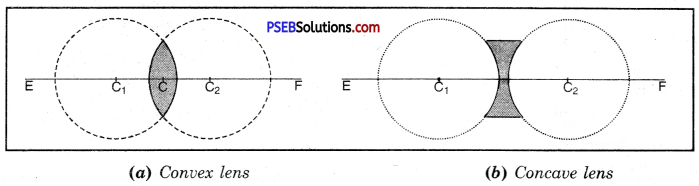
Do it yourself.

Question 2.
Write the details of some road accident you have seen and write how you helped the injured persons.
Answer:
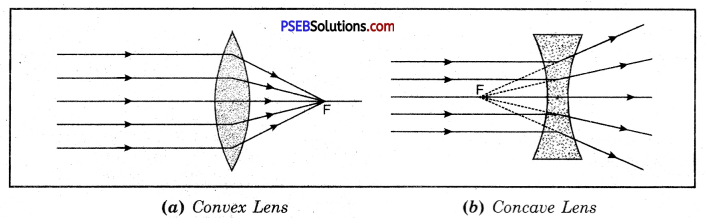
Do it yourself.

PSEB 7th Class Social Science Guide State-Government Important Questions and Answers

Multiple Choice Questions

Question 1.
Member of Legislative Assembly is known as
(a) MLA
(b) Chief Minister
(c) Prime Minister
(d) Advocate General.
Answer:
(a) MLA.

Question 2.
Who is the leader of majority party in Legislative Assembly?
(a) Prime Minister
(b) Chief Minister
(c) President
(d) MLA.
Answer:
(b) Chief Minister.

PSEB 7th Class Social Science Solutions Chapter 20 State-Government

Question 3.
__________ works as the representative of President in the state.
(a) Chief Minister
(b) Speaker
(c) Governor
(d) MLA.
Answer:
(c) Governor.

Question 4.
Which of these is the level of government?
(a) Local level
(b) State level
(c) Central level
(d) All of these.
Answer:
(d) All of these.

Question 5.
Which of these is the chief minister of Haryana?
(a) Manohar Lai Khattar
(b) Bhajan Lai
(c) Bansi Lai
(d) Om Prakash Chautala.
Answer:
(a) Manohar Ltd Khattar.

Question 6.
Who runs the state government?
(a) Governor
(b) Chief Minister
(c) Speaker
(d) Legislative Assembly.
Answer:
(6) Chief Minister.

Question 7.
Who asks questions to ministers in Legislative Assembly?
(a) Chief Minister
(b) Speaker
(c) MLA
(d) None of these.
Answer:
(c) MLA.

PSEB 7th Class Social Science Solutions Chapter 20 State-Government

Question 8.
__________ is the head of the state.
(a) Governor
(b) Chief Minister
(c) Speaker
(d) President.
Answer:
(a) Governor.

Question 9.
Who appoints the Governor?
(a) State Government
(b) Central Government
(c) Parliament
(d) Election Commission.
Answer:
(b) Central Government.

Short Answer Type Questions

Question 1.
How many States are there in India?
Answer:
28.

Question 2.
What are the three organs of Central/State Govt.?
Answer:
Legislative, Executive and Judiciary.

Question 3.
What are the main functions of the three organs of the State Govt.?
Answer:

  1. Legislature makes laws.
  2. The executive executes these laws.
  3. The Judiciary punishes the violators.

PSEB 7th Class Social Science Solutions Chapter 20 State-Government

Question 4.
What is the difference between Union list and State list? What is the common list or Concurrent list?
Answer:
There is division of powers among the Centre and the States. All important subjects are in the Union list, like defence, external affairs, currency, railways. The important subjects for the state like, agriculture, land revenue, jails, local self Govts, are in the state list. There are certain common subjects which are written in the concurrent list.

Question 5.
When does a bill become law?
Answer:
After the bill is passed in the State Legislature it is sent to the Governor for signature. It becomes a law only after the Governor puts his signature.

Question 6.
Write the powers and functions of the State legislature.
Answer:

  1. It can make laws on subjects given in state list.
  2. The council of ministers is accountable to the state legislature and has to answer all the queries.
  3. It can even pass a no-confidence motion.
  4. If the Vidhan Sabha (Legislative Assembly) passes a resolution by a majority of 2/3rd of its members, the Union Parliament can abolish or re-establish the Vidhan Parishad. Thus, the life of the Vidhan Parishad depends upon the will of the Vidhan Sabha.

Question 7.
What are the functions of the Speaker?
Answer:

  1. He is the Chairman of all meetings of the Legislative Assembly.
  2. He gives permission to present bills.
  3. He is responsible for discipline in the assembly.

Question 8.
How is the Governor of a state-appointed?
Answer:
The Governor is appointed by the President of India. The President can appoint the same person as Governor for more than one state. The President acts on the advice of the Prime Minister while appointing the Governors.

Question 9.
How is the Council of Ministers appointed as well as the Chief Minister?
Answer:
The Council of Ministers is appointed by the Governor on the recommendation of Chief Minister. The Chief Minister along with other ministers forms the Council of Ministers. Sometimes the Chief Minister heads the coalition govt, because no single party gets absolute majority. Sometimes such person becomes Chief Minister who is not a member of either house. In such a case, he has to become a member within six months.

PSEB 7th Class Social Science Solutions Chapter 20 State-Government

Question 10.
Write a commentary on the construction of Council of ministers and their process of functioning.
Answer:
Construction / Composition: Three types of ministers are there :

  1. Cabinet Ministers,
  2. Ministers of State,
  3. Deputy Ministers.

Functioning: The Council of Ministers work in coordination as a team. They are accountable to the State Legislature jointly as well as individually. It means even if a no-confidence motion is passed against one minister, the whole Council has to resign. If the Chief Minister resigns, it is considered as the resignation of the whole Council of Ministers.

Question 11.
Name five states of India having Bi-cameral legislature.
Answer:
Bihar, Jammu & Kashmir, Karnataka, Andhra Pradesh, Maharashtra and Uttar Pardesh.

Question 12.
Give the discretionary powers of a Governor.
Answer:
The Governor has certain powers which he can use at his own discretion.
(a) He recommends to the President to declare emergency in the state.
(b) He becomes a real ruler of the state after the emergency is declared in the state.
(c) He can appoint a person of his choice as a Chief Minister if no party in the state Legislative Assembly can win a majority of seats.
(d) He can send back the bills passed by the State Legislature for reconsideration.
(e) He can reserve certain bills for the final approval of the President.

Question 13.
What type of ministers are there in the Council of Ministers?
Answer:
Three types of ministers: Cabinet ministers who hold important portfolios, deputy ministers and the ministers of state who help the Cabinet ministers to perform their duties.

PSEB 7th Class Social Science Solutions Chapter 20 State-Government

Question 14.
What do you know about the term of the State Legislature?
Answer:
1. Council of Ministers: The period is 5 years, but if the Chief Minister resigns or dies, then the Council of Ministers also comes to an end. The no-confidence motion in the legislature can also put an end to the period of the Council of Ministers.

2. State Legislature: Its period is also 5 years but it can be dissolved by the Governor early also. During an emergency, its period can be increased by 6 months. The Legislative Council has a period of 6 years, but after every 2 years, 1/3 of its members retire.

PSEB 10th Class SST Solutions Civics Chapter 2 The Central Government

Punjab State Board PSEB 10th Class Social Science Book Solutions Civics Chapter 2 The Central Government Textbook Exercise Questions and Answers.

PSEB Solutions for Class 10 Social Science Civics Chapter 2 The Central Government

SST Guide for Class 10 PSEB The Central Government Textbook Questions and Answers

I. Answer the following questions in brief:

Question 1.
Mention the tenure of the Lok Sabha.
Answer:
The term of the Lok Sabha is five years but the President, on the advice of the Prime Minister, can dissolve it before the expiry of its term. During the emergency, this period can be extended for one year by the Parliament.

Question 2.
What is the maximum number of the members of the Lok Sabha?
Answer:
The maximum strength of the Lok Sabha has been fixed at 550 members. Out of this number, 530 members represent the people of the States of India and 20 members are elected by the voters of the Union Territories. The President can nominate two Anglo- Indians, if he feels that this community has not got adequate representation.

Question 3.
How is the Speaker of the Lok Sabha appointed?
Answer:
The Speaker or Chairman of the Lok Sabha is elected by the members of the Lok Sabha from among themselves.

Question 4.
What do you mean by a Vote of No-confidence?
Answer:
The Prime Minister and the Council of Ministers can continue to be in office as long as they enjoy the confidence of the Lok Sabha. They can be thrown out of office by a vote of no-confidence passed by a majority of members present and voting in the house.

PSEB 10th Class SST Solutions Civics Chapter 2 The Central Government

Question 5.
What is the minimum age required to become a member of the Lok Sabha or the Rajya Sabha?
Answer:
The minimum age limit for a person to become a member of the Lok Sabha is 25 , years and that of the Rajya Sabha is thirty years.

Question 6.
When and how many Anglo-Indians can be nominated by the President in the Lok Sabha?
Answer:
If no Anglo-Indian is elected to the Lok Sabha, the President can nominate two members of this community to it.

Question 7.
Enumerate the stages through which an ordinary bill passes to become a law.
Answer:
A bill passes through three stages or readings through both the houses of the parliament separately. If the bill is passed, it is sent to the President for his assent.

Question 8.
How and who elects the members of Rajya Sabha?
Answer:
The members of the Rajya Sabha are indirectly elected by the members of the State Legislative Assemblies. The maximum number of the members of Rajya Sabha can be 250.

Question 9.
Who are included in the electoral college for the election of the President? ,
Answer:
Elected representative of the people are included in the electoral college for the President.

Question 10.
How is the Vice-President of India elected?
Answer:
The Vice-President of India is elected by the members of both the houses of Parliament in a joint sitting by an absolute majority.

PSEB 10th Class SST Solutions Civics Chapter 2 The Central Government

Question 11.
How is the Prime Minister appointed?
Answer:
The Prime Minister is appointed by the President. He appoints that person as the Prime Minister who enjoys a majority in the Lok Sabha.

Question 12.
Explain the organisation of the Union Council of Ministers,
Answer:
The Union Council of Ministers is appointed by the President on the recommendation of the Prime Minister.

Question 13.
Explain each of the following :
(a) Qualification of a Judge of the Supreme Court.
Answer:

  1. He must be a citizen of India.
  2. He must have worked as a judge of High Court for a period of not less than five years or must have worked as an advocate in some high courts for a period of not less than ten years. Or he must be an eminent jurist in the view of the President.

(b) Advisory Jurisdiction of the Supreme Court.
Answer:
Advisory Jurisdiction of the Supreme Court. It is the obligation of the Supreme Court to advise on constitutional as well as other legal matters to any legislature, the Council of Ministers or the President. But it is not binding upon the President or the government to accept the advice given by the Supreme Court.

(c) Supreme Court Act as a Court of Record.
Answer:
Supreme Court Act as a Court of Record. The Supreme Court is a Court of Record. It means that its decisions and Judicial proceedings are recorded and printed. The Courts subordinate to it and the lawyers use them in their pleadings. The decisions given by the Supreme Court are recorded and then used by the Lower Courts to give further Judgements.

II. Answer the following questions in short :

Question 1.
Explain the powers of the Parliament.
Answer:
Following are the main powers of the Parliament :
1. Legislative Powers. The Parliament legislates on the subjects included in the Union List and the Concurrent List. It can also pass laws on the Residuary Subjects. During the emergency, it can also legislate on any and every subject mentioned in the State List.

2. Executive Powers. It can dissolve the cabinet by passing a vote of no-confidence against it. It also exercises control over the executive by asking questions and supplementary ‘questions. The members can table certain other resolutions to suspend the normal proceedings of the Parliament.

3. Financial Powers. The Parliament is the custodian of the Union purse. It passes the budget and authorises all expenditure. No tax can be imposed without its sanction.

4. Constitutional Amendment. All proposals for the constitutional amendments can be initiated only by the Parliament.

PSEB 10th Class SST Solutions Civics Chapter 2 The Central Government

Question 2.
Examine the role or functions of the Speaker of the Lok Sabha.
Answer:
The Speaker is elected by the House from amongst its members. Following are the main functions of the Speaker :

  • He presides over the meetings of the Lok Sabha and conducts its business. He generally belongs to the majority party, but he acts in an impartial manner.
  • He maintains discipline in the House. He can suspend a member from the House for his misconduct and indiscipline in the house.
  • He decides whether a particular bill is a Money Bill or an Ordinary Bill.
  • If a joint session of both the Houses of the Parliament is summoned by the President to discuss a bill, it is presided over by the Speaker of the Lok Sabha.

Question 3.
How a bill becomes an Act in the Indian Parliament?
Answer:
An ordinary bill may be introduced in the either House by any minister or a member of the Parliament. A bill, before becoming an Act, has to pass through the stages given below :

  • First Reading. Only the heading and main clauses of the bill are read out at this stage. No discussion takes place.
  • Second Reading or Stage. The bill is debated-clause by clause and amendments are moved. If the majority of the members vote in its favor, the bill is referred to the select committee.
  • Third Reading or Stage. The debate at this stage is confined only to the matter of the bill. The bill is rejected or accepted by the House.
  • Bill in the Second House. The Bill in the Second House also passes through the same stages as in the First House. If the Bill is also passed by the Second House, it is referred to the President for his assent.
  • Assent of the President. After getting the assent of the President, it becomes a law.

Question 4.
Explain the collective and individual responsibility of the Council of Ministers?
Answer:
Principle of Collective Responsibility. The Council of Ministers is collectively responsible to the Lok Sabha. The ministers come into the office and go out of it as a team. The Prime Minister is the captain of this team. He presides over the meetings of the Cabinet or the whole Council of Ministers. They take decisions collectively. After decisions are arrived at, all the members of the Cabinet are equally responsible for it, including those who might have argued against it. If a vote of no-confidence is passed against one Minister in the Lok Sabha, the whole Council of Ministers must resign. The ministers sink and sail together. When any minister is criticised in the Parliament, the other members of the Council of Ministers come to his rescue and support the action and policy of the minister. The ministers are thus responsible to the Parliament both collectively and individually.

Question 5.
How is the Union Cabinet appointed in India?
Answer:
The Cabinet which is a part of the Council of Ministers is appointed by the President of India. In fact, the President has not free hand in the appointment of the Prime Minister or Ministers. He appoints the leader of the majority party in the Lok Sabha as a Prime Minister. The President has no choice in this matter.

The Prime Minister prepares the list of other ministers to be included in the Council of Ministers. He presents this list to the President. The President cannot refuse to approve this list. Sometimes a person who is not a member of the Parliament is appointed a minister. Such a minister must become the member of Parliament within six months of his appointment as a minister.

Question 6.
Examine the position of the Prime Minister.
Answer:
The Prime Minister enjoys vast powers in the constitutional setup of the country. He chooses the Ministers of his team and allots the portfolios to them. In the Cabinet, he is not only the first among the equals, but a moon among the stars. His resignation brings about the fall of the entire Cabinet. He is thus the key stone of the Cabinet arch. Although all the executive authority of the Union is vested in the President, it is invariably exercised by his Council of Ministers and the President is supposed to be a mere constitutional head. To sum up, the Prime Minister is the linchpin of the government.

PSEB 10th Class SST Solutions Civics Chapter 2 The Central Government

Question 7.
Examine the powers of the Prime Minister.
Answer:
‘There is no doubt that the Prime Minister is the pivot of the cabinet. He appoints the ministers. The President appoints the ministers only on the recommendation of the Prime Minister. He allots the portfolios to the ministers. He can reorganise the cabinet to make the administration efficient. He can change the portfolios of the ministers. If the Prime minister resigns, the whole council of ministers is dissolved. He can ask the erring ministers or a minister having a different opinion, to quit. If a minister refuses to resign, he can tender the resignation of his Council of Ministers and reconstitute the ministry. He presides over the meetings of the Cabinet and exercises control over its agenda.

Question 8.
Explain the emergency powers of the President.
Answer:
Following are the emergency powers of the President :
1. National Emergency. If the President is satisfied that a grave emergency exists whereby the security of India is threatened by war, external aggression or armed rebellion, he may declare a state of emergency for the whole of India or a part of it. (Article 352)

2. Constitutional Emergency. If the President is satisfied either on the recommendation of the Governor or otherwise that the government cannot be carried on in the state in accordance with the constitution, he may declare emergency in that state. (Art.-356) .

3. Financial Emergency. The President may declare financial emergency if he is satisfied that there is a threat to financial stability or credit of the country as a whole or a part thereof. (Art. 360)

Question 9.
Describe the procedure of Impeachment of the President.
Answer:

  1. The process of impeachment of the President may be started in either house of the Parliament.
  2. A prior notice to this effect has to be given to the President duly signed by l/4th of the total number of that house;
  3. A prior notice of 14 days must be served before initiating the impeachment;
  4. Such resolution of charges must be supported by at least 2/3rd of the total membership of that house;
  5. The charges initiated in one house, if are proved after investigation in the other house by 2/3 majority of the total membership of the house, the President shall have to leave the office from the date such a resolution is approved. The President can defend himself personally or through a counsel before both the houses.

Question 10.
Do you think that the Indian President is nominal head of the union executive? If yes, then who is the real executive?
Answer:
From the study of powers of the President in various fields, it seems that he is a very powerful executive head. Besides, he has important legislative, financial and judicial powers. He can declare emergency. He can dissolve the Lok Sabha, can issue ordinances. No bill can become law without his signature.

In actual practice, however, he is the nominal head of the state. He does not exercise these powers himself but on the advice of the Council of Ministers. He declares emergency only on the advice of the Council of Ministers and uses these powers with its aid. He can never become a dictator. His powers closely resemble the powers of the Queen of Britain. He can advise, encourage and warn his ministers. But much depends upon the personality and character of the President. And in this sense, he is no figure head. He is, in fact, a guide who can shape and mould the policy of India both at home and abroad.

PSEB 10th Class SST Solutions Civics Chapter 2 The Central Government

Question 11.
Describe the role of the Vice-President of India.
Answer:
Following are the two important functions of the Vice-President of India :

  1. He is the ex-officio Chairman of the Rajya Sabha. When he acts as the President of India or discharges his functions, he shall not preside over the meetings of the Rajya Sabha.
  2. He can officiate as the President for a maximum period of six months in case of death, resignation or removal of the latter till the new President is elected. He discharges the functions of the President when the latter is unable to do so owing to any reason.

Question 12.
Explain briefly the powers of the President of India.
Answer:
Following are the powers of the Indian President :
1. Executive Powers

  • All laws are enforced in the name of the President,
  • He appoints the Prime Minister and other ministers on the basis of the recommendations of the Prime Minister,
  • He can make a declaration of war and peace.
  • It is he who appoints ambassadors to foreign states and receives those coming from other countries.

2. Legislative Powers.

  • No bill becomes an act without his approval,
  • He can dissolve the Lok Sabha before its fixed term on the advice of the Prime Minister.
  • He nominates 12 members to the Rajya Sabha and two to the Lok Sabha.

3. Financial Powers. No money bill can be introduced in the Lok Sabha without the prior approval of the President.

4. Judicial Powers

  • The President can remove the judges of the High Courts and Supreme Court on the basis of the resolution passed by the Parliament with 2/3rd majority of the members present and voting,
  • He can pardon or reprieve the punishment confirmed by the Supreme Court.

5. Emergency Powers: The President can proclaim emergency under certain circumstances,

  • War, external aggression and armed rebellion.
  • Breakdown of constitutional machinery in a State,
  • Financial crisis.

Question 13.
Explain the following :
(a) How an ordinary bill differs from a money bill?
Answer:
Money bill. A money bill relates to the imposing, reducing or repealing of taxes, borrowing of money or authorizing expenditure by the government. It is called a money bill. A money bill can be introduced only in the Lok Sabha by a minister.

Ordinary bill. All the bills other than money bills are called ordinary bills. They are of two types, Public bill and Private bill. Public bill is of universal nature and affects all the residents of the state. Private bill relates to a particular section of the society or some private companies.

(b) Unified concept of Judiciary in India.
Answer:
India has single unified judicial system. The Supreme Court of India is the highest court of Justice in India, immediately below which are the state High Courts, below the High Courts, there are District Courts. All these courts apply the same law code in the decisions of all civil, criminal and constitutional cases. The appeals can be taken to the High Court, against the decision of the District Court. The Supreme Court hears appeals against the decisions of High Court.

(c) The power of Judicial Review in India.
Answer:
The power of Judicial Review in India (2014 III). The Supreme Court can exercise the power of judicial review. It can declare any law passed by the Union Parliament or by a State Legislature as unconstitutional if it violates the Constitution.

PSEB 10th Class Social Science Guide The Central Government Important Questions and Answers

Answer the following questions in one line or one word :

Question 1.
What is meant by the Indian Parliament?
Answer:
In India, the Union Legislature is called the Parliament or Sansad.

Question 2.
Mention any one essential qualification for the members of Lok Sahha.
Answer:
He must, be a citizen of India.

PSEB 10th Class SST Solutions Civics Chapter 2 The Central Government

Question 3.
Write any one important function of the Speaker of Lok Sabha.
Answer:
He presides over the meetings of the Lok Sabha.

Question 4.
What is the difference between a money bill and an ordinary bill?
Answer:
A money bill can originate in the Lok Sabha and not in the Rajya Sabha.

Question 5.
Write down one power of the President relating to a bill.
Answer:
No bill can become a law without his assent.

Question 6.
Mention any one method by which the Parliament keeps the executive under control.
Answer:
It can dissolve the cabinet by passing a vote of no-confidence against it.

Question 7.
What is meant by the Parliamentary system?
Answer:
It means a system of government in which all the powers of the state are exercised by the Prime Minister and his ministers.

Question 8.
When can the President declare Financial Emergency?
Answer:
If he is satisfied that there is a threat to financial stability or credit of the country as a whole or a part thereof.

Question 9.
What is the composition of Electoral College which elects the Vice¬President of India?
Answer:
The electoral college which elects the Vice-President includes only the elected members of the Parliament. .

Question 10.
Explain any one function of the Vice-President.
Answer:
He is the ex-officio Chairman of the Rajya Sabha.

Question 11.
How many types of ministers are included in the Council of Ministers?
Answer:
Cabinet Ministers, Ministers of State, Deputy Ministers.

Question 12.
What is meant by the Reading of the Bill?
Answer:
The procedure of discusssion of a bill is called the Reading of the Bill.

Question 13.
What is an adjournment motion?
Answer:
To discuss a grave matter of public importance out of turn in the Parliament is called adjournment motion.

PSEB 10th Class SST Solutions Civics Chapter 2 The Central Government

Question 14.
Explain the meaning of Question Hour.
Answer:
The first hour of every sitting in both the houses of the parliament is devoted to asking arid answering questions.

Question 15.
In connection with the Parliament what is a supplementry question?
Answer:
The right of the members to ask some more questions relating to the same matter. Question 16. Mention any two qualifications for the membership of the Rajya Sabha. Answer:He must be a citizen of India and must have completed 30 years of age.

Question 17.
Write any one important function of the Speaker of Lok Sahha.
Answer:
To preside over the meetings of the Lok Sabha.

Question 18.
What is the main function of the Parliament?
Answer:
The main function of the Parliament is to make laws.

Question 19.
What is a Bill?
Answer:
The proposed law is called a Bill.

Question 20.
Who decides whether a bill is an ordinary or money bill?
Answer:
The Speaker of the Lok Sabha decides whether a Bill is ordinary or money bill.

Question 21.
For how many days can the Rajya Sabha delay a money hill duly passed by the Lok Sabha?
Answer:
A money bill duly passed by the Lok Sabha can be delayed by fourteen days by the Rajya Sabha.

PSEB 10th Class SST Solutions Civics Chapter 2 The Central Government

Question 22.
What should be the minimum age required to become the President of India?
Answer:
35 years.

Question 23.
What is the tenure of the President of India?
Answer:
The tenure of the President is five years.

Question 24.
Write one executive power of the President.
Answer:
The President makes the appointment of the Prime Minister and other Ministers on his advice.

Question 25.
Who is the Supreme Commander of all the three armed forces?
Answer:
The President.

Question 26.
Who can issue an ordinance?
Answer:
The President can issue an ordinance.

Question 27.
Write one legislative power of the President.
Answer:
All bills passed by the Parliament must receive his assent before becoming laws.

PSEB 10th Class SST Solutions Civics Chapter 2 The Central Government

Question 28.
Write any one financial power of the President.
Answer:
The President causes to be laid, before the Parliament the annual: budget.

Question 29.
Write one judicial power qf the president.
Answer:
The President appoints judges of the. Supreme Court and the High Courts.

Question 30.
Who is the real head of the Union Government’?
Answer:
The Prime Minister.

Question 31.
Write one power of the Prime Minister.
Answer:
He chooses the Ministers of his team and allocates portfolios to them.

Question 32.
Which is the highest court of justice in India?
Answer:
The Supreme Court.

Question 33.
How many judges are there in the Supreme Court?
Answer:
At present Supreme Court consists of one Chief Justice and 33 other Judges.

Question 34.
Mention any one qualification with regard to experience for appointment as a judge in the Supreme Court.
Answer:
He has been for at least 10 years an advocate of a High Court or two or more such courts in succession.

Question 35.
How many jurisdictions are there of the Supreme Court? Which are these?
Answer:

  1. Original
  2. Appellate and
  3. Advisory jurisdiction.

Question 36.
Who is the guardian of our fundamental rights?
Answer:
The Supreme Court is the guardian of our fundamental rights.

Question 37.
What does the term ‘appeal’ mean?
Answer:
When petition against the decision of a lower court is made to a high court, it is called appeal.

Question 38.
Describe one function and jurisdiction of the Supreme Court.
Answer:
It decides the cases regarding the fundamental rights.

Question 39.
How can the President remove the judges of the Supreme Court or High Courts?
Answer:
On the basis of a resolution passed by the parliament by a special majority.

Question 40.
How is the Lok Sabha dissolved?
Answer:
Lok Sabha can be dissolved by the President on the recommendation of the Prime Minister.

Question 41.
Who presides over the meetings of Rajya Sabha?
Answer:
Vice-President of India presides over the meetings of Rajya Sabha.

PSEB 10th Class SST Solutions Civics Chapter 2 The Central Government

Question 42.
How are the judges of Supreme Court-appointed?
Or
Who elects (appoints) the Judges of Supreme Court?
Answer:
They are appointed by the President of India.

Question 43.
What is the tenure of the Judges of Supreme Court?
Answer:
The Judges of the Supreme Court retire at the age of 65 years.

Question 44.
Who is Public Prosecutor?
Answer:
Public prosecutor is a person appointed by central / state govt, to represent cases on behalf of the state in criminal trials.

Question 45.
How many members can be nominated in the Lok Sabha and Ra\ya Sabha by the President?
Answer:
The President can nominate twelve members to the Rajya Sabha. The President can nominate two members of the Anglo-Indian Community in the Lok Sabha if no member of the community is elected to the Lok Sabha.

Question 46.
Mention the term of the members of Rajya Sabha.
Answer:
The tenure of the members of Rajya Sabha is six years. One third members of the Rajya Sabha retire after two years.

Fill in the blanks :

Question 1.
The tenure of the Lok Sabha is ___________ years.
Answer:
five

Question 2.
Maximum number of the members of Lok Sabha can be ___________
Answer:
550

PSEB 10th Class SST Solutions Civics Chapter 2 The Central Government

Question 3.
The Prime Minister is appointed by the ___________
Answer:
President

Question 4.
The term of the members of Rajya Sabha is ___________ years.
Answer:
six

Question 5.
Upper House of the Parliament is known as ___________
Answer:
Rajya Sabha

Question 6.
Lower House of the Parliament is known as ___________
Answer:
Lok Sabha

Question 7.
Vice-President is the ex-officio Chairman of the ___________
Answer:
Rajya Sabha

Question 8.
The Speaker of the Lok-Sabha is elected by the members of the ___________
Answer:
Lok Sabha

Question 9.
No money bill can be introduced in the Lok Sabha without the prior approval of the ___________
Answer:
Speaker

PSEB 10th Class SST Solutions Civics Chapter 2 The Central Government

Question 10.
The highest court of justice is ___________
Answer:
Supreme Court

Question 11.
The tenure of the President is ___________years.
Answer:
five

Question 12.
Lok Sabha can be dissolved by the ___________
Answer:
President.

Choose the correct answer:

Question 1.
The Indian Parliament is:
(a) Unicameral
(b) Three Houses
(c) Bicameral
(d) None of the above.
Answer:
(c) Bicameral

Question 2.
The tenure of the members of the Rajya Sabha is:
(a) 5 years
(b) 4 years
(c) 6 years
(d) 3 years.
Answer:
(c) 6 years

Question 3.
The term of office of the Indian President is:
(a) 4 years
(b) 5 years
(c) 6 years
(d) 3 years.
Answer:
(b) 5 years

PSEB 10th Class SST Solutions Civics Chapter 2 The Central Government

Question 4.
The Judges Qf the Supreme Court retire at the age of:
(a) 62
(b) 58
(c) 60
(d) 65.
Answer:
(d) 65.

Question 5.
The President of India is elected by:
(a) The Electoral College
(b) The Legislative Assemblies
(c) The Parliament
(d) The People.
Answer:
(a) The Electoral College

Question 6.
Who is the guardian of ouí’ fundamental rights?:
(a) President
(b) Supreme Court
(c) Parliament
(cl) Prime Minister.
Answer:
(b) Supreme Court

Question 7.
Who is the supreme commander of the defence forces?
(a) Defence Minister
(b) Prime Minister
(c) Home Minister
(d) President,
Answer:
(d) President,

Question 8.
The real head of the Union Government is:
(a) The President
(b) Home Minister
(c) Prime Minister
(d) Cabinet.
Answer:
(c) Prime Minister

PSEB 10th Class SST Solutions Civics Chapter 2 The Central Government

Question 9.
The President is:
(a) Head of Govt.
(b) Head of the State
(c) Head of the Union Territory
(d) None of these.
Answer:
(b) Head of the State

Question 10.
Supreme Court consists of one Chief Justice and :
(a) 13 other Judges
(b) 25 other Judges
(c) 20 other Judges
(d) 33 other Judges.
Answer:
(d) 33 other Judges.

Question 11.
While appointing the Judges of the Supreme Court it is obligatory for the President to consult the :
(a) Chief Justice of the High Court
(b) Law Minister
(c) Prime Minister
(d) Chief Justice of India.
Answer:
(d) Chief Justice of India.

Question 12.
The tenure of the Prime Minister is :
(a) 5 years
(b) 4 years
(c) 6 years
(d) Not fixed.
Answer:
(d) Not fixed.

Short Answer Type Questions

Question 1.
Give arguments to prove that there is the Supremacy of the Parliament in the country.
Or
What do you mean by the ‘Supremacy of the Parliament’?
Answer:
By the ‘Supremacy of the Parliament’, we mean that the Parliament is the supreme law-making body. It can enact, amend and repeal any lav/ as and when it likes. It is both an ordinary law-making body as well as a constitutional law-making body.

The Indian Parliament is the creation of the Constitution of India which has specified its powers, etc. in relevant articles. It is the legislative organ of the Union and is comprised of the representatives of the people. It takes part in the election of the President and the Vice-President. It exercises control over the executive who is collectively responsible to it. It can dissolve the Cabinet by withdrawing confidence in it. It keeps complete control over the national finance. The foregoing points prove its supremacy but it is not a sovereign body uncontrolled or having unlimited powers. The Supreme Court can strike down the Acts passed by the Parliament, if they violate the Constitution.

PSEB 10th Class SST Solutions Civics Chapter 2 The Central Government

Question 2.
Make a mention of the mutual relationship between the President and the Prime Minister.
Answer:
The essence of the Parliamentary form of Government is that the chief executive head of the State is a nominal head. All those powers vested in him are exercised by the Council of Ministers headed by the Prime Minister. The Prime Minister is the link between the President and the Council of Ministers. The Prime Minister is appointed by the President. The President invariably appoints that person as the Prime Minister who is the leader of the majority party in the Lok Sabha. The Prime Minister is the chief advisor of the President and as the present constitutional position stands, it is binding on the President to act on the advice of the Prime Minister.

Question 3.
Write any four powers of the Prime Minister.
Or
Explain three powers of the Prime Minister.
Answer:
Main functions of the Prime Minister are given ahead :

  1. He chooses the ministers of his team and allocates portfolios to them.
  2. He can change the portfolios of the ministers.
  3. He advises the President on different matters of the government.
  4. He formulates all internal and external policies of the government.
  5. Inside the Parliament, he is the chief spokesman of the government.
  6. He supervises the work of administration of different departments.

Question 4.
When can emergency be declared in a state?
Answer:
A state of emergency may be declared in a state by the President. Generally, it is declared on the advice of the Governor of the state.

If the President is satisfied either on the recommendation of the Governor or otherwise that the government cannot be carried on in a State in accordance with the Constitution, he may declare emergency in the State. Initially, the President’s Rule is imposed for a period of six months but it can be extended upto a maximum period of three years. During this emergency, the President can suspend or dissolve the State Legislative Assembly. The President can himself assume all or any of the functions of the State. He may vest all or any of those functions in the Governor or any other executive authority.

PSEB 10th Class SST Solutions Civics Chapter 2 The Central Government

Question 5.
Explain the relations between the Parliament and Judiciary in India.
Answer:
In India, there is a close relation between the Parliament and Judiciary. The Parliament determines the number of judges of the Supreme Court and can also pass a resolution for their removal. Moreover, it can increase or decrease the powers of the Supreme Court. The Supreme Court of India is also competent to declare null and void the laws of the Parliament if they violate the Constitution by exercising its power of ‘Judicial Review’.

Question 6.
Mention the procedure of election of the members of the Lok Sabha.
Answer:
Lok Sabha is the lower chamber of the Parliament. It has 544 members. These members are directly elected by the people. Every Indian citizen (who is 18 years of age) whose name is on the voters’ list can participate in the election to the Lok Sabha. Some seats are reserved for the scheduled castes and scheduled tribes. The President can nominate two Anglo-Indians if he feels that the community has not received proper representation.

The members of Lok Sabha are elected on the basis of population. Every member represents 10 lakh to 15 lakh of population. The whole country is divided into constituencies. Every state gets representation in proportion to its population.

Question 7.
Who can be elected the Speaker of the Lok Sabha and how?
Answer:
The office of the Presiding Officer of the Lok Sabha (called the Speaker) is of great dignity and authority. The Speaker is elected by the Lok Sabha from among its members. After the general elections, when the House assembles, it is presided over by the seniormost member of the House to elect its Presiding Officer. Any member can seek election to this office and one getting majority of votes is elected as the Speaker of the House.

Question 8.
What is meant by Parliament? Tell the names of the two Houses of the Parliament and also their term.
Answer:
The Union Legislature of India is called the Parliament. Constitutionally Parliament consists of the President and two houses-the Lok Sabha and the Rajya Sabha. The Parliament can make laws on all the subjects of national importance. It is the supreme law making body.

1. Term of the Lok Sabha. The Lok Sabha is elected for 5 years. But it can be dissolved earlier by the President on the advice of the Prime Minister. During the emergency due to external aggression or armed revolt its life can be extended.

2. Term of the Rajya Sabha. The Rajya Sabha is a permanent house. But every two years one-third (l/3rd) of its members retire and new ones are elected in their place. Thus every member is elected for a term of six years.

Question 9.
Mention six essential qualifications for the membership of the Parliament.
Answer:
Following are the six essential qualifications for the membership of the Parliament :

  1. He must be a citizen of India.
  2. He must have completed 30 years of age for the Rajya Sabha and 25 years for the Lok Sabha.
  3. He must not hold any office of profit under the state or union government.
  4. He must not be of unsound mind.
  5. He must not be bankrupt.
  6. He must not be an alien or non-citizen.

Question 10.
Mention the basis on which the President can nominate 12 members for the Rajya Sabha and 2 members for Lok Sabha.
Answer:
The President can nominate twelve members to the Rajya Sabha from amongst the persons of eminence having practical experience in literature, science, art and social services. He is also empowered to nominate to the Lok Sabha not more than two members from the Anglo-Indian Community if he feels that it has not got adequate representation.

PSEB 10th Class SST Solutions Civics Chapter 2 The Central Government

Question 11.
Mention three types of legislative and non-legislative powers of the Parliament.
Answer:
Legislative Powers :

  • It can legislate upon all ordinary bills.
  • It also passes the money bills.
  • It approves all the ordinances issued by the President. It can also reject them.

Non-legislative Powers :

  • It accords approval to all emergency proclamations promulgated by the President.
  • Any member of Parliament may ask the government any question to elicit information regarding its policies.
  • It also considers the no-confidence motion initiated against the Cabinet.

Question 12.
Who makes the appointment of the Chief Justice of the Supreme Court and other judges and with whose consultation?
Answer:

  1. The appointment of the Chief Justice and other judges of the Supreme Court is made by the President.
  2. The appointment of the Chief Justice is made in consultation with the judges of the Supreme Court and High Courts.
  3. The appointment of other judges of the Supreme Court is made in consultation with the Chief Justice of India and others whom the President may deem necessary.

Question 13.
Mention the qualifications, tenure, and salary of the Chief Justice and other judges of the Supreme Court.
Answer:
Qualifications for an appointment :

  • He must be a citizen of India.
  • He has been for at least five years a judge of a High Court or of two or more such Courts in succession.
  • He has been for at least 10 years an advocate of a High Court or of two or more such Courts in succession.
  • He is, in the opinion of the President, a distinguished jurist.

Tenure :

  • A Judge of a Supreme Court can serve up to the age of 65 years.
  • Salary. The salary of the Chief Justice is Rs. 2,80,000 per month and Rs. 2,50,000 of the other Judges of the Supreme Court.

PSEB 10th Class SST Solutions Civics Chapter 2 The Central Government

Question 14.
Mention those five references from the Constitution which make the Supreme Court independent and impartial.
Answer:

  1. The Directive Principles of State Policy provide that the judiciary be made independent of the control of the executive.
  2. The appointment of Judges is made on the basis of their legal acumen.
  3. The judges are paid decent salaries befitting their position which cannot be altered to their disadvantage.
  4. The procedure for their removal has been made very difficult.
  5. The decisions of the Supreme Court cannot be subjected to criticism by an individual, institution or even Parliament.

Question 15.
Describe the effects of the emergency proclamation on the state administration.
Answer:
According to Article 356 of the Constitution, the President can proclaim an emergency in a state if he is satisfied that the constitutional machinery in a state has broken down. The President declares constitutional emergency in a state only after receiving a report from the Governor. During the emergency, the whole administration of the state comes under the control of the central govt. Such an emergency is declared when the constitutional machinery in a state does not work properly. The Governor of the state is generally asked to run the state administration on behalf of the central government. The Governor can suspend or dissolve the state legislative assembly. He becomes the real ruler of the state.

Question 16.
What do you mean by a Vote of No-confidence?
Answer:
The Constitution grants the Lok Sabha the power of passing a Vote of No-confidence against the Council of Ministers. It means that the Council, of Ministers, is responsible to the Lok Sabha. The members of the Council of Ministers remain in office so long as they enjoy the confidence of the Lok Sabha. If the Lok Sabha passes by a majority of votes, the motion of No-confidence against the Council of Ministers will resign.