PSEB 12th Class Physical Education Solutions Chapter 2 Sports Training

PSEB Solutions for Class 12 Class Physical Education  Chapter 2 Sports Training

Physical Education Guide for Class 12 PSEB Sports Training Textbook Questions and Answers

One Mark Question-Answers

Question 1.
How many types of warming-up are there? Name them.
Answer:
There are two types of warming up:

  • Physiological warming up
  • Psychological warming up.

Question 2.
Write any one benefit of Interval training Method.
Answer:
Since, hardly any training aids are required, more athletes can be trained at the same time.

PSEB 12th Class Physical Education Solutions Chapter 2 Sports Training

Question 3.
How is the word Training used in sports?
Answer:
Sports training is the entire systematic process of preparation of athletes for highest level of performance.

Two Marks Question-Answers

Question 4.
Write the meaning of sports training.
Answer:
In general, the word sports training is commonly used by the sportsperson in the field of sports. But, in broad sense training may be defined as an organised and systematic instructional process which aims to improve the individual’s physical, psychological and intellectual performance or tactical capabilities.

Question 5.
Write one aim of sports training.
Answer:
Development of Overall Personality. Overall personality can be observed with habits, self esteem, social skills, behaviour, leadership, abilities, resilience, values, team building etc. towards the requirements of training of competition. These are the personality traits that can be achieved or improved through sports during training. Hence, sports training play an important role in the development of personality.

PSEB 12th Class Physical Education Solutions Chapter 2 Sports Training

Question 6.
What do you know about physical structure?
Answer:
Physical structure means physique body structure or work efficiency. Shape of muscles and structure of bones can be identified through medical procedure. Inspite of these factors hereditary factors also play an important role in games and sports.

Three Marks Question-Answers

Question 7.
Write a note on the following:
(i) Physical fitness
(ii) Technical Expertise
(iii) Technical skills
(iv) Development of overall personality.
Answer:
(i) Physical Fitness:
It refers as one must possess physical fitness components e.g. strength, speed, endurance, agility, balance, power etc. these components can be achieved through regular physical training and are prerequisites of all sports. These physical fitness components vary from sports to sports e.g. some sports requires strength and endurance and other needs agility etc. With the help of physical training plan e.g. short term and long term plan, plan according to participation in general or specific competitions etc. can be achieved easily.

(ii) Technical Expertise:
Technical skill is a fundamental component of sports training. It refers to improve set of exercises and various skills used in various sports to achieve highly optimum performance or efficiency. Technical skill consists of various repeats (in order to become skill), initial training of athlete, abilities of athlete, motor abilities (fitness components), sensory abilities (understanding level of complex situation) etc. these above said fundaments can be achieved regular practice. For this, technical skill can divide in phases e.g. athlete must be prepared themselves for physical fitness, skill improvement training etc.

(iii) Technical skills:
Technical skill is a fundamental component of sports training. It refers to improve set of exercises and various skills used in various sports to achieve highly optimum performance or efficiency. Technical skill consists of various repeats (in order to become skill), initial training of athlete, abilities of athlete, motor abilities (fitness components), sensory abilities (understanding level of complex situation) etc. these above said fundaments can be achieved regular practice. For this, technical skill can divide in phases e.g. athlete must be prepared themselves for physical fitness, skill improvement training etc.

(iv) Development of overall personality:
Overall personality can be observed with habits, selfesteem, social skills, behaviour, leadership, abilities, resilience, values, team building etc. towards the requirements of training of competition. These are the personality traits that can be achieved or improved through sports during training. Hence, sports training play an important role in the development of personality.

All games and sports certainly benefit both mind and body and create discipline, team building, confidence and physical fitness. Sports training enhance strength, speed, skill, endurance, and flexibility but also increases self esteem, builds social skills and leadership, increases resilience and inculcates values. These specific personality traits which are more suitable to attain high level of sports performance in sports can be develop with the help of sports training.

PSEB 12th Class Physical Education Solutions Chapter 2 Sports Training

Question 8.
What is warming up? What is the difference between psychological and Physical warm up? .
Answer:
“Warming up is a preliminary exercises of physical and mental preparation for a strenuous exertion”.
“Warming up is a process of heating the whole body by running and performing exercises prior to the activity”.
“Warming up is a process by which human machine is brought to a condition at which it safely responds to the nerves impulses of the persons for quick and efficient action”.

1. Physiological warming up:
It is mainly when the light exercises are performed in order to have benefits of muscular contraction due to increase in temperature of the muscles. It can furthur be classified into following two categories:

(i) Active warming up:
It involves bodily movement such as light exercises, jogging etc. to increase body temperature.
It is furthur of two types:
(a) General warming up
(b) Specific warming up

(a) General warming up:
In this type of warm-up athlete does not engage themselves in a specific activity. It generally last from eight to ten minutes. This warm-up might include very easy jogging or vigorous walking, strides and simple exercises which are helpful to increase the heart rate.

(b) Specific warming up:
In this type of warming up athlete must follow specific exercises related to game or activity. For example sprinter must do strides before actual competition. Lunge walk, buttock kicks and rotation torso from side to side are required for tennis players etc.

(i) Passive warming up:
In passive wanning up activities other than bodily movements are adapted to have physiological effects of warming up such as sauna bath, steam bath, massage, both with warm water etc.

2. Physical Wanning up:
In this, the psychological benefits of warming up are displayed with the effect of exercises. In this, mind is prepared for action within the duration of . warming up.

PSEB 12th Class Physical Education Solutions Chapter 2 Sports Training

Question 9.
Write about the principle of uniformity and differentiation.
Answer:
1. Principle of differentiation:
As we all know ‘no two individuals are alike, they may have different physical structure, psychological make up, interest, capacities and abilities etc. So, while preparing physical training programme, a coach or trainer must take into consideration these factors.

2. Principle of Uniformity:
The second principle for the sports training lies in the use and disuse of the trained skills. It simply implies that regular training or practice is most important for any training programme. Without regular practice or use of trained skill the training or fitness level is not possible to maintain at same level.

Five Marks Question-Answers

Question 10.
What is circuit training method? Write its benefits.
Answer:
Circuit training was developed by R.E. Morgan and G.T. Anderson in 1953 at the University of Leads, England. This type of conditioning involves almost all of the training factors. Circuit training can be designed to develop strength, power, muscular endurance, speed, agility and neuromuscular coordination, flexibility and cardiovascular endurance.
Circuit training is formal type of training which is done in a circular pattern.

Circuit can be set up in gymnasium hall, room, or outside of the court and fields. There are usually six to ten stations are arranged in a circuit. A trainee perform one exercise and then move to the next station to do next exercise and keep moving from one point to the other to do the rest of exercises within the stipulated time.
Benefits of Circuit Training:
Circuit training has enormous advantages. These are mentioned below-

  • It is time saving.
  • More players can be trained at a time.
  • Swiftness in training.
  • Recreation in training.
  • Development of individual capabilities.
  • It is easy to make separate plans for men and women.
  • It combines a number of different components of training.

PSEB 12th Class Physical Education Solutions Chapter 2 Sports Training 1

  • It provides an interesting training environment for the athlete and there are established times and levels to motivate the athlete to continue improving.
  • The circuit can be modified to fit the needs of any one group or individual.
  • It can be adapted within the time constraints of the individual.
  • It can accommodate large groups of individuals at a relatively low expense.
  • In circuit training progression in all activities is assured.

PSEB 12th Class Physical Education Solutions Chapter 2 Sports Training

Question 11.
What is the meaning of cooling/limbering down?
Answer:
It is very important process to bring the body in normal state after competition or training. These are simple, easy and mild exercises done after intense training to allow body from transition to resting phase or we can say that limbering down means lowering the intensity of the work by performing stretching exercise followed by deep breath and relaxation exercises.

Cooling down is a process, which should be carried out at the end of stemuos activity. Our body after an exercise or training period takes some time for coming to its normal state, during this period many accommodative activities take place inside the body. Blood circulation in effected muscles and joints take place at a faster pace and cools down slowly. Continuing with slow exercises and deep breathing, cooling down should be carried out. Sudden coming to rest posture shall cause immense harm to the joints and muscles of our body.
Methods of Cooling Down:

  • Walking.
  • Jogging 5-10 min.
  • Static exercises 5-10 min.
  • Stretching exercises 10-30 min.
  • Yogic asana like shavasana.
  • To take hot water bath.
  • To carry out massage of the muscles to save them from hardening.
  • To carry out entertainment activities or mood stimulating games.
  • To carry out relaxation exercises.

The effects of cooling down are listed below:

  • Assists in the decrease of post exercise stiffness and muscle soreness.
  • Helpful in decreasing the risk of injury.
  • Body temperature becomes normal.
  • It reduces the chances of fainting.
  • Supply good amount of oxygen.
  • It decreases the level of underline in the blood.
  • It relaxes muscles.
  • Heart rate returns to initial stage.
  • Decrease in tension.
  • Save body from harmful effects.
  • Calm down mental state.
  • Reduces unwanted liquid from the muscle.
  • Prepares the body for ensuing events.
  • Reduces obstruction in the functioning of muscles.
  • Makes the system favourable for other exercises.

PSEB 12th Class Physical Education Solutions Chapter 2 Sports Training

Question 12.
What do you know about Interval method?
Answer:
Interval training is very useful for increasing the endurance and capabilities of sprinters and other players. This pattern of training was developed by German coach Dr.Woldemar Gerschler and Dr. Herbert Reindel, Interval training method gives importance to distance, speed, time and rest and develops tolerance, strength and proper blood circulation towards heart.

In this, interval training- relatively fast runs over relatively short distances are repeated for a number of times. We can say, a player in this pattern runs half or a quarter of the fixed distance with maximum speeds and then followed by jogging to regain strength and repeats this pattern several times. As the player develops stamina, period of rest is reduced and running time with maximum speed is increased. This system of exercise is carried out on repeatedly till a player reaches the peak of his capacities.
1. Fast or Intensive Interval training
2. Slow or Extensive Interval training.

1. Fast or Intensive:
It is also called high intensity interval training (HUT) or sprint interval training (SIT) in which intense aerobic exercise with less period of recovery is given, until the athlete gets too exhausted to continue the workout. In this athlete performs 80 to 100% of his total capacity and the heart rate goes up to 170 to 200 beats/per minute. This method is primarily used to develop speed endurance.

2. Slow or Extensive:
It is primarily used to develop general endurance of an athlete. The minutes of repetition should be more with less intensity. In this athlete performs 60 to 80% of his total capacity and the heart rate increases upto 140-180 beats/per minute.
Advantage of Interval Training:

1. Interval training utilizes the body’s two energy- producing systems: The aerobic and the anaerobic.
(i) The aerobic system is the one that allows walking or running for several miles, that uses oxygen to convert carbohydrates from various sources throughout the body into energy.

(ii) The anaerobic system, on the other hand, draws energy from carbohydrates stored in muscles for short bursts of activity such as sprinting, jumping or lifting heavy objects. This system does not require oxygen, nor does it provide enough energy for more than the briefest activities.
2. It improves blood circulation.
3. Since, hardly any training aids are required; more athletes can be trained at the same time.
4. Economy of time.

PSEB 12th Class Physical Education Solutions Chapter 2 Sports Training

PSEB 12th Class Physical Education Guide Sports Training Important Questions and Answers

One Mark Question-Answers

Question 1.
Enlist various types of warming up.
Answer:
(i) Physiological Warming up
(ii) Psychological Warming up.

Question 2.
What is the effect of cooling down?
Answer:
Helpful in decreasing post exercise stiffness and muscle soreness.

Question 3.
When we should warm-up?
Answer:
We should warm up prior to any activity or an event.

Question 4.
What is the another name for cooling down?
Answer:
Limbering down.

PSEB 12th Class Physical Education Solutions Chapter 2 Sports Training

Question 5.
Who developed the circuit training method?
Answer:
R.E. Morgan and G.T. Anderson.

Question 6.
Name the person who developed interval training method.
Answer:
German Coach Dr. Woldemar Gerschler and Dr. Herbert Reindel.

Question 7.
Enlist various types of Interval training method.
Answer:

  • Fast and intensive-intental -training.
  • Slow and extensive interval training.

Question 8.
In which year the circuit training method was developed?
Answer:
In the year 1953.

PSEB 12th Class Physical Education Solutions Chapter 2 Sports Training

Question 9.
Enlist various exercises for wanning up.
Answer:
Jogging, Strides, Stretching exercises, rotation movement exercises.

Question 10.
Enlist two principles of sports training.
Answer:

  • Principle of uniformity
  • Principle of continuity.

Question 11.
Elucidate the meaning of term ‘circuit’?
Answer:
Circuit means a circular pattern for the formal training.

Question 12.
Give the types of physiological warming up.
Answer:

  • Active warming up
  • Passive warming up.

Question 13.
How many types of active warming up are there?
Answer:
Two types.

PSEB 12th Class Physical Education Solutions Chapter 2 Sports Training

Question 14.
Which type of warming up is general warming up?
Answer:
Active warming up.

Question 15.
Which component is important under interval training method?
Answer:
This method gives importance to distance, speed, duration and rest.

Question 16.
Which component of physical fitness is developed with interval training method?
Answer:
Endurance.

Question 17.
What is circuit training?
Answer:
Circuit training is formal type of training which is done in a circular pattern. Circuit can be set up in gymnasium hall, room, or outside of the court and fields. There are usually six to ten stations are arranged in a circuit. A trainee perform one exercise and then move to the next station to do next exercise and keep moving from, one point to the other to do the rest of exercises within the stipulated time.

Question 18.
Which component are included in circuit training?
Answer:
Circuit training can be designed to develop strength, power, muscular endurance, speed, agility and neuromuscular coordination, flexibility and cardiovascular endurance.

Question 19.
How many stations can be there in circuit training?
Answer:
6 to 10.

Question 20.
What percentage of efficiency in used under fast and intense interval training method?
Answer:
80% to 100%.

PSEB 12th Class Physical Education Solutions Chapter 2 Sports Training

Question 21.
At what level heart rate increases in fast and intense interval training method?
Answer:
170 to 200 beats/per minute.

Question 22.
At what pace training is done under fast and intense interval training method?
Answer:
In this method, training is done with fast pace for short distance.

Question 23.
At what pace training is done under slow and extensive interval training method?
Answer:
In this method, speed is maintain at medium pac.

Question 24.
What percentage of efficiency is used under slow and extensive interval training method?
Answer:
60 to 80%.

Question 25.
At what level heart rate increases in slow and extensive interval training method?
Answer:
140 to 180 beats/per minute.

PSEB 12th Class Physical Education Solutions Chapter 2 Sports Training

Two Marks Question-Answers

Question 1.
Give the meaning of sports training.
Answer:
In general, the word sports training is commonly used by the sports person in the field of sports. But, in broad sense training may be defined as an organised and systematic instructional process which aims to improve the individuals’ physical, psychological and physiological performance or tactical capabilities.The scientific and systematic channel of preparation of players for highest level of sports performance is known as sports training.

Question 2.
What do you know about performance efficiency?
Answer:
Performance efficiency largely depends on the rate of practice and the amount of the competition and training. It also depends on training of loads during practice, training period, and quality of training and equipment. Efficiency is not achieved over a day, it needs constant training under the supervision of coach.

Question 3.
What is the need of warming up?
Answer:

  • Increases temperature of muscles.
  • Increases heart rate and blood flow.
  • Enhances coordination and motor ability.
  • Increases the sensitivity of nerve receptors.
  • Lowering of the energy rates of metabolic chemical reactions.

PSEB 12th Class Physical Education Solutions Chapter 2 Sports Training

Question 4.
Enlist methods of warming up.
Answer:
Physiological warming up:
It is mainly when the light exercises are performed in order to have benefits of muscular contraction due to increase in temperature of the muscles.

Psychological warming up:
In this the psychological benefits of warming up are displayed with the effect of exercises. In this mind is prepared for action within the duration of warming up.

Question 5.
Define cooling down?
Answer:
Cooling down is a process, which should be carried out at the end of stemuos activity. Our body after an exercise or training period takes some time for coming to its normal state, during this period many accommodative activities take place inside the body. Blood circulation in effected muscles and joints take place at a faster pace and cools down slowly. Continuing with slow exercises and deep breathing, cooling down should be carried out.

Question 6.
Highlight two advantages of cooling down.
Answer:

  • Assists in the decrease of post exercise stiffness and muscle soreness.
  • Helpful in decreasing the risk of injury.

PSEB 12th Class Physical Education Solutions Chapter 2 Sports Training

Question 7.
What is principle of rest in sports training?
Answer:
This principle of training suggests that there should be sufficient rest and recovery period after the strenous work load. This is important so that one should feel fresh and recovered from fatigue to adopt further work load. In addition to rest and recover between the load it is also important that a person should take proper sleep, diet and rest before the training.

Question 8.
Highlight advantages of Interval training.
Answer:

  • Interval training utilizes the body’s two energy- producing systems: The aerobic and the anaerobic,
  • Economy of time,
  • Improves blood circulation.

Question 9.
Who developed the circuit training method?
Answer:
Circuit training was developed by R.E. Morgan and G.T. Anderson in 1953 at the University of Leeds, England.

PSEB 12th Class Physical Education Solutions Chapter 2 Sports Training

Question 10.
What is the purpose of interval training method?
Answer:

  • It gives importance to time, distance, speed and rest.
  • It also develops endurance strength and improves blood circulation.

Question 11.
What is the aim of sports training?
Answer:

  • Improvement in work efficiency.
  • Development of overall personality.

Question 12.
Give the examples of specific warming up in football sport.
Answer:
Lunge walk, side steps, running backward, buttock kicks and chest hugs are required in football.

Question 13.
Stick rotation dribbing, tapping etc. specific warming up in related to which sport?
Answer:
Hockey.

PSEB 12th Class Physical Education Solutions Chapter 2 Sports Training

Three Marks Question-Answers

Question 1.
Write a note on the following:
(a) Physical training
(b) Technical skill.
Answer:
(a) Physical training:
Physical training refers as one must possess physical fitness components e.g. strength, speed, endurance, agility, balance, power etc. these components can be achieved through regular physical training and are prerequisites of all sports. These physical fitness components vary from sports to sports e.g. some sports requires strength and endurance and other needs agility etc. With the help of physical training plan e.g. short term and long term plan, plan according to participation in general or specific competitions etc. can be achieved easily.

(b) Technical skill:
Technical skill is a fundamental component of sports training. It refers to improve set of exercises and various skills used in various sports to achieve highly optimum performance or efficiency. Technical skill consists of various repeats (in order to become skill), initial training of athlete, abilities of athlete, motor abilities (fitness components), sensory abilities (understanding level of complex situation) etc. these above said fundaments can be achieved regular practice. For this, technical skill can divide in phases e.g. athlete must be prepared themselves for physical fitness, skill improvement training etc.

PSEB 12th Class Physical Education Solutions Chapter 2 Sports Training

Question 2.
Write about principles of continuity and uniformity.
Answer:
1. Principle of continuity:
The second principle for the sports training lies in the use and disuse of the trained skills. It simply implies that regular training or practice is most important for any training programme. Without regular practice or use of trained skill the training or fitness level is not possible to maintain at same level.

2. Principle of uniformity:
As we all know ‘no two individuals are alike, they may have different physical structure, psychological make up, interest, capacities and abilities etc. So, while preparing physical training programme, a coach or trainer must take into consideration these factors.

Question 3.
Give an account of wanning up exercises.
Answer:

  • Jogging
  • Strides
  • Stretching exercises
  • Rotation movement exercises
  • Wind sprint
  • Walking lunge
  • Butt kicks

Question 4.
What do you mean by principle of active participation?
Answer:
Active participation means where an, athlete or sportsperson have a keen interest or willingness to take part in a particular activity. Any training programme proves to be of no use if the person is not willing or ready to take part in that very activity. So, this is the most valuable principle of training that a person should be ready in terms of interest, his physical or physiological abilities and capabilities to take any training programme.

PSEB 12th Class Physical Education Solutions Chapter 2 Sports Training

Question 5.
Explain principles of rest and recovery.
Answer:
This principle of training suggests that there should be sufficient rest and recovery period after the strenous work load. This is important so that one should feel fresh and recovered from fatigue to adopt further work load. In addition to rest and recover between the load it is also important that a person should take proper sleep, diet and rest before the training.

Question 6.
Describe the principle of adaptation.
Answer:
This principle implies that after performing severe exercise or training programe for weeks our body becomes adjustable to increased or decreased physical demands. So, in order to have continued improvement the training programme should be such that new routine is introduced after adaptation to previous level of training or particular exercise.

Question 7.
Elucidate advantages of circuit training method.
Answer:

  • It is easy to make separate plans for men and women.
  • It combines a number of different components of training.
  • It provides an interesting training environment for the athlete and there are established times and levels to motivate the athlete to continue improving.
  • The circuit can be modified to fit the needs of any one group or individual.
  • It can be adapted within the time constraints of the individual.

PSEB 12th Class Physical Education Solutions Chapter 2 Sports Training

Five Marks Question-Answers

Question 1.
What is the meaning of cooling down? Explain about the effects of cooling down on body.
Answer:
It is very important process to bring the body in normal state after competition or training. These are simple, easy and mild exercises done after intense training to allow body from transition to resting phase or we can say that limbering down means lowering the intensity of the work by performing stretching exercise followed by deep breath and relaxation exercises.

Cooling down is a process, which should be carried out at the end of stemuos activity. Our body after ah exercise or training period takes some time for coming to its normal state, during this period many accommodative activities take place inside the body. Blood circulation in effected muscles and joints take place at a faster pace and cools down slowly. Continuing with slow exercises and deep breathing, cooling down should be carried out. Sudden coming to rest posture shall cause immense harm to the joints and muscles of our body.

Following are the benefits of cooling down:

  • Assists in the decrease of post exercise stiffness and muscle soreness.
  • Helpful in decreasing the risk of injury.
  • Body temperature becomes normal.
  • It reduces the chances of fainting.
  • Supply good amount of oxygen.
  • It decreases the level of aderaline in the blood.
  • It relaxes muscles.
  • Heart rate returns to initial stage.
  • Decrease in tension.
  • Save body from harmful effects.
  • Calm down mental state.
  • Reduces unwanted liquid from the muscle.
  • Prepares the body for ensuing events.
  • Reduces obstruction in the functioning of muscles.
  • Makes the system favourable for other exercises.

PSEB 12th Class Physical Education Solutions Chapter 2 Sports Training

Question 2.
What do you mean by warming up? How should body be wanned up? Explain various methods of warming up.
Answer:
Toning up of the muscles by performing warming up exercises, is most essential before starting with any physical workout. Warming up here means ‘preparing the physical body for the type of physical work it is going to do, by giving some kind of physical exercises. It is normally seen that stemuos physical exercises are started without doing any warming up exercises, which causes harmful effects on the related muscles and at times may result in to serious injury. Warming up exercises is required for preparing the body for proper demonstration of the skills. These exercises prepare a player physically and mentally for the event.

Definitions of Warming Up:
“Warming up is a preliminary exercises of physical and mental preparation for a strenuous exertion”.
“Warming up is a process of heating the whole body by running and performing exercises prior to the activity”.
“Warming up is a process by which human machine is brought to a condition at which it safely responds to the nerves impulses of the persons for quick and efficient action”.
“Warming up is done to tone up the body so as to meet the ensuing activity”.
Warming up is very essential before any competition or other activities though muscles can be damaged or tom which is lead to disability or inefficiency in sports.

Types of Warming Up:
Types of Warming up: The types of warming up can broadly be classified as follows:
PSEB 12th Class Physical Education Solutions Chapter 2 Sports Training 2
1. Physiological warming up:
It is mainly when the light exercises are performed in order to have benefits of muscular contraction due to increase in temperature of the muscles. It can furthur be classified into following two categories:
(i) Active warming up. It involves bodily movement such as light exercises, jogging etc. to increase body temperature.
It is furthur of two types:
(a) General warming up
(b) Specific warming up

(a) General warming up:
In this type of warm-up athlete does not engage themselves in a specific activity. It generally last from eight to ten minutes. This warm-up might include very easy jogging or vigorous walking, strides and simple exercises which are helpful to increase the heart rate. It also improves coordination and flexibility of joints. In general warm up, there are no such specific criteria but there are few exercises which may be mandatory for increasing temperature of the muscles. These are as follows:

  • Jogging
  • Strides
  • Stretching exercises
  • Rotation movement exercises
  • Wind sprint
  • Walking lunge
  • Butt kicks High knee pulls
  • Backward step over
  • Jumping jacks
  • Run forward, backward and sideward
  • Exercises for hands, arms, shoulder, neck, knees and legs.

(b) Specific warming up:
In this type of warming up athlete must follow specific exercises related to game or activity. For example sprinter must do strides before actual competition. Lunge walk, buttock kicks and rotation torso from side to side are required for tennis players etc. It stimulates competition actions and intensity in order to start the competition at the highest level. We have few examples of specific exercises related to game as follows:

  • Lunge walk, side steps, running backward, buttock kicks and chest hugs are required in football.
  • Lunge walk, buttock kicks, controlled leg swings and fast feet for runners.
  • Jog on the spot, jumps from side to side; lunge forward and backward for cyclist.
  • Lunge walk, buttocks kicks, jumping high and from side to side and rotating torso are for tennis.
  • Dribbling, shooting and lay up shots for basket ball.
  • All types of bending exercises and body twisting for badminton.

(ii) Passive wanning up:
In passive warming up activities other than bodily movements are adapted to have physiological effects of warming up such as sauna
bath, steam bath, massage, both with warm water etc.

2. Psychological Wanning up:
In this, the psychological benefits of warming up are displayed with the effect of exercises. In this, mind is prepared for action within the duration of warming up. The following ways can be adopted for the psychological warming up:

  • With the help of pep talks.
  • Motivational techniques
  • Meditation and relaxation training.

Question 3.
Write the meaning of Interval training method. Briefly explain various purposes of interval training method.
Answer:
Interval training is very useful for increasing the endurance and capabilities of sprinters and other players. This pattern of training was developed by German coach Dr.Woldemar Gerschler and Dr. Herbert Reindel, Interval training method gives importance to distance, speed, time and rest and develops tolerance, strength and proper blood circulation towards heart.

In this, interval training- relatively fast runs over relatively short distances are repeated for a number of times. We can say, a player in this pattern runs half or a quarter of the fixed distance with maximum speeds and then followed by jogging to regain strength and repeats this pattern several times. As the player develops stamina, period of rest is reduced and running time with maximum speed is increased. This system of exercise is carried out on repeatedly till a player reaches the peak of his capacities.

Advantages of Interval Training:
1. Interval training utilizes the body’s two energy- producing systems: The aerobic and the anaerobic.

(i) The aerobic system is the one that allows walking or running for several miles, that uses oxygen to convert carbohydrates from various sources throughout the body into energy.

(ii) The anaerobic system, on the other hand, draws energy from carbohydrates stored in muscles for short bursts of activity such as sprinting, jumping or lifting heavy objects. This system does not require oxygen, nor does it provide enough energy for more than the briefest activities.

2. It improves blood circulation.
3. Since, hardly any training aids are required; more athletes can be trained at the same time.
4. Economy of time.
Purpose of the Interval training method

Improves anaerobic performance:
Adapt the body to running condition, including high pace and high levels of lactase in muscles. Accomplish more overall work with less physiological strain in comparison to continuous running.

Question 4.
What is the meaning of sports training? Briefly explain principles of sports training.
Answer:
Meaning and Definition of Sports Training:
In general, the word sports training is commonly used by the sportsperson in the field of sports. But, in broad sense training may be defined as an organised and systematic instructional process which aims is to improve the individual’s physical, psychological and intellectual performance or tactical capabilities. It can be said that, ‘the means with which a sports person is prepared physically, technically, tactically, intellectually, psychologically and morally is called sports training.

The scientific and systematic channel of preparation of players for highest level of sports performance is known as sports training. All the learning influences and processes that are aimed at enhancing sports performance.
are considered to be an important part of sports training. .

Definition of Sports Training:
Various experts have defined the concept of sports training in different ways. Some of the definitions are as follows:
According to Matveyev, “the fundamental form of an athlete’s training is called sports training. It is an organised process of controlling a player’s development with the help of systematically organised exercises”. There are several universally accepted scientific training principles that must be followed in order to improve conditions and sports performance. These training principles are as follows:

1. Principle of differentiation:
As we all know ‘no two individuals are alike’, they may have different physical structure, psychological make up, interest, capacities and abilities etc. So, while preparing physical training programme, a coach or trainer must take into consideration these factors.

2. Principle of Continuity:
The second principle for the sports training lies in the use and disuse of the trained skills. It simply implies that regular training or practice is most important for any training programme. Without regular practice or use of trained skill the training or fitness level is not possible to maintain at same level.

3. Principle of load (overload):
In order to improve the level of performance, the overload i.e. load greater than normal stress must be given properly. It should be done in a systematic way. The load should be increased gradually after adapting certain training level.

4. Principle of safety and prevention:
It is important to take care of every aspect related to safety such as size and specification of equipment, classification of students, warming up and protective equipment etc. to avoid chances of injuries during training. As we all know prevention is better than cure, so we should always consider these aspects while training.

5. Principle of variety:
In order to maintain the zeal and interest for the activity it is important to provide variety in the training method. The monotonous and same kind of training would bring boredom and lack of interest to continue training for the same activity. So, its necessary to change the training method to create interest for the activity.

6. Principle of periodization:
The term periodization can be described as the division of training session to attain peak performance at the time of competition. So, this is the scientific base of training, in which lots of expertise is required to design training programme to attain highest performance at the time of competition. Broadly, the periodization can be distinguished as preparatory phase, competition phase and transition or recovery phase.

7. Principle of progression:
This principle of training implies that training must proceed from simple to complex and general to specific e.g. firstly simple dribbling should be practiced in order to perform lay up shot in basketball. The basic skills should be trained first in order to create stronger base for the particular activity. It should be done slowly and gradually to attain highest performance.

8. Principle of rest/recovery:
This principle of training suggests that there should be sufficient rest and recovery period after the strenous work load. This is important so that one should feel fresh and recovered from fatigue to adopt further work load. In addition to rest and recover between the load it is also important that a person should take proper sleep, diet and rest before the training.

9. Principle of conditioning/adaptation:
This principle implies that after performing severe exercise or training programe for weeks our body becomes adjustable to increased or decreased physical demands. So, in order to have continued improvement the training programme should be such that new routine is introduced after adaptation to previous level of training or particular exercise.

10. Principle of active participation:
Active participation means where an athlete or sportsperson have a keen interest or willingness to take part in a particular activity. Any training programme proves to be of no use if the person is not willing or ready to take part in that very activity. So, this is the most valuable principle of training that a person should be ready in terms of interest* his physical or physiological abilities and capabilities to take any training programme.

Punjab State Board PSEB 12th Class Physical Education Book Solutions Chapter 2 Sports Training Textbook Exercise Questions and Answers.
PSEB 10th Class Welcome Life Solutions Chapter 1 Self-Awareness and Self Discipline

Punjab State Board PSEB 10th Class Welcome Life Book Solutions Chapter 1 Self-Awareness and Self Discipline Textbook Exercise Questions and Answers.
PSEB Solutions for Class 10 Welcome Life Chapter 1 Self-Awareness and Self Discipline

Welcome Life Guide for Class 10 PSEB Self-Awareness and Self Discipline Textbook Questions and Answers

Choose True/False

1. Repeated practice sharpens the skills.
Answer:
True

2. Singing can be refined with practice.
Answer:
True

3. Skills are given to lucky people by birth. He who has not got his boon cannot do anything.
Answer:
False

4. Talent should also be trained to be carved.
Answer:
True.

Think and Tell

Question 1.
Upon which thing, a good choice of career depends?
Answer:
The choice of a good career depends on one’s own inclination that in which field he is most inclined. If a person chooses a career that he does not like, then that career will not be good for him. It also depends on the circumstances of the person’s home and the need of the hour which career he chooses.

PSEB 10th Class Welcome Life Solutions Chapter 1 Self-Awareness and Self Discipline

Question 2.
How many types of counseling did the career counselor suggest?
Answer:
The career counselor suggested three types of counseling

  • Personal Counselling. When a counselor councils an individual personally, it is called personal counseling.
  • Group counseling. When some students or individuals interact with a counselor, it is called group counseling.
  • Class counseling. When the counselor talks to the whole class together and tells them about their career choices, it is called class counseling.

Question 3.
About which thing Navdeep was happy?
Answer:
Navdeep was happy that the school is now doing well as the students are being made career conscious.

Question 4.
Nowadays, why is it become good to move with a lot of career options?
Answer:
Nowadays, it is becoming good to move with a lot of career options because :

  • Maybe the person may lose interest in that occupation in the near future.
  • It is possible that in the future, the importance of a particular career in society will be lost.
  • Maybe in another job, a person starts to get self-satisfaction and more money.

Question 5.
What good things do you notice in your school?
Answer:

  • Our school focuses on the multifaceted development of students.
  • Students are introduced to a range of future career choices.
  • Students are told to think not just about one career but about at least three career options.
  • The school teachers have a good relationship with the children and counsel them from time to time.

Question 6.
Which quality do you find in Manisha?
Answer:
In Manisha, we saw the quality of knowing. She wanted to know why the kids were asked to fill three choices in the form. This quality should be in every child that why should he do any work. The advantage of this is that the child develops the quality of rational thinking.

PSEB 10th Class Welcome Life Guide Self-Awareness and Self Discipline Important Questions and Answers

Multiple Choice Questions:

1. Skill conies with ………….. in person.
(a) Practice
(b) Study
(c) Wandering
(d) All of these
Answer:
(a) Practice

2. How can we improve one’s singing skills?
(a) By learning songs
(b) By practice
(c) By listening to songs
(d) None of these
Answer:
(b) By practice

PSEB 10th Class Welcome Life Solutions Chapter 1 Self-Awareness and Self Discipline

3. How to find someone’s skills?
(a) With hard work
(b) With a concentration
(c) With practice
(d) All of these
Answer:
(d) All of these

4. Human nature is …………..
(a) changeable
(b) same
(c) static
(d) none of these
Answer:
(a) changeable

5. An individual with narrow mindedness :
(a) Spreads negativity
(b) Never becomes happy
(c) Never accepts criticism
(d) All of these
Answer:
(d) All of these

6. An individual’s thinking :
(a) should be open
(b) should be closed
(c) should be same
(d) should be unsatisfied
Answer:
(a) should be open.

7. Which of these is a feature of a good personality?
(a) Sociable
(b) Accept the challenge
(c) Ready to learn
(d) All of these
Answer:
(d) All of these

8. Everyone must keep ………………… career options.
(a) Two
(b) Three
(c) Four
(d) Five
Answer:
(b) Three

9. Which of these is a type of counseling?
(a) Individual
(b) Class
(c) Group
(d) All of these
Answer:
(d) All of these

10. One must choose a career according to his
(a) Ability
(b) Interest
(c) Needs
(d) All of these
Answer:
(d) All of these

PSEB 10th Class Welcome Life Solutions Chapter 1 Self-Awareness and Self Discipline

Fill in the Blanks:

1. Varinder Kumar was a teacher and a ………………. as well.
Answer:
Counselor

2. One must keep …………… career options.
Answer:
three

3. An individual’s ……………… nature becomes an obstacle in the way of his progress.
Answer:
rigid

4. ………………. has given great progress to society;
Answer:
Technology

5. …………………. is the law of nature.
Answer:
Change

True / False:

1. A narrow-minded person always makes progress.
Answer:
False

2. Not every child is skilled.
Answer:
False

3. Practice enhances one’s skills.
Answer:
True

4. An individual should openly accept his own criticism.
Answer:
True

5. Individuals should choose a career according to their interests.
Answer:
True

Match the Column:

Column A Column B
(a) Talent (i) Trend
(b) Foreigner (ii) Quality
(c) Point of view (iii) British
(d) Personality (iv) Outlook
(e) Interest (v) Individual’s outlook

Answer:

Column A Column B
(a) Talent (ii) Quality
(b) Foreigner (iii) British
(c) Point of view (iv) Outlook
(d) Personality (v) Individual’s outlook
(e) Interest (i) Trend

Very Short Answer Type Questions:

Question 1.
What makes a Person Special?
Answer:
The skills presented in a person make him a person special from the ordinary.

Question 2.
How do a person’s skills shine?
Answer:
A person’s skills shine only with practice.

PSEB 10th Class Welcome Life Solutions Chapter 1 Self-Awareness and Self Discipline

Question 3.
How can we improve one’s singing skills?
Answer:
The singing skills of an individual can be improved only with continuous practice.

Question 4.
What is needed to improve a person’s talent?
Answer:
Continuos practice, hard work, and concentration can improve one’s talent.

Question 5.
What kind of human nature should it be?
Answer:
Human nature must be changeable.

Question 6.
Give one demerit of narrow-mindedness.
Answer:
A narrow-minded person always spreads negativity.

Question 7.
What is the advantage of open-mindedness?
Answer:
An open-minded person always remains happy and keeps others happy.

Question 8.
Can a narrow-minded person maintain a relationship?
Answer:
No, he cannot maintain a relationship.

PSEB 10th Class Welcome Life Solutions Chapter 1 Self-Awareness and Self Discipline

Question 9.
What is meant by openness?
Answer:
Openness is the quality of one’s nature that helps, us to think openly.

Question 10.
Give one quality of an open-minded person.
Answer:
An open-minded person is always sociable.

Question 11.
Give one flaw in a narrow-minded person.
Answer:
He is critical of everything.

Question 12.
How can the stubborn nature of a person is detrimental to him?
Answer:
Because stubborn nature becomes an obstacle in the way of his progress.

Question 13.
What kind of stubbornness should the person have?
Answer:
The stubbornness of doing work with honesty, hard work, not to take a bribe, etc.

Question 14.
How can we become responsible citizens of society?
Answer:
By following social rules and removing wrong things from society, we can become responsible citizens.

Question 15.
How many career options a person should have?
Answer:
He must have a minimum of three career options.

Question 16.
What should a person keep in mind while choosing a career?
Answer:
His interest and need of the hour.

PSEB 10th Class Welcome Life Solutions Chapter 1 Self-Awareness and Self Discipline

Short Answer Type Questions:

Question 1.
How can we master a task? Explain with an example.
Answer:
Every person has some other skill and there is a need to polish that skill. To polish one’s skill, there is a need to do the practice. One cannot be a master of a skill if he is short of practice. For example, the writing of a first-class student can never be good but can be after writing continually. As children, we did not know how to ride a bicycle but with practice, we learned to ride a bicycle. In this way, practice is a must to masterwork.

Question 2.
What should a person keep his mind open?
Answer:
A person must keep his mind and perspective open. As the saying goes, running water looks good but stagnant water becomes dirty. In the same way, a narrow-minded person cannot make progress in life. He neither makes himself happy nor allows others to be happy. He can’t even handle relationships properly. He never accepts his criticism which actually he should do. One should keep his thinking open and must accept criticism positively.

Question 3.
What are the benefits of being open-minded?
Answer:

  • An open-minded person always accepts a change.
  • He accepts his criticism positively and brings changes in himself.
  • He contributes to social progress and does his own progress as well.
  • He keeps himself happy and keeps others happy too.
  • Does he maintain relationships in a better way?

Question 4.
What is the role of technology in our lives?
Answer:
Nowadays new technology is coming before us and we own it in a positive manner. Life is constantly progressing with technology. The older generation is not as fast as today’s youth in adopting modem technology. That’s why today’s generation is progressing so fast with this technology, we can do all our work easily. For example., clothes used to be washed by hand but now the machine washes them easily. In this way, we can say that technology plays a very important role in our lives and makes our work quite easy.

Question 5.
“The person should be stubborn or flexible”, Give a reason in favor of your answer.
Answer:
The person should not be stubborn but flexible in nature. His stubbornness becomes an obstacle in the way of his progress such as not accepting boys and girls as equals. People start to discriminate and pay a heavy price for it. Such stubbornness should be changed. One can contribute to the family’s progress, society’s progress, and national progress by changing according to changed circumstances.

Question 6.
What are the duties of a responsible citizen?
Answer:

  • He must change himself according to changed circumstances.
  • He must not accept Social evils. Instead, he must try to eliminate them.
  • He must remain within social boundaries.
  • He must motivate others to follow social rules.
  • He must try to bring social change and change himself as well.

Long Answer Type Questions:

Question 1.
Give merits and demerits of an individual’s personality.
Answer:
Merits.

  • First of all, he must be ready to learn something new so that he could change himself according to changed circumstances.
  • He must be sociable and keep healthy relationships with others.
  • He must accept every challenge because if he will not, he will become static and will not be able to do individual progress.
  • He must follow all the social rules and must motivate others to do the same.

Demerits.

  • A stubborn person never takes anyone’s advice. He always does his own thing which is to his detriment.
  • A stubborn person always runs away from his responsibilities which can be harmful to his life.
  • He gets angry suddenly which can be dangerous.
  • He loses his temper very quickly.
  • Many times, he never follows the rules. Instead, he breaks the social norms.

Question 2.
Observe the following pictures and answer the given questions.
PSEB 10th Class Welcome Life Solutions Chapter 1 Self-Awareness and Self Discipline Img 1

  1. What is shown in picture 1?
  2. What do you observe in picture 2?
  3. What do we come to know from both the pictures?

Answer:
1. Picture 1 tells us about a person with narrow-mindedness. He always remains unhappy. He not only hurts himself but also hurts those around him. He cannot maintain his relationships as well.

2. Person in the second picture is of open thinking and nature who always accepts a change. He himself remains happy and keeps others happy as well. He maintains his relationships well.

3. After looking at both the pictures, we can say that an individual must not be stubborn but be of open mind and perspective. It makes his life happy. On contrary, the stubborn person remains sad every time which is not correct. So, we must take a vow that We must accept challenges and will remain happy.

PSEB 12th Class Physical Education Solutions Chapter 5 Disability

PSEB Solutions for Class 12 Physical Education Chapter 5 Disability

Physical Education Guide for Class 12 PSEB Disability Textbook Questions and Answers

One Mark Question-Answers

Question 1.
What Is the meaning of disability?
Answer:
Disability means inability to do certain physical or mental work. When the capacity to perform any physical or mental work decreases that stage is called disability.

Question 2.
What is social rehabilitation?
Answer:
In this restoration of social relationship within the family and the society is done. In spite of the disability the social upliftment is given to restore the social status of a person.

PSEB 12th Class Physical Education Solutions Chapter 5 Disability

Question 3.
Where are industrial units set up for the blinds?
Answer:
In order to provide occupational or industrial training, industrial home for blinds was established in Mumbai in the year 1971. Under various branches of these industrial training centre the vocational training is given to visually challenged at state level.

Two Marks Question-Answers

Question 4.
What is permanent disability?
Answer:
This term is used when a person is unable to work in normal conditions for long term or life long.

Question 5.
What is functional disability?
Answer:
In this type body organs are affected, generally these faults occur due to chronic diseases and some times the reason may be congenital. This disability itself restrict the normal functioning of a person.

Question 6.
What is the difference between permanent disability and temporary disability?
Answer:
(a) Permanent Disability:
This term is used when a person is unable to work in normal conditions for long term or life long.

(b) Temporary Disability: It is consider to be the inability to discharge normal work for a short period of time.

PSEB 12th Class Physical Education Solutions Chapter 5 Disability

Question 7.
Write two reasons of disability.
Answer:
There are many factors which causes disability. These are explained below:
1. Mental factors:
Mental disability may be hereditary but some times it may be due to mental stress or tension. Mind and body are interrelated therefore these mental effects, badly affects the physical condition of the body.

2. Physical diseases:
Due to physical disease or ailments, some deficiency may developed which leads to disability e.g. smallpox can cause blindness, so physical disease can one of the cause of disability.

Three Marks Question-Answers

Question 8.
Write the types of disabilities caused due to occupations.
Answer:
According to the Occupational Safety and Health Convention, the term “occupational disease” covers any disease contracted as a result of an exposure to risk factors arising from work activity. Occupational diseases are many and varied. They arise out of or the course of employment. The following is a list of the important occupational diseases.

  1. Diseases due to physical agents or physical hazards
  2. Dust diseases or dust hazards
  3. Chemical diseases or chemical hazards
  4. Diseases due to unusual timings/shift workers.

1. Diseases due to physical agents/physical hazards:
Diseases which are occurred due to physical condition of the working places e.g. a high and low temperature falls under this category.

2. Dust diseases/dust hazards: There are so many lung diseases which are occurred due to accumulation of dust.

3. Chemical diseases/Chemical hazards:
Chemicals are used extensively both in industry and in our daily lives. Many useful products are derived from chemicals, such as plastics, paints, pharmaceuticals, detergents etc. some chemicals may appear harmful only after prolonged exposure.

4. Diseases due to unusual timings/shift workers:
In today’s scenario due to technological development in the world, it has been noticed that most of the IT companies are coming into existence as a job opportunity.

PSEB 12th Class Physical Education Solutions Chapter 5 Disability

Question 9.
Write a note on the following:
(i) Anthracosis
(ii) Lead poisoning
(iii) Cancer and Asthma
(iv) First Aid.
Answer:
The name has been derived from the word anthrac meaning-‘coal and carbon and on’s means condition.
(i) Anthracosis:
This type of occupational disease is common in the people who works in coal mines and fumances. The disease affects the respiratory track related organes such as trachea, lungs and nasal cavity. The lungs gets affected with the inhalation of coal particles at work place. This disease is also known as ‘black lung’ disease.

(ii) Lead Poisoning:
The lead is a toxic metal that may affect the health. This disease is common in of a the people who are engaged in construction works such as painting, building construction plumbing. Ceramic work etc. This is caused due to inhalation of lead particles in body through respiratory track. The common symptom for the lead poisoning are abdominal pain, nausea, headache, body pain, paralysis, lungs disorder etc.

(iii) Cancer and Asthma:
It is mainly related to the occupations where the workers are exposed to chemicals, dust, radiation etc. The risk factor related to cancer is more common in coal and metal processing industries. The workers of these industries may develop cancer related to skin, lungs, blood cancer etc. The worker who are engaged in coal mines, fumances, dust hazards, chemical etc. are more prone to lung diseases such as asthma and bronchitis etc.

(iv) First Aid:
“First aid is the immediate treatment given to the victim of sudden illness before medical help is made available.” It is applied to prevent further injury, reduce pain experienced by the patient, and shock from the injury. The most important basic concept in first aid is to stop bleeding, restore adequate breathing and treat the patient from shock.

This is very necessary to make sure that the patient has an open airway, is breathing apporpriately, and has circulation intact i.e. pulses, normal skin colour and no uncontrolled bleeding. If the patient has stable other specific injuries can be addressed with first aid. The basic concepts of first aid includes keeping wounds clean, applying pressure to stop bleeding and keeping suspected broken bones immobile until they can be evaluated and aligned appropriately.

PSEB 12th Class Physical Education Solutions Chapter 5 Disability

Question 10.
Write about Indian Red Cross Society.
Answer:
The Indian Red Cross Society is a national agency and is associated with Internal Red Cross Society. Red Cross is considered as a symbol for protecting sick and wounded including physician and nurses in-charge. The International Red Cross Society was founded in 1863 by J.H. Dunant The Indian Red Cross Society was established in 1920. It has three objectives, that is. improvement of health, prevention of disease and to decrease the severity of disease. The Indian Red Cross Society has St. John Ambulance Association which has trained several people in first aid training and nursing.

Five Marks Question-Answers

Question 11.
What is the meaning of Rehabilitation? Explain it in detail.
Answer:
The word rehabilitation has been derived from the word ‘re’ which means ‘again’ and ‘habilita’, means ‘capacity’, so rehabilitation means to recapitulate. In other words rehabilitation means to regain or recapture the former fitness or to recover and settle. According to W.H.O., Rehabilitation is ‘the combined and coordinated use of medical, social, educational and vocational measures for the training or retraining the individual to the highest possible level of functional ability.”
For example A person loses his physical fitness on account of some injury. The work done to restore the former fitness is called rehabilitation.

In the ancient times disabled were neglected by the society. But, nowadays the work done to restore the social relationship of disabled is called social rehabilitation. Even persons with disability are given vocational training in spite of their restricted movements. This type of training is called vocational training.

Scope of Rehabilitation. The scope of rehabilitation has been divided into following parts:
1. Medical rehabilitation
2. Vocational rehabilitation
3. Social rehabilitation
4. Psychological rehabilitation

1. Medical Rehabilitation:
In case of any physical disorder due to injury or illness a specialized medical treatment is required This includes medicine branch, surgery, orthopaedic, physiotherapy etc. .

2. Vocational Rehabilitation:
In spite of disability the disabled persons are given training to earn for themselves e.g. blinds can be given training for the caning of furniture etc.

3. Social Rehabilitation:
In this restoration of social relationship within the family and the society is done. In spite of the disability the social upliftment is given to restore the social status of a person.

4. Psychological Rehabilitation:
In this work is done to restore the confidence. In case of mental disorder or depression the psychiatric department helps for the psychological rehabilitation.

PSEB 12th Class Physical Education Solutions Chapter 5 Disability

Question 12.
Write in detail about the organisations involved in rehabilitation.
Answer:
The process of rehabilitation is mostly done in hospitals. Even then some additional measures are needed. In the process of rehabilitation many private social agencies are working. Some of the voluntary agencies engaged in rehabilitation are as below:

1. The Indian Red Cross Society:
The Indian Red Cross Society is a national agency and is associated with Internal Red Cross Society. Red Cross is considered as a symbol for protecting sick and wounded including physician and nurses in-charge. The International Red Cross Society was founded in 1863 by J.H. Dunant The Indian Red Cross Society was established in 1920. It has three objectives, that is. improvement of health, prevention of disease and to decrease the severity of disease. The Indian Red Cross Society has St. John Ambulance Association which has trained several people in first aid training and nursing.

2. All India Blind Relief Society:
It was established in 1946, which is responsible for conducting eye camps and also coordinates the different associations working for the blinds. It assists people with vision disability to train in vocational courses according to their, ability.

3. Tuberculosis Association of India:
This association was established in 1939. It is engaged in research work for the prevention and control ot tuberculosis. It also organises T.B. seal compaign every year to collect funds. Tuberculosis Association of India provides training to doctors and social workers. This association has many institutions like New Delhi Tuberculosis Centre, Sanitoijum at Kasauli and Dharampur.

4. Hind Kusht Nivaran Sangh:
It was formed in 1950 in New Delhi. This sangh specially works for leprosy. The Hind Kusht Nivaran Sangh provides financial assistance to various leprosy clinics in India. Through posters it educates the community for the welfare of people suffering from leprosy. Leprosy is a chronic bacterial disease theat affects skin. This organisation also publishes a journal ‘Leprosy in India’.

5. Indian Council for Child Welfare:
Indian Council for Child Welfare was formed in 1952. It organizes various child welfare programmes and also helps the children in the development of health.

6. Bharat Sevak Samaj:
It was formed in 1952. The aim of this Samaj is to achieve good health. The most important activity of the Samaj is the improvement of sanitation in the rural areas.

7. National Centre for Deaf: This agency has a training centre at Hyderabad which works for deaf children.

8. All India Women’s Conference:
It was established in 1926. This organization helps handicapped women and children. It also works for vocational training.

9. Kasturba Gandhi National Memorial Trust:
It was formed in 1944 and generally looks after the welfare of women in villages. It is also involved in antileprosy work.

10. Industrial Home for Blind:
It was formed in 1971. It is located in Mumbai. Vocational guidance is given to people with vision impairment, so that they can earn in spite of their disability.

11. Asha Niketan Rehabilitation Centre:
It was formed in 1960 and has got a hospital with physiotherapist unit attached with it. It has also got a school for mentally retarded and deaf.

12. Artificial Limbs Manufacturing Corporation:
This corporation was formed at Kanpur. It manufactures artificial limbs for the disabled.

13. Kamayani School:
This school was established in 1964 at Poona. In this school disabled, specially mentally disabled are given vocational training like polishing of furniture etc.

In addition to these there are many social welfare associations working for rehabilitation e.g. Indian Council of Mental Hygiene, Indian Conference of Social Work, Rama Krishan Mission, Lions Club, Marwari Relief Society. I.I.T. Delhi National Physical Laboratory, Nevedic Prosthetic Centre, Chandigarh, etc.

PSEB 12th Class Physical Education Solutions Chapter 5 Disability

PSEB 12th Class Physical Education Guide Disability Important Questions and Answers

One Mark Question-Answers

Question 1.
Give literal meaning of rehabilitation.
Answer:
The word rehabilitation has been derived from Latin word ‘re’ means ‘again’ and ‘habitare’ meaning ‘make fit’.

Question 2.
Enlist two types of disability.
Answer:

  • Structural disability
  • Functional disability.

PSEB 12th Class Physical Education Solutions Chapter 5 Disability

Question 3.
What is the full form of WHO?
Answer:
World Health Organisation.

Question 4.
Name two structural disability.
Answer:

  • Kyphosis
  • Lordosis.

Question 5.
Highlight any two factors causing disability.
Answer:

  • Mental Factors
  • Physical diseases.

Question 6.
Name any two chemicals causing disability.
Answer:

  • Carbon monoxide
  • Sulphur dioxide.

Question 7.
Mention two Physical agents causing occupational disease.
Answer:

  • High heat and low temperature
  • Radiation.

Question 8.
Enlist two dust hazards causing occupational disease.
Answer:

  • Coal dust
  • Silica dust.

PSEB 12th Class Physical Education Solutions Chapter 5 Disability

Question 9.
Write two preventive measures of occupational disability.
Answer:

  • Medical examination before joining
  • Maintance of work place.

Question 10.
Give two causes of environmental pollution.
Answer:

  • Noise pollution due to loud noise at factories etc.
  • Air pollution due to chemicals and dust hazards.

Question 11.
What does ‘Habita’ means in Rehabilitation?
Answer:
Habilita means to regain capacity.

Question 12.
The word rehabilitation is derived from which language?
Answer:
Latin Language.

Question 13.
Write any two scope of Rehabilitation.
Answer:

  • Medical rehabilitation
  • Vocational rehabilitation.

Question 14.
What is Medical Rehabilitation?
Answer:
In case of any physical disorder due to injury or illness a specialized medical treatment is required.

Question 15.
When did the Indian Red Cross Society came into existence?
Answer:
In the year 1920.

PSEB 12th Class Physical Education Solutions Chapter 5 Disability

Question 16.
In which year Kamayani school was established?
Answer:
In the year 1964.

Question 17.
Where did the Artificial limbs manufacturing corporation was established?
Answer:
Kanpur.

Question 18.
Which society works for the deaf?
Answer:
National Centre for deaf.

Question 19.
Name the society which works for the welfare of children.
Answer:
Indian Council for Child Welfare.

Question 20.
When did the tuberculosis association of India was developed?
Answer:
In the year 1939.

Question 21.
On which part of body Kyphosis effects?
Answer:
Upper part of the spinal column.

Question 22.
What do you mean by Lordosis?
Answer:
It is caused by forward exaggeration in the lumbar region resulting in prominent abdomen and stoop in the upper part of the body.

Question 23.
What do you mean by scolosis disability?
Answer:
It is caused due to an exaggeration of lateral curvature of the spine.

Question 24.
Where the Kamayani School is located in India?
Answer:
Pune.

PSEB 12th Class Physical Education Solutions Chapter 5 Disability

Question 25.
In how many parts disability can be divided according to ’’Rehabilitation Council of India”?
Answer:
Four.

Question 26.
In which year All India Blind relief society has been established?
Answer:
In year 1946.

Question 27.
When and where Hind Kusht Nivaran Sangh was established?
Answer:
In the year 1950 at New Delhi.

Question 28.
When was Bharat Sevak Samaj started?
Answer:
In the year 1952.

Question 29.
Where was National Centre of Deaf located?
Answer:
At Hyderabad.

Question 30.
Where is the Industrial Home for Blind?
Answer:
At Mumbai.

PSEB 12th Class Physical Education Solutions Chapter 5 Disability

Two Marks Question-Answers

Question 1.
What do you mean by disability?
Answer:
Disability means inability to do certain physical or mental work. When the capacity to perform any physical or mental work decreases that stage is called disability.

Question 2.
Elucidate various types of disability.
Answer:

  • Structural disability such as Kyphoris, Lordoris etc.
  • Functional disability such as chronic disease like respiratory disorder etc.

Question 3.
Explain the term functional disability.
Answer:
In this body organs are affected generally, these faults occur due to chronic disease and sometimes the reason may be congenital. This disability itself restrict the normal functioning of a person.

Question 4.
Define Rehabilitation.
Answer:
According to W.H.O. Rehabilitation is ‘the combined and coordinated use of medical, ‘ social, educational and vocational measures for the training or retraining the individual to the highest possible level of functional ability.”

PSEB 12th Class Physical Education Solutions Chapter 5 Disability

Question 5.
Elucidate the literal meaning of rehabilitation.
Answer:
The literal meaning of the word rehabilitation has been derived from two words ‘re’ means ‘again’ and ‘habilita’ means ‘capacity’.

Question 6.
Enlist various agents causing occupational disability.
Answer:

  • Diseases due to physical agents or physical hazards
  • Dust diseases or dust hazard
  • Chemical diseases or chemical hazard
  • Diseases due to unusual timings/shift workers.

Question 7.
Write any two scope of rehabilitation.
Answer:
Medical Rehabilitation:
In case of any physical disorder due to injury or illness a specialized medical treatment is required This includes medicine branch, surgery, orthopaedic, physiotherapy etc.

Vocational Rehabilitation:
In spite of disability the disabled persons are given training to earn for themselves e.g. blinds can be given training for the caning of furniture etc.

PSEB 12th Class Physical Education Solutions Chapter 5 Disability

Question 8.
Name various society providing services for rehabilitation.
Answer:

  • All India Blind Relief Society.
  • Tuberculosis Association of India.
  • Tuberclons Association of India.
  • Hind Kusht Nivaran Singh.

Question 9.
Highlight various preventive measures for disability.
Answer:
Medical examination before joining:
The purpose of this examination is to place the right man in the right job. A person should be given job only when he is found medically fit so that he can perform his work efficiently without any danger e.g. a person suffering from asthma should be rejected at the time of employment in mining industry.

Periodical examination of workers:
Since many occupational diseases take long time to develop, it is difficult to recognise them at an early stage. If a disease is detected at initial stage, it can be cured easily and quickly. The purpose of this examination is to detect and cure the disease at an early stage. The frequency of examination depends upon type of occupational exposure. Monthly examination is preferred for the employees.

PSEB 12th Class Physical Education Solutions Chapter 5 Disability

Question 10.
What is the function of Indian council for Child welfare?
Answer:
Indian Council for Child Welfare was formed in 1952. It organizes various child welfare programmes and also helps the children in the development of health.

Question 11.
What do you know about Kamayani school?
Answer:
This school was established in 1964 at Poona. In this school disabled specially mentally disabled are given vocational training like polishing of furniture etc.

Question 12.
Elucidate about Asha Niktan Rehabilitation Centre.
Answer:
It was formed in 1960 and has got a hospital with physiotherapist unit attached with it. It has also got a school for mentally retarded and deaf.

Question 13.
What do you know about All India Blind Relief Society?
Answer:
It was established in 1946, which is responsible for conducting eye camps and also coordinates the different associations working for the blinds. It assists people with vision disability to train in vocational courses according to their ability.

PSEB 12th Class Physical Education Solutions Chapter 5 Disability

Three Marks Question-Answers

Question 1.
Elaborate about the types of disability.
Answer:
Structural disability:
It is related to the bony structure of the body, generally these are posture related deformities. Such deformation of the body may be acquired or congenital. The reasons may be accident, inadequate diet, wrong habits of sitting while working, etc.
Some examples of structural disabilities are kyphosis, lordosis and scoliosis etc.

Functional disability:
In this type body organs are affected, generally these faults occur due to chronic diseases and some times the reason may be congenital. This disability itself restrict the normal functioning of a person. According to WHO, ‘ ‘A functional disability is a disability as any long term limitation in activity resulting from a condition or health problem.
Some examples of functional disabilities are respiratary disabilities, lead poisoning, anthracosis etc.

Question 2.
Elaborate any two factors causing disability.
Answer:
Physical Factors:
Many occupational hazards occur due to physical factors which include heat, cold, light, pressure, noise, radiations, etc. For example working in cold climate can cause from bite. Heat cramps can be caused due to high temperature. Excessive noise in factories can be a cause of occupational deafness.

Social Factors:
The various social hazards arise in worker whenever he is not able to adjust in the social environment. The social hazards are often more in introverts. A worker who is not socially adjusted my face depression, tension, anxiety and insecurity. The causes may be due to introvert nature, lack of confidence and poor human relationship.

PSEB 12th Class Physical Education Solutions Chapter 5 Disability

Question 3.
What do you understand by occupational Environment?
Answer:
Most of the disabilities occur due to occupational environment. There is great danger of respiratory disability if some one is exposed to toxic polluted air e.g. inhalation of asbestos fibres causes asbestosis. Even postural deformities can be caused because of incorrect sitting or standing while working e.g. Kyphosis is common in tailors.

Question 4.
Elucidate about social factor causing disability.
Answer:
The various social hazards arise in worker whenever he is not able to adjust in the social environment. The social hazards are often more in introverts. A worker who is not socially adjusted my face depression, tension, anxiety and insecurity. The causes may be due to introvert nature, lack of confidence and poor human relationship.

Question 5.
Write about chemical factor causing disability.
Answer:
Chemicals are used extensively both in industry and in our daily lives. Many useful products are derived from chemicals, such as plastics, paints, pharmaceuticals, detergents etc. some chemicals may appear harmful only after prolonged exposure. These diseases include diabetes, allergies, asthma, eczema, cancer, attention deficit disorder, autism, learning difficulties, infertility, depression, chronic fatigue, chemical sensitivities, heart disease, multiple sclerosis, Parkinson’s disease, thyroid disease, inflammatory bowel disease amongst many others.

Question 6.
Elucidate various dust hazards which may cause diseases.
Answer:
Dust diseases/ dust hazards. There are so many lung diseases which are occurred due to accumulation of dust, most common dust diseases are as follow:

1. Coal dust:
The disease named black lung disease is caused by inhaling coal dust. It causes inflammation and scarring of the lungs. This can cause permanent lung damage and shortness of breath.

2. Silica dust:
This condition is caused by breathing in silica crystals in the dust of mines. It causes scarrying of the lungs. It can also increase the risk for other lung diseases.

3. Cotton dust /Byssinosis:
It is also known as Brown Lung Disease. This is caused by breathing in dust from hemp, flax, and cotton processing. The condition is chronic and causes chest tightness and shortness of breath. It affects textile workers, especially those who work with unprocessed cotton.

4. Occupation Asthma:
Occupational asthma is caused by breathing in dusts, gases, fumes, and vapours. It causes asthma symptoms such as a chronic cough and wheezing.

PSEB 12th Class Physical Education Solutions Chapter 5 Disability

Question 7.
Give any two preventive measure of disability.
Answer:
Use of Protective Devices. Many occupational health hazards can be prevented by the correct use of protective devices. For example, the use of gas masks can prevent the respiratory disabilities which are caused due to inhalation of chemical agents like dust, gases, etc. The use of many protective devices like ear-plugs, shoes, gloves, aprons, helmets, etc. can prevent various occupational health hazards.
Mechanisation of Plants and Factories. The mechanisation of the factories can reduce the hazards of stress and strain as heavy lifting can be done by mechanical devices. Even contact with harmful substances can be prevented by the use of mechanical devices.

Question 8.
Write the definition given by WHO for the term rehabilitation.
Answer:
According to W.H.O., Rehabilitation is ‘the combined and coordinated use of medical, social, educational and vocational measures for the training or retraining the individual to the highest possible level of functional ability.”
For example A person loses his physical fitness on account of some injury. The work done to restore the former fitness is called rehabilitation.

Question 9.
Elucidate the scope of rehabilitation.
Answer:
The scope of rehabilitation has been divided into following parts:
1. Medical rehabilitation
2. Vocational rehabilitation
3. Social rehabilitation
4. Psychological rehabilitation

1. Medical Rehabilitation:
In case of any physical disorder due to injury or illness a specialized medical treatment is required This includes medicine branch, surgery, orthopaedic, physiotherapy etc.

2. Vocational Rehabilitation:
In spite of disability the disabled persons are given training to earn for themselves e.g. blinds can be given training for the caning of furniture etc.

3. Social Rehabilitation:
In this restoration of social relationship within the family and the
society is done. In spite of the disability the social upliftment is given to restore the social status of a person. .

4. Psychological Rehabilitation:
In this work is done to restore the confidence. In case of mental disorder or depression the psychiatric department helps for the psychological rehabilitation.

Question 10.
Write a short note on:
(a) Hind Kusht Nivaran Sangh
(b) Kamayani School.
Answer:
Hind Kusht Nivaran Sangh:
It was formed in 1950 in New Delhi. This sangh specially works for leprosy. The Hind Kusht Nivaran Sangh provides financial assistance to various leprosy clinics in India. Through posters it educates the community for the welfare of people suffering from leprosy. Leprosy is a chronic bacterial disease theat affects skin. This organisation also publishes a journal ‘Leprosy in India’.

Kamayani School:
This school was established in 1964 at Poona. In this school disabled specially mentally disabled are given vocational training like polishing of furniture etc.

PSEB 12th Class Physical Education Solutions Chapter 5 Disability

Five Marks Question-Answers

Question 1.
Give the meaning of disability with its types.
Answer:
Disability means inability to do certain physical or mental work. When the capacity to perform any physical or mental work decreases that stage is called disability. According to W.H.O., “Disability is a restriction or lack of ability to perform an activity in the manner or whithin the range considered normal for a human being”. Any abnormal condition of the body whether congenital or acquired may be called disability.

Types of Disability
It has two types:
1. Structural disability
2. Functional disability .

1. Structural disability:
It is related to the bony structure of the body, generally these are posture related deformities. Such deformation of the body may be acquired or congenital. The reasons may be accident, inadequate diet, wrong habits of sitting while working, etc.
Some examples of structural disabilities are as follows:

(a) Kyphosis: It is caused by an exaggeration of the normal dorsal curvature of the spine resulting in hump at the back.

(b) Lordosis:
It is caused by forward exaggeration in the lumbar region resulting in prominent abdomen and stoop in the upper part of the body.

(c) Scoliosis: It is caused due to an exaggeration of lateral curvature of the spine.

2. Functional disability:
In this type body organs are affected, generally these faults occur due to chronic diseases and some times the reason may be congenital. This disability itself restrict the normal functioning of a person. According to WHO, “A functional disability is a disability as any long term limitation in activity resulting from a condition or health problem. Some examples of functional disabilities are respiratary disabilities, lead poisoning, anthracosis etc.

Question 2.
Define disability. Briefly explain the factors causing disability.
Answer:
Disability means inability to do certain physical or mental work. When the capacity to perform any physical or mental work decreases that stage is called disability.

According to W.H.O., “Disability is a restriction or lack of ability to perform an activity in the manner or whithin the range considered normal for a human being.” Any abnormal condition of the body whether congenital or acquired may be called disability.There are many factors which causes disability. These are explained below:

1. Mental factors:
Mental disability may be hereditary but some times it may be due to mental stress or tension. Mind and body are interrelated therefore these mental effects, badly affects the physical condition of the body.

2. Physical diseases:
Due to physical disease or ailments, some deficiency may developed which leads to disability e.g. smallpox can cause blindness, so physical disease can one of the cause of disability.

3. Occupational environment:
Most of the disabilities occur due to occupational environment. There is great danger of respiratory disability if some one is exposed to toxic polluted air e.g. inhalation of asbestos fibres causes asbestosis. Even postural deformities can be caused because of incorrect sitting or standing while working e.g. Kyphosis is common in tailors. The other environmental factors are explained below:

(a) Physical Factors:
Many occupational hazards occur due to physical factors which include heat, cold, light, pressure, noise, radiations, etc. For example working in cold climate can cause from bite. Heat cramps can be caused due to high temperature. Excessive noise in factories can be a cause of occupational deafness.

(b) Social Factors:
The various social hazards arise in worker whenever he is not able to adjust in the social environment. The social hazards are often more in introverts. A worker who is not socially adjusted my face depression, tension, anxiety and insecurity. The causes may be due to introvert nature, lack of confidence and poor human relationship.

(c) Chemical Factors:
Many diseases arise due to chemical pollution. The chemical pollution may be due to fumes of the poisonous gases like carbon dioxide. It can cause headache and breathlessness. It mostly occurs in mine workers. There are many poisonous gases like carbon monoxide, sulphur dioxide, carbon bisulphide, etc. The poisonous chemical agents may enter the body of workers by inhalation into the lungs and through mouth into the digestive tract.

(d) Psychological Factors:
Many occupational hazards are caused due to psychological factors. The psychological depression and inferiority complex may be developed due to lack of confidence in the work, family problems, lack of job satisfaction, etc. These psychological pressures can be a cause of occupational hazards like accidents in factories.

(e) Mechanical Factors:
Mostly industries have big mechanical processors used for increasing the production. Accidents can be caused due to machine if worker is using it carelessly. Even lack of knowledge in handling machine can put a worker in trouble. The various mechanical hazards may be caused due to lack of safety equipment.

(f) Electrical Factors:
Electrical shock may occur in the electrical device used in the various factories. It may cause even death. It mostly occurs with the workers who do not use protective devices like gloves, helmets, insulated tools, etc. Electric shock may be caused due to touching of naked wires, therefore, leakage of current should be stopped by the insulations.

4. Accident:
Accident can be a cause of disability. According to W.H.O. “accident is an event independent of human will, caused by an outside force acting rapidly which results in bodily or mental injury.” Accidents are definitely on increase and the types of accidents are road accidents, domestic accidents and occupational accidents.

5. Dietic Factors:
The most common form of malnutrition is inadequate nourishment from insufficient food. Malnutrition may cause anaemia and rickets, which is due to lack of vitamin D, calcium or phosphorus salt in food and sunlight.

6. Drug addiction:
According to W.H.O., “Drug abuse is defined as self administration of a drug for non medical reasons in quantities and frequencies which may impair an individual’s ability to function effectively and which may result in social, physical and emotional harm.” The non medical use of drugs has become a serious concern in many countries. Drugs like Cocaine, Heroin. LSD, & Alcohol disturb neuromuscular coordination which can be cause of physical disease.

7. Lack of Education:
Prevention is better than cure. Ignorance towards the prevention of disease is mostly due to illiteracy. Knowledge of prevention and cure of diseases often helps the workers to save themselves. Therefore lack of education can be a cause of disability, e.g. occupational disability can occur if the worker does not know about protective devices which are used for his personal protection

PSEB 12th Class Physical Education Solutions Chapter 5 Disability

Question 3.
What do you understand by occupational diseases? Highlight general diseases related to occupation.
Answer:
According to the Occupational Safety and Health Convention, the term “occupational disease” covers any disease contracted as a result of an exposure to risk factors arising from work activity. Occupational diseases are many and varied. They arise out of or the course of employment. The following is a list of the important occupational diseases.

1. Diseases due to physical agents or physical hazards
2. Dust diseases or dust hazard
3. Chemical diseases or chemical hazard
4. Diseases due to unusual timings/shift workers.

Here, we are discussing general occupational disease:
1. Diseases due to physical agents/physical hazards:
Diseases which are occurred due to physical condition of the working places e.g. a high and low temperature falls under this category. Many industrial worker who are working under extremely heat temperature like mine and furnaces may face bum, cramps, exertion etc. and such type of physical problems. Those who are working under extremely cold temperature may face frost bite, trench foot etc. There are few basic physical agents which creates health hazard are as ahead:

(a) Light:
High light and low light can cause eye sight problem. Working in high light can cause mental fatigue and working under low light conditions can cause mental stress, heaviness on eyes, headache etc.

(b) Noise: Working under severe noise or listen loud sound for long time can cause hearing loss, headache, stress etc.

(c) Radiation:
Radiation damage to the intestinal tract lining will cause nausea, bloody vomiting and diarrohea. Long-term health effects of radiation can be cancer and cardiovascular disease.

2. Dust diseases/dust hazards: There are so many lung diseases which are occurred due to accumulation of dust, most common dust diseases are as follow:

(a) Coal dust The disease named black lung disease is caused by inhaling coal dust. It causes inflammation and scarring of the lungs. This can cause permanent lung damage and shortness of breath.

(b) Silica dust This condition is caused by breathing in silica crystals in the dust of mines. It causes scarrying of the lungs. It can also increase the risk for other lung diseases.

(c) Cotton dust/Byssinosis:
It is also known as Brown Lung Disease. This is caused by breathing in dust from hemp, flax, and cotton processing. The condition is chronic and causes chest tightness and shortness of breath. It affects textile workers, especially those who work with unprocessed cotton.

(d) Occupation Asthma:
Occupational asthma is caused by breathing in dusts, gases, fumes, and vapours. It causes asthma symptoms such as a chronic cough and wheezing.

3. Chemical diseases/Chemical hazards:
Chemicals are used extensively both in industry and in our daily lives. Many useful products are derived from chemicals, such as plastics, paints, pharmaceuticals, detergents etc. some chemicals may appear harmful only after prolonged exposure. These diseases include diabetes, allergies, asthma; eczema, cancer, attention deficit disorder, autism, learning difficulties, infertility, depression, chronic fatigue, chemical sensitivities, heart disease, multiple sclerosis, Parkinson’s disease, thyroid disease, inflammatory bowel disease amongst many others. There are few chemical hazards which cause death. They are as follow:

(a) Diseases Caused due to Inhalation of Poisonous Gases:
Many types of gases such as chlorine, phosgene, sulphurdioxide, hydrogen sulphide, nitrogen dioxide, and ammonia may suddenly be released during industrial accidents and may severely irritate the lungs. Gases such as chlorine and ammonia easily dissolve and immediately irritate the mouth, nose, and throat.

(b) Lead Poisoning: By swallowing tiny particles of lead, a worker may face constipation abdominal colic, anaemia, pain in muscles etc.

(c) Mercury poisoning: The ingestion of mercury may cause breathlessness, swelling of gums, falling of teeth, anaemia etc.

4. Diseases due to unusual timings/shift workers:
In today’s scenario due to technological development in the world, it has been noticed that most of the IT companies are coming into existence as a job opportunity. These companies provide jobs in Indian scenario at night or evening shifts due to time difference of countries like USA and Australia etc. So, the workers who are working in night shifts usually falls prey to diseases like lifestyle diseases, e.g. diabetes, hypertension, insomnia, lack of sleep (sleep deprivation) and improper dietary habits etc. So, this is also an occupation related disease which is caused due to unusual timings and work hour shift etc.

PSEB 12th Class Physical Education Solutions Chapter 5 Disability

Question 4.
Define the term disability. Also elucidate various preventive measure of disability.
Answer:
Disability means inability to do certain physical or mental work. When the capacity to perform any physical or mental work decreases that stage is called disability. According to W.H.O., “Disability is a restriction or lack of ability to perform an activity in the manner or whithin the range considered normal for a human being.”
Any abnormal condition of the body whether congenital or acquired may be called disability.

Preventive Measures of Occupational Disability:

The aim of occupational health is to promote and maintain the well being of workers in all occupations. To keep the workers physically, mentally, socially and emotionally fit, some preventive measures are adopted which can prevent many occupational diseases. Many disabilities occur due to the occupational environment. Occupational hazards are more common, where the workers do not follow principles of occupational hazards. The following preventive methods should be followed to minimize the occupational health hazards:

1. Medical examination before joining:
The purpose of this examination is to place the right man in the right job. A person should be given job only when he is found medically fit so that he can perform his work efficiently without any danger e.g. a person suffering from asthma should be rejected at the time of employment in mining industry.

2. Periodical examination of workers:
Since many occupational diseases take long time to develop, it is difficult to recognise them at an early stage. If a disease is detected at initial stage, it can be cured easily and quickly. The purpose of this examination is to detect and cure the disease at an early stage. The frequency of examination depends upon type of occupational exposure. Monthly examination is preferred.

3. Maintenance of work places:
Many occupational diseases arise due to physical agents like light, heat, cold, pressure radiation, noise, etc. Therefore, special attention should be given for the maintenance of these physical agents. The physician should check and maintain temperature, light, ventilation, humidity, noise etc.
The following steps should be taken in the supervision of working places:

(a) Control of Air pollution:
Most of the diseases arise due to air pollution. It should be controlled by adopting following methods:

(i) By Increasing Humidity: Dust can be controlled by increasing humidity because dust floats more in dry air. By spraying water at working places, air pollution can be controlled. Even while grinding little moisture is added to the material to prevent air pollution.

(ii) Separate Enclosure: The harmful material should be enclosed separately to prevent the escape of dust and fumes in the factory.

(iii) Exhaust Ventilation: Proper exhaust ventilation should be provided in the factory, so that toxic fumes can be exhausted out.

(b) Control of Noise Pollution:
Occupational deafness is caused due to excessive noise in the factory. The noise can be reduced by noise absorbing ceilings and walls. Even carpet flooring also helps in reducing noise pollution.

(c) Control of fflumination:
There should be proper light at the working places in the factory so that diseases arising due to poor or high illumination can be avoided.

(d) Temperature Control:
Some occupational health hazards are caused due to excessive heat or cold. It can be avoided by regulating the temperature of the working places.

4. Use of Protective Devices:
Many occupational health hazards can be prevented by the correct use of protective devices. For example, the use of gas masks can prevent the respiratory disabilities which are caused due to inhalation of chemical agents like dust, gases, etc. The use of many protective devices like ear-plugs, shoes, gloves, aprons, helmets, etc. can prevent various occupational health hazards.

5. Mechanisation of Plants and Factories:
The mechanisation of the factories can reduce the hazards of stress and strain as heavy lifting can be done by mechanical devices. Even Contact with harmful substances can be prevented by the use of mechanical devices.

6. Maintenance of Health records:
It is very important to run an efficient occupational health service. Health record of the worker should be maintained periodically which will be helpful in assessing the health conditions of the workers.

7. Educating the Workers:
Many occupational hazards occur in the workers due to lack of education. Each worker should be taught about the correct use of protective devices. Workers must be instructed about the correct use of machines, which can avoid the accidents in the factories. All the risks involved in the occupational environment should be made clear to each worker for his safety.

8. Periodical Examination of Machines:
Many accidents occur in the factories due to fault in the machines. The aim of the periodical check up of the machines is to avoid these accidents by repairing and replacing the defective machines.

9. Prohibition of Intoxicants:
Sometimes individuals are themselves responsible for occurrence of disability due to consuming intoxicants. Therefore use of intoxicants should be strictly prohibited at the working places.
By keeping all the above mentioned points in mind a worker can lead happy occupational life.

PSEB 12th Class Physical Education Solutions Chapter 5 Disability

Question 5.
Why medical examination of worker is necessary at work place?
Answer:
The aim of occupational health is to promote and maintain the well being of workers in all occupations. To keep the workers physically, mentally, socially and emotionally fit, some preventive measures are adopted which can prevent many occupational diseases.
Many disabilities occur due to the occupational environment. Occupational hazards are more common, where the workers do not follow principles of occupational hazards. The following preventive methods should be followed to minimize the occupational health hazards:

1. Medical examination before joining:
The purpose of this examination is to place the right man in the right job. A person should be given job only when he is found medically fit so that he can perform his work efficiently without any danger e.g. a person suffering from asthma should be rejected at the time of employment in mining industry.

2. Periodical examination of workers:
Since many occupational diseases take long time to develop, it is difficult to recognise them at an early stage. If a disease is detected at initial stage, it can be cured easily and quickly. The purpose of this examination is to detect and cure the disease at an early stage. The frequency of examination depends upon type of occupational exposure. The monthly examination is preferred.

Punjab State Board PSEB 12th Class Physical Education Book Solutions Chapter 5 Disability Textbook Exercise Questions and Answers.
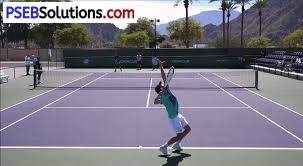
PSEB 12th Class Physical Education Solutions Chapter 4 Sport Injuries

PSEB Solutions for Class 12 Physical Education Chapter 4 Sport Injuries

Physical Education Guide for Class 12 PSEB Sport Injuries Textbook Questions and Answers

One Mark Question-Answers

Question 1.
What are sports injuries?
Answer:
A sports injury may be defined as “damage to the tissues of the body that occurs as a result of sport or exercise” due to overuse, twisting and strectching.

Question 2.
Write any two symptoms of sprain.
Answer:

  • Burning, pain, and swelling.
  • Severe pain during movement.

PSEB 12th Class Physical Education Solutions Chapter 4 Sport Injuries

Question 3.
Who participates in sports besides players or sports persons?
Answer:
The persons with active lifestyle and performing regular exercises takes part in sports.

Two Marks Question-Answers

Question 4.
What is compound fracture?
Answer:
It is one in which the skin or mucous membrane wound extends to the fractured bone.

Question 5.
What is green stick fracture?
Answer:
A fracture in which only one side may get broken and the bone then appears to be bent, but not broken. It is most common in children.

Question 6.
What are indirect injuries?
Answer:
The injury does not result from physical contact with an object or person but it caused due to internal force built up the action of the performer such as overstretching and poor technique.

PSEB 12th Class Physical Education Solutions Chapter 4 Sport Injuries

Three Marks Question-Answers

Question 7.
What is strain? What are the symptoms of strain?
Answer:
Strain is a disruption of the fibres of a muscle or tendon. Tears or strains occur when a muscle or tendon is over-stretched or when a muscle contracts too quickly. The causes of strain occur while lifting weights, muscles are stretched during sudden jerky motion, landing badly on an ankle or walking or exercising on uneven surface. This type of injury generally causes sprains in knees or ankles.

Symptoms:

  • Sudden pain at the site of injury.
  • Fitness and cramps.
  • Swelling at the site of the injuries and sometimes redness also appears.
  • Tenderness.
  • No movement and numbness.

PSEB 12th Class Physical Education Solutions Chapter 4 Sport Injuries

Question 8.
Write the treatment of the following:
Answer:
(i) Sprain:
There are few steps for prevention of sprains:

  • Sprain is firstly treated as ‘PRICE’, where ‘P’ stands for ‘protection’ and ‘R’ stands for ‘Rest’, ‘I’ stands for ‘Ice application’, ‘C’ stands for ‘Compression’ and E stands for ‘Elevation’. Rest the sprained area. If necessary, use sling for an arm injury or crutches for a leg or foot injury. Apply ice on an injured part for 20 minutes every hour. Never put ice directly against skin or it may damage the skin.
  • Give comfortable position to the patient.
  • Provide support to the injured part.
  • Immobilize and elevate the injured part.
  • Cold compression is given to reduce swelling.
  • Hot formation is applied to absorb the blood collection and reduce discolouration.
  • Apply firm elastic bandage.
  • Shift the patient to the hospital as soon as possible for the medical aid.

(ii) Abrasion:

  • Use protective gear like helmet, knee pads, elbow pads, glasses etc. while doing activities.
  • Use anti itching cream over and near abrasion area.
  • If cut has bleeding, apply gentle pressure with clean cloth. Hold the pressure for 20 to 30
    minutes.
  • Immediately rinse out the wound with clear water, do not use soap over it, it may irritate the wound. Through wound cleaning reduces the risk of tetanus.
  • After cleaning the wound, apply antibiotic cream over it to moist the surface.
  • Use bandage to keep the wound clean and keep harmful bacteria out.
  • Use ice to reduce the swelling.
  • Call doctor if scrape is very large and dirty and one is unable to remove debris and dirt, which may cause further infection.

(iii) Strain:

  • Strain is firstly treated as PRICE, where ‘P’ stands for ‘protection’ and ‘R’ stands for ‘Rest’, ‘I’ stands for ‘Ice Application’, C stands for ‘Compression’ and ‘E’ stands for ‘Elevation’. The first thing is to immobilize or rest the sprained area. If necessary, use sling for an arm injury or crutches for a leg or foot injury. Apply ice on an injured part for atleast 20 minutes after every hour. Never put ice directly against skin or it may damage the skin.
  • Place the patient in a comfortable position.
  • Immobilized the injured area.
  • Steady and support the injured part.
  • Elevate the injure injured part.
  • Continue ‘RICE’ for 24 to 48 hours.
  • Shift the patient to the hospital or consult doctor.

(iv) Dislocation:
1. Pain Reduction:
During this process, the doctor may try some gentle movements around the affected joint to help the bones back into position. In case of severe pain local anaesthetic procedures are adopted.

2. Immobilization:
After getting the bones at normal position the joint should be immobilized with a splint or sling for several weeks. The time for which sling or splint is to be used depends upon extent of damage to nerves, blood vessels and supporting tissues.

3. Surgery:
If reduction is not able to settle the joint then surgical technique can be used to move dislocated bones back into their correct positions. Even in case of ruptured nearby blood vessels, nerves or ligaments surgery is required.

4. Rehabilitation:
Rehabilitation process is started after the splint or sling is removed. For the dislocated joint the rehabilitation exercises should be designed in such a way that the gradual load is given. The aim of rehabilitation is to restore normal range of motion and strength around the joint.

PSEB 12th Class Physical Education Solutions Chapter 4 Sport Injuries

Question 9.
What do you know about impact?
Answer:
It is common to suffer from injuries during competitive sports. In order to win at any cost, sportsperson performed with zeal and fast pace in competitions. In this stituation, the players sometimes come directly in contact with other player and causes injury. The common sports activities in which players suffer injuries due to direct impact are kabaddi, wrestling, boxing, football, hockey etc.

Five Marks Question-Answers

Question 10.
Explain the types of fracture in detail.
Answer:
Fracture:
A fracture is a break in the continuity of bone. Fracture occurs when the bone is subjected to stress greater than it can absorb. Fracture can be caused by a direct blow, force, sudden twisting motion and even extreme muscles contraction. The causes of fracture can be direct force, indirect force, force of muscular action and force of ligament. There are following types of bone fractures that may occur during playing or due to accident:

1. Closed Fracture/Simple Fracture:
Its simply the break down of bone in two pieces. It does not produce a break in the skin.

2. Open Fracture/Compound Fracture:
It is one in which the skin or mucous membrane wound extends to the fracture bone.

3. Commuted Fracture: A fracture in which bone has splintered into several fragments.

4. Complicated Fracture:
A fracture in which the fractured bone fragment is driven into another organs or ligaments such as fracture in throacic bone may affect lungs etc.
PSEB 12th Class Physical Education Solutions Chapter 4 Sport Injuries 1
5. Green Stick Fracture:
A fracture in which only one side may get broken and the bone then appears to be bent, but not broken. It is most common in children.

6. Hair line Fracture:
In this type of fracture the thin hair line crack appears in the bone.

7. Depressed Fracture:
A fracture in which fragments are driven inward. This type of fracture can be seen in flat bones such as skull bones etc.

PSEB 12th Class Physical Education Solutions Chapter 4 Sport Injuries

Question 11.
Describe sports injuries. Also write the reasons of sports injuries.
Answer:
A sports injury may be defined as “damage to the tissues of the body that occurs as a result of sport or exercise”. Sports injuries can be classified according to the cause of the injury or the type of tissues damaged.

If we divide injury according to the cause then it can be categorised as under:
1. Direct Injury: A direct injury is caused by an external blow or force.

2. Indirect injury:
The injury does not result from physical contact with an object or person, but from internal forces built up by the actions of the performer, such as may be caused by overstretching, poor technique, etc.

3. Overuse injury:
Overuse injuries occur when excessive and repetitive force is placed on the bones and other connective tissues of the body.

If injuries are classified according to the damaged tissues then we can classify them as follows:
1. Soft Tissue Injuries:
Soft-tissue injuries are the most common injuries resulting from participation in sport. It occurs to muscles, tendons, ligaments and the skin. These injuries include sprain, strain, contusion, abrasion, laceration and blisters.

2. Hard Tissue Injuries:
Hard tissue injuries include injuries to bones or around joints i.e., fracture and dislocations.
Reasons of Sports Injuries. Sports injuries are commonly caused due to overuse, over twisting, over stretching, collision, etc. These injuries can be mild to severe. Most of the injuries are caused due to lack of knowledge. Sports injuries can occur on the play field or while playing due to reasons given ahead:

1. Poor Physical Fitness of Player:
Physical fitness is required for better performance. Physical fitness can be achieved with regular practice. All components like strength, speed, flexibility, endurance, agility, power, balance etc must be possess by the athlete. Lack of physical fitness then causes injury.

2. Due to Poor Psychological Preparation:
If athlete is stressful, full of anxiety or may be playing in tension can be injured easily. For prevention of injury, one must be psychologically prepared for the event.

3. Inadequate warming up before match:
Warming-up is very important for the prevention of injuries. The stretching exercises done during the warm-up session often prevent injuries such as sprain and strain. After proper warming up, the body becomes ready to bear any sort of physical stress. That is why it has been always suggested to begin more vigorous activity after having proper warm-up exercises.

4. Lack of knowledge of proper technique:
By using the accurate technique one can reduce the risk of overuse injuries, such as tendonitis and stress fractures. The injuries like tennis elbow are due to improper technique and overuse. If you are unsure about the correct technique, a qualified sports coach can give you advice. If you exercise in a gym or a leisure centre, ask a fitness instructor or member of gym staff for help.

5. By using substandard sports equipment:
Half of the game can be won by using good equipment. Substandard or poor quality equipment causes injuries during match or practice. Hence, it is always recommeded to use quality equipment during game.

6. Lack of knowledge of rules and regulation of game:
The rules are formulated keeping in view the safety of the sportsmen. Rules of conduct, including illegal blocks and tackles are enforced to keep athlete injury free. Many games have rule of “no body contact” to avoid injuries. By playing under discipline the injuries can be prevented.

7. Bad conditions of Play fields:
The equipment and play fields having all safety measures can save lots of sports injuries. For example running on synthetic track as compared to mud track has less chance of injuries. In basketball safety pads on poles can protect injuries.

8. Due to Arrogance of Player:
Sometimes aggressive players intensely injured other players with intension to injure. To avoid such type of injury, they must be punished at the time.

9. Due to Bad Climate:
Bad climates like sudden rain or uneven ground or may be weather condition like severe cold or hot weather can also cause injury sometimes.

10. Due to Lack of Match Practice:
As we know practice makes a man perfect, athlete must be well prepared and practiced before match. Every day match practice is required for coordination, understanding with fellow team mates, conditioned body movements etc for the prevention of injuries.

PSEB 12th Class Physical Education Solutions Chapter 4 Sport Injuries

Question 12.
Write the meaning and principles of first aid.
Answer:
“First aid is the immediate treatment given to the victim of sudden illness before medical help is made available”. It is applied to prevent further injury, reduce pain experienced by the patient, and shock from the injury. The most important basic concept in first aid is to stop bleeding, restore adequate breathing and treat the patient from shock.

This is very necessary to make sure that the patient has an open airway, is breathing appropriately, and has circulation intact i.e. pulses, normal skin colour and no uncontrolled bleeding. If the patient has stable other specific injuries can be addressed with first aid. The basic concepts of first aid includes keeping wounds clean, applying pressure to stop bleeding and keeping suspected broken bones immobile until they can be evaluated and aligned appropriately.

Principles of First Aid. The basic principles of First aid are as follows:

  • Do first thing fast and quickly, quietly and without panic.
  • Guard against a treat shock by moving the causality as little as possible.
  • Do not attempt too much.
  • Reassure the causality and those around in order to reduce tension.
  • Give artificial respiration if required.
  • Try to stop bleeding.
  • Do not allow people around patient as fresh air is required.
  • Do not change or remove clothes unnecessarily.
  • Arrange immediate vehicle or ambulance to take patient to the hospital.

PSEB 12th Class Physical Education Solutions Chapter 4 Sport Injuries

PSEB 12th Class Physical Education Guide Sport Injuries Important Questions and Answers

One Mark Question-Answers

Question 1.
Give full form of PRICE.
Answer:
Protection, Rest, Ice application, compression, elevation.

Question 2.
Enlist any two soft tissue injuries.
Answer:
Sprain and contusion.

Question 3.
Write any two hard tissue injuries.
Answer:
Fracture, Dislocation.

Question 4.
What is direct injury?
Answer:
A direct injury is caused by external blow or force.

PSEB 12th Class Physical Education Solutions Chapter 4 Sport Injuries

Question 5.
Enlist any two causes of sports injury.
Answer:

  • Poor physical fitness of player
  • Due to inadequate warming up.

Question 6.
Give any two safety measures for injuries.
Answer:

  • Preventive Measures.
  • Curative Measures.

Question 7.
Highlight two principles of First Aid.
Answer:
(i) Do first thing fast and quickly, quietly and without panic.
(ii) Do not attempt too much.

Question 8.
Define First Aid.
Answer:
First aid is the immediate treatment given to the victim of sudden illness before medical help is made available.

Question 9.
Enlist various types of strain.
Answer:
(i) Acute strain
(ii) Chomic strain.

Question 10.
Give two causes of strain.
Answer:
(i) Excessive stretching.
(ii) Sudden movement.

Question 11.
What are the symptoms of strains? Give any two.
Answer:
(i) Sudden pain, swelling, burning at the site of injury
(ii) Excessive pain during movement.

PSEB 12th Class Physical Education Solutions Chapter 4 Sport Injuries

Question 12.
What should be the duration of ice application in sprain?
Answer:
20 minutes every hour.

Question 13.
Highlight any two symptoms of contusion.
Answer:

  • Burning of the skin
  • Localized pain to the injured area.

Question 14.
Enlist various type of Abrasion.
Answer:
Scratches, Grazes, Pressure abrasion, Impact abrasion.

Question 15.
Give any two types of fracture?
Answer:

  • Green stick fracture
  • Commuted fracture.

Question 16.
What are the symptoms of fracture?
Answer:

  • Severe pain
  • Swelling around the injured area.

Question 17.
What is chronic strain?
Answer:
A chronic strain results from prolonged repetitive movements of a muscles. This may occur during events for example Gymnastics, Tennis, Rowing and Golf etc.

PSEB 12th Class Physical Education Solutions Chapter 4 Sport Injuries

Question 18.
How many hours PRICE principle should be applied?
Answer:
24 hours to 48 hours.

Question 19.
What is ordinary sprain?
Answer:
It is mild in nature and little swelling can be seen which has no impact on movements and functions.

Question 20.
What do you mean by laceration?
Answer:
Laceration is the cut over the skin. It is minor wound on skin.

Question 21.
What do you mean by depressed fracture?
Answer:
A fracture in which fragments are driven inward. This type of fracture can be seen in flat bones such as skull bones etc.

Question 22.
What is complicated fracture?
Answer:
A fracture in which the fractured bone fragment is driven into another organs or ligaments such as fracture in throacic bone may affect lungs etc.

PSEB 12th Class Physical Education Solutions Chapter 4 Sport Injuries

Question 23.
What is commuted fracture?
Answer:
A fracture in which bone has splintered into several fragments.

Two Marks Question-Answers

Question 1.
What are major injuries?
Answer:
These injuries are commonly affect muscles, tendons, skin etc. and major injuries are: Sprain, Strain, Contusion, Abrasion, laceration, bruises, fracture, dislocation.

Question 2.
What do you understand by sprain?
Answer:
A sprain is a tear of ligament fibres, muscles or tendons supporting a joint or it is defined as an injury to the ligament and joint capsule. Sprain occurs when joint is extended beyond its normal range, sudden movement, twisting of the part involving joint.

Question 3.
Write about the principles of First Aid.
Answer:

  • Do first thing fast and quickly, quietly and without panic.
  • Guard against a treat shock by moving the causality as little as possible.
  • Do not attempt too much.

PSEB 12th Class Physical Education Solutions Chapter 4 Sport Injuries

Question 4.
Enlist various causes of sports injuries.
Answer:

  • Poor Physical fitness of player
  • Due to poor psychological preparation
  • Inadequate warming up before match.

Question 5.
Highlight various soft tissue related injuries.
Answer:
Soft-tissue injuries are the most common injuries resulting from participation in sport. It occurs to muscles, tendons, ligaments and skin. These injuries include sprain, strain, contusion, abrasion, laceration, blisters and incision.

Question 6.
What do you understand by contusion?
Answer:
A contusion or bruise is bleeding into the soft tissue. It is caused by a direct blow from another person or a direct hit by a blunt object. A bruise can occur to any soft tissue of the body. In contusion capillaries are ruptured and swelling, bleeding and pain appear on the injured part.

Question 7.
Elucidate the term abrasion.
Answer:
Abrasion occurs when the outer layer of skin is removed, usually as a result of a scraping action. It may be any grade of severity from a simple scraping away of a layer of skin to very extensive damage. The open wound can contain dirt or gravel, which should be removed to avoid further infection.

PSEB 12th Class Physical Education Solutions Chapter 4 Sport Injuries

Question 8.
Enlist various types of hard tissue injuries.
Answer:
Hard tissue injuries include injuries to bones or around joints i.e., fracture and dislocations.

Question 9.
Write any two symptoms of dislocation of bones.
Answer:

  • Severe pain in the joint.
  • Reduction in movement around the joint.
  • Joint looks deformed.
  • Swelling appears.

Question 10.
What do you understand by the term ‘PRICE’?
Answer:
Protection, Rest, Ice, application, Compression and Elevation.

Question 11.
Elucidate soft tissues injuries.
Answer:
Soft-tissue injuries are the most common injuries resulting from participation in sport. It occurs to muscles, tendons, ligaments and the skin. These injuries include sprain, strain, contusion, abrasion, laceration, blisters and incision.

Question 12.
Differentiate between direct and indirect injury.
Answer:
(a) Direct Injury: A direct injury is caused by an external blow or force.
(b) Indirect injury: The injury does not result from physical contact with an object or person, but from internal forces built up by the actions of the performer, such as may be caused by overstretching, poor technique, etc.

Question 13.
Differentiate between soft tissue and hard tissue injury.
Answer:
Soft Tissue Injuries:
Soft-tissue injuries are the most common injuries resulting from participation in sport. It occurs to muscles, tendons, ligaments and the skin. These injuries include sprain, strain, contusion, abrasion, laceration and blisters.

Hard Tissue Injuries: Hard tissue injuries include injuries to bones or around joints i.e., fracture and dislocations.

PSEB 12th Class Physical Education Solutions Chapter 4 Sport Injuries

Question 14.
Enlist various principles of First Aid.
Answer:

  • Try to stop bleeding.
  • Do not allow people around patient as fresh air is required.
  • Do not change or remove clothes unnecessarily.
  • Arrange immediate vehicle or ambulance to take patient to the hospital.

Question 15.
What are the symptoms of strain?
Answer:

  • Burning, pain, and swelling.
  • Severe pain during movement.
  • Discoloration
  • Tenderness.

Question 16.
Give any two reasons of strain.
Answer:

  • Over stretching.
  • Sudden movement.

Question 17.
What do you know about sprain?
Answer:
A sprain is a tear of ligament fibres, muscles or tendons supporting a joint or it is defined as an injury to the ligament and joint capsule. Sprain occurs when joint is extended beyond its normal range, sudden movement, twisting of the part involving joint.

PSEB 12th Class Physical Education Solutions Chapter 4 Sport Injuries

Question 18.
Define contusion.
Answer:
A contusion or bruise is bleeding into the soft tissue. It is caused by a direct blow from another person or a direct hit by a blunt object. A bruise can occur to any soft tissue of the body. In contusion capillaries are ruptured and swelling, bleeding and pain appear on the injured part.

Three Marks Question-Answers

Question 1.
What is strain? What are the symptoms of strain?
Answer:
Strain is a disruption of the fibres of a muscle or tendon. Tears or strains occur when a muscle or tendon is over-stretched or when a muscle contracts too quickly. The causes of strain occur while lifting weights, muscles are stretched during sudden jerky motion, landing badly on an ankle or walking or exercising on uneven surface. This type of injury generally causes sprains in knees or ankles.

Sign and symptoms:

  • Sudden pain at the site of injury.
  • Stifhess and cramps.
  • Swelling at the site of injuries and sometime redness also appears.
  • Tenderness.
  • No movement and numbness.

Question 2.
What are the principles of First Aid?
Answer:
The basic principles of First aid are as follows:

  • Do first thing fast and quickly, quietly and without panic.
  • Guard against a treat shock by moving the causality as little as possible.
  • Do not attempt too much.
  • Reassure the causality and those around in order to reduce tension.
  • Give artificial respiration if required.
  • Try to stop bleeding.
  • Do not allow people around patient as fresh air is required.

PSEB 12th Class Physical Education Solutions Chapter 4 Sport Injuries

Question 3.
How would you give First aid for the sprain?
Answer:
There are few steps for prevention of sprains:

  • Sprain is firstly treated as ‘PRICE’, where ‘P’ mean ‘protection’ ‘R’ stands for ‘Rest’, ‘I’ stands for ‘Ice application’, ‘C’ stands for ‘Compresion’ and E stands for ‘Elevation’. Rest the sprained area. If necessary, use sling for an arm injury or crutches for a leg or foot injury. Apply ice on an injured part for 20 minutes every horn. Never put ice directly against skin or it may damage the skin.
  • Give comfortable position to the patient.
  • Provide support to the injured part.
  • Immobilize and elevate the injured part.
  • Cold compression is given to reduce swelling.

Question 4.
Enlist various preventive measures of dislocation.
Answer:
1. Reduction:
During this process, the doctor may try some gentle movements around the affected joint to help the bones back into position. In case of severe pain local anaesthetic procedures are adopted.

2. Immobilization:
After getting the bones at normal position the joint should be immobilized with a splint or sling for several weeks. The time for which sling or splint is to be used depends upon extent of damage to nerves, blood vessels and supporting tissues.

3. Surgery:
If reduction is not able to settle the joint then surgical technique can be used to move dislocated bones back into their correct positions. Even in case of ruptured nearby blood vessels, nerves or ligaments surgery is required.

4. Rehabilitation:
Rehabilitation process is started after the splint or sling is removed. For the dislocated joint the rehabilitation exercises should be designed in such a way that the gradual load is given. The aim of rehabilitation is to restore normal range of motion and strength around the joint.

Question 5.
Differentiate between fracture and dislocation.
Answer:
Fracture:
A fracture is a break in the continuity of bone. Fracture occurs when the bone is subjected to stress greater than it can absorb. Fracture can be caused by a direct blow, force, sudden twisting motion and even extreme muscles contraction. The causes of fracture can be direct force, indirect force, force of muscular action and force of ligament.

Dislocation;
Dislocation is injury to joints where one bone is displaced from another. A dislocation is often accompanied by considerable damage to the surrounding connective tissues. Dislocation occurs as a result of the joint being pushed past its normal range of movement. Common site occurring of dislocation are finger, shoulder, hip joint and patella.

PSEB 12th Class Physical Education Solutions Chapter 4 Sport Injuries

Question 6.
Define Abrasion. Also explain various types of Abrasion.
Answer:
Abrasion:
Abrasion occurs when the outer layer of skin is removed, usually as a result of a scraping action. It may be any grade of severity from a simple scraping away of a layer of skin to very extensive damage. The open wound can contain dirt or gravel, which should be removed to avoid further infection.

Types of Abrasions:
Abrasion is four types:
1. Scratches:
An abrasion by sharp or pointed object, not sharp enough to incise but pointed enough to scratches e.g. pin, tip of knife, finger nail etc. Scratches have length but no significant width.

2. Grazes:
Grazes caused by movement between skin and some rough surface in contact with it. They are commonly seen in road accidents.

3. Pressure abrasion:
Caused by crushing of superficial layers of epidermis and are associated with bruise of surrounding area. In this abrasion movement is slightly and directed inward.

4. Impact abrasion:
Caused by impact with a rough object. For example when a person is knocked down by motor car, a headlamps rim or tread of type may be seen on the skin.

Question 7.
Explain various causes of sports injury.
Answer:
Sports injuries are commonly caused due to overuse, over twisting, over stretching, collision, etc. These injuries can be mild to severe. Most of the injuries are caused due to lack of knowledge. Sports injuries can occur on the play field or while playing due to reasons given ahead:

1. Poor Physical Fitness of Player:
Physical fitness is required for better performance. Physical fitness can be achieved with regular practice. All components like strength, speed, flexibility, endurance, agility, power, balance etc must be possess by the athlete. Lack of physical fitness then causes injury.

2. Due to Poor Psychological Preparation:
If athlete is stressful, full of anxiety or may be playing in tension can be injured easily. For prevention of injury, one must be psychologically prepared for the event.

3. Inadequate warming up before match:
Warming-up is very important for the prevention of injuries. The stretching exercises done during the warm-up session often prevent injuries such as sprain and strain. After proper warming up, the body becomes ready to bear any sort of physical stress. That is why it has been always suggested to begin more vigorous activity after having proper warm-up exercises.

PSEB 12th Class Physical Education Solutions Chapter 4 Sport Injuries

Question 8.
What are the safety measures for sports injury?
Answer:
There are following points which one should consider for safety:
1. Proper Warming Up:
The most important measure to prevent injuries is to perform warming up exercises prior to any event. This would help to prepare an athlete physiologically and psychologically for the event. Hence, the chances of getting injuries would be less by performing proper warming up exercises.

2. According to the fitness level of an athlete:
Sometimes the injury may cause due to overuse of the muscle, in which there are more chances of wear and tear of muscle tissue. So, it is important that the training load should be according to the fitness level of an athlete.

3. Proper technique:
Faulty methods of training or practicing wrong technique would also lead to injury. So, teacher needs to constantly check whether an athlete is practicing appropriate technique or not. It is important to make correction at an early age.

Question 9.
Briefly explain the term RICE and PRICE.
Answer:
RICE:
The term RICE implies ‘R’ means rest, ‘I’ stands for ‘Ice application’ ‘C’ means ‘compression and ‘E’ represents ‘Elevation.’ The term ‘PRICE’ denotes ‘P’ which means ‘protection’ or ‘prevention’ i.e., prevention is better than cure. Hence, principle of ‘PRICE’ most suitable and applicable in the field of sports.

Question 10.
Write a short note on:
(i) Strain
(ii) Contusion.
Answer:
(i) Strain:
Strain is a disruption of the fibres of a muscle or tendon. Tears or strains occur when a muscle or tendon is over-stretched or when a muscle contracts too quickly. The causes of strain occur while lifting weights, muscles are stretched during sudden jerky motion, landing badly on an ankle or walking or exercising on uneven surface. This type of injury generally causes sprains in knees or ankles,

(ii) Contusion:
A contusion or bruise is bleeding into the soft tissue. It is caused by a direct blow from another person or a direct hit by a blunt object. A bruise can occur to any soft tissue of the body. In contusion capillaries are ruptured and swelling, bleeding and pain appear on the injured part.

PSEB 12th Class Physical Education Solutions Chapter 4 Sport Injuries

Question 11.
Differentiqate between Sprain and Strain.
Answer:
Sprain:
A sprain is a tear of ligament fibres, muscles or te’Jons supporting a joint or it is defined as an injury to the ligament and joint capsule. Sprain occurs when joint is extended beyond its normal range, sudden movement, twisting of the part involving joint.

Strain:
Strain is a disruption of the fibres of a muscle or tendon. Tears or strains occur when a muscle or tendon is over-stretched or when a muscle contracts too quickly. The causes of strain occur while lifting weights, muscles are stretched during sudden jerky motion, landing badly on an ankle or walking or exercising on uneven surface. This type of injury generally causes sprains in knees or ankles.

Five Marks Question-Answers

Question 1.
Elaborate the term dislocation with its symptoms and preventive measures.
Answer: Dislocation. Dislocation is injury to joints where one bone is displaced from another. A dislocation is often accompanied by considerable damage to the surrounding connective tissues. Dislocation occurs as a result of the joint being pushed past its normal range of movement. Common site occurring of dislocation are finger, shoulder, hip joint and patella.
Symptoms:

  • Severe pain in the joint.
  • Reduction in movement of the joint.
  • Joint looks deformed.
  • Swelling appears.

Prevention of Dislocation:
As dislocation occurs immediately restrict the joint for further movement. Further movement of dislocated joint can damage the joint and its surrounding muscles, ligaments, nerves or blood vessels. Apply ice on the injured joint. This can help in reducing swelling by controlling internal bleeding.

After this restrict the joint from moving by using a bandage. For an arm injury, a sling can be used to support the arm. For a leg injury, use padding or broad-fold bandages. To give extra support for an injured shoulder, tie a bandage around the arm. After stopping the joint from moving, send the injured person to hospital.
The dislocation is treated by expert doctors. The management of dislocation is done as following steps:

1. Reduction:
During this process, the doctor may try some gentle movements around the affected joint to help the bones back into position. In case of severe pain local anaesthetic procedures are adopted.

2. Immobilization:
After getting the bones at normal position the joint should be immobilized with a splint or sling for several weeks. The time for which sling or splint is to be used depends upon extent of damage to nerves, blood vessels and supporting tissues.

3. Surgery:
If reduction is not able to settle the joint then surgical technique can be used to move dislocated bones back into their correct positions. Even in case of ruptured nearby blood vessels, nerves or ligaments surgery is required.

4. Rehabilitation:
Rehabilitation process is started after the splint or sling is removed. For the dislocated joint the rehabilitation exercises should be designed in such a way that the gradual load is given. The aim of rehabilitation is to restore normal range of motion and strength around the joint.

PSEB 12th Class Physical Education Solutions Chapter 4 Sport Injuries

Question 2.
Write a short note on:
1. Abrasion
2. Dislocation.
3. Contusion
Answer:
1. Abrasion:
Abrasion occurs when the outer layer of skin is removed, usually as a result of a scraping action. It may be any grade of severity from a simple scraping away of a layer of skin to very extensive damage. The open wound can contain dirt or gravel, which should be removed to avoid further infection.

2. Contusion:
A contusion or bruise is bleeding into the soft tissue. It is caused by a direct blow from another person or a direct hit by a blunt object. A bruise can occur to any soft tissue of the body. In contusion capillaries are ruptured and swelling, bleeding and pain appear on the injured part.

3. Dislocation:
Dislocation is injury to joints where one bone is displaced from another. A dislocation is often accompanied by considerable damage to the surrounding connective tissues. Dislocation occurs as a result of the joint being pushed past its normal range of movement. Common site occurring of dislocation are finger, shoulder, hip joint and patella.

Question 3.
What do you know about strain? Write its symptoms and treatment
Answer:
Soft tissue injuries occur in sports. These are common injuries which mostly occur on the ground while playing the game. These are as under:

(a) Strain/Tear:
Strain is a disruption of the fibres of a muscle or tendon. Tears or strains occur when a muscle or tendon is overstretched or when a muscle contracts too quickly. The causes of strain occur while lifting weights, muscles are stretched during sudden jerky motion, landing badly on an ankle or walking or exercising on uneven surface. This type of injury generally causes sprains in knees or ankles. There are two types of strains.
1. Acute strain
2. Chronic strain

1. Acute Strain:
An acute strain occurs when a muscle become strained or may even tear or when it stretched usually far or abruptly. Acute strains often occur in the following ways:

  • Slipping on surface.
  • Running, jumping or throwing.
  • Lifting a heavy objects.

2. Chronic Strain:
A chronic strain results from prolonged repetitive movements of a muscles. This may occur during events for example Gymnastics, Tennis, Rowing and Golf etc.
Causes of strain

  • While lifting weight.
  • Sudden movement.
  • When muscles are stretched during sudden jerky motion.

Sign and symptoms:

  • Sudden pain at the site of injury.
  • Stifness and cramps. .
  • Swelling at the site of injuries and sometime redness also appears.
  • Tenderness.
  • No movement and numbness.

Preventions and Remedies:

  • Strain is firstly treated as RICE, where ‘R’ stands for ‘Rest’, ‘I’ stands for ‘Ice Application’, C stands for ‘Compression’ and ‘E’ stands for ‘Elevation’. The first thing is to immobilize or rest the sprained area. If necessary, use sling for an arm injury or crutches for a leg or foot injury. Apply ice on an injured part for atleast 20 minutes after every hour. Never put ice directly against skin or it may damage the skin.
  • Place the patient in a comfortable position.
  • Immobilized the injured area.
  • Steady and support the injured part.
  • Elevate the injure injured part.
  • Continue ‘RICE’ for 24 to 48 hours.
  • Shift the patient to the hospital or consult doctor.

PSEB 12th Class Physical Education Solutions Chapter 4 Sport Injuries

Question 4.
Write about sprain alongwith its symptoms and preventions.
Answer:
Sprain:
A sprain is a tear of ligament fibres, muscles or tendons supporting a joint or it is defined as an injury to the ligament and joint capsule. Sprain occurs when joint is extended beyond its normal range, sudden movement, twisting of the part involving joint. We can grade sprain into three phases:

(i) Ordinary Sprain:
It is mild in nature and little swelling can be seen which has no impact on movements and functions.

(ii) Moderate Sprain: It is moderate, due to swelling and pain it affects the functioning and movements.

(iii) Severe Sprain:
It is pain free sprain as sensory fibres are completely tom up. It has large swelling, loss of functioning generally occurs.

Causes of sprain:
There are few reasons for sprain. They are following:

  • Sudden movement.
  • Twisting of the part involving joint.
  • Over stretch or tear of the ligament supporting that joint.
  • Sudden fall on over stretched arm or side of the foot

Sign and Symptoms:

  • Burning, pain, and swelling.
  • Severe pain during movement.
  • Discoloration
  • Tenderness.
  • Loss of the ability to move.
  • Redness or red streaks spreading over injured area.

Prevention and Remedies:
There are few steps for prevention of sprains. .

  • Sprain is firstly treated as ‘PRICE’, where ‘P’ stands for ‘protection’ and ‘R’ stands for ‘Rest’, T stands for ‘Ice application’, ‘C’ stands for ‘Compresion’ and E stands for ‘Elevation’. Rest the sprained area. If necessary, use sling for an arm injury or crutches for a leg or foot injury. Apply ice on an injured part for 20 minutes every hour. Never put ice directly against skin or it may damage the skin.
  • Give comfortable position to the patient.
  • Provide support to the injured part.
  • Immobilize and elevate the injured part.
  • Cold compression is given to reduce swelling.
  • Hot formation is applied to absorb the blood collection and reduce discolouration.
  • Apply firm elastic bandage.

PSEB 12th Class Physical Education Solutions Chapter 4 Sport Injuries

Question 5.
What do you mean about fracture? Write its types.
Answer:
Fracture:
A fracture is a break in the continuity of bone. Fracture occurs when the bone is subjected to stress greater than it can absorb. Fracture can be caused by a direct blow, force, sudden twisting motion and even extreme muscles contraction. The causes of fracture can be direct force, indirect force, force of muscular action and force of ligament. There are ahead types of bone fractures that may occur during playing or due to accident:

1. Closed Fracture/Simple Fracture:
Its simply the break down of bone in two pieces. It does not produce a break in the skin.

2. Open Fracture/Compound Fracture:
It is one in which the skin or mucous membrane wound extends to the fracture bone.

3. Commuted Fracture: A fracture in which bone has splintered into several fragments.

4. Complicated Fracture: A fracture in which the fractured bone fragment is driven into another organs or ligaments such as fracture in throacic bone may affect lungs etc.

5. Green Stick Fracture:
A fracture in which only one side may get broken and the bone then appears to be bent, but not broken. It is most common in children.

6. Hair line Fracture: In this type of fracture the thin hair line crack appears in the bone.

7. Depressed Fracture:
A fracture in which fragments are driven inward. This type of fracture can be seen in flat bones such as skull bones etc.

Signs and Symptoms:
Signs of a fractured bone include one or more of the symptoms which are listed below. Intense pain at the site of the injury that worsens with movement.

  • Severe pain
  • Swelling around the injured area.
  • Bone may protrude through the skin.
  • Heavy bleeding may occur at the injury site.

Remedies and Prevention:
Fractured bones are generally not life frightening, but they need instant medical care
1. In case of bleeding apply pressure to the wound with a sterile bandage, a clean cloth, or a clean piece of clothing. Even first aid treatment for shock is also required.

2. In case the injured person has symptoms such as dizziness, weakness, pale and clammy skin, shortness of breath, and increased heart rate. The person should lie quietly with the feet elevated about 12 inches.

3. Cover him or her with a blanket to maintain body warmth. After this immobilize the injured area.

4. Do not let the injured move if there is a back or neck injury. Make a splint by folding a piece of cardboard or newspaper or a magazine, then placing it gently under the limb. Carefully tie the splint to the injured area with pieces of cloth.

5. Cold compression to the injured area also minimizes swelling and faster recovery. Make sure to place a cloth between the skin and the ice to prevent the damage of the skin.

6. If an injured person is unresponsive and is facing great difficulty in breathing can be given CPR. Don’t move the person to avoid further injury.

7. Immobilize the injured area. Apply a splint to the area above and below the fracture sites. Padding the splints can help reduce discomfort.

Question 6.
What do you understand by Sports injuries? Tell about the prevention of Sports injuries.
Answer:
A sports injury may be defined as ‘ ‘damage to the tissues of the body that occurs as a result of sport or exercise”. Sports injuries can be classified according to the cause of the injury or the type of tissues damaged.
PSEB 12th Class Physical Education Solutions Chapter 4 Sport Injuries 3

If we divide injury according to the cause then it can be categorised as under:
1. Direct Injury: A direct injury is caused by an external blow or force.

2. Indirect injury:
The injury does not result from physical contact with an object or person, but from internal forces built up by the actions of the performer, such as may be caused by overstretching, poor technique, etc.

3. Overuse injury:
Overuse injuries occur when excessive and repetitive force is placed on the bones and other connective tissues of the body.

If injuries are classified according to the damaged tissues then we can classify them as follows:

1. Soft Tissue Injuries:
Soft-tissue injuries are the most common injuries resulting from participation in sport. It occurs to muscles, tendons, ligaments and the skin. These injuries include sprain, strain, contusion, abrasion, laceration and blisters.

2. Hard Tissue Injuries:
Hard tissue injuries include injuries to bones or around joints i.e., fracture and dislocations.
Prevention of Sports Injuries. The Physical Education Programme includes the bodily movement where the risks associated with the injury deemed to be acceptably very high. So, it is the responsibility of all the teachers, worker and trainers of Physical Education Programme to identity those risks and situation where the students are not safe in terms of Physical injuries. The Physical Education teacher should make the sports situations and environment safe for the students.

He should also teach safe practices, self safety and effective management of risks to the students. The concept self safety includes various means and ways which helps an athlete to protect him from the chances of injury while playing. It is to gain proper knowledge about the athletic care and how to minimize chances of injury while taking part in games and sports. So, we can say that self safety is a set of measures, ways and methods to care our body from various hazards while participating in games and sports to improve performance. Safety or athletic care has two aspects:

1. Preventive aspects:
It guides us about the preventive ways of the problems.’i.e. how we should prevent ourselves from injury, accident or other hazards. It guides us about preventive clothing, protective equipment, safety equipment, rest and diet etc.

2. Curative aspects:
It guide us how to cure, manage and give treatment to injury. This includes corrective exercise and rehabilitation programme to manage and recover from the injury.
There are following preventive measures which one should consider for safety:

1. Proper Wanning Up:
The most important measure to prevent injuries is to perform warming up exercises prior to any event. This would help to prepare an athlete physiologically and psychologically for the event. Hence, the chances of getting injuries would be less by performing proper warming up exercises.

2. According to the fitness level of an athlete:
Sometimes the injury may cause due to overuse of the muscle, in which there are more chances of wear and tear of muscle tissue. So, it is important that the training load should be according to the fitness level of an athlete.

3. Proper technique:
Faulty methods of training or practicing wrong technique would also lead to injury. So, teacher needs to constantly check whether an athlete is practicing appropriate technique or not. It is important to make correction at an early age.

4. After complete recovery from an injury:
Sometimes athletes start practicing after incomplete recovery from the previous injury, this would lead to further complications and chances of injuries increase in this condition. Hence, an athlete must participate after the complete recovery to avoid further chances of injuries.

5. Safety of equipment:
The most important aspect in the teaching of skill to the students of physical education is that the teacher must have relevant knowledge about the group he is going to deal with it a class. The key information regarding the students includes their physical, mental and physiological capacities and capabilities. Teacher needs to constantly check whether the place (field) where they are going to perform the activity is safe or not. The second concern should be the equipment they are going to use should be properly checked prior to an activity. The equipment you are going to use while participating in sports and other activities is key to injuries.

6. Handling dangerous equipment:
The activity which involves the use of dangerous equipment like javelin, shot-put, hockey stick etc., special attention should be given in the placement of students in the field. No one should be allowed to trespass or cross the field during the use of such equipment.

7. Use of protective equipment:
The activities involving chances of physical injury due to bodily or equipment contact must be performed while using protective equipment. The protective equipment such as head guard, gun shield, cup protective, anklet, knee guard, chest guard etc. must be worn while taking part in sports such as boxing, hockey goal keeping and other contact sports.

Hence, it can be concluded from the above facts that the teachers who are managing and conducting the physical training programme must realize the importance of safety measures in terms of equipment.

PSEB 12th Class Physical Education Solutions Chapter 4 Sport Injuries

Question 7.
Elucidate First Aid. Write down principles of First Aid.
Answer:
“First aid is the immediate treatment given to the victim of sudden illness before medical help is made available”. It is applied to prevent further injury, reduce pain experienced by the patient, and shock from the injury. The most important basic concept in first aid is to stop bleeding, restore adequate breathing and treat the patient from shock.

This is very necessary to make sure that the patient has an open airway, is breathing appropriately, and has circulation intact i.e. pulses, normal skin colour and no uncontrolled bleeding. If the patient has stable other specific injuries can be addressed with first aid. The basic concepts of first aid includes keeping wounds clean, applying pressure to stop bleeding and keeping suspected broken bones immobile until they can be evaluated and aligned appropriately.

Principles of First Aid
The basic principles of First aid are as follows:

  • Do first thing fast and quickly, quietly and without panic.
  • Guard against a treat shock by moving the causality as little as possible.
  • Do not attempt too much.
  • Reassure the causality and those around in order to reduce tension.
  • Give artificial respiration if required.
  • Try to stop bleeding. .
  • Do not allow people around patient as fresh air is required.
  • Do not change or remove clothes unnecessarily.
  • Arrange immediate vehicle or ambulance to take patient to the hospital.

Punjab State Board PSEB 12th Class Physical Education Book Solutions Chapter 4 Sport Injuries Textbook Exercise Questions and Answers.
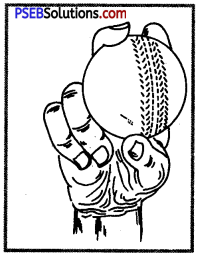
PSEB 12th Class Physical Education Solutions Chapter 1 Physical Fitness

PSEB Solutions for Class 12 Physical Education Chapter 1 Physical Fitness

Physical Education Guide for Class 12 PSEB Physical Fitness Textbook Questions and Answers

One Mark Question-Answers

Question 1.
How many types of strength are there? Name them.
Answer:
There are two types of strength:

  • Dynamic strength
  • Static strength.

Question 2.
How many components of Physical fitness are there? Name them.
Answer:

  • Strength
  • Endurance
  • Speed
  • Flexibility
  • Agibity
  • Coordinaiton ability

PSEB 12th Class Physical Education Solutions Chapter 1 Physical Fitness

Question 3.
Name short term races.
Answer:
100mt., 200 mt., 400 mt., 4 x 100 m Relay, 4 x 200 mt. Relay, 110 mt hurdle, 100 mt hurdle.

Question 4.
Which type of flexibility is more Active flexibility or Passive flexibility?
Answer:
Passive flexibility is more than active flexibility.

Two Marks Question-Answers

Question 5.
What is medium term endurance?
Answer:
It can be required for such activities which lasts from 2 to 10 min. Middle term endurance depends on muscle endurance and speed endurance Middle distance races are the example of the middle term endurance (800 mt., 1500 m) etc.

Question 6.
What do you know about long term endurance?
Answer:
It depends upon the aerobic energy system. Long term endurance can be developed for such an event which lasts for 10 min or more. Marathon, 5000 m and 10,000 m races are the examples of the long term endurance.

Question 7.
What do you know about passive flexibility?
Answer:
It is the ability to perform extension movements around joints with wider range and some external helps. For example, stretching exercise with the help of a partner. This flexibility is more than active flexibility.

PSEB 12th Class Physical Education Solutions Chapter 1 Physical Fitness

Three Marks Question-Answers

Question 8.
What are the different types of Endurance? Explain each of them in detail.
Answer:
As per the requirements following are the categories of endurance
1. As per the Nature of the Activity:
(a) Basic Endurance:
Basic endurance mainly depends upon aerobic endurance. It is done in slow pace where all the muscle groups of the body are involved in a particular movement. Running, jogging, walking and swimming are the examples of basic endurance.

(b) General Endurance:
It depends upon both aerobic and anaerobic activities. It, is done in both slow and fast pace activities. This enables sportsperson to work for longer duration without any tiredness.

(c) Specific Endurance:
Specific endurance can be differ from sports to sports. Every sport has their own intensity. For example, marathon runners have to run long hours beside boxers have to complete their bout in 3 minute round.

2. As per the Duration of the Activity:
(a) Short Term Duration:
Exercises for short distance can be fixed with the rest interval of short duration. It lasts upto 2 minutes and also called anaerobic activities. Short term endurance is required to resist fatigue in sports activities such as sprints and middle distance races.

(b) Middle Term Endurance:
It can be required for such activities which lasts from 2 to 10 min. Middle term endurance depends on muscle endurance and speed endurance Middle distance races are the example of the middle term endurance (800 mt., 1500 m) etc.

(c) Long Term Endurance:
It depends upon the aerobic energy system. Long term endurance can be developed for such an event which lasts for 10 min or more. Marathon, 5000 m and 10,000 m races are the examples of the long term endurance.

PSEB 12th Class Physical Education Solutions Chapter 1 Physical Fitness

Question 9.
Write a note on each of the following:
(i) speed
(ii) flexibility
(iii) co-ordinative ability.
Answer:
(i) Speed:
Speed is maximum rate at which a person is able to move his body over a specific distance. We can say that speed is the ability to move from one place to another in the shortest possible time. This ability is mainly hereditary in nature. That is why we can improve speed after rigorous training upto 20% only. It is also said that sprinters are bom not made.

Types of Speed:
1. Reaction Speed: It is the ability to give a quick reaction on a signal. The sportsperson respond against the situation demand.

2. Acceleration Speed:
It is the ability to achieve maximum speed from stationary position. We can see it in sprints. Indirectly .this ability depends on the other factors like explosive strength, technique and flexibility.

3. Movement Speed:
It is the ability to do maximum movement in minimum time. These can be seen in team games, combative sports, racket sports, throws and gymnastics etc.

4. Locomotor Ability:
This is the ability to maintain the speed after accelerated maximally. This can be seen in few events such as short distance races, i.e. 100 m, 200 m and 400 m etc.

5. Speed Endurance:
It is the ability to maintain near maximal speed for a longer duration.

(ii) Flexibility:
Flexibility is the range of movement possible around a joint. In general terms, flexibility has been defined as the range of motion around a joint and its surrounding muscles during passive movements.

Types of Flexibility:
1. Static Flexibility:
It is the ability to extend various joints in a stationary position.
(a) Passive Flexibility:
It is the ability to perform extension movements around joints with wider range and some external helps. For example, stretching exercise with the ‘ help of a partner. This flexibility is more than active flexibility.

(b) Active Flexibility:
It is the ability to perform flexibility or extension movements with larger amplitude without any external help or a partner. For example, swinging of legs.

2. Dynamic Flexibility:
It is the ability to perform extension movements around joints with greater amplitude when the body is in motion. Dynamic flexibility is more specific to sports to sports movements. For example, running and somersault in gymanastics or diving in swimming etc.

(iii) Coordination Ability:
Coordination Ability is the ability to perform smooth and accurate motor task, often involving the use of the sense organs and series of correlated muscular contraction that affect a range of joint and therefore relative limb and body position. It depends on the neuro-muscular coordination of the body.

Types of Coordination Ability:
There are mainly seven types of coordinative abilities considered in sports. These are as follows:
1. Orientation Ability:
It is the ability of an individual to analyze and change his body position and its parts in time and space in relation to performance required. For example, gymnast changes his body position as per the requirements of sports performance and basket ball player changes his position from offense to defence as the ball possession goes to opponent.

2. Coupling Ability:
It is the ability of an individual to systematically and meaningfully combine the movement of different body parts for successful performance of sports movement. For example, during spiking in volleyball, the player jumps and hits the ball.

3. Differentiation Ability:
It is the ability which enables the sportsman to separate the different body position and its parts during execution of motor action with high accuracy and movement economy. For example, in volley ball when player jumps for spiking, but drops ball according to the situation.

4. Reaction Ability:
It is the ability of an individual to respond quickly to a given signal and perform the movement in well directed manner. For example, in 100 m sprint when an athlete gets the signal he reacts quickly and performs the movement in desired direction.

5. Balance Ability:
It is the ability of an individual to maintain the dynamic condition. For example, in 400 m race, runner should run in his own lane.

6. Rhythm Ability:
It is the ability of an individual to understand the rhythm of movement and to execute the movement with required rhythm. For example, taking lay-up shot in basketball.

7. Adaptation Ability:
It is the ability of an individual to bring about an effective change in the movement according to anticipated change in the situation. For example, adaptation of scoop to the hitting a ball in hockey.

Five Marks Question-Answers

Question 10.
What do you know about the importance of Physical fitness? Explain in detail.
Answer:
People who are physically fit are able to enjoy their life to the fullest. In today’s scenario of technological development people hardly spend time for their physical fitness. Now, question arises why it is important to be physically fit. The answer lies in the following points:

1. Improves Overall Health:
Physically fit persons possess numerous health advantages such as respiratory, cardiovascular health and overall functioning of the body remain in active state. This helps, in reducing the chances of type 2 diabetes, heart diseases, reduces risk of some cancer and lastly helps in maintaining good health and wellness.

2. Weight Management:
As we all know that the person with over weight or obese people are more prone to health related problems such as high BP, Ghotestrol level, diabetes etc. So, people who are living active lifestyle and physically fit are less likely to face these problems as they are able to control and manage their optimum weight with the help of regular exercise and stay fit.

3. Importance as a stress management:
Through the physical fitness and wellness programme, an individual become capable of managing stress, releiving stress and easily distracted from the daily stresses. Hence, this help in staying active and balanced in any stage of life. So, in order to maintain relaxed state of mind, a person should be physically fit.

4. Reduced risk of injuries:
Physical fitness prevents the chances of injuries in later stage. The reason for the same could be the increased muscle strength, bone density, flexibility and stability. It reduces the chances of injuries especially, as a person get older e.g. strong bones mean less likely to suffer bone injuries as later age.

5. Increases life expectancy:
Regular exercise and physical acitivity reduces the chances of health related diseases, which increases life expectancy and reduce the risk of premature mortality. It has been observed that people who are more active tend to be healtheir and tend to live longer.

6. Proper growth and development:
Through fitness and wellness programme children tend to grow and develop better. They are able to attain good shape, height, structure and optimum weight with the help of their physical fitness programme. So, physically fit person are in well balanced state of their physical structure as well.

7. Improves work efficiency:
The person who are physically fit are tend to perform well in every sphere of life such as work place, family peer group etc. Due to their active and balance state of body and mind their output at work place is more and they tend to enjoy social group with more zeal and excitement. Hence, helps in enjoying their life to the fullest.

Hence, it can be concluded that physical fitness is important for the ‘‘Sound mind in a sound body”. To enjoy at every stage of life.

PSEB 12th Class Physical Education Solutions Chapter 1 Physical Fitness

Question 11.
Write the meaning and definition of Physical fitness.
Answer:
Physical fitness is one of the basic requirements of life. It is the ability to carry out our daily tasks without undue fatigue. It is also refer to balanced state of psychological, physiological or anatomical aspects of the person. The concept of physical fitness, in the field of physical education and sports, means the capability of an individual to meet the varied physical and physiological demands made by a sporting activity, without reducing the person to an excessively fatigued state. Such a state would be one in which individual can no longer perform the skills of the activity accurately and successfully.

It is necessary for every individual to be physically fit to perform their daily work with ease or without undue fatigue and to take part in various activities effectively. Everyone should be fit enough through participation in physical activities to develop the different components related to physical fitness.

1. According to Clarke:
“Physical fitness is the ability to carry out daily task with vigour and alertness without undue fatigue and ample energy to enjoy leisure time pursuits and to meet unforeseen emergencies.”

2. According to Bucher and Prentice:
“Physical fitness is organic development, muscular strength and stamina. Physical fitness implies efficient performance in exercises.”

3. According to Thomas: “Physical fitness is the total fundamental capacity of an individual to perform a given task”.

4. According to Mathews: “Physical fitness is the capacity of an individual to perform given physical tasks involving muscular effort”.

5. According to William: “Physical fitness is the capacity of an individual to perform physical work”.

6. According to Hubert Dhanaraj: “Physical fitness refers to the ability of the body to tolerate stress in all its kinds and maintain manifestations”.

7. According David R. Lamb: “Physical fitness is the capacity to meet the present and potential physical challenges of life with success.”

8. According to Web Encyclopaedia: ‘‘It is the ability of a person to do daily routine work without fatigue; moreover to participate in playful activity and still reserves enough capacity to meet any emergency.”

Hence, it is important for everyone to stay fit and healthy to perform his daily routine work effectively, to enjoy his life to fullest.

PSEB 12th Class Physical Education Solutions Chapter 1 Physical Fitness

Question 12.
Explain the factors affecting Physical fitness in detail.
Answer:
There are enormous factors which affects physical fitness in certain ways. Due to inactivity, both short term and long term physical fitness get affected in number of ways. These factors which affect physical fitness are as below:
1. Anatomical Structure:
Anatomical/body structure of every individual is different or they have different shape and sizes. Inappropriate shape and size always hinder in physical performance. Sometimes, genetic impaired organ limits the physical performance of an individual, e.g. a person with smaller lower limbs have more balance as compare to vice-versa.

2. Physiological Structure:
Our all internal system like respiratory system, circulatory system, muscular system and other body systems must work efficiently. Any malfunctioning in systems can affect the physical performance of an individual Example would be problem in breathing or heart diseases etc. may affect the endurance capacity of a person. Hence, for the optimal physical fitness an individual must be physiologically fit also.

3. Psychological Factor:
There are so many psychological disorders which has affect on physical performance e.g. stress, tension, anxiety etc. which are big barriers in performance. Mentally strong and stress free individual can be fit for sports. Stress and tension always limits the physical fitness of a person and hence, affects the performance.

4. Heredity and Environment:
Both, heredity and environment affects physical fitness of an individual. Heredity and environment interacts to produce their effects. This means that the way genes act depends on the environment in which they act. e.g. if any person is a good sportsman, the child tend to have some traits of physical domain. Similarly, environmental variables also effects an individual e.g. difference of height in Japanese and AmericAnswer:

5. Good Posture:
Postural deformities always creates hinderance in physical fitness, for example muscle imbalance, pain, nutrition deficiency, lordosis, scoliosis, round shoulder, knock knees etc. can affect physical fitness of a person, e.g. A person with flat feet would not be able to perform better in events demanding speed.

6. Diet:
Diet plays a major role in physical performance and it is required to maintain physical fitness level. Right amount of calories and nutrition will help athlete to perform their best. Without adequate carbohydrate and fluid, an athlete gets tired very easily and quickly. Protein is needed to rebuild muscles. Without carbohydrates, protein, vitamins athlete will not perform well and it also decreases physical fitness.

7. Life Style:
A person who follow good life style are more fit and perform better in physical performance. Life style does not mean luxuries living; it means living with good habits. An individual who is habitual of smoking, liquor, drug etc. cannot perform well on these components of physical fitness. It affects physical fitness and overall health of a person.

8. Climate:
Different climatic conditions always affects the physical fitness of a person. There are different climatic conditions like winter, summer, humid etc. which influence physical fitness. For better physical performance one must trained themselves in different climate conditions. For example if an individual belongs to the hot and humid area and they have to compete in cold area then, it affects their physical performance. To avoid these barriers one must practice in different climates.

9. Inactivity:
Lack of physical activity leads individual towards sedentary life style which also creates malfunctioning in body system. Physical activity is the term used to describe any kind of everyday activity where body’s movement bums calories. Example would be walking, running, cycling, swimming, sweeping or other household work. Due to inactivity body system gets weaken and other health issues arises.

10. Injury:
Injuries are part of sports. Lack of injury management can decrease performance as well as it affects psychologically on athletes’ mind. Severe or long term injuries often affecting more mentally then physically. Long term injuries leads to inactivity which ultimately affects the physical fitness of a person.

11. Age:
Age differences always affects physical fitness of an individual. As we cannot compare the physical efficiency of an adult with younger ones. In the same way when we grow older, our muscle mass decreases and body fat increases which really affects physical fitness.

12. Gender:
Gender plays a major role in physical performance. Both male and female have huge structural differences. For example female bodies are less muscular, but their joints are more flexible, which gives them greater range of motion and they have an advantage in sports such as gymnastics. Men have larger skeletal muscles as well as larger heart, which generate more power, strength, speed and endurance.

13. Healthy environment:
A healthy environment at school, home or at playfield is helpful in better physical health and fitness. It also encourages athlete to get best physical performance. A healthy environment and good participation is essential for proper rowth and development which plays a key role in physical fitness.

PSEB 12th Class Physical Education Solutions Chapter 1 Physical Fitness

PSEB 12th Class Physical Education Guide Physical Fitness Important Questions and Answers

One Mark Question-Answers

Question 1.
Enlist any two types of speed.
Answer:
Reaction Speed, Acceleration Speed.

Question 2.
In how many types endurance can be divided?
Answer:
Two types.

Question 3.
Give various types of strength.
Answer:
(i) Dynamic Strength
(ii) Static Strength.

Question 4.
At what age weight training programme should be started?
Answer:
At the age of 18 years.

Question 5.
Enlist any two importance of physical fitness.
Answer:
(i) Improves overall health.
(ii) Weight management.

PSEB 12th Class Physical Education Solutions Chapter 1 Physical Fitness

Question 6.
Give various components of physical fitness.
Answer:
Strength, Speed, Flexibility, Agility, Balance and Coordination ability.

Question 7.
What is the other name for dynamic strength?
Answer:
Isotonic Strength.

Question 8.
Give substitute name for static strength.
Answer:
Isometric Strength.

Question 9.
What is balance?
Answer:
The ability to control the body position, either stationary or in movement is termed as balance.

Question 10.
Name various types of flexibility.
Answer:
(i) Static flexibility.
(ii) Dynamic flexibility.

Question 11.
Enlist any two coordination abilities.
Answer:
(i) Orientation ability
(ii) Coupling Ability

PSEB 12th Class Physical Education Solutions Chapter 1 Physical Fitness

Question 12.
Give any two methods for developing agility.
Answer:

  • Shuttle Run
  • Speed Ladder Agility Drill.

Question 13.
How does William express his views about physical fitness?
Answer:
According to William, “Physical fitness is the capacity of an individual to perform physical work”.

Question 14.
What is strength?
Answer:
The extent to which muscles can exert force by contracting against resistance is known to be strength. In simple words its an ability to work against resistance.

Question 15.
Define strength in the words of Muller.
Answer:
According to Muller,” Strength may be defined as “The force, a muscle can exert against a resistance in one maximal effort”. It is measured in units of pounds or kilograms.”

Question 16.
How does Mathews define strength?
Answer:
According to Mathews,” Muscular Strength is the force that a muscle or group of muscles can exert against a resistance in one maximum effort.”

PSEB 12th Class Physical Education Solutions Chapter 1 Physical Fitness

Question 17.
What is static strength?
Answer:
It is the ability of muscles to act against resistance without changing or shortening the length, e.g. Pushing against wall in which muscles develops tension without changing its length.

Question 18.
Tell about explosive strength.
Answer:
It is the combination of speed and strength. It is the ability to overcome resistance with high speed. Explosive strength can be seen in sprint races, weight lifting, hammer throw, long jump and high jump etc.

Question 19.
Explain about strength endurance.
Answer:
It is the combination of strength and endurance. It is the ability to overcome resistance for a longer duration. Long distance races, swimming and cycling are the examples of strength endurance.

Question 20.
Whether the muscle changes its length in static strength?
Answer:
No.

Question 21.
What is basic endurance?
Answer:
Basic endurance mainly depends upon aerobic endurance. It is done in slow pace where all the muscle groups of the body are involved in a particular movement. Running, jogging, walking and swimming are the examples of basic endurance.

Question 22.
What is general endurance?
Answer:
It depends upon both aerobic and anaerobic activities. It is done in both slow and fast pace activities. This enables sportsperson to work for longer duration without any tiredness.

PSEB 12th Class Physical Education Solutions Chapter 1 Physical Fitness

Question 23.
General endurance is part of which type of endurance.
Answer:
Nature of the activity.

Question 24.
If a boxer has to complete for three minutes boxing round, then which type of endurance is required?
Answer:
Specific endurance.

Question 25.
What is the meaning of aerobic?
Answer:
Aerobic means when the oxygen demand is meet during exercise and practice.

Question 26.
Explain middle term endurance in your own words.
Answer:
It can be required for such activities which lasts from 2 to 10 min. Middle term endurance depends on muscle endurance and speed endurance Middle distance races are the example of the middle term endurance (800 m, 1500 m) etc.

Question 27.
In which type of races short term endurance is required?
Answer:
100 mt., 200 mt., 400 mt. etc.

Question 28.
The activities which that end from 2 minutes 10 minutes, what type of endurance is required for these activities.
Answer:
Middle term endurance.

Question 29.
Which type of endurance is required in 5000 and 10000 metre races?
Answer:
Long term endurance.

PSEB 12th Class Physical Education Solutions Chapter 1 Physical Fitness

Question 30.
Middle term of endurance is part of which types of endurance?
Answer:
Endurance on the basis of duration of activity.

Question 31.
What percentage of speed can be improved after stermous training?
Answer:
Upto 20%.

Question 32.
What do you mean by locomoter ability?
Answer:
This is the ability to maintain the speed after accelerated maximally. This can be seen in few events such as short distance races, i.e. 100 m, 200 m and 400 m etc.

Question 33.
What is speed endurance?
Answer:
It is the ability to maintain near maximal speed for a longer duration.

Question 34.
Which component of physical fitness is improved with shuttle run, polymetric jump and tuck jumps.
Answer:
Agility.

Question 35.
What is adaptation ability?
Answer:
It is the ability of an individual to bring about an effective change in the movement according to anticipated change in the situation. For example, adaptation of scoop to the hitting a ball in hockey.

PSEB 12th Class Physical Education Solutions Chapter 1 Physical Fitness

Two Marks Question-Answers

Question 1.
Define physical fitness.
Answer:
According to Bucher and Prentice, “Physical fitness is organic development, muscular strength and stamina. Physical fitness implies efficient performance in exercises.”

Question 2.
Give any two importance of physical fitness.
Answer:
1. Improves Overall Health:
Physically fit persons possess numerous health advantages such as respiratory, cardiovascular health and overall functioning of the body remain in active state. This helps in reducing the chances of type 2 diabetes, heart diseases, reduces risk of some cancer and lastly helps in maintaining good health and wellness.

2. Weight Management:
As we all know that the person with over weight or obese people are more prone to health related problems such as high BP, Chotestrol level, diabetes etc. So, people who are living active lifestyle and physically fit are less likely to face these problems as they are able to control and manage their optimum weight with the help of regular exercise and stay fit.

Question 3.
Define Endurance.
Answer:
According to Barrow and McGee, “Endurance is the result of a physiological capacity of the individual to sustain movement over a period of time”.

Question 4.
What do you mean by explosive strength?
Answer:
It is the combination of speed and strength. It is the ability to overcome resistance with high speed. Explosive strength can be seen in sprint races, weight lifting, hammer throw, long jump and high jump etc.

Question 5.
Enlist various factors affecting physical fitness.
Answer:

  • Anatomical Structure
  • Physiological Structure
  • Psychological Factor
  • Heredity and Environment

PSEB 12th Class Physical Education Solutions Chapter 1 Physical Fitness

Question 6.
Define Speed.
Answer:
According to Johnson and Nelson, “speed is the rate at which a person can propel his body or parts of his body through space”.

Question 7.
What do you mean by strength endurance?
Answer:
It is the combination of strength and endurance. It is the ability to overcome resistance for a longer duration. Long distance races, swimming and cycling are the examples of strength endurance.

Question 8.
Enlist two factors affecting physical fitness.
Answer:
Psychological Factor:
There are so many psychological disorders which has affect on physical performance e.g. stress, tension, anxiety etc. which are big barriers in performance. Mentally strong and stress free individual can be fit for sports. Stress and tension always limits the physical fitness of a person and hence, affects the performance.

Diet:
Diet plays a major role in physical performance and it is required to maintain physical fitness level. Right amount of calories and nutrition will help athlete to perform their best. Without adequate carbohydrate and fluid, an athlete gets tired very easily and quickly. Protein is needed to rebuild muscles. Without carbohydrates, protein, vitamins athlete will not perform well and it also decreases physical fitness.

PSEB 12th Class Physical Education Solutions Chapter 1 Physical Fitness

Question 9.
What points should be taken into consideration while perparing fitness programme?
Answer:
Age:
Age differences always affects physical fitness of an individual. As we cannot compare the physical efficiency of an adult with younger ones. In the same way when we grow older, our muscle mass decreases and body fat increases which really affects physical fitness.

Gender:
Gender plays a major role in physical performance. Both male and female have huge structural differences. For example female bodies are less muscular, but their joints are more flexible, which gives them greater range of motion and they have an advantage in sports such as gymnastics. Men have larger skeletal muscles as well as larger heart, which generate more power, strength, speed and endurance.

Question 10.
What is the meaning of strength endurance?
Answer:
It is the combination of strength and endurance. It is the ability to overcome resistance for a longer duration. Long distance races, swimming and cycling are the examples of strength endurance.

Question 11.
What do you understand by speed and strength?
Answer:
Speed: Speed is maximum rate at which a person is able to move his body over a specific distance.
Strength. It is defined as the force exerted by muscles during a single maximal muscular contraction.

Question 12.
What are the factors affecting physical fitness?
Answer:
1. Anatomical Structure:
Anatomical/body structure of every individual is different or they have different shape and sizes. Inappropriate shape and size always hinder in physical performance. Sometimes, genetic impaired organ limits the physical performance of an individual, e.g. a person with smaller lower limbs have more balance as compare to vice-versa.

2. Psychological Factor:
There are so many psychological disorders which has affect on physical performance e.g. stress, tension, anxiety etc. which are big barriers in performance. Mentally strong and stress free individual can be fit for sports. Stress and tension always limits the physical fitness of a person and hence, affects the performance.

PSEB 12th Class Physical Education Solutions Chapter 1 Physical Fitness

Question 13.
Define reaction speed.
Answer:
It is the ability to give a quick reaction on a signal. The sportsperson respond against the situation demand.

Question 14.
What is agility?
Answer:
The ability to perform a series of explosive movements in rapid succession in opposing directions (zig-zag running shuttle run or cutting movement). In other words, it can be termed as how quickly a person respond to a given stimulus.

Question 15.
Give any one definition of physical fitness.
Answer:
According David R. Lamb, “Physical fitness is the capacity to meet the present and potential physical challenges of life with success.”

Question 16.
Enlist any two elements of physical fitness.
Answer:
Strength:
The extent to which muscles can exert force by contracting against resistance is known to be strength. In simple words its and ability to work against resistance.

Agility: It is the ability to move and change direction and position of the body quickly and effectively while under control.

Question 17.
Elaborate the term anatomical structure.
Answer:
Anatomical/body structure of every individual is different or they have different shape and sizes. Inappropriate shape and size always hinder in physical performance. Sometimes, genetic impaired organ limits the physical performance of an individual, e.g. a person with smaller lower limbs have more balance as compare to vice-versa.

PSEB 12th Class Physical Education Solutions Chapter 1 Physical Fitness

Question 18.
Does injuries affects physical fitness and why?
Answer:
Yes, because injuries are part of sports. Lack of injury management can decrease performance as well as it affects psychologically on athletes’ mind. Severe or long term injuries often affecting more mentally then physically. Long term injuries leads to inactivity which ultimately affects the physical fitness of a person.

Question 19.
How does healthy environment affects the physical fitness of a person?
Answer:
A healthy environment at school, home or at playfield is helpful in better physical health and fitness. It also encourages athlete to get best physical performance. A healthy environment and good participation is essential for proper growth and development which plays a key role in physical fitness.

Question 20.
Explain about general endurance and middle term endurance.
Answer:
General Endurance:
It depends upon both aerobic and anaerobic activities. It is done in both slow and fast pace activities. This enables sportsperson to work for longer duration without any tiredness.

Middle Term Endurance:
It can be required for such activities which lasts from 2 to 10 min. Middle term endurance depends on muscle endurance and speed endurance Middle distance races are the example of the middle term endurance (800 m, 1500 m) etc.

Question 21.
What is the difference between reaction speed and movement speed?
Answer:
Reaction Speed:
It is the ability to give a quick reaction on a signal. The sportsperson respond against the situation demand.

Movement Speed:
It is the ability to do maximum movement in minimum time. These can be seen in team games, combative sports, racket sports, throws and gymnastics etc.

PSEB 12th Class Physical Education Solutions Chapter 1 Physical Fitness

Question 22.
Write in your own words about locomotor speed and accleration speed.
Answer:
Locomotor speed:
This is the ability to maintain the speed after accelerated maximally. This can be seen in few events such as short distance races, i.e. 100 m, 200 m and 400 m etc.

Acceleration Speed:
It is the ability to achieve maximum speed from stationary position. We can see it in sprints. Indirectly ,this ability depends on the other factors like explosive strength, technique and flexibility.

Three Marks Question-Answers

Question 1.
Differentiate between Isotonic and Isometric strength.
Answer:
Dynamic Strength or Isotonic Strength:
When the contraction results in the change of muscles length and the pressure remains same throughout the contraction, it can be called dynamic strength. For example, involving movement at more than one joint i.e. push ups, pull-ups, barbell press, squats, lunges and dead lifts etc. Dynamic strength can also be divided in three parts:

Static strength or Isometric strength:
It is the ability of muscles to act against resistance without changing or shortening the length, e.g. Pushing against wall in which muscles develops tension without changing its length.

PSEB 12th Class Physical Education Solutions Chapter 1 Physical Fitness

Question 2.
How would you classify endurance on the basis of nature of activity?
Answer:
1. Basic Endurance:
Basic endurance mainly depends upon aerobic endurance. It is done in slow pace where all the muscle groups of the body are involved in a particular movement. Running, jogging, walking and swimming are the examples of basic endurance.

2. General Endurance:
It depends upon both aerobic and anaerobic activities. It is done in both slow and fast pace activities. This enables sportsperson to work for longer duration without any tiredness.

3. Specific Endurance:
Specific endurance can be differ from sports to sports. Every sport has their own intensity. For example, marathon runners have to run long hours beside boxers have to complete their bout in 3 minute round.

Question 3.
Elucidate the term short term endurance and middle term endurance.
Answer:
1. Short Term Endurance:
Exercises for short distance can be fixed with the rest interval of short duration. It lasts upto 2 minutes and also called anaerobic activities. Short term endurance is required to resist fatigue in sports activities such as sprints and middle distance races.

2. Middle Term Endurance:
It can be required for such activities which lasts from 2 to 10 min. Middle term endurance depends on muscle endurance and speed endurance Middle distance races are the example of the middle term endurance (800 m, 1500 m) etc.

PSEB 12th Class Physical Education Solutions Chapter 1 Physical Fitness

Question 4.
What do you know about coordination ability?
Answer:
Coordination ability is the ability to perform smooth and accurate motor task, often involving the use of the sense organs and series of correlated muscular contraction that affect a range of joint and therefore relative limb and body position. It depends on the neuro¬muscular coordination of the body. The various elements of coordinative abilities are orientation ability, coupling, ability differentiation ability, reaction ability, balance ability, rhythm, ability and adaptation ability.

Question 5.
Differentiate between agility and speed.
Answer:
Speed is maximum rate at which a person is able to move his body over a specific distance. We can say that speed is the ability to move from one place to another in the shortest possible time.

Agility is the ability to move and change direction and position of the body quickly and effectively while under control. It requires quick reflexes, coordination, balance, speed, and correct response to the changing situation.

Question 6.
Briefly explain about the types of strength.
Answer:
As per the requirements in different sports settings the following classifications of the strength can be given:
1. Dynamic strength or isotonic strength
2. Static strength or isometric strength

1. Dynamic Strength or Isotonic Strength:
When the contraction results in the change of muscles length and the pressure remains same throughout the contraction, it can be called dynamic strength. For example, involving movement at more than one joint i.e. push ups, pull- ups, barbell press, squats, lunges and dead lifts etc. Dynamic strength can also be divided in three parts:

(a) Maximum Strength:
It is the greatest strength that can be achieved voluntarily against a resistance. We can also define maximum strength as the amount of muscuo skeletal force a person can generate with all-out efforts..

(b) Explosive Strength:
It is the combination of speed and strength. It is the ability to overcome resistance with high speed. Explosive strength can be seen in sprint races, weight lifting, hammer throw, long jump and high jump etc.

(c) Strength endurance:
It is the combination of strength and endurance. It is the ability to overcome resistance for a longer duration. Long distance races, swimming and cycling are the examples of strength endurance.

2. Static strength or Isometric strength:
It is the ability of muscles to act against resistance without changing or shortening the length, e.g. Pushing against wall in which muscles develops tension without changing its length.

PSEB 12th Class Physical Education Solutions Chapter 1 Physical Fitness

Question 7.
What do you know about flexibility? Give its types also.
Answer:
Flexibility is the range of movement possible around a joint. In general terms, flexibility has been defined as the range of motion around a joint and its surrounding muscles during passive movements.

Types of Flexibility
1. Static Flexibility: It is the ability to extend various joints in a stationary position.
(a) Passive Flexibility:
It is the ability to perform extension movements around joints with wider range and some external helps. For example, stretching exercise with the help of a partner.

(b) Active Flexibility:
It is the ability to perform flexibility or extension movements with larger amplitude without any external help or a partner. For example, swinging of legs.

2. Dynamic Flexibility:
It is the ability to perform extension movements around joints with greater amplitude when the body is in motion. Dynamic flexibility is more specific to sports to sports movements. For example, running and somersault in gymanastics or diving in swimming etc.

Question 8.
Enlist various types of speed.
Answer:
1. Reaction Speed: It is the ability to give a quick reaction on a signal. The sportsperson respond against the situation demand.

2. Acceleration Speed:
It is the ability to achieve maximum speed from stationary position. We can see it in sprints. Indirectly ,this ability depends on the other factors like explosive strength, technique and flexibility.

3. Movement Speed:
It is the ability to do maximum movement in minimum time. These can be seen in team games, combative sports, racket sports, throws and gymnastics etc.

4. Locomotor Ability:
This is the ability to maintain the speed after accelerated maximally. This can be seen in few events only i.e. 100 m, 200 m and 400 m etc.

5. Speed Endurance: It is the ability to maintain near maximal speed for a longer duration.

PSEB 12th Class Physical Education Solutions Chapter 1 Physical Fitness

Question 9.
Highlight any three factors affecting physical fitness.
Answer:
1. Life Style:
A person who follow good life style are more fit and perform better in physical performance. Life style does not mean luxuries living; it means living with good habits. An individual who is habitual of smoking, liquor, drug etc. cannot perform well on these components of physical fitness. It affects physical fitness and overall health of a person.

2. Good Posture:
Postural deformities always creates hindrance in physical fitness, for example muscle imbalance, pain, nutrition deficiency, lordosis, scoliosis, round shoulder, knock knees etc. can affect physical fitness of a person, e.g. A person with flat feet would not be able to perform better in events demanding speed.

3. Diet:
Diet plays a major role in physical performance and it is required to maintain physical fitness level. Right amount of calories and nutrition will help athlete to perform their best. Without adequate carbohydrate and fluid, an athlete gets tired very easily and quickly. Protein is needed to rebuild muscles. Without carbohydrates, protein, vitamins athlete will not perform well and it also decreases physical fitness.

Question 10.
Differentiate between locomotor ability and reaction ability?
Answer:
Reaction Ability.
It is the ability of an individual to respond quickly to a given signal and perform the movement in well directed maimer. For example, in 100 m sprint when an athlete gets the signal he reacts quickly and performs the movement in desired direction.

Locomotor Ability:
This is the ability to maintain the speed after accelerated maximally. This can be seen in few events such as short distance races, i.e. 100 m, 200 m and 400 m etc.

PSEB 12th Class Physical Education Solutions Chapter 1 Physical Fitness

Five Marks Question-Answers

Question 1.
Write the basic components of physical fitness strength and speed.
Answer:
Strength is defined as the force exerted by muscles groups during a single maximal muscle contraction. Strength can be developed with the right kind and amount of training.
PSEB 12th Class Physical Education Solutions Chapter 1 Physical Fitness 1

Types of Strength
As per the requirements in different sports settings the following classifications of the strength can be given:
1. Dynamic strength or isotonic strength
2. Static strength or isometric strength

1. Dynamic Strength or Isotonic Strength:
When the contraction results in the change of muscles length and the pressure remains same throughout the contraction, it can be called dynamic strength. For example, involving movement at more than one joint i.e. push ups, pull- ups, barbell press, squats, lunges and dead lifts etc. Dynamic strength can also be divided in three parts:

(a) Maximum Strength:
It is the greatest strength that can be achieved voluntarily against a resistance. We can also define maximum strength as the amount of muscuo skeletal force a person can generate with all-out efforts.

(b) Explosive Strength:
It is the combination of speed and strength. It is the ability to overcome resistance with high speed. Explosive strength can be seen in sprint races, weight lifting, hammer throw, long jump and high jump etc.

(c) Strength endurance:
It is the combination of strength and endurance. It is the ability to overcome resistance for a longer duration. Long distance races, swimming and cycling are the examples of strength endurance.

2. Static strength or Isometric strength:
It is the ability of muscles to act against resistance without changing or shortening the length, e.g. Pushing against wall in which muscles develops tension without changing its length.

Speed:
Speed is maximum rate at which a person is able to move his body over a specific distance. We can say that speed is the ability to move from one place to another in the shortest possible time.
PSEB 12th Class Physical Education Solutions Chapter 1 Physical Fitness 2According to Barrow and McGee, “speed is the capacity of an individual to perform successive movement of the same pattern at a fast rate”. According to Johnson and Nelson, “speed is the rate at which a person can propel his body or parts of his body through space”.
Speed comprises quick response, acceleration, maximum speed and speed endurance.

Types of Speed
1. Reaction Speed: It is the ability to give a quick reaction on a signal. The sportsperson respond against the situation demand.

2. Acceleration Speed:
It is the ability to achieve maximum speed from stationary position. We can see it in sprints. Indirectly ,this ability depends on the other factors like explosive strength, technique and flexibility.

3. Movement Speed:
It is the ability to do maximum movement in minimum time. These can be seen in team games, combative sports, racket sports, throws and gymnastics etc.

4. Locomotor Ability:
This is the ability to maintain the speed after accelerated maximally. This can be seen in few events only i.e. 100 m, 200 m and 400 m etc.

5. Speed Endurance: It is thejability to maintain near maximal speed for longer duration.

PSEB 12th Class Physical Education Solutions Chapter 1 Physical Fitness

Question 2.
Explain the importance of physical fitness.
Answer:
People who are physically fit are able to enjoy their life to the fullest. In today’s scenario of technological development people hardly spend time for their physical fitness. Now, question arises why it is important to be physically fit. The answer lies in the following points:

1. Improves Overall Health:
Physically fit persons possess numerous health advantages such as respiratory, cardiovascular health and overall functioning of the body remain in active state. This helps in reducing the chances of type 2 diabetes, heart diseases, reduces risk of some cancer and lastly helps in maintaining good health and wellness.

2. Weight Management:
As we all know that the person with over weight or obese people are more prone to health related problems such as high BP, Chotestrol level, diabetes etc. So, people who are living active lifestyle and physically fit are less likely to face these problems as they are able to control and manage their optimum weight with the help of regular exercise and stay fit.

3. Importance as a stress management:
Through the physical fitness and wellness programme, an individual become capable of managing stress, releiving stress and easily distracted from the daily stresses. Hence, this help in staying active and balanced in any stage of life. So, in order to maintain relaxed state of mind, a person should be physically fit.

4. Reduced risk of Injuries:
Physical fitness prevents the chances of injuries in later stage. The reason for the same could be the increased muscle strength, bone density, flexibility and stability. It reduces the chances of injuries especially, as a person get older e.g. strong bones mean less likely to suffer bone injuries as later age.

5. Increases life expectancy:
Regular exercise and physical acitivity reduces the chances of health related diseases, which increases life expectancy and reduce the risk of premature mortality. It has been observed that people who are more active tend to be healtheir and tend to live longer.

6. Proper growth and development:
Through fitness and wellness programme children tend to grow and develop better. They are able to attain good shape, height, structure and optimun weight with the help of their physical fitness programme. So, physically fit person are in well balanced state of their physical structure as well.

7. Improves work efficiency:
The person who are physically fit are tend to perform well in every sphere of life such as work place, family peer group etc. Due to their active and balance state of body and mind their output at work place is more and they tend to enjoy social group with more zeal and excitement. Hence, helps in enjoying their life to the fullest.

Hence, it can be concluded that physical fitness is important for the “Sound mind in a sound body”. To enjoy at every stage of life.

PSEB 12th Class Physical Education Solutions Chapter 1 Physical Fitness

Question 3.
Briefly explain the factors affecting physical fitness.
Answer:
There are enormous factors which affects physical fitness in certain ways. Due to inactivity, both short term and long term physical fitness affected in number of ways. These factors which affect physical fitness are as ahead:

1. Anatomical Structure:
Anatomical/body structure of every individual is different or they have different shape and sizes. Inappropriate shape and size always hinder in physical performance. Sometimes, genetic impaired organ limits the physical performance of an individual, e.g. a person with smaller lower limbs have more balance as compare to vice-versa.

2. Physiological Structure:
Our all body system like respiratory system, circulatory system, muscular system and other body systems must work efficiently. Any malfunctioning in systems can affect the physical performance. Example would be problem in breathing or heart diseases etc. Hence, for the optimal physical fitness an individual must be physiological fit also.

3. Psychological Factor:
There are so many psychological disorders which has affect on physical performance e.g. stress, tension, anxiety etc. which are big barriers in performance. Mentally strong and stress free individual can be fit for sports. Stress and tension always limits the physical fitness of a person and hence, affects the performance.

4. Heredity and Environment:
Both, heredity and environment affects physical fitness of an individual. Heredity and environment interacts to produce their effects. This means that the way genes act depends on the environment in which they act. e.g. if any person is a good sportsman, the child tend to have some traits of physical domain. Similarly, environmental variables also effects an individual e.i., heighted Japanese and Americans.

5. Good Posture:
Postural deformities always creates hinderance in physical fitness, for example muscle imbalance, pain, nutrition deficiency, lordosis, scoliosis, round shoulder, knock knees etc. can affect physical fitness of a person, e.g. A person with flat feet would not be able to perform better in events demanding speed.

6. Diet:
Diet plays a major role in physical performance and it is required to maintain physical fitness level. Right amount of calories and nutrition will help athlete to perform their best. Without adequate carbohydrate and fluid, an athlete gets tired very easily and quickly. Protein is needed to rebuild muscles. Without carbohydrates, protein, vitamins athlete will not perform well and it also decreases physical fitness.

7. Life Style:
A person who follow good life style are more fit and perform better in physical performance. Life style does not mean luxuries living; it means living with good habits. An individual who is habitual of smoking, liquor, drug etc. cannot perform well on these components of physical fitness. It affects physical fitness and overall health of a person.

8. Climate:
Different climatic conditions always affects the physical fitness of a person. There are different climatic conditions like winter, summer, humid etc. which influence physical fitness. For better physical performance one must trained themselves in different climate conditions. For example if an individual belongs to the hot and humid area and they have to compete in cold area then, it affects their physical performance. To avoid these barriers one must practice in different climates.

9. Inactivity:
Lack of physical activity leads individual towards sedentary life style which also creates malfunctioning in body system. Physical activity is the term used to describe any kind of everyday activity where body’s movement bums calories. Example would be walking, running, cycling, swimming, sweeping or other household work. Due to inactivity body system gets weaken and other health issues arises.

10. Injury:
Injuries are part of sports. Lack of injury management can decrease performance as well as it affects psychologically on athletes mind. Severe or long term injuries often affecting more mentally then physically. Long term injuries leads to inactivity which ultimately affects the physical fitness of a person.

11. Age:
Age differences always affects physical fitness of an individual. As we cannot compare the physical efficiency of an adult with younger ones. In the same way when we grow older, our muscle mass decreases and body fat increases which really affects physical fitness.

12. Gender:
Gender plays a major role in physical performance. Both male and female have huge structural differences. For example female bodies are less muscular, but their joints are more flexible, which gives them greater range of motion and they have an advantage in sports such as gymnastics. Men have larger skeletal muscles as well as larger heart, which generate more power, strength, speed and endurance.

13. Healthy environment:
A healthy environment at school, home or at playfield is helpful in better physical health and fitness. It also encourages athlete to get best physical performance. A healthy environment and good participation is essential for proper growth and development which plays a key role in physical fitness.

PSEB 12th Class Physical Education Solutions Chapter 1 Physical Fitness

Question 4.
Explain flexibility alongwith its various types?
Answer:
Flexibility:
Flexibility is the range of movement possible around a joint. In general terms, flexibility has been defined as the range of motion around a joint and its surrounding muscles.

Types of Flexibility:
1. Static Flexibility:
It is the ability to extend various joints in a stationary position.

(а) Passive Flexibility:
It is the ability to perform extension movements around joints with wider range and some external helps. For example, stretching exercise with the help of a partner. This flexibility is more then active flexibility,

(b) Active Flexibility:
It is the ability to perform flexibility or extension movements with larger amplitude without any external help or a partner. For example, swinging of legs.

2. Dynamic Flexibility:
It is the ability to perform extension movements around joints with greater amplitude when the body is in motion. Dynamic flexibility is more specific to sports to sports movements. For example, running and somersault in gymanastics or diving in swimming etc.
PSEB 12th Class Physical Education Solutions Chapter 1 Physical Fitness 3

PSEB 12th Class Physical Education Solutions Chapter 1 Physical Fitness

Question 5.
What do you know about coordination ability? Also explain various types of coordination ability.
Answer:
Coordinative ability is the ability to perform smooth and accurate motor task, often involving the use of the sense organs and series of correlated muscular contraction that affect a range of joint and therefore relative limb and body position. It depends on the neuromuscular coordination of the body.

Types of Coordinative Ability:
There are mainly seven types of coordinative abilities considered in sports. These are as follows:

1. Orientation Ability:
It is the ability of an individual to analyze and change his body position and its parts in time and space in relation to performance required. For example, gymnast changes his body position as per the requirements of sports performance and basket ball player changes his position from offense to defence as the ball possession goes to opponent.

2. Coupling Ability:
It is the ability of an individual to systematically and meaningfully combine the movement of different body parts for successful performance of sports movement. For example, during spiking in volleyball, the player jumps and hits the ball.

3. Differentiation Ability:
It is the ability which enables the sportsman to separate the different body position and its parts during execution of motor action with high accuracy and movement economy. For example, in volley ball when player jumps for spiking, but drops ball according to the situation.

4. Reaction Ability:
It is the ability of an individual to respond quickly to a given signal and perform the movement in well directed manner. For example, in 100 m sprint when an athlete gets the signal he reacts quickly and performs the movement in desired direction.

5. Balance Ability:
It is the ability of an individual to maintain the dynamic condition. For example, in 400 m race,, runner should run in his own lane.

6. Rhythm Ability:
It is the ability of an individual to understand the rhythm of movement and to execute the movement with required rhythm. For example, taking lay-up shot in basketball.

7. Adaptation Ability:
It is the ability of an individual to bring about an effective change in the movement according to anticipated change in the situation. For example, adaptation of scoop to the hitting a ball in hockey.

Punjab State Board PSEB 12th Class Physical Education Book Solutions Chapter 1 Physical Fitness Textbook Exercise Questions and Answers.
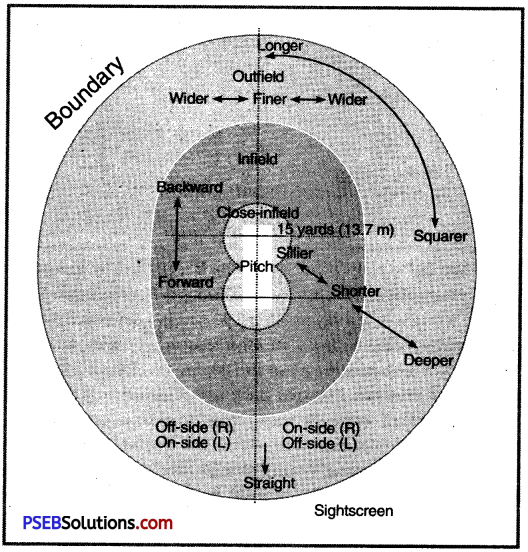
PSEB 10th Class Welcome Life Solutions Chapter 5 Creative Thinking

Punjab State Board PSEB 10th Class Welcome Life Book Solutions Chapter 5 Creative Thinking Textbook Exercise Questions and Answers.
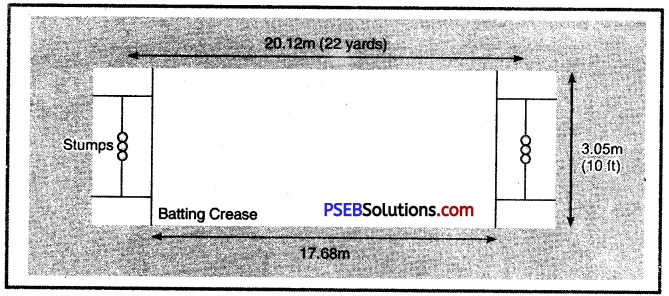
PSEB Solutions for Class 10 Welcome Life Chapter 5 Creative Thinking

Welcome Life Guide for Class 10 PSEB Creative Thinking In Text Questions and Answers

Question 1.
Who are the parts of the tree of school?
Answer:
The principal, teachers, clerk, peon, students, management all are parts of the school tree.

Question 2.
How do flowers of school’s trees spread their fragrance in the world?
Answer:
These flowers can spread their fragrance in the whole world by getting a good education, doing individual progress, getting good marks, etc.

PSEB 10th Class Welcome Life Solutions Chapter 5 Creative Thinking

Question 3.
Do you irrigate your family tree with love, respect, time, and cooperation?
Yes or No. If yes, tell how …………………
Answer:
Yes, we irrigate our family tree with love, respect, time, and cooperation. We give and take love from the family members. We respect elders and cooperate with the younger ones. We spent time with each other, listen to their problems, to get rid of such problems. We always cooperate with the parents to do their work. It helps in reducing their load of work. Detail of given and taken cooperation to the single-family, joint (maternal/paternal) family.

Sr. No Name of the family member and relation Cooperation got from them Cooperation was given to them
1.
2.
3.
4.
5.
6.
7.

Note: Do it yourself.

Question 4.
How do you feel when someone else helps you at time of need?
Answer:
It feels great when someone helps me at the time of need and at that time, I also think of helping others when required.

Question 5.
Do you cooperate with the ‘School-Family’?
Yes or No
Answer:
Yes

If yes, give detail: …………………….

Sr. No Name of the members of the school family Cooperation was given to them Cooperation got from them

Answer:
Do it yourself.

PSEB 10th Class Welcome Life Solutions Chapter 5 Creative Thinking

Question 6.
Someone helps you, when you need help, how do you feel?
Answer:
It seems great when someone helps us in distress. At this time, a small help is of great importance. We feel great at that time.

For these How will you cooperate with them For these How will you cooperate
Family Class
Elders School
Youngsters Classmates
Society Needy/with special needs

Answer:
Do it yourself.

Let us enjoy

1. Be a companion to all
Be a companion to all
Empower the needy,
If you’re a man of God.

2. By supporting the powerless,
By supporting the powerless,
You will make their strength
And power double.

3. What you sow is what you reap,
What you sow is what you reap,
Be positive and
Never wish badly on anyone

4. Don’t live a life of selfishness,
Don’t live a life of selfishness,
Nobody will stand with you
In the time of hopelessness.

5. When you live in harmony and togetherness,
When you Jive in harmony and togetherness,
You will always lead a life full of happiness
Nobody will be able to break your spirit of happiness.

6. You’ll never see the face of defeat,
You’ll never see the face of defeat,
When you start.
Finding unity in diversity

7. Good & bad are never at parity,
Good & bad are never at parity,
Helpful people bring to the world,
love and solidarity.

8. First is more powerful than a finger,
First is more powerful than a finger,
While the religions teach the world to be united.

PSEB 10th Class Welcome Life Solutions Chapter 5 Creative Thinking

Question 1.
What do these poetic lines tell us?
Answer:
The poetic lines tell us the importance of cooperation that nothing is possible in society without cooperation. If all will not cooperate with, each other, family and society cannot run smoothly. An individual cannot do anything alone. He needs the cooperation of others to do every type of work.

Question 2.
How do we double their impact?
Answer:
If we stand with a weak person, his strength becomes double. It means that the strength of an individual becomes double if we help or cooperate with him in any manner.

Question 3.
What happens if we don’t live in togetherness?
Answer:

  • If we don’t live together, nothing will come out of anything.
  • Everyone will do his or her work, will not cooperate with others, and finally, society will not do progress.
  • Maybe the enemy will attack him alone and he will have to repent later.

Question 4.
Who runs the society?
Answer:
Society runs with cooperation and cooperative families. If there will be no cooperative families, society will not run smoothly.

Question 5.
Who never lost the bet?
Answer:
Those who cooperate with others never lose the bet.

PSEB 10th Class Welcome Life Solutions Chapter 5 Creative Thinking

PSEB 10th Class Welcome Life Guide Empathy Important Questions and Answers

Multiple Choice Questions:

1. To watch the beauty of the world :
(a) Depends upon the world
(b) Depends upon the perspective of an individual
(c) Depends upon society
(d) None of these.
Answer:
(b) Depends upon the perspective of an individual.

2. What do we expect from others?
(а) They should respect us
(b) They should accept our friendship.
(c) They must’ be willing to talk to me.
(d) All of these
Answer:
(d) All of these

3. How can we increase the tree of the family?
(a) By cooperation
(b) By giving respect
(c) By giving time
(d) All of these.
Answer:
(d) All of these.

4. Who is the head of the school?
(a) Management
(b) Principal
(c) H.O.D.
(d) None of these.
Answer:
(b) Principal

5. Life is incomplete without
(a) Understanding
(b) Greed
(c) Jealousy
(d) None of these.
Answer:
(a) Understanding

6. The meaning of creative nature is …………….
(a) To do something new
(b) To create something special
(c) To do something basic
(d) All of these.
Answer:
(d) All of these.

PSEB 10th Class Welcome Life Solutions Chapter 5 Creative Thinking

Fill in the Blanks:

1. A creative mind does ……………….
Answer:
Self-development

2. Life is incomplete without ……………
Answer:
Understanding

3. Society cannot move without …………..
Answer:
Cooperation

4. We must give ……………. and ……………. to elders.
Answer:
respect, time,

5. We keep some …………… from others.
Answer:
expectations

True / False :

1. We must not keep expectations from others.
Answer:
False

2. I want that everyone should respect me.
Answer:
True

3. Teachers motivate the students.
Answer:
True

4. We must keep ourselves away from petty fights.
Answer:
True

5. We don’t like when someone helps us.
Answer:
False

PSEB 10th Class Welcome Life Solutions Chapter 5 Creative Thinking

Match the Column :

Column A Column B
(a) Remain intact (i) Quality of creating new
(b) Angry (ii) Mood
(c) Imagination (iii) To live collectively
(d) Creative thinking (iv) Scolding
(e) Feeling (v) Thinking about someone

Answer:

Column A Column B
(a) Remain intact (iii) To live collectively
(b) Angry (iv) Scolding
(c) Imagination (v) Thinking about someone
(d) Creative thinking (i) Quality of creating new
(e) Feeling (ii) Mood

Very Short Answer Type Questions:

Question 1.
Watching the world’s beauty depends on what?
Answer:
It depends upon one’s perspective.

Question 2.
When can we find everything good in the world?
Answer:
When we start looking for good, we find everything good in the world.

Question 3.
What type of thinking a man should have?
Answer:
His thinking should be of constructive nature.

Question 4.
What should we do so that we should like the whole world?
Answer:
We must try to find happiness and beauty in everything.

PSEB 10th Class Welcome Life Solutions Chapter 5 Creative Thinking

Question 5.
Tell one expectation which I keep with others?
Answer:
We want that they should accept what we say and must not say no to us.

Question 6.
Do you live up to the expectations of others?
Answer:
Yes, whenever they require it, we help them.

Question 7.
How can we get better in the world?
Answer:
If we fulfill the expectations of others, we will definitely get better in the world.

Question 8.
What should we look for in others?
Answer:
We should look for good qualities in others.

Question 9.
How can a family do progress?
Answer:
By giving time, cooperation, and love to family members, the family can do progress.

Question 10.
How can we keep elders happy?
Answer:
By spending time with them and by giving respect, we can keep our elders happy.

Question 11.
Without what life is incomplete?
Answer:
Life is incomplete without understanding.

Question 12.
How did Mangat get hurt?
Answer:
Mangat got hurt in a road accident.

Question 13.
What is meant by creative thinking?
Answer:
The meaning of creative thinking is to have a curiosity to create something new or special.

Question 14.
When can a creative mind get social respect?
Answer:
When he creates something new and does self-progress he gets social respect.

PSEB 10th Class Welcome Life Solutions Chapter 5 Creative Thinking

Short Answer Type Questions:

Question 1.
How the world looks good?
Answer:
This world is quite beautiful and it depends upon one’s perspective that how he looks at this beauty. If we search for good things in the world, we will definitely find them but if we search for bad, it will come automatically to us. That’s why, if we do have good, we need to find beauty and happiness in everything. Then everything will look good.

Question 2.
What a student expects from others?
Answer:

  • He expects that others should respect him.
  • He wants that others must wish to speak to him.
  • He wants that his friends should obey him.
  • He wants to get good marks.
  • He wants to move around with his friends.

Question 3.
What are the expectations in our lives?
Answer:
Expectations are of great role in our lives. We keep many expectations from others and also expect them to fulfill those expectations. If they are not fulfilling these expectations, our relationship is in danger. So, we must understand that if we want to get our expectations fulfilled, it is a must for us to fulfill others’ expectations as well. In this way by fulfilling each other’s expectations, we can find happiness in the world and make it a happier place to live.

PSEB 10th Class Welcome Life Solutions Chapter 5 Creative Thinking

Question 4.
What is the importance of cooperation in our lives?
Answer:
There is no denying the fact that life cannot run even for a single day without others’ cooperation. In life, we cooperate with others and they cooperate with us as well. Parents cooperate in the family to raise their children. All the teachers and students cooperate in school to provide better education. In this way, cooperation exists in every part of our lives. In its absence, life cannot move even for a day. In this way cooperation with others is a must for a good life.

Question 5.
What is the art of understanding?
Answer:
Life cannot be completed without understanding. To complete any work, the art of better understanding is a must. Understanding one’s own to live life, understanding rules to play games, understanding their love before parents anger, understanding behavior of friends, etc. are a few of the aspects which we can observe in life. If there will not no aspect of understanding in our lives, we won’t be able to do anything in life. Those we don’t have the ability of understanding, cannot do anything in life. On the other hand, people with understanding abilities do great progress in life. That’s why the art of understanding is in everyone’s life.

Question 6.
Explain the development of creativity.
Answer:
The meaning of creativity is to create or to do something new, unique, and original. People with a creative mind, always think of new ideas and they always try to express such ideas in a unique way. Different individuals have different qualities and traits. An individual with a creative mind uses this quality to develop himself and that’s why he gets social respect. This type of focus can be associated with any field i.e. art, literature, science, etc. If such creativity will be developed among students, we can properly use their energy to create new ideas.

Long Answer Type Question:

Question 1.
Briefly describe the story given in the chapter.
Answer:
Once upon, there was a person called Mangat. He met with an accident and got badly hurt. He was admitted to the hospital. He was unable to move, even he could not move to see the left or right side. On the next bed in the hospital, there was another patient named Vishal. He used to tell Mangat the beauty of nature seen through the window beside. Mangat listened to him and started to imagine the beauty of nature beyond the window.

Soon, he started recovering from the accident within a month. Finally, he was allowed to move a little -bit and was shifted to another bed on which Vishal was lying. Now, he was in a position to look through the window. The hospital officials told him that Vishal passed away last night. When he tried to look through the window, there was no window on that wall. Officials also told him that Vishal was blind. He always gave Mangat hope that he will get well soon. After this, Mangat realized that help people support others to help them and improve them. Despite their own sorrows, they try to spread happiness.

Athletics Game Rules – PSEB 10th Class Physical Education

Athletics Game Rules – PSEB 10th Class Physical Education

Question 1.
Describe the various officials for the athletics competition.
Answer:
Officials:
The following officials are needed to conduct an athletic event-
Administrative Officials:

  • Manager
  • Secretary
  • Technical Manager

Officials for the Meet:

  • Referee for Track Events
  • Referee for Field Events
  • Referee for Walking Events
  • Judge for Track Events
  • Judge for Field Events
  • Judge for Walking Events
  • Umpire
  • Time-keeper
  • Starter
  • Asstt. Starter
  • Markman
  • Lap Scorer
  • Recorder
  • Marshal

Additional Officials :

  • Announcer
  • Official Surveyor
  • Doctor
  • Stewards

PSEB 10th Class Physical Education Solutions Athletics

Question 2.
Mention the Track events for men and women in Athletics competitions.
Answer:
Track Events for Men:

  • 100 Metre Race
  • 200 Metre Race
  • 400 Metre Race
  • 800 Metre Race
  • 1500 Metre Race
  • 3000 Metre Race
  • 5000 Metre Race
  • 10000 Metre Race
  • 42195 Metre or 26 Mile Race
  • 3000 Metre Steeple Chase
  • 20.0 Metre Walking
  • 30.0 Metre Walking
  • 50.0 Metre Walking

Track Events for Women :

  • 100 Metre Race
  • 200 Metre Race
  • 400 Metre Race
  • 800 Metre Race
  • 1500 Metre Race

Hurdle Races for Men :

  • 110 Metre Hurdle Race
  • 200 Metre Hurdle Race
  • 400 Metre Hurdle Race

Hurdle Races for Women :

  • 100 Metre Hurdle Race
  • 200 Metre Hurdle Race

Relay Races for Men :

  • 4 x 100 Metre
  • 4 x 200 Metre
  • 4 x 400 Metre
  • 4 x 800 Metre
  • 4 x 1500 Metre

Relay Races for Women:

  • 4 x 100 Metre
  • 4 x 200 Metre
  • 4 x 400 Metre

MEDLEY RELAY RACE :
800 X 200 x 200 x 400

PSEB 10th Class Physical Education Solutions Athletics

Question 3.
What are the general rules of Race?
Answer:
Rules of Track Events:
The rules of track events for the athletes are as follows-

1. Athletes should wear such clean clothes as are not subject to any objection.

2. Athletes can participate in a game with foot on feet. The footwear should be such as provides no additional help to the players in the game.

3. A player who causes an obstruction for other players or obstructs the progress of any player may be disqualified.

4. Each athlete should bear marks distinctly on his chest and back.

5. In lane races, a player shall have to confine himself to his lane from the beginning to the end of a play.

6. If a player knowingly runs out of his lane, he is disqualified. If, in the opinion of the referee, he has not done it knowingly, the referee may or may not disqualify him.

7. A player leaving his track of his own will is not allowed to continue his race.

8. If track and field events start simultaneously, a judge may allow an athlete to take part in a different way.

9. A point is scored against an athlete who makes an unnecessary delay in field events, and he is not permitted to take part in the trial. If he persists in it, he shall not be permitted to participate in one more trial, but his first performance shall be reckoned

10. The athletes are forbidden to use or even keep with them intoxicants and other such drugs. An athlete who makes use of such drugs may be disqualified.

11. In 800 metre race, the starter shall say in his own language: “On your marks”…. “set”, and the pistol shot is fired and the athletes start the race. For races above 800 metres only these words shall be uttered: “On our marks”, and when the players are ready, the pistol shot shall be fired.

12. An athlete should not touch the ground in front or start line with his hands or feet when he is in the position of “on your marks”.

13. If an athlete crosses the start line before the pistol shot, his start shall be a foul all athletic are given a warning for it. If any body does it twice he may be disqualified.

14. The position of the players is decided on the finish line. A player touching the finish line first with any part of his body is considered to have reached across first.

15. In hurdle race, are player may be disqualified if he obstructs other competitors by extending his hand and feet, covers the hurdle of the other player’s lane, and if, in the opinion of the referee, fells that hurdle knowingly.

16. A player cannot be disqualified if the hurdles fall due to other reasons than rules mentioned above.

17. he referee can order for replay of the race in case a player has obstructed another player.

18. If the number of participants in throw events is excessive, the referee fixes qualifying marks, and six chances are given in the end.

19. If a racer continues to throw hurdles not with his hands but with his feets, he cannot be disqualified.

20. An athlete is barred from participating in the race if he takes start fouls twice

Question 4.
In how many categories can we divide Athletics?
Answer:
There are long jump, high jump, triple jump and pole vault in field events for men. For women, there are long jump and high jump. In throwing events for men, there are shot put, javelin throw and hammer throw. Only hammer throw is not meant for women.

Decathlon for men:
In Decathlon there are ten events which the athlete has to complete in two days.
First day events:

  • 100 metre Race
  • Long Jump
  • Shot-put
  • High Jump
  • 400 metre race

Second day events:

  • 110 metre Hurdle
  • Discus throw
  • Pole vault
  • Jevelin throw
  • 1500 metre Race

Hepatathelon for women:
In Hepathelon there are seven events which the Athlete has to complete in two days.
First day events:

  • 100 metre hurdle
  • Long Jump
  • Short-put

Second day events:

  • 200 metre Race
  • Jevelin throw
  • 800 metre race

PSEB 10th Class Physical Education Solutions Athletics

Question 5.
Draw a diagram of 200 metre Track and 400 metre Track.
Answer:
Track for 200 metres:
The length of this track is 94 metre while the breadth is 53 metre-
PSEB 10th Class Physical Education Solutions Athletics 1

  • Total running distance = 200 metres
  • Length of sides = 40 metres
  • Space covered by the sides = 40 x 2 = 80 metres
  • Space covered by the corners = 120 metresPSEB 10th Class Physical Education Solutions Athletics 2
  • Track for 400 metres:
  • Minimum dimensions = 17.40 x 90.40 metres
  • Total running distance = 400 metres
  • Straight length = 80 metres
  • Distance of both sides = 160 metres
  • Distance of curves = 240 metres
  • Diameter = 38.18 metres
  • Radius of the running distance = 38.18 metres
  • Marking radius = 37.88 metres

Question 6.
What do you mean by sprints?
Answer:
PSEB 10th Class Physical Education Solutions Athletics 3
You can obtain creditable achievements by sprinting under the ; conditions of the competition, and by developing strength and stamina. through heavy hurdles instead of focusing attention on the method of running. The basic aspects of a race include the pace and length of steps in addition to the starting technique. Many players learn to acquire efficiency in sprinting at high speed. Don’t waste much time in the training of running outside the blocks.

  • Developing Speed: Run a sprint 10 yards off the rolling start, and record the time. You can run a number of sprints.
  • Leg-action: Clear a track of 70 yards. Coming out of 15 yard rolling start, run a sprint on the cleared track. Mark the footsteps. You will see that the length of footsteps after having increased comes 4 to definite length.
  • The length of footsteps and the speed of legs are co-related. These are determined chiefly by the length of legs, flexibility and strength of hips. You can hope to increase to some extent, to an important extent, the length of your steps, if you increase through training the flexibility and strength of hips and keep a steady pace in the lane.

The following methods may be useful :
(i) Movements of Arms:
The movements of arms in sprinting is essential to keep the body in action. It is a common practice with the racers to move the arms backward and forward of their bodies by moving these briskly at 90° ahead. While bringing the arm back, it should be straightened and then bent at the angle of the wrist. But it develops naturally in co-ordination between pace of legs and time.

(ii) The Start:
The movement of front foot is seen in figures 3 and 4, and it is an important aspect of efficient start. Keeping the blocks depends upon the length of your arms and legs, and to a certain extent upon your strength. Keep the blocks in such a way that the front block is 18 inches behind the line, and the rear about 36 inches away from the line. Continue practising with these distances till you develop good rate for your body and strength.

Bend your body, in the condition shown in figure 2, to such an extent that most of the weight falls on arms and the hips raised be above the shoulders. Now remember that the front knee forms an angle of 90°. In this condition, the face of the front block is at 60°, and of the rear block perpendicular. Raise the shoulders as much as possible. Increase the extra length of arms by straightening each hand.

(iii) Training:
You can acquire efficiency in sprinting by getting training in increasing the speed of your running at full speed on the track. You can prepare a daily routine in accordance with the example given ahead :
Form a rolling start of 6 x 70 yards with the rest intervals of 1 x 180 yards. When you are used to it, repeat it after the rest of 5 minutes. When you are perfectly normal, repeat this schedule thrice. By following it, you can increase the load of the work by steadily decreasing the rest intervals. When you practice in a group with an efficient starter, and the use of the pistol shot, the training for the start of sprint becomes very important.

Some useful practice should be done in the presence of the critics. Of course, each sprinter should be ready to make his start under possible good conditions. Set a standard for your training. Don’t feel satisfied with a little achievement. The training of heavy hurdles is essential for the whole body of a sprinter, particularly for his arms, shoulders and legs. Two practice sessions of at least 40 minutes each per week are essential for it.
PSEB 10th Class Physical Education Solutions Athletics 4

PSEB 10th Class Physical Education Solutions Athletics

Question 7.
How many events are there in track events? After how many fouls after the wrong start can an athlete be dismissed?
Answer:

Track Events of Races-Short, Middle and Long:
(I) Sprinting.
Sprint is that race which is run at full speed and with full strength. It includes 100 and 200 metre races. Even 400 metre race has come to be included in it now-a-days. In these races, reaction time and speed hold much importance.
(i) Start-
Generally, three types of start are taken in sprints:

  • Bunch Start
  • Medium Start
  • Elongated Start

1. Bunch Start:
For this kind of start the distance between blocks should be 8 to 10 inches. The next block should be 19 inches away from the starting line. The sprinter bends in the block in forward direction so that the toes of his back foot and the heel of the forward foot are in the same line. The hand should form a bridge on the starting line and behind the line. In this start, as soon as the set position is declared, the hips are brought upward. This start is the most unstable.

2. Medium Start:
In the medium start the distance between blocks is from 10 to 13 inches. The distance between the first block and the starting line is about 15 inches. The athletes often make use of this start. In this start, the knee of the lagging leg and the central part of the leading leg are in the same fine. At the set position, hips and shoulders are at the same height.

3. Elongated Start:
The athletes rarely make use of this start. In this type of start, the distance between blocks is 25 to 28 inches. The knee of the lagging leg is in the line with the heel of the leading leg.
Start:
The three types of orders have to be adhered to while taking the start for a race-

  • On your mark
  • Set position
  • Go, with the pistol shot

Finish of the Race:
The finish of the race also holds much importance. Generally, athletes finish the race in the following three ways-

  • Run through
  • Lunging
  • The shoulders string

(II) Middle-distance Races:
Track events include a few middle distance races. The races more than 400 yards and less than 1000 yards fall in this category. They are generally 400 and 800 metre races. These races require both speed and endurance. The athlete possessing both these qualities succeed in such competitions. In the beginning of such a race, uniform speed is maintained and full energy is used to win towards the end of the race. Start for 400 metre race is taken like a sprint start, whereas, the start for 800 metre race can be taken only in standing position. As far as possible, big strides should be taken in this race.

(III) Long-distance Races:
Long-distance races, as the name implies, involve greater distance, and often cover a distance of over a mile. 1500, 3000 and 5000 metre races are long distance races. In these, races, the endurance of the player plays an important role. The player has to utilize his energy and stamina in a planned way. The athletes who become well-versed in this art become successful in long distance races. In long distance races, except at the beginning, an athlete keeps his body straight and little bent in the forward direction, with head straight and eyes towards the track.

Arms are loosely lifted in the forward direction and bent at elbows and hands without tensions.The actions of the arms and legs should be as far as possible without much effort forward. While running, the forward foot should touch the ground. Even the heel touches the ground. More push is, however, taken through the toes. In these races, strides should be short and uniform. The body should remain relaxed during the race.

PSEB 10th Class Physical Education Solutions Athletics

Question 8.
How many types are there of Hurdle races? Describe briefly.
Answer:
100-Metre Hurdle Race:
The number of hurdles, height and distance for various competition-
PSEB 10th Class Physical Education Solutions Athletics 5
Generally, athletes taking part in hurdle race take 8 strides to reach the first hurdle. While sitting on the starting block, the take off foot is kept in front. If the hurdler has more height and can run faster, the distance in his case can be short. In such a case he will run by keeping his stronger foot on the backward block. This will come two metres behind the hurdle.

For 3 to 5 strides the hurdler should look towards ground and after that he should concentrate on the hurdles. The difference between strides will go on increasing. The last stride, however, will be 6 inches (10 cm.) shorter than the jump. While running a hurdle race, the knee of the runner will be a bit higher than in the ordinary race. Only toes and not the whole foot should touch the ground.

While jumping over the hurdles the athlete should keep the jumping foot straight while elevating the leading foot above the knee. Toes of the foot should be bent towards the ground, and leading foot should be straightened and brought above the hurdle. The upper part of the body should be bent forward just after crossing the hurdle. The forward thigh should be pressed down so that the toes remain beside the hurdle after it has been crossed.

At the same time lagging leg, bending at the knee should be kept parallel to the ground, and the knee should be brought near the chest. In this way, when the foot crosses the hurdle, the runner will run faster. After having crossed the hurdle, the first stride should fall at a distance of 1.55 to 1.60 metres, the second stride at 2.10 metres, and the third stride at 2.00 metres (12 m., 13.72 m., 9.14 m., 14.20 m.)
PSEB 10th Class Physical Education Solutions Athletics 6
In 400-metre hurdle race the most difficult problem a hurdler faces, is to synchronise his strides, that is, to set coordination among strides. The runners generally take 21 to 23 strides to cover the distance upto the first hurdle and take 13 to 15 or 17 strides between the hurdles. Some runners take 14 and then 16 strides for covering this distance. Jumping by right foot may prove to be more beneficial.

The jump is taken from 2 metres and the first stride on the ground, after crossing the hurdle, is of 1.20 metres. The technique is the same as that of 110 m. or 100 m. hurdle races. The time of 400 metre hurdle races is more than that of 400 metre race, by 2.5 to 3.5 seconds.
PSEB 10th Class Physical Education Solutions Athletics 7

PSEB 10th Class Physical Education Solutions Athletics

Question 9.
How  6 many events are there in field events?
Answer:
LONG JUMP:

  • Length of Runway
  • Breadth of Runway
  • Length of Pit
  • Breadth of Pit
  • Length of take of Board
  • Breadth of take of Board

Method of Long Jump:
To strengthen the jumping foot, the same method will be followed in long jump as is followed in high jump. First of all, the jumping foot is kept forward and the other foot behind it. The right foot is taken upward with a bend at the knee, and at the same time the right arm will be bent at the elbow. The method will be the same as is that of fast runners. This action will be performed first in the standing position, and then by walking four to five steps. When this action improves, it should be repeated to running while running a bit.

This time while going upward, the ground should not be touched:
(1) Running 6-7 steps, coming forward and jumping from the height, the athlete shall touch the ground. Repeating this action for some time, he will bring the jumping foot alongwith the other foot on the ground while landing on the ground.
(2) After the athletes have done the above action many times, a handkerchief shall be tied with the pole at more than the jumping height. The athletes shall be asked to jump and touch the handkerchief. By doing this, they will learn to jump and keep the upper part of the body straight.
PSEB 10th Class Physical Education Solutions Athletics 8
METHOD OF LANDING:
The athletes shall’stand on the edge of the pit with both the feet in line and swing their arms backward and forward. They will bow at the knees and carry both arms behind. Afterwards, they shall bend their knees a bit more, take arms forward and then upward, and then shall jump intathe pit. As the athlete goes up into the air, he will bring the free foot behind and downward so that it may join the jumping foot.

The jumping foot shall remain with the knees, and the upper part of the body shall be straight. When the athlete goes up, both of his knees will be bent and in line with the thighs. Both arms will be on the head sides and upward. The body shall be bent back, and as the athlete is just going to jump in the pit he will carry the free leg forward, bending at the knee, his belly downward, and will try to rest his straightened leg in the air.

METHOD OF HITCH KICK:

  • After jumping, split in the air, feet forward and backward, the athlete shall bend on free foot, but his upper part of the body and head will be straight and will not go backward.
  • Now the athlete will keep the free foot in the air and land with jumping foot taken forward.
  • The other methods shall be the same as told above, except that at the time of landing free foot will be brought with the take-off foot and both feet will land together. All other methods shall be the same as described in the hang. The athletes should go on increasing the approach rim.
  • After having repeated the above actions, this should be done with the help of spring boards such as gymnasts do. In the absence of spring boards this can be done from a height so that the athletes may have good practice of right action in the air.

TRIPLE JUMP:

Approach Run:

  • Length of Runway = 40 m to 45 metre
  • Breadth of Runway = 1.22 metre
  • Length of Pit = From take board to Pit = 21 metre
  • Breadth of Pit = 2.75 to 3 metre
  • Length of take of Board = 11 to 13 m
  • Length of take of Board = 1.22 m.
  • Breadth of take of Board = 20 c.m.

As in the long jump, approach run will be used in triple jump, too, but the speed shall be neither very fast nor very slow. Length of the Approach Run. An approach run of 18 to 22 or 40 to 45 steps is used in the triple jump. It depends upon the speed of the runner. Slow speed runner will take long approach and fast speed runner will take short approach. The athletes shall run by keeping both feet together and maintain a uniform running speed.

The upper part of the body shall remain erect. While taking of, the knee will be bent less as compared to the one in the long jump. While taking off and hop step, the weight of the body will be on the back and both the arms shall also be at the back. The second leg coming fast in the air will form a split position.
Three techniques are chiefly in vogue in triple jump-

  • Flat Technique
  • Steep Technique
  • Mixec Technique

HIGH JUMP:

  • Length of Runway = 15 to 25 m
  • Each side of triangle Cross Bar = 30 M.M.
  • Length of Cross Bar = 3.98 to 4.02 m
  • Weight of Cross Bar = 2 Kg
  • Length of Pit =5 m
  • Breadth of Pit = 4 m
  • Height of Pit = 60 cm

1. All the trainees shall be asked to first jump on their both legs: After they have got some practice, they will be asked to jump on one leg. It should be kept in mind that while jumping, the upper part of the body should be kept straight. All the trainees should be divided on the basis of the taking off foot with which they feel comfortable :

  • Jumpers on left foot
  • Jumpers on right foot

2. The trainees shall keep their take-off foot forward and the other foot behind:
They will bring both arms bent at the elbow forward and then upward with speed. At the same time they will kick the other foot upward, and after jumping in the air, will come back on the ground on the same foot. At this time the knee of the take off foot will be slightly bent. The upper part of the body will be straight, and will rise up ahead and will come back at the same place. While going upward, the jumper should try to keep the waist and the forward foot in straight position.

3. Standing at an angle of 45°, the right foot jumpers on the right side and the left foot jumpers on the left side, moving forward, shall jump over the cross bar kept at a height of 2 feet, and come back on the ground on the same take off foot. The only difference will be that instead of falling on their places they will cross the bar, and the other foot, as they fall, will come 10 to 12 inches forward of the first and will move ahead.

4. The height of the cross bar will be increased: The athletes will be asked to elongate the take off foot while taking off. The heel should come on the ground first. Both the arms should be bent at the elbows. While jumping, the athletes should concentrate on the cross bar, with the head leaning behind and the toes of the foot upward and straight.

Points to be remembered:
The following points should be kept in mind-

  • Both the arms will be taken upward quickly.
  • The take off foot will leave the ground only when free leg reaches its full height.
  • The above activity will also be done while jogging.

5. Crossbar. Keeping the crossbar 2 feet (60 cm.) high, the players shall jump over the crossbar as explained in 3, and then will rotate 90° in the air while coming in the pit. Hie players taking off by left foot will turn towards the left, and the players taking off by right foot, towards the right.
The following two points shall be borne in mind:

  • The players should not rotate while taking off.
  • They should not rotate before reaching maximum height.

6. The athlete will stand keeping taking off foot forward but he will keep in mind that the weight of the body should be on the heel, and that they will kick upward with kick upward with free leg so that the whole body gets lifted up the ground.

7. A parallel line shall be marked on the ground. The athletes shall do the above mentioned action while standing on the right of this line. Reaching up in the air, the athlete will rotate the take-off foot towards the left, keeping his face down and lift the back foot up with a kick. In this, it shall be kept in mind that free leg is kicked straight. The take off leg will be kicked straight and will be taken up by bending it on the knee. The athletes can do it in the pit after jumping over the crossbar, because by taking fast kick, his balance may go off.

8. Jumping from three steps. Parallel to the crossbar, a line shall be drawn at a distance of 1 to 2 feet (45 to 60 cm.). The athlete will stand with both his feet at an angle of 30° with this line. Putting forward his take off foot, he will run with medium speed. The position of the third foot will be marked. Keeping both the feet on this position, the athlete will advance towards the crossbar and repeat the above mentioned activity. The height of the crossbar will go on increasing according to the convenience of the player.

POLE VAULT:

  • Length of Runway = 40 to 45 m
  • Breadth of Runway = 1.22 m
  • Landing Area = 5 x 5 m
  • Length of Cross Bar = 4.48 x 4.52 m
  • Size of one side of triangle Cross Bar = 30 M.M.
  • Weight of Cross Bar = 2.25 Kg
  • Height of Landing area = 61 to 91 cm
  • Length of vaulting Box = 1.08 m
  • Breadth of the Box from = 60 cm

Runway side:
In athletics pole vault is a very complex event. No other event while taking off in the pit needs so many activities as this event does. Therefore, it is difficult to learn and teach this event.

PSEB 10th Class Physical Education Solutions Athletics

Selection of Athletes for Pole Vault:
An all-rounder alone can become a good pole vaulter as this is an event which maintains the stamina of the bodies in all ways such as speed, strength, endurance and co-ordination. A pole vaulter needs to be a good gymnast so that he may perform all activities at a time.

Holding and carrying the Pole:
Generally a pole is held in the left hand keeping the palm towards the ground. The right hand is placed beside the hip on the back and at the end of the pole. While holding the pole the left arm forms an angle of 100° with the elbow. The pole is held keeping the wrist straight and away from the body. With the right hand, the pole is pressed downward between the thumb and the first finger. Both the elbows form an angle of 100°. The distance between the two hands is from 24 inches (60 cm.) to 36 inches (80 cm.). This distance depends upon the body structure of the athlete and his comfort while running with the pole.

Running with the pole:

  • Walking with the pole kept overhead. It takes more time to carry the pole into the box. Therefore, it is not a very suitable method.
  • Walking with the pole kept at the level of head. Most of the pole vaulters in the world follow this method. While walking, the 1 pole is kept the level of head and in the line with the left shoulder. From right to left. In it, shoulders and arms remain in normal position.
  • Walking with the pole kept below the head. It exerts more pressure on arms which tires the body as one approaches the box. A very few athletes use it into practice.

Approach-run:
A pole-vaulter becomes self-confident when he starts getting correct approach run. The further action can be thought of later on. The best method for this is to make the athlete run with the pole for a distance of over 150 feet (50 metre) along a marked line (with the lime) on the ground.


By doing this action for some days the athlete’s foot will .touch the ground at the required position. Measure this distance with the tape and then work on the runway of the pole vault. The approach run has also to be increased or decreased alongwith the feet. There should be only one check mark in the approach run of the pole vault. If there are more marks, then the athlete instead of thinking about his style continues to think about the marks. The length of the approach run should be 40 to 45 metres. The athlete should be faster during his last 4 or 5 strides.

Pole Plant:
It is not possible to plant the pole with full speed. The speed has to be limited for doing it. The pole planting should be fast in case of steel pole and slow in case of a fibre glass pole. While planting steel pole the athlete should count “1 and 2”. On 1 he will take off his left foot and the knee of the right foot will lift upward. On 2 his body will start swinging. At this point the pole vaulter should leave his right leg free so that it may meet the left one. It facilitates better swinging.

Take off:
While taking off, the right knee should come forward. In this the body is lifted and the chest is pulled towards the pole. While leaving the ground, the hand and the arm are straightened. During the swing the right leg lifts upward.

Note:
While poling the athletes lift their hips first while their legs should come upwards and the hips should be kept down. The pole vaulter should keep in mind that he should remain with the pole until it becomes straight. While leaving the pole, he should free the downward hand first. It has been observed that many fresh pole vaulters take their back above the cross bar. It happens as a result of freeing the upper hand first.

PSEB 10th Class Physical Education Solutions Athletics

Question 10.
Discuss the throw events in Athletes and mention their respective Rules.
Answer:

Men Women
1. Weight of Shot-put 7.260 kg. ± 5 gm. 4 kg. ± 5 gm.
2. Agnle of Throwing sector 34.92° 34.92°
3. Radius of circle 2.135 m ± 5 M.M.
4. Length of stop board 1.21 to 1.23 M.M.
5. Bredth of stop board 112 to 300 M.M.
6. Height of stop board 98 to 102 M.M.
7. Curcumference of shot-put 110 to 130 M.M. 95 to 110. M.M.

1. Initial Position:
The thrower will stand with his back towards the direction of throw. The weight of the body will be. on right foot. While bringing upper part of the body down, the right heel will be lifted and the left leg bent at the knee will go up to meet immediately the right foot. Both the feet will be inclined and the toes bent forward.

PSEB 10th Class Physical Education Solutions Athletics

2. Glide:
Now the right foot will be straightened, and will come back with the heel of the right foot. The left foot will be kicked fast towards stop board. In sitting position the hips will be falling downwards. The right foot will be lifted up from the ground and will be kept towards the left with bent toes. At the same time the left foot will touch the ground on the right of the stop board. Now the toes of both the feet will be brought on the ground. Both the shoulders will be bent backward. The whole weight of the body will be on the right foot.
3. Final Phase:
The toes and the knee of the right foot will be rotated together towards the left and both the feet will be straightened. The whole weight of the body will be on both “the feet. The left shoulder will open forward. The right shoulder will lift up and rotate. The belly will be bent in the shape of a bow.

4. Putting/Throwing the Shot:
The right shoulder and right arm will go forward towards the shot. The left shoulder will go on advancing. The whole weight of the body will be on the left foot which will be completely straight. As the shot is thrown with right hand, the position of both the feet will change. The left foot will come backward and the right foot forward. Now the body weight will rest on the right foot. Both the upper part of the body and the right foot will remain bent forward.

Throwing the Shot by Rotating or Like a Discus:
1. Initial Position:
At the start the athlete will stand with his back towards the direction of throw. The left foot will be on the center line and the right foot on the right side. The right foot will be placed at 5 to 8 centimetres away from the rim so as to avoid foul while rotating. The shot will be near the lower part of the neck and the elbow will be lifted upward. Before starting, the shoulder, belly, left arm and the shot, all will turn towards the left and then towards the right. While doing so both the knees will remain bent.

2. Rotation:
The body weight will rest on both feet. After taking one swing in the upword direction, the rotation will start. While rotating the upper part of the body, the body weight will shift on the left foot. In this position, the left arm is kept on the left and parallel to the ground, and while shifting the weight on the left toes the athlete will rotate with both knees bent. On the right toes also he will rotate through 90°. The right foot, bent at the knee, will be brought above the left foot.

While rotating on the left foot, on the completion of circle, both feet will be in the air, and the wrist will be rotated. The left foot will be on the toes of the right foot. The position of the toes of the right foot will be the same as the hand of the clock at 2 o’ clock. The foot of Mr. Bahadur Singh remains in the position of 10 o’clock. He rotates his waist even in the air. In the 2 o’clock position the left foot will come on the toes with some delay, but the upper part is kept in the centre. In the position of 10 o’clock the left foot comes fast on the ground, and there is always a possibility that the upper part of the body comes up very soon.

We shall keep the following points in mind :

  • At the start, walk with maintaining the balance, and keep the left foot down.
  • The complete glide will be taken with right foot. The jump will not be taken, and the upper part of the body will not be lifted.
  • The right foot will be bent inward while coming in the centre.
  • The left shoulder and the hip will not be lifted in haste.
  • The left arm should be kept near the body.
  • The left foot will touch the ground neither very fast nor very slowly.

General Rules:
1. In men’s group, the weight of the shot is 7.26 kg. while in women’s group it is 4.00 kg. In men’s group, the diameter of the shot is 110-130 cm. whereas in women’s group it is 95 to 110 cm.

2. The shot is thrown from a circle of 2.135 m. diameter. The inner part will be cemented and 25 mm. lower than the field. The stop board will be 1.22 mm. long, 114 mm. wide, and 100 mm. high.

3. The shot, hammer or the discus will be a sector of 40° angle. From centre a 20 m. line will be marked. On this line a point will be taken at 18.84 m. Two more points at a distance of 6.84 m. on both sides of this point will be taken, and the two lines drawn from these two points shall make an angle of 40°. While throwing the shot the body should be kept in balance. At the fall of the shot on the ground the athletes shall come from behind the 75 cm. lines dividing the field into two parts. Now the shot will be taken in hand. It will remain near the neck and not behind shoulder. It will be considered a foul if the sector lines are touched. If there are eight competitors, 6 chances will be provided to each. If there is a tie, the number of chances may be 9.

Initial Stance of Discus Throw:

  • Weight of Discus = 2 kg for men and 1 kg for women
  • Radius of circle = 2.5 metre ± 5 M.M.
  • Angle of throwing sector = 34.922
  • Circumference of outside = 219 to 2.21 M.M.
  • For men 180 of Discus to 182 M.M. for women.

The athlete will stand near the ring and in the circle with his back in the direction of throw. He will take one or two swings, with right arm arid trunk. While doing so, the body weight will shift from one foot to the other, as a result of which heels will be lifted up. When the discus and the upper part of the body are both on the right, the round will start. The round of throw shall start from the lower part, the left leg will be inclined towards the left, the weight of the body will also rest on this foot. The right foot, waist and belly will also rotate, and it will bring along with it the right arm and discus.

It is in this way that the shot activity will start. First of all, the left foot will leave the ground. After this it will advance in the direction of discus throw. The right leg, bent at knee, will advance from left to right in a semi-circle. While rotating both will be ahead of the shoulder. It will cause a bend between the upper and the lower parts of the body. The right arm holding the discus will be straight. The left arm bent at the elbow will face the chest. The head with straight. Placing the right foot a bit above the ground, the thrower will cross the circle and will come on the ground at the toes of the right foot. This foot will come almost in the centre. The toes will be bent towards the left.

PSEB 10th Class Physical Education Solutions Athletics

Methods:
In main, there are three methods in it:
1. At the start, the trainees keep their right foot at the centre line and the left foot 10 cm. behind the ring.

2. In the second method, the player keeps the centre line between both of their feet.
3. In the third method, the throwers keep their left leg on the centre line. Thus, the players place their feet within the circle in three ways, in the position of 3 o’ clock, in the position of 10 o’ clock and in the position of 12 o’clock. The last position (of 12 o’ clock) is considered i to be the best as it requires less rotation on the right foot and the left shoulder need not be opened. The right foot even after coming on the ground will continue to rotate and the toes of the left foot will touch the ground on left side of the centre line and the end of the circle.
Last Step:
At this time, in the last step, both the feet will be on the ground and the waist will be bent at the back, the left foot will be straight and the right foot bent at the back, the left foot will be straight and the right foot bent at the knee. The right knee and the hip will be in the rotating position in the left. The left arm will be opened upward and the right arm will also be brought upward keeping it away from the body.

Throwing:
Both the feet going ahead in rotation will be straight. Hips will go forward, and shoulders and trunk will have finished rotation. Left arm and shoulder will stop at a position. Right arm and shoulder will advance forward. The body weight will be on the toes and both the feet will be straight. In the end, left foot will come backward and right foot will advance and will bend at the knee. The upper part of the body will be bent forward. This is done to maintain the balance of the body.

General rules:
In men’s group, the weight of the discus is 2 kg. whereas in women’s group it is 1 kg. The diameter of the circle is 2.50 m. These days an iron cage is fitted outside the discus to avoid anybody being hurt or injured with the discus. It is in the shape of the English letter C. Its height is 3.35 m.

PSEB 10th Class Physical Education Solutions Athletics

Question 11.
Write down about the Javelin throw.
Answer:
Javelin throw:
Javelin is placed near the ear at the level of head with the arm bent at the elbow. Both javelin and the elbow will face forward. The palm of the hand will be upward and parallel to the ground. The total length will be 30-35 m. The athlete shall run straight in the 3/4 th run. In the last, l/3rd part cross steps will be taken equal to five strides. In the last phase when the left foot will touch the check mark, the right shoulder will start leaving towards right and the right arm will start coming at the back. The distance between steps will start increasing.

The right hand and the shoulder will come behind and will open on the right. The waist and the upper part of the body will bend backward. A bend will be formed between upper and lower parts because the upper part will open on the right and the lower part will advance straight ahead. The eyes will remain looking ahead. In the end, the right foot will come in the end of the cross step on the ground. As the knee advances, the heel of the right foot will start lifting up. In this way, it helps the left foot in going to a long distance.

Last Phase:
In the the right foot and straightening it all shall bend the upper body in the backward direction like a bow, and will create tension in the muscles of chest and stomach.

JAVELIN THROW:

  • Weight of Javelin = 800 g for men and 600 gm, for women
  • Length of Runway = 30 to 36.50 m
  • Breadth of Runway =4 m
  • Length of Javelin = 200 to 270 cm for men. 220 to 230 cm for women
  • Angle of throwing
    sector of Javelin       = 28.95

PSEB 10th Class Physical Education Solutions Athletics

After throwing the javelin, to maintain balance of the body and to avoid foul, the thrower will bring a change in steps. The right leg will come forward and bend at the knee, and the toes will bend on the left. The upper part of the body will bend on the right and keep balance. The right foot can advance forward, too.

GENERAL RULES:

  • For men the length of javelin is 260 to 2.70 m., and for women, it is 2.20 to 2.30 m.
  • For throwing javelin we need a path which is 30.5 to 36.50 m. long and 4 m. wide. On the front side there will be a 70 mm. iron arc white in colour and projected 75 cm. on both sides. It can be made of white lime. This line can be drawn 8 m from the centre.
  • The sector for the javelin is of 29°. It is marked wherever the curve meets. For correct angle at 40 m., the distance between two lines will be 20 m. and at 60 m. it will be 30 m.
  • The javelin will be thrown by holding it from the central grip. The front end of the javelin should touch the ground. Touching of any part of the body with 50 cm. wide lines or 70 cm. wide line will be deemed as a foul.
  • The javelin shall remain in the direction of throw from start to finish. The javelin will not be thrown by rotating. It will be thrown from above the shoulders.

PSEB 10th Class Physical Education Solutions Athletics

Question 12.
What do you know about Relay Races?
Answer:
RELAY RACES:
Men:

  • 4 x 100 metre
  • 4 x 200 metre
  • 4 X 400 metre
  • 4 x 800 metre

Women:

  • 4 x 100 metre
  • 4 x 400 metre

MEDLEY RELAY RACE:
800 x 200 x 200 x 400 metre

Baton:
In all medley relay races the baton has to be carried. Baton should be of a hollow tube and its length should not exceed 30 cm. Its circumference should be 12 cm. and weight should be 50 gm.

Relay Race Track:
The relay race track should be divided or marked by small paths for full circle. If it is not possible, then the baton exchange path should be through narrow paths.

Start of Relay Race:
At the start of the race any part of the baton can cross the initial line, but the baton is not to touch the ground above:
Taking the Baton:
An area is also fixed for taking the baton. This area is marked by drawing a line 10 m. long on both sides of the fixed race distance line. Thus, a type of room is formed for giving and receiving the baton. In relay races up to 4 x 200 metre all the other members of the team excepting the first runner begin to run from outside the fixed area but from a distance less than 10 metre.

Exchange of Baton:
The exchange of baton should take place within the fixed area. Pushing or providing any type of help is forbidden. The runner cannot throw baton to each other. If the baton falls, it will be picked up only by the one who has fallen it.

HURDLE RACES:

High Jump Score Sheet:

Score Sheet (For Height):

PSEB 10th Class Physical Education Solutions Athletics 33

Score Sheet (For Distance):
PSEB 10th Class Physical Education Solutions Athletics 30
Score Sheet (Races):

PSEB 10th Class Physical Education Solutions Athletics

Important Information About the Athletics

  •  No player having taken intoxicating drugs can participate in athletic competition.
  • An athlete who causes an obstruction in the play of the other athlete is disqualified. An athlete who leaves the track of his own will, cannot continue his race again.
  • There are two types of events in field events such as jumping and throw events. The events which are run in track are known track events.
  • The length and breadth of 200 metre track are 40 and 38.15 metres respectively, while for 400 metre track these are 176.36 and 90.40 metres respectively.
  • The weight of the javelin for boys is 800 gms. and for girls, from 605 to 625 gms. The weight of the discus for boys is 2 kg.
  • The height of 110 metre hurdles for boys is 1.06 metres and for junior boys, the height of 100 metre hurdles is 0.75 metre. For senior girls this height shall be 0.89 metre.

Punjab State Board PSEB 10th Class Physical Education Book Solutions Athletics Textbook Exercise Questions and Answers.
PSEB 10th Class Welcome Life Solutions Chapter 4 Empathy

Punjab State Board PSEB 10th Class Welcome Life Book Solutions Chapter 4 Empathy Textbook Exercise Questions and Answers.
PSEB Solutions for Class 10 Welcome Life Chapter 4 Empathy

Welcome Life Guide for Class 10 PSEB Empathy In Text Questions and Answers

Question 1.
What tasks your mother also does?
Answer:
My mother goes to the office and does all the household work herself. She cooks for us, washes the clothes, cleans the house, and takes care of the needs of all the family members.

Question 2.
What are the tasks, both of your parents do?
Answer:
They both go to their respective office, share most of the household work, bring household things collectively from the market and collectively care about my study.

Question 3.
What homework activities will you share with your mother?
Answer:
First of all, I will help her to keep the house clean. We will not spread dirt in the house and will keep everything in place. We will help them dry clothes and do other small chores.

Question 4.
How many homework activities will you share with your spouse?
Answer:
I will help her to wrap dry clothes, bring items from the market and help her to keep the house clean. I will also help my kids to study properly.

PSEB 10th Class Welcome Life Solutions Chapter 4 Empathy

Activity – 1

Question 1.
After one year, which type of facilities and how many do you want to have?
Answer:
After one year, I want :

  • to have a good smartphone to do the study properly.
  • to have a good Laptop and internet connection so that my online classes must go smoothly.
  • to have a car so that I can’t move around with my parents.
  • to have twenty-four hours electricity supply.

Activity – 2

Question 1.
Look at the picture, here and total ten things. Out of these, which thing is enough to fulfill our many needs and do the work of the other nine facilities?

PSEB 10th Class Welcome Life Solutions Chapter 4 Empathy Img 1

Answer:
Out of all these things, I would prefer to “have a smartphone which fulfills all our many needs. We can watch T.V., listen to the telephone, can do accounting, can make alarms, can see time, click pictures and make videos. Along with this, it can do all the work of a computer.

PSEB 10th Class Welcome Life Solutions Chapter 4 Empathy

Activity – 3

Question 1.
Which message does Symbolically suggest the concept of fist by school counselor?
Answer:
The school counselor was of the view that all the issues should be resolved with great care. He said that great patience, proper language, and knowledge are required to solve sensitive issues.
PSEB 10th Class Welcome Life Solutions Chapter 4 Empathy Img 2
For this, there is a need to know about the basic reason for the issue, listen to others respectfully, and decide with proper care. The decision must not be imposed upon anyone.

Question 2.
Please write down five sensitive issues in these five fingers.
Answer:
PSEB 10th Class Welcome Life Solutions Chapter 4 Empathy Img 3
Five sensitive issues are :
(a) Religious issues
(b) Linguistic issues
(c) Family-related issues
(d) Social issues
(e) Issue of Women’s Security.

PSEB 10th Class Welcome Life Guide Empathy Textbook Questions and Answers

Question 1.
What do you mean by sensitive issues?
Answer:
Sensitive issues are the issues that are related to serious issues and it’s not possible for everyone to solve them. Solving them requires a lot of wisdom, for example, personal issues of any family or religious and linguistic issues of any society.

PSEB 10th Class Welcome Life Solutions Chapter 4 Empathy

Question 2.
Which points did the school counselor suggest to solve the sensitive issues?
Answer:
School counselor Khushminder Singh told students that sensitive issues cannot be easily solved. For this, the following things should keep in mind :

  • An individual must have tolerance, patience, proper knowledge, good language, etc. Along with this, there is definitely a need to know the basic reason for the issue, listen to each and every person carefully, and make a solid decision about it.
  • Decisions must not be imposed upon anyone, but an atmosphere should be
    created so that others should understand the decision to solve the sensitive issue.
  • First of all, put ourselves in the situation in which someone else is facing the situation.
  • Such issues must not be thrown in the open air but should be solved secretly by sitting in a room.

PSEB Solutions for Class 10 Welcome Life Empathy Important Questions and Answers

Multiple Choice Questions:

1. Which type of quality it is when we behave respectfully while living in society?
(a) Sensitivity
(b) Respectfulness
(c) Hardness
(d) Sympathy
Answer:
(a) Sensitivity

2. What is the name of ‘Pain’?
(a) Understand collective pain
(b) One’s own pain
(c) Problem of society
(d) Pleasure of society
Answer:
(b) One’s own pain

3. Sympathy means :
(a) One’s own pain
(b) Understanding collective pain
(c) Problem of society
(d) Pleasure of society.
Answer:
(b) Understanding collective pain.

4. Which of these is not a symbol of sensitivity?
(a) When parents love more to one of their children
(b) Making a girl as clay monitor
(c) (a) and (b) both
(d) None of these
Answer:
(c) (a) and (b) both

5. ………………….. are very much necessary to live life.
(a) Wishes
(b) Hardness
(c) Jealousy
(d) All of these
Answer:
(a) Wishes

6. Which of these is more required to live life?
(a) Bread
(b) Shelter
(c) Cloth
(d) All of these
Answer:
(d) All of these

PSEB 10th Class Welcome Life Solutions Chapter 4 Empathy

7. What should we do for social welfare?
(a) Save trees
(b) Say no to drugs
(c) Save the environment
(d) All of these
Answer:
(d) All of these

8. The Principal called ………… students to his office.
(a) 10
(b) 12
(c) 14
(d) 16
Answer:
(c) 14

9. What is required to solve the sensitive issue?
(а) Patience
(b) Proper knowledge
(c) To know the basic reason
(d) All of these
Answer:
(d) All of these

Fill in the Blanks:

1. ……………… was the school counselor.
Answer:
Khushminder Singh

2. ……………….. of the school made a committee of 14 students.
Answer:
Principal

3. An individual must have …………… wishes.
Answer:
less

4. …………………. is a must in human life.
Answer:
Change

5. Every person in this world is ……………………
Answer:
distinctive

6. ……………… is of great importance in student life.
Answer:
Friendship

True / False :

1. Change is not necessary for life.
Answer:
False

2. There is 90 place of friendship in Student’s life.
Answer:
False

3. Every person is different from the other.
Answer:
True

PSEB 10th Class Welcome Life Solutions Chapter 4 Empathy

4. Special care is required to solve sensitive issues.
Answer:
True

5. Every individual is a sensitive one.
Answer:
True

Match the Column:

Column A Column B
(a) Pain (i) Friendship
(b) Sympathy (ii) One’s own pain
(c) Food, Cloth, Shelter (iii) Collective pain of all
(d) Sensitive Issue (iv) Needs of Life
(e) Student Life (v) Religious Issue

Answer:

Column A Column B
(a) Pain (ii) One’s own pain
(b) Sympathy (iii) Collective pain of all
(c) Food, Cloth, Shelter (iv) Needs of Life
(d) Sensitive Issue (v) Religious Issue
(e) Student Life (i) Friendship

Very Short Answer Type Questions:

Question 1.
What is the quality of sensitivity?
Answer:
While living in society, when we want to behave respectfully with others, it is known as quality of sensitivity.

Question 2.
What is the limited meaning of Pain?
Answer:
The limited meaning of pain is one’s own pain.

Question 3.
What is the broader meaning of Sympathy?
Answer:
The broader meaning of sympathy is to understand the collective pain of all.

Question 4.
What complain do we have with our siblings?
Answer:
Those parents love them more.

Question 5.
What complaints do boys have in school?
Answer:
Those girls are made monitors in school?

PSEB 10th Class Welcome Life Solutions Chapter 4 Empathy

Question 6.
Who made the work of the boys and girls separately?
Answer:
It’s not nature, but society itself has decided that what work will they do?

Question 7.
What is the basic need of living life?
Answer:
The basic need of living life is bread, shelter, and cloth.

Question 8.
What is necessary to live life?
Answer:
Needs and aspirations are necessary to live life.

Question 9.
How can we serve our society?
Answer:
By saving the environment and trees and by saving ourselves from drugs, we can serve our society.

Question 10.
How can we fulfill our increasing needs with fewer resources?
Answer:
By keeping fewer aspirations, we can fulfill our increasing needs in fewer resources.

Question 11.
What did the Principal tell in the morning assembly?
Answer:
He told the students that they would be in charge of tomorrow’s society. That’s why they must learn to accept responsibilities.

Question 12.
Of how many students and why the Principle Sir made a committee?
Answer:
The Principal sir made a committee of 44 students to solve the sensitive issues.

Question 13.
What is required to solve any sensitive issue?
Answer:
Patience, proper knowledge and listen carefully to others while solving any sensitive issue.

Question 14.
What is required to have good relationships?
Answer:
For good relationships, it is necessary to accept others according to their personality.

Question 15.
What is of great importance in a student’s life?
Answer:
Friendship is of great importance in students’ life.

Question 16.
What is the major problem in human life?
Answer:
We want that everyone should live life according to their wishes.

PSEB 10th Class Welcome Life Solutions Chapter 4 Empathy

Short Answer Type Questions:

Question 1.
Explain Pain and Sympathy in detail.
Answer:
We live in society and behave respectfully with others. It is so because we have a quality of sensitivity. We treat everyone equally. That’s why boys and girls, males and females are required to treat each other on equal terms. Here we can see the meaning of pain and sympathy. The limited meaning of pain is one’s own pain and the broader meaning of sympathy is to understand everyone’s pain.

Question 2.
How can boys and girls develop well?
Answer:
Children do many works for their parents. No matter whether it’s a boy or girl, both should collectively work for the parents. But it is not necessary that they will do only that work which is assigned to them by society. Their roles can be changed. Society gives its own perspective which can be changed. If this perspective will be changed along with the assigned roles, definitely boys and girls can be developed in a better way.!

Question 3.
What is the importance of aspirations in our lives?
Answer:
Aspirations are of great importance in our lives. Needs and aspirations are very much necessary to live life. One cannot do anything in the absence of aspirations. But aspirations should be limited or they will create problems for us. There is definitely a need to keep them under limits. Just as life requires food, clothing, and shelter, so – does a good life that can only happen with the fulfillment of desires.

Question 4.
What did Principal Sir say in the morning assembly?
Answer:
In the morning assembly, Principal Sir told the students that they will be in charge of tomorrow’s society. He asked for the names of ten students, who feel that they can solve the personal and family problems of their friends. At that time 14 students came forward and there was clapping for them.

Question 5.
What problems did the students report?
Answer:

  • One child reported that tension prevails at his home for no reason.
  • One girl said that two boys in her neighborhood were making bad comments about her.
  • Another boy reported that in the class in front of him, a little boy was teased and abused by older boys.
  • Another girl said that people in her street have illicit relations which often leads to quarrels in their house.

Question 6.
What is the major problem of human life and how can it be solved?
Answer:
The major problem of human life is that we want that people should live life according to their wishes. That’s why we want everyone to change according to us. Its * better solution is that we should accept them in their present form. We must not change others but should accept them as they are. Everyone is different and we can learn a lot from this difference. If we try to change everyone, we will fail and not be happy.

Long Answer Type Question:

Question 1.
How should we accept others?
Answer:
Everyone in this world is different from each other. Every individuals’ appearance is different from each other and that’s why their personalities are also different. If we want to keep good relationships with others, it is necessary for us to accept them in their original form. If we look carefully then these differences are blessings for us. These differences are complementary to each other. When We accept others, we learn a lot from them. If we will not accept others then will remain alone. Friends are of great importance in students’ life because we accept them as they are. That’s why we must accept others in their actual or original form to keep good relations with them.

PSEB 12th Class Physical Education Solutions Chapter 6 Sociological and Psychological Aspects of Physical Education

PSEB Solutions for Class 12 Physical Education Chapter 6 Sociological and Psychological Aspects of Physical Education

Physical Education Guide for Class 12 PSEB Sociological and Psychological Aspects of Physical Education Textbook Questions and Answers

One Mark Question-Answers

Question 1.
Where has the word Sociology been define from?
Answer:
The word Sociolgy has been derived from two words ‘Socius’ meaning associate or companion and ‘logos’ means knowledge.

Question 2.
Which country is considered to be the most ancient civilizations in the world?
Answer:
Greek.

Question 3.
Which sports is considered to be the mother of all sports?
Answer:
Gymnastics.

PSEB 12th Class Physical Education Solutions Chapter 6 Sociological and Psychological Aspects of Physical Education

Two Marks Question-Answers

Question 4.
Write the definition of Sociology.
Answer:
According to Garrett, ‘‘Socialization is the process where by the biological individual is converted into human person.”
According to Ogburn, ‘‘Socialization is the process by which the individual learns to conform to the norms of the group”.

Question 5.
What is the meaning of Sociology?
Answer:
The literal meaning of the term sociology is composed of two words ‘Socius’ meaning associate or social and ‘logos’ meaning science or study. Thus sociology is the science of society. Sociology is the scientific study of society, patterns of social relationships, social interaction and culture of everyday life. The main focus of sociology is to study the human society in relation to its origins, functions and problems. It works on relation among people, group, class, organization and culture. It also helps in varying the impact of social organization like family, religion, education, politics, culture etc. on human behaviour.

Question 6.
Write about ‘brotherhood’.
Answer:
This implies that participation in sports activities helps in the development of social qualities such as brotherhood feeling, equality and sympathetic attitude, cooperation, helpfulness etc. The feeling of brotherhood is mainly developed through team games, where a player develops a feeling of affection and loyality for his team members.

Question 7.
How can a person get rid of Physical and mental stress?
Answer:
The following methods can be adopted to get rid from Physical ad mental stress:

  • Meditation and deep breathing exercises.
  • To keep yourself busy in constructive activities.
  • To recognize the stress causing situations.
  • Self-assessment and self control.
  • To remove stress with the help of pep-talks.
  • Participation in sports and recreational activities.

PSEB 12th Class Physical Education Solutions Chapter 6 Sociological and Psychological Aspects of Physical Education

Three Marks Question-Answers

Question 8.
How are social values developed?
Answer:
“Participating in sports can improve the quality of life of individuals and communities, promote social inclusion, improve health, counter anti-social behaviour,’raise individual self-esteem and confidence, and widen horizons.”

Socialization enables a man to become an individual and at the same time a valuable member of society. Social development is a balanced set of social skills and learned adaptive behaviors that enables an individual to interact well with other people, react positively and avoid behaviour that has negative consequences. Sport has been used as a practical tool to engage young people in their communities through volunteering, resulting in higher levels of leadership, community engagement and altruism among young people.

Sports helps an individual much more than in the physical aspects alone. It builds character, teaches and develops strategic thinking, analytical thinking, leadership skills, goal setting, risk taking and many more. Cooperation, responsibility, empathy, self-control and self-reliance etc. are considered to be components of social development.

Question 9.
Explain the contribution of sports in National integration?
Answer:
Physical education and sports programme serves as a valuable means for the development of national and international integration. It provides activities that help participants to deeply understand the cultural diversity, different castes and religions, their social norms, ethical and moral issues in their life. Physical education and sports provides a common platform to unite different segments of people to work for a common goal.

Hence, physical activity and sports programmes should be practiced to inculcate these values in school curriculum. Keeping in view the development of community integration through sports it should be an educational phenomenon. The idea behind the origin of Olympic Games by the Greeks were development of brotherhood and cooperation through sports. The French man Baron Pierre De Coubertin advanced the same idea, for the revival of modem Olympic Games in 1896.

PSEB 12th Class Physical Education Solutions Chapter 6 Sociological and Psychological Aspects of Physical Education

Question 10.
Write a note on the following:
(i) Educational institution
(ii) Social groups
(iii) Development of leadership
(iv) Selection of the Right sport.
Answer:
(i) Educational institution (School):
An educational institution such as school play a pivotal role in the child’s life. These institutions help in crafting children to interact positively with the members of society such as their friends, family and teachers etc. That is why schools are also known to be the second home of learning for children. The behaviour of children and their personality development not only depends on the upbringing by the parents but also on the way they are evolved in their school lives. So, now-a-days it is becoming more challenging for the schools to inculcate every aspect of child’s personality development rather than just to impart bookish knowledge.

(ii) Social groups:
Just as family, the peer or friends group to have an important role in child’s behaviour. When the children interact with their friends they learn social skills such as communication, helpfulness, co-operation, brotherhood etc. in the group. But, unfortunately we don’t always realize how children are attached to their friends and what influence they have on their behaviour. Hence, if a child remains in bad group, he will learn bad habits and if he lives in a good friends group the same will have positive impact on his behaviour.

(iii) Development of leadership:
There are ample opportunities in games and sports, where the leadership qualities are developed in sportspersons. The main base of sports activities is to direct and establish common aim among team members and group. Through games and sport various leadership qualities are developed in sportspersons such as loyahty, empathy, ability, discipline, enthusiasm, responsibility etc.

(iv) Selection of the right sport:
The knowledge of psychology helps in the selection of athletes for a particular sports after testing and observation of behaviour. It is important to possess some psychological traits such as will power, interest, motivation, competitive spirit to prepare well in the field of spores. So while making selection for the team and preparing them for competition the knowledge of psychological behaviour would prove to be beneficial.

PSEB 12th Class Physical Education Solutions Chapter 6 Sociological and Psychological Aspects of Physical Education

Five Marks Question-Answers

Question 11.
What is learning? Explain the definition and principles of learning.
Answer:
The concept of learning can be understood as the change in behaviour as a result of experience, acquisition of new habits and skills. The change of behaviour is relatively permanent in nature. It is believed that learning is a lifelong process that begins in cradle and ends in coffin. It has been viewed that a person adapts to his environment by acquiring new survival and social skills. It is not necessarily being a positive change in behaviour. It is most appropriately lasting change in the behaviour as a result of experience which gives satisfaction and fulfilment in social context. Further, to an ordinary man, it may be understood as formal way of acquiring skills and knowledge but it is not confined to four walls.

According to Gates:
“Learning is the modification of behaviour through experience and training.”
According to E.R. Hilgard: “Learning is a permanent change in behaviour that occurs as a result of prior experience.”
According to Mitchel: has defined learning as “the process by which new behaviour is acquired.”
According to G.Murphy: “The term learning covers every modification in behaviour to meet environmental requirements.”

1. Law of Readiness:
The first most important law related to learning implies that a person must be ready to learn i.e. he should have interest for what he is going to learn. If the person is not interested he will not learn, whatever the situation is given or presented before him. He should have clear objective and reason to learn something e.g. ‘ ‘You can take a horse to a pond, but cannot make him drink, if he is not thirsty.” Similarly, a child does not leam if he/she has no reason for it. Secondly, if an individual is not ready in terms of physical abilities, mental capabilities and emotionally then also they will not be able to find any reason to leam.

2. Law of Effect:
It is natural that an individual works continually to leam if the result or outcome of the learning has a positive effect on the learner or if the learner feels satisfying and pleasant. It is simply the positive feedback and strong effect of learning. It gives positive reinforcement and motivation to leam if the effect is satisfying and the learner will continue to leam in order to improve. On the other hand, if the learner experiences unsatisfying,, unpleasant feelings, then it creates difficulty for a task to be learned by the student. Hence, it is very challenging for a teacher or instructor to retain positive outcomes from the learning situation for the learner. Hence, the chances of success and continuity in learning definitely increase if the effect of learning experiences is pleasant and satisfying.

3. Law of Exercise:
This law simply states that it is important to practice or repeat to retain and remember particular things. The correct and precise repetition of a particular task leads to accurate movement and improvement related to particular skill or knowledge. It can further be understood as law of use and law of disuse:

(i) Law of Use:
It implies that in order to have perfection or improvement in particular learning, it is necessary to reduce errors by making repetition for a particular task. This would lead to less error and more perfection or improvement. In other words, practice makes a man perfect.”

(ii) Law of Disuse:
When a modifiable connection is not made between a situation and response, during a length of time, that connection’s strength is decreased.” The things learnt are not easy to retain, evaluate and apply after a single session of practice. Hie skills shown and practised once leads to weakening of stimulus and response of the learners. Hence, it is important to practice and strengthen the stimulus and response related to the learning of skills.

PSEB 12th Class Physical Education Solutions Chapter 6 Sociological and Psychological Aspects of Physical Education

Question 12.
What do you know about the problems of adolescence? Explain in detail.
Answer:
During this period of growth, many physiological, biological, psychological and behaviour changes can be seen in adolescence. Due to these unseen and unexpected rapid changes, adolescents face many problems as mentioned below:

1. Problems related to biological changes:
The problems related to physical or biological changes occur both in boys as well as girls. These changes are internal physiological changes such as menstruation periods in females and nightfall among boys. Due to these physiological changes, they experience aggresive drives, restless and difficulty in adapting to these sudden changes. These changes can also be seen on the surface of the body in both genders. The most observable change is the growth of body hair.

2. Problems related to psychological behaviour:
During this age, adolescents become highly mal-adjusted due to physiological changes. They get entangled in stress, tension, anxiety, strife, irritable behaviour; mood swings and self consciousness etc. They begin to quarrel with elders over small issues. Sometimes, the adolescent feels so excited as top of the world and sometimes he finds himself in a state of depression. According to Ross, ‘ ‘ The adolescent lives intensely emotional life, in which we can see the rhythm of positive and negative phases of behaviour in his constant alteration between intense excitement and deep depression.”

3. Freedom:
In this age an adolescent seeks freedom of thoughts and acts from his parents. Due to intense physical and mental changes adolescent wants to exhibit that they tend to make themselves free from any kind of parental control or boundations. But, they should be given freedom with responsiblity at the same time. They should be neither overprotected nor under protected.

4. Recognition and self consciousness:
During adolescent period the child seeks social attention and recognition. He wants to be recognised as mature, who understands every aspect related to society and tries to attract everyone’s attention in the group with his acts. He tries to change his behaviour as a result of physical and mental maturity.

5. Destructive tendencies and behaviour:
During this age the adolescents fall prey to destructive behaviour or tendencies if not guided properly. They tend to show aggressive behaviour, especially when they are compelled to do any activity against their desire or liking. Adolescents experiments with drugs, smoking, alcohol, watching adult films under the influence of ignorance.

6. Peer relationship:
It has been observed that friends are very important for this age group. They have keen desire to be outside with the company of their friends rather than family members. They try to present themselves better than others in order to maintain their respect and value in the group. This is an appropriate age for socialization if they get proper guidance.

7. Problems related to career choices:
The problems related to choice related to educational stream, vocational guidance occurs during his age. During this age of schooling they have to make selection regarding his subjects for the future career aspect. The maturity level of this age group keep them in dilemma whether it is a right decision or not for their future. The whole career depends on the selection of the subjects and course made by them.

8. Lack of stability in relation to dependency:
This age is the bridge between childhood and adulthood, hence it is neither the age of maturity nor immaturity. So, an adolescent always struggle between the dependent or independent behaviour. On one hand, he does not leave the adolescent and on the other hand he wants to take responsibility. Lack of experience and immaturity leads to experience emotional imbalance.

9. Sex related problems:
During adolescence many physiological changes occurs and this may result in the intense sexual urges. They get attracted towards opposite gender or they want to indulge in satisfying sexual desires. This may lead to distraction from their family members sometimes leading to complex situations.

PSEB 12th Class Physical Education Solutions Chapter 6 Sociological and Psychological Aspects of Physical Education

Question 13.
What is the meaning of Psychology? What is the importance of Psychology in sports?
Answer:
The concept of studying human behaviour and their mental processes was first recognized by the Greek psychologists Sigmund Freud. To study human behaviour the knowledge of psychology must be understood. The word ‘Psychology’ has been derived from the Greek terms ‘psyche’ and ‘logos’ where ‘psyche’ means the ‘soul or mind’, and the meaning of logos is to talk about’ or ‘science or study’. Hence, the meaning of psychology is the science or study of soul. But, the meaning and concept of psychology kept on changing. Later, the concept was explained as science of mind, as the psycho-physical unity of a human being cannot be ignored. Today, it is understood as the science of behaviour of an individual in relation to the environment.

Definitions of Psychology:
According to Warren, “Psychology is the science which deals with the mutual interrelation between an organism and environment.”
According to Woodworth, “Psychology deals with the activities of the individuals in relation to his environment.”
According to Crow and Crow, “Psychology is the study of human behaviour and human relationship.
According to MC Dougall, “Psychology is the study of human behaviour, its cause and conditions.”

Importance of Psychology in Games and Sports:
Physical education and sports involves bodily movement in an environment related to physical activities. Moreover, the need of psychology automatically arises on account of the applicability of the principles of psychology in Education. Since, the start of an organised programme of Physical Education and competitive sports where everyone is willing to win at any cost, we cannot perform well without proper knowledge of psychological behaviour of a sportsperson e.g. his interest, attitude, motivation, aptitute, emotional behaviour pattern and individual differences etc. Physical performance in sports is no longer restricted to a physical or physiological domain of the athlete. It is well understood that numerous psychological factors affect and improve the performance level of an athlete.

Physical capacities although limited to a certain extent can be modified under certain psychological conditions such as motivating an athlete or reinforcement of behaviour. Therefore, there is an essence to exploit the capability through the application of psychological aspects in the field of sports. Physical education teachers, coaches and trainers therefore should apply its knowledge to enhance individual development and achievements.

1. To know and understand the behaviour:
The first most important aspect of psychology is to know an individual and understand his behaviour in different situations. This understanding related to behaviour helps in dealing with various aspects of a person e.g. interest and attitude of a person towards an activity, his emotional state during various competitive situations etc. This would certainly help the teachers and coaches to direct their students towards an activity which may be beneficial in terms of performance.

2. Channelization and Control of Emotions:
The study of psychology helps in understanding the feelings and emotions of an individual or a sportsperson particularly during practice and competitive situations such as anxiety, fear, stress etc. The knowledge of psychology helps in understanding and channelizing these emotions towards right direction during competitive situations. During these situations psychological techniques such as meditation, autogenic training, concentration etc. can be practised.

3. Selection and preparation of athletics:
The knowledge of psychology helps in the selection of athletes for a particular sports after testing and observation of behaviour. It is important to possess some psychological traits such as will power, interest, motivation, competitive spirit to prepare well in the field of sports. So while making selection for the team and preparing them for competition the knowledge of psychological behaviour would prove to be beneficial.

4. Important as a relaxation tool:
Psychology is not just to help people to understand their behaviour. It also helps to move athletes to next level of performance. To learn how basic psychological tools such as goal setting, imagery, self talk, relaxation skills can help with the problems when things go wrong. It would not just help to deal with problems or issues, it will help the sportsperson to understand how self talk can influence emotion and behaviour achieves peak performance.

5. Help in motivation to improve:
Some sports psychologist work with athletes and coaches to improve performance and increase motivation. It helps the athletes to cope up with difficult situations.

PSEB 12th Class Physical Education Solutions Chapter 6 Sociological and Psychological Aspects of Physical Education.

PSEB 12th Class Physical Education Guide Sociological and Psychological Aspects of Physical Education Important Questions and Answers

One Mark Question-Answers

Question 1.
The word psychology has been derived from which language?
Answer:
The word psychology has been derived from the Latin language.

Question 2.
Give literal meaning of sociology. .
Answer:
The literal meaning of term sociology is composed of two words ‘Socius’ meaning associate or social and ‘logos’ meaning to study or science.

Question 3.
Name two social qualities.
Answer:

  • Brotherhood feeling
  • Moral and character development.

Question 4.
Highlight two social institutions affecting human behaviour.
Answer:

  • Family
  • Edcuational Institution.

Question 5.
Who was the father of Modern Olympic Game?
Answer:
Baron Pierre de Coubertin.

Question 6.
In which year Modern Olympic Games was started?
Answer:
In the year 1896.

Question 7.
Highlight moral and character qualities of a person.
Answer:

(i) Mutual understanding
(ii) empathy.

Question 8.
Define psychology.
Answer:
According to Woodsworth “Psychology deals with the actvities of the individual in relation to his environment.

PSEB 12th Class Physical Education Solutions Chapter 6 Sociological and Psychological Aspects of Physical Education

Question 9.
Highlight two importance of psychology.
Answer:

  • To know and understand the behaviour.
  • Channelization of emotion.

Question 10.
Elucidate the concept of learning.
Answer:
Learning implies change in behaviour of an individual as a result of experience, acquisition of new habits and skills.

Question 11.
Enlist two laws of learning.
Answer:

  • Law of Readiness
  • Law of exercise.

Question 12.
Give the types of transfer of training.
Answer:

  • Positive transfer of training
  • Negative transfer of training
  • Zero transfer of training.

Question 13.
Give the literal meaning of adolescence.
Answer:
The literal meaning of adolescence is to grow to maturity.

Question 14.
Enlist any two problems of adolescents.
Answer:

  • Problem related to biological changes
  • Problem related to psychological behaviour.

Question 15.
Give two measures to solve problem related to adolesence.
Answer:

  • Parental guidance and knowledge
  • Sex education.

PSEB 12th Class Physical Education Solutions Chapter 6 Sociological and Psychological Aspects of Physical Education

Question 16.
Highlight major countries which contributed in the development of sports.
Answer:
Greece, China, Japan, India, USA, Sweeden, Denmark.

Question 17.
What is transfer of training?
Answer:
Transfer of training refers to carrying over of habits, skills and attitude from one learning area to other area.

Question 18.
Elucidate various laws of learning.
Answer:

  • Law of Readiness
  • Law of Exercise
  • Law of Effect.

Question 19.
Who presented various laws of learning?
Answer:
E.L. Thorndike.

Question 20.
Enlist various social qualities.
Answer:

  • Brotherhood feeling
  • Helpfulness.

Question 21.
What do you understand by socialization?
Answer:
The process of acquiring social qualities, skills, knowledge and value to development social relation is called socialization.

Question 22.
Who was the father of psychology?
Answer:
Sigmund Freud.

PSEB 12th Class Physical Education Solutions Chapter 6 Sociological and Psychological Aspects of Physical Education

Two Marks Question-Answers

Question 1.
What do you understand by sociology?
Answer:
In order to learn social skills to survive in a conducive social environment a man has to go through social learning is known to be sociology.
Alex Inkeles, “Sociology is the study of system of social action and of their interrelations.”

Question 2.
Define Sociology.
Answer:
Young and Mack defined Sociology as, “The scientific study of the social aspects of human life.”

Question 3.
Highlight various social qualities.
Answer:

  • Community building
  • Character and moral qualities
  • Group feeling and responsibility
  • Channelization of energy

Question 4.
Name any two social institutions affecting human behaviour.
Answer:
The Family:
The key role and foundation of human behaviour is influenced by the family. The family traditions, values, beliefs, ethics deeply affects the behaviour of a child. A child’s behaviour is most influenced by their family members since they are the primary social group.

Educational Institution (School):
An educational institution such as school play a pivotal role in the child’s life. These institutions help in crafting children to interact positively with the members of society such as their friends, family and teachers etc. That is why schools are also known to be the second home of learning for children.

PSEB 12th Class Physical Education Solutions Chapter 6 Sociological and Psychological Aspects of Physical Education

Question 5.
What is the role of sports in National Integration?
Answer:
Understanding cultural diversity:
Participation in physical acitivity helps in deep understanding related to cultural diversity and democracy. It helps to practice and understand the values, ways of living, their language, problems related to different communities and religions.

Equal opportunities to all:
The physical education and sports programme provides no space for the discrimination on the basis of caste, creed, religion or colour etc. It ensures that one remains free from any sense of discrimination.

Question 6.
What do you know about control of emotions?
Answer:
The study of psychology helps in understanding the feelings and emotions of an individual or a sportsperson particularly during practice and competitive situations such as anxiety, fear, stress etc. The knowledge of psychology helps in understanding and channelizing these emotions towards right direction during competitive situations. During these situations psychological techniques such as meditation, autogenic training, concentration etc. can be practised.

Question 7.
Give the literal meaning of the term learning.
Answer:
The concept of learning can be understood as the change in behaviour as a result of experience, acquisition of new habits and skills. The change of behaviour is relatively permanent in nature. It is believed that learning is a lifelong process that begins in cradle and ends in coffin. It has been viewed that a person adapts to his environment by acquiring new survival and social skills. It is not necessarily being a positive change in behaviour. It is most appropriately lasting change in the behaviour as a result of experience which gives satisfaction and fulfilment in social context. Further, to an ordinary man, it may be understood as formal way of acquiring skills and knowledge but it is not confined to four walls.

Question 8.
Elucidate the various laws of learning.
Answer:

  • Law of Readiness.
  • Law of Effect.
  • Law of Exercise.

Question 9.
What is the difference between the law of use and disuse?
Answer:
Law of Use:
It implies that in order to have perfection or improvement in particular learning, it is necessary to reduce errors by making repetition for a particular task. This would lead to less error and more perfection or improvement. In other words, practice makes a man perfect.”

Law of Disuse:
When a modifiable connection is not made between a situation and response, during a length of time, that connection’s strength is decreased.” The things learnt are not easy to retain, evaluate and apply after a single session of practice. The skills shown and practised once leads to weakening of stimulus and response of the learners. Hence, it is important to practice and strengthen the stimulus and response related to the learning of skills.

Question 10.
What do you know about transfer Of learning?
Answer:
Generally, transfer of training refers to carrying over of habits, skills and attitude from one learning area to another area. Sometimes it has been observed that skills or techniques learnt in one area helps or creates hindrance in the other area, so it is said to have the impact of transfer of training.
According to Perkinson and Salomon, “When learning in one context enhances (or undermines) a related performance in another contexts is called transfer of learning.”

PSEB 12th Class Physical Education Solutions Chapter 6 Sociological and Psychological Aspects of Physical Education

Question 11.
Enlist various types of transfer of training.
Answer:
The application of previous learning in new learning may influence in three ways: The skills, behaviour, knowledge and habits acquired may either help the new learning or create hindrance in the new learning or may not have any influence on the new learning. Hence it can be categorised under three sub headings:
1. Positive transfer of training.
2. Negative transfer of training.
3. Neutral or Zero transfer of training.

Question 12.
How would you explain positive transfer of training?
Answer:
When the skills, behaviour or knowledge habits acquired in previous learning area helps in the new learning area that can be termed as positive transfer of training. It may also be termed as generalization of the skills or knowledge in the new situation, e.g. in physical education and sports situation the endurance developed by running long distance can help in the endurance capacity to new learning area-swimming. This would help in swimming for longer duration as general component of endurance developed with the help of previous learning area. Positive transfer occurs when learning one skills makes a way to learn the next one easier.

Question 13.
What do you mean by zero transfer of training?
Answer:
This condition of transfer of training occurs when the previously learned skills has nothing to do with the new learning area. In other words it implies that the skills, knowledge, habit acquired in previous learning area neither creates hindrance problems nor facilitates the learning of new skills. For example, the skills learnt in Volleyball like smashing & service etc. neither helps in learning any of the Gymnastics skills.

Question 14.
Give the literal meaning of adolescence.
Answer:
The literal meaning of the word adolescence is derived from a Latin word ‘adolescere’ which means ‘to grow to maturity.’ This is generally considered to be the transitional stage of physical and psychological changes.
According to Jersield, ‘‘Adolescence is the period through which a gorwing person makes transition from childhood to maturity. ”

Question 15.
Highlight various problems of adolescence.
Answer:

  • Problems related to biological changes
  • Problems related to psychological behaviour
  • Freedom
  • Recognition and self consciousness
  • Destructive tendencies and behaviour
  • Peer relationship
  • Problems related to career choices
  • Lack of stability in relation to dependencys

Question 16.
Explain the contribution of Greek for the development of sports.
Answer:
The Greek civilization has the oldest culture in the world. It was the ‘Golden Era’ in the field of sports. The highest event in the field of sports was originated by the Greek civilization i.e. Ancient Olympic Games in 776 B.C. Their philosophy for the same was to stay healthy and fit and overall development for the benefit of citizens.

The main states were Athens and Sparta to introduce games and sports to celebrate the festival in honour of God Zeus. The main activities included in the festival were wrestling, chariot races, running, throwing, horse riding and hunting etc. Due to the impact of Roman invaders the games came to end in 394 A.D.

PSEB 12th Class Physical Education Solutions Chapter 6 Sociological and Psychological Aspects of Physical Education

Question 17.
What contribution give by Japan for the development of sports?
Answer:
The history of games and sports in Japan can be classified into two periods before The Meiji Era(up to 1867) and after the Meiji Era (1867 onwards). There is not much evidence suggesting rigorous involvement in games and sports prior to 1867. However, during early period Archery, Horse riding, Wrestling and Judo etc.were the major physical activities. After 1867, games and sports were introduced in the schools on similar patterns like that the western countries.

Starting with callisthenic and military drills, Swedish gymnastic type exercises were adopted.In 1913 military drills Judo, fencing were introduced in the schools and later on 1936 in revised curriculum many other athletics activities and Ball games were added.Their physical education program was based on scientific lines contributing to the health and physical fitness of the students with an objective to develop wholesome personality.

Three Marks Question-Answers

Question 1.
Give two definitions of the term sociology.
Answer:
Alex Inkeles, “Sociology is the study of system of social action and of their interrelations.”
Young and Mack defined Sociology as, “The scientific study of the social aspects of human life.”

Question 2.
Write any two social institutions affecting human behaviour.
Answer:
The various social institutions that play a vital role in moulding the behaviour have been listed below: .
1. Peer Group:
Just as family, the peer or freinds group to have an important role in child’s behaviour. When the children interact with their friends they learn social skills such as communication, helpfulness, co-operation, brotherhood etc. in the group. But, unfortunately we don’t always realize how children are attached to their friends and what influence they have on their behaviour. Hence, if a child remains in bad group, he will learn bad habits and if he lives in a good friends group the same will have positive impact on his behaviour.

2. Religious Institutions:
A religious institution is a place where a unified system of beliefs, values and practices relative to sacred things are acquired. These institutions play a major role in imbibing moral values such as speaking the truth, not to harm others, sympathetic attitude, respecting elders, helpfulness etc. Hence, these values play significant role in the behaviour of a child. It is also believed that the people spending time in these institutions are tolerant by nature , peaceful and remain content and happy in their life.

Question 3.
Write a short note on:
(a) Religious institutions
(b) National culture.
Answer:
(a) Religious Institutions:
A religious institution is a place where a unified system of beliefs, values and practices relative to sacred things are acquired. These institutions play a major role in imbibing moral values such as speaking the truth, not to harm others, sympathetic attitude, respecting elders, helpfulness etc. Hence, these values play significant role in the behaviour of a child. It is also believed that the people spending time in these institutions are tolerant by nature , peaceful and remain content and happy in their life.

(b) National Culture:
The nation in which children bom and grow with due care of both family and state, with quality education, without any bias thought would prove to be a strength of nation.

PSEB 12th Class Physical Education Solutions Chapter 6 Sociological and Psychological Aspects of Physical Education

Question 4.
How would you elucidate the role of sports in national integration?
Answer:
Understanding cultural diversity:
Participation in physical acitivity helps in deep understanding related to cultural diversity and democracy. It helps to practice and understand the values, ways of living, their language, problems related to different communities and religions. Thus, in the field of sports new connection and bonding among the players is formed and in certain cases this turns into relationship. Thus, games and sports help in promoting goodwill, unity and understanding, that may provide solution to many national problems.

Equal opportunities to all:
The physical education and sports programme provides no space for the discrimination on the basis of caste, creed, religion or colour etc. It ensures that one remains free from any sense of discrimination. Especially in team games, members of the team are selected from different regions of the country to represent national team. Thus, the players belonging to different caste, religion or region develops feeling of togetherness, brotherhood, co-operation, helpfulness and goodwill to achieve common goal as a national team. These qualities become an integral part of their nature, conduct and behaviour in real life. So, we develop sports in the belief that this would help in solving many national problems and develop national integration.

Respect for nation and patriotism:
Physical Education and sports plays an important role in inculcating the feeling of belongingness to the nation and national character. The team or an individual representing nation feels honoured and thus spirit of patriotism is developed in same way. Thus, the programme of physical education and sports are planned in such a way that the j spirit of patriotism and national respect strengthens among the participants.

Question 5.
Highlight the importance of psychology.
Answer:
To know and understand the behaviour:
The first most important aspect of/ psychology is to know an individual and understand his behaviour in different situations. This understanding related to behaviour helps in dealing with various aspects of a person e.g. interest and attitude of a person towards an activity, his emotional state during various competitive situations etc. This would certainly help the teachers and coaches to direct their students towards an activity which may be beneficial in terms of performance.

Channelization and Control of Emotions:
The study of psychology helps in understanding the feelings and emotions of an individual or a sportsperson particularly during practice and competitive situations such as anxiety, fear, stress etc. The knowledge of psychology helps in understanding and channelizing these emotions towards right direction during competitive situations. During these situations psychological techniques such as meditation, autogenic training, concentration etc. can be practised.

Question 6.
What is concept of learning?
Answer:
The concept of learning can be understood as the change in behaviour as a result of experience, acquisition of new habits and skills. The change of behaviour is relatively permanent in nature. It is believed that learning is a lifelong process that begins in cradle and ends in coffin. It has been viewed that a person adapts to his environment by acquiring new survival and social skills. It is not necessarily being a positive change in behaviour. It is most appropriately lasting change in the behaviour as a result of experience which gives satisfaction and fulfilment in social context. Further, to an ordinary man, it may be understood as formal way of acquiring skills and knowledge but it is not confined to four walls.

Question 7.
Define learning.
Answer:
According to Gates, “Learning is the modification of behaviour through experience and training.”
According to E.R. Hilgard, “Learning is a permanent change in behaviour that occurs as a result of prior experience.”
According to Mitchel has defined learning as “the process by which new behaviour is acquired.”

PSEB 12th Class Physical Education Solutions Chapter 6 Sociological and Psychological Aspects of Physical Education

Five Marks Question-Answers

Question 1.
What do you understand by the term Sociology? How physical education and sports help in the development of social qualities.
Answer:
The literal meaning of the term sociology is composed of two words ‘Socius’ meaning associate or social and ‘logos’ meaning science or study. Thus sociology is the science of society. Sociology is the scientific study of society, patterns of social relationships, social interaction and culture of everyday life. The main focus of sociology is to study the human society in relation to its origins, functions and problems. It works on relation among people, group, class, organization and culture. It also helps in varying the impact of social organization like family, religion, education, politics, culture etc. on human behaviour.

Development of social Qualities Through Sports:
Sports play a significant role in the lives of children and young people by shaping their development into useful members of the society and the sorts of people they become in their life. In terms of development of social qualities through sports, following areas have been discussed:

1. Community building:
The role of sports in the community building has shown strong link with the social cohesion and social capital among children and youth. Sports provide opportunities to these children and youth to engage themselves in their communities through volunteer participation which results in the development of leadership qualities, positive peer relationship regardless of gender, ability and ethnicity.

2. Character and moral qualities:
The moral behaviour and character development is acquired through social interaction that occurs through sports and physical activities depend on the context of programe and values promoted in the sports scenario. In this
way, physical education teacher, coach, trainer have a determinant role to influence the character building of youth or children with appropriate sports programme. It has been observed that physical activity outside of competetive sports are more beneficial in promoting mutual understanding and empathy among children and youth.

3. Group feeling and responsibility:
Team games act as a model for the development of group feeling or cohesion. The best way to develop group feeling or ‘We’ is to engage youth and children in the team participation. It helps in the development of social qualities such as brotherhood, helpfulness,respect, cooperation, sympathetic attitude etc among the members of team or a group.

4. Channelization of energy:
Games and sports play an important role in channelizing the energy in an appropriate way. This is the best means to divert the hidden emotions, negative thoughts into constructive and meaningful activities and bring desirable changes in the behaviour of a person. So, it is useful means to provide an appropriate outlet to these negative thoughts and emotions otherwise the same can be dangerous for the society.

5. Punctuality and dedication:
Participation in games and sports requires lot of dedication, keeping in view the rules of games to perform well. It helps in inculcating the sense of responsibility, value of time, punctuality and respect for other team mates and cooperation of all team members to achieve results. These qualities are better learned in the field of physical education and sports, which proves to be very useful in other fields of life as a member of society. Hence, these qualities helps to become a productive member of the society.

PSEB 12th Class Physical Education Solutions Chapter 6 Sociological and Psychological Aspects of Physical Education

Question 2.
Elucidate the term psychology. Also highlight its importance in the field of sports.
Answer:
The concept of studying human behaviour and their mental processes was first recognized by the Greek psychologists Sigmund Freud. To study human behaviour the knowledge of psychology must be understood. The word ‘Psychology’ has been derived from the Greek terms ‘psyche’ and ‘logos’ where ‘psyche’ means the ‘soul or mind’, and the meaning of ‘logos’ is ‘to talk about’ or ‘science or study’. Hence, the meaning of psychology is the science or study of soul. But, the meaning and concept of psychology kept on changing. Later, the concept was explained as science of mind, as the psycho-physical unity of a human being cannot be ignored. Today, it is understood as the science of behaviour of an individual in relation to the environment.

According to Woodworth, “Psychology deals with the activities of the individuals in relation to his environment.”
Importance of Psychology in Physical Education and Sports.
1. To know and understand the behaviour:
The first most important aspect of psychology is to know an individual and understand his behaviour in different situations. This understanding related to behaviour helps in dealing with various aspects of a person e.g. interest and attitude of a person towards an activity, his emotional state during various. competitive situations etc. This would certainly help the teachers and coaches to direct their students towards an activity which may be beneficial in terms of performance.

2. Channelization and Control of Emotions:
The study of psychology helps in understanding the feelings and emotions of an individual or a sportsperson particularly
during practice and competitive situations such as anxiety, fear, stress etc. The knowledge of psychology helps in understanding and channelizing these emotions towards right direction during competitive situations. During these situations psychological techniques such as meditation, autogenic training, concentration etc. can be practised.

3. Selection and preparation of athletics:
The knowledge of psychology helps in the selection of athletes for a particular sports after testing and observation of behaviour. It is important to possess some psychological traits such as will power, interest, motivation, competitive spirit to prepare well in the field of sports. So while making selection for the team and preparing them for competition the knowledge of psychological behaviour would prove to be beneficial.

4. Important as a relaxation tool:
Psychology is not just to help people to understand their behaviour. It also helps to move athletes to next level of performance. To learn how basic psychological tools such as goal setting, imagery, self talk, relaxation skills can help with the problems when things go wrong. It would not just help to deal with problems or issues, it will help the sportsperson to understand how self talk can influence emotion and behaviour achieves peak performance.

5. Help in motivation to improve:
Some sports psychologist work with athletes and coaches to improve performance and increase motivation. It helps the athletes to cope up with difficult situations.

PSEB 12th Class Physical Education Solutions Chapter 6 Sociological and Psychological Aspects of Physical Education

Question 3.
What is learning? Explain the various types of transfer of training.
Answer:
The concept of learning can be understood as the change in behaviour as a result of experience, acquisition of new habits and skills. The change of behaviour is relatively permanent in nature. It is believed that learning is a lifelong process that begins in cradle and ends in coffin. It has been viewed that a person adapts to his environment by acquiring new survival and social skills. It is not necessarily being a positive change in behaviour.

It is most appropriately lasting change in the behaviour as a result of experience which gives satisfaction and fulfilment in social context. Further, to an ordinary man, it may be understood as formal way of acquiring skills and knowledge but it is not confined to four walls.
According to Gates, “Learning is the modification of behaviour through experience and training.”

Types of Transfer of Training:
The application of previous learning in new learning may influence in three ways: The skills, behaviour, knowledge and habits acquired may either help the new learning or create hindrance in the new learning or may not have any influence on the new learning. Hence it can be categorised under three sub headings:
1. Positive transfer of training.
2. Negative transfer of training.
3. Neutral or Zero transfer of training.

1. Positive transfer of training:
When the skills, behaviour or knowledge habits acquired in previous learning area helps in the new learning area that can be termed as positive transfer of training. It may also be termed as generalization of the skills or knowledge in the new situation, e.g. in physical education and sports situation the endurance developed by running long distance can help in the endurance capacity to new learning
area-swinuning. This would help in swimming for longer duration as general component of endurance developed with the help of previous learning area. Positive transfer occurs when learning one skills makes a way to learn the next one easier.

2. Negative Transfer of Training:
It is the situation when the skills, knowledge, habits acquired in previous learning area creates hinderance and problems in the new learning area. This type of transfer can be seen when the skills learnt in previous area overlaps the other one and causes confusions and problems for the new area. e.g. In games and sports situation the transfer of learning from Lawn tennis to Badminton causes hindrance in learning the gripping of racket. The reason for this could be in Lawn tennis, the gripping of racket needs strong and stiff wrist whereas in Badminton the vice versa i.e. flexible wrist is required for the same. Hence, this becomes quite harder for a learner to learn new skills.

3. Neutral or Zero Transfer of Training:
This condition of transfer of training occurs when the previously learned skills has nothing to do with the new learning area. In other words it implies that the skills, knowledge, habit acquired in previous learning area neither creates hindrance problems nor facilitates the learning of new skills. For example, the skills learnt in Volleyball like smashing & service etc. neither helps in learning any of the Gymnastics skills.

PSEB 12th Class Physical Education Solutions Chapter 6 Sociological and Psychological Aspects of Physical Education

Question 4.
What do you know about the sports as cultural heritage?
Answer:
Culture can be defined as the behavior that comes to us either by inheritance or by the surroundings. Culture comprises our ways of living, eating habits, thoughts, customs, traditions, moral, art, literature, religion, games and sports and many other aspects of life. The term heritage is something that is transfered from the past to the present and from the present to the future with proper modifications. Heritage serves as a building bridge between the past and present.

Physical activities were part of ancient times as a means of existence like running, fishing, fighting and jumping etc. Later on, these were used to fulfill their basic needs slowly with change in time most of these physical activities were modified and were used for playing and recreation. Let’s trace out the historical development or sports as cultural heritage in various parts of the world:

1. Greece:
The Greek civilization has the oldest culture in the world. It was the ‘Golden Era’ in the field of sports. The highest event in the field of sports was originated by the Greek civilization i.e. Ancient Olympic Games in 776 B.C. Their philosophy for the same was to stay healthy and fit and overall development for the benefit of citizens. The main states were Athens and Sparta to introduce games and sports to celebrate the festival in honour of God Zeus. The main activities included in the festival were wrestling, chariot races, running, throwing, horse riding and hunting etc. Due to the impact of Roman invaders the games came to end in 394 A.D.

2. Rome:
Romans were not keen sports lovers as participants, they strongly believed in gaining supremacy with power and strength. The only purpose to take part in physical activities was to serve military purpose. The most practiced activities at that time was gladiater combats, man to man combat, birds fight, and the same used to continue till the end of other’s life. The blood shed and brutality brought vulgarity to these games and ended with the time. They introduced many combative games like chariot racing, jumping and sword fighting etc.

3. Germany:
The culture of sports as ‘aesthetisism’ was introduced by the Germans in the world. In the early 19th century, coincident with the rise of nationalism, Friedrich Ludwig John, considered the “father of gymnastics,” founded the gymnastics club, and invented several events that are now part of the Modem gymnastics program. At the same time, Johann Christoph Friedrich Guts-Muths initiated school programs that helped to promote physical education in the curriculum of German education programme. They introduced gymnastics apparatus like horizontal bar, vaulting horse and parallel bars etc to the world. So, the contribution of German can be realized as the introduction of Gymnastics.

4. Sweden:
In Sweden’s history of physical education and sports name of Per Henrik Ling appears at the forefront. He founded a system of gymnastics which has come to be known as Swedish Gymnastics and was later on adopted by United States of America also. He applied the science of anatomy and physiology to physical activities. His another contribution was in introducing new apparatus like stall bars, rings, swinging ropes etc. in Swedish system of gymnastics. He advocated physical activities for all and that exercise be prescribed keeping in view the individual differences. Swedish gymnastics devised corrective and curative exercises for correct posture and correct carriage of body.

5. Denmark:
In Denmark, Franz Nachtegall laid foundation of the physical education. Due to his continuous untiring efforts physical education games and sports were introduced in the schools. As the need for trained teachers grew he took lead in developing courses of study for this purpose. After his death, Danish Rifle Club was formed where training is shooting and military drill was imported. Niels Bukh introduced Primitive Gymnastic in which he included a series of exercise of arms, legs, neck joints, abdomen etc. at one stretch without any break. As a result of Nachtegall’s efforts physical education was made compulsory in all elementary schools and introduced in many high schools. Foundation of physical education physical activity was, thus firmly laid.

6. England:
The credit of popularizing outdoor games lies with the Britishers. The activities that were popular in England were Archeiy, Swimming, Rowing, Hockey, Football and later on Cricket and Tennis were also introduced during that period. The importance of introducing physical education in the school curriculum was presented by the Britishers. The emphasis were also laid to maintain and develop playground and gymnasium in the institution as well. So, the physical training, games and sports occupied prominent place in the British period.

7. United States of America:
The contribution of American culture can be realized with the introduction of new sphere of games i.e. ball games like soccer, tennis, baseball and ice hockey etc. Later on with the tremendous efforts YMCA organization Dr. James Naismith invented Basketball in the year 1991 in the training school Springfield. In the year 1895 volleyball game was invented by William G. Morgan at YMCA. After the revival of Modem Olympic Games in the year 1896, with the untiring efforts of ‘Baron Pierre Dr. Coubertin, the development of games and sports continued of its peak.

8. Japan:
The history of games and sports in Japan can be classified into two periods before The Meiji Era(up to 1867) and after the Meiji Era (1867 onwards). There is not much evidence suggesting rigorous involvement in games and sports prior to 1867. However, during early period Archery, Horse riding, Wrestling and Judo etc.were the major physical activities. After 1867, games and sports were introduced in the schools on similar patterns like that the western countries. Starting with callisthenic and military drills, Swedish gymnastic type exercises were adopted.In 1913 military drills Judo, fencing were introduced in the schools and later on 1936 in revised curriculum many other athletics activities and Ball games were added.Their physical education program was based on scientific lines contributing to the health and physical fitness of the students with an objective to develop wholesome personality.

9. China:
Although, it is believed that since 2698 BC Kung Fu a medicinal type of gymnastics was prevalent in China, Simple exercises like bending, stretching, skating were also practiced. Dancing, wrestling, bow and arrow, shooting were also popular. Period of ChouDynasty (1122 BC to 256 BC) gave impetus to physical activities and shooting, football, boxing, fencing, boat racing, throwing, and Chariot racing also became quite popular.The modem physical education came to occupy an important position only in 19thcentury. Earlier, calisthenics and military drills were introduced but later on ball games were also introduced.In 1929, physical education was introduced in the schools as the compulsory subject. Gradually, all major games found their way in the regular exercise programs and today China has emerged as a formidable country in the field of games and sports.

10. India:
India can boast of having rich sports heritage. During Indus Valley Civilization period (3250 BC to 2500 BC) it appears that dancing, swimming, boxing and dice games were quite popular in India. During Vedic period (2500 BC to 600 BC) yoga was being practiced, though more as a religious activity than as an exercise. Military drill, wrestling, bow and arrow shooting, fights with dagger, sword and mace, throwing discuss and spear, horse riding, chariot races, hunting, boxing were also prevalent. Early and later Hindu period (600 BC to 1000 AD) witnessed keen interest of the rulers in promoting the sports activities.

Medieval period (1000 AD to 175 AD) saw the emergence of Gurukul system where in physical activities occupied similar important status of education in other subjects. Activities like wrestling, sword fighting and other activities resembling martial arts were patronized by the rulers.Even during Mughal period, physical activities received due attention and were promoted and patronized by Mughal rulers. During this period wrestling, boxing, pigeon flying, swimming, hunting, animal fighting, chess,chopadand individual competitions were quite popular.

However, institution like akharas and vyamshalas took keen interest in promoting indigenous activities like dands, baithaks, malkham and popularized Indigenous games like Kho-Kho and Kabaddi. Yogic exercises, dancing, wrestling etc. also found place in the regular exercise programs. After independence various schemes and policies for promoting games and sports were adopted. Numerous sports associations and organizations have been set up to give impetus to physical activities. India also took initiative to organize a sports competition between Asian countries on the pattern of Olympic Games.

Punjab State Board PSEB 12th Class Physical Education Book Solutions Chapter 6 Sociological and Psychological Aspects of Physical Education Textbook Exercise Questions and Answers.
क्रिकेट (Cricket) Game Rules – PSEB 10th Class Physical Education

Punjab State Board PSEB 10th Class Physical Education Book Solutions क्रिकेट (Cricket) Game Rules.

क्रिकेट (Cricket) Game Rules – PSEB 10th Class Physical Education

याद रखने योग्य बातें

  1. क्रिकेट में खिलाड़ियों की गिनती = 16 (11 + 5 रिज़र्व)
  2. विकटों के मध्य की दूरी = 22 गज़ (20.12 मीटर)
  3. पिच की चौड़ाई। = 4’4′
  4. विकटों की चौड़ाई = 9″, (22.9 सी० मै०)
  5. क्रिकेट गेंद का घेरा = 8″ से 9″, (22, 4 सैं मी० से 22.4 मैं० मी०)
  6. क्रिकेट गेंद का घेरा क्रिकेट गेद का भार = 51/2 औंस 5% औंस (156 ग्राम सैं० मी० 163 ग्राम)
  7. बैट की चौड़ाई = 41/4″, (10.8 सैं०मी०)
  8. बैट की लम्बाई = 38″, (6.5 सैं० मी०)
  9. गेंद का रंग = दिन के मैच के लिए लाल और रात के लिए सफ़ेद
  10. केन्द्र से बड़े सर्कल की दूरी = 75 गज़ से 85 गज़ (68 मीटर से 58 मीटर)
  11. विकटों की ज़मीन से ऊंचाई = 28″, (71 cm.)
  12. मैच की किस्में = 20, 20 ओवर, एक दिवसीय मैच, पांच दिन का टेस्ट मैच
  13. मैच के अम्पायर = दो
  14. तीसरा अम्पायर = एक मैच रैफ़री
  15. केन्द्रीय विकेट के दोनों ओर पिच = 4 फुट 4 इंच की चौड़ाई
  16. स्कोरर की संख्या = 2
  17. पारी बदली का समय = 10 मिनट
  18. खिलाड़ी बदली का समय = 2 मिनट
  19. छोटे सर्कल का रेडियस = 2.7 मी०

क्रिकेट खेल की संक्षेप रूपरेखा
(Brief outline of the Cricket Game)

  1. मैच दो टीमों के बीच खेला जाता है। प्रत्येक टीम में 11 खिलाड़ी होते हैं।
  2. मैच के लिए दो अम्पायर नियुक्त किए जाते हैं। दोनों तरफ एक-एक अम्पायर होता है।
  3. रनों का रिकार्ड स्कोरर रखता है।
  4. ज़ख्मी या बीमार होने की दशा में खिलाड़ी तबदील किया जा सकता है, परन्तु उसे बैट या बाऊल करने की आज्ञा नहीं होती, वह विकटों के मध्य दूसरे खिलाड़ी के लिए दौड़ सकता है या फील्ड कर सकता है।
  5. बदला हुआ खिलाड़ी अपने विशिष्ट स्थान (Specialised Position) पर फील्ड नहीं कर सकता।
  6. बैट करने के लिये या फील्ड करने के लिए टीम के कप्तान टॉस करते हैं।
  7. प्रत्येक इनिंग के आरम्भ में नया गेंद लिया जाता है। 200 रन बनने के पश्चात् या 75 ओवरों के बाद गेंद नया लिया जा सकता है। गेंद गुम हो जाने या नष्ट हो जाने पर नया गेंद ले सकते हैं, परन्तु उसकी हालत गुम हुए या खराब हुए गेंद से मिलती-जुलती होनी चाहिए।

क्रिकेट (Cricket) Game Rules - PSEB 10th Class Physical Education

प्रश्न
क्रिकेट गेंद, बैट, पिच विकट बाऊलिंग,पायिंग क्रीजें, पारी, खेल के आरम्भ, अन्त और इन्टरवल आदि के विषय में संक्षिप्त लिखें।
उत्तर-
(क) खिलाड़ी, निर्णायक (अम्पायर)
तथा फलांकनकर्ता (स्कोरर)

  1. क्रिकेट मैच दो टीमों के बीच खेला जाता है। प्रत्येक टीम में खिलाड़ियों की संख्या 11-11 होती है। प्रत्येक टीम का एक कप्तान होता है जो पारी के लिए टॉस होने से पहले अपने खिलाड़ी मनोनीत करता है।।
  2. किसी खिलाड़ी के घायल या अस्वस्थ हो जाने पर उसकी जगह पर किसी अन्य खिलाड़ी को लिए जाने की आज्ञा है। नए खिलाड़ी को सबस्टीच्यूट खिलाड़ी कहते हैं। सबस्टीच्यूट खिलाड़ी केवल फील्ड ही कर सकता है। वह बैट या बाऊल नहीं कर सकता।
  3. पारी के लिए टॉस से पहले दोनों सिरों के लिए एक-एक निर्णायक (अम्पायर) नियुक्त किया जाता है, जो खेल का निष्पक्ष नियन्त्रण करता है।
    क्रिकेट (Cricket) Game Rules - PSEB 10th Class Physical Education 1
  4. सभी दौड़ों का रिकार्ड रखने के लिए दो फलांकनकर्ता (स्कोरर) नियुक्त किये जाते हैं। वे अम्पायरों के सभी इशारों तथा अनुदेशों का पालन करते हैं।

क्रिकेट किट
(Cricket Kit)
क्रिकेट के खिलाड़ी के लिए किट पहननी ज़रूरी है। किट से अभिप्राय सफेद पैंट, सफ़ेद कमीज़, बूट, जुराबें, पैड, अबडायिनल गार्ड, दस्ताने और बैट हैं।
(ख) खेल की सामग्री तथा मैदान

  1. गेंद (Ball) क्रिकेट बाल (गेंद) का वज़न \(5 \frac{1}{2}\) औंस से कम और \(5 \frac{3}{4}\) औंस से से अधिक नहीं होना चाहिए। इसकी परिधि (घेरा) \(8 \frac{13}{16}\) कम तथा 9” से अधिक नहीं होनी चाहिए।
    कोई भी कप्तान प्रत्येक पारी (इनिंग्ज़) के शुरू में नई गेंद ले सकता है। यदि खेल के दौरान गेंद गुम हो जाए या खराब हो जाए तो अम्पायर दूसरी गेंद लेने की अनुमति दे देता है। दूसरी गेंद प्रयोग या बनावट में पुरानी या खोई हुई गेंद से मिलती-जुलती होनी चाहिए।
    क्रिकेट (Cricket) Game Rules - PSEB 10th Class Physical Education 2
  2. बैट (Bat) क्रिकेट बैट सबसे चौड़े भाग में \(4 \frac{1}{4}\)” तथा लम्बाई में 38” से अधिक नहीं होना चाहिए। साधारण क्रिकेट बैट का भार \(2 \frac{1}{4}\) पौंड होता है।
  3. पिच (Pitch) बाऊलिंग करने वाले स्थानों के बीच का क्षेत्र पिच कहलाता है। यह क्रिकेट के केन्द्र को जोड़ने वाली रेखा के दोनों ओर 4-4″ चौड़ी होती है तथा कुल पिच की चौड़ाई 8′-8″ होती है।
  4. विकेट (Wicket)-पिच के आमने-सामने तीन-तीन विकेट गाड़ी जाएंगी तथा आमने-सामने की विकेटों की दूरी 22 गज़ होगी। विकटों की चौड़ाई 9” होगी और उन पर जाने वाली दो गिल्लियां (वेल्ज़) होंगी। स्टम्प इस प्रकार गाड़े जाएंगे कि उनमें से गेंद न निकल सके। स्टम्प की भूमि से ऊंचाई 28” होगी। प्रत्येक गुल्ली \(4 \frac{3}{4}\)” लम्बी होगी तथा स्टम्प पर रखी हुई उनसे \( \frac{1}{2}\)” से अधिक बाहर न निकलेगा।
    नोट-जब तेज़ हवा चल रही हो तब टीमों के कप्तान अम्पायर की स्वीकृति से गिल्लियों का प्रयोग छोड़ भी सकते हैं।
  5. गेंद प्रक्षेपण तथा अदृश्य मंज रेखा (Bowling Crease and Popping Crease)—प्रक्षेपण (बाऊलिंग) मंज रेखा स्टम्पों की सीध में 8 फुट 8” लम्बी होगी। इसके केन्द्र में स्टम्प होंगे। प्रक्षेपण मंज स्टम्पों के समानान्तर 4 फुट सामने की ओर अदृश्य मंज रेखा अंकित की जाएगी। यह स्टम्प रेखा के किसी भी पार्श्व सिरे से कम से कम 6 फुट तक बढ़ती है। विकेट के पीछे दोनों ओर समकोण पर 4 फुट की निवर्तन रेखा होगी। निवर्तन तथा अदृश्य मंज रेखाएं लम्बाई में असीमित मानी जाएंगी।

प्रश्न
क्रिकेट खेल कितने खिलाड़ी, निर्णायक, स्कोरर और उनकी किट के बारे में लिखें।
उत्तर-
खेल की रीति (Rules of Game)—

  1. प्रत्येक टीम को बारी-बारी से दो पारियां मिलेंगी।
  2. खेल आरम्भ होने से कम-से-कम 15 मिनट पहले दोनों टीमों के कप्तान पारियों के लिए टॉस (Toss) करेंगे।
  3. टॉस जीतने वाली टीम का कप्तान बैट या फील्ड करने के निर्णय की सूचना विरोधी टीम के कप्तान को देगा। इस निर्णय का बाद में परिवर्तन नहीं हो सकता।
  4. अनुवर्तित (फालो ऑन) (Follow on) कराना-पहले बैट करने वाली टीम यदि पांच दिन के मैच में 200, तीन दिन के मैच में 150, दो दिन के मैच में 100 और एक दिन के मैच में 75 (दौड़ें) रन अधिक बना लेती है तो वह अपनी विरोधी टीम से पारी अनुवर्तित (Follow on) करने के लिए कह सकती है।
  5. पारी की घोषणा करना (डिक्लेयर करना) (Inning Declare)-मैच के दौरान किसी भी समय बैट करने वाली टीम का कप्तान अपनी पारी (इनिंग्ज़) समाप्त करने की घोषणा (Declare) कर सकता है।
  6. खेल का प्रारम्भ, समाप्ति तथा इन्टरवल (Start, Finish and Interval)प्रति-दिन खेल निश्चित समय पर शुरू होगा। खेल की अवधि प्रायः 5, 55 या 6 घंटे की होती है। पहले दो घंटे के खेल के बाद 45 मिनट के लिए भोजन का इन्टरवल (Lunch Interval) हो जाता है। इसके बाद दो घंटे के खेल के बाद 20 मिनट का चाय के लिए इन्टरवल (Tea Interval) होता है। प्रत्येक पारी के बीच 10 मिनट तथा प्रत्येक नए बैट्समैन के आने के लिए अधिक-से-अधिक 2 मिनट का समय दिया जाता है।

क्रिकेट (Cricket) Game Rules - PSEB 10th Class Physical Education

प्रश्न
क्रिकेट खेल में निम्नलिखित से आप क्या समझते हैं ?
फलांकन, सीमाएं, गेंद का गुम होना, ओवर, विकेट का गिरना, मृत बाल, नो बाल, वाइड बाल, बाई, लैग बाई, बाऊल्ड, कैच, एल० बी० डब्ल्यू, स्टम्पड, रन आउट।
उत्तर-
फलांकन (Score)—फलांकन (Score) के लिए दौड़ों (रनों) की गिनती की जाती है। जब बैट्समैन गेंद को हिट करने के बाद एक छोर (सिरे) से दूसरे छोर (सिरे) पर पहुंचे बिना ही रास्ते में से लौट जाता है तो वह दौड़ (रन) नहीं गिनी जाएगी। इसे शार्ट रन (Short Run) कहते हैं। यदि रन बनाते समय बाल हवा में हो और वह लपक लिया जाए तो वह ‘रन’ (दौड़) गिनी नहीं जाएगी। इसी प्रकार यदि बैट्समैन ‘रन’ बनाते समय आऊट (Run out) हो जाए तो उस ‘रन’ को भी गिना नहीं जाएगा।

सीमाएं (Boundaries) खेल की सीमाएं सफेद रंग द्वारा अंकित की जानी चाहिएं। यदि बैट्समैन के हिट करने पर गेंद मैदान को छूती हुई सीमा रेखा के पार चली जाती है तो इसे बाऊण्डरी कहते हैं। बाऊण्डरी के लिए 4 दौड़ें (र.) दी जाती हैं। हां, यदि हिट की गई गेंद सीमा रेखा के बाहर गिरती है (भले ही उसे फील्डर ने छू लिया हो) तो इसे ‘छक्का’ (Sixer) कहते हैं। छक्के में 6 दौड़ें होती हैं। यदि बाऊण्डरी ओवर थ्रो के कारण हो तो बने हुए रन तथा बाऊण्डरी के ‘रन’ स्कोर में जोड़े जाएंगे।
गेंद का गुम होना (Loss of Ball)-यदि खेल के दौरान गेंद गुम हो जाती है तो स्कोर में 6 ‘रन’ जोड़ दिए जाएंगे। परन्तु गेंद गुम होने से पहले 6 से अधिक रन बने हों तो उतनी ही रने’ जोड़ी जाएंगी जितनी कि बनाई जा चुकी हों।
‘ परिणाम (Result) जो भी टीम दो पारियों (इनिंग) में अधिक दौडें बना लेती है उसे विजयी माना जाएगा। एक दिन के मैच में एक पारी पर फैसला होगा। यदि मैच पूरा न हो सके तो वह बराबर माना जाता है। ओवर में 6 या 8 बार गेंद फेंकी जाएगी। ये ओवर विकट के सिरे से बारी-बारी दिए जाते हैं। ‘नो-बाल’ तथा ‘वाइड-बाल’ ओवर में नहीं गिने जाएंगे। एक इनिंग में कोई भी बाऊलर लगातार दो ओवर नहीं कर सकता।
ओवर (Over)—एक ओवर में 6 बार गेंद फेंकी जाएगी। यह ओवर विकेट के सिरे पर बारी-बारी दिए जाते हैं। ‘No Ball’ तथा ‘Wide Ball’ ओवर में नहीं गिने जाएंगे। एक इनिंग में कोई भी ‘Bowler’ निरन्तर दो ‘Overs Bowl’ नहीं कर सकता।
मृत बाल (Dead Ball)-गेंद निम्नलिखित दशाओं में मृत गेंद कहलाएगी—

  1. जब बाऊलर या विकेट कीपर के हाथ में पूरी तरह आ जाए।
  2. सीमा तक पहुंच जाए या ठप्पा खा जाए।
  3. खेलने या न खेलने पर बैट्समैन या अम्पायर के कपड़ों में उलझ जाए।
  4. अम्पायर द्वारा ओवर या ‘समय’ की घोषणा कर दी जाए।
  5. बैट्समैन के आऊट होने पर।

नो बाल (No Ball)—गेंद करते समय यदि गेंदबाज़ का अगला पैर Bowling Crease से आगे चला जाता है या Return Crease को काटता है तो Umpire, No Ball घोषित कर देगा।
बैट्समैन नो बाल पर हिट लगाकर जितनी भी दौड़ें सम्भव हो, बना सकता है। इस प्रकार बनी दौडों को कुल स्कोर में जमा कर लिया जाएगा। यदि कोई भी दौड न बनी हो तो केवल एक दौड़ ही स्कोर में जोड़ी जाएगी। अम्पायर अपनी एक भुजा फैलाकर ‘नो बाल’ का संकेत देता है।

वाइड बाल (Wide Ball)-यदि बाऊलर गेंद को विकेट से उतनी ऊंचाई पर या चौड़ाई पर फेंकता है कि अम्पायर के विचार में यह बैट्समैन की पहुंच से बाहर है तो वह वाइड बाल की घोषणा कर देता है। वाइड बाल के समय बनने वाली दौड़ों की गिनती वाइड बाल में की जाती है। यदि कोई भी दौड़ न बने तो एक दौड़ बनी समझी जाती है।
बाई या लैग बाई (Bye or Leg Bye)–यदि कोई गेंद, जो न ही नो बाल हो और न ही वाइड बाल हो, प्रहारक (स्ट्राइकर) के बैट या शरीर को बिना स्पर्श किए पास से गुज़र जाए और ‘रन’ बन जाए तो अम्पायर, बाई घोषित करता है परन्तु गेंद प्रहारक के बैट वाले हाथ को छोड़कर शरीर के किसी भाग से छू कर पास से गुज़र जाए और ‘रन’ बन जाए तो अम्पायर लैग-बाई घोषित करेगा।

विकेट का गिरना (The Wicket is done) यदि प्रहारक स्वयं या उसका बैट या गेंद स्टम्प्स के ऊपर एक या दोनों गिल्लियां गिरा दे या प्रहार द्वारा भूमि से उखड़ जाए तो विकेट गिरी मानी जाएगी।
अपने क्षेत्र के बाहर (Out of his Ground) बैट्समैन अपने क्षेत्र से बाहर माना जाएगा जब उसके हाथ के बैट का कुछ भाग या उसका शरीर कल्पित मंज रेखा की पीछे ज़मीन पर न हो।
बैट्समैन की निवृत्ति (Batsman Retirement)-बैट्समैन किसी भी समय घायल या बीमारी की दशा में निवृत्त (Retire) हो सकता है। वह बल्लेबाजी तो कर सकता है परन्तु उसको विपक्षी कप्तान की आज्ञा लेनी पड़ेगी कि किस नम्बर पर बल्लेबाज़ी करे।
बाऊल्ड (Bowled)-जब विकेट गेंद मारकर गिरा दी जाए तो प्रहारक बाऊल्ड माना जाएगा। भले ही गेंद उसके बैट या शरीर के भाग से स्पर्श कर चुकी हो।

पकड़ आऊट (कैच आऊट) (Catch Out)-यदि बैट के प्रहार से, या बैट वाले हाथ से (कलाई से नहीं) लग कर ज़मीन छूने से पहले किसी फील्डर द्वारा गेंद लपक ली जाए तो प्रहारक पकड़ आऊट (कैच आऊट) होगा। यदि गेंद विकेट कीपर के पैडों में भी अटके तो भी बैट्समैन पकड़े आऊट माना जाएगा।
गेंद को हाथ लगाना आऊट (Handle the Ball) यदि खेलते समय कोई बैट्समैन हाथों से गेंद को छू लेता है तो उसे गेंद के साथ हाथ लगाना आऊट माना जाएगा।
गेंद पर दो प्रहार (Hit the Ball twice)-प्रहारक (स्ट्राइकर) गेंद पर ‘दो प्रहार’ आऊट होगा यदि गेंद उसके शरीर के किसी भाग से लगकर रुक जाती या वह उस पर जान-बूझ कर पुनः प्रहार करता है। केवल अपनी विकेट के बचाव के लिए ही प्रहार किया जा सकता है।

विकेट पर प्रहार आऊट (Hit Wicket Out) यदि गेंद खेलते समय प्रहारक (Striker) अपने बैट या शरीर के किसी भाग से विकेट मार गिराता है तो इसे ‘विकेट पर प्रहार’ (हिट विकेट) आऊट माना जाएगा। यदि उसकी विकेट टोपी या हैट गिरने या टूटे हुए बैट के किसी भाग के लगने से गिर जाती है तो भी उसे विकेट पर प्रहार आऊट माना जाएगा।
पगबाधा एल० बी० डब्ल्यू० (L.B.W.)(लैग बिफोर विकेट) या पगबाधा आऊटप्रहारक (Striker) उस समय ‘लैग बिफोर विकेट’ (एल० बी० डब्ल्यू०) आऊट माना जाता है जब गेंद को बल्ले से स्पर्श करने से पहले शरीर के किसी भाग से रोकने का यत्न करता है और अम्पायर के अनुसार गेंद विकेट की सीधी रेखा में है और यदि बैट्समैन इसे अपने शरीर के किसी भाग से न रोकता तो गेंद सीधे विकेट पर ही लगती।

क्षेत्र में बाधा (Obstruction) आऊट-कोई भी बैट्समैन ‘क्षेत्र में बाधा’ आऊट हो सकता है यदि वह जान-बूझ कर किसी फील्डर को गेंद पकड़ने से रोकता है।
स्टम्पड (Stumped) आऊट-प्रहारक (Stricker) उस समय ‘स्टम्पड आऊट’ माना जाता है जब बाऊलर द्वारा बाऊल की गई गेंद को प्राप्त करते समय रन बनाने की स्थिति के अतिरिक्त अपने क्षेत्र से बाहर चला जाए और विकेट कीपर विकेट उखाड़ दे या विकेटों के ऊपर रखी गिल्लियां उतार दे।
रन आऊट (Run Out)–जब कोई बैट्समैन दौड़ते समय या जब गेंद खेल में हो अपने क्षेत्र से बाहर चला जाए और कोई फील्डर गेंद मारकर उसकी विकेट गिरा दे और विकेटों के ऊपर से गेंद लगने से गिल्लियां गिर जाएं तो बैट्समैन को रन आऊट माना जाता है। यदि बैट्समैन एक-दूसरे को पार कर जाए तो उस बैट्समैन को आऊट माना जाएगा जो गिरी हुई विकेट की ओर दौड़ रहा है।
विकेट रक्षक (विकेट कीपर) (Wicket Keeper)-विकेट कीपर सदा विकेटों के पीछे रहेगा जब तक कि बाऊलर द्वारा संक्रमित (फेंकी हुई) गेंद बल्ले या प्रहारक के शरीर पर स्पर्श न कर ले या विकेट पार न चली जाए या प्रहारक रन (दौड़) बनाने की कोशिश न करे, वह गेंद को नहीं पकड़ सकता।

क्षेत्र रक्षक (Fielder) क्षेत्र रक्षक (फील्डर) अपने शरीर के किसी भी भाग से गेंद को रोक सकता है। क्षेत्र रक्षक टोपी या रूमाल से गेंद नहीं रोक सकता। यदि वह जानबूझ कर टोपी या रूमाल से गेंद रोकता है तो बनाए हुए रनों में पांच रन और जमा कर दिए जाएंगे। यदि कोई ‘रन’ न बना हो तो ‘रन’ और दिए जाएंगे।
क्षेत्र, मौसम और प्रकाश (Field, Weather and Light)-मैच शुरू होने से पहले टीमों के कप्तान खेल क्षेत्र, मौसम तथा प्रकाश के उचित होने को निश्चित करने के लिए चुनाव करेंगे। यदि इस विषय में पहले सहमति न हो गई हो। यदि किसी प्रकार की सहमति हुई हो तो उसका फैसला अम्पायर करेंगे।

  1. टैस्ट मैच (Test Match)-टैस्ट मैच में दोनों टीमों में से प्रत्येक को दो इनिंग Inning खेलने का अवसर मिलता है। टैस्ट मैच 5 दिनों में खेला जाता है।
  2. एक दिवसीय मैच (One day Match)-एक दिवस के मैच में दोनों टीमों 50-50 ओवरों को बैट करेगी। एक दिवसीय मैच दिन अथवा रात को हो सकता है।
  3. 20, 20 मैच (20, 20 Match)—यह एक दिवसीय मैच की तरह है इसे 20, 20 ओवर का मैच कहा जाता है क्योंकि दोनों टीम 20, 20 ओवर ही खेलती है। इस में नए नियम हैं जो इस प्रकार है। फ्री-हिट (Free Hit) जब बाउलर बाउलिंग करीज़ पार करके बाल फेंकता है। उसे नो बाल कहा जाता है। इसमें बैटस मैन को फ्री-हिट मिलती है। इस फ्री-हिट में बैटस मैन आऊट नहीं होगा सिर्फ रन आउट होने पर ही आउट माना जाता है।
  4. बाल आउट (Ball Out)-जब मैच बराबर हो जाता है तो बाल आऊट के द्वारा जीत का फैसला किया जाता है इसमें दोनों टीमों के पांच-पांच खिलाड़ियों को बाल करने का अवसर दिया जाता है। जिसमें कोई बैटस मैन नहीं होता जो टीम अधिक विकट लेती ही जाती मानी जाती है।
  5. पावर प्ले (Power Play)-क्रिकेट में नए नियम लागू हुए हैं जो इस प्रकार हैं। 50 ओवरों में तीन पावर प्ले 10 ओवर, 5 ओवर और 5 ओवर के होने चाहिए। पहले 10 पावर प्ले खेल के आरम्भ में लेने होते हैं 5-5 Overs बैटिंग और फीलडिंग टीम जब चाहे ले सकते हैं।

अपील (Appeal) अम्पायर किसी बैट्समैन को आऊट नहीं देगा जब तक कि किसी फील्डर द्वारा अपील न की गई हो। यह अपील अगली गेंद फेंकने तथा ‘समय’ पुकारने से पहले होनी चाहिए। अपील करते समय फील्डर अम्पायर से कहते हैं। ‘हाऊ इज़ दिस’ (यह कैसे हुआ) अम्पायर आऊट का निर्णय अपनी निर्देशिका अंगुली उठा कर देता है।

क्रिकेट (Cricket) Game Rules - PSEB 10th Class Physical Education

प्रश्न
क्रिकेट के खेल में खिलाड़ियों के फील्ड करने की पोजीशन को चित्र द्वारा प्रकट करें।
उत्तर-
क्षेत्र रक्षक की व्यूह रचना (फील्ड सैटिंग)
(CRICKET FIELD)
क्रिकेट (Cricket) Game Rules - PSEB 10th Class Physical Education 3
क्रिकेट (Cricket) Game Rules - PSEB 10th Class Physical Education 4
प्रायः मैदान में क्षेत्र रक्षक चित्र के अनुसार स्थान ग्रहण करते हैं।

प्रश्न
क्रिकेट खेल के महत्त्वपूर्ण तकनीक लिखें।
उत्तर-
क्रिकेट में बैटिंग निपुणता और तकनीकें
क्रिकेट (Cricket) Game Rules - PSEB 10th Class Physical Education 5
किसी भी हिट को सफलतापूर्वक खेलने के लिए बैट्समैनों को तीन बातों का ध्यान रखना चाहिए। उसे अवश्य ही पहले बाल को ढूंढ़ना चाहिए और तब निरन्तर बाल की ओर ध्यान रखना चाहिए। उसे यह निर्णय देना होता है कि कौन-सी हिट ठीक है। उस हिट को ठीक तरह से खेलने के लिए अपने बदन को छोड़ना चाहिए।

पहले कहने को तो काफ़ी आसान है परन्तु वास्तव में इतना आसान नहीं है। यह बात सोचनी तो आसान है कि तुम बाल की ओर देख रहे हो। यह वास्तव में किसी आ रहे बाल को देखना आसान है बशर्ते कि तुमने अपना मन बनाया हुआ हो। किन्तु पूरी पारी में प्रत्येक बाल की जांच करने की आदत डालनी, सही अर्थों में जांच करनी एक बड़ा कठिन कार्य है। आप ऐसा केवल अपने हाथ के कार्य पर ध्यान केन्द्रित करना सीख कर ही कर सकते हो। यह वास्तव में बड़ा कठिन है, परन्तु यदि तुम इस प्रकार करना सीख लेते हो तो यह तुम्हें क्रिकेट में ही सहायक सिद्ध नहीं होगा बल्कि जीवन में भी।

अच्छी प्रकार निर्णय करना कि किसी विशेष बाल को किस तरह हिट करना है। यह एक प्रकार से अन्तर प्रेरणा का साधन है, या जिसे प्रायः क्रिकेट में ‘बाल सूझ’ कहा जाता है। कारण यह मुख्यतः अनुभव का कार्य है।
खिलाड़ी की स्थिति
खिलाड़ी की आरामदायक, तनावहीन तथा सन्तुलित स्थिति बनी रहनी आवश्यक है। बाल की ठीक परख करना और प्रत्येक स्ट्रोक के लिए पांव की हिल-डुल इस पर ही निर्भर करती है। पांव साधारणतः क्रीज़ की ओर समानान्तर होने चाहिएं और इनके पंजे लक्ष्य की ओर होने चाहिएं।
क्रिकेट (Cricket) Game Rules - PSEB 10th Class Physical Education 6
एक ठीक बैक लिफ्ट’ का बहुत महत्त्व है। बायां बाजू और कलाई को ही समस्त कार्य करना चाहिए और बैट को आसानी से लक्ष्य की ओर, जैसे कि बैट उतरता है।
सिर और बदन बिल्कुल स्थिर होने चाहिएं। उभार के सिरे पर दाईं कुहनी बदन से कुछ पीछे होनी चाहिए और बायां हाथ पैंट की दाईं जेब के बिल्कुल सामने ऊपर की ओर होना चाहिए।
बैट नीचे की ओर इच्छुक हिट की रेखा पर घूमना चाहिए। प्रहार के समय लिफ्ट कुदरती है कि अधिक परिपक्व हो।

सीधे बाल को सामने की सुरक्षा हिट
क्रिकेट (Cricket) Game Rules - PSEB 10th Class Physical Education 7
सामने की हिट सुरक्षा में न केवल बहुमूल्य है, बल्कि सब हिटों का आधार भी है। इसे ठीक ढंग से खेलना लगभग आधा बाल बैटमैन बनने के तुल्य है। उद्देश्य बाल को जितना प्वाइंट के निकट से निकट सम्भव हो सके, खेलने का है।
सिर आगे की ओर बढ़ाते, बायां कूल्हा और कन्धा बाल की रेखा से बाहर रख कर बाल को बैट पर बाएं पांव से कुछ इंच सामने लेना होता है और पांव मिड ऑफ व एक्स्ट्रा कवर के बीच की सेध में होना चाहिए। बदन का बोझ मुड़े हुए बाएं घुटने से बिल्कुल सामने की ओर हो।
क्रिकेट (Cricket) Game Rules - PSEB 10th Class Physical Education 8
बाल की समस्त मार्ग परख करो। इस तरह करने के लिए तुम्हें अपना सिर जहां तक हो सके, सन्तुलन में रखना चाहिए। सिर ऊपर उठाने का लोभ कम करो।
हिट में नियन्त्रण आवश्यक है-यदि तुम मज़बूत हिट मारना चाहते हो तो तुम्हारी हिट घूमने की अपेक्षा अधिक अच्छी लम्बी हो सकती है।
बाल को साफ़-साफ़ व आसान ढंग से हिट करने के लिए उसे सीमा (बाऊंडरी) की ओर फेंकने की अपेक्षा मैदान में फेंकना चाहिए।
यदि बाल काफ़ी दूर ऊपर है तो हिट एक ही लम्बे कदम से भरी जा सकती है, मगर तुम्हें पिच पर कम गति, तेज़ व अधूरे (Shorter) बाल को खेलने के लिए पांव का प्रयोग करना भी सीखना चाहिए।
क्रिकेट (Cricket) Game Rules - PSEB 10th Class Physical Education 9
आफ़ ड्राइव में सबसे आवश्यक बात यह है कि सिर, बायां कन्धा और कमर बाल की रेखा पर होने चाहिएं। यदि वह ठीक दिशा में होंगे तो बायां पांव अपने आप ही ठीक दिशा में काम करेगा। पहुंच से बाहर बाल और साधारण बाल को प्राप्त करने के लिए बाएं कन्धे की पीठ गेंद करने वाले की ओर होनी चाहिए और आफ़ साइड की ओर हिट का लक्ष्य होना चाहिए। वास्तव में अपनी नीचे की ओर गति फाइन लैग की रेखा से आरम्भ करेगा। जहां तक सम्भव हो सके बैट का पूरा भाग हिट की रेखा द्वारा घूमना चाहिए।
क्रिकेट (Cricket) Game Rules - PSEB 10th Class Physical Education 10
युवकों में आन ड्राइव की योग्यता बहुत ही कम है, मगर यदि वह इसे हासिल कर लें तो अपने रन बनाने की सामर्थ्य को काफ़ी बढ़ा सकते हैं।
इससे पहली हरकत बाएं कन्धे को हल्का-सा नीचे रखना है। इस प्रकार बाएं पांव और सन्तुलन रेखा को ठीक रखने, सिर को आगे की ओर करके बाल की रेखा पर आने की सहायता मिलेगी। बायां पांव रेखा से हल्का-सा दूर होगा।
बैट्समैन को हिट का निशाना लेना चाहिए और अन्तिम बैट की चौड़ाई की ओर से नीचे घूमना चाहिए। बैट्समैन को अपनी आन ड्राइवस दाएं हाथ और दाएं कन्धे से अधिक काम लेने की रुचि को दृढ़ता से कम करना होगा। उसे अपने बाएं कूल्हे को भी दूर होने की आज्ञा नहीं देनी चाहिए।
क्रिकेट (Cricket) Game Rules - PSEB 10th Class Physical Education 11
जब तक एक बैट्समैन बाल के आकर्षण की अच्छी तरह पड़ताल नहीं कर लेता तो उसे बैक स्ट्रोक से ही खेलना चाहिए और इस प्रकार उसे बाल के आकर्षण के पश्चात् जांच करने का समय भी मिलेगा। हल्की बाल और अधिक कठिन विकट में उसे अवश्य ही बैक स्ट्रोक पर निर्भर करना चाहिए।
दायां पांव क्रीज़ की ओर पंजा समानान्तर रहते बाल की रेखा के भीतर और पीछे की ओर अच्छी तरह हिल-डुल कर सकता है। बदन का बोझ इस पांव पर बदली किया जा सकता है परन्तु सिर आगे की ओर झुका हुआ होना चाहिए। बाएं पांव पर होते हुए एक सन्तुलनीय-सा कार्य करता है।
बाल दृष्टि से कुछ नीचे मिलना चाहिए जोकि जितना सम्भव स्तर हो सके होना चाहिए क्योंकि वह बाल को नीचे पिच की ओर झांकती है। हिट पर नियन्त्रण बाएं हाथ से बाजू की ओर से कोहनी ऊपर उठा कर किया जाता है। दायां हाथ अंगूठे पर अंगुलियों की पकड़ में आरामदायक होता है। बदन को जितना सम्भव हो सके साइडों की ओर रखना चाहिए।

समतल बैट स्ट्रोक
क्रिकेट (Cricket) Game Rules - PSEB 10th Class Physical Education 12
एक लड़का जब तक सीधी हिट नहीं मारना सीखता तब तक बैट्समैन नहीं बनता परन्तु उसे पूरे भाव से अनुचित बाल से खेलने का ढंग भी होना चाहिए। यह बात विशेष तौर पर लम्बे टिप्पों और पूर्ण उछाल में वास्तविक लगती है और विशेषतः जूनियर क्रिकेट में चौके मारने के उत्तम अवसर प्रदान करती है।
ये हिटें अधिक आसान होती हैं क्योंकि ये सीधी बैट हिटों से अधिक प्राकृतिक होती हैं, परन्तु इनको दृढ़ता से खेलने के लिए तुम्हें चतुराई से खेलने का ढंग सीखना चाहिए।

पिछले पांव का स्कवेयर कट
क्रिकेट (Cricket) Game Rules - PSEB 10th Class Physical Education 13
बाल रेखा और प्वाइंट पर सामने से या पीछे मिले बाल से निपटने के लिए दायां पांव दाएं कूल्हे के आर-पार घूमता है। तब कलाइयों और हाथों को एक ऊंची बैक लिफ्ट से नीचे घुमाया जाता है और सिर व बदन, झुके हुए दाएं घुटने और स्ट्रोक रेखा में घूमता है।

लेट कट
क्रिकेट (Cricket) Game Rules - PSEB 10th Class Physical Education 14
यह हिट भी ऊपरी हिट जैसी ही है, सिवाय इसके कि यह बाएं कन्धे के अधिक घुमाव से आरम्भ होती है और दायां पांव थर्ड स्लिप की ओर से पंजे की ओर भूमि पर होता है। बाल विकटों की सतह के बराबर मिलता है और कलाई आगे बढ़ाते बैट्समैन इसे गुल्ली या स्लिप की दिशा में हिट करता है।
इन दोनों कट्स में बायां पांव पंजे पर विश्राम अवस्था में रहता है और बोझ झुके हुए दाएं घुटने पर पूरी तरह रहता है।

क्रिकेट (Cricket) Game Rules - PSEB 10th Class Physical Education

PSEB 10th Class Physical Education Practical क्रिकेट (Cricket)

प्रश्न 1.
क्रिकेट के खेल में एक टीम में कितने खिलाड़ी होते हैं ?
उत्तर-
11 खिलाड़ी भाग लेते हैं तथा 5 अतिरिक्त (Substitute) खिलाड़ी होते हैं

प्रश्न 2.
क्रिकेट की गेंद का भार तथा परिधि कितनी होती है ?
उत्तर-
गेंद का भार 155.9 ग्राम (\(5 \frac{1}{2}\) औंस) से 163 ग्राम (\(5 \frac{3}{4}\) औंस) तक तथा परिधि 22.4 सेमी० (\(3 \frac{13}{16}\)) 22.9 सेमी० (9”) तक होती है।

क्रिकेट (Cricket) Game Rules - PSEB 10th Class Physical Education

प्रश्न 3.
क्रिकेट के खेल में अधिकारियों की संख्या कितनी होती है ?
उत्तर-

  1. अम्पायर-2
  2. स्कोरर-2

प्रश्न 4.
क्रिकेट के बैट की लम्बाई तथा चौड़ाई कितनी होती है ?
उत्तर-
लम्बाई 96.5 सेमी० तथा अधिक-से-अधिक चौड़ाई 10.8 सेमी० होती है।

प्रश्न 5.
विकटों की एक स्टम्प से दूसरी स्टम्प तक दूरी कितनी होती है ?
उत्तर-
20.12 मीटर या 22 गज।

क्रिकेट (Cricket) Game Rules - PSEB 10th Class Physical Education

प्रश्न 6.
डैड बाल से आप क्या समझते हैं ?
उत्तर-
डैड बाल (Dead Ball)

  1. जब गेंद बाऊलर या विकेट कीपर ने ठीक तरह से पकड़ लिया हो।
  2. जब वह सीमा तक पहुंच जाये या ठप्पा खा जाए।
  3. वह खेले या बिना खेले या अम्पायर या बैट्समैन के कपड़ों से उलझ जाए।
  4. बैट्समैन आऊट हो जाये।
  5. गेंद फेंकने वाले के गेंद फिर प्राप्त करने के ऊपर अम्पायर खेल को यदि रोकना चाहे।
  6. अम्पायर द्वारा समय या ओवर की घोषणा करने पर।

नोट-बाऊलर को गेंद फेंकने की क्रिया या दौड़ शुरू करते ही गेंद डैड नहीं रहेगा।

प्रश्न 7.
क्रिकेट में ओवर से क्या अभिप्राय है ?
उत्तर-
ओवर (Over)-प्रायः एक ओवर में 6 बार गेंदें खेली जाती हैं, यदि पहले निश्चित कर लिया जाए तो ओवर में आठ गेंदें भी खेली जा सकती हैं। यदि नो बाल या वाइड बाल हो जाये तो ओवर में एक गेंद और फेंकने की वृद्धि की जाती है। जितने नो बाल उस ओवर में होंगे उतने और गेंद फेंके जाते हैं। यदि अम्पायर से ओवर के बालों की गिनती में भूल हो जाती है तो अम्पायर द्वारा गिना गया ओवर ही माना जायेगा।
भारत में एक ओवर छ: गेंदों का होता है जबकि ऑस्ट्रेलिया में आठ गेंदें होती थीं।

क्रिकेट (Cricket) Game Rules - PSEB 10th Class Physical Education

प्रश्न 8.
निम्नलिखित से आप क्या समझते हैंस्टम्पड, बोल्ड, विकेट पर चोट, गेंद को हाथ लगाना, गेंद पर दो चोंटे, रन आऊट, पगबाधा (LBW), नो बाल, वाइड बाल, बाई और लैग बाई।
उत्तर-

  1. स्टम्पड (Stumped)-बैट्समैन के हाथ का बैट या उसका पांव मानी गई भंज-रेखा के पीछे पृथ्वी पर न हो तो वह क्षेत्र से बाहर माना जाता है। यदि विकेट कीपर गेंद विकेट को लगाकर गिल्ली उड़ा दे तो बैट्समैन स्टम्पड आऊट होगा।
  2. बोल्ड (Bowled)-बाऊलर यदि गेंद फेंक कर विकेट गिरा दे तो बैट्समैन Bowled out कहलाता है, चाहे गेंद पहले उसके पैर या शरीर को छू चुकी हो।
  3. विकेट पर चोट (Hit wicket)-विकेट पर चोट खेलते हुए चाहे बैट्समैन के बैट या शरीर के किसी भी भाग को छू कर यदि विकेट या इस पर रखी गिल्ली (Bail) गिर जाए तो वह बैट्समैन आऊट समझा जाएगा।
  4. गेंद को हाथ लगाना (Handled the ball) यदि बैट्समैन खेलता हुआ गेंद को छू ले तो वह आऊट माना जाएगा।
  5. गेंद पर दो चोटें (Hit the Ball twice)-गेंद पर चोट लगाते समय यदि गेंद पर चोट लगाने वाले के शरीर के किसी भी भाग पर लगे या रुक जाए और वह उस पर जानबूझ कर फिर चोट लगाए तो वह गेंद पर चोट वाला आऊट हो जाता है। परन्तु एक शर्त है कि ऐसा विकट के बचाव के लिए न किया गया हो।
  6. रन आऊट (Run out)-जिस समय गेंद मैदान में हो और बैट्समैन भागते हुए अपने क्षेत्र से बहार चला जाए और विरोधी टीम का खिलाड़ी उसकी विकेट गिरा दे तो बैट्समैन रन आऊट हो जाता है।
  7. पगबाधा (LBW)–एक बैट्समैन पगबाधा (LBW) आऊट हो जाता है जबकि उसके शरीर का भी कोई भाग सिवाए हाथ के दोनों विकटों के बिल्कुल सामने हो क्योंकि अम्पायर के विचार में यदि ऐसा न होता तो गेंद सीधा विकटों में लगता है।
  8. नो बाल (No Ball)-जब गेंदबाज का गेंद फेंकते समय एक पैर पॉपिंग क्रीज़ से पीछे और रिटर्न क्रीज़ के मध्य में हो तथा दोनों में से किसी एक को छू रहा हो या उसके ऊपर टिका हो तो नो बाल हो जाता है। नो बाल की एक दौड़ होती है। यदि नो बाल पर बैट्समैन हिट करके कुछ दौड़ें बना ले तो वे दौड़ें बैट्समैन के खाते में जमा होंगी। अम्पायर अपनी एक भुजा फैलाकर नो बाल का संकेत करता है।
  9. वाइड बाल (Wide Ball)–यदि गेंद इतनी ऊंचा या बाहर फेंकी जाए कि वह बैट्समैन की पहुंच से बाहर हो तो उसे वाइड बाल कहते हैं। जो दौड़ें बाल के समय बनें, उन्हें वाइड बाल में गिना जाता है। यदि कोई भी दौड़ न बने तो वह एक दौड़ बनी समझी जाती है। वाइड बाल का संकेत अम्पायर अपनी दोनों भुजाएं फैला कर करता है।
  10. बाई और लैग बाई (Bye and Leg Bye)–यदि गेंद स्ट्राइक लेने वाले ‘बैट्समैन’ के पास से गुज़र जाए तो इसके साथ जितनी दौड़ें बनें उन्हें ‘बाई’ कहते हैं परन्तु नो बाल या वाइड बाल नहीं होना चाहिए। यदि गेंद उसके बैट वाले हाथ को छोड़ शरीर के किसी दूसरे अंग के साथ छू कर दूर चला जाता है और इतनी देर में कोई दौड़ बन जाए उसे लैग बाई कहते हैं।

क्रिकेट (Cricket) Game Rules - PSEB 10th Class Physical Education

प्रश्न 9.
निम्नलिखित से क्या अभिप्राय है
(1) अनिवार्य ओवर
(2) एक दिवसीय मैच।
उत्तर-

  1. अनिवार्य ओवर (Mandatory Over)-मैच समाप्ति के एक घण्टा पहले निर्णायक अनिवार्य ओवर का संकेत देगा। उसके बाद खेल 20 ओवरों तक और खेला जाता है। प्रत्येक ओवर में 6 गेंदें खेली जाती हैं। यदि मैच अनिर्णित प्रतीत हो तो इन 20 ओवरों से पहले भी खेल स्थगित की जा सकती है।
  2. एक दिवसीय मैच-राष्ट्रीय तथा अन्तर्राष्ट्रीय स्तर पर एक दिवसीय टेस्ट मैच होता है जिसमें दोनों टीमें 40-40 या 50-50 ओवर खेलती हैं। जो टीम अधिक रन बनाती है वह जीत जाती है।