Punjab State Board PSEB 10th Class Hindi Book Solutions Hindi Grammar anuvad अनुवाद Exercise Questions and Answers, Notes.
PSEB 10th Class Hindi Grammar अनुवाद
निम्नलिखित पंजाबी के गद्यांशों का हिंदी में अनुवाद करें
1. ਮੈਨੂੰ ਜਦੋਂ ਵੀ ਆਪਣਾ ਬਚਪਨ ਯਾਦ ਆਉਂਦਾ ਹੈ ਤਾਂ ਮੇਰਾ ਦਿਲ ਕਰਦਾ ਹੈ ਕਿ ਮੈਂ ਆਪਣੇ ਉਸੇ ਬਚਪਨ ਵਿਚ ਗੁਮ ਹੋ ਜਾਵਾਂ । ਮਨ ਬਚਪਨ ਦੀਆਂ ਖੇਡਾਂ ਵਲ ਚਲਾ ਜਾਂਦਾ ਹੈ । ਪਤੰਗ ਉਡਾਣਾ, ਦੋਸਤਾਂ ਨਾਲ ਸਾਈਕਲ ਦੀਆਂ ਰੇਸਾਂ ਲਗਾਉਣਾ,ਬੰਟੇ ਖੇਡਣੇ ਅਤੇ ਰਾਤ ਨੂੰ ਲੁਕਣ-ਮੀਟੀ ਖੇਡਣਾ ਮੈਨੂੰ ਅੱਜ ਵੀ ਯਾਦ ਹੈ । ਤਪਦੀ ਗਰਮੀ ਵਿਚ ਬਾਗ ਵਿੱਚ ਅੰਬ ਤੋੜ ਕੇ ਖਾਣੇ ਅਤੇ ਬਹੁਤ ਤੇਜ਼ ਮੀਂਹ ਵਿਚ ਨਹਾਉਣਾ ਮੈਨੂੰ ਬਹੁਤ ਚੰਗਾ ਲਗਦਾ ਸੀ ।
अनुवाद:
मुझे जब भी अपना बचपन याद आता है तो मेरा दिल करता है कि मैं अपने उस बचपन में गुम हो जाऊँ। मन बचपन की खेलों की तरफ चला जाता है। पतंग उड़ाना, मित्रों के साथ साइकिल की दौड़ें लगाना, कंचे खेलने और रात को छुपम-छुपाई खेलना मुझे आज भी याद है। तपती गर्मी में बाग में आम तोड़ कर खाने और बहुत तेज़ बारिश में नहाना मुझे बहुत अच्छा लगता था।
2. ਭ੍ਰਿਸ਼ਟ ਆਚਰਨ ਹੀ ਭ੍ਰਿਸ਼ਟਾਚਾਰ ਹੁੰਦਾ ਹੈ । ਕੁਝ ਲੋਕ ਕੇਵਲ ਪੈਸੇ ਦੀ ਹੇਰਾਫੇਰੀ ਅਤੇ ਘਪਲੇਬਾਜ਼ੀ ਨੂੰ ਹੀ ਭ੍ਰਿਸ਼ਟਾਚਾਰ ਕਹਿੰਦੇ ਹਨ । ਪਰ ਇਸ ਵਿਚ ਇਸ ਤੋਂ ਇਲਾਵਾ ਮਿਲਾਵਟ, ਅਨਿਆਂ, ਸਿਫਾਰਿਸ਼, ਕਾਲਾਬਜ਼ਾਰੀ, ਸ਼ੋਸ਼ਣ ਅਤੇ ਧੋਖਾ ਆਦਿ ਸਭ ਕੁਛ ਆ ਜਾਂਦਾ ਹੈ । ਸਾਰਾ ਸਮਾਜ ਇੱਕ ਜੁਟ ਹੋ ਕੇ ਹੀ ਭ੍ਰਿਸ਼ਟਾਚਾਰ ਰੂਪੀ ਇਸ ਦੈਤ ਨੂੰ ਖ਼ਤਮ ਕਰ ਸਕਦਾ ਹੈ ।
अनुवाद:
भ्रष्ट आचरण भी भ्रष्टाचार होता है। कुछ लोग केवल पैसे की हेराफेरी और घपलेबाजी को ही भ्रष्टाचार कहते हैं। पर इसके अतिरिक्त मिलावट, अन्याय, सिफ़ारिश, कालाबाजारी, शोषण और धोखा आदि सब कुछ आ जाता है। सारा समाज एकजुट हो कर भ्रष्टाचार रूपी इस दैत्य को समाप्त कर सकता है।

3. ਜੀਵਨ ਵਿਚ ਮਿਹਨਤ ਦਾ ਬਹੁਤ ਮਹੱਤਵ ਹੈ । ਮਿਹਨਤੀ ਵਿਅਕਤੀ ਵਿਚ ਜੇਕਰ ਦ੍ਰਿੜ੍ਹ ਸੰਕਲਪ ਵੀ ਹੋਵੇ ਤਾਂ ਉਹ ਕਈ ਵਾਰ ਅਜਿਹੇ ਕੰਮ ਵੀ ਕਰ ਜਾਂਦਾ ਹੈ ਜੋ ਕਿ ਆਮ ਇਨਸਾਨ ਨੂੰ ਅਸੰਭਵ ਲਗਦੇ ਹਨ । ਸੱਚਾ ਮਿਹਨਤੀ ਵਿਅਕਤੀ ਜੇਕਰ ਕਿਸੇ ਕੰਮ ਵਿਚ ਅਸਫਲ ਵੀ ਹੋ ਜਾਂਦਾ ਹੈ ਤਾਂ ਉਹ ਆਪਣੀਆਂ ਕਮੀਆਂ ਦਾ ਪਤਾ ਲਗਾ ਕੇ ਵਧੇਰੇ ਸ਼ਕਤੀ ਨਾਲ ਉਸ ਕੰਮ ਵਿਚ ਜੁੱਟ ਜਾਂਦਾ ਹੈ ।
अनुवाद:
जीवन में मेहनत का बहुत महत्त्व है। मेहनती व्यक्ति में यदि दृढ़ संकल्प भी हो तो वह कई बार ऐसे काम भी कर जाता है जो कि आम इन्सान को अंसभव लगते हैं। सच्चा मेहनती व्यक्ति यदि किसी काम में असफल भी हो जाता है तो वह अपनी कमियों का पता लगा कर अधिक शक्ति से उस काम में जुट जाता है।
4. ਸਾਨੂੰ ਆਪਣੇ ਤਨ ਨੂੰ ਤੰਦਰੁਸਤ ਰੱਖਣ ਲਈ ਕਸਰਤ ਕਰਨ ਦੀ ਆਦਤ ਪਾਉਣੀ ਚਾਹੀਦੀ ਹੈ । ਕਸਰਤ ਨਾਲ ਕੇਵਲ ਤਨ ਹੀ ਨਹੀਂ ਸਗੋਂ ਸਾਡਾ ਮਨ ਵੀ ਚੰਗਾ ਬਣਦਾ ਹੈ । ਜਦੋਂ ਤਨ ਅਤੇ ਮਨ ਦੋਵੇਂ ਤੰਦਰੁਸਤ ਹੋ ਜਾਣਗੇ ਤਾਂ ਸਾਡੇ ਮਨ ਵਿਚ ਚੰਗੇ ਵਿਚਾਰ ਆਉਣਗੇ । ਚੰਗੇ ਵਿਚਾਰਾਂ ਨਾਲ ਹੀ ਅਸੀਂ ਚੰਗੇ ਕਰਮ ਕਰਾਂਗੇ ।
अनुवाद:
हमें अपने तन को स्वस्थ रखने के लिए कसरत की आदत डालनी चाहिए। कसरत के साथ केवल तन ही नहीं अपितु हमारा मन भी अच्छा बनता है। जब तन और मन दोनों स्वस्थ हो जाएंगे तो हमारे मन में अच्छे विचार आएंगे। अच्छे विचारों से ही हम अच्छे कार्य करेंगे।
5. ਚੰਗੀਆਂ ਕਿਤਾਬਾਂ ਸੁੱਖ ਅਤੇ ਖੁਸ਼ੀਆਂ ਦਾ ਖਜ਼ਾਨਾ ਹੁੰਦੀਆਂ ਹਨ । ਔਖੀ ਘੜੀ ਵਿਚ ਇਹ ਸਾਡਾ ਮਾਰਗ ਦਰਸ਼ਨ ਕਰਦੀਆਂ ਹਨ । ਜਿਨ੍ਹਾਂ ਲੋਕਾਂ ਨੂੰ ਕਿਤਾਬਾਂ ਨਾਲ ਪਿਆਰ ਹੁੰਦਾ ਹੈ, ਉਨ੍ਹਾਂ ਲਈ ਕਿਤਾਬਾਂ ਕਿਸੇ ਖਜ਼ਾਨੇ ਤੋਂ ਘੱਟ ਨਹੀਂ ਹੁੰਦੀਆਂ । ਲੋਕਮਾਨਿਆ ਤਿਲਕ ਦਾ ਕਹਿਣਾ ਸੀ ਕਿ-“ਮੈਂ ਨਰਕ ਵਿਚ ਵੀ ਕਿਤਾਬਾਂ ਦਾ ਸਵਾਗਤ ਕਰਾਂਗਾ । ਕਿਉਂਕਿ ਇਨ੍ਹਾਂ ਵਿੱਚ ਉਹ ਸ਼ਕਤੀ ਹੈ ਕਿ ਜਿੱਥੇ ਇਹ ਹੋਣਗੀਆਂ ਉੱਥੇ ਆਪਣੇ ਆਪ ਸਵਰਗ ਬਣ ਜਾਏਗਾ ।
अनुवाद:
अच्छी पुस्तकें सुख और प्रसन्नताओं का खज़ाना होती हैं। कठिन घड़ी में ये हमारा मार्गदर्शन करती हैं। जिन लोगों को पुस्तकों से प्रेम होता है, उनके लिए पुस्तकें किसी खज़ाने से कम नहीं होतीं। लोकमान्य तिलक का कहना था-‘मैं नर्क में भी पुस्तकों का स्वागत करूँगा। क्योंकि इनमें वह शक्ति है कि जहाँ ये होंगी वहाँ अपने आप स्वर्ग बन हैं।
6. ਓਜ਼ੋਨ ਪਰਤ ਸੂਰਜ ਤੋਂ ਨਿਕਲਣ ਵਾਲੀਆਂ ਨੁਕਸਾਨਦਾਇਕ ਕਿਰਨਾਂ ਦੇ ਨਾਲ-ਨਾਲ ਪਰਾਬੈਂਗਣੀ ਕਿਰਨਾਂ ਨੂੰ ਵਾਯੂਮੰਡਲ ਵਿਚ ਪ੍ਰਵੇਸ਼ ਕਰਨ ਤੋਂ ਰੋਕਣ ਲਈ ਫਿਲਟਰ ਦੇ ਰੂਪ ਵਿਚ ਕੰਮ ਕਰਦੀ ਹੈ । ਵਿਜ, ਏ. ਸੀ. ਉਪਕਰਨ ਆਦਿ ਵਿਚ ਇਸਤੇਮਾਲ ਹੋਣ ਵਾਲੀਆਂ ਜ਼ਹਿਰੀਲੀਆਂ ਗੈਸਾਂ ਇਸ ਪਰਤ ਨੂੰ ਨੁਕਸਾਨ ਕਰਦੀਆਂ ਹਨ । ਇਸ ਲਈ ਸਾਨੂੰ ਏ. ਸੀ. ਉਪਕਰਨਾਂ ਦਾ ਘੱਟ ਪ੍ਰਯੋਗ ਕਰਨਾ ਚਾਹੀਦਾ ਹੈ ।
अनुवाद:
ओज़ोन परत से निकलने वाली हानिकारक किरणों के साथ-साथ पराबैंगनी किरणों को वायुमंडल में प्रवेश करने से रोकने के लिए फिल्टर के रूप में काम करती हैं। फ्रिज, ए०सी० उपकरण आदि में प्रयुक्त होने वाली विषैली गैसें इस परत का नुकसान करती हैं। इसलिए हमें ए०सी० उपकरणों का कम प्रयोग करना चाहिए।
7. ਹਿੰਦੀ ਨੂੰ ਸੰਘ ਦੀ ਰਾਜਭਾਸ਼ਾ ਕਹਿਣ ਦਾ ਇਹ ਅਰਥ ਨਹੀਂ ਕਿ ਭਾਰਤ ਦੀਆਂ ਦੂਜੀਆਂ ਭਾਸ਼ਾਵਾਂ ਇਸ ਤੋਂ ਘੱਟ ਮਹੱਤਵਪੂਰਨ ਹਨ । ਭਾਰਤ ਦੀਆਂ ਸਾਰੀਆਂ ਪ੍ਰਦੇਸ਼ਿਕ ਭਾਸ਼ਾਵਾਂ ਸਮਾਨ ਮਹੱਤਵ ਰੱਖਦੀਆਂ ਹਨ । ਜੇਕਰ ਅਖਿਲ ਭਾਰਤੀ ਪੱਧਰ ‘ਤੇ ਹਿੰਦੀ ਰਾਜਭਾਸ਼ਾ ਹੈ ਤਾਂ ਦੂਜੀਆਂ ਦੇਸ਼ਿਕ ਭਾਸ਼ਾਵਾਂ ਆਪਣੇ-ਆਪਣੇ ਰਾਜਾਂ ਵਿਚ ਰਾਜਭਾਸ਼ਾ ਦੇ ਰੂਪ ਵਿਚ ਕੰਮ ਕਰ ਰਹੀਆਂ ਹਨ ।
अनुवाद:
हिंदी को संघ की राजभाषा कहने का यह अर्थ नहीं कि भारत में अन्य भाषाएं इस से कम महत्त्वपूर्ण हैं। भारत की सभी प्रादेशिक भाषाएँ समान महत्त्व रखती हैं। यदि अखिल भारतीय स्तर पर हिंदी राजभाषा है तो अन्य प्रादेशिक भाषाएं अपने-अपने राज्यों में राजभाषा के रूप में काम कर रही हैं।
8. ਸਾਨੂੰ ਬਿਜਲੀ ਦੀ ਖਪਤ ਘੱਟ ਅਤੇ ਬੜੇ ਹੀ ਕਿਫ਼ਾਇਤੀ ਢੰਗ ਨਾਲ ਕਰਨੀ ਚਾਹੀਦੀ ਹੈ । ਜਿਸ ਸਥਾਨ ‘ਤੇ ਅਸੀਂ ਮੌਜੂਦ ਨਹੀਂ ਹੁੰਦੇ, ਉਸ ਸਥਾਨ ‘ਤੇ ਬਿਜਲੀ ਚਲਦੀ ਨਹੀਂ ਰਹਿਣ ਦੇਣੀ ਚਾਹੀਦੀ । ਬਿਜਲੀ ਦੀ ਬੱਚਤ ਸੰਬੰਧੀ ਇੱਕ ਨਾਰਾ ਹੈ ‘ਲੋੜ ਨਹੀਂ ਜਦੋਂ, (ਸਵਿੱਚ ਬਟਨ ਬੰਦ ਉਦੋਂ ਜੇਕਰ ਇਸ ਨਾਰੇ ਨੂੰ ਸਾਰੇ ਲੋਕ ਆਪਣੇ ਜੀਵਨ ਵਿਚ ਅਪਨਾ ਲੈਣ ਤਾਂ ਵੀ ਅਸੀਂ ਬਹੁਤ ਸਾਰੀ ਬਿਜਲੀ ਬਚਾ ਸਕਦੇ ਹਾਂ।
अनुवाद:
हमें बिजली की खपत कम और अति किफ़ायती ढंग से करनी चाहिए। जिस स्थान पर हम उपस्थित नहीं होते, उस स्थान पर बिजली चलती नहीं रहने देनी चाहिए। बिजली की बचत संबंधी एक नारा है ‘आवश्यकता नहीं जब, बटन बंद तब।’ यदि इस नारे को सभी लोग अपने जीवन में अपना लें तो हम बहुत-सी बिजली बचा सकते हैं।
9. ਮਹਿੰਗਾਈ ਨੇ ਅੱਜ ਗਰੀਬ ਲੋਕਾਂ ਦੀ ਕਮਰ ਤੋੜ ਦਿੱਤੀ ਹੈ । ਘਰੇਲੂ ਪ੍ਰਯੋਗ ਵਿਚ ਆਉਣ ਵਾਲੀਆਂ ਵਸਤੂਆਂ ਦੀਆਂ ਕੀਮਤਾਂ ਇਸ ਕਦਰ ਵੱਧ ਗਈਆਂ ਹਨ ਕਿ ਗਰੀਬ ਵਰਗ ਦਾ ਘਰ-ਪਰਿਵਾਰ ਦਾ ਗੁਜ਼ਾਰਾ ਕਰਨਾ ਬਹੁਤ ਮੁਸ਼ਕਿਲ ਹੋ ਗਿਆ ਹੈ । ਸਰਕਾਰ ਨੂੰ ਜਲਦੀ ਤੋਂ ਜਲਦੀ ਮਹਿੰਗਾਈ ਨੂੰ ਘਟਾ ਕੇ ਲੋਕਾਂ ਨੂੰ ਰਾਹਤ ਦੇਣੀ ਚਾਹੀਦੀ ਹੈ ।
अनुवाद:
महंगाई ने आज गरीब लोगों की कमर तोड़ दी है। घरेलू प्रयोग में आने वाली वस्तुओं के मूल्य इस तरह बढ़ गए हैं कि निर्धन वर्ग के घर-परिवार का निर्वाह करना बहुत कठिन हो गया है। सरकार को शीघ्रातिशीघ्र महंगाई को घटा कर लोगों को राहत देनी चाहिए।
10. ਸਾਡੇ ਸਕੂਲ ਦਾ ਸਲਾਨਾ ਸਮਾਗਮ ਬੜੀ ਧੂਮਧਾਮ ਨਾਲ ਮਨਾਇਆ ਗਿਆ | ਸਾਰੇ ਸਕੂਲ ਨੂੰ ਬਹੁਤ ਹੀ ਸੁੰਦਰ ਢੰਗ ਨਾਲ ਸਜਾਇਆ ਗਿਆ ਸਕੂਲ ਦੇ ਪ੍ਰਿੰਸੀਪਲ ਨੇ ਸਕੂਲ ਦੀ ਰਿਪੋਰਟ ਪੜ੍ਹੀ । ਮੁੱਖ ਮਹਿਮਾਨ ਨੇ ਸਿੱਖਿਆ ਦੇ ਖੇਤਰ ਵਿੱਚ ਸਾਡੇ ਸਕੂਲ ਦੇ ਯੋਗਦਾਨ ਦੀ ਪ੍ਰਸ਼ੰਸਾ ਕੀਤੀ । ਉਨ੍ਹਾਂ ਨੇ ਇਸ ਸਾਲ ਹਰ ਜਮਾਤ ਵਿੱਚੋਂ ਪਹਿਲੇ ਤਿੰਨ ਸਥਾਨ ਪ੍ਰਾਪਤ ਕਰਨ ਵਾਲੇ ਵਿਦਿਆਰਥੀਆਂ ਨੂੰ ਇਨਾਮ ਵੰਡੇ ।
अनुवाद:
हमारे स्कूल का वार्षिक समारोह बड़ी धूमधाम से मनाया गया। सारे स्कूल को बहुत ही सुंदर ढंग से सजाया गया। स्कूल के प्राचार्य ने स्कूल की रिपोर्ट पढ़ी। मुख्य अतिथि ने शिक्षा के क्षेत्र में हमारे स्कूल के योगदान की प्रशंसा की। उन्होंने इस वर्ष कक्षा में पहले तीन स्थान प्राप्त करने वाले विद्यार्थियों को पुरस्कार बांटे।
हल सहित अनुवाद संबंधी अवतरण
1. ਪੜਨਾ ਅੱਜ ਸਾਡੇ ਲਈ ਬਹੁਤ ਜ਼ਰੂਰੀ ਹੋ ਗਿਆ ਹੈ, ਪਰ ਪੜਾਈ ਦੇ ਨਾਲ-ਨਾਲ ਆਪਣੇ ਹੁਨਰ ਅਤੇ ਪ੍ਰਤਿਭਾ ਨੂੰ ਸਭ ਦੇ ਸਾਹਮਣੇ ਵਿਖਾਉਣਾ ਬਹੁਤ ਜ਼ਰੂਰੀ ਹੈ । ਜਿੰਨਾ ਚਿਰ ਵਿਅਕਤੀ ਆਪਣੇ ਵਿਚਾਰਾਂ ਅਤੇ ਪ੍ਰਤਿਭਾ ਨੂੰ ਲੋਕਾਂ ਦੇ ਸਾਹਮਣੇ ਨਾ ਲਿਆਏ ਉਨਾ ਚਿਰ ਇਸ ਦਾ ਕੋਈ ਫਾਇਦਾ ਨਹੀਂ । ਅੱਜ-ਕਲ੍ਹ ਇਨ੍ਹਾਂ ਹੁਨਰਾਂ ਨੂੰ ਸਮਾਜ ਵਿਚ ਲਿਆਉਣ ਦੇ ਕਈ ਸਾਧਨ ਹਨ । ਇਨ੍ਹਾਂ ਵਿਚੋਂ ਇਕ ਹੈ ‘ਸਾਹਿਤ’ ਕਿਹਾ ਜਾਂਦਾ ਹੈ ਕਿ ਸਾਹਿਤ ਸਮਾਜ ਦਾ ਦਰਪਣ ਹੁੰਦਾ ਹੈ । ਇਹ ਕਥਨ ਬਿਲਕੁਲ ਸਹੀ ਹੈ, ਕਿਉਂਕਿ ਇਹ ਸਾਹਿਤ ਹੀ ਸਮਾਜ ਵਿੱਚ ਵਾਪਰ ਰਹੀਆਂ ਘਟਨਾਵਾਂ ਨੂੰ ਆਪਣੀ ਲੇਖਣੀ ਅੰਦਰ ਬੰਦ ਕਰਕੇ ਲੋਕਾਂ ਦੇ ਸਾਹਮਣੇ ਪੇਸ਼ ਕਰਦਾ ਹੈ । ਜ਼ਰਾ ਸੋਚੋ, ਜੇਕਰ ਇਹ ਸਾਹਿਤ ਹੀ ਨਾ ਹੁੰਦਾ ਤੇ ਇਨ੍ਹਾਂ ਮਹਾਨ ਕਵੀਆਂ ਅਤੇ ਸਾਹਿਤਕਾਰਾਂ ਬਾਰੇ ਸਾਨੂੰ ਜਾਣਕਾਰੀ ਕਿਵੇਂ ਮਿਲਦੀ?
अनुवाद:
पढ़ना आज हमारे लिए बहुत आवश्यक हो गया है, पर पढ़ाई के साथ-साथ अपने गुणों और प्रतिभा को सबके सामने दर्शाना अतिआवश्यक है। जब तक व्यक्ति अपने विचारों और प्रतिभा को लोगों के सामने न लाए तब तक इन का कोई लाभ नहीं। आजकल इन गुणों को समाज में लाने के अनेक साधन हैं। इनमें एक ‘साहित्य’ है। कहा जाता है कि साहित्य समाज का दर्पण होता है। यह कथन पूरी तरह से सत्य है क्योंकि यह साहित्य ही समाज में घटित हो रही घटनाओं को अपने लेखन में बंद करके लोगों के समक्ष प्रस्तुत करता है। ज़रा सोचो कि यदि साहित्य ही न होता तो इन महान् कवियों और साहित्यकारों के विषय में हमें जानकारी किस प्रकार प्राप्त होती?
2. ਅਰਦਾਸਾਂ ਕਰਕੇ ਅਤੇ ਜੋਤਸ਼ੀਆਂ ਨੂੰ ਹੱਥ ਦਿਖਾ ਕੇ ਸਾਡੇ ਮਨਾਂ ਅੰਦਰ ਉਮੀਦਾਂ ਜਾਗਦੀਆਂ ਹਨ ਅਤੇ ਇਨ੍ਹਾਂ ਉਮੀਦਾਂ ਦਾ ਨਸ਼ਾ ਉਸੇ ਤਰ੍ਹਾਂ ਸਾਨੂੰ ਚੜਿਆ ਰਹਿੰਦਾ ਹੈ , ਜਿਵੇਂ ਅਸੀਂ ਲਾਟਰੀ ਦੀ ਟਿਕਟ ਖ਼ਰੀਦ ਕੇ ਸੁਪਨਿਆਂ ਵਿੱਚ ਹੀ ਲੱਖਾਂਪਤੀ ਬਣ ਕੇ ਉਸ ਰਕਮ ਨੂੰ ਖ਼ਰਚਣ ਦੀਆਂ ਤਰਕੀਬਾਂ ਬਣਾਉਂਦੇ ਰਹਿੰਦੇ ਹਾਂ | ਕਈ ਵਾਰੀ ਤਾਂ ਅਸੀਂ ਇਹ ਸੋਚਣ ਉੱਤੇ ਮਜਬੂਰ ਹੋ ਜਾਂਦੇ ਹਾਂ ਕਿ ਜੇ ਭਾਰਤੀ ਲੋਕ ਅਰਦਾਸਾਂ ਅਤੇ ਜੋਤਸ਼ੀਆਂ ਉੱਤੇ ਵਿਸ਼ਵਾਸ ਨਾ ਕਰਦੇ ਹੁੰਦੇ ਤਾਂ ਇੱਥੇ ਵੱਡੀਆਂ ਕਰਾਂਤੀਆਂ ਆ ਸਕਦੀਆਂ ਸਨ ।
अनुवाद:
प्रार्थनाएं करके और ज्योतषियों को हाथ दिखा कर हमारे मन के भीतर आशाएं जागृत होती हैं और इन आशाओं का नशा हमें उसी प्रकार चढ़ा रहता है जैसे लाटरी की टिकट खरीद कर सपनों में ही लखपति बन कर उस राशि को व्यय करने की योजनाएँ बनाते रहते हैं। अनेक बार तो हम यह सोचने के लिए विवश हो जाते हैं कि यदि हम भारतीय प्रार्थना और विश्वास न करते होते तो यहाँ बड़ी क्रांतियां आ सकती थीं।
3. ਭਾਰਤ ਦੇ ਉੱਤਰ ਪ੍ਰਦੇਸ਼ ਦੇ ਆਗਰਾ ਸ਼ਹਿਰ ਵਿਚ ਸਥਿਤ ਤਾਜ ਮਹੱਲ ਇੱਕ ਖੂਬਸੂਰਤ ਮਕਬਰਾ ਹੈ । ਇਸਦਾ ਨਿਰਮਾਣ ਮੁਗਲ ਸਮਰਾਟ ਸ਼ਾਹ ਜਹਾਨ ਨੇ ਆਪਣੀ ਪਤਨੀ ਮੁਮਤਾਜ ਮਹੱਲ ਦੀ ਯਾਦ ਵਿਚ ਕਰਵਾਇਆ ਸੀ ।ਇਹ ਆਪਣੀ ਸੁੰਦਰਤਾ ਅਤੇ ਉੱਤਮ ਵਾਸਤੁਕਲਾ ਕਰਕੇ ਦੁਨੀਆ ਭਰ ਵਿਚ ਪ੍ਰਸਿੱਧ ਹੈ । ਇਹ ਵਿਲੱਖਣ ਮਕਬਰਾ ਸਵੇਰ ਨੂੰ ਲਾਲ-ਗੁਲਾਬੀ, ਸ਼ਾਮ ਨੂੰ ਦੁਧੀਆ ਅਤੇ ਰਾਤ ਨੂੰ ਸੁਨਹਿਰੀ ਝਲਕ ਦਿੰਦਾ ਹੈ । ਇਸ ਨੂੰ ਵੇਖੇ ਬਿਨਾਂ ਭਾਰਤ ਦਾ ਸੈਰ-ਸਪਾਟਾ ਅਧੂਰਾ ਮੰਨਿਆ ਜਾਂਦਾ ਹੈ ।
अनुवाद:
भारत के उत्तर प्रदेश के आगरा शहर में स्थित ताजमहल एक खूबसूरत मकबरा है। इसका निर्माण मुग़ल सम्राट शाहजहाँ ने अपनी पत्नी मुमताज महल की याद में करवाया था। यह अपनी सुन्दरता तथा उत्तम वास्तुकला के लिए विश्व भर में प्रसिद्ध है। यह विलक्षण मकबरा सुबह को लाल-गुलाबी, शाम को दूधिया और रात को सुनहरी झलक देता है। इस को देखे बिना भारत का सैर-सपाटा अधूरा माना जाता है।
4. ਪੂਰੀ ਦੁਨੀਆਂ ਵਿਚ 8 ਮਾਰਚ ਦਾ ਦਿਨ ਮਹਿਲਾ ਦਿਵਸ ਵਜੋਂ ਮਨਾਇਆ ਜਾਂਦਾ ਹੈ । ਸਰਕਾਰਾਂ ਵਲੋਂ ਔਰਤਾਂ ਦੇ ਵਿਕਾਸ ਲਈ ਕਈ ਨੀਤੀਆਂ ਵੀ ਬਣਾਈਆਂ ਜਾਂਦੀਆਂ ਹਨ । ਲੜਕੀਆਂ ਦੀ ਸਿੱਖਿਆ ਵੱਲ ਵਿਸ਼ੇਸ਼ ਤੌਰ ‘ਤੇ ਧਿਆਨ ਦਿੱਤਾ ਜਾ ਰਿਹਾ ਹੈ । ਸਿੱਖਿਆ ਦੇ ਨਾਲ-ਨਾਲ ਔਰਤਾਂ ਦੀ ਸੁਰੱਖਿਆ ਵੱਲ ਵੀ ਠੋਸ ਕਦਮ ਚੁੱਕਣ ਦੀ ਜ਼ਰੂਰਤ ਹੈ । ਲੜਕੀਆਂ ਨੂੰ ਖ਼ੁਦ ਵੀ ਸਿੱਖਿਅਤ ਹੋ ਕੇ ਆਤਮਨਿਰਭਰ ਬਣਨ ਦੀ ਲੋੜ ਹੈ ।
अनुवाद:
पूरे विश्व में 8 मार्च का दिन महिला दिवस के रूप में मनाया जाता है। सरकारों की ओर से महिलाओं के विकास के लिए कई नीतियाँ बनाई जाती हैं। लड़कियों की शिक्षा की ओर विशेष ध्यान दिया जा रहा है। शिक्षा के साथसाथ महिलाओं की सुरक्षा की ओर भी ठोस कदम उठाने की ज़रूरत है। लड़कियों को स्वयं भी शिक्षित होकर आत्मनिर्भर बनने की आवश्यकता है।
5. ਆਮ ਤੌਰ ਤੇ ਲੋਕ ਵਿਅਕਤੀਤਵ ਦਾ ਗ਼ਲਤ ਮਤਲਬ ਕੱਢਦੇ ਹਨ । ਉਹ ਮਨੁੱਖ ਦੇ ਸਰੀਰ ਦੀ ਬਾਹਰੀ ਬਨਾਵਟ ਨੂੰ ਹੀ ਉਸਦਾ ਵਿਅਕਤੀਤਵ ਸਮਝਦੇ ਹਨ ਚੰਗੇ ਕੱਪੜੇ ਦੇਖ ਕੇ ਉਹ ਅੰਦਾਜ਼ਾ ਲਗਾ ਲੈਂਦੇ ਹਨ ਕਿ ਇਸ ਮਨੁੱਖ ਦਾ ਵਿਅਕਤੀਤਵ ਚੰਗਾ ਹੈ । ਬਾਹਰੀ ਬਨਾਵਟੀ ਕਿਸੇ ਮਨੁੱਖ ਦੇ ਵਿਅਕਤੀਤਵ ਨੂੰ ਨਿਰਧਾਰਤ ਨਹੀਂ ਕਰਦੀ । ਇਹ ਵਿਅਕਤੀਤਵ ਦਾ ਹਿੱਸਾ ਮਾਤਰ ਹੁੰਦੀ ਹੈ । ਇਕ ਮਨੁੱਖ ਜਿਸ ਦੇ ਕੱਪੜੇ ਵਧੀਆ ਹਨ ਪਰ ਉਸ ਨੂੰ ਕਿਸੇ ਚੀਜ਼ ਬਾਰੇ ਕੋਈ ਗਿਆਨ ਨਹੀਂ, ਤਾਂ ਅਸੀਂ ਕਹਿ ਸਕਦੇ ਹਾਂ ਕਿ ਉਸਦਾ ਵਿਅਕਤੀਤਵ ਪ੍ਰਭਾਵਸ਼ਾਲੀ ਨਹੀਂ ਹੈ । ਇਕ ਚੰਗੇ ਵਿਅਕਤੀਤਵ ਦਾ ਵਿਕਾਸ ਕਰਨ ਲਈ ਸਾਨੂੰ ਵਰਤਮਾਨ ਸਮੇਂ ਬਾਰੇ ਗਿਆਨ ਹੋਣਾ ਜ਼ਰੂਰੀ ਹੈ ।
अनुवाद:
प्रायः लोग व्यक्तित्व का ग़लत अर्थ निकालते हैं। वे मनुष्य की बाह्य रचना को ही उसका व्यक्तित्व समझते हैं। अच्छे वस्त्र देखकर वे अनुमान लगा लेते हैं कि इस व्यक्ति का व्यक्तित्व अच्छा है। बाह्य बनावट किसी मनुष्य के व्यक्तित्व को निर्धारित नहीं करती। यह व्यक्तित्व का एक अंश-मात्र होती है। एक मनुष्य जिसके वस्त्र बढ़िया हैं पर उसे किसी वस्तु का कोई ज्ञान नहीं तो हम कह सकते हैं कि उस का व्यक्तित्व प्रभावशाली नहीं है। एक अच्छे व्यक्तित्व का विकास करने हेतु हमें वर्तमान समय के विषय में ज्ञान होना आवश्यक है।
6. ਭਾਰਤ ਦਾ ਇਤਿਹਾਸ ਕਈ ਦੇਸ਼ ਭਗਤਾਂ ਦੀਆਂ ਕੁਰਬਾਨੀਆਂ ਨਾਲ ਭਰਿਆ ਪਿਆ ਹੈ । ਜਦੋਂ ਬਾਬਰ ਨੇ ਭਾਰਤ ਉੱਤੇ ਹਮਲਾ ਕੀਤਾ ਤਾਂ ਉਸ ਸਮੇਂ ਗੁਰੂ ਨਾਨਕ ਦੇਵ ਜੀ ਨੇ ਇਸ ਵਿਰੁੱਧ ਆਵਾਜ਼ ਉਠਾਈ । ਭਗਤ ਸਿੰਘ ਨੇ ਆਪਣਾ ਨਾਮ ਇਤਿਹਾਸ ਦੇ ਪੰਨਿਆਂ ਉੱਤੇ ਸ਼ਹੀਦ-ਏ-ਆਜ਼ਮ ਸਰਦਾਰ ਭਗਤ ਸਿੰਘ ਲਿਖਵਾਇਆ, ਸ਼ੇਰੇ ਪੰਜਾਬ ਲਾਲਾ ਲਾਜਪਤ ਰਾਏ, ਸ਼ਹੀਦ ਊਧਮ ਸਿੰਘ ਅਤੇ ਸਾਡੇ ਦੇਸ਼ ਦੇ ਹਰੇਕ ਹਿੱਸੇ ਤੋਂ ਅਨੇਕਾਂ ਲੋਕਾਂ ਨੇ ਆਪਣੀਆਂ ਜਾਨਾਂ ਇਸ ਆਜ਼ਾਦੀ ਨੂੰ ਪ੍ਰਾਪਤ ਕਰਨ ਲਈ ਕੁਰਬਾਨ ਕੀਤੀਆਂ । ਇਸ ਲਈ ਸਾਨੂੰ ਇਸ ਆਜ਼ਾਦੀ ਦੀ ਅਹਿਮੀਅਤ ਸਮਝਣੀ ਚਾਹੀਦੀ ਹੈ ਅਤੇ ਦੇਸ਼ ਨੂੰ ਦੁਨੀਆ ਦੇ ਸਿਖਰ ਤੇ ਪਹੁੰਚਾਉਣਾ ਚਾਹੀਦਾ ਹੈ ਅਤੇ ਭਾਰਤ ਵਿੱਚ ਫੈਲੀਆਂ ਬੁਰਾਈਆਂ ਨੂੰ ਦੂਰ ਕਰਨਾ ਚਾਹੀਦਾ ਹੈ ।
अनुवाद:
भारत का इतिहास अनेक देशभक्तों के बलिदानों से भरा हुआ है। जब बाबर ने भारत पर हमला किया तो उस समय गुरु नानक देव जी ने इसके विरुद्ध आवाज़ उठाई। भगत सिंह ने अपना नाम इतिहास के पृष्ठों पर शहीदए-आज़म सरदार भगत सिंह लिखवाया। शेरे पंजाब लाला लाजपत राय, शहीद ऊधम सिंह और हमारे देश के प्रत्येक हिस्से से अनेक लोगों ने अपने जीवन इस स्वतंत्रता को प्राप्त करने हेतु बलिदान कर दिए थे। इसलिए हमें इस स्वतंत्रता का महत्त्व समझना चाहिए और देश को विश्व के शिखर तक पहुँचाना चाहिए तथा भारत में व्याप्त बुराइयों को दूर करना चाहिए।
7. ਅੱਜ ਸਾਡਾ ਦੇਸ਼ ਵੱਖ-ਵੱਖ ਧਰਮ-ਜਾਤਾਂ ਵਿੱਚ ਵੰਡਿਆ ਗਿਆ ਹੈ । ਇਸ ਲਈ ਸਾਡੇ ਦੇਸ਼ ਵਿੱਚ ਸਮਾਨ ਵਿਚਾਰਧਾਰਾ ਤੇ ਏਕਤਾ ਦੀ ਬਹੁਤ ਲੋੜ ਹੈ । ਆਪਣੇ ਦੇਸ਼ ਦੇ ਲੋਕਾਂ ਨੂੰ, ਦੇਸ਼ ਦੀ ਮਿੱਟੀ ਨੂੰ, ਸਭਿਆਚਾਰ ਅਤੇ ਮਾਂ ਬੋਲੀ ਨੂੰ ਪਿਆਰ ਕਰਨਾ ਹੀ ਦੇਸ਼ ਪਿਆਰ ਹੈ । ਜਿਸ ਇਨਸਾਨ ਵਿੱਚ ਦੇਸ਼ ਪਿਆਰ ਦਾ ਜ਼ਜਬਾ ਨਹੀਂ ਉਹ ਗੱਦਾਰ, ਅਣਖਹੀਣ ਤੇ ਮੁਰਦਾ ਹੈ । ਸਾਡਾ ਦੁੱਖ-ਸੁੱਖ ਸਭ ਕੁਝ ਦੇਸ਼ ਪਿਆਰ ਨਾਲ ਹੀ ਬੱਝਾ ਹੁੰਦਾ ਹੈ । ਜਿਸ ਦੇਸ਼ ਦੇ ਲੋਕਾਂ ਵਿੱਚ ਦੇਸ਼ ਪਿਆਰ ਨਹੀਂ ਉਹ ਹਮੇਸ਼ਾਂ ਹੀ ਜੰਜ਼ੀਰਾਂ ਵਿੱਚ ਜਕੜੇ ਰਹਿੰਦੇ ਹਨ ।
अनुवाद:
आज हमारा देश पृथक् पृथक् धर्म-जातियों में बंट गया है। इसलिए हमारे देश में समान विचारधारा और एकता की बहुत आवश्यकता है। अपने देश के लोगों को, देश की मिट्टी को, सभ्याचार और मातृभाषा से प्रेम करना ही देश-प्रेम है। जिस इन्सान में देश-प्रेम का भाव नहीं, वह गद्दार, अस्वाभिमानी और मृतक है। हमारा सुख-दुःख, सब कुछ देश-प्रेम से ही बंधा होता है। जिस देश के लोगों में देश-प्रेम नहीं, वह सदा जंजीरों में ही जकड़े रहते हैं।
8. ਹਰ ਸਾਲ 31 ਮਈ ਨੂੰ ਕੌਮਾਂਤਰੀ ਤੰਬਾਕੂਮੁਕਤ ਦਿਵਸ ਮਨਾਇਆ ਜਾਂਦਾ ਹੈ । ਇਸ ਦਿਨ ਸਰਕਾਰੀ ਅਤੇ ਗੈਰ-ਸਰਕਾਰੀ ਸੰਸਥਾਵਾਂ ਵੱਲੋਂ ਲੋਕਾਂ ਨੂੰ ਤੰਬਾਕੂਨੋਸ਼ੀ ਤੋਂ ਹੋਣ ਵਾਲੀਆਂ ਬੀਮਾਰੀਆਂ ਪ੍ਰਤੀ ਜਾਗਰੂਕ ਕੀਤਾ ਜਾਂਦਾ ਹੈ । ਤੰਬਾਕੂਨੋਸ਼ੀ ਕਾਰਨ ਕਈ ਨਾਮੁਰਾਦ ਅਤੇ ਲਾਇਲਾਜ ਬੀਮਾਰੀਆਂ ਲੱਗ ਜਾਂਦੀਆਂ ਹਨ ਜਿਨ੍ਹਾਂ ਵਿੱਚ ਕੈਂਸਰ, ਦਮਾ, ਚਮੜੀ ਦੇ ਰੋਗ, ਫੇਫੜਿਆਂ ਦੇ ਰੋਗ ਤੇ ਹੋਰ ਅਨੇਕ ਬੀਮਾਰੀਆਂ ਸ਼ਾਮਲ ਹਨ ।
अनुवाद:
प्रति वर्ष 31 मई को राष्ट्रीय तंबाकू मुक्त दिवस मनाया जाता है। इस दिन सरकारी तथा गैर-सरकारी संस्थाओं की ओर से लोगों को तंबाकूनोशी से होने वाली बीमारियों के प्रति जागरूक किया जाता है। तंबाकूनोशी के कारण कई नामुराद तथा लाइलाज रोग लग जाते हैं जिनमें कैंसर, दमा, चमड़ी के रोग, फेफड़ों के रोग तथा अन्य अनेक बीमारियों ਬ ਚਿਰ ਵੈਂ ।
9. ਨਵੇਂ ਵੋਟਰਾਂ ਨੂੰ ਉਤਸਾਹਿਤ ਕਰਨ ਲਈ ਭਾਰਤ ਵਿਚ 25 ਜਨਵਰੀ ਨੂੰ ਹਰ ਸਾਲ ਰਾਸ਼ਟਰੀ ਵੋਟਰ ਦਿਵਸ ਦੇ ਤੌਰ ‘ਤੇ ਮਨਾਇਆ ਜਾਂਦਾ ਹੈ । ਇਸ ਦੀ ਸ਼ੁਰੂਆਤ ਭਾਰਤੀ ਚੋਣ ਕਮਿਸ਼ਨ ਦੇ ਡਾਇਮੰਡ ਜੁਬਲੀ ਸਮਾਰੋਹ ਦੇ ਸਮਾਪਤੀ ਸਮਾਗਮ ਦੌਰਾਨ ਕੀਤੀ ਗਈ ਸੀ । ਭਾਰਤੀ ਸੰਵਿਧਾਨ ਦੀ ਧਾਰਾ 326 ਵਿਚ ਸੋਧ ਕਰਕੇ ਵੋਟ ਪਾਉਣ ਦੇ ਅਧਿਕਾਰ ਲਈ ਉਮਰ ਸੀਮਾ 21 ਸਾਲ ਤੋਂ ਘਟਾ ਕੇ 18 ਸਾਲ ਕਰ ਦਿੱਤੀ ਗਈ ਸੀ ਤਾਂ ਕਿ ਨੌਜਵਾਨ ਵਰਗ ਨੂੰ ਦੇਸ਼ ਦੀ ਰਾਜਨੀਤਿਕ ਪ੍ਰਕਿਰਿਆ ਵਿਚ ਭਾਗ ਲੈਣ ਦੇ ਯੋਗ ਬਣਾਇਆ ਜਾ ਸਕੇ ।
अनुवाद:
नए मतदाताओं को उत्साहित करने के लिए भारत में 25 जनवरी को प्रतिवर्ष राष्ट्रीय मतदाता दिवस के तौर पर मनाया जाता है। इसका प्रारंभ भारतीय चुनाव आयोग की हीरक जयंती समारोह के समापन समारोह के दौरान किया गया ਆਰੀਧ ਸੰਥਿਆਰ ਨੀ. ਪਾਵਾ 326 ਸੌ ਸੰਗੀਬਰ ਕੇ ਸਰ ਕਰੇ ਕੇ ਖਿਝ ਕੇ ਜਿਤੁ ਆਧੁ ਜੀ 21 ਕਥੇ ਬਟਨ 18 वर्ष कर दी गयी थी ताकि नौजवान वर्ग को देश की राजनीतिक प्रक्रिया में भाग लेने के योग्य बनाया जा सके।
10. ਬੇਰੁਜ਼ਗਾਰੀ ਦਾ ਇਕ ਹੋਰ ਪ੍ਰਮੁੱਖ ਕਾਰਨ ਸਾਡੀ ਵਿੱਦਿਅਕ ਪ੍ਰਣਾਲੀ ਦਾ ਸਹੀ ਨਾ ਹੋਣਾ ਵੀ ਹੋ ਸਕਦਾ ਹੈ । ਆਰਟ ਦੇ ਵਿਸ਼ਿਆਂ ਦੀ ਥਾਂ ਤੇ ਜੇਕਰ ਵਿਦਿਆਰਥੀਆਂ ਨੂੰ ਤਕਨੀਕੀ ਕੋਰਸਾਂ ਵਿਚ ਦਾਖ਼ਲ ਕੀਤਾ ਜਾਵੇ ਤਾਂ ਵਿਦਿਆਰਥੀ ਆਪਣੇ ਪੈਰਾਂ ਤੇ ਆਪ ਖੜੇ ਹੋ ਸਕਦੇ ਹਨ । ਕਈ ਵਾਰ ਇੰਟਰਵਿਊ ਤੋਂ ਪਹਿਲਾਂ ਹੀ ਉਹ ਨੌਜਵਾਨ ਰੱਖ ਲਏ ਜਾਂਦੇ ਹਨ ਜੋ ਰਿਸ਼ਵਤ ਦਿੰਦੇ ਹਨ । ਉਹ ਉਮੀਦਵਾਰ ਜਿਨ੍ਹਾਂ ਦੇ ਚੰਗੇ ਨੰਬਰ ਹੁੰਦੇ ਹਨ ਉਹਨਾਂ ਨੂੰ ਨੌਕਰੀ ਨਹੀਂ ਮਿਲਦੀ । ਬੇਰੁਜ਼ਗਾਰੀ ਦੀ ਸਮੱਸਿਆ ਦਾ ਹੱਲ ਕਿਸੇ ਇਕ ਮਨੁੱਖ ਦੇ ਹੱਥ ਵਿੱਚ ਨਹੀਂ ਹੈ । ਸਰਕਾਰ ਨੂੰ ਬੇਰੁਜ਼ਗਾਰੀ ਨੂੰ ਖ਼ਤਮ ਕਰਨ ਲਈ ਠੋਸ ਕਦਮ ਚੁੱਕਣੇ ਚਾਹੀਦੇ ਹਨ । ਸਭ ਤੋਂ ਪਹਿਲਾਂ ਵੱਧ ਰਹੀ ਆਬਾਦੀ ਤੇ ਰੋਕ ਲਗਾਉਣੀ ਚਾਹੀਦੀ ਹੈ ਅਤੇ ਰਿਸ਼ਵਤਖੋਰੀ ਨੂੰ ਖ਼ਤਮ ਕਰਨਾ ਚਾਹੀਦਾ चै।
अनुवाद:
बेरोज़गारी का एक अन्य कारण हमारी शिक्षा प्रणाली का ठीक न होना भी हो सकता है। आर्ट्स (कला) के विषयों की जगह यदि विद्यार्थियों को तकनीकी पाठ्यक्रमों में प्रविष्ठ किया जाए जो विद्यार्थी अपने पांवों पर स्वयं खड़े हो सकते हैं । अनेक बार साक्षात्कार से पहले उन नवयुवकों को रख लिया जाता है जो रिश्वत देते हैं। वे प्रार्थी जिनके अच्छे अंक होते हैं उन्हें नौकरी नहीं मिलती। बेरोज़गारी की समस्या का हल किसी एक व्यक्ति के हाथ में नहीं है। सरकार को बेरोज़गारी को समाप्त करने के लिए ठोस कदम उठाने चाहिएं। सबसे पहले बढ़ रही जनसंख्या पर प्रतिबंध लगाना चाहिए और रिश्वतखोरी को समाप्त करना चाहिए।
11. ਅੱਜ-ਕਲ੍ਹ ਹਰ ਇਕ ਭਾਸ਼ਾ ਦਾ ਸਾਹਿਤ ਮੌਜੂਦ ਹੈ । ਹਰ ਇਕ ਭਾਸ਼ਾ ਦੇ ਵਿੱਚ ਸਾਹਿਤ ਦੀ ਸਿਰਜਣਾ ਹੋ ਰਹੀ ਹੈ | ਹਰ ਇਕ ਸਾਹਿਤ ਆਪਣੀਆਂ ਵਿਸ਼ੇਸ਼ਤਾਵਾਂ ਨੂੰ ਉਜਾਗਰ ਕਰਨ ਤੇ ਲੱਗਾ ਹੋਇਆ ਹੈ । ਪਰ ਇਨ੍ਹਾਂ ਵਿਚੋਂ ‘‘ਪੰਜਾਬੀ ਸਾਹਿਤ ਦਾ ਇਕ ਵਿਸ਼ੇਸ਼ ਮਹੱਤਵ ਹੈ। ਕਿਹਾ ਜਾਂਦਾ ਹੈ ਕਿ ਜਿੰਨਾ ਚੰਗਾ ਸਾਹਿਤ ਆਪਣੀ ਮਾਂ ਬੋਲੀ ਵਿੱਚ ਲਿਖਿਆ ਜਾ ਸਕਦਾ ਹੈ ਉੱਨਾ ਸ਼ਾਇਦ ਕਿਸੇ ਹੋਰ ਸਾਹਿਤ ਵਿੱਚ ਨਹੀਂ । ਅੱਜ ਸਾਡੀ ਮਾਂ ਬੋਲੀ ਦਿਨ ਦੁਗਣੀ ਅਤੇ ਰਾਤ ਚੌਗਣੀ ਤਰੱਕੀ ਕਰ ਰਹੀ ਹੈ | ਅੱਜ ਸਾਡੀ ਮਾਂ ਬੋਲੀ ਕੇਵਲ ਭਾਰਤ ਵਿਚ ਹੀ ਨਹੀਂ ਸਗੋਂ ਬਾਹਰ ਵੀ ਚੰਗਾ ਨਾਮ ਕਮਾ ਰਹੀ ਹੈ | ਅੱਜ-ਕਲ੍ਹ ਪੰਜਾਬੀ ਲੇਖਕਾਂ ਨੇ ਪੰਜਾਬੀਅਤ ਨੂੰ ਇੰਗਲੈਂਡ ਅਤੇ ਅਮਰੀਕਾ ਜਿਹੇ ਦੇਸ਼ਾਂ ਅੰਦਰ ਵਿਸ਼ੇਸ਼ ਦਰਜਾ ਦਵਾਇਆ ਹੋਇਆ ਹੈ ।
अनुवाद:
आजकल प्रत्येक भाषा का साहित्य उपलब्ध है। हर एक भाषा में साहित्य की सर्जना हो रही है। हर एक साहित्य अपनी विशिष्टताओं को उजागर करने में लगा हुआ है पर इनमें ‘पंजाबी-साहित्य’ का एक विशेष महत्त्व है। कहा जाता है कि जितना अच्छा साहित्य अपनी मातृभाषा में लिखा जा सकता है उतना संभवतः किसी अन्य साहित्य में नहीं। आज हमारी मातृभाषा दिन दुगुनी रात चौगुनी उन्नति कर रही है। आज हमारी मातृभाषा केवल भारत में ही नहीं अपितु बाहर भी अच्छा नाम कमा रही है। आजकल पंजाबी लेखकों ने पंजाबियत को इंग्लैंड और अमेरिका जैसे देशों में विशेष स्थान दिलवाया हुआ है।
12. ਅਸੀਂ ਭਾਰਤੀ ਸਦੀਆਂ ਤੋਂ ਉਜਲੇ ਭਵਿੱਖ ਦੀਆਂ ਆਸਾਂ ਲਾਈ ਬੈਠੇ ਹਾਂ। ਅਸੀਂ ਆਪਣੇ ਖ਼ੁਸ਼ਹਾਲ ਭਵਿੱਖ ਲਈ ਸੰਘਰਸ਼ ਵੀ ਕੀਤੇ ਹਨ । ਅਰਦਾਸਾਂ ਵੀ ਕੀਤੀਆਂ ਹਨ ਸਮਾਧੀਆਂ ਵੀ ਲਗਾਈਆਂ ਹਨ । ਬੰਦਗੀਆਂ ਕੀਤੀਆਂ ਹਨ ਅਤੇ ਜੋਤਸ਼ੀਆਂ ਅੱਗੇ ਹੱਥ ਅੱਡ-ਅੱਡ ਵੀ ਬੈਠੇ ਹਾਂ । ਪਰ ਏਨਾ ਕੁੱਝ ਕਰਨ ਦੇ ਬਾਵਜੂਦ ਸਾਡਾ ਭਵਿੱਖ ਉਜਲਾ ਨਹੀਂ ਹੋਇਆ ਅਸੀਂ ਆਪਣੀ ਹਾਲਤ ਸੰਵਾਰਨੀ ਤਾਂ ਕੀ ਸੀ ਬਲਕਿ ਹਰ ਸਾਲ ਸਾਡੇ ਹਾਲਾਤ ਅੱਗੇ ਨਾਲੋਂ ਵੀ ਬਦਤਰ ਹੋ ਕੇ ਸਾਡਾ ਮਜ਼ਾਕ ਉਡਾਉਂਦੇ ਹਨ ।
अनुवाद:
हम भारतीय शताब्दियों से उज्ज्वल भविष्य की आशा लगाए बैठे हैं। हम ने अपने समृद्ध भविष्य के लिए संघर्ष भी किए हैं। प्रार्थनाएं भी की हैं। समाधियां भी लगाई हैं। वंदनाएं भी की हैं तथा ज्योतषियों के आगे हाथ फैलाफैला कर बैठे भी हैं। पर इतना कुछ करने के उपरांत भी हमारा भविष्य उज्ज्वल नहीं हुआ। हमने अपने हालात संवारने तो क्या बल्कि प्रतिवर्ष हमारे हालात पहले से भी बदतर होकर हमारा मज़ाक उड़ाते हैं।
13. ਮੋਬਾਇਲ ਅੱਜ ਸਾਡੀ ਜ਼ਿੰਦਗੀ ਦਾ ਅਹਿਮ ਹਿੱਸਾ ਬਣ ਗਿਆ ਹੈ । ਫਿਰ ਵੀ ਸਾਨੂੰ ਇਸ ਦਾ ਬੜੀ ਹੀ ਸਮਝਦਾਰੀ ਨਾਲ ਪ੍ਰਯੋਗ ਕਰਨਾ ਚਾਹੀਦਾ ਹੈ । ਕੇਵਲ ਬਹੁਤ ਜ਼ਰੂਰੀ ਹੋਣ ਤੇ ਹੀ ਮੋਬਾਇਲ ਫ਼ੋਨ ਦਾ ਪ੍ਰਯੋਗ ਕਰਨਾ ਚਾਹੀਦਾ ਹੈ ਘਰ ਵਿਚ ਲੈਂਡਲਾਈਨ ਟੇਲੀਫੋਨ ਨੂੰ ਹੀ ਪਹਿਲ ਦੇਣੀ ਚਾਹੀਦੀ ਹੈ । ਮੋਬਾਇਲ ਫ਼ੋਨ ਦੇ ਘਟ ਇਸਤੇਮਾਲ ਕਰਨ ਨਾਲ ਇਸਦੇ ਦਿਮਾਗ ਅਤੇ ਕੋਸ਼ਿਕਾਵਾਂ ‘ਤੇ ਪ੍ਰਤਿਕੂਲ ਪ੍ਰਭਾਵ ਪੈਣ ਦੀ ਸੰਭਾਵਨਾ ਕਾਫੀ ਘੱਟ ਜਾਂਦੀ ਹੈ ।
अनुवाद:
मोबाइल आज हमारी जिंदगी का महत्त्वपूर्ण हिस्सा बन गया है । फिर भी हमें इसका बहुत ही समझदारी से प्रयोग करना चाहिए। केवल बहुत ज़रूरी होने पर ही मोबाइल फ़ोन का प्रयोग करना चाहिए। घर में लैंडलाइन टैलीफ़ोन को ही प्राथमिकता देनी चाहिए। मोबाइल फोन के कम प्रयोग से मस्तिष्क और कोशिकाओं पर इसके प्रतिकूल प्रभाव पड़ने की संभावना काफी कम हो जाती है।
14. ਕੁਦਰਤ ਵਲੋਂ ਸਾਨੂੰ ਵੱਖ-ਵੱਖ ਤਰ੍ਹਾਂ ਦੇ ਦਰੱਖ਼ਤ, ਹਰਿਆਲੀ, ਠੰਡੀਆਂ ਹਵਾਵਾਂ, ਰੰਗ-ਬਿਰੰਗੇ ਫੁੱਲ, ਅਨੇਕ ਕਿਸਮਾਂ ਦੇ ਫਲ, ਪਵਿੱਤਰ ਜਲ, ਸੁਹਾਵਣੇ ਜੰਗਲ, ਪਸ਼ੂ-ਪੰਛੀ ਰੂਪੀ ਅਨੋਖੀ ਦੌਲਤ ਮਿਲੀ ਹੈ । ਪਰ ਮਨੁੱਖ ਆਪਣੇ ਨਿਜੀ ਸਵਾਰਥਾਂ ਕਾਰਨ ਇਸ ਕੁਦਰਤੀ ਦੌਲਤ ਨੂੰ ਹੀ ਨੁਕਸਾਨ ਪਹੁੰਚਾ ਰਿਹਾ ਹੈ । ਅੱਜ ਸਮਾਂ ਆ ਗਿਆ ਹੈ ਕਿ ਅਸੀਂ ਸਾਰੇ ਮਿਲ ਕੇ ਵਾਤਾਵਰਨ ਦੀ ਸੰਭਾਲ ਲਈ ਵਚਨਬੱਧ ਹੋਈਏ ।
अनुवाद:
प्रकृति की ओर से हमें भिन्न-भिन्न तरह के वृक्ष, हरियाली, शीतल हवाएं, रंग-बिरंगे फूल, अनेक प्रकार के फल, पवित्र जल, सुहावने वन, पशु-पक्षी रूपी अद्भुत संपत्ति मिली है। परंतु मानव अपने निजी स्वार्थों के कारण इस प्राकृतिक दौलत को ही हानि पहुँचा रहा है। आज समय आ गया है कि हम सभी मिलकर पर्यावरण की संभाल के लिए वचनबद्ध हों।
15 ਇੱਕ ਵਾਰ ਇੱਕ ਮਨੁੱਖ ਸੀ ਜਿਸ ਨੇ ਆਪਣੇ ਸਾਰੇ ਜੀਵਨ ਕਾਲ ਵਿੱਚ ਕਦੇ ਕੋਈ ਚੰਗਾ ਕੰਮ ਨਹੀਂ ਸੀ ਕੀਤਾ । ਇਸ ਲਈ ਉਸ ਨੂੰ ਪਤਾ ਸੀ ਕਿ ਮਰਨ ਪਿੱਛੋਂ ਉਸਨੂੰ ਸਿੱਧਾ ਨਰਕ ਵਿੱਚ ਹੀ ਜਾਣਾ ਪਵੇਗਾ । ਉਸਨੇ ਪੁਰਾਤਨ ਪੁਸਤਕਾਂ ਅਤੇ ਕਥਾਕਹਾਣੀਆਂ ਵਿੱਚ ਪੜ੍ਹਿਆ ਹੋਇਆ ਸੀ ਕਿ ਨਰਕ ਵਿੱਚ ਅੱਗ ਦੇ ਭਾਂਬੜ ਬਲਦੇ ਰਹਿੰਦੇ ਹਨ ਅਤੇ ਚਾਰੇ ਪਾਸੇ ਧੂੰਆਂ ਹੀ ਧੂੰਆਂ ਨਜ਼ਰ ਆਉਂਦਾ ਹੈ ।ਉੱਥੋਂ ਦੀ ਧਰਤੀ ਭਖਦੇ ਲੋਹੇ ਵਾਂਗ ਤਪਦੀ ਰਹਿੰਦੀ ਹੈ ਅਤੇ ਉੱਥੋਂ ਦੀਆਂ ਨਦੀਆਂ ਦਾ ਪਾਣੀ ਉਬਲਦਾ ਰਹਿੰਦਾ ਹੈ । ਪਾਪੀ ਆਤਮਾਵਾਂ ਹਰ ਥਾਂ ਅੱਗ ਦੇ ਭਾਂਬੜ ਵਿੱਚ ਸੜਦੀਆਂ ਨਜ਼ਰ ਆਉਂਦੀਆਂ ਹਨ । ਇਹ ਸਭ ਗੱਲਾਂ ਸੁਣ ਕੇ ਉਹ ਬੜਾ ਦੁਖੀ ਰਹਿੰਦਾ ਸੀ ।
अनुवाद:
एक बार एक मनुष्य था जिसने अपने सारे जीवन काल में कभी कोई अच्छा काम नहीं किया था। इसलिए उसे पता था कि मृत्यु के पश्चात् उसे सीधा नर्क में जाना पड़ेगा । उसने प्राचीन पुस्तकों और कथा-कहानियों में पढ़ा हुआ था कि नर्क में आग की लपटें दहकती रहती हैं और चारों तरफ धुआँ ही धुआँ दिखाई देता है। वहाँ की धरती दहकते लोहे की तरह तपती रहती है इसलिए वहाँ की नदियों का जल उबलता रहता है। पापी आत्माएँ हर जगह आग की लपटों में जलती हुई दिखाई देती हैं। इन सब बातों को सुनकर वह बहुत दुःखी रहता था।
16. ਸਾਨੂੰ ਆਪਣੇ ਵਿਅਕਤੀਤਵ ਦਾ ਵਿਕਾਸ ਕਰਨ ਦੀ ਦਿਸ਼ਾ ਵਿੱਚ ਠੋਸ ਕਦਮ ਚੁੱਕਣੇ ਚਾਹੀਦੇ ਹਨ । ਸਿਰਫ਼ ਗੱਲਾਂ ਕਰਨ ਨਾਲ ਹੀ ਕੁੱਝ ਨਹੀਂ ਹੁੰਦਾ । ਸੰਗਤ ਦਾ ਵੀ ਸਾਡੇ ਵਿਅਕਤੀਤਵ ਤੇ ਡੂੰਘਾ ਪ੍ਰਭਾਵ ਪੈਂਦਾ ਹੈ । ਬੁਰੀ ਸੰਗਤ ਨਾਲੋਂ ਮਨੁੱਖ ਨੂੰ ਇਕੱਲਾ ਰਹਿਣਾ ਚਾਹੀਦਾ ਹੈ । ਬੁਰੀ ਸੰਗਤ ਸਾਡੇ ਵਿਅਕਤੀਤਵ ਨੂੰ ਵਿਗਾੜ ਸਕਦੀ ਹੈ । ਅਸੀਂ ਕਈ ਆਦਤਾਂ ਆਪਣੀ ਸੰਗਤ ਤੋਂ ਗ੍ਰਹਿਣ ਕਰਦੇ ਹਾਂ । ਇਸ ਲਈ ਸਾਨੂੰ ਪ੍ਰਭਾਵਸ਼ਾਲੀ ਅਤੇ ਸਮਝਦਾਰ ਵਿਅਕਤੀ ਨਾਲ ਹੀ ਮਿੱਤਰਤਾ ਕਰਨੀ ਚਾਹੀਦੀ ਹੈ । ਕਿਸੇ ਸ਼ਰਾਬੀ ਅਤੇ ਜੁਆਰੀਏ ਦੀ ਸੰਗਤ ਵਿੱਚ ਰਹਿ ਕੇ ਅਸੀਂ ਚੰਗੇ ਵਿਅਕਤੀਤਵ ਦਾ ਵਿਕਾਸ ਨਹੀਂ ਕਰ ਸਕਦੇ । ਬੁਰੀ ਸੰਗਤ ਵਿਚ ਰਹਿ ਕੇ ਅਸੀਂ ਬੁਰੀਆਂ ਆਦਤਾਂ ਦਾ ਸ਼ਿਕਾਰ ਹੋ ਜਾਂਦੇ ਹਾਂ । ਇਕ ਵਾਰ ਜੇ ਅਸੀਂ ਬੁਰੀ ਸੰਗਤ ਵਿਚ ਫਸ ਗਏ ਤਾਂ ਨਿਕਲਣਾ ਮੁਸ਼ਕਿਲ ਹੋ ਜਾਂਦਾ ਹੈ ।
अनुवाद:
हमें अपने व्यक्तित्व का विकास करने की दिशा में ठोस कदम उठाने चाहिए। केवल बातें करने से कुछ नहीं होता। संगति का भी हमारे व्यक्तित्व पर गहरा प्रभाव पड़ता है। बुरी संगति की अपेक्षा मनुष्य को अकेला रहना चाहिए। बुरी संगति हमारे व्यक्तित्व को बिगाड़ सकती है। हम अनेक आदतें अपनी संगति से ग्रहण करते हैं। इसलिए हमें प्रभावशाली और समझदार व्यक्ति के साथ ही मित्रता करनी चाहिए। किसी शराबी और जुआरी की संगति में रहकर हम अच्छे व्यक्तित्व का विकास नहीं कर सकते। बुरी संगति में रह कर हम बुरी आदतों का शिकार हो जाते हैं। एक बार यदि हम बुरी संगति में फंस गए तो निकलना कठिन हो जाता है।
17. ਸ਼ੇਖ ਫ਼ਰੀਦ ਜੀ ਪਹੁੰਚੇ ਹੋਏ ਫ਼ਕੀਰ ਹੋਏ ਹਨ । ਆਪ ਜੀ ਦੀ ਬਾਣੀ ਗੁਰੂ ਗ੍ਰੰਥ ਸਾਹਿਬ ਵਿਚ ਸ਼ਾਮਲ ਹੈ । ਆਪ ਜੀ . ਦੇ ਬਹੁਤ ਸਾਰੇ ਮੁਰੀਦ ਸਨ । ਇਹ ਮੁਰੀਦ ਆਪ ਜੀ ਪਾਸ ਭੇਟਾਵਾਂ ਲੈ ਕੇ ਹਾਜ਼ਿਰ ਹੁੰਦੇ ਸਨ । ਇੱਕ ਵਾਰ ਇਕ ਮੁਰੀਦ ਨੇ ਆਪ ਜੀ ਨੂੰ ਸੋਨੇ ਦੀ ਇੱਕ ਕੈਂਚੀ ਭੇਟਾਂ ਕੀਤੀ । ਮੁਰੀਦ ਨੂੰ ਬਹੁਤ ਆਸ ਸੀ ਕਿ ਸੋਨੇ ਦੀ ਕੈਂਚੀ ਲੈ ਕੇ ਬਾਬਾ ਫ਼ਰੀਦ ਜੀ ਬੜੇ ਖ਼ੁਸ਼ ਹੋਣਗੇ ਪਰ ਫ਼ਰੀਦ ਜੀ ਬੋਲੇ ‘‘ਸਾਨੂੰ ਇਹ ਕੈਂਚੀ ਨਹੀਂ ਚਾਹੀਦੀ ਸਾਨੂੰ ਤਾਂ ਲੋਹੇ ਦੀ ਇੱਕ ਸੂਈ ਲਿਆ ਦੇ’ ਮੁਰੀਦ ਉਦਾਸ ਹੋ ਗਿਆ ਫ਼ਰੀਦ ਜੀ ਨੇ ਮੁਰੀਦ ਨੂੰ ਸਮਝਾਇਆ ਕਿ ‘‘ਕੈਂਚੀ ਦਾ ਕੰਮ ਵੱਢਣਾ ਹੈ, ਸਾਨੂੰ ਤਾਂ ਸੁਈ ਚਾਹੀਦੀ ਹੈ ਜਿਸ ਨਾਲ ਵੱਖ-ਵੱਖ ਹੋਈਆਂ ਲੀਰਾਂ ਨੂੰ ਜੋੜਿਆ ਜਾ ਸਕੇ. ਅਸੀਂ ਕੱਟਣ ਦਾ ਨਹੀਂ ਸੀਣ ਦਾ ਕੰਮ ਕਰਨਾ ਹੈ । ਧਰਮ ਦਾ ਕੰਮ ਹਮੇਸ਼ਾਂ ਜੋੜਨ ਦਾ ਹੈ । ਇਸ ਲਈ ਤੋੜਨ ਨਾਲੋਂ ਜੋੜਨ ਦਾ ਕੰਮ ਹਮੇਸ਼ਾਂ ਹੀ ਵੱਡਾ ਹੁੰਦਾ ਹੈ ।”
अनुवाद:
शेख फ़रीद पहुँचे हुए फ़कीर हुए हैं। आप की वाणी गुरु ग्रंथ साहिब में सम्मिलित है। आप के अनेक शिष्य थे। ये शिष्य आप के पास भेंटें लेकर उपस्थित होते थे। एक बार एक शिष्य ने आप को सोने की एक कैंची भेट की। शिष्य को बहुत आशा थी कि सोने की कैंची लेकर बाबा फरीद बहुत प्रसन्न होंगे पर फ़रीद जी बोले, “हमें यह कैंची नहीं चाहिए। हमें तो लोहे की एक सूई ला दो।” शिष्य उदास हो गया। फ़रीद जी ने शिष्य को समझाया “कैंची का काम काटना है, हमें तो सूई चाहिए जिस के साथ अलग-अलग हुई कतरनों को जोड़ा जा सके। हमने काटने का नहीं सिलने का कार्य करना है। धर्म का कार्य सदा जोड़ने का है। इसलिए तोड़ने की अपेक्षा जोड़ने का कार्य सदा ही ਕਢਾ ਵੀਗ ਵੈ ।’
18. ਹਰ ਮਨੁੱਖ ਦੇਸ਼ ਦਾ ਬਹੁਮੁੱਲਾ ਰਤਨ ਹੈ ਅਤੇ ਵਿਦਿਆਰਥੀ ਹੀਰਿਆਂ ਦੇ ਸਮਾਨ ਹਨ । ਵਰਤਮਾਨ ਸਮੇਂ ਵਿੱਚ ਭਾਰਤ ਦੀ ਸਮਾਜਿਕ, ਆਰਥਿਕ ਅਤੇ ਸਭਿਆਚਾਰਕ ਉਸਾਰੀ ਲਈ ਵਿਦਿਆਰਥੀਆਂ ਦਾ ਰੋਲ ਬਹੁਤ ਮਹੱਤਵਪੂਰਨ ਹੈ। ਇਹ ਵਿਦਿਆਰਥੀ ਸਾਡੇ ਦੇਸ਼ ਦੀ ਤਰੱਕੀ ਦੇ ਦੀਪਕ ਹਨ ਜਿਹੜੇ ਵਿੱਦਿਆ ਰਾਹੀਂ ਦੂਸਰੇ ਲੋਕਾਂ ਦੀ ਜ਼ਿੰਦਗੀ ਵਿੱਚ ਵੀ ਚਾਨਣ ਕਰ ਸਕਦੇ ਹਨ । ਵਿੱਦਿਆ ਦਾ ਪਾਤਰ ਹਰ ਕੋਈ ਵਿਅਕਤੀ ਨਹੀਂ ਹੋ ਸਕਦਾ । ਵਿਦਿਆਰਥੀਆਂ ਨੂੰ ਵਿੱਦਿਆ ਪ੍ਰਾਪਤ ਕਰਨ ਲਈ ਅਭਿਮਾਨ, ਕ੍ਰੋਧ, ਲੋਭ, ਆਲਸ ਆਦਿ ਵਿਕਾਰਾਂ ਨੂੰ ਤਿਆਗ ਦੇਣਾ ਚਾਹੀਦਾ ਹੈ । ਇੱਕ ਚੰਗੇ ਵਿਆਰਥੀ ਨੂੰ ਸਬਰ, ਸੰਤੋਖ, ਮਿੱਠਾ ਬੋਲਣਾ ਆਦਿ ਗੁਣਾਂ ਨੂੰ ਅਪਨਾਉਣਾ ਚਾਹੀਦਾ ਹੈ । ਆਪਣੇ ਉਦੇਸ਼ ਨੂੰ ਪ੍ਰਾਪਤ ਕਰਨ ਲਈ ਕਠੋਰ ਮਿਹਨਤ ਕਰਨੀ ਚਾਹੀਦੀ ਹੈ ।
अनुवाद:
प्रत्येक मनुष्य देश का बहुमूल्य रत्न है और विद्यार्थी हीरों के समान हैं। वर्तमान समय में भारत के सामाजिक, आर्थिक और सभ्यतापूर्ण निर्माण के लिए विद्यार्थियों की भूमिका बहुत महत्त्वपूर्ण है। ये विद्यार्थी हमारे देश के विकास के दीपक हैं जो शिक्षा की राह से दूसरे लोगों के जीवन में उजाला कर सकते हैं। शिक्षा का पात्र हर व्यक्ति नहीं हो सकता। विद्यार्थियों को शिक्षा प्राप्त करने के लिए अभिमान, क्रोध, लोभ, आलस्य आदि विकारों को त्याग देना चाहिए। एक अच्छे विद्यार्थी को धैर्य, संतोष, मीठा बोलना आदि गुणों को अपनाना चाहिए। अपने उद्देश्य को प्राप्त करने के लिए कठोर मेहनत करनी चाहिए।
19. ਹਰੇਕ ਸਾਲ ਵਿਸ਼ਵ ਵਾਤਾਵਰਣ ਦਿਵਸ 5 ਜੂਨ ਨੂੰ ਪੂਰੀ ਦੁਨੀਆਂ ਭਰ ਵਿਚ ਮਨਾਇਆ ਜਾਂਦਾ ਹੈ । ਇਸ ਦਾ ਮਕਸਦ ਇਸ ਧਰਤੀ ਤੇ ਰਹਿ ਰਹੇ ਲੋਕਾਂ ਨੂੰ ਵਾਤਾਵਰਣ ਪ੍ਰਤੀ ਜਾਗਰੂਕ ਕਰਨਾ ਹੈ । ਹਵਾ, ਪਾਣੀ ਤੇ ਧਰਤੀ ਦਾ ਪ੍ਰਦੂਸ਼ਣ ਜਦੋਂ ਲਗਾਤਾਰ ਵੱਧਣ ਲੱਗਾ ਤਾਂ ਵਿਦਵਾਨਾਂ ਨੂੰ ਵਿਸ਼ਵ ਵਾਤਾਵਰਨ ਦਿਵਸ ਮਨਾਉਣ ਦੀ ਲੋੜ ਮਹਿਸੂਸ ਹੋਈ । ਭਾਰਤ ਵਿਚ ਵੀ ਇਸ ਦਿਹਾੜੇ ਨੂੰ ਵੱਖਵੱਖ ਸਿੱਖਿਆ ਸੰਸਥਾਵਾਂ ਦੁਆਰਾ ਉਤਸਾਹ ਨਾਲ ਮਨਾਇਆ ਜਾਂਦਾ ਹੈ ।
अनुवाद:
प्रत्येक वर्ष विश्व पर्यावरण दिवस 5 जून को पूरे विश्व में मनाया जाता है। इसका उद्देश्य इस पृथ्वी पर रह रहे लोगों को पर्यावरण के प्रति जागरूक करना है। वायु, जल तथा पृथ्वी का प्रदूषण जब लगातार बढ़ने लगा तो विद्वानों को विश्व पर्यावरण दिवस मनाने की आवश्यकता महसूस हुई। भारत में ही इस दिन को भिन्न-भिन्न शिक्षण संस्थाओं द्वारा उत्साह पूर्वक मनाया जाता है।
20. ਖੇਡਾਂ ਦਾ ਮਨੁੱਖ ਦੇ ਜੀਵਨ ਵਿਚ ਬਹੁਤ ਵੱਡਾ ਯੋਗਦਾਨ ਹੁੰਦਾ ਹੈ । ਇਹ ਜੀਵਨ ਦਾ ਇਕ ਬਹੁਤ ਹੀ ਲਾਜ਼ਮੀ ਅੰਗ ਹਨ । ਇਹ ਸਰੀਰ ਨੂੰ ਸਿਹਤਮੰਦ ਰੱਖਣ ‘ਚ ਸਹਾਇਕ ਹੁੰਦੀਆਂ ਹਨ । ਇੱਕ ਸਿਹਤਮੰਦ ਵਿਅਕਤੀ ਹੀ ਚੰਗੇ ਸਮਾਜ ਦੀ ਉਸਾਰੀ ਵਿਚ ਯੋਗਦਾਨ ਪਾ ਸਕਦਾ ਹੈ । ਇਸ ਤੋਂ ਇਲਾਵਾ ਖੇਡਾਂ ਨੌਜਵਾਨ ਪੀੜ੍ਹੀ ਨੂੰ ਨਸ਼ਿਆਂ ਤੋਂ ਵੀ ਬਚਾਅ ਕੇ ਰੱਖਦੀਆਂ ਹਨ । ਇਸ ਲਈ ਮਾਤਾ-ਪਿਤਾ ਅਤੇ ਵਿਦਿਅਕ ਸੰਸਥਾਵਾਂ ਨੂੰ ਆਪਣੇ ਬੱਚਿਆਂ ਨੂੰ ਪੜ੍ਹਾਈ ਦੇ ਨਾਲ-ਨਾਲ ਖੇਡਾਂ ਵੱਲੋਂ ਵੀ ਉਤਸਾਹਿਤ ਕਰਨਾ ਚਾਹੀਦਾ ਹੈ ।
अनुवाद:
खेलों का मानव जीवन में बहुत बड़ा योगदान होता है। ये जीवन का एक बहुत ही आवश्यक अंग हैं। ये शरीर को स्वस्थ रखने में सहायक होती हैं। एक स्वस्थ व्यक्ति ही अच्छे समाज के निर्माण में योगदान दे सकता है। इसके अतिरिक्त खेलें युवा पीढ़ी को नशों से भी बचाकर रखती हैं। इसलिए माता-पिता तथा शिक्षण संस्थाओं को अपने बच्चों को पढ़ाई के साथ-साथ खेलों की ओर भी उत्साहित करना चाहिए।
21. ਜਿਸ ਵੀ ਮਨੁੱਖ ਤੋਂ ਇੱਕ ਸਵਾਲ ਪੁੱਛੋ ਕਿ ਤੂੰ ਕਦੋਂ ਮਰਨਾ ਹੈ ? ਕਿਸ ਦਿਨ ਸੰਸਾਰ ਛੱਡਣਾ ਹੈ ਤੇ ਸੋਚੀਂ ਪੈ ਜਾਂਦਾ ਹੈ ਤੇ ਕਹਿੰਦਾ ਹੈ ਜਦੋਂ ਲਿਖੀ ਹੈ ਉਸ ਟਾਈਮ । ਜੇ ਪੁੱਛੋ ਕਿ ਤੇਰਾ ਜਨਮ ਕਦੋਂ ਹੋਇਆ ? ਤੇ ਅੱਗੇ ਦੱਸੇਗਾ ਕਿ ਮੇਰਾ ਜਨਮ ਇਸ ਤਾਰੀਖ, ਦਿਨ, ਸੰਨ, ਸਾਰਾ ਕੁੱਝ ਦੱਸ ਦਵੇਗਾ । ਜੇ ਇਨਸਾਨ ਨੂੰ ਆਪਣੇ ਜਨਮ ਬਾਰੇ ਪਤਾ ਹੈ, ਤੇ ਆਪਣੀ ਮੌਤ ਬਾਰੇ ਕਿਉਂ ਨਹੀਂ ਪਤਾ ? ਪਰਮਾਤਮਾ ਨੇ ਮਨੁੱਖ ਨੂੰ ਜੀਵਨ ਤਾਂ ਦੇ ਦਿੱਤਾ ਪਰ ਉਸ ਦੀ ਕੋਈ ਬੁਨਿਆਦ ਨਾ ਰੱਖੀ । ਮਨੁੱਖ ਨੂੰ ਆਪਣੇ ਬੀਤੇ ਕੱਲ੍ਹ ਬਾਰੇ ਪਤਾ ਹੈ ਪਰ ਅੱਗੇ ਆਉਣ ਵਾਲੇ ਕੱਲ੍ਹ ਦਾ ਨਹੀਂ ਪਤਾ । ਇਨਸਾਨ ਇੱਕ ਡੂੰਘੀ ਸੋਚ ਸੋਚਦਾ ਹੈ ਕਿ ਮੈਂ ਇਸ ਦੁਨੀਆਂ ਤੇ ਆ ਗਿਆ ਹਾਂ । ਹੁਣ ਮੈਂ ਕਦੀ ਵੀ ਇਸ ਸੰਸਾਰ ਤੋਂ ਵਾਪਸ ਨਹੀਂ ਜਾਣਾ ।
अनुवाद:
जिस भी मनुष्य से एक प्रश्न पूछे कि तूने कब मरना है ? किस दिन संसार छोड़ना है, तो वह सोच में पड़ जाता है और कहता है-जो लिखी है उसी समय। यदि पूछो कि तेरा जन्म कब हुआ ? तो आगे बताएगा कि मेरा जन्म इस तारीख, दिन, सन्–सब कुछ बता देगा। यदि इन्सान को अपने जन्म के बारे पता है तो अपनी मौत के विषय में क्यों नहीं पता ? परमात्मा ने मनुष्य को जीवन तो दे दिया पर उसकी कोई नींव नहीं रखी। मनुष्य को अपने बीते हुए कल के बारे में पता है पर आगे आने वाले कल के बारे में पता नहीं। इन्सान एक गहरी सोच में डूब कर सोचता है कि मैं इस दुनिया में आ गया हूँ। अब मुझे कभी भी इस संसार से वापस नहीं जाना।
22. ਬਹੁਤ ਸਮੇਂ ਪਹਿਲਾਂ ਦੀ ਗੱਲ ਹੈ ਇਕ ਆਦਮੀ ਬੜਾ ਹੀ ਗ਼ਰੀਬ ਸੀ । ਉਹ ਰੋਜ਼ ਅਮੀਰ ਹੋਣ ਦੇ ਸੁਪਨੇ ਦੇਖਦਾ ਸੀ । ਪਰ ਉਹ ਮਿਹਨਤ ਉਨੀ ਹੀ ਕਰਦਾ ਸੀ, ਜਿੰਨੀ ਨਾਲ ਉਹ ਢਿੱਡ ਭਰ ਕੇ ਰੋਟੀ ਖਾ ਸਕੇ । ਉਸ ਨੇ ਆਪਣੀ ਇਸ ਜ਼ਿੰਦਗੀ ਤੋਂ ਤੰਗ ਆ ਕੇ ਅਮੀਰ ਬਣਨ ਦੀ ਸਕੀਮ ਸੋਚੀ ਅਤੇ ਭਗਵਾਨ ਸ਼ਿਵ ਦੀ ਅਰਾਧਨਾ ਕਰਨ ਲੱਗ ਪਿਆ । ਉਸ ਦੀ ਕਈ ਦਿਨਾਂ ਦੀ ਕਠਿਨ ਤਪੱਸਿਆ ਤੋਂ ਖ਼ੁਸ਼ ਹੋ ਕੇ ਭਗਵਾਨ ਨੇ ਉਸ ਨੂੰ ਵਰ ਮੰਗਣ ਲਈ ਕਿਹਾ | ਉਸ ਨੇ ਭਗਵਾਨ ਅੱਗੇ ਪ੍ਰਾਰਥਨਾ ਕੀਤੀ ਕਿ ਉਸ ਨੂੰ ਅਮੀਰ ਬਣਾ ਦਿਉ । ਉਸ ਕੋਲ ਧਨ-ਦੌਲਤ ਦੀ ਕੋਈ ਕਮੀ ਨਾ ਰਹੇ । ਇਹ ਸੁਣ ਕੇ ਭਗਵਾਨ ਨੇ ਉਸ ਨੂੰ ਕਿਹਾ ਕਿ ਇਸ ਜਗਾ ਤੋਂ ਜਿਸ ਦਿਸ਼ਾ ਵਲ ਦੋ ਮੀਲ ਜਾਵੇਗਾ ਅਤੇ ਧਰਤੀ ਪੁੱਟੇਂਗਾ ਤੈਨੂੰ ਉੱਥੇ ਹੀ ਬੇਅੰਤ ਮਾਇਆ ਮਿਲੇਗੀ ।
अनुवाद:
बहुत समय पहले की बात है कि एक आदमी बहुत ही ग़रीब था। वह प्रतिदिन अमीर होने के स्वप्न देखता था। पर वह परिश्रम उतना ही करता था जिस के साथ वह पेट भर कर रोटी खा सके। उसने अपनी इस जिंदगी से तंग आ कर अमीर बनने की योजना सोची और भगवान् शिव की आराधना करने लगा । उस की अनेक दिनों की कठिन तपस्या पर प्रसन्न हो कर भगवान् ने उसे वरदान मांगने के लिए कहा। उसने भगवान् के आगे प्रार्थना की कि उसे अमीर बना दो। उस के पास धन-दौलत की कोई कमी न रहे। यह सुन कर भगवान् ने उसे कहा कि इस जगह से जिस दिशा की ओर दो मील जाएगा और धरती खोदेगा, तुझे वहीं अनंत संपत्ति मिलेगी।
23. ਸਾਡੇ ਦੇਸ਼ ਨੂੰ ਆਜ਼ਾਦ ਹੋਇਆਂ ਕਈ ਸਾਲ ਹੋ ਗਏ ਹਨ । ਵਿਗਿਆਨ ਤਰੱਕੀ ਕਰਕੇ ਕਿਤੇ ਦਾ ਕਿਤੇ ਪਹੁੰਚ ਗਿਆ ਪਰ ਬੜੇ ਅਫਸੋਸ ਦੀ ਗੱਲ ਹੈ ਕਿ ਅੰਧਵਿਸ਼ਵਾਸ ਦੀਆਂ ਜੜ੍ਹਾਂ ਹਾਲੇ ਵੀ ਸਾਡੇ ਦੇਸ਼ ਵਿੱਚ ਡੂੰਘੀਆਂ ਫੈਲੀਆਂ ਹੋਈਆਂ ਹਨ । ਅਨਪੜ੍ਹਤਾ ਦਾ ਹਨੇਰਾ ਇਸ ਨੂੰ ਹੋਰ ਵੀ ਗਾੜ੍ਹਾ ਕਰ ਦਿੰਦਾ ਹੈ । ਪਿੰਡ ਦੇ ਭੋਲੇ-ਭਾਲੇ ਲੋਕ ਅੰਧਵਿਸ਼ਵਾਸ ਦੀਆਂ ਜ਼ੰਜੀਰਾਂ ਵਿਚ ਜਕੜੇ ਹੋਏ ਹਨ ।
अनुवाद:
हमारे देश को स्वतंत्र हुए अनेक वर्ष हो गए हैं। विज्ञान उन्नति कर के कहां से कहां पहुँच गया पर बड़े अफ़सोस की बात है कि अंधविश्वास की जड़ें अभी भी हमारे देश में गहरी फैली हुई हैं। अशिक्षा का अंधकार इसे और भी गहरा कर देता है। गाँवों के भोले-भाले लोग अंधविश्वास की श्रृंखलाओं में जकड़े हुए हैं।
24. ਉਸਨੂੰ ਅੱਗੋਂ ਉੱਤਰ ਮਿਲਿਆ, “ਮੈਂ ਇੱਥੋਂ ਦਾ ਇੱਕ ਪਹਿਰੇਦਾਰ ਹਾਂ। ਮੈਂ ਇੱਥੇ ਨਵੇਂ ਆਏ ਵਸਨੀਕਾਂ ਲਈ ਪੁੱਛ-ਗਿੱਛ ਲਈ ਨਿਯੁਕਤ ਹਾਂ । ਜਨਾਬ, ਗੱਲ ਇਸ ਤਰ੍ਹਾਂ ਹੈ ਕਿ ਸ਼ੁਰੂ ਵਿੱਚ ਜਦੋਂ ਪਰਮਾਤਮਾ ਨੇ ਨਰਕ ਬਣਾਇਆ ਸੀ ਤਾਂ ਉਸ ਨੇ ਹੁਕਮ ਦਿੱਤਾ ਸੀ ਕਿ ਨਰਕ ਵਿੱਚ ਸਦਾ ਅੱਗ ਬਲਦੀ ਰਹੇ ਕਿਉਂਕਿ ਉਸਦਾ ਖ਼ਿਆਲ ਸੀ ਕਿ ਬਹੁਤੇ ਆਦਮੀ ਨੇਕ ਹੋਣਗੇ ਤੇ ਟਾਵੇਂ-ਟਾਵੇਂ ਹੀ ਪਾਪੀ ਹੋਣਗੇ । ਪਰ ਅਸਲ ਵਿੱਚ ਇਹ ਗੱਲ ਉਲਟ ਹੋ ਗਈ । ਇਸੇ ਕਰਕੇ ਪਰਮਾਤਮਾ ਨੇ ਫ਼ੈਸਲਾ ਕੀਤਾ ਕਿ ਇਤਨੇ ਜ਼ਿਆਦਾ ਪਾਪੀ-ਮਨੁੱਖਾਂ ਲਈ ਅੱਗ ਦਾ ਪ੍ਰਬੰਧ ਕਰਨ ਲਈ ਬੜੀ ਮੁਸ਼ਕਿਲ ਹੈ । ਕਰੋੜਾਂ ਮਣ ਕੋਇਲੇ ਅਤੇ ਲੱਕੜਾਂ ਦੀ ਲੋੜ ਪੈਂਦੀ ਹੈ । ਇਸੇ ਕਰਕੇ ਪਰਮਾਤਮਾ ਨੇ ਫ਼ੈਸਲਾ ਕੀਤਾ ਕਿ ਅਗਾਂਹ ਤੋਂ ਹਰ ਪਾਪੀ ਆਪੋ ਆਪਣੀ ਅੱਗ ਨਾਲ ਹੀ ਲਿਆਇਆ ਕਰੇਗਾ ।
अनुवाद:
उसे आगे से उत्तर मिला, “मैं यहाँ का एक पहरेदार हूँ। मैं यहाँ नए आए वासियों की पूछ-ताछ के लिए नियुक्त हूँ। मान्यवर, बात इस तरह है कि आरंभ में जब परमात्मा ने नर्क बनाया था तो उस ने आदेश दिया था कि नर्क में सदा आग जलती रहे क्योंकि उसका विचार था कि अधिक आदमी भले होंगे और कोई-कोई ही पापी होंगे। पर वास्तव में यह बात उलट हो गई। इसी कारण परमात्मा ने निर्णय किया कि इतने अधिक पापी इन्सानों के लिए आग का प्रबंध करने के लिए बहुत कठिनाई होगी। करोड़ों मन कोयले और लकड़ियों की आवश्यकता पड़ेगी। इसी कारण परमात्मा ने फैसला किया कि आगे से. प्रत्येक पापी अपनी आग स्वयं अपने साथ लाया करेगा।”
25. ਸਾਨੂੰ ਆਪਣੇ ਬਜ਼ੁਰਗਾਂ ਦਾ ਵੱਧ ਤੋਂ ਵੱਧ ਸਨਮਾਨ ਕਰਨਾ ਚਾਹੀਦਾ ਹੈ । ਕਿਉਂਕਿ ਉਹ ਬੁੱਧੀਮਾਨ, ਅਨੁਭਵੀ ਅਤੇ ਘਰ ਦਾ ਸ਼ਿੰਗਾਰ ਹੁੰਦੇ ਹਨ । ਕਈ ਵਾਰ ਲੋਕ ਆਪੋ-ਆਪਣੇ ਕੰਮਾਂ ਵਿਚ ਲੱਗੇ ਰਹਿਣ ਕਰਕੇ ਆਪਣੇ ਬਜ਼ੁਰਗਾਂ ਨੂੰ ਘੱਟ ਸਮਾਂ ਦਿੰਦੇ ਹਨ ਜਿਸ ਕਰਕੇ ਉਨ੍ਹਾਂ ਦੇ ਜੀਵਨ ਵਿਚ ਨਿਰਾਸ਼ਾ ਆ ਜਾਂਦੀ ਹੈ । ਸਾਨੂੰ ਆਪਣੇ ਬਜ਼ੁਰਗਾਂ ਨੂੰ ਉੱਚਿਤ ਸਮਾਂ ਦੇਣਾ ਚਾਹੀਦਾ ਹੈ । ਉਨ੍ਹਾਂ ਦੀ ਸਮੱਸਿਆ ਦਾ ਹੱਲ ਕੱਢਣਾ ਚਾਹੀਦਾ ਹੈ । ਸਾਨੂੰ ਉਨ੍ਹਾਂ ਨਾਲ ਬੈਠ ਕੇ ਰੋਟੀ ਖਾਣਾ, ਉਨ੍ਹਾਂ ਨੂੰ ਸੈਰ ਸਪਾਟੇ ਲਈ ਨਾਲ ਲੈਕੇ ਜਾਣਾ ਚਾਹੀਦਾ ਹੈ । ਸਾਨੂੰ ਇਹ ਨਹੀਂ ਭੁੱਲਣਾ ਚਾਹੀਦਾ ਕਿ ਅਸੀਂ ਆਪਣੇ ਬਜ਼ੁਰਗਾਂ ਦੀ ਮਿਹਨਤ, ਪਿਆਰ ਅਤੇ ਚੰਗੀ ਪਰਵਰਿਸ਼ ਸਦਕਾ ਹੀ ਚੰਗਾ ਜੀਵਨ ਬਤੀਤ ਕਰ ਰਹੇ ਹਾਂ ।
अनुवाद:
हमें अपने बुजुर्गों का अधिक-से-अधिक सम्मान करना चाहिए क्योंकि वे बुद्धिमान, अनुभवी तथा घर का शृंगार होते हैं। कई बार लोग अपने-अपने कामों में लगे रहने के कारण अपने बुजुर्गों को कम समय देते हैं जिस कारण उनके जीवन में निराशा आ जाती है। हमें अपने बुजुर्गों को उचित समय देना चाहिए। हमें उनके साथ बैठकर रोटी खाना, उन्हें सैरसपाटे के लिए साथ लेकर जाना चाहिए। हमें यह नहीं भूलना चाहिए कि हम अपने बुजुर्गों की मेहनत, प्यार तथा अच्छे पालन-पोषण के कारण ही अच्छा जीवन व्यतीत कर रहे हैं।
26. ਭਾਰਤ ਵਿਚ ਬੇਰੁਜ਼ਗਾਰੀ ਦੀ ਸਮੱਸਿਆ ਇਕ ਚਿੰਤਾ ਦਾ ਵਿਸ਼ਾ ਹੈ । ਇਸ ਦੇਸ਼ ਵਿਚ ਬੇਰੁਜ਼ਗਾਰਾਂ ਦੀ ਗਿਣਤੀ ਦਿਨੋ ਦਿਨ ਵੱਧਦੀ ਜਾ ਰਹੀ ਹੈ । ਇਸ ਸਮੱਸਿਆ ਨਾਲ ਪਿੰਡਾਂ ਅਤੇ ਸ਼ਹਿਰਾਂ ਦੇ ਨੌਜਵਾਨ ਦੋਨੋਂ ਹੀ ਜੂਝ ਰਹੇ ਹਨ | ਹਰੇਕ ਨੌਜਵਾਨ ਚੰਗੀ ਨੌਕਰੀ ਵੱਲ ਨੂੰ ਭੱਜਦਾ ਹੈ । ਜੇਕਰ ਉਸਨੂੰ ਨੌਕਰੀ ਨਹੀਂ ਮਿਲਦੀ ਤਾਂ ਉਸਨੂੰ ਸਵੈਰੋਜ਼ਗਾਰ ਦਾ ਰਸਤਾ ਅਪਣਾ ਕੇ ਦੇਖਣਾ ਚਾਹੀਦਾ ਹੈ | ਸਰਕਾਰ ਵਲੋਂ ਬੇਰੁਜ਼ਗਾਰਾਂ ਨੂੰ ਕਰਜ਼ੇ ਦੇ ਕੇ ਉਹਨਾਂ ਨੂੰ ਆਪਣਾ ਕੰਮਧੰਦਾ ਖੋਲ੍ਹਣ ਲਈ ਪ੍ਰੇਰਿਤ ਕੀਤਾ ਜਾ ਰਿਹਾ ਹੈ ।
अनुवाद:
भारत में बेरोज़गारी की समस्या चिंता का एक विषय है। इस देश में बेरोज़गारों की गिनती दिनों दिन बढ़ती जा रही है। इस समस्या के साथ गाँवों और शहरों के नौजवान दोनों ही जूझ रहे हैं। प्रत्येक नौजवान अच्छी नौकरी की तरफ भागता है। यदि उसे नौकरी नहीं मिलती तो उसे स्वरोजगार का रास्ता अपनाकर देखना चाहिए। सरकार की ओर से बेरोजगारों को ऋण देकर उनको अपना कारोबार खोलने के लिए प्रेरित किया जा रहा है।
27. ਇੱਕ ਵਾਰ ਦੋ ਬੰਦੇ ਸ਼ਿਕਾਰ ਖੇਡਦੇ ਇੱਕ ਵੱਡੇ ਜੰਗਲ ਵਿੱਚ ਰਾਹ ਭੁੱਲ ਗਏ। ਉਹ ਕਾਫ਼ੀ ਦੇਰ ਤਕ ਭਟਕਦੇ ਰਹੇ ਪਰ ਉਹਨਾਂ ਨੂੰ ਬਾਹਰ ਜਾਣ ਲਈ ਰਾਹ ਨਾ ਮਿਲਿਆ | ਬਹੁਤ ਗਰਮੀ ਹੋਣ ਕਰਕੇ ਉਹਨਾਂ ਨੂੰ ਬਹੁਤ ਤਰ੍ਹਾਂ ਲੱਗ ਗਈ । ਉਹਨਾਂ ਨੂੰ ਇੱਧਰ-ਉੱਧਰ ਪਾਣੀ ਵੀ ਨਾ ਮਿਲਿਆ ਅਤੇ ਉਹਨਾਂ ਨੇ ਇੱਕ ਛੋਟੀ ਜਿਹੀ ਝੁੱਗੀ ਵੇਖੀ । ਉਸ ਵਿੱਚ ਇੱਕ ਬੁੱਢੀ ਬੈਠੀ ਸੀ | ਦੋਹਾਂ ਵਿੱਚ ਇੱਕ ਨੂੰ ਬੋਲਣ ਦਾ ਬੜਾ ਢੰਗ ਆਉਂਦਾ ਸੀ । ਉਸ ਨੇ ਦੂਜੇ ਨੂੰ ਆਖਿਆ ਕਿ ਤੂੰ ਘੋੜੇ ਨੂੰ ਫੜ, ਪਹਿਲਾਂ ਮੈਂ ਪਾਣੀ ਪੀ ਕੇ ਆਉਂਦਾ ਹਾਂ । ਫਿਰ ਤੂੰ ਪਾਣੀ ਪੀਣ ਚਲਾ ਜਾਂਵੀਂ । ਉਹ ਉਸ ਨੂੰ ਘੋੜੇ ਫੜਾ ਕੇ ਝੁੱਗੀ ਅੰਦਰ ਚਲਾ ਗਿਆ । ਉਸ ਨੇ ਬੁੱਢੀ ਨੂੰ ਬੜੇ ਪਿਆਰ ਨਾਲ ਕਿਹਾ, “ਮਾਂ ਜੀ ਪੀਣ ਲਈ ਥੋੜ੍ਹਾ ਪਾਣੀ ਮਿਲੇਗਾ |’ ਇਹਨਾਂ ਸ਼ਬਦਾਂ ਨਾਲ ਬੁੱਢੀ ਦੀ ਮਮਤਾ ਜਾਗ ਪਈ । ਉਸ ਨੇ ਝੱਟ ਪਾਣੀ ਦੇ ਦਿੱਤਾ । ਉਸ ਨੇ ਪਾਣੀ ਪੀ ਕੇ ਬੁੱਢੀ ਦਾ ਧੰਨਵਾਦ ਕੀਤਾ ।
अनुवाद:
एक बार दो आदमी शिकार खेलते हुए एक बड़े जंगल में रास्ता भूल गए। वे काफ़ी देर तक भटकते रहे पर उनको बाहर जाने के लिए रास्ता नहीं मिला। बहुत गरमी होने के कारण उन्हें बहुत प्यास लग गई। उन्हें इधर-उधर पानी भी नहीं मिला। अंत में उन्होंने एक छोटी-सी झोंपड़ी देखी। उसमें एक बुढ़िया बैठी थी। उन दोनों में से एक को बातचीत का बड़ा अच्छा ढंग आता था। उसने दूसरे से कहा कि तू घोड़े को पकड़, पहले मैं ‘पानी पी आता हूँ। फिर तू पानी पीने चले जाना। वह उसे घोड़ा पकड़ा कर झोंपड़ी के भीतर चला गया। उसने बुढ़िया को बड़े प्यार से कहा, “माँ जी, पीने के लिए थोड़ा पानी मिलेगा।” इन शब्दों से बुढ़िया की ममता जाग गई। उसने तुरंत पानी दे दिया। उसने पानी पी कर बुढ़िया को धन्यवाद किया।
28. ਨਕਲ ਇੱਕ ਇਸ ਤਰ੍ਹਾਂ ਦਾ ਸਰਾਫ਼ ਹੈ ਜੋ ਕਿਸੇ ਮਨੁੱਖ ਨੂੰ ਮੰਦ ਬੁੱਧੀ, ਕੰਮ ਚੋਰ ਅਤੇ ਸੁਸਤ ਬਣਾਉਂਦਾ ਹੈ । ਇਸ ਨਾਲ ਕੋਈ ਬੇਹਤਰੀ ਨਹੀਂ ਹੁੰਦੀ, ਸਗੋਂ ਅੱਗੇ ਵੱਧਣ ਦੀ ਬਜਾਏ ਮਨੁੱਖ ਪਿੱਛੇ ਰਹਿੰਦਾ ਹੈ । ਨਕਲ ਦੀ ਭਾਵਨਾ ਚੰਗੇ ਗੁਣ ਪੈਦਾ ਕਰਨ ਦੀ ਬਜਾਏ ਬੱਚਿਆਂ ਵਿੱਚ ਜੁਰਮ ਦੀ ਭਾਵਨਾ ਦਾ ਵਿਕਾਸ ਕਰਦੀ ਹੈ ਅਤੇ ਉਹਨਾਂ ਨੂੰ ਸ਼ੱਕੀ ਸਭਾਉ ਦਾ ਬਣਾਉਂਦੀ ਹੈ । ਨਕਲ ਬੱਚਿਆਂ ਵਿੱਚ ਯੋਗਤਾ ਨੂੰ ਉਭਾਰਣ ਨਹੀਂ ਦਿੰਦੀ । ਜਿਸ ਨਾਲ ਉਹਨਾਂ ਦੀ ਸ਼ਖ਼ਸੀਅਤ ਦਾ ਪੂਰਾ ਵਿਕਾਸ ਨਹੀਂ ਹੁੰਦਾ ।
अनुवाद:
नकल एक इस तरह का श्राप है जो किसी मनुष्य को मंद बुद्धि, कामचोर और सुस्त बनाता है। इस के साथ कोई बेहतरी नहीं होती अपितु आगे बढ़ने की अपेक्षा मनुष्य पीछे रहता है। नकल की भावना श्रेष्ठ गुण उत्पन्न करने की अपेक्षा बच्चों में अपराध की भावना का विकास करती है अतः उन को शंकालु स्वभाव का बनाती है। नकल बच्चों में योग्यता को उभरने नहीं देती। जिस के साथ उनकी शख्सीयत का पूर्ण विकास नहीं होता।
29. ਆਤੰਕਵਾਦ ਦੇਸ਼ ਦੇ ਆਰਥਿਕ, ਸਮਾਜਿਕ ਤੇ ਭਾਈਚਾਰਕ ਜੀਵਨ ਲਈ ਇੱਕ ਵੱਡਾ ਖ਼ਤਰਾ ਹੈ । ਆਤੰਕਵਾਦ ਦੀ ਸਮੱਸਿਆ ਦਾ ਹੱਲ ਕਿਸੇ ਇੱਕ ਮਨੁੱਖ ਦੇ ਹੱਥ ਵਿੱਚ ਨਹੀਂ ਹੈ । ਭਾਰਤ ਸਰਕਾਰ ਨੂੰ ਆਤੰਕਵਾਦ ਖ਼ਤਮ ਕਰਨ ਲਈ ਠੋਸ ਕਦਮ ਚੁੱਕਣੇ ਚਾਹੀਦੇ ਹਨ । ਭਾਰਤ ਸਰਕਾਰ ਨੂੰ ਚਾਹੀਦਾ ਹੈ ਕਿ ਉਹ ਆਮ ਜਨਤਾ ਨੂੰ ਆਪਣੇ ਤਿਆਰ ਕੀਤੇ ਗਏ ਠੋਸ ਕਦਮਾਂ ਬਾਰੇ ਦੱਸੇ ਤਾਂ ਜੋ ਦੇਸ਼ ਦੀ ਜਨਤਾ ਵੀ ਉਹਨਾਂ ਨੂੰ ਚੰਗੀ ਤਰ੍ਹਾਂ ਸਮਝ ਜਾਏ । ਅੱਜ ਸਾਡੀ ਉਨਤੀ ਦੇ ਰਾਹ ਵਿੱਚ ਸਭ ਤੋਂ ਵੱਡੀ ਰੋਕ ਇਹ ਹੈ ਕਿ ਸਾਡੇ ਵਿੱਚ ਕਰਨੀ ਨਾਲੋ ਕਹਿਣਾ ਵੱਧ ਗਿਆ ਹੈ । ਅੱਜ ਜ਼ਰੂਰਤ ਹੈ ਕਥਨੀ ਤੇ ਕਰਨੀ ਨੂੰ ਇੱਕ ਕਰਕੇ ਦਿਖਾਉਣ ਦੀ ਜੋ ਮੂੰਹੋਂ ਕੱਢ ਦਿੱਤਾ ਉਸ ਨੂੰ ਇੱਕ ਕਰਕੇ ਦਿਖਾਉਣ ਦੀ । ਅੰਤ ਵਿੱਚ ਮੈਂ ਇਹੋ ਹੀ ਕਹਿਣਾ ਚਾਹਾਂਗਾ ਕਿ ਸਾਰੇ ਸੰਸਾਰ ਨੂੰ ਮਿਲ ਕੇ ਆਤੰਕਵਾਦ ਵਿਰੁੱਧ ਕਦਮ ਚੁੱਕਣੇ ਚਾਹੀਦੇ ਹਨ । ਤਾਂ ਹੀ ਮਨੁੱਖਤਾ ਦਾ ਜੀਵਨ ਸੁਖੀ ਬਣ ਸਕੇਗਾ ।
अनुवाद:
आतंकवाद देश के आर्थिक, सामाजिक और भाईचारे के जीवन के लिए एक बड़ा खतरा है। आतंकवाद की समस्या का हल किसी एक मनुष्य के हाथ नहीं है। भारत सरकार को आतंकवाद समाप्त करने के लिए ठोस कदम उठाने चाहिए। भारत सरकार को चाहिए कि वह सामान्य जनता को अपने तैयार किए गए ठोस कदमों के विषय में बताए ताकि देश की जनता भी उन्हें भली-भांति समझ जाए। आज हमारी उन्नति की राह में सब से बड़ी रुकावट यह है कि हममें करनी की अपेक्षा कथनी बढ़ गई है। आज आवश्यकता है कथनी और करनी को एक कर के दिखाने की। जो मुँह से निकाल दिया उसे कर के दिखाने की। अंत में मैं यही कहना चाहूँगा कि सारे विश्व को मिलकर आतंकवाद के विरुद्ध कदम उठाने चाहिए। तभी मनुष्यता का जीवन सुखी बन सकेगा।
30. ਸੰਸਾਰ ਵਿੱਚ ਪਰਮਾਤਮਾ ਨੇ ਮਨੁੱਖ ਨੂੰ ਸੋਚਣ ਦੇ ਨਾਲ ਬੋਲਣ ਦੀ ਸ਼ਕਤੀ ਵੀ ਬਖ਼ਸ਼ੀ ਹੈ। ਗੱਲਬਾਤ ਤਾਂ ਹਰ ਕੋਈ ਮਨੁੱਖ ਕਰ ਲੈਂਦਾ ਹੈ, ਪਰ ਬੋਲਣਾ ਵੀ ਇੱਕ ਕਲਾ ਹੈ । ਇੱਕ ਢੰਗ ਹੈ । ਸੁਚੱਜੇ ਢੰਗ ਨਾਲ ਗੱਲਬਾਤ ਕਰਕੇ ਮਨੁੱਖ ਜਿੱਥੇ ਗਾਗਰ ਵਿੱਚ ਸਾਗਰ ਭਰਦਾ ਹੋਇਆ, ਮਿੱਠਾ ਬੋਲ ਕੇ ਦੁਸ਼ਮਣਾਂ ਨੂੰ ਵੀ ਮਿੱਤਰ ਬਣਾ ਲੈਂਦਾ ਹੈ । ਉੱਥੇ ਅਣਜਾਣ ਬੰਦਾ ਸ਼ਬਦਾਂ ਦੀ ਉਲਟ-ਪੁਲਟ ਕਰ ਕੇ ਆਪਣਿਆਂ ਨਾਲ ਹੀ ਲੜਾਈ ਪਾ ਲੈਂਦਾ ਹੈ । ਬੋਲਣ ਨਾਲ ਹੀ ਮਨੁੱਖ ਦੇ ਸੁਭਾਅ ਤੇ ਵਿਹਾਰ ਦਾ ਪਤਾ ਲੱਗਦਾ ਹੈ । ਬੰਦੇ ਨੂੰ ਪਹਿਲਾਂ ਤੋਲਣਾ ਤੇ ਫਿਰ ਬੋਲਣਾ ਚਾਹੀਦਾ ਹੈ । ਸਾਨੂੰ ਇਹ ਵੇਖਣਾ ਚਾਹੀਦਾ ਹੈ ਕਿ ਕਿਹੜੀ ਗੱਲ ਕਿਹੜੇ ਸਮੇਂ ਤੇ ਢੁੱਕਵੀਂ ਬਹਿੰਦੀ ਹੈ । .
अनुवाद:
संसार में परमात्मा ने मनुष्य को सोचने के साथ बोलने की शक्ति भी प्रदान की है। बातचीत तो प्रत्येक मनुष्य कर लेता है, पर बोलना भी एक कला है। एक ढंग है। अच्छे ढंग से बातचीत करके मनुष्य जहाँ गागर में सागर भरता हुआ, मीठा बोल कर दुश्मनों को भी मित्र बना लेता है। वहीं अनजान व्यक्ति शब्दों को उलट-पुलट करके अपनों के साथ ही लड़ाई आरंभ कर लेता है। बोलने के साथ ही मनुष्य के स्वभाव और व्यवहार का पता लगता है। इन्सान को पहले तोलना और फिर बोलना चाहिए। हमें यह देखना चाहिए कि कौन-सी बात किस समय उचित लगती है।
31. ਕੱਲ੍ਹ ਐਤਵਾਰ ਸੀ । ਇਹ ਛੁੱਟੀ ਦਾ ਦਿਨ ਸੀ । ਮੇਰੇ ਘਰ ਵਿੱਚ ਪਾਰਟੀ ਸੀ । ਇਹ ਮੇਰੇ ਜਨਮ ਦਿਨ ਦੀ ਪਾਰਟੀ ਸੀ । ਉੱਥੇ ਇਕ ਕੇਕ ਸੀ, ਜਿਸ ਉੱਤੇ ਬਾਰਾਂ ਮੋਮਬੱਤੀਆਂ ਸਨ । ਉੱਥੇ ਮਿਠਾਈਆਂ ਤੇ ਬਿਸਕਟ ਸਨ । ਮੇਰੀ ਮਾਤਾ ਜੀ ਨੇ ਮੋਮਬੱਤੀਆਂ ਬਾਲੀਆਂ । ਮੈਂ 11 ਮੋਮਬੱਤੀਆਂ ਬੁੱਝਾ ਦਿੱਤੀਆਂ | ਮੈਂ ਕੇਕ ਕੱਟਿਆ | ਮੇਰੇ ਮਿੱਤਰ ਗਾ ਰਹੇ ਸਨ, “ਜਨਮ ਦਿਨ ਦੀ ਲੱਖਲੱਖ ਵਧਾਈ ਹੋਵੇਂ’ ਅਸੀਂ ਸਾਰੇ ਬਹੁਤ ਖੁਸ਼ ਸੀ । ਪਰ ਮੈਨੂੰ ਆਪਣੇ ਪਿਤਾ ਜੀ ਅਤੇ ਆਪਣੇ ਸਭ ਤੋਂ ਚੰਗੇ ਮਿੱਤਰ ਰਾਜ ਦੀ ਯਾਦ ਆਈ । ਮੇਰੀ ਮਾਤਾ ਜੀ ਨੇ ਅੰਤ ਵਿਚ ਸਭ ਦਾ ਧੰਨਵਾਦ ਕੀਤਾ ।
अनुवाद:
कल रविवार था। यह अवकाश का दिन था। मेरे घर में पार्टी थी। यह मेरे जन्मदिन की पार्टी थी। वहाँ केक था, जिस पर बारह मोमबत्तियाँ थीं। वहाँ मिठाइयाँ और बिस्कुट थे। मेरी माँ ने मोमबत्तियाँ जलाईं। मैंने ग्यारह मोमबत्तियाँ बुझा दीं। मैंने केक काटा। मेरे मित्र गा रहे थे, “जन्मदिन की लाखों-लाख बधाई हो”। हम सब बड़े प्रसन्न थे परंतु मुझे अपने पिता जी और अपने सबसे अच्छे मित्र राजू की बड़ी याद आई। मेरी माँ ने अंत में सबका धन्यवाद किया।
32. ਕਾਫ਼ੀ ਸਮੇਂ ਦੀ ਗੱਲ ਹੈ ਇਕ ਪਿੰਡ ਵਿਚ ਦੋ ਔਰਤਾਂ ਰਹਿੰਦੀਆਂ ਸਨ । ਇਕ ਔਰਤ ਨੇ ਆਪਣੇ ਗੁਜ਼ਾਰੇ ਵਾਸਤੇ ਬੱਕਰੀ ਰੱਖੀ ਹੋਈ ਸੀ ਤੇ ਦੂਜੀ ਨੇ ਮੱਝ । ਬੱਕਰੀ ਵਾਲੀ ਔਰਤ ਆਪਣਾ ਚੰਗਾ ਗੁਜ਼ਾਰਾ ਕਰਦੀ ਸੀ । ਇਕ ਵਾਰ ਮੱਝ ਵਾਲੀ ਔਰਤ ਨੇ ਬੱਕਰੀ ਵਾਲੀ ਤੋਂ ਇਕ ਕਿਲੋ ਘਿਉ ਉਧਾਰ ਲਿਆ । ਕੁੱਝ ਸਮੇਂ ਬਾਅਦ ਜਦੋਂ ਬੱਕਰੀ ਵਾਲੀ ਨੇ ਆਪਣੇ ਘਿਉ ਦੇ ਪੈਸੇ ਮੰਗੇ ਤਾਂ ਮੱਝ ਵਾਲੀ ਔਰਤ ਮੁਕਰ ਗਈ ਕਿ ਉਸ ਨੇ ਘਿਉ ਲਿਆ ਹੀ ਨਹੀਂ । ਉਹ ਕਹਿਣ ਲੱਗੀ ਭਲਾ ਮੱਝ ਵਾਲੀ ਕਿਸੇ ਬੱਕਰੀ ਵਾਲੀ ਕੋਲੋਂ ਘਿਉ ਲੈ ਸਕਦੀ ਹੈ ? ਪਿੰਡ ਦੇ ਲੋਕ ਸੋਚਦੇ ਕਿ ਬੱਕਰੀ ਵਾਲੀ ਔਰਤ ਝੂਠ ਮਾਰਦੀ ਹੈ ਕਿਉਂਕਿ ਮੱਝ ਵਾਲੀ ਔਰਤ ਕੋਲ ਆਪਣਾ ਕਾਫੀ ਦੁੱਧ ਸੀ । ਇਹ ਝਗੜਾ ਅਦਾਲਤ ਵਿਚ ਪਹੁੰਚ ਗਿਆ ।
183 अनुवाद-काफ़ी समय की बात है कि एक गाँव में दो औरतें रहती थीं। एक औरत ने अपने गुजारे के लिए बकरी रखी थी और दूसरी ने भैंस। बकरी वाली औरत अपना अच्छी तरह गुजारा करती थी। एक बार भैंस वाली औरत ने बकरी वाली से एक किलो घी उधार लिया। कुछ समय बाद जब बकरी वाली ने अपने घी के पैसे माँगे तो भैंस वाली औरत मुकर गई कि उस ने घी लिया ही नहीं। वह कहने लगी कि भला भैंस वाली किसी बकरी वाली से घी ले सकती है ? गाँव के लोग सोचते कि बकरी वाली औरत झूठ बोलती है क्योंकि भैंस वाली औरत के पास अपना काफ़ी दूध था। यह झगड़ा अदालत में पहुँच गया।
33. ਗੁਰੂ ਨਾਨਕ ਦੇਵ ਜੀ ਇੱਕ ਸਧਾਰਨ ਪੁਰਖ ਨਹੀਂ ਸਨ । ਉਹ ਇੱਕ ਅਵਤਾਰ ਪੁਰਖ ਅਤੇ ਸਮਾਜ ਸੁਧਾਰਕ ਸਨ । ਉਹ ਏਕਤਾ, ਸਮਾਨਤਾ, ਪ੍ਰੇਮ, ਸੱਚਾਈ ਅਤੇ ਸ਼ਾਂਤੀ ਦੇ ਪ੍ਰਤੀਕ ਸਨ । ਉਹ ਉਸ ਸਮੇਂ ਪੈਦਾ ਹੋਏ, ਜਦ ਉੱਚੀ ਜਾਤੀ ਦੇ ਲੋਕ ਨੀਵੀਂ ਜਾਤੀ ਦੇ ਲੋਕਾਂ ਨੂੰ ਨਫ਼ਰਤ ਨਾਲ ਦੇਖਦੇ ਸਨ । ਲੋਕ ਭਰਮਾਂ ਅਤੇ ਝੂਠੇ ਰੀਤੀ ਰਿਵਾਜ਼ਾਂ ਵਿਚ ਵਿਸ਼ਵਾਸ ਰੱਖਦੇ ਸਨ । ਉਹ ਰੱਬ ਨੂੰ ਭੁੱਲ ਚੁੱਕੇ ਸਨ । ਉਹਨਾਂ ਨੇ ਉਹਨਾਂ ਨੂੰ ਸੱਚਾ ਰਾਹ ਵਿਖਾਇਆ । ਉਹਨਾਂ ਕਿਹਾ ਕਿ ਸੱਚਾ ਧਰਮ ਅਤੇ ਪੂਜਾ ਮਨੁੱਖਤਾ ਨਾਲ ਪ੍ਰੇਮ ਕਰਨਾ ਹੈ । ਇਹ ਸਾਨੂੰ ਆਪਸ ਵਿੱਚ ਮਿਲਾਉਂਦਾ ਹੈ ਨਾ ਕਿ ਵੱਖ-ਵੱਖ ਕਰਦਾ ਹੈ । ਇਕ ਵਾਰ ਕਿਸੇ ਨੇ ਉਹਨਾਂ ਨੂੰ ਪੁੱਛਿਆ ਕਿ ਹਿੰਦੂ ਵੱਡੇ ਹਨ ਜਾਂ ਮੁਸਲਮਾਨ । ਉਹਨਾਂ ਉੱਤਰ ਦਿੱਤਾ ਨੇਕ ਕਰਮ ਤੋਂ ਬਗੈਰ ਦੋਵੇਂ ਹੀ ਚੰਗੇ ਨਹੀਂ ਹਨ ।
अनुवाद:
गुरु नानक देव जी एक साधारण व्यक्ति नहीं थे। वे एक अवतार पुरुष और समाज सुधारक थे। वे एकता. समानता, प्रेम, सत्य और शांति के प्रतीक थे। वे उस समय पैदा हुए, जब ऊँची जाति के लोग नीच जाति के लोगों को निम्न दृष्टि से देखते थे। लोग भ्रमों और झूठे रीति-रिवाजों में विश्वास रखते थे। वे भगवान् को भूल चुके थे। उन्होंने उन्हें सच्चा मार्ग दिखाया। उन्होंने कहा कि सच्चा धर्म और पूजा मानवता से प्रेम करना है। यह हमें आपस में मिलाता है, न कि अलग करता है। एक बार किसी ने उनसे पूछा कि हिंदू बड़े हैं या मुसलमान। तब उन्होंने उत्तर दिया कि बिना नेक काम के दोनों ही अच्छे नहीं हैं।
34. ਸਿਆਲ ਦੀ ਰਾਤ ਸੀ । ਠੰਡੀ-ਠੰਡੀ ਹਵਾ ਚਲ ਰਹੀ ਸੀ । ਇਕ ਅਮੀਰ ਤੇ ਦਿਆਲੂ ਵਿਅਕਤੀ ਆਪਣੇ ਘਰ ਵਿਚ ਸੁੱਤਾ ਪਿਆ ਸੀ | ਅਚਾਨਕ ਅੱਧੀ ਰਾਤ ਵੇਲੇ ਕਿਸੇ ਨੇ ਉਸ ਦੇ ਦਰਵਾਜੇ ਨੂੰ ਖੜਕਾਇਆ | ਅਮੀਰ ਵਿਅਕਤੀ ਨੇ ਦਰਵਾਜਾ ਖੋਲ ਕੇ ਬਾਹਰ ਵੇਖਿਆ । ਇਕ ਨੌਜਵਾਨ ਫਟੇ ਪੁਰਾਣੇ ਕੱਪੜਿਆਂ ਵਿਚ ਠੰਡ ਨਾਲ ਕੰਬ ਰਿਹਾ ਸੀ । ਦਿਆਲੂ ਵਿਅਕਤੀ ਨੂੰ ਵੇਖਦੇ ਉਸ ਨੇ ਅਰਜ਼ ਕੀਤੀ ‘‘ਸ੍ਰੀਮਾਨ ਮੈਂ ਬਹੁਤ ਭੁੱਖਾ ਹਾਂ ਅਤੇ ਠੰਡ ਨਾਲ ਕੰਬ ਰਿਹਾ ਹਾਂ । ਜੇਕਰ ਤੁਹਾਡੀ ਆਗਿਆ ਹੋਵੇ ਤਾਂ ਮੈਂ ਅੰਦਰ ਆ ਜਾਵਾਂ ।” ਉਸਦੀ ਹਾਲਤ ਵੇਖ ਕੇ ਅਮੀਰ ਵਿਅਕਤੀ ਨੂੰ ਉਸ ਤੇ ਦਇਆ ਆ ਗਈ । ਉਸ ਨੇ ਨੌਜਵਾਨ ਨੂੰ ਅੰਦਰ ਬੁਲਾ ਲਿਆ ।
अनुवाद:
सर्दियों की रात थी। ठंडी-ठंडी हवा चल रही थी। एक अमीर और दयाल व्यक्ति अपने घर में सोया हुआ था। अचानक आधी रात के समय किसी ने उस के दरवाजे को खटखटाया। अमीर व्यक्ति ने दरवाज़ा खोल कर बाहर देखा। एक नौजवान फटे-पुराने वस्त्रों में ठंड के कारण काँप रहा था। दयालु व्यक्ति को देख कर उसने प्रार्थना की, “श्रीमान, मैं बहुत भूखा हूँ और ठंड से कांप रहा हूँ। यदि आपकी आज्ञा हो तो मैं भीतर आ जाऊँ।” उसकी हालत देख कर. अमीर व्यक्ति को उस पर दया आ गई। उसने नौजवान को भीतर बुला लिया।
35. माहा नीठ वश ममें 3 घरला ना लिगा चै। हिसार मधयां, पडी-घउठी, हुँचतली भाभरठ, ई-ढां, ਰਾਸ਼ਟਰਵਾਦ, ਧਾਰਮਿਕ ਕਰਮ-ਕਾਂਡ ਅਤੇ ਮਾਪਿਆਂ ਤੇ ਬੱਚਿਆਂ ਦੇ ਸੰਬੰਧਾਂ ਬਾਰੇ ਵਿਚਾਰ ਬਦਲਦੇ ਜਾ ਰਹੇ ਹਨ । ਅੱਜ हिरिभातवी, प्टिमउतीमा, भलत, उल-हाग्व, पुनाती मार माते घेतात उठ। लॅट-धेठ, मउिभाउा, ਦੁਰਾਚਾਰੀ ਤੇ ਚੋਰ ਬਾਜ਼ਾਰੀ ਦਾ ਬੋਲਬਾਲਾ ਹੈ। ਨੌਜਵਾਨ ਪੀੜ੍ਹੀ ਕੋਲ ਕੋਈ ਜਿਉਂਦਾ ਵਿਸ਼ਵਾਸ ਨਹੀਂ ਰਿਹਾ ਤੇ ਬਿਨਾਂ ਜਿਉਂਦੇ ਵਿਸ਼ਵਾਸ ਦੇ ਜ਼ਿੰਦਗੀ ਸਫ਼ਲ, ਸੋਚਵੀ ਤੇ ਦੁਰਗਾਮੀ ਨਹੀਂ ਹੋ ਸਕਦੀ ।
अनुवाद:
हमारा जीवन कुछ समय से बदलता जा रहा है। विवाह संबंध, पति-पत्नी, ऊपर की आय, फूं-फां, राष्ट्रवाद, धार्मिक कर्म-कांड तथा माता-पिता और बच्चों के संबंधों के बारे में विचार बदलते जा रहे हैं। आज विद्यार्थी, स्त्रियाँ, मज़दूर, हल-वाहक, पुजारी आदि सभी परेशान हैं। लूट-खसोट, असभ्यता, दुराचारी और चोर बाज़ारी का बोलबाला है। नवयुवा पीढ़ी के पास कोई जीवंत विश्वास नहीं रहा और बिना जीवंत-विश्वास के जिंदगी सफल, विचारमयी और दूरगामी नहीं हो सकती।
36. ਨਕਲ ਸੱਚ ਨੂੰ ਦੂਜਿਆਂ ਤੇ ਨਿਰਭਰ ਬਣਾਉਂਦੀ ਹੈ । ਇਹੋ ਕਾਰਨ ਹੈ ਕਿ ਅਸੀਂ ਖੋਜ ਦੀ ਦੁਨੀਆਂ ਤੋਂ ਦੂਰ ਰਹਿੰਦੇ ਹਾਂ । ਨਕਲ ਦਾ ਔਗੁਣ ਬੱਚਿਆਂ ਨੂੰ ਹਲਕੇ ਬਣਾਉਂਦਾ ਹੈ । ਨਤੀਜਾ ਇਹ ਹੁੰਦਾ ਹੈ ਕਿ ਬੱਚਾ ਝੂਠ ਬੋਲਣਾ ਸ਼ੁਰੂ ਕਰ ਦਿੰਦਾ ਹੈ । ਝੂਠ ਦਾ ਸਹਾਰਾ ਰੇਤ ਦੀ ਕੰਧ ਵਾਂਗ ਹੁੰਦਾ ਹੈ । ਇਹ ਬੱਚਿਆਂ ਦੇ ਮਨੋਬਲ ਨੂੰ ਦੂਰ ਕਰਦਾ ਹੈ । ਜਿਸ ਆਦਮੀ ਦੀ ਨੀਂਹ ਝੂਠ ਦੇ ਆਧਾਰ ਤੇ ਹੋਵੇ, ਉਸ ਨੂੰ ਹਰ ਵੇਲੇ ਸਹਾਰੇ ਦੀ ਲੋੜ ਰਹਿੰਦੀ ਹੈ ਅਤੇ ਨਕਲੇ ਆਦਮੀ ਨੂੰ ਖ਼ੁਦਗਰਜ ਬਣਾ ਦਿੰਦੀ ਹੈ । ਇਹੋ ਜਿਹਾ ਵਿਅਕਤੀ ਕਦੇ ਵੀ ਆਪਣੇ ਦੇਸ਼ ਦਾ ਸਹਾਈ ਨਹੀਂ ਹੋ ਸਕਦਾ ।
अनुवाद:
नकल सत्य को दूसरों पर निर्भर बनाती है। यही कारण है कि हम अन्वेषण की दुनिया से दूर रहते हैं। नकल का अवगुण बच्चों को कमज़ोर बनाता है। परिणाम यह होता है कि बच्चा झूठ बोलना आरंभ कर देता है। झूठ का सहारा रेत की दीवार की तरह होता है। यह बच्चों के मनोबल को दूर करता है। जिस व्यक्ति की नींव झूठ के आधार पर हो उसे हर समय सहारे की आवश्यकता रहती है और नकल व्यक्ति को खुदगरज़ बना देती है। ऐसा व्यक्ति कभी भी अपने देश का सहायक नहीं हो सकता।
37. ਬੇਰੁਜ਼ਗਾਰ ਮਨੁੱਖ ਦੇਸ਼ ਦੇ ਆਰਥਿਕ, ਸਮਾਜਿਕ ਤੇ ਭਾਈਚਾਰਕ ਜੀਵਨ ਲਈ ਇਕ ਵੱਡਾ ਖ਼ਤਰਾ ਹੈ । ਰੋਜ਼ਗਾਰ ਦਫ਼ਤਰਾਂ ਦੇ ਆਂਕੜੇ ਦੱਸਦੇ ਹਨ ਕਿ ਬੇਰੁਜ਼ਗਾਰੀ ਦਿਨੋਂ ਦਿਨ ਵਧ ਰਹੀ ਹੈ । ਇਸ ਦੇ ਕਈ ਕਾਰਨ ਹੋ ਸਕਦੇ ਹਨ । ਬੇਰੁਜ਼ਗਾਰੀ ਦਾ ਇਕ ਵੱਡਾ ਕਾਰਨ ਆਬਾਦੀ ਦਾ ਦਿਨੋਂ-ਦਿਨ ਵਧਣਾ ਹੈ । ਭਾਰਤ ਦੀ ਆਬਾਦੀ ਇੰਨੀ ਜ਼ਿਆਦਾ ਰਫ਼ਤਾਰ ਨਾਲ ਵੱਧ ਰਹੀ ਹੈ ਕਿ ਜੇਕਰ ਇਸ ਤੇ ਕਾਬੂ ਨਾ ਪਾਇਆ ਗਿਆ ਤਾਂ ਇਸ ਦੇ ਭਿਆਨਕ ਸਿੱਟੇ ਨਿਕਲ ਸਕਦੇ ਹਨ ਜੋ ਦੇਸ਼ ਦੀ ਪ੍ਰਤੀ ਵਿਚ ਅੜਚਨ ਪੈਦਾ ਕਰ ਸਕਦੇ ਹਨ | ਰੋਜ਼ਗਾਰ ਤਾਂ ਕੀ ਮਨੁੱਖ ਦੇ ਰਹਿਣ ਲਈ ਇਕ ਇੰਚ ਥਾਂ ਵੀ ਨਹੀਂ ਬਚੇਗੀ । ਬੇਰੁਜ਼ਗਾਰੀ ਦਾ ਨੌਜਵਾਨਾਂ ਦੀ ਮਾਨਸਿਕਤਾ ਤੇ ਬੁਰਾ ਅਸਰ ਪੈਂਦਾ ਹੈ । __
अनुवाद:
बेरोज़गार व्यक्ति देश के आर्थिक, सामाजिक और भ्रातृत्व जीवन के लिए एक बड़ा खतरा है। रोज़गार कार्यालयों के आंकड़े बताते हैं कि बेरोज़गारी दिन-प्रतिदिन बढ़ रही है। इसके अनेक कारण हो सकते हैं। बेरोज़गारी का एक बड़ा कारण जनसंख्या का दिन-प्रतिदिन बढ़ना है। भारत की जनसंख्या इतनी तेज़ गति से बढ़ रही है कि यदि इस पर काबू नहीं पाया गया तो इस के भयानक परिणाम हो सकते हैं जो देश की प्रगति में अवरोध उत्पन्न कर सकते हैं। रोज़गार तो क्या मनुष्य को रहने के लिए जगह ही नहीं बचेगी। बेरोज़गारी का नवयुवकों की मानसिकता पर बुरा प्रभाव पड़ता है।
38. ਅੱਜ ਸਾਰਾ ਸੰਸਾਰ ਅਨਿਸ਼ਚਿਤਤਾ ਦੀ ਸਥਿਤੀ ਵਿਚੋਂ ਗੁਜ਼ਰ ਰਿਹਾ ਹੈ । ਸਮੁੱਚੀ ਮਨੁੱਖਤਾ ਦੇ ਭਵਿੱਖ ਪ੍ਰਤੀ ਅਨੇਕਾਂ ਪ੍ਰਸ਼ਨ ਉੱਠ ਖੜੇ ਹੋਏ ਹਨ | ਖੇਤਰ ਕੋਈ ਵੀ ਹੋਵੇ, ਸਥਿਤੀ ਡਾਵਾਂ ਡੋਲ ਨਜ਼ਰ ਆ ਰਹੀ ਹੈ । ਹਰੇਕ ਬੰਦਾ ਚਾਹੁੰਦਾ ਹੈ ਕਿ ਉਹ ਕਿਸੇ ਨਾ ਕਿਸੇ ਚੰਗੀ ਨੌਕਰੀ ਤੇ ਲੱਗ ਜਾਵੇ ਪਰ ਫਿਰ ਵੀ ਭਾਰਤ ਵਿਚ ਬੇਰੁਜ਼ਗਾਰਾਂ ਦੀ ਗਿਣਤੀ ਵਿਚ ਦਿਨੋਂ-ਦਿਨ ਵਾਧਾ ਹੁੰਦਾ ਜਾ ਰਿਹਾ ਹੈ । ਜਦੋਂ ਤੱਕ ਇਸ ਸਮੱਸਿਆ ਤੇ ਪੂਰੀ ਤਰ੍ਹਾਂ ਕਾਬੂ ਨਹੀਂ ਪਾਇਆ ਜਾਂਦਾ ਉਦੋਂ ਤੱਕ ਭਾਰਤ ਦੀ ਆਜ਼ਾਦੀ ਦਾ ਕੋਈ ਮਤਲਬ ਨਹੀਂ ।
अनुवाद:
आज सारा विश्व अनिश्चितता की स्थिति से गुजर रहा है। समूची इन्सानियत के भविष्य के प्रति अनेक प्रश्न उठ खड़े हुए हैं। क्षेत्र कोई भी हो, स्थिति डावांडोल दिखाई दे रही है। प्रत्येक व्यक्ति चाहता है कि वह किसी न किसी नौकरी में लग जाए पर फिर भी भारत में बेरोज़गारों की संख्या दिन-प्रतिदिन बढ़ती ही जा रही है। जब तक इस समस्या पर पूर्ण रूप से नियंत्रण प्राप्त नहीं किया जाता तब तक भारत की स्वतंत्रता का कोई अर्थ नहीं है।
39. ਮਨੁੱਖ ਨੂੰ ਚਾਹੀਦਾ ਹੈ ਕਿ ਉਹ ਇਸੇ ਵਿਸ਼ਵਾਸ ਨਾਲ ਸਾਰੀ ਮਨੁੱਖਤਾ ਨਾਲ ਇਨਸਾਫ਼ ਦੀ ਗੱਲ ਕਰੇ । ਮਨੁੱਖ ਨੂੰ ਇਸ ਦੀ ਸਾਧਨਾ ਕਰਨੀ ਚਾਹੀਦੀ ਹੈ | ਸਾਰੇ ਸਿਆਣਿਆਂ, ਸਾਇੰਸਦਾਨਾਂ ਤੇ ਮਨੋਵਿਗਿਆਨੀਆਂ ਦੀਆਂ ਅਕਲਾਂ ਨੂੰ ਜੋੜ ਕੇ ਅਜਿਹਾ ਸੰਸਾਰ ਬਣਾਇਆ ਜਾਵੇ, ਜਿਹੜਾ ਹਰ ਇਕ ਦੀ ਭੁੱਖ, ਨੰਗ ਤੇ ਬੇਰੁਜ਼ਗਾਰੀ ਦੂਰ ਕਰੇ । ਹਰ ਇਕ ਕੋਲ ਪੜ੍ਹਨ, ਖੇਡਣ ਤੇ ਗਾਉਣ ਦੀ ਵਿਹਲ ਹੋਵੇ ਤੇ ਜ਼ਿੰਦਗੀ ਦੀ ਹਰ ਸੱਸ ਨੂੰ ਹੁਨਰ ਦੇ ਕਮਾਲ ਤੱਕ ਪੁਚਾਉਣ ਦੀ ਲਗਨ ਹਰ ਘਰ ਵਿਚ ਹੋਵੇ | ਮਨੁੱਖ ਦੀਆਂ ਦੋ ਖਿੱਚਾਂ-ਪਿਆਰ ਤੇ ਹੁਸਨ ਨੂੰ ਸੁਤੰਤਰ ਰੱਖਿਆ ਜਾਵੇ । ਇਨ੍ਹਾਂ ਦੇ ਸੋਹਣੇ ਵਸੀਲੇ ਹੀ ਮਨੁੱਖੀ ਤਰੱਕੀ ਦਾ ਨਾਂ ਹੈ ।
अनवाद:
मानव को चाहिए कि वह इसी विश्वास के साथ सारी मानवता से इन्साफ की बात करे। मानव को इस की साधना करनी चाहिए। सारे बुद्धिमान, वैज्ञानिक और मनोवैज्ञानिकों की बुद्धियों को जोड़ कर ऐसा संसार बनाया जाए, जो सभी की भूख, नग्नता और बेरोज़गारी को दूर करे। सभी के पास पढ़ने, खेलने और गाने के लिए खाली समय हो और जिंदगी की प्रत्येक साँस के गुण को श्रेष्ठता तक पहुँचने की लग्न हर घर में हो। मानव के दो आकर्षण-प्रेम और सुंदरता को स्वतंत्र रखा जाए। इनके सुंदर उपकरण ही मानवी विकास का नाम है।
40. ਅੱਜ ਸਾਰਾ ਸੰਸਾਰ ਆਤੰਕਵਾਦ ਦੀ ਸਥਿਤੀ ਵਿਚੋਂ ਗੁਜ਼ਰ ਰਿਹਾ ਹੈ । ਸਮੁੱਚੀ ਮਨੁੱਖਤਾ ਦਾ ਭਵਿੱਖ ਖ਼ਤਰੇ ਵਿੱਚ ਹੈ । ਭਾਰਤ ਵਿਚ ਆਤੰਕਵਾਦ ਦਿਨੋ-ਦਿਨ ਵੱਧ ਰਿਹਾ ਹੈ । ਜੇਕਰ ਇਸਦੀ ਰਫ਼ਤਾਰ ਘੱਟ ਨਾ ਹੋਈ, ਤਾਂ ਉਹ ਦਿਨ ਦੂਰ ਨਹੀਂ ਜਦੋਂ ਆਮ ਮਨੁੱਖ ਲਈ ਜੀਵਨ ਗੁਜ਼ਾਰਨਾ ਮੁਸ਼ਕਿਲ ਹੋ ਜਾਵੇਗਾ | ਭਾਰਤ ਆਤੰਕਵਾਦ ਦਾ ਸ਼ੁਰੂ ਤੋਂ ਹੀ ਸ਼ਿਕਾਰ ਹੁੰਦਾ ਰਿਹਾ ਹੈ ਪਰ ਇਸਨੇ ਤਾਂ ਦੂਜਿਆਂ ਦੇਸ਼ਾਂ ਨੂੰ ਵੀ ਨਹੀਂ ਛੱਡਿਆ । ਇਸ ਸਮੇਂ ਵਿਚ ਆਤੰਕਵਾਦ ਕੇਵਲ ਭਾਰਤ ਦੀ ਸਮੱਸਿਆ ਨਹੀਂ । ਇਹ ਤਾਂ ਸਾਰੇ ਸੰਸਾਰ ਦੀ ਵੱਡੀ ਸਮੱਸਿਆ ਹੈ ।
अनुवाद:
आज सारा विश्व आतंकवाद की स्थिति से गुजर रहा है। समूची इन्सानियत का भविष्य संकट में है। भारत में आतंकवाद दिन-प्रतिदिन बढ़ रहा है। यदि इस की गति कम नहीं हुई तो वह दिन दूर नहीं जब सामान्य इन्सान के लिए जीवन व्यतीत करना कठिन हो जाएगा। भारत आतंकवाद का आरंभ से ही शिकार होता रहा है पर इसने तो अन्य देशों को भी नहीं छोड़ा। इस समय आतंकवाद मात्र भारत की समस्या नहीं है। यह तो सारे विश्व की बड़ी समस्या है।
41. ਅੱਜ 26 ਜਨਵਰੀ ਦਾ ਦਿਨ ਹੈ । ਸਾਡਾ ਸ਼ਹਿਰ ਬੜਾ ਸਾਫ਼ ਸੁਥਰਾ ਦਿਖਾਈ ਦੇ ਰਿਹਾ ਹੈ । ਪੁਰਸ਼ਾਂ, ਇਸਤਰੀਆਂ ਅਤੇ ਬੱਚਿਆਂ ਨੇ ਨਵੇਂ-ਨਵੇਂ ਕੱਪੜੇ ਪਾਏ ਹੋਏ ਹਨ । ਉਹ ਸਾਰੇ ਪਰੇਡ ਗਰਾਉਂਡ ਵੱਲ ਜਾ ਰਹੇ ਸਨ । ਉੱਥੇ ਸਿੱਖਿਆ ਮੰਤਰੀ ਜੀ ਆ ਰਹੇ ਹਨ । ਉਹ ਸਾਡਾ ਰਾਸ਼ਟਰੀ ਝੰਡਾ ਲਹਿਰਾਉਣਗੇ । ਜਦ ਮੈਂ ਗਰਾਉਂਡ ਵਿਚ ਪੁੱਜਿਆ, ਮੰਤਰੀ ਜੀ ਮੰਚ ਉੱਤੇ ਸਨ । ਉਹ ਝੰਡੇ ਦੀ ਰੱਸੀ ਖਿੱਚ ਰਹੇ ਸਨ । ਝੰਡਾ ਉਪਰ ਜਾ ਰਿਹਾ ਹੈ । ਇਹ ਸਾਡਾ ਰਾਸ਼ਟਰੀ ਝੰਡਾ ਹੈ । ਮੰਤਰੀ ਜੀ ਝੰਡੇ ਨੂੰ ਸਲਾਮੀ ਦੇ ਰਹੇ ਹਨ । ਲੋਕ ਰਾਸ਼ਟਰੀ ਗੀਤ ਗਾ ਰਹੇ ਹਨ । ਇਸ ਤੋਂ ਬਾਅਦ ਮੰਤਰੀ ਜੀ ਨੇ ਲੋਕਾਂ ਨੂੰ ਸੰਬੋਧਿਤ ਕੀਤਾ | ਭਾਰਤ ਦੋ ਸੌ ਸਾਲਾਂ ਤੱਕ ਅੰਗਰੇਜ਼ੀ ਸ਼ਾਸ਼ਨ ਦੇ ਅਧੀਨ ਰਿਹਾ | ਮਹਾਤਮਾ ਗਾਂਧੀ ਜੀ ਸਾਡੀ ਆਜ਼ਾਦੀ ਲਈ ਲੜੇ । ਸਾਨੂੰ ਉਨ੍ਹਾਂ ਦੀ ਵਾਂਗ-ਡੋਰ ਹੇਠ ਆਜ਼ਾਦੀ ਮਿਲੀ । ਉਹ ਸਾਡੇ ਰਾਸ਼ਟਰ ਪਿਤਾ ਹਨ । ਸਾਨੂੰ ਆਪਣੇ ਮਹਾਨ ਨੇਤਾਵਾਂ ਤੇ ਮਾਣ ਹੈ ।
अनुवाद:
आज 26 जनवरी का दिन है। हमारा शहर बड़ा साफ़-सुथरा दिखाई दे रहा है। पुरुषों, स्त्रियों तथा बच्चों ने नये-नये वस्त्र पहने हुए हैं। वे सब परेड ग्राउंड की ओर जा रहे थे। वहाँ शिक्षामंत्री जी आ रहे हैं। वे हमारा राष्ट्रीय ध्वज लहराएँगे। जब मैं ग्राऊंड में पहुँचा, मंत्री जी मंच पर थे। वे झंडे की रस्सी खींच रहे हैं। झंडा ऊपर जा रहा है। यह हमारा राष्ट्रीय ध्वज है। मंत्री जी, झंडे को सलामी दे रहे हैं। सभी लोग राष्ट्रीय गान गा रहे हैं। इसके पश्चात् मंत्री जी ने लोगों को संबोधित किया। भारत दो सौ वर्षों तक अंग्रेज़ी शासन के अधीन रहा। महात्मा गांधी हमारी आज़ादी के लिए लड़े। हमें उनके नेतृत्व में स्वतंत्रता मिली। वे हमारे राष्ट्रपिता हैं। हमें अपने महान् नेताओं पर गर्व है।
42. ਪੰਡਿਤ ਜਵਾਹਰ ਲਾਲ ਨਹਿਰੂ ਸਿਰਫ਼ ਭਾਰਤ ਵਿਚ ਹੀ ਨਹੀਂ, ਸਗੋਂ ਸਾਰੇ ਸੰਸਾਰ ਵਿੱਚ ਪ੍ਰਸਿੱਧ ਹਨ । ਉਹਨਾਂ ਦੇ ਪਿਤਾ ਪੰਡਿਤ ਮੋਤੀ ਲਾਲ ਨਹਿਰੂ ਇਕ ਨਾਮੀ ਵਕੀਲ ਸਨ ਅਤੇ ਰਾਜਸੀ ਜੀਵਨ ਬਤੀਤ ਕਰਦੇ ਸਨ । ਸੰਨ 1921 ਵਿੱਚ ਗਾਂਧੀ ਜੀ ਨੇ ਭਾਰਤ ਦੀ ਅਜ਼ਾਦੀ ਲਈ ਅੰਦੋਲਨ ਸ਼ੁਰੂ ਕੀਤਾ । ਪਿਤਾ ਵਾਂਗ ਪੁੱਤਰ ਨੇ ਵੀ ਇਸ ਵਿੱਚ ਭਾਗ ਲਿਆ ਅਤੇ ਆਪਣੀ ਬੀਰਤਾ ਦਾ ਪਰਿਚੈ ਦਿੱਤਾ | ਸਾਰਿਆਂ ਨੇ ਅਨੇਕਾਂ ਕਸ਼ਟ ਸਹੇ, ਪਰ ਭਾਰਤ ਮਾਤਾ ਦੀ ਸੇਵਾ ਤੋਂ ਮੁੱਖ ਨਹੀਂ ਮੋੜਿਆ । ਨਹਿਰੂ ਜੀ ਸਚਮੁਚ ਸਾਡੇ ਦੇਸ਼ ਦੇ ਰਤਨ ਹਨ । अनुवाद:
पंडित जवाहर लाल नेहरू केवल भारतवर्ष में नहीं, अपितु पूरे संसार में प्रसिद्ध हैं। उनके पिता पंडित मोती लाल नेहरू एक प्रसिद्ध वकील थे और राजसी जीवन व्यतीत करते थे। सन् 1921 में गांधी जी ने भारत की स्वतंत्रता के लिए आंदोलन शुरू किया। पिता की तरह पुत्र ने भी इसमें भाग लिया और अपनी वीरता का परिचय दिया। सभी ने अनेक कष्ट सहे परंतु भारत माता की सेवा से मुख नहीं मोड़ा। नेहरू जी सचमुच हमारे देश के रत्न है।
43. ਰੰਗ-ਬਿਰੰਗੇ ਸੁੰਦਰ ਫੁੱਲਾਂ ਵਾਲਾ ਇਹ ਗੁਲਦਸਤਾ ਤਾਂ ਮੈਂ ਖੁਸ਼ੀ ਨਾਲ ਲੈ ਰਹੀ ਹਾਂ ਬਾਕੀ ਇਹ ਗਿਫਟ ਕਿਸੀ ਇਹੋ ਜਿਹੀ ਔਰਤ ਨੂੰ ਦੇ ਦੇਣਾ ਜਿਸਦਾ ਕੋਈ ਬਬਲੁ ਹੋਵੇ । ਮੇਰਾ ਤਾਂ ਕੋਈ ਬਬਲੁ ਹੈ ਹੀ ਨਹੀਂ । ਮੈਂ ਤਾਂ ਹਾਲੇ ਤਕ ਸ਼ਾਦੀ ਹੀ ठी वीडी।
अनुवाद:
रंग-बिरंगे सुंदर फूलों वाला यह गुलदस्ता तो मैं प्रसन्नता से ले रही हूँ। शेष यह गिफ्ट (उपहार) किसी ऐसी औरत को दे देना जिसका कोई बबलू हो। मेरा तो कोई बबलू है ही नहीं। मैंने तो अभी तक शादी ही नहीं की।
44 ਠਾਕੁਰ ਸਾਹਿਬ ਦੇ ਚਲੇ ਜਾਣ ਤੋਂ ਬਾਅਦ ਮਨੋਹਰ ਸਿੰਘ ਨੇ ਤੇਜ਼ਾ ਨੂੰ ਬੁਲਾਕੇ ਛਾਤੀ ਨਾਲ ਲਾਇਆ ਤੇ ਕਿਹਾ-ਪੁੱਤਰ, ਇਸ ਦਰਖ਼ਤ ਤੂੰ ਨੂੰ ਹੀ ਬਚਾਇਆ ਹੈ, ਇਸ ਲਈ ਮੈਨੂੰ ਵਿਸ਼ਵਾਸ ਹੋ ਗਿਆ ਹੈ ਕਿ ਮੇਰੇ ਪਿਛੋਂ ਤੂੰ ਇਸ ਦਰਖ਼ਤ ਦੀ ਪੂਰੀ ਰੱਖਿਆ ਕਰ ਸਕੇਂਗਾ ।
अनुवाद:
ठाकुर साहिब के चले जाने के पश्चात् मनोहर सिंह ने तेजा को बुला कर छाती से लगाया और कहापुत्र, इस वृक्ष को तूने बचाया है, इसलिए मुझे विश्वास हो गया है कि मेरे बाद तू इसकी पूरी रक्षा कर सकेगा।
प्रश्न 1.
अनुवाद किसे कहते हैं?
उत्तर:
किसी भाषा में कही या लिखी गई बात को किसी दूसरी भाषा में सार्थक परिवर्तन करने को अनुवाद कहते हैं। इसे साहित्यिक विधा माना जाता है लेकिन यह मौलिक साहित्य रचना की श्रेणी में नहीं आता।
प्रश्न 2.
अनुवादक किसे कहते हैं?
उत्तर:
जो व्यक्ति अनुवाद कार्य को करता है उसे अनुवादक कहते हैं।
प्रश्न 3.
अनुवाद के लिए सबसे आवश्यक किसे माना जाता है?
उत्तर:
अनुवाद के लिए सबसे आवश्यक उन दो भाषाओं का माना जाता है जिनका एक से दूसरी में सार्थक परिवर्तन किया जाता है।
प्रश्न 4.
स्रोत भाषा और लक्ष्य भाषा से क्या तात्पर्य है?
उत्तर:
स्रोत भाषा-जिस भाषा की सामग्री का अनुवाद किया जाता है उसे स्रोत भाषा कहते हैं।
लक्ष्य भाषा-जिस भाषा में अनुवाद किया जाता है उसे लक्ष्य भाषा कहते हैं।
उदाहरण-यदि हिंदी में लिखित किसी कविता को पंजाबी में अनूदित किया जाए तो हिंदी स्रोत भाषा कहलाती है। इस स्थिति में पंजाबी लक्ष्य भाषा होगी।
प्रश्न 5.
किसी भाषा में रचित सामग्री को किसी दूसरी भाषा में अनूदित करते समय किस-किस प्रकार के पूर्ण ज्ञान की आवश्यकता होती है?
उत्तर:
अनुवाद कार्य करते समय अनुवादक को स्रोत भाषा और लक्ष्य भाषा की लिपियों, शब्दावली, वाक्य संरचना और व्याकरण का पूर्ण ज्ञान आवश्यक रूप से होना चाहिए क्योंकि प्रत्येक भाषा की अपनी लिपि, शब्दावली और व्याकरण होती है।
प्रश्न 6.
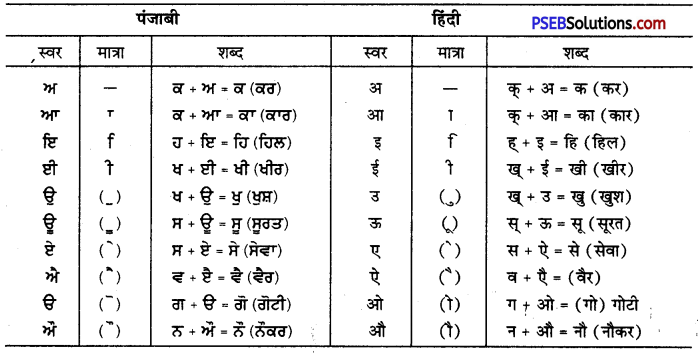
पंजाबी और हिंदी की स्वर ध्वनियों को स्पष्ट कीजिए।
उत्तर:
पंजाबी में स्वरों को लिखित रूप देने के लिए केवल तीन ही अक्षर होते हैं । ध्वनि के स्तर पर इनकी संख्या दस स्वीकार की जाती है-

प्रश्न 7.
पंजाबी और हिंदी की स्वर ध्वनियों को उदाहरण सहित लिखिए।
उत्तर:
प्रश्न 8.
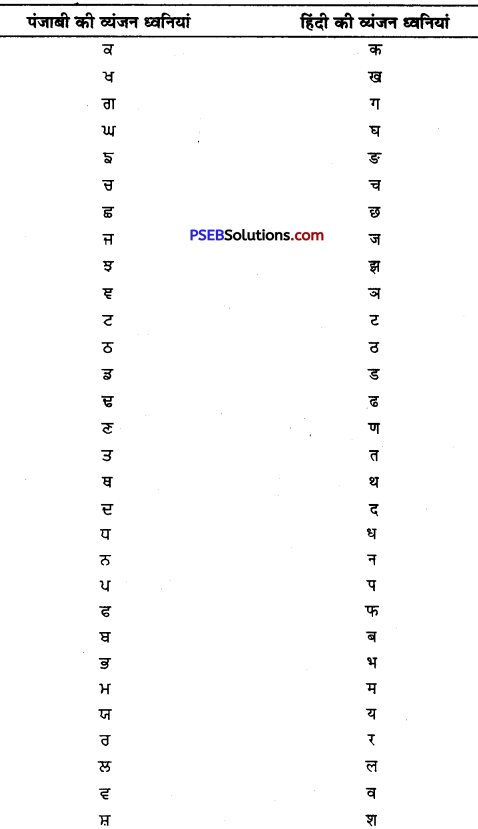
पंजाबी और हिंदी की व्यंजन ध्वनियों को लिखिए।
उत्तर:
प्रश्न 9.
पंजाबी में बिंदी () और टिप्पी (“) का प्रयोग कैसे किया जाता है?
उत्तर:
पंजाबी में बिंदी (‘) और टिप्पी (“) का प्रयोग मात्राओं के अनुसार किया जाता है। हिंदी में इनके लिए प्रायः बिंदी का ही प्रयोग होता है लेकिन बड़े ‘अ’ के साथ बिंदी की जगह चंद्रबिंदु का प्रयोग किया जाता है। पंजाबी में दुलैंकड़ मात्राओं के साथ टिप्पी का प्रयोग होता है पर हिंदी में दीर्घ ‘ऊ’ (‘) के साथ चंद्र बिंदु का प्रयोग किया जाता है; जैसेनँ, बूँद, चूं-चूँ।
प्रश्न 10.
पंजाबी के टिप्पी वाले शब्दों का हिंदी में कैसे प्रयोग किया जाता है?
उत्तर:
(I) हिंदी में पंजाबी के टिप्पी वाले शब्दों का प्रयोग करते समय चंद्र बिंदु लगाया जाता है; जैसे-
भव – मुँह
यस – पहँच
(II) कहीं-कहीं टिप्पी वाले शब्दों का प्रयोग करते समय टिप्पी की जगह कुछ नहीं लगाया जाता; जैसे-
ਧੰਨ – धन
(III) कुछ स्थानों पर ऐसी स्थिति में ‘क’, ‘च’ आदि की जगह ‘का’, ‘चा’ आदि का प्रयोग किया जाता है; जैसे-
ਕੰਨ – कान
ਚੰਮ – चाम
ਕੰਮ – काम
(IV) कुछ जगह टिप्पी की जगह चंद्र बिंदु का प्रयोग और अंतिम अक्षर में परिवर्तन किया जाता है; जैसे-
ਦੰਦ – दाँत
ਪੰਜ – पाँच
(V) पंजाबी में कन्ना, लां, दुलावां, होड़ा तथा कनौड़ा मात्राओं के साथ बिंदी का प्रयोग होता है लेकिन हिंदी में कई जगह बिंदी की जगह चंद्र बिंदु का प्रयोग किया जाता है; जैसे-
ਚਾਂਦੀ – चाँदी
उप्वा – ताँबा
ਸਾਂਝਾ – साँझा
प्रश्न 11.
हिंदी के जिन शब्दों में ‘य’ से पहले आधा अक्षर प्रयुक्त किया जाता है वहाँ पंजाबी में क्या परिवर्तन होता है? उदाहरण देकर लिखिए।
उत्तर:
हिंदी के शब्दों में जहाँ ‘य’ से पहले आधा अक्षर आता है वहाँ पंजाबी में प्रायः आधा अक्षर पूरा लिखा जाता है और पूरे अक्षर के साथ ‘इ’ की मात्रा लगा दी जाती है। साथ ही ‘य’ की जगह ”लिखा जाता है। कहीं-कहीं कुछ अन्य परिवर्तन भी किए जाते हैं। उदाहरण के लिए-
हिंदी – पंजाबी
माध्यम – ਮਾਧਿਅਮ
सभ्यता – ਸਭਿਅਤਾ
अभ्यास – ਅਭਿਆਸ
अध्यापक – ਅਧਿਆਪਕ
व्यर्थ – ਵਿਅਰਥ
व्यापक – ਵਿਆਪਕ
व्यक्ति – ਵਿਅਕਤੀ
व्यवस्था – ਵਿਵਸਥਾ
प्रश्न 12.
हिंदी के जिन शब्दों में ‘आ’ अथवा ‘या’ लगाया जाता है वहाँ पंजाबी में अनुवाद करते समय क्या परिवर्तन किया जाता है?
उत्तर:
पंजाबी में अनुवाद करते समय ऐसी स्थिति में धातु के अंतिम अक्षर के साथ ‘ई’ की मात्रा लगा कर मा’ लगा दिया जाता है। उदाहरण
हिंदी – पंजाबी
पढा – ਪੜਿਆ
भेजा – ਭੇਜਿਆ
लिखा – ਲਿਖਿਆ
माया – ਮਾਇਆ
गाया – ਗਾਇਆ
मापा – ਮਾਪਿਆ
हिंदी की जिन क्रियाओं के अंत में ‘या’ लगा होता है वहाँ पंजाबी में ‘आ’ लगाया जाता है; जैसे-सोया-मॅग, किया-वीउ, दिया-टॅिग, लिया-लिभा|
प्रश्न 13.
हिंदी में जहाँ ‘व’ से पहले आधा अक्षर होता है वहाँ पंजाबी में परिवर्तन करते समय क्या किया जाता है?
उत्तर:
हिंदी के जिन शब्दों में ‘व’ से पहले आधा अक्षर होता है वहाँ पंजाबी में पूरा अक्षर लिखा जाता है और वहाँ ‘व’ के साथ की मात्रा (_) का प्रयोग किया जाता है; जैसे-
हिंदी – पंजाबी
द्वारा – ਦੁਆਰ
स्वतंत्र – ਸੁਆਗਤ
द्वार – ਦੁਆਰਾ
स्वागत – ਸੁਆਗਤ
कहीं-कहीं इस स्थिति में तनिक अंतर होने पर भिन्न विधि अपनाई जाती है; जैसे-
स्वरोजगार – ਸਵੈ ਰੋਜ਼ਗਾਰ
स्वर – ਸਵਰ
प्रश्न 14.
पंजाबी में सरलता बनाए रखने के लिए हिंदी के संयुक्त व्यंजनों में किस प्रकार परिवर्तन किया जाता है?
उत्तर:
हिंदी के संयुक्त व्यंजनों में पंजाबी में अनुवाद करते समय सरलता बनाए रखने के लिए प्रायः दो प्रकार से परिवर्तन किए जा रहे हैं-
(I) संयुक्त व्यंजनों के मध्य में स्वराज्य से उच्चारण में सरलता लाने का प्रयास किया जाता है; जैसे-
हिंदी – पंजाबी
फ़िक्र – ਫ਼ਿਕਰ
राष्ट्र – ਰਾਸ਼ਟਰ
इन्द्र/इंद्र – ਇੰਦਰ
कलेश – ਕਲੇਸ਼
विश्वास – ਵਿਸ਼ਵਾਸ
शास्त्र – ਸ਼ਾਸਤਰ
स्कूल – ਸਕੂਲ
कृपा – ਕਿਰਪਾ
पुत्री – ਪੁੱਤਰੀ
संग्राम – ਸੰਗਰਾਮ
(II) स्वरों के लोप से भी शब्दों की सरलता बनाई जाती है. जैसे-
परंतु – ਪ੍ਰੰਤੂ
प्रत्यक्ष – ਪ੍ਰਤੱਖ
लक्ष्मी – ਲੱਛਮੀ
लक्षण – ਲੱਛਣ
ईर्ष्या – ਈਰਖਾ
प्रश्न 15.
हिंदी के संयुक्त व्यंजनों को पंजाबी में किस प्रकार लिखा जाता है?
उत्तर:
हिंदी के संयुक्त व्यंजनों को सरल बनाने के लिए पंजाबी में अलग-अलग व्यंजनों के साथ लिखा जाता है; जैसे-
हिंदी – पंजाबी
विश्राम – ਵਿਸ਼ਰਾਮ
मात्रा – ਮਾਤਰਾ
पवित्र – ਪਵਿੱਤਰ
कृपा – ਕਿਰਪਾ
भ्रम – ਭਰਮ
पदार्थ – ਪਦਾਰਥ
अर्पण – ਅਰਪਣ
निर्धन – ਨਿਰਧਨ
प्रश्न 16.
हिंदी के जिन शब्दों के अंत में ‘व’ आ जाता है वहाँ पंजाबी में अनुवाद करते समय प्रायः क्या परिवर्तन किया जाता है?
उत्तर:
हिंदी के जिन शब्दों के अंत में ‘व’ आ जाता है उसकी जगह पंजाबी में प्राय: लिख दिया जाता है; जैसे-
हिंदी – पंजाबी
स्वभाव – महाभ
दुर्भाव – ਦੁਰਭਾਵ
प्रश्न 17.
हिंदी में ‘ह’ से पहले ‘ए’ (‘) की मात्रा के स्थान पर पंजाबी में क्या परिवर्तन किया जाता है?
उत्तर:
पंजाबी में किसी शब्द में ‘उ’ से पहले ‘प्टे’ की मात्रा हो तो वहाँ छोटी ‘इ’ की मात्रा लगाई जाती है; जैसे-
हिंदी – पंजाबी
मेहनत – ਮਿਹਨਤ
मेहर – ਮਿਹਰ
मेहरबान – ਮਿਹਰਬਾਨ
सेहत – ਸਿਹਤ
चेहरा – ਚਿਹਰਾ
प्रश्न 18.
हिंदी में जिन शब्दों का उच्चारण ऐह’ है लेकिन क्रम अह’ होता है उसे पंजाबी में किस प्रकार लिखा जाता है?
उत्तर:
पंजाबी में ऐसे शब्द का ‘हाहे’ से पहला अक्षर मुक्त रहता है पर उसे छोटी ‘इ’ की मात्रा लगती है; जैसे-
हिंदी – पंजाबी
नहर – ਨਹਿਰ
शहर – ਸ਼ਹਿਰ
वहम – ਵਹਿਮ
महंगा – ਮਹਿੰਗਾ
महल – ਮਹਿਲ
शहद – ਸ਼ਹਿਦ
प्रश्न 19.
हिंदी में जिन शब्दों में नासिक्य ध्वनि प्राय: ‘ण’ का प्रयोग होता है तो वहाँ पंजाबी शब्दों में के अनुवाद में क्या परिवर्तन आता है?
उत्तर:
हिंदी में जिन शब्दों में ‘ण’ का प्रयोग होता है उनका पंजाबी में अनुवाद में नासिक्य ध्वनि को प्रयुक्त किया जाता है; जैसे-
हिंदी – पंजाबी
कारण – ਕਾਰਨ
कर्ण – ਕਰਨ
किरण – ਕਿਰਨ
शरण – ਸ਼ਰਨ
हिरण – ਹਿਰਨ
धर्म – ਧਰਮ
दर्शन – ਦਰਸ਼ਨ
ਅਰਜਨ
प्रश्न 20.
हिंदी भाषा की देवनागरी लिपि और गुरुमुखी लिपि में द्वित्व शब्दों के लेखन में अंतर स्पष्ट कीजिए।
उत्तर:
(i) देवनागरी लिपि में द्वित्व वर्णों का प्रयोग किया जाता है लेकिन गुरुमुखी लिपि में अद्धक (‘) का प्रयोग होता है; जैसे- शुद्ध = रॉय, खट्टा = बॅटा, बच्चा = वसा, पक्का = पॅवा, आदि।
प्रश्न 21.
हिंदी और पंजाबी में उच्चारण भिन्नता के कारण व्यंजनों के प्रयोग में क्या बदलाव आता है?
उत्तर:
उच्चारण भेद होने के कारण हिंदी और पंजाबी में ‘ब’, ‘ग’, ‘न’, ‘ड’ पंजाबी में क्रमश: ‘उ’, ‘व’, ‘ह’ और ‘इ’ में बदल जाते हैं ; जैसे- सब = र्मठ, पानी = पाटी, लोग = प्लेव आदि।
प्रश्न 22.
लिंग परिवर्तन करते समय हिंदी और पंजाबी में आए अंतर स्पष्ट कीजिए।
उत्तर:
(क) हिंदी में कुछ आकारांत शब्दों का लिंग बदलते समय ‘आ’ को इया में बदल दिया जाता है लेकिन पंजाबी में ‘आ’ के स्थान पर प्टी (१) का प्रयोग किया जाता है; जैसे-
चूहा = चुहिया = तुगी, बूढ़ा = बुढ़िया = वडी।।
(ख) हिंदी में जहाँ अंत में ‘इन’ प्रत्यय लगाया जाता है वहाँ पंजाबी में ‘ठ’ या ‘ह’ लगाया जाता है; जैसे-
तेली = तेलिन = उलट, सपेरा = सपेरिन = मयेण्ट।
(ग) हिंदी में अंतिम स्वर के स्थान पर जहाँ आनी’ लगाया जाता है वहाँ पंजाबी में ‘टी’ लगाया जाता है; जैसे-
नौकर = नौकरानी = वाटी, सेठ = सेठानी = मिठाटी, पंडित = पंडिताइन = पंडाटी, बनिया = बनियाइन = घटिभाटी।
(घ) हिंदी में अक’ अंत वाले पुल्लिग शब्दों के अंत में ‘इका’ लगाया जाता है लेकिन पंजाबी में ‘अक’ अंत वाले पुल्लिग शब्दों में कन्ना लगा दिया जाता है; जैसे-
नायक = नायिका = ठाप्टिवा, सेवक = सेविका = मेहवा ।।
(ङ) हिंदी और पंजाबी में लिंग परिवर्तन में अनेक स्थानों पर कोई परिवर्तन दिखाई नहीं देता; जैसे-
चाचा = चाची = सासी, पुत्र = पुत्री = ‘उठी, सरदार = सरदारनी = मराठठी।
प्रश्न 23.
पंजाबी और हिंदी में उच्चारण भिन्नता के कारण
उत्तर:
पंजाबी के कुछ शब्दों में स्वर या व्यंजन की मात्रा में वृद्धि हो जाती है; जैसे-
गुरु = ताठ, स्थान = पाठ, स्कूल = मवल।
प्रश्न 24.
हिंदी के शब्दों में प्रयुक्त ‘क्ष’ और ‘ष’ के उच्चारण में बदलाव के कारण पंजाबी में क्या बदलाव दिया जाता है?
उत्तर:
उच्चारण में परिवर्तन के कारण ‘क्ष’ के स्थान पर ‘ध’ और ‘ष’ की जगह ‘ह’ का प्रयोग किया जाता है; जैसे-
पुरुष = पठध, ईर्ष्या = प्टीतधा, लक्ष्मी = लॅधनी, पक्षी = धंढी।
प्रश्न 25.
पंजाबी और हिंदी में बहुवचन बनाने में क्या-क्या अंतर दिखाई देते हैं? स्पष्ट कीजिए।
उत्तर:
I. हिंदी में अकारांत स्त्रीलिंग संज्ञाओं के अंत में बहुवचन बनाते हुए ‘अ’ को ‘ऐं’ में बदला जाता है लेकिन पंजाबी में ‘कन्ने’ के ऊपर बिंदी लगाई जाती है; जैसे-
रात = रातें = ठारा; मशीन = मशीनें = भतीठां; सड़क = सड़कें = मइयां।
II. हिंदी के ‘आकारांत’ एकवचन शब्दों के अंत में ‘एँ’ लगाया जाता है लेकिन ऐसी स्थिति में पंजाबी में ‘गं’ लगाया जाता है; जैसे
कविता = कविताएँ = वहिउाहां, सभा = सभाएँ = माहां, अध्यापक = अध्यापिकाएँ = अयिभाववाहां, हवा = हवाएँ = उहाहां।
III. हिंदी के इकारांत या ईकारांत स्त्रीलिंग शब्दों के अंत में बहुवचन बनाते हुए ‘ई’ की जगह ‘इ’ कर दिया जाता है लेकिन पंजाबी में बिहारी की जगह बहुवचन के अंत में ‘भा’ लगा दिया जाता है; जैसे-
नदी = नदियाँ = ठटीला, कली = कलियाँ = वप्लीमां, लड़की = लड़कियाँ = लक्वीनां।
IV. हिंदी में उकारांत और ऊकारांत स्त्रीलिंग शब्दों को बहुवचन में बदलते समय ‘एँ’ लगाया जाता है लेकिन पंजाबी में इस स्थिति में जहाँ औंकड़ और दुलैंकड़ होते हैं वहाँ बहुवचन बनाते हुए ‘मां’ लगा दिया जाता है; जैसे
धातु = धातुएँ = पाउला ; वस्तु = वस्तुएँ = हमला|
V. अनेक स्थानों पर आकारांत पुल्लिग शब्दों में बहुवचन बनाते समय हिंदी और पंजाबी में समानता रहती है। दोनों में ही ‘आ’ को ‘ए’ में बदल दिया जाता है: जैसे-
रुपया = रुपये = तृघटे; कपड़ा = कपड़े = वॅपडे; चाचा = चाचे = सासे; पत्ता = पत्ते = डे।
प्रश्न 26.
हिंदी और पंजाबी की वाक्य-संरचना में समानताओं को स्पष्ट कीजिए।
उत्तर:
हिंदी और पंजाबी दोनों भाषाओं में उच्चारण की दृष्टि से बहुत अधिक समानता है। इनकी वाक्य-संरचना और व्याकरणिक नियमों में भी कोई बहुत बड़ा अंतर नहीं है; जैसे-
आज हमारा देश भिन्न-भिन्न धर्म-जातियों में बंटा हुआ है।
ਅੱਜ ਸਾਡਾ ਦੇਸ਼ ਵੱਖ-ਵੱਖ ਧਰਮ ਜਾਤਾਂ ਵਿਚ ਵੰਡਿਆ ਹੋਇਆ ਹੈ ।
इन दोनों भाषाओं में क्रिया का लिंग मुख्य कर्ता के अनुसार ही होता है; जैसे-
ਮੁੰਡਾ ਦਸਵੀਂ ਜਮਾਤ ਵਿਚ ਪੜ੍ਹਦਾ ਹੈ ।
लड़का दसवीं कक्षा में पढ़ता है।
इन दोनों भाषाओं में कर्तृवाच्य में क्रिया का लिंग मुख्य कर्ता के समान ही रहता है। इनमें कर्मवाच्य की क्रिया का लिंग मुख्य रूप से कर्म के अनुसार ही होता है; जैसे-
भेठे उ प हॅप्ल निभा । मुझ से दूध गिर गया।
भेठे 3 साग इल ताप्टी । मुझ से चाय गिर गई।
पंजाबी और हिंदी में भाववाच्य की क्रिया सदा पुल्लिंग में रहती है: जैसे-
मुंडे पङिमा ठगीं सांस । लड़के से पढ़ा नहीं जाता।
वही घडिमा ठगी मांग । लड़की से पढ़ा नहीं जाता।
पंजाबी और हिंदी में क्रिया के दो ही वचन होते हैं-एक वचन और बहुवचन। इन दोनों में ही एक के लिए एकवचन की क्रिया और अनेक के लिए बहुवचन क्रिया का प्रयोग होता है, इन दोनों भाषाओं में संज्ञा, वचन और लिंग के अनुसार ही विशेषण बोधकों के रूप में परिवर्तन होता है।
पंजाबी से हिंदी में अनुवाद संबंधी वाक्यों के कुछ उदाहरण
निम्नलिखित पंजाबी के वाक्यों का हिंदी में अनुवाद करें
1. नाव जुठीहमिटी उडीगाड हिच चै।
2. रिहाली वॅउव सी मॅमिभा सी ठाउ मठाप्टी सांटी चै।
3. ਇਤਿਹਾਸਿਕ ਸਥਾਨਾਂ ਦੀ ਯਾਤਰਾ ਨਾਲ ਸਾਡੇ ਗਿਆਨ ਵਿਚ ਵਾਧਾ ਹੁੰਦਾ ਹੈ !
4. ਛੱਬੀ ਜਨਵਰੀ ਅਤੇ ਪੰਦਰਾਂ ਅਗਸਤ ਸਾਡੇ ਕੌਮੀ ਤਿਉਹਾਰ ਹਨ ।
5. ਸਾਡੇ ਹਿਰਦੇ ਵਿਚ ਆਪਣੀ ਮਾਂ-ਬੋਲੀ ਲਈ ਪਿਆਰ ਹੋਣਾ ਚਾਹੀਦਾ ਹੈ ।
6. ਕਰਤਾਰ ਸਿੰਘ ਸਰਾਭਾ ਨੇ ਉੱਨੀ ਸਾਲ ਦੀ ਛੋਟੀ ਉਮਰ ਵਿਚ ਦੇਸ਼ ਲਈ ਸ਼ਹੀਦੀ ਪਾਈ ।
7. भिठाम पडे ठित मावे ताहां रा ठिठेइ ।।
8. ਵਿਗਿਆਨ ਦੇ ਖੇਤਰ ਵਿਚ ਲਗਾਤਾਰ ਵਾਧਾ ਹੋ ਰਿਹਾ ਹੈ ।
9. ਅਖ਼ਬਾਰ ਦਾ ਸਾਡੇ ਜੀਵਨ ਵਿਚ ਮਹੱਤਵਪੂਰਨ ਸਥਾਨ ਹੈ ।
10. ਜਨਸੰਖਿਆ ਦੇ ਵੱਧਣ ਨਾਲ ਬੇਰੁਜ਼ਗਾਰੀ ਵੀ ਵੱਧ ਰਹੀ ਹੈ ।
11. माठु विनप्ली टी घुउउ वठठी नग्गीसी चै।
12. ਜੇਕਰ ਤੁਸੀਂ ਆਪਣਾ ਅੱਜ ਖ਼ਰਾਬ ਕਰੋਗੇ ਤਾਂ ਤੁਹਾਡਾ ਕਲ਼ ਵੀ ਖ਼ਰਾਬ ਹੋ ਜਾਏਗਾ ।
13. लठउर मडी सी धिभा व भडे ठिसा उँ त।
14. लठिरत मिप पइसा चै ठाले तेवठी वठरा वै।
15. ਗੁਰੂ ਨਾਨਕ ਦੇਵ ਜੀ ਨੇ ਕਿਰਤ ਕਰਕੇ ਖਾਣ ਦੀ ਸਿੱਖਿਆ ਦਿੱਤੀ ਹੈ ।
16. ऐमराठाल वरे ही गाढेठी ठगीं वठठी साजीसी।
17. नेवत तेवठी ठगीं मिल ठगी गं -तृलताठ रा ठमठा सपठाठ।
18. डेल सी माहान मह वे ममी पत्रे वापत मा ताप्टे ।।
19. ਸਿਆਣਾ ਇਨਸਾਨ ਖ਼ਾਲੀ ਸਮੇਂ ਦਾ ਵੀ ਸਦਉਪਯੋਗ ਕਰਦਾ ਹੈ ।
20. पत हांठा मल हित ही महाप्टी घउ सती गै।
उत्तर:
1. पंजाब विश्वविद्यालय चंडीगढ़ में है।
2. दिवाली कार्तिक की अमावस्या की रात्रि में मनाई जाती है।
3. ऐतिहासिक स्थानों की यात्रा से हमारे ज्ञान में वृद्धि होती है।
4. छब्बीस जनवरी और पंद्रह अगस्त हमारे राष्ट्रीय त्यौहार हैं।
5. हमारे हृदय में अपनी मातृ-भाषा के लिए प्रेम होना चाहिए।
6. करतार सिंह सराभा ने उन्नीस वर्ष की छोटी आयु में देश के लिए कुर्बानी पाई।
7. मिठास और नम्रता सभी गुणों का निचोड़ है।
8. विज्ञान के क्षेत्र में निरंतर विकास हो रहा है।
9. समाचार-पत्र का हमारे जीवन में महत्त्वपूर्ण स्थान है।
10. जनसंख्या के बढ़ने के साथ बेरोज़गारी भी बढ़ रही है।
11. हमें बिजली की बचत करनी चाहिए।
12. यदि आप अपना आज खराब करोगे तो आपका कल भी खराब हो जाएगा।
13. पशु संपत्ति की रक्षा करो और हिंसा से दूर रहो।
14. जतिंद्र सिंह पढ़ता है साथ नौकरी करता है।
15. गुरु नानक देव जी ने कार्य (मेहनत) करके खाने की शिक्षा दी है।
16. मित्रों से कभी भी हेराफेरी नहीं करनी चाहिए।
17. यदि नौकरी नहीं मिल रही तो स्वरोजगार का रास्ता अपनाओ।
18. ढोल की आवाज़ सुन कर हम घर से बाहर आ गए।
19. बुद्धिमान इन्सान खाली समय का भी सदुपयोग करता है।
20. घर की तरह विद्यालय में भी सफ़ाई बहुत आवश्यक है।