PSEB 8th Class Maths Solutions Chapter 9 Algebraic Expressions and Identities InText Questions

Punjab State Board PSEB 8th Class Maths Book Solutions Chapter 9 Algebraic Expressions and Identities InText Questions and Answers.

PSEB 8th Class Maths Solutions Chapter 9 Algebraic Expressions and Identities InText Questions

Try These: [Textbook Page No. 139]

1. Write two terms which are like:

Question (i)
7xy
Solution:
14xy, 21xy

PSEB 8th Class Maths Solutions Chapter 9 Algebraic Expressions and Identities InText Questions

Question (ii)
4mn2
Solution:
8mn2 , – 11mn2

Question (iii)
21
Solution:
– 5l, 9l

Try These : [Textbook Page No. 142]

1. Can you think of two more such situations, where we may need to multiply algebraic expressions?
Solution:
1. Aarush purchased x notebooks and y pens. If cost of a notebook and a pen is same ₹ z, what amount has he to pay? → ₹ z (x + y)
2. Shailja wants to spread a carpet in her room having length (l + 5) m and breadth (b – 2) m. Find the area of the carpet. → (l + 5) (b – 2) m2

PSEB 8th Class Maths Solutions Chapter 9 Algebraic Expressions and Identities InText Questions

Try These: [Textbook Page No. 143]

1. Find 4x × 5y × 7z.
Solution:
4x × 5y × 7z = 4 × 5 × 7 × x × y × z
= 140 xyz

2. Find 4x × 5y × 7z. First find (4x × 5y) and multiply it by 7z; or first find (5y × 7z) and multiply it by 4x. Is the result the same? What do you observe? Does the order in which you carry out the multiplication matter?
Solution:
(4x × 5 y) = 4 × 5 × x × y
= 20xy
Now, 20xy × 7z = 20 × 7 × xy × z
= 140xyz … (i)
Also, (5y × 7z) = 5 × 7 × y × z = 35 yz
Now, 35yz × 4x = 35 × 4 × yz × x
= 140xyz … (ii)
Yes, the result is same.
We can conclude that product remains same if we change order of the terms.

PSEB 8th Class Maths Solutions Chapter 9 Algebraic Expressions and Identities InText Questions

3. Complete the table for area of a rectangle with given length and breadth.
Solution:

length breadth area
3x 5y 3x × 5y = 15xy
9y 4y2 9y × 4y2 = 36y3
4ab 5bc 4ab × 5be = 20ab2c
2l2m 3lm2 2l2m × 3lm2 = 6l3m3

Try These : [Textbook Page No. 144]

1. Find the product:

Question (i)
2x (3x + 5xy)
Solution:
= (2x × 3x) + (2x × 5xy)
= 6x2 + 10x2y

Question (ii)
a2 (2ab – 5c)
Solution:
= (a2 × 2ab) – (a2 × 5c)
= 2a3b – 5a2c

PSEB 8th Class Maths Solutions Chapter 9 Algebraic Expressions and Identities InText Questions

Try These: [Textbook Page No. 145]

1. Find the product: (4p2 + 5p + 7) × 3p
Solution:
(4p2 + 5p + 7) × 3p
= (4p2 × 3p) + (5p × 3p) + (7 × 3p)
= 12p3 + 15p2 + 21p

Try These : [Textbook Page No. 149]

1. Put -b in place of b in Identity (I). Do you get Identity (II)?
Solution:
Identity (I): (a + b)2 = a2 + 2ab + b2
Let us put (- b) instead of b [a + (- b)]2
= a2 + 2a (- b) + (- b)2
∴ (a – b)2
= a2 – 2ab + b2
Identity (II): (a – b)2 = a2 – 2ab + b2
Yes, we get Identity (II).

PSEB 8th Class Maths Solutions Chapter 9 Algebraic Expressions and Identities InText Questions

Try These : [Textbook Page No. 149]

1. Verify Identity (IV), for a = 2, b = 3, x = 5.
Solution:
Identity (IV):
(x + a) (x + b) = x2 + (a + b) x + ab
Substitute a = 2, b = 3 and x = 5
LHS
= (x + a) (x + b)
= (5 + 2) (5 + 3)
= (7)(8)
= 56

RHS
= x2 + (a + b) x + ab
= (5)2 + (2 + 3) × 5 + (2 × 3)
= 25 + (5) × 5 + (6)
= 25 + 25 + 6 = 56
∴ LHS = RHS
∴ The given identity is true for the given values.

2. Consider, the special case of Identity (IV) with a = b, what do you get ? Is it related to Identity (I)?
Solution:
When a = b (∴ Take y for both)
(x + a) (x + b) = x2 + (a + b) x + ab
Substitute a = y and b = y
(x + y)(x + y) = x2 + (y + y)x + (y × y)
= x2 + (2y) x + (y × y) = x2 + 2xy + y2
∴ Yes, it is the same as Identity ( I).

PSEB 8th Class Maths Solutions Chapter 9 Algebraic Expressions and Identities InText Questions

3. Consider, the special case of Identity (IV) with a = -c and b = -c. What do you get ? Is it related to Identity (II) ?
Solution:
Identity (IV):
(x + a)(x + b) = x2 + (a + b) x + ab
Substitute (- c) instead of a and (- c) instead of b,
(x – c) (x – c)
= x2 + [(-c) + (-c)]x + [(-c) × (-c)]
= x2 + [- 2c] x + (c2)
= x2 – 2cx + c2
∴ Yes, it is the same as Identity (II).

4. Consider the special case of Identity (IV) with b = – a. What do you get ? Is it related to Identity (III)?
Solution :
Identity (IV):
(x + a) (x + b) = x2 + (a + b) x + ab
Substitute (-a) instead of b,
(x + a) (x – a)
= x2 + [a + (- a)] x + [a × (- a)]
= x2 + (a – a) x + [- a2]
= x2 + (0) x – a2
= x2 – a2
∴ Yes, it is the same as Identity (III).

PSEB 8th Class Maths Solutions Chapter 9 Algebraic Expressions and Identities Ex 9.5

Punjab State Board PSEB 8th Class Maths Book Solutions Chapter 9 Algebraic Expressions and Identities Ex 9.5 Textbook Exercise Questions and Answers.

PSEB Solutions for Class 8 Maths Chapter 9 Algebraic Expressions and Identities Ex 9.5

1. Use a suitable identity to get each of the following products:

Question (i)
(x + 3) (x + 3)
Solution:
= (x + 3)2
= (x)2 + 2(x)(3) + (3)2
[∵ (a + b)2 = a2 + 2ab + b2]
= x2 + 6x + 9

PSEB 8th Class Maths Solutions Chapter 9 Algebraic Expressions and Identities Ex 9.5

Question (ii)
(2y + 5) (2y + 5)
Solution:
= (2y + 5)2
= (2y)2 + 2 (2y)(5) + (5)2
[∵ (a – b)2 = a2 – 2ab + b2]
= 4y2 + 20y + 25

Question (iii)
(2a – 7) (2a – 7)
Solution:
= (2a – 7)2
= (2a)2 – 2(2a)(7) + (7)2
[∵ (a – b)2 = a2 – 2ab + b2]
= 4a2 – 28a + 49

Question (iv)
(3a – \(\frac {1}{2}\))(3a – \(\frac {1}{2}\))
Solution:
= (3a – \(\frac {1}{2}\))2
= (3a)2 – 2(3a)(\(\frac {1}{2}\)) + (\(\frac {1}{2}\))2
[∵ (a – b)2 = a2 – 2ab + b2]
= 9a2 – 3a + \(\frac {1}{4}\)

PSEB 8th Class Maths Solutions Chapter 9 Algebraic Expressions and Identities Ex 9.5

Question (v)
(1.1m – 0.4) (1.1m + 0.4)
Solution:
= (1.1m)2 – (0.4)2
[∵ (a + b) (a – b) = a2 – b2]
= 1.21m2 – 0.16

Question (vi)
(a2 + b2) (-a2 + b2)
Solution:
= (b2 + a2) (b2 – a2)
= (b2)2 – (a2)2
[∵ (a + b) (a – b) = a2 – b2]
= b4 – a4

Question (vii)
(6x – 7) (6x + 7)
Solution:
= (6x)2 – (7)2
[∵ (a + b) (a – b) = a2 – b2]
= 36x2 – 49

Question (viii)
(-a + c) (-a + c)
Solution:
= (-a + c)2
= (-a)2 + 2 (-a) (c) + (c)2
[∵ (a + b)2 = a2 + 2ab + b2]
= a2 – 2ac + c2

Question (ix)
(\(\frac{x}{2}+\frac{3 y}{4}\))
Solution:
= (\(\frac{x}{2}+\frac{3 y}{4}\))2
= (\(\frac {x}{2}\))2 + 2(\(\frac {x}{2}\))(\(\frac {3y}{4}\)) + (\(\frac {3y}{4}\))2
[∵ (a + b)2 = a2 + 2ab + b2]
= \(\frac{x^{2}}{4}+\frac{3 x y}{4}+\frac{9 y^{2}}{16}\)

PSEB 8th Class Maths Solutions Chapter 9 Algebraic Expressions and Identities Ex 9.5

Question (x)
(7a – 9b) (7a – 9b)
Solution:
= (7a – 9b)2
= (7a)2 – 2(7a)(9b) + (9b)2
[∵ (a – b)2 = a2 – 2ab + bsup>2]
= 49a2 – 126ab + 81b2

2. Use the identity (x + a) (x + b) = x2 + (a + b) x + ab to find the following products:

Question (i)
(x + 3) (x + 7)
Solution:
Identity : (x + a) (x + b) = x2 + (a + b) x + ab
= (x)2 + (3 + 7)x + (3) (7)
= x2 + (10) x + 21
= x2 + 10x + 21

Question (ii)
(4x + 5) (4x + 1)
Solution:
= (4x)2 + (5 + 1) 4x + (5)(1)
= 16x2 + (6) 4x + 5
= 16x2 + 24x + 5

Question (iii)
(4x – 5) (4x – 1)
Solution:
= (4x)2 + (- 5 – 1) 4x + (- 5) (- 1)
= 16x2 + (- 6) 4x + 5
= 16x2 – 24x + 5

PSEB 8th Class Maths Solutions Chapter 9 Algebraic Expressions and Identities Ex 9.5

Question (iv)
(4x + 5) (4x- 1)
Solution:
= (4x)2 + (5 – 1) 4x + (5) (- 1)
= 16x2 + (4) 4x – 5
= 16x2 + 16x – 5

Question (v)
(2x + 5y) (2x + 3y)
Solution:
= (2x)2 + (5y + 3y) 2x + (5y) (3y)
= 4x2 + (8y) 2x + 15y2
= 4x2 + 16xy + 15y2

Question (vi)
(2a2 + 9) (2a2 + 5)
Solution:
= (2a2)2 + (9 + 5) 2a2 + (9)(5)
= 4a4 + (14)2a2 + 45
= 4a4 + 28a2 + 45

Question (vii)
(xyz – 4) (xyz – 2)
Solution:
= (xyz)2 + (- 4 – 2) xyz + (- 4)(- 2)
= x2y2z2 + (- 6) xyz + 8
= x2y2z2 – 6xyz + 8

3. Find the following squares by using the identities:

Question (i)
(b – 7)2
Solution:
= (b)2 – 2 (b)(7) + (7)2
[∵ (a – b)2 = a2 – 2ab + b2]
= b2 – 14 b + 49

PSEB 8th Class Maths Solutions Chapter 9 Algebraic Expressions and Identities Ex 9.5

Question (ii)
(xy + 3z)2
Solution:
= (xy)2 + 2 (xy)(3z) + (3z)2
[∵ (a + b)2 = a2 + 2ab + b2]
= x2y2 + 6xyz + 9z2

Question (iii)
(6x2 – 5y)2
Solution:
= (6x2)2 – 2 (6x2) (5y) + (5y)2
[∵ (a – b)2 = a2 – 2ab + b2]
= 36x4 – 60x2y + 25y2

Question (iv)
(\(\frac {2}{3}\)m + \(\frac {3}{2}\)n)2
Solution:
= (\(\frac {2}{3}\)m)2 + 2(\(\frac {2}{3}\)m)(\(\frac {3}{2}\)n) + (\(\frac {3}{2}\)n)2
[∵ (a + b)2 = a2 + 2ab + b2]
= \(\frac {4}{9}\)m2 + 2mn + \(\frac {9}{4}\)n2

Question (v)
(0.4p – 0.5q)2
Solution:
= (0.4p)2 – 2 (0.4p)(0.5q) + (0.5q)2
[∵ (a – b)2 = a2 – 2ab + b2]
= 0.16p2 – 0.4pq + 0.25q2

PSEB 8th Class Maths Solutions Chapter 9 Algebraic Expressions and Identities Ex 9.5

Question (vi)
(2xy + 5y)2
Solution:
= (2xy)2 + 2 (2xy)(5y) + (5y)2
[∵ (a + b)2 = a2 + 2ab + b2]
= 4x2y2 + 20xy2 + 25 y2

4. Simplify:

Question (i)
(a2 – b2)2
Solution:
= (a2)2 – 2(a2)(b2) + (b2)2
= a4 – 2a2b2 + b4

Question (ii)
(2x + 5)2 – (2x – 5)2
Solution:
= [(2x)2 + 2(2x)(5) + (5)2] – [(2x)2 – 2 (2x)(5) + (5)2]
= [4x2 + 20x + 25] – [4x2 – 20x + 25]
= 4x2 + 20x + 25 – 4x2 + 20x – 25
= 4x2 – 4x2 + 20x + 20x + 25 – 25
= 40x

Question (iii)
(7m – 8n)2 + (7m + 8n)2
Solution:
= [(7m)2 – 2(7m)(8n) + (8n)2] + [(7m)2 + 2 (7m)(8n) + (8n)2]
= [49m2 – 112mn + 64n2] + [49m2 + 112mn + 64n2]
= 49m2 – 112mn + 64n2 + 49m2 + 112mn + 64n2
= 49m2 + 49m2 – 112mn + 112mn + 64n2 + 64n2
= 98m2 + 128n2

PSEB 8th Class Maths Solutions Chapter 9 Algebraic Expressions and Identities Ex 9.5

Question (iv)
(4m + 5n)2 + (5m + 4n)2
Solution:
= [(4m)2 + 2 (4m)(5n) + (5n)2] + [(5m)2 + 2 (5m)(4n) + (4n)2]
= 16m2 + 40mn + 25n2 + 25m2 + 40mn + 16n2
= 16m2 + 25m2 + 40mn + 40 mn + 25n2 + 16n2
= 41m2 + 80mn + 41n2

Question (v)
(2.5p – 1.5q)2 – (1.5p – 2.5q)2
Solution:
= [(2.5p)2 – 2 (2.5p)(1.5q) + (1.5q)2] – [(1.5p)2 – 2 (1.5p)(2.5q) + (2.5q)2]
= [6.25p2 – 7.5pq + 2.25q2] – [2.25p2 – 7.5pq + 6.25q2]
= 6.25p2 – 7.5pq + 2.25q2 – 2.25p2 + 7.5pq – 6.25q2
= 6.25p2 – 2.25p2 – 7.5pq + 7.5pq + 2.25q2 – 6.25q2
= 4p2 – 4q2

Question (vi)
(ab + bc)2 – 2ab2c
Solution:
= [(ab)2 + 2 (ab)(bc) + (bc)2] – 2ab2c
= a2b2 + 2ab2c + b2c2 – 2ab2c
= a2b2 + 2ab2c – 2ab2c + b2c2
= a2b2 + b2c2

Question (vii)
(m2 – n2m)2 + 2m3n2
Solution:
= [(m2)2 – 2 (m2)(n2m)2 + (n2m)2] + 2m3n2
= m4 – 2 m3n2 + n4m2 + 2 m3 n2
= m4 – 2 m3n2 + 2 m3n2 + n4m2
= m4 + m2n4

PSEB 8th Class Maths Solutions Chapter 9 Algebraic Expressions and Identities Ex 9.5

5. Show that:

Question (i)
(3x + 7)2 – 84x = (3x – 7)2
Solution:
LHS = (3x + 7)2 – 84x
= (3x)2 + 2(3x)(7) + (7)2 – 84x
= 9x2 + 42x + 49 – 84x
= 9x2 + 42x – 84x + 49
= 9x2 – 42x + 49

RHS = (3x – 7)2
= (3x)2 – 2(3x)(7) + (7)2
= 9x2 – 42x + 49
Thus, LHS = RHS
∴ (3x + 7)2 – 84x = (3x – 7)2

Question (ii)
(9p – 5q)2 + 180pq = (9p + 5q)2
Solution:
LHS = (9p – 5q)2 + 180pq
= (9p)2 – 2(9p)(5q) + (5q)2 + 180pq
= 81p2 – 90pq + 25q2 + 180pq
= 81p2 – 90pq + 180pq + 25q2
= 81p2 + 90pq + 25q2

RHS = (9p + 5q)2
= (9p)2 + 2(9p)(5q) + (5q)2
= 81p2 + 90pq + 25q2
Thus, LHS = RHS
∴ (9p – 5q)2 + 180pq = (9p + 5q)2

PSEB 8th Class Maths Solutions Chapter 9 Algebraic Expressions and Identities Ex 9.5

Question (iii)
(\(\frac {4}{3}\)m – \(\frac {3}{4}\)n)2 + 2mn = \(\frac {16}{9}\)m2 + \(\frac {9}{16}\)n2
Solution:
LHS = [\(\frac {4}{3}\)m – \(\frac {3}{4}\)n]2 + 2mn
= [(\(\frac {4}{3}\)m)2 – 2(\(\frac {4}{3}\)m)(\(\frac {3}{4}\)n) + (\(\frac {3}{4}\)n)2] + 2mn
= \(\frac {16}{9}\)m2 – 2mn + \(\frac {9}{16}\)n2 + 2mn
= \(\frac {16}{9}\)m2 – 2mn + 2mn + \(\frac {9}{16}\)n2
= \(\frac {16}{9}\)m2 + \(\frac {9}{16}\)n2 = RHS
Thus, LHS = RHS
∴ (\(\frac {4}{3}\)m – \(\frac {3}{4}\)n)2 + 2mn = \(\frac {16}{9}\)m2 + \(\frac {9}{16}\)n2

Question (iv)
(4pq + 3q)2 – (4pq – 3q)2 = 48pq2
Solution:
LHS = (4pq + 3q)2 – (4pq – 3q)2
= [(4pq)2 + 2 (4pq)(3q) + (3q)2] – [(4pq)2 – 2 (4pq)(3q) + (3q)2]
= [16p2q2 + 24pq2 + 9q2] – [16p2q2 – 24pq2 + 9q2]
= 16p2q2 + 24pq2 + 9q2 – 16p2q2 + 24pq2 – 9q2
= 16p2q2 – 16p2q2 + 24pq2 + 24pq2 + 9q2 – 9q2
= 48pq2 = RHS
Thus, LHS = RHS
∴ (4pq + 3q)2 – (4pq – 3q)2 = 48pq2

PSEB 8th Class Maths Solutions Chapter 9 Algebraic Expressions and Identities Ex 9.5

Question (v)
(a – b) (a + b) + (b – c) (b + c) + (c – a) (c + a) = 0
Solution:
LHS = (a – b)(a + b) + (b – c)(b + c) + (c – a) (c + a)
= (a2 – b2) + (b2 – c2) + (c2 – a2)
= a2 – b2 + b2 – c2 + c2 – a2
= a2 – a2 + b2 – b2 + c2 – c2
= 0 = RHS
Thus, LHS = RHS
∴ (a -b)(a + b) + (b- c) (b + c) + (c – a) (c + a) = 0

6. Using identities, evaluate:

Question (i)
712
Solution:
= (70 + 1)2
= (70)2 + 2 (70)(1) + (1)2
[∵ (a + b)2 = a2 + 2ab + b2]
= 4900 + 140 + 1
= 5041

Question (ii)
992
Solution:
= (100 – 1)2
= (100)2 – 2(100)(1) + (1)2
[∵ (a – b)2 – a2 – 2ab + b2]
= 10000 – 200 + 1
= 9801

PSEB 8th Class Maths Solutions Chapter 9 Algebraic Expressions and Identities Ex 9.5

Question (iii)
1022
Solution:
= (100 + 2)2
= (100)2 + 2 (100)(2) + (2)2
[∵ (a + b)2 = a2 + 2ab + b2]
= 10000 + 400 + 4
= 10404

Question (iv)
9982
Solution:
= (1000 – 2)2
= (1000)2 – 2 (1000)(2) + (2)2
[∵ (a – b)2 = a2 – 2ab + b2]
= 1000000 – 4000 + 4
= 996004

Question (v)
5.22
Solution:
= (5 + 0.2)2
= (5)2 + 2 (5)(0.2) + (0.2)2
[∵ (a + b)2 = a2 + 2ab + b2]
= 25 + 2 + 0.04
= 27 + 0.04
= 27.04

Question (vi)
297 × 303
Solution:
= (300 – 3) × (300 + 3)
= (300)2 – (3)2
[∵ (a – b)(a + b) = a2 – b2]
= 90000 – 9
= 89991

PSEB 8th Class Maths Solutions Chapter 9 Algebraic Expressions and Identities Ex 9.5

Question (vii)
78 × 82
Solution:
= (80 – 2) × (80 + 2)
= (80)2 – (2)2
[∵ (a – b)(a + b) = a2 – b2]
= 6400 – 4
= 6396

Question (viii)
8.92
Solution:
= (9 – 0.1)2
= (9)2 – 2(9)(0.1) + (0.1)2
[∵ (a – b)2 = a2 – 2ab + b2]
= 81 – 1.8 + 0.01
= 81.01 – 1.8
= 79.21

Question (ix)
10.5 × 9.5
Solution:
= (10 + 0.5) × (10 – 0.5)
= (10)2 – (0.5)2
[∵ (a + b)(a – b) = a2 – b2]
= 100 – 0.25
= 99.75

PSEB 8th Class Maths Solutions Chapter 9 Algebraic Expressions and Identities Ex 9.5

7. Using a2 – b2 = (a + b) (a – b), find:

Question (i)
512 – 492
Solution:
= (51 + 49) (51 – 49)
= (100) × (2)
= 200

Question (ii)
(1.02)2 – (0.98)2
Solution:
= (1.02 + 0.98) (1.02 – 0.98)
= (2.0) × (0.04)
= 0.08

Question (iii)
1532 – 1472
Solution:
= (153 + 147) (153 – 147)
= (300) × (6)
= 1800

Question (iv)
12.12 – 7.92
Solution:
= (12.1 + 7.9) (12.1 – 7.9)
= 20 × 4.2
= 84

PSEB 8th Class Maths Solutions Chapter 9 Algebraic Expressions and Identities Ex 9.5

8. Using (x + a)(x + b) = x2 + (a + b) x + ab, find:

Question (i)
103 × 104
Solution:
= (100 + 3) × (100 + 4)
= (100)2 + (3 + 4) × 100 + (3)(4)
= 10000 + 700 + 12
=10712

Question (ii)
5.1 × 5.2
Solution:
= (5 + 0.1) (5 + 0.2)
= (5)2 + (0.1 + 0.2) × 5 + (0.1)(0.2)
= 25 + (0.3) × 5 + 0.02
= 25 + 1.5 + 0.02
= 26.52

Question (iii)
103 × 98
Solution:
= (100 + 3) (100-2)
= (100)2 + (3 – 2) 100 + (3)(-2)
= 10000 + 100 – 6
= 10094

PSEB 8th Class Maths Solutions Chapter 9 Algebraic Expressions and Identities Ex 9.5

Question (iv)
9.7 × 9.8
Solution:
= (10 – 0.3) (10 – 0.2)
= (10)2 + [(-0.3) + (-0.2)] 10 + (-0.3) (-0.2)
= 100 + [-0.5] × 10 + 0.06
= 100 – 5 + 0.06
= 95.06

PSEB 8th Class Maths Solutions Chapter 8 Comparing Quantities Ex 8.1

Punjab State Board PSEB 8th Class Maths Book Solutions Chapter 8 Comparing Quantities Ex 8.1 Textbook Exercise Questions and Answers.

PSEB Solutions for Class 8 Maths Chapter 8 Comparing Quantities Ex 8.1

1. Find the ratio of the following.

Question (a).
Speed of a cycle 15 km per hour to the speed of scooter 30 km per hour.
Solution:
Speed of a cycle = 15 km/h
Speed of a scooter = 30 km / h
∴ Ratio of the speed of a cycle to the speed of a scooter
= \(\frac{15 \mathrm{~km} / \mathrm{h}}{30 \mathrm{~km} / \mathrm{h}}\)
= \(\frac {1}{2}\)
= 1 : 2

Question (b).
5 m to 10 km
Solution:
[Note : Unit of both quantities should be same.]
1 km = 1000 m
∴ 10 km = 10 × 1000 m
= 10,000 m
∴ Ratio of 5 m to 10 km = \(\frac{5 \mathrm{~m}}{10 \mathrm{~km}}\)
= \(\frac{5 \mathrm{~m}}{10000 \mathrm{~m}}\)
= \(\frac{1}{2000}\)
= 1 : 2000

Question (c).
50 paise to ₹ 5
Solution:
[Note : Unit of both quantities should be same.]
₹ 1 = 100 paise
∴ ₹ 5 = 500 paise
∴ Ratio of 50 paise to ₹ 5 = \(\frac{50 \text { paise }}{₹ 5}\)
= \(\frac{50 \text { paise }}{500 \text { paise }}\)
= \(\frac{1}{10}\)
= 1 : 10

PSEB 8th Class Maths Solutions Chapter 8 Comparing Quantities Ex 8.1

2. Convert the following ratios to percentages.

Question (a).
3 : 4
Solution:
Given ratio = 3 : 4
∴ Percentage = (\(\frac{3}{4}\) × 100) %
= (3 × 25) %
= 75 %

Question (b).
2 : 3
Solution:
Given ratio = 2 : 3
∴ Percentage = (\(\frac{2}{3}\) × 100) %
= (\(\frac{200}{3}\)) %
= 66 \(\frac{2}{3}\)%

3. 72% of 25 students are interested in Mathematics. How many are not interested in Mathematics?
Solution:
Total number of students = 25
Students interested in Mathematics = 72%
∴ Students who are not interested in Mathematics = (100 – 72) %
= 28 %
Number of students who are not interested in Mathematics = 28% of 25
= \(\frac{28}{100}\) × 25
= \(\frac{28}{4}\)
= 7
Thus, 7 students are not interested in Mathematics.

PSEB 8th Class Maths Solutions Chapter 8 Comparing Quantities Ex 8.1

4. A football team won 10 matches out of the total number of matches they played. If their win percentage was 40, then how many matches did they play in all ?
Solution:
Number of matches won by the football team = 10
Let x matches be played by the team.
∴ 40% of x = 10
∴ \(\frac{40}{100}\) × x = 10
∴ x = \(\frac{10 \times 100}{40}\)
= 25
Thus, the football team played 25 matches in all.

5. If Chameli had ₹ 600 left after spending 75% of her money, how much did she have in the beginning?
Solution:
Let Chameli had in the beginning ₹ x
Percentage of money spent by Chameli = 75 %
Percentage of money left with Chameli = (100 – 75)%
= 25%
But money left = ₹ 600 (Given)
∴ 25% of x = 600
∴ \(\frac{25}{100}\) × x = 600
∴ x = \(\frac{600 \times 100}{25}\)
∴ x = 2400
Thus, Chameli had ₹ 2400 in the beginning.

PSEB 8th Class Maths Solutions Chapter 8 Comparing Quantities Ex 8.1

6. If 60% people in a city like cricket, 30% like football and the remaining like other games, then what per cent of the people like other games? If the total number of people is 50 lakh, find the exact number who like each type of game.
Solution:
Percentage of people who like cricket = 60 %
Percentage of people who like football = 30 %
∴ Percentage of people who like other games = [ 100 – (60 + 30)]%
= (100 – 90)%
= 10 %
Total number of people = 50,00,000 (Given)
Now,
People who like cricket
= 60% of 50,00,000
= \(\frac {1}{2}\) × 50,00,000
= 60 × 50000
= 3000000
= 30 lakh

People who like football
= 30% of 5000000
= \(\frac {30}{100}\) × 5000000
= 30 × 50000
= 1500000
= 15 lakh

People who like other games
= 10% of 5000000
= \(\frac {10}{100}\) × 5000000
= 500000
= 5 lakh
Thus, number of people who like
cricket = 30 lakh,
football = 15 lakh
and other games = 5 lakh

PSEB 8th Class Maths Solutions Chapter 7 Cubes and Cube Roots InText Questions

Punjab State Board PSEB 8th Class Maths Book Solutions Chapter 7 Cubes and Cube Roots InText Questions and Answers.

PSEB 8th Class Maths Solutions Chapter 7 Cubes and Cube Roots InText Questions

Try These (Textbook Page No. 111)

Find the one’s digit of the cube of each of the following numbers:
(i) 3331
(ii) 8888
(iii) 149
(iv) 1005
(v) 1024
(vi) 77
(vii) 5022
(viii) 53
Solution:

Sl. No. Number Number ending in Units place digit of the cube
(i) 3331 1 1
(ii) 8888 8 2
(iii) 149 9 9
(iv) 1005 5 5
(v) 1024 4 4
(vi) 77 7 3
(vii) 5022 2 8
(viii) 53 3 7

PSEB 8th Class Maths Solutions Chapter 7 Cubes and Cube Roots InText Questions

Some interesting patterns: (Textbook Page No. 111)

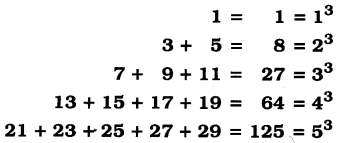
Observe the following pattern of sums of odd numbers.
PSEB 8th Class Maths Solutions Chapter 7 Cubes and Cube Roots InText Questions 1

Try These (Textbook Page No. 111)

1. Express the following numbers as the sum of odd numbers using the above pattern ?
(a) 63
(b) 83
(c) 73
Solution:
From above pattern, we can conclude n3 = [n(n – 1) + 1] + [n(n – 1) + 3] + [n(n – 1) + 5]… + n terms
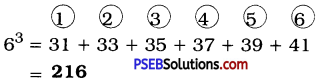
(a) 63
Here, n = 6, n- 1=5
6 (6 – 1) + 1 → 6 × 5 + 1 → 31
PSEB 8th Class Maths Solutions Chapter 7 Cubes and Cube Roots InText Questions 2
OR
= [6(6 – 1) + 1] + [6(6 – 1) + 3] + [6(6 – 1) + 5] + [6(6 – 1) + 7] + [6(6 – 1) + 9] + [6(6 – 1) + 11]
= (6 × 5 + 1) + (6 × 5 + 3) + (6 × 5 + 5) + (6 × 5 + 7) + (6 × 5 + 9) + (6 × 5 + 11)
= (30 + 1) + (30 + 3) + (30 + 5) + (30 + 7) + (30 + 9) + (30 + 11)
= 31 +33 + 35 + 37 + 39 + 41
= 216

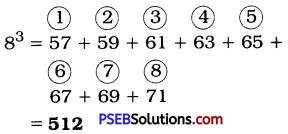
(b) 83
Here, n = 8, n – 1 = 7
8 (8 – 1) + 1 → 8 × 7 + 1 → 57
PSEB 8th Class Maths Solutions Chapter 7 Cubes and Cube Roots InText Questions 3
OR
= [8(8 – 1) + 1] + (8(8 – 1) + 3] + [8(8 – 1) + 5] + [8(8 – 1) + 7] + [8(8 – 1) + 9] + [8(8 – 1) + 11] + [8(8 – 1) + 13] + [8(8 – 1) + 15]
= (8 × 7 + 1) + (8 × 7 + 3) + (8 × 7 + 5) + (8 × 7 + 7) + (8 × 7 + 9) + (8 × 7 + 11) + (8 × 7 + 13) + (8 × 7 + 15)
= (56 + 1) + (56 + 3) + (56 + 5) + (56 + 7) + (56 + 9) + (56 + 11) + (56 + 13) + (56 + 15)
= 57 + 59 + 61 + 63 + 65 + 67 + 69 + 71
= 512

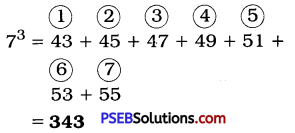
(c) 73
Here, n = 7, n – 1 = 6
7 × 6 + 1 → 42 + 1 → 43
PSEB 8th Class Maths Solutions Chapter 7 Cubes and Cube Roots InText Questions 4
OR
= [7(7 – 1) + 1] + [7(7 – 1) + 3] + [7(7 – 1) + 5] + [7(7 – 1) + 7] + [7(7 – 1) + 9] + [7(7 – 1) + 11] + [7(7 – 1) + 13]
= (7 × 6 + 1) + (7 × 6 + 3) + (7 × 6 + 5) + (7 × 6 + 7) + (7 × 6 + 9) + (7 × 6 + 11) + (7 × 6 + 13)
= (42 + 1) + (42 + 3) + (42 + 5) + (42 + 7) + (42 + 9) + (42 + 11) + (42 + 13)
= 43 + 45 + 47 + 49 + 51 + 53 + 55
= 343

PSEB 8th Class Maths Solutions Chapter 7 Cubes and Cube Roots InText Questions

Consider the following pattern:
23 – 13 = 1 + 2 × 1 × 3
33 – 23 = 1 + 3 × 2 × 3
43 – 33 = 1 + 4 × 3 × 3
Using the above pattern, find the value of the following:
(i) 73 – 63
(ii) 123– 113
(iii) 203 – 193
(iv) 513 – 503
Solution:
From above pattern, we can conclude
n3 – (n – 1)3 = 1 + n × (n – 1) × 3
(i) 73 – 63 = 1 + 7 × 6 × 3
= 1 + 126
= 127

(ii) 123 – 113 = 1 + 12 × 11 × 3
= 1 + 396
= 397

(iii) 203 – 193 = 1 + 20 × 19 × 3
= 1 + 1140
= 1141

(iv) 513 – 503 = 1 + 51 × 50 × 3
= 1 + 7650
= 7651

Try These (Textbook Page No. 112)

1. Which of the following are perfect cubes?

Question (1).
400
Solution:
\(\begin{array}{l|l}
2 & 400 \\
\hline 2 & 200 \\
\hline 2 & 100 \\
\hline 2 & 50 \\
\hline 5 & 25 \\
\hline 5 & 5 \\
\hline & 1
\end{array}\)
400 = 2 × 2 × 2 × 2 × 5 × 5
Here, the prime factors 2 and 5 do not appear in triples.
∴ 2 × 5 × 5 is left over.
∴ 400 is not a perfect cube.

Question (2).
3375
Solution:
\(\begin{array}{l|l}
3 & 3375 \\
\hline 3 & 1125 \\
\hline 3 & 375 \\
\hline 5 & 125 \\
\hline 5 & 25 \\
\hline 5 & 5 \\
\hline & 1
\end{array}\)
3375 = 3 × 3 × 3 × 5 × 5 × 5
Here, the prime factors 3 and 5 appear in triples.
No factor is left over.
∴ 3375 is a perfect cube.
3375 = 33 × 53

PSEB 8th Class Maths Solutions Chapter 7 Cubes and Cube Roots InText Questions

Question (3).
8000
Solution:
\(\begin{array}{l|l}
2 & 8000 \\
\hline 2 & 4000 \\
\hline 2 & 2000 \\
\hline 2 & 1000 \\
\hline 2 & 500 \\
\hline 2 & 250 \\
\hline 5 & 125 \\
\hline 5 & 25 \\
\hline 5 & 5 \\
\hline & 1
\end{array}\)
8000 = 2 × 2 × 2 × 2 × 2 × 2 × 5 × 5 × 5
Here, the prime factors 2 and 5 appear in triples.
No factor is left over.
∴ 8000 is a perfect cube.
8000 = 23 × 23 × 53

Question (4).
15625
Solution:
\(\begin{array}{l|l}
5 & 15625 \\
\hline 5 & 3125 \\
\hline 5 & 625 \\
\hline 5 & 125 \\
\hline 5 & 25 \\
\hline 5 & 5 \\
\hline & 1
\end{array}\)
15625 = 5 × 5 × 5 × 5 × 5 × 5
Here, the prime factor 5 appear in triples.
No factor is left over.
∴ 15625 is a perfect cube.
15625 = 53 × 53

Question (5).
9000
Solution:
\(\begin{array}{l|l}
2 & 9000 \\
\hline 2 & 4500 \\
\hline 2 & 2250 \\
\hline 3 & 1125 \\
\hline 3 & 375 \\
\hline 5 & 125 \\
\hline 5 & 25 \\
\hline 5 & 5 \\
\hline & 1
\end{array}\)
9000 = 2 × 2 × 2 × 3 × 3 × 5 × 5 × 5
Here, among the prime factors 2 and 5 appear in triples but 3 does not appear in triple.
3 × 3 is left over.
∴ 9000 is not a perfect cube.

Question (6).
6859
Solution:
\(\begin{array}{l|l}
19 & 6859 \\
\hline 19 & 361 \\
\hline 19 & 19 \\
\hline & 1
\end{array}\)
6859 = 19 × 19 × 19
Here, the prime factor 19 appears in triple.
No factor is left over.
∴ 6859 is a perfect cube.
6859 = 193

Question (7).
2025
Solution:
\(\begin{array}{l|l}
3 & 2025 \\
\hline 3 & 675 \\
\hline 3 & 225 \\
\hline 3 & 75 \\
\hline 5 & 25 \\
\hline 5 & 5 \\
\hline & 1
\end{array}\)
2025 = 3 × 3 × 3 × 3 × 5 × 5
Here, the prime factor 3 appears in triple, but 3 × 5 × 5 is left over.
∴ 2025 is not a perfect cube.

PSEB 8th Class Maths Solutions Chapter 7 Cubes and Cube Roots InText Questions

Question (8).
10648
Solution:
\(\begin{array}{r|l}
2 & 10648 \\
\hline 2 & 5324 \\
\hline 2 & 2662 \\
\hline 11 & 1331 \\
\hline 11 & 121 \\
\hline 11 & 11 \\
\hline & 1
\end{array}\)
10648 = 2 × 2 × 2 × 11 × 11 × 11
Here, the prime factors 2 and 11 appear in triples.
No factor is left over.
∴ 10648 is a perfect cube.
10648 = 23 × 113

Think, Discuss and Write (Textbook Page No. 113)

1. Check which of the following are perfect cubes:
(i) 2700
(ii) 16000
(iii) 64000
(iv) 900
(v) 125000
(vi) 36000
(vii) 21600
(viii) 10000
(ix) 27000000
(x) 1000
What pattern do you observe in these perfect cubes ?
Solution:
(i) 2700
The number is ending with two zeros. If a number ends with three zeros or a multiple of 3 zeros, it may be a perfect cube.
∴ 2700 is not a perfect cube.

(ii) 16000
The number is ending with three zeros.
So it may be a perfect cube.
But, 16 is not a perfect cube.
∴ 16000 is not a perfect cube.

(iii) 64000
The number is ending with three zeros.
So it may be a perfect cube.
64 is a perfect cube. (∵ 43 = 64)
∴ 64000 is a perfect cube.

(iv) 900
The number is ending with two zeros.
So it is not a perfect cube.
∴ 900 is not a perfect cube.

(v) 125000
The number is ending with three zeros.
So it may be a perfect cube.
125 is a perfect cube. (∵ 53 = 125)
∴ 125000 is a perfect cube.

(vi) 36000
The number is ending with three zeros.
So it may be a perfect cube.
But, 36 is not a perfect cube.
∴ 36000 is not a perfect cube.

(vii) 21600
The number is ending with two zeros.
So it is not a perfect cube.
∴ 21600 is not a perfect cube.

(viii) 10000
The number is ending with four zeros.
So it is not a perfect cube.
∴ 10000 is not a perfect cube.

(ix) 27000000
The number is ending with six zeros.
So it may be a perfect cube.
27 is a perfect cube. (∵ 33 = 27)
∴ 27000000 is a perfect cube.

(x) 1000
The number is ending with three zeros.
So it may be a perfect cube.
1 is a perfect cube, (∵ 13 = 1)
∴ 1000 is a perfect cube.

PSEB 8th Class Maths Solutions Chapter 7 Cubes and Cube Roots InText Questions

Think, Discuss and Write (Textbook Page No. 115)

1. State true or false for any integer m, m2 < m3. Why ?
Solution:
It seems true, but not always true.
m × m = m2 and m × m × m = m3
∴ m2 < m3
e.g. if m = 1
∴ m2 = 12 = 1 and m3 = 13 = 1
∴ m2 ≮  m3, but m2 = m3
If m = (- 1)
∴ m2 = (- 1)2 = 1 and m3 = (- 1)3 = (- 1)
∴ m2 ≮  m3, but m2 > m3
So the above statement is not always true.

PSEB 8th Class Maths Solutions Chapter 9 Algebraic Expressions and Identities Ex 9.4

Punjab State Board PSEB 8th Class Maths Book Solutions Chapter 9 Algebraic Expressions and Identities Ex 9.4 Textbook Exercise Questions and Answers.

PSEB Solutions for Class 8 Maths Chapter 9 Algebraic Expressions and Identities Ex 9.4

1. Multiply the binomials:

Question (i)
(2x + 5) and (4x – 3)
Solution:
= (2x + 5)(4x – 3)
= 2x(4x – 3) + 5 (4x – 3)
= 8x2 – 6x + 20x – 15
= 8x2 + 14x – 15

PSEB 8th Class Maths Solutions Chapter 9 Algebraic Expressions and Identities Ex 9.4

Question (ii)
(y – 8) and (3y – 4)
Solution:
= (y -8) (3y – 4)
= y (3y – 4) – 8 (3y – 4)
= 3y2 – 4y – 24y + 32
= 3y2 – 28y + 32

Question (iii)
(2.51 – 0.5m) and (2.51 + 0.5m)
Solution:
= (2.5l – 0.5m) (2.5l + 0.5m)
= 2.5l(2.5l + 0.5m) – 0.5m (2.5l + 0.5m)
= 6.25l2 + 1.25lm – 1.25lm – 0.25m2
= 6.25l2 – 0.25m2

Question (iv)
(a + 3b) and (x + 5)
Solution:
= (a + 3b) (x + 5)
= a (x + 5) + 3b (x + 5)
= ax + 5a + 3bx + 15b

PSEB 8th Class Maths Solutions Chapter 9 Algebraic Expressions and Identities Ex 9.4

Question (v)
(2pq + 3q2) and (3pq – 2q2)
Solution:
= (2pq + 3q2) (3pq – 2q2)
= 2pq (3pq – 2q2) + 3q2 (3pq – 2q2)
= 6p2q2 – 4pq3 + 9pq3 – 6q4
= 6p2q2 + 5pq3 – 6q4

Question (vi)
(\(\frac {3}{4}\)a2 + 3b2) and 4 (a2 – \(\frac {2}{3}\)b2)
Solution:
= (\(\frac {3}{4}\)a2 + 3b2) (4a2 – \(\frac {8}{3}\)b2)
= \(\frac {3}{4}\)a4 (4a2 – \(\frac {8}{3}\)b2) + 3b2 (4a2 – \(\frac {8}{3}\)b2)
= 3a4 – 2a2b2 + 12a2b2 – 8b4
= 3a4 + 10a2b2 – 8b4

2. Find the product:

Question (i)
(5 – 2x) (3 + x)
Solution:
= 5 (3 + x) – 2x (3 + x)
= 15 + 5x – 6x – 2x2
= 15 – x – 2x2

PSEB 8th Class Maths Solutions Chapter 9 Algebraic Expressions and Identities Ex 9.4

Question (ii)
(x + 7y) (7x – y)
Solution:
= x(7x – y) + 7y (7x – y)
= 7x2 – xy + 49xy – 7y2
= 7x2 + 48xy – 7y2

Question (iii)
(a2 + b) (a + b2)
Solution:
= a2 (a + b2) + b (a + b2)
= a3 + a2b2 + ab + b3

Question (iv)
(p2 – q2) (2p + q)
Solution:
= p2(2p + q) – q2(2p + q)
= 2p3 + p2q – 2pq2 – q3

PSEB 8th Class Maths Solutions Chapter 9 Algebraic Expressions and Identities Ex 9.4

3. Simplify:

Question (i)
(x2 – 5) (x + 5) + 25
Solution:
= x2 (x + 5) – 5 (x + 5) + 25
= x3 + 5x2 – 5x – 25 + 25
= x3 + 5x2 – 5x

Question (ii)
(a2 + 5) (b3 + 3) + 5
Solution:
= a2(b3 + 3) + 5 (b3 + 3) + 5
= a2b3 + 3a2 + 5b3 + 15 + 5
= a2b3 + 3a2 + 5b3 + 20

Question (iii)
(t + s2)(t2 – s)
Solution:
= t (t2 – s) + s2 (t2 – s)
= t3 – st + s2t2 – s3

Question (iv)
(a + b) (c – d) + (a – b) (c + d) + 2 (ac + bd)
Solution:
= a(c – d) + b(c – d) + a(c + d) – b(c + d) + 2 (ac + bd)
= ac – ad + bc – bd + ac + ad – bc – bd + 2ac + 2bd
= ac + ac + 2ac – ad + ad + bc – bc – bd – bd + 2 bd
= 4 ac

PSEB 8th Class Maths Solutions Chapter 9 Algebraic Expressions and Identities Ex 9.4

Question (v)
(x + y) (2x + y) + (x + 2y) (x – y)
Solution:
= x (2x + y) + y (2x + y) +x(x – y) + 2y (x – y)
= 2x2 + xy + 2xy + y2 + x2 – xy + 2xy – 2y2
= 2x2 + x2 + xy + 2xy – xy + 2xy + y2 – 2y2
= 3x2 + 4xy – y2

Question (vi)
(x + y) (x2 – xy + y2)
Solution:
= x (x2 – xy + y2) + y (x2 – xy + y2)
= x3 – x2y + xy2 + x2y – xy2 + y3
= x3 – x2y + x2y + xy2 – xy2 + y3
= x3 + y3

Question (vii)
(1.5x – 4y) (1.5x + 4y + 3) – 4.5x + 12y
Solution:
= 1.5x (1.5x + 4y + 3) – 4y (1.5x + 4y + 3) – 4.5x + 12y
= 2.25x2 + 6xy + 4.5x – 6xy – 16y2 – 12y – 4.5x + 12y
= 2.25x2 + 6xy – 6xy + 4.5x – 4.5x – 16y2 – 12y + 12y
= 2.25x2 – 16y2

PSEB 8th Class Maths Solutions Chapter 9 Algebraic Expressions and Identities Ex 9.4

Question (viii)
(a + b + c) (a + b – c)
Solution:
= a (a + b – c) + b (a + b – c) + c (a + b – c)
= a2 + ab – ac + ab + b2 – bc + ac + bc – c2
= a2 + ab + ab – ac + ac + b2 – bc + bc – c2
= a2 + 2ab + b2 – c2
= a2 + b2 – c2 + 2 ab

PSEB 8th Class Maths Solutions Chapter 7 Cubes and Cube Roots Ex 7.2

Punjab State Board PSEB 8th Class Maths Book Solutions Chapter 7 Cubes and Cube Roots Ex 7.2 Textbook Exercise Questions and Answers.

PSEB Solutions for Class 8 Maths Chapter 7 Cubes and Cube Roots Ex 7.2

1. Find the cube root of each of the following numbers by prime factorisation method.

Question (i).
64
Solution:
\(\begin{array}{l|l}
2 & 64 \\
\hline 2 & 32 \\
\hline 2 & 16 \\
\hline 2 & 8 \\
\hline 2 & 4 \\
\hline 2 & 2 \\
\hline & 1
\end{array}\)
By prime factorisation,
64 = 2 × 2 × 2 × 2 × 2 × 2
∴ \(\sqrt[3]{64}\) = 2 × 2
= 4
Thus, cube root of 64 is 4.

Question (ii).
512
Solution:
\(\begin{array}{l|l}
2 & 512 \\
\hline 2 & 256 \\
\hline 2 & 128 \\
\hline 2 & 64 \\
\hline 2 & 32 \\
\hline 2 & 16 \\
\hline 2 & 8 \\
\hline 2 & 4 \\
\hline 2 & 2 \\
\hline & 1
\end{array}\)
By prime factorisation,
512 = 2 × 2 × 2 × 2 × 2 × 2 × 2 × 2 × 2
∴ \(\sqrt[3]{512}\) = 2 × 2 × 2
= 8
Thus, cube root of 512 is 8.

Question (iii).
10648
Solution:
\(\begin{array}{r|l}
2 & 10648 \\
\hline 2 & 5324 \\
\hline 2 & 2662 \\
\hline 11 & 1331 \\
\hline 11 & 121 \\
\hline 11 & 11 \\
\hline & 1
\end{array}\)
By prime factorisation,
10648 = 2 × 2 × 2 × 11 × 11 × 11
∴ \(\sqrt[3]{10648}\) = 2 × 11
= 22
Thus, cube root of 10648 is 22.

PSEB 8th Class Maths Solutions Chapter 7 Cubes and Cube Roots Ex 7.2

Question (iv).
27000
Solution:
\(\begin{array}{l|l}
2 & 27000 \\
\hline 2 & 13500 \\
\hline 2 & 6750 \\
\hline 3 & 3375 \\
\hline 3 & 1125 \\
\hline 3 & 375 \\
\hline 5 & 125 \\
\hline 5 & 25 \\
\hline 5 & 5 \\
\hline & 1
\end{array}\)
By prime factorisation
27000 = 2 × 2 × 2 × 3 × 3 × 3 × 5 × 5 × 5
∴ \(\sqrt[3]{27000}\) = 2 × 3 × 5
= 30
Thus, cube root of 27000 is 30.

Question (v).
15625
Solution:
\(\begin{array}{l|l}
5 & 15625 \\
\hline 5 & 3125 \\
\hline 5 & 625 \\
\hline 5 & 125 \\
\hline 5 & 25 \\
\hline 5 & 5 \\
\hline & 1
\end{array}\)
By prime factorisation,
15625 = 5 × 5 × 5 × 5 × 5 × 5
∴ \(\sqrt[3]{15625}\) = 5 × 5
= 25
Thus, cube root of 15625 is 25.

Question (vi).
13824
Solution:
\(\begin{array}{l|l}
2 & 13824 \\
\hline 2 & 6912 \\
\hline 2 & 3456 \\
\hline 2 & 1728 \\
\hline 2 & 864 \\
\hline 2 & 432 \\
\hline 2 & 216 \\
\hline 2 & 108 \\
\hline 2 & 54 \\
\hline 3 & 27 \\
\hline 3 & 9 \\
\hline 3 & 3 \\
\hline & 1
\end{array}\)
By prime factorisation,
13824 = 2 × 2 × 2 × 2 × 2 × 2 × 2 × 2 × 2 × 3 × 3 × 3
∴ \(\sqrt[3]{13824}\) = 2 × 2 × 2 × 3
= 24

PSEB 8th Class Maths Solutions Chapter 7 Cubes and Cube Roots Ex 7.2

Question (vii).
110592
Solution:
\(\begin{array}{l|l}
2 & 110592 \\
\hline 2 & 55296 \\
\hline 2 & 27648 \\
\hline 2 & 13824 \\
\hline 2 & 6912 \\
\hline 2 & 3456 \\
\hline 2 & 1728 \\
\hline 2 & 864 \\
\hline 2 & 432 \\
\hline 2 & 216 \\
\hline 2 & 108 \\
\hline 2 & 54 \\
\hline 3 & 27 \\
\hline 3 & 9 \\
\hline 3 & 3 \\
\hline & 1
\end{array}\)
By prime factorisation,
110592 = 2 × 2 × 2 × 2 × 2 × 2 × 2 × 2 × 2 × 2 × 2 × 2 × 3 × 3 × 3
∴ \(\sqrt[3]{110592}\) = 2 × 2 × 2 × 2 × 3
= 48
Thus, cube root of 110592 is 48.

Question (viii).
46656
Solution:
\(\begin{array}{l|l}
2 & 46656 \\
\hline 2 & 23328 \\
\hline 2 & 11664 \\
\hline 2 & 5832 \\
\hline 2 & 2916 \\
\hline 2 & 1458 \\
\hline 3 & 729 \\
\hline 3 & 243 \\
\hline 3 & 81 \\
\hline 3 & 27 \\
\hline 3 & 9 \\
\hline 3 & 3 \\
\hline & 1
\end{array}\)
By prime factorisation,
46656 = 2 × 2 × 2 × 2 × 2 × 2 × 3 × 3 × 3 × 3 × 3 × 3
∴ \(\sqrt[3]{46656}\) = 2 × 2 × 3 × 3
= 36
Thus, cube root of 46656 is 36.

Question (ix).
175616
Solution:
\(\begin{array}{l|l}
2 & 175616 \\
\hline 2 & 87808 \\
\hline 2 & 43904 \\
\hline 2 & 21952 \\
\hline 2 & 10976 \\
\hline 2 & 5488 \\
\hline 2 & 2744 \\
\hline 2 & 1372 \\
\hline 2 & 686 \\
\hline 7 & 343 \\
\hline 7 & 49 \\
\hline 7 & 7 \\
\hline & 1
\end{array}\)
By prime factorisation,
175616 = 2 × 2 × 2 × 2 × 2 × 2 × 2 × 2 × 2 × 7 × 7 × 7
∴ \(\sqrt[3]{175616}\) = 2 × 2 × 2 × 7
= 56
Thus, cube root of 175616 is 56.

Question (x).
91125
Solution:
\(\begin{array}{l|l}
3 & 91125 \\
\hline 3 & 30375 \\
\hline 3 & 10125 \\
\hline 3 & 3375 \\
\hline 3 & 1125 \\
\hline 3 & 375 \\
\hline 5 & 125 \\
\hline 5 & 25 \\
\hline 5 & 5 \\
\hline & 1
\end{array}\)
By prime factorisation,
91125 = 3 × 3 × 3 × 3 × 3 × 3 × 5 × 5 × 5
∴ \(\sqrt[3]{91125}\) =3 × 3 × 5
= 45
Thus, cube root of 91125 is 45.

PSEB 8th Class Maths Solutions Chapter 7 Cubes and Cube Roots Ex 7.2

2. State true or false.

Question (i).
Cube of any odd number is even.
Solution:
False, cube of any odd number is odd.

Question (ii).
A perfect cube does not end with two zeros.
Solution:
True, a perfect cube ending with zero will always have a triplet of zeros.

Question (iii).
If square of a number ends with 5, then its cube ends with 25.
Solution:
False, let us understand with an example.
152 = 15 × 15 = 225
153 = 15 × 15 × 15 = 3375

Question (iv).
There is no perfect cube which ends with 8.
Solution:
False, let us understand with an example.
8 = 23, 1728 = 123

Question (v).
The cube of a two-digit number may be a three-digit number.
Solution:
False, let us take an example.
The smallest two-digit number is 10.
103 = 1000
which is a four-digit number and not a three-digit number.

PSEB 8th Class Maths Solutions Chapter 7 Cubes and Cube Roots Ex 7.2

Question (vi).
The cube of a two-digit number may have seven or more digits.
Solution:
False, let us take an example.
The greatest two-digit number is 99.
993 = 970299
which is a six-digit number.

Question (vii).
The cube of a single digit number may be a single digit number.
Solution:
True, let us take examples.
13 = 1 and 23 = 8

3. You are told that 1,331 is a perfect cube. Can you guess without factorisation what is its cube root? Similarly, guess the cube roots of 4913, 12167, 32768.
Solution:
Yes, we can guess without prime factorisation.
1331 : Separate given number into two groups.
1331 → 1 and 331
331 → Units place digit of 331 is 1.
∴ Unit place digit of cube root of 1331 = 1 (∵ 13 = 1)
1 → 13 = 1 and 23 = 8
∴ Tens digit of cube root of 1331 = 1
Thus, the cube root of 1331 is 11.

(i) 4913 : Separate given number into two groups.
4913 → 4 and 913
913 → Units place digit of 913 is 3.
∴ Unit digit of cube root of 4913 = 7 (∵ 73 = 343)
4 → 13 = 1 and 23 = 8
1 < 4 < 8 (∴ 13 < 4 < 23)
∴ The tens digit of cube root of 4913 = 1
Thus, the cube root of 4913 is 17.

(ii) 12167 : Separate given number into two groups.
12167 → 12 and 167
167 → Units place digit of 167 is 7.
∴ Unit digit of cube root of 12167 = 3
(∵ 33 = 27)
12 → 23 = 8 and 33 = 27
8 < 12 < 27 (∵ 23 < 12 < 33)
∴ Tens place digit of cube root of 12167 = 2
Thus, the cube root of 12167 is 23.

(iii) 32768 : Separate given number into two groups.
32768 → 32 and 768
768 → Units place digit of 768 is 8.
∴ Unit digit of cube root of 32768 = 2 (∵ 23 = 8)
32 → 33 = 27 and 43 = 64
27 < 32 < 64 (∵ 33 < 32 < 43)
∴ The tens digit of cube root of 32768 = 3
Thus, the cube root of 32768 is 32.

PSEB 8th Class Maths Solutions Chapter 9 Algebraic Expressions and Identities Ex 9.3

Punjab State Board PSEB 8th Class Maths Book Solutions Chapter 9 Algebraic Expressions and Identities Ex 9.3 Textbook Exercise Questions and Answers.

PSEB Solutions for Class 8 Maths Chapter 9 Algebraic Expressions and Identities Ex 9.3

1. Carry out the multiplication of the expressions in each of the following pairs:

Question (i)
4p, q + r
Solution:
= 4p × (q + r)
= (4p × q) + (4p × r)
= 4pq + 4pr

PSEB 8th Class Maths Solutions Chapter 9 Algebraic Expressions and Identities Ex 9.3

Question (ii)
ab, a – b
Solution:
= ab × (a-b)
= (ab × a) – (ab × b)
= a2b – ab2

Question (iii)
a + b, 7a2b2
Solution:
= (a + b) × 7a2b2
= (a × 7a2b2) + (b × 7a2b2)
= 7 a3b2 + 7a2b3

Question (iv)
a2 – 9, 4a
Solution:
= (a2 – 9) × 4a
= (a2 × 4a) – (9 × 4a)
= 4a3 – 36a

PSEB 8th Class Maths Solutions Chapter 9 Algebraic Expressions and Identities Ex 9.3

Question (v)
pq + qr + rp, 0
Solution:
= (pq + qr + rp) × 0
= 0

2. Complete the table:

First expression Second expression Product
1. a b + c + d ……………
2. x + y- 5 5xy ……………
3. P 6p2 – 7p + 5 …………..
4. 4p2q- q2 p2 – q2 …………..
5. a + b + c abc ………….

Solution:
(i) a × (b + c + d)
= (a × b) + (a × c) + (a × d)
= ab + ac + ad

(ii) (x + y – 5) × 5xy
= (x × 5xy) + (y × 5xy) + [(- 5) × 5xy]
= 5x2y + 5xy2 – 25xy

(iii) p × (6p2 – 7p + 5)
= (p × 6p2) + [p × (- 7p)] + (p × 5)
= 6p3 – 7p2 + 5p

(iv) 4p2q2 × (p2 – q2)
= (4p2q2 × p2) + [4p2q2 × (-q2)]
= 4p4q2 – 4p2q4

(v) (a + b + c) × abc
= (a × abc) + (b × abc) + (c × abc)
= a2bc + ab2c + abc2

PSEB 8th Class Maths Solutions Chapter 9 Algebraic Expressions and Identities Ex 9.3

3. Find the product:

Question (i)
(a2) × (2a22) × (4a26)
Solution:
= (1 × 2 × 4) × a2 × a22 × a26
= 8 × a50
= 8a50

Question (ii)
(\(\frac {2}{3}\)xy) × (\(\frac {-9}{10}\)x2y2)
Solution:
= \(\frac {2}{3}\) × (\(\frac {-9}{10}\)) × xy × x2y2
= \(\frac {-2}{3}\) × \(\frac {9}{10}\) × x3y3
= \(\frac {-3}{5}\)x3y3

Question (iii)
(\(\frac {-10}{3}\)pq3) × (\(\frac {6}{5}\)p3q)
Solution:
= [(\(\frac {-10}{3}\)) × \(\frac {6}{5}\)] × pq3 × p3q
= – \(\frac {10}{3}\) × \(\frac {6}{5}\) × p4q4
= – 4p4q4

Question (iv)
x × x2 × x3 × x4
Solution:
= (1 × 1 × 1 × 1) × x × x2 × x3 × x4
= (1) × x10
= x10

PSEB 8th Class Maths Solutions Chapter 9 Algebraic Expressions and Identities Ex 9.3

4.

Question (a)
Simplify 3x(4x – 5) + 3 and find its value for
(i) x = 3
(ii) x = \(\frac {1}{2}\)
Solution:
3x (4x- 5) + 3
= (3x × 4x) – (3x × 5) + 3
= 12x10 – 15x + 3

(i) When x = 3, then
12x2 – 15x + 3
= 12 (3)2 – 15(3) + 3
= 12 (9) – 15 (3) + 3
= 108 -45 + 3
= 111 – 45
= 66

(ii) x = \(\frac {1}{2}\), then
12x2 – 15x + 3
= 12(\(\frac {1}{2}\))2 – 15(\(\frac {1}{2}\)) + 3
= 12(\(\frac {1}{4}\)) – 15(\(\frac {1}{2}\)) + 3
= 3 – \(\frac {15}{2}\) + 3
= 6 – \(\frac {15}{2}\)
= \(\frac{12-15}{2}\)
= \(\frac {-3}{2}\)

PSEB 8th Class Maths Solutions Chapter 9 Algebraic Expressions and Identities Ex 9.3

Question (b)
Simplify a (a2 + a + 1) + 5 and find its values for
(i) a = 0 (ii) a = 1 (iii) a = (-1)
Solution:
a (a2 + a + 1) + 5
= (a × a2) + (a × a) + (a × 1) + 5
= a3 + a2 + a + 5

(i) When a = 0, then
a3 + a2 + a + 5
= (-1)3 + (0)3 + (0) + 5
= 0 + 0 + 0 + 5
= 5

(ii) a = 1, then
a3 + a2 + a + 5
= (1)3 + (1)2 + (1) + 5
= 1 + 1 + 1 + 5
= 8

(iii) a = (-1), then
a3 + a2 + a + 5
= (-1)3 + (-1)2 + (-1) + 5
= (-1) + (1) + (-1) + 5
= 6 – 2 = 4

PSEB 8th Class Maths Solutions Chapter 9 Algebraic Expressions and Identities Ex 9.3

5.

Question (a)
Add : p(p – q), q(q – r) and r(r – p)
Solution:
[p(p-q)] + [q(q-r)] + [r(r-p)]
= p2 – pq + q2 – qr + r2 – rp
= p2 + q2 + r2 – pq – qr – rp

Question (b)
Add : 2x(z – x – y) and 2y(z – y – x)
Solution:
[2x (z – x – y)] + [2y (z – y – x)]
= 2xz – 2x2 – 2xy + 2yz – 2y2 – 2xy
= – 2x2 – 2y2 – 2xy – 2xy + 2yz + 2xz
= – 2x2 – 2y2 – 4xy + 2yz + 2xz

Question (c)
Subtract : 31(l – 4m + 5n) from 4l(10n – 3m + 2l)
Solution:
[4l(10n – 3m + 21)] – [3l(l – 4m + 5n)]
= [40ln – 12lm + 8l2] – [3l2 – 12lm + 15ln]
= 40ln – 12lm + 8l2 – 3l2 + 12lm – 15ln
= 40ln – 15ln – 12lm + 12lm + 8l2 – 3l2
= 25ln + 0lm + 5l2
= 25ln + 5l2

PSEB 8th Class Maths Solutions Chapter 9 Algebraic Expressions and Identities Ex 9.3

Question (d)
Subtract : 3a(a + b + c) – 2b(a – b + c) from 4c(- a + b + c)
Solution:
[4c (- a + b + c)] – [3a (a + b + c) – 2b (a – b + c)]
= [- 4ac + 4bc + 4c2]
– [3a2 + 3ab + 3ac – 2ab + 2b2 – 2bc]
= – 4ac + 4be + 4c2 – 3a2 – 3ab – 3ac + 2ab – 2b2 + 2bc
= – 3a2 – 2b2 + 4c2 – 3ab + 2ab + 4bc + 2bc – 4ac – 3ac
= – 3a2 – 2b2 + 4c2 – ab + 6bc – 7ac

PSEB 8th Class Maths Solutions Chapter 7 Cubes and Cube Roots Ex 7.1

Punjab State Board PSEB 8th Class Maths Book Solutions Chapter 7 Cubes and Cube Roots Ex 7.1 Textbook Exercise Questions and Answers.

PSEB Solutions for Class 8 Maths Chapter 7 Cubes and Cube Roots Ex 7.1

1. Which of the following numbers are not perfect cubes ?

Question (i).
216
Solution:
216
\(\begin{array}{l|l}
2 & 216 \\
\hline 2 & 108 \\
\hline 2 & 54 \\
\hline 3 & 27 \\
\hline 3 & 9 \\
\hline 3 & 3 \\
\hline & 1
\end{array}\)
216 = 2 × 2× 2 × 3 × 3 × 3
Here, the prime factors 2 and 3 appear in a group of three (triples).
∴ 216 is a perfect cube.
216 = 23 × 33

Question (ii).
128
Solution:
\(\begin{array}{l|l}
2 & 128 \\
\hline 2 & 64 \\
\hline 2 & 32 \\
\hline 2 & 16 \\
\hline 2 & 8 \\
\hline 2 & 4 \\
\hline 2 & 2 \\
\hline & 1
\end{array}\)
128 = 2 × 2 × 2 × 2 × 2 × 2 × 2
Here, the prime factor 2 does not appear in a group of three.
∴ 128 is not a perfect cube.

Question (iii).
1000
Solution:
\(\begin{array}{l|l}
2 & 1000 \\
\hline 2 & 500 \\
\hline 2 & 250 \\
\hline 5 & 125 \\
\hline 5 & 25 \\
\hline 5 & 5 \\
\hline & 1
\end{array}\)
1000 = 2 × 2 × 2 × 5 × 5 × 5
Here, the prime factors 2 and 5 appear in a group of three.
∴ 1000 is a perfect cube.
1000 = 23 × 53

PSEB 8th Class Maths Solutions Chapter 7 Cubes and Cube Roots Ex 7.1

Question (iv).
100
Solution:
\(\begin{array}{l|l}
2 & 100 \\
\hline 2 & 50 \\
\hline 5 & 25 \\
\hline 5 & 5 \\
\hline & 1
\end{array}\)
100 = 2 × 2 × 5 × 5
Here, the prime factors 2 and 5 do not appear in a group of three.
∴ 100 is not a perfect cube.

Question (v).
46656
Solution:
\(\begin{array}{l|l}
2 & 46656 \\
\hline 2 & 23328 \\
\hline 2 & 11664 \\
\hline 2 & 5832 \\
\hline 2 & 2916 \\
\hline 2 & 1458 \\
\hline 3 & 729 \\
\hline 3 & 243 \\
\hline 3 & 81 \\
\hline 3 & 27 \\
\hline 3 & 9 \\
\hline 3 & 3 \\
\hline & 1
\end{array}\)
46656 = 2 × 2 × 2 × 2 × 2 × 2 × 3 × 3 × 3 × 3 × 3 × 3
Here, the prime factors 2 and 3 appear in a group of three.
∴ 46656 is a perfect cube.
46656 = 23 × 23 × 33 × 33

PSEB 8th Class Maths Solutions Chapter 7 Cubes and Cube Roots Ex 7.1

2. Find the smallest number by which each of the following numbers must be multiplied to obtain a perfect cube:

Question (i).
243
Solution:
\(\begin{array}{l|l}
3 & 243 \\
\hline 3 & 81 \\
\hline 3 & 27 \\
\hline 3 & 9 \\
\hline 3 & 3 \\
\hline & 1
\end{array}\)
243 = 3 × 3 × 3 × 3 × 3
Here, the prime factor 3 does not appear in a group of three.
∴ 243 is not a perfect cube.
(243) × 3 = (3 × 3 × 3 × 3 × 3) × 3
∴ 729 = 33 × 33
Thus, 3 is the smallest number by which 243 must be multiplied to get a perfect cube.

Question (ii).
256
Solution:
\(\begin{array}{l|l}
2 & 256 \\
\hline 2 & 128 \\
\hline 2 & 64 \\
\hline 2 & 32 \\
\hline 2 & 16 \\
\hline 2 & 8 \\
\hline 2 & 4 \\
\hline 2 & 2 \\
\hline & 1
\end{array}\)
256 = 2 × 2 × 2 × 2 × 2 × 2 × 2 × 2
Here, the prime factor 2 does not appear in a group of three.
∴ 256 is not a perfect cube.
(256) × 2
= (2 × 2 × 2 × 2 × 2 × 2 × 2 × 2) × 2
∴ 512 = 23 × 23 × 23
Thus, 2 is the smallest number by which 256 must be multiplied to get a perfect cube.

Question (iii).
72
Solution:
\(\begin{array}{l|l}
2 & 72 \\
\hline 2 & 36 \\
\hline 2 & 18 \\
\hline 3 & 9 \\
\hline 3 & 3 \\
\hline & 1
\end{array}\)
72 = 2 × 2 × 2 × 3 × 3
Here, the prime factor 3 does not appear in a group of three.
∴ 72 is not a perfect cube.
(72) × 3
= (2 × 2 × 2 × 3 × 3) × 3
∴ 216 = 23 × 33
Thus, 3 is the smallest number by which 72 must be multiplied to get a perfect cube.

PSEB 8th Class Maths Solutions Chapter 7 Cubes and Cube Roots Ex 7.1

Question (iv).
675
Solution:
\(\begin{array}{l|l}
3 & 675 \\
\hline 3 & 225 \\
\hline 3 & 75 \\
\hline 5 & 25 \\
\hline 5 & 5 \\
\hline & 1
\end{array}\)
∴ 675 = 3 × 3 × 3 × 5 × 5
Here, the prime factor 5 does not appear in a group of three.
∴ 675 is not a perfect cube.
(675) × 5
= (3 × 3 × 3 × 5 × 5) × 5
∴ 3375 = 33 × 53
Thus, 5 is the smallest number by which 675 must be multiplied to get a perfect cube.

Question (v).
100
Solution:
\(\begin{array}{l|l}
2 & 100 \\
\hline 2 & 50 \\
\hline 5 & 25 \\
\hline 5 & 5 \\
\hline & 1
\end{array}\)
100 = 2 × 2 × 5 × 5
Here, the prime factors 2 and 5 do not appear in a group of three.
∴ 100 is not a perfect cube.
(100) × 2 × 5 = (2 × 2 × 5 × 5) × 2 × 5
∴ 1000 = 23 × 53
Thus, 10 is the smallest number by which 100 must be multiplied to get a perfect cube.

3. Find the smallest number by which each of the following numbers must be divided to obtain a perfect cube:

Question (i).
81
Solution:
\(\begin{array}{l|l}
3 & 81 \\
\hline 3 & 27 \\
\hline 3 & 9 \\
\hline 3 & 3 \\
\hline & 1
\end{array}\)
81 = 3 × 3 × 3 × 3
Here, the prime factor 3 is left over after making triples of 3.
∴ 81 is not a perfect cube.
(81) ÷ 3 = (3 × 3 × 3 × 3) ÷ 3
∴ 27 = 3 × 3 × 3 = 33
Thus, 3 is the smallest number by which 81 must be divided to get a perfect cube.

PSEB 8th Class Maths Solutions Chapter 7 Cubes and Cube Roots Ex 7.1

Question (ii).
128
Solution:
\(\begin{array}{l|l}
2 & 128 \\
\hline 2 & 64 \\
\hline 2 & 32 \\
\hline 2 & 16 \\
\hline 2 & 8 \\
\hline 2 & 4 \\
\hline 2 & 2 \\
\hline & 1
\end{array}\)
128 = 2 × 2 × 2 × 2 × 2 × 2 × 2
Here, the prime factor 2 is left over after making triples of 2.
∴ 128 is not a perfect cube.
(128) ÷ 2
= (2 × 2 × 2 × 2 × 2 × 2 × 2) ÷ 2
∴ 64 = 2 × 2 × 2 × 2 × 2 × 2
= 23 × 23
Thus, 2 is the smallest number by which 128 must be divided to get a perfect cube.

Question (iii).
135
Solution:
\(\begin{array}{l|l}
3 & 135 \\
\hline 3 & 45 \\
\hline 3 & 15 \\
\hline 5 & 5 \\
\hline & 1
\end{array}\)
135 = 3 × 3 × 3 × 5
Here, the prime factor 5 is left over after making triples of 3.
∴ 135 is not a perfect cube.
(135) ÷ 5 = (3 × 3 × 3 × 5) ÷ 5
∴ 27 = 3 × 3 × 3
= 33
Thus, 5 is the smallest number by which 135 must be divided to get a perfect cube.

Question (iv).
192
Solution:
\(\begin{array}{l|l}
2 & 192 \\
\hline 2 & 96 \\
\hline 2 & 48 \\
\hline 2 & 24 \\
\hline 2 & 12 \\
\hline 2 & 6 \\
\hline 3 & 3 \\
\hline & 1
\end{array}\)
192 = 2 × 2 × 2 × 2 × 2 × 2 × 3
Here, the prime factor 3 is left over after making triples of 2.
∴ 192 is not a perfect cube.
(192) ÷ 3
= (2 × 2 × 2 × 2 × 2 × 2 × 3) ÷ 3
∴ 64 = 2 × 2 × 2 × 2 × 2 × 2
= 23 × 23
Thus, 3 is the smallest number by which 192 must be divided to get a perfect cube.

Question (v).
704
Solution:
\(\begin{array}{l|l}
2 & 704 \\
\hline 2 & 352 \\
\hline 2 & 176 \\
\hline 2 & 88 \\
\hline 2 & 44 \\
\hline 2 & 22 \\
\hline 11 & 11 \\
\hline & 1
\end{array}\)
704 = 2 × 2 × 2 × 2 × 2 × 2 × 11
Here, the prime factor 11 is left over after making triples of 2.
∴ 704 is not a perfect cube.
(704) ÷ 11
= (2 × 2 × 2 × 2 × 2 × 2 × 11) ÷ 11
∴ 64 = 2 × 2 × 2 × 2 × 2 × 2
= 23 × 23
Thus, 11 is the smallest number by which 704 must be divided to get a perfect cube.

PSEB 8th Class Maths Solutions Chapter 7 Cubes and Cube Roots Ex 7.1

4. Parikshit makes a cuboid of plasticine of sides 5 cm, 2 cm, 5 cm. How many such cuboids will he need to form a cube ?
Solution:
Sides of the cuboid are 5 cm, 2 cm and 5 cm (Given).
∴ Volume of the cuboid = l × b × h
= 5 cm × 2 cm × 5 cm
To form it as a cube, its dimensions should be in the group of triplets.
Here, the prime factors 2 and 5 are not in group of three.
∴ Volume of the required cube
= (5 cm × 5 cm × 2 cm) × 5 cm × 2 cm × 2 cm
= (53 × 23) cm3
Thus, Parikshit needed 5 × 2 × 2 = 20 cuboids to form a cube.

PSEB 8th Class Maths Solutions Chapter 9 Algebraic Expressions and Identities Ex 9.2

Punjab State Board PSEB 8th Class Maths Book Solutions Chapter 9 Algebraic Expressions and Identities Ex 9.2 Textbook Exercise Questions and Answers.

PSEB Solutions for Class 8 Maths Chapter 9 Algebraic Expressions and Identities Ex 9.2

1. Find the product of the following pairs of monomials:

Question (i)
4, 7p
Solution:
= 4 × 7p
= 4 × 7 × p
= 28p

PSEB 8th Class Maths Solutions Chapter 9 Algebraic Expressions and Identities Ex 9.2

Question (ii)
– 4p, 7p
Solution:
= – 4p × 7p
= (-4 × 7) × p × p
= – 28p2

Question (iii)
– 4p, 7pq
Solution:
= (- 4p) × 7pq
= – 4 × 7 × p × pq
= – 28p2q

Question (iv)
4p3, – 3p
Solution:
= 4p3 × (- 3p)
= 4 × (- 3) × p3 × p
= – 12p4

Question (v)
4p, 0
Solution:
= 4p × 0
= 0

PSEB 8th Class Maths Solutions Chapter 9 Algebraic Expressions and Identities Ex 9.2

2. Find the areas of rectangles with the following pairs of monomials as their s lengths and breadths respectively:
(p, q); (10m, 5n); (20x2, 5y2); (4x, 3x2); (3mn, 4np)
Solution:
Area of a rectangle = length × breadth
(i) length = p, breadth = q
∴ Area = length × breadth
= p × q = pq unit2

(ii) length = 10m, breadth = 5n
∴ Area = length × breadth
= 10m × 5n
= 50mn unit2

(iii) length = 20x2, breadth = 5y2
∴ Area = length × breadth
= 20x2 × 5y2
= 100x2y2 unit2

(iv) length = 4x, breadth 3x2
∴ Area = length × breadth
= 4x × 3x2
= 12x3 unit2

(v) length = 3mn, breadth = 4np
∴ Area = length × breadth
= 3mn × 4np
= 12 mn2p unit2

PSEB 8th Class Maths Solutions Chapter 9 Algebraic Expressions and Identities Ex 9.2

3. Complete the table of products:
Solution:

First monomial → Second monomial ↓ 2x -5 y 3x2 -4xy 7x2y – 9x2y2
2x 4x2 -10xy 6x3 -8x2y 14x3y – 18x3y2
– 5 y – 10xy 25y2 – 15x2y 20xy2 – 35x2y2 45x2y3
3x2 6x3 – 15x2y 9x4 – 12x3y 21x4y – 27x4y2
– 4xy – 8x2y 20xy2 -12x3y 16x2y2 – 28x3y2 36x3y3
7x2y 14x3y – 35x2y2 21x4y – 28x3y2 49x4y2 – 63x4y3
– 9x2y2 – 18x3y2 45x2y3 – 27x4y2 36x3y3 – 63x4y3 81x4y4

4. Obtain the volume of rectangular boxes with the following length, breadth and height respectively:

Question (i)
5a, 3a2, 7a4
Solution:
Volume of rectangular box = length × breadth × height
length = 5a, breadth = 3a2, height = 7a4
∴ Volume = length × breadth × height
= 5a × 3a2 × 7a4
= (5 × 3 × 7) × a × a2 × a4
= 105a7 cubic unit

PSEB 8th Class Maths Solutions Chapter 9 Algebraic Expressions and Identities Ex 9.2

Question (ii)
2p, 4q, 8r
Solution:
length = 2p, breadth = 4q, height = 8r
∴ Volume = length × breadth × height
= 2p × 4q × 8r
= (2 × 4 × 8) × p × q × r
= 64pqr cubic unit

Question (iii)
xy, 2x2y, 2xy2
Solution:
length = xy, breadth = 2x2y, height = 2 xy2
∴ Volume = length × breadth × height
= xy × 2x2y × 2xy2
= (1 × 2 × 2) × xy × x2y × xy2
= 4x4y4 cubic unit

Question (iv)
a, 2b, 3c
Solution:
length = a, breadth = 2b, height = 3c
∴ Volume = length × breadth × height
= a × 2b × 3c
= (1 × 2 × 3) × a × b × c
= 6abc cubic unit

PSEB 8th Class Maths Solutions Chapter 9 Algebraic Expressions and Identities Ex 9.2

5. Obtain the product of:

Question (i)
xy, yz, zx
Solution:
= xy × yz × zx
= [x × y) × (y × z) × (z × x)
= x × x × y × y × z × z
= x2y2z2

Question (ii)
a, -a2, a3
Solution:
= (a) × (- a2) × (a3)
= – a × a2 × a3
= – a6

Question (iii)
2, 4y, 8y2, 16y3
Solution:
= 2 × 4y × 8y2 × 16y3
= 2 × 4 × 8 × 16 × y × y2 × y3
= 1024y6

PSEB 8th Class Maths Solutions Chapter 9 Algebraic Expressions and Identities Ex 9.2

Question (iv)
a, 2b, 3c, 6abc
Solution:
= a × 2b × 3c × 6abc
= 1 × 2 × 3 × 6 × a × b × c × abc
= 36 a2b2c2

Question (v)
m, – mn, mnp
Solution:
= (m) × (- mn) × (mnp)
= – (m × mn × mnp)
= – m3n2p

PSEB 8th Class Maths Solutions Chapter 6 Squares and Square Roots InText Questions

Punjab State Board PSEB 8th Class Maths Book Solutions Chapter 6 Squares and Square Roots InText Questions and Answers.

PSEB 8th Class Maths Solutions Chapter 6 Squares and Square Roots InText Questions

Try These (Textbook Page No. 90)

1. Find the perfect square numbers between (i) 30 and 40 (ii) 50 and 60
Solution:
(i) Since,
1 × 1 = 1,
2 × 2 = 4,
3 × 3 = 9,
4 × 4 = 16,
5 × 5 = 25,
6 × 6 = 36,
7 × 7 = 49.
Thus, 36 is the only perfect square number between 30 and 40.

(ii) Since, 7 × 7 = 49 and 8 × 8 = 64.
∴ There is no perfect square number between 49 and 64.
Thus, there is no perfect square number between 50 and 60.

Try These (Textbook Page No. 90 – 91)

1. Can we say whether the following numbers are perfect squares? How do we know ?
(i) 1057
(ii) 23453
(iii) 7928
(iv) 222222
(v) 1069
(vi) 2061
Write five numbers which you can decide by looking at their units digit that they are not square numbers.
Solution:
(i) 1057
The ending digit is 7. All square numbers end with 0, 1, 4, 5, 6 or 9 at unit’s place.
∴ 1057 cannot be a perfect square.

(ii) 23453
The ending digit is 3. All square numbers end with 0, 1, 4, 5, 6 or 9 at unit’s place.
∴ 23453 cannot be a perfect square.

(iii) 7928
The ending digit is 8. All square numbers end with 0, 1, 4, 5, 6 or 9 at unit’s place.
∴ 7928 cannot be a perfect square.

(iv) 222222
The ending digit is 2. All square numbers end with 0, 1, 4, 5, 6 or s 9 at unit’s place.
∴ 222222 cannot be a perfect square.

(v) 1069
The ending digit is 9. All square jj numbers end with 0, 1, 4, 5, 6 or 9 at unit’s place.
∴ 1069 may or may not be a square number.
30 × 30 = 900, 31 × 31 = 961,
32 × 32 = 1024 and 33 × 33 = 1089.
e.g. No natural number between 1024 and 1089 is a perfect square.
∴ 1069 cannot be a perfect square.

(vi) 2061
The ending digit is 1. All square s numbers end with 0, 1, 4, 5, 6 or 9 at unit’s place.
∴ 2061 may or may not be a square number.
45 × 45 = 2025, 46 × 46 = 2116,
e.g. No natural number between 2025 and 2116 is a square number.
∴ 2061 is not a square number.

PSEB 8th Class Maths Solutions Chapter 6 Squares and Square Roots InText Questions

2. Write five numbers which you cannot decide just by looking at their unit’s digit (or units place) whether they are square numbers or not.
Solution:
Any natural number ending with 0, 1, 4, 5, 6 or 9 can be or cannot be a square number.
Five such numbers are :
719, 2431, 524, 215, 326
[Note: You can write many more numbers.]

Try These (Textbook Page No. 91)

1. Which of 1232, 772, 822, 1612, 1092 would end with digit 1 ?
Solution:
The square of those numbers end in 1 which end in either 1 or 9. Here, the square of 161 and 109 would end in 1.
OR
The number having 1 or 9 in units place has the digit 1 in units place of its square.

Try These (Textbook Page No. 91)

Which of the following numbers would have digit 6 at unit place ?
(i) 192
(ii) 242
(iii) 262
(iv) 362
(v) 342
Solution:
The number having 4 or 6 in the units place has the digit 6 in units place of its square. Except 192 all other numbers have 6 in their units place.
OR
(i) 192
Units place digit is 9.
∴ 192 would not have units digit as 6. (9 × 9 = 81)

(ii) 242
Units place digit is 4.
∴ 242 would have units digit as 6. (4 × 4= 16)

(iii) 262
Units place digit is 6.
∴ 262 would have 6 at units place. (6 × 6 = 36)

(iv) 362
Units place digit is 6.
∴ 362 would have 6 at units place. (6 × 6 = 36)

(v) 342
Units place digit is 4.
∴ 342 would have 6 at units place. (4 × 4 = 12)

PSEB 8th Class Maths Solutions Chapter 6 Squares and Square Roots InText Questions

Try These (Textbook Page No. 92)

What will be the “one’s digit” in the square of the following numbers ?

Question (i).
1234
Solution:
1234
The ending digit is 4.
4 × 4 = 16
∴ (1234)2 will have 6 as the one’s place.

Question (ii).
26387
Solution:
26387
The ending digit is 7.
7 × 7 = 49
∴ (26387)2 will have 9 as the one’s place.

Question (iii).
52698
Solution:
52698
The ending digit is 8.
8 × 8 = 64
∴ (52698)2 will have 4 as the one’s place.

Question (iv).
99880
Solution:
99880
The ending digit is 0.
0 × 0 = 0
∴ (99880)2 will have 0 as the one’s place.

Question (v).
21222
Solution:
21222
The ending digit is 2.
2 × 2 = 4
∴ (21222)2 will have 4 as the one’s place.

Question (vi).
9106
Solution:
9106
The ending digit is 6.
6 × 6 = 36
∴ (9106)2 will have 6 as the one’s place.

PSEB 8th Class Maths Solutions Chapter 6 Squares and Square Roots InText Questions

Try These (Textbook Page No. 92)

1. The square of which of the following numbers would be an odd number/an even number? Why?

Question (i).
727
Solution:
727
Here, the ending digit is 7.
It is an odd number.
∴ Its square is also an odd number.

Question (ii).
158
Solution:
158
Here, the ending digit is 8.
It is an even number.
∴ Its square is also an even number.

Question (iii).
269
Solution:
269
Here, the ending digit is 9.
It is an odd number.
∴ Its square is also an odd number.

Question (iv).
1980
Solution:
1980
Here, the ending digit is 0.
It is an even number.
∴ Its square is also an even number.

PSEB 8th Class Maths Solutions Chapter 6 Squares and Square Roots InText Questions

2. What will be the number of zeros in the square of the following numbers?

Question (i).
60
Solution:
60
In 60, number of zero is 1.
∴ (60)2 will have 2 zeros. (∵ 602 = 3600)

Question (ii).
400
Solution:
400
In 400, number of zeros are 2.
∴ (400)2 will have 4 zeros.
(∵ 4002 = 160000)

Try These (Textbook Page No. 94)

1. How many natural numbers lie between 92 and 102? Between 112 and 122?
Solution:
(a) We can find 2n natural numbers between two consecutive natural numbers, n2 and (n + 1)2.
Here, n = 9, n + 1 = 9 + 1 = 10.
∴ Natural numbers between 92 and 102 are 2n = 2 × 9 = 18.
Thus, 18 natural numbers lie between 92 and 102.

(b) We can find 2n natural numbers between two consecutive natural numbers, n2 and (n + 1)2.
Here, n = 11, n + 1 = 11 + 1 = 12.
∴ Natural numbers between 112 and 122 are 2n = 2 × 11 = 22.
Thus, 22 natural numbers lie between 112 and 122.

PSEB 8th Class Maths Solutions Chapter 6 Squares and Square Roots InText Questions

2. How many non square numbers lie between the following pairs of numbers:

Question (i).
1002 and 1012
Solution:
1002 and 1012
Here, n = 100 and n + 1 = 100 + 1
= 101
∴ non square numbers between 1002 and 1012 = 2 × n
= 2 × 100
= 200
Thus, 200 non square numbers lie between 1002 and 1012.

Question (ii).
902 and 912
Solution:
902 and 912
Here, n = 90 and n + 1 = 90 + 1 = 91.
∴ Natural numbers between 902 and 912
= 2 × n
= 2 × 90
= 180.
Thus, 180 non square numbers lie between 902 and 912.

Question (iii).
10002 and 10012
Solution:
10002 and 10012
Here, n = 1000 and
n + 1 = 1000 + 1 = 1001.
∴ Natural numbers between 10002 and 10012
= 2 × n
= 2 × 1000
= 2000.
Thus, 2000 non square numbers lie between 10002 and 10012.

Try These (Textbook Page No. 94)

Find whether each of the following numbers is a perfect square or not:

Question (i).
121
Solution:
121
121 – 1 = 120, 120 – 3 = 117
117-5 = 112, 112 – 7 = 105
105-9 = 96, 96 – 11 = 85
85 – 13 = 72, 72 – 15 = 57
57- 17 = 40, 40 – 19 = 21
21 – 21=0
e.g. 121 = 1 + 3 + 5 + 7 + 9 + 11 + 13 + 15 + 17 + 19 + 21
Thus, 121 is a perfect square.

Question (ii).
55
Solution:
55
55 – 1 = 54, 54 – 3 = 51
51 – 5 = 46, 46 – 7 = 39
39 – 9 = 30, 30 – 11 = 19
19 – 13 = 6, 6 – 15 = – 9
Thus, 55 cannot be expressed as the sum of successive odd numbers starting from 1.
∴ 55 is not a perfect square.

PSEB 8th Class Maths Solutions Chapter 6 Squares and Square Roots InText Questions

Question (iii).
81
Solution:
81
81 – 1 = 80, 80 – 3 = 77
77 – 5 = 72, 72 – 7 = 65
65 – 9 = 56, 56 – 11 = 45
32 – 15 = 17, 32 – 15 = 17
17 – 17 = 0
∴ 81 = 1 + 3 + 5 + 7 + 9 + 11 + 13 + 15 + 17
Thus, 81 is a perfect square.

Question (iv).
49
Solution:
49
49 – 1 = 48, 48 – 3 = 45
45 – 5 = 40, 40 – 7 = 33
33 – 9 = 24, 24 – 11 = 13
13 – 13 = 0
∴ 49 = 1 + 3 + 5 + 7 + 9 + 11 + 13
Thus, 49 is a perfect square.

Question (v).
69
Solution:
69
69 – 1 = 68, 68 – 3 = 65
65 – 5 = 60, 60 – 7 = 53
53-9 = 44, 44 – 11 = 33
33- 13 = 20, 20 – 15 = 5
5 – 17 = – 12
Thus, 69 cannot be expressed as the sum of successive odd numbers starting from 1.
∴ 69 is not a perfect square.

Try These (Textbook Page No. 95)

1. Express the following as the sum of two consecutive integers:

Question (i).
212
Solution:
Remember : n2 = \(\frac{n^{2}-1}{2}+\frac{n^{2}+1}{2}\)
212
n = 21

PSEB 8th Class Maths Solutions Chapter 6 Squares and Square Roots InText Questions 1
∴ 212 = 220 + 221 = 441

Question (ii).
132
Solution:
132
n = 13

PSEB 8th Class Maths Solutions Chapter 6 Squares and Square Roots InText Questions 2
∴ 132 = 84 + 85 = 169

Question (iii).
112
Solution:
112
n = 11

PSEB 8th Class Maths Solutions Chapter 6 Squares and Square Roots InText Questions 3
∴ 112 = 60 + 61 = 121

Question (iv).
192
Solution:
192
n = 19

PSEB 8th Class Maths Solutions Chapter 6 Squares and Square Roots InText Questions 4
∴ 192 = 180 + 181 = 361

PSEB 8th Class Maths Solutions Chapter 6 Squares and Square Roots InText Questions

2. Do you think the reverse is also true, e.g. is the sum of any two consecutive positive integers is perfect square of a number? Give example to support your answer.
Solution:
No, the reverse is not always true.
(i) 3 + 4 = 7, 7 is not a perfect square.
(ii) 10 + 11 = 21, 21 is not a perfect square.
But,
(i) 4 + 5 = 9, 9 is a perfect square.
(ii) 12 + 13 = 25, 25 is a perfect square.

Try These (Textbook Page No. 95)

Write the square, making use of the above pattern:

Question (i).
1111112
Solution:
(111111)2
The given number is a six-digit number,
∴ middle number 6
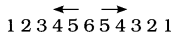
PSEB 8th Class Maths Solutions Chapter 6 Squares and Square Roots InText Questions 5

Question (ii).
11111112
Solution:
(1111111)2
The given number is a seven-digit number.
∴ middle number 7

PSEB 8th Class Maths Solutions Chapter 6 Squares and Square Roots InText Questions 6

Try These (Textbook Page No. 95)

Can you find the square of the following numbers using the above pattern ?
(i) 66666672
(ii) 666666672
Solution:
(i) Yes, 66666672 = 44444448888889
(ii) Yes, 666666672 = 4444444488888889

PSEB 8th Class Maths Solutions Chapter 6 Squares and Square Roots InText Questions

Try These (Textbook Page No. 97)

Find the squares of the following numbers containing 5 in unit’s place:

Question (i).
15
Solution:
[Note : A number with unit digit 5, e.g. a5
(a5)2 = a(a + 1) × 100 + 25]
( i ) (15)2 = 1 × (1 + 1) × 100 + 25
= 1 × 2 × 100 + 25
= 200 + 25
= 225
Hint:
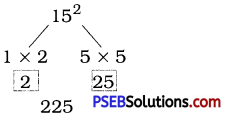
PSEB 8th Class Maths Solutions Chapter 6 Squares and Square Roots InText Questions 7

Question (ii).
95
Solution:
(95)2 = 9 (9 + 1) × 100 + 25
= 9 × 10 × 100 + 25
= 9000 + 25
= 9025

Question (iii).
105
Solution:
(105)2 = 10 × (10 + 1) × 100 + 25
= 10 × 11 × 100 + 25
= 11000 + 25
= 11025
Hint:
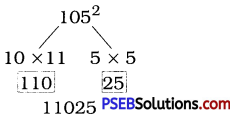
PSEB 8th Class Maths Solutions Chapter 6 Squares and Square Roots InText Questions 8

Question (iv).
205
Solution:
(205)2 = 20 × (20 + 1) × 100 + 25
= 20 × 21 × 100 + 25
= 42000 + 25
= 42025

PSEB 8th Class Maths Solutions Chapter 6 Squares and Square Roots InText Questions

Try These (Textbook Page No. 99)

Question (i).
112 = 121. What is the square root of 121 ?
Solution:
Square root of 121 is 11.

Question (ii).
142 = 196. What is the square root of 196 ?
Solution:
Square root of 196 is 14.

Think, Discuss and Write (Textbook Page No. 99)

Question (i).
(-1)2 = 1. Is – 1, a square root of 1 ?
Solution:
[Note: There are two (positive as well as negative) integral square roots of a perfect square number.]
(- 1) × (- 1) = 1, (- 1)2 = 1
∴ Square root of 1 can also be (-1).

Question (ii).
(-2)2 = 4. Is -2, a square root of 4 ?
Solution:
(- 2) × (- 2) = 4, (-2)2 = 4
∴ Square root of 4 can also be (-2).

Question (iii).
(-9)2 = 81. Is – 9, a square root of 81 ?
Solution:
(-9) × (-9) = 81, (- 9)2 = 81
∴ Square root of 81 can also be (-9).

PSEB 8th Class Maths Solutions Chapter 6 Squares and Square Roots InText Questions

Try These (Textbook Page No. 100)

By repeated subtraction of odd numbers starting from 1, find whether the following numbers are perfect squares or not? If the number is a perfect square then find its square root:

Question (i).
121
Solution:
Subtracting the successive odd numbers from 121 :
121 – 1 = 120, 120 – 3 = 117
117 – 5 = 112, 112 – 7 = 105
105 – 9 = 96, 96 – 11 = 85
85 – 13 = 72, 72 – 15 = 57
57 – 17 = 40, 40 – 19 = 21
21 – 21 = 0
∴ \(\sqrt{121}\) = 11
∴ 121 is a perfect square.

Question (ii).
55
Solution:
∵ 55 – 1 = 54, 54 – 3 = 51
51 – 5 = 46, 46 – 7 = 39
39 – 9 = 30, 30 – 11 = 19
19 – 13 = 6, 6 – 15 = – 9
55 does not reduced to 0 after subtracting odd numbers starting from 1.
∴ 55 is not a perfect square.

Question (iii).
36
Solution:
∵ 36 – 1 = 35, 35 – 3 = 32
32 – 5 = 27, 27 – 7 = 20
20 – 9 = 11, 11 – 11 = 0
∴ \(\sqrt{36}\) = 6
∴ 36 is a perfect square.

Question (iv).
49
Solution:
49 – 1 = 48, 48 – 3 = 45
45 – 5 = 40, 40 – 7 = 33
33 – 9 = 24, 24 – 11 = 13
13- 13 = 0
∴ \(\sqrt{49}\) = 7
∴ 49 is a perfect square.

Question (v).
90
Solution:
90 – 1 = 89, 89 – 3 = 86
86 – 5 = 81, 81 – 7 = 74
74 – 9 = 65, 65 – 11 = 54
54 – 13 = 41, 41 – 15 = 26
26 – 17 = 9, 9 – 19 = – 10
90 does not reduced to 0 after subtracting odd numbers starting from 1.
∴ 90 is not a perfect square.

PSEB 8th Class Maths Solutions Chapter 6 Squares and Square Roots InText Questions

Think, Discuss and Write (Textbook Page No. 103)

Can we say that if a perfect square is of n-digits, then its square root will have \(\frac{n}{2}\) digits if n is even or \(\frac{(n+1)}{2}\) if n is odd ?
Solution:
Yes, we can say that if a perfect square is of n-digits, then its square root will have
(a) \(\frac{n}{2}\) digits, if n is even.
(b) \(\frac{(n+1)}{2}\) digits, if n is odd.

Try These (Textbook Page No. 105)

Without calculating square roots, find the number of digits in the square root of the following numbers:

Question (i).
25600
Solution:
Here, the number of digits, n = 5 (an odd number.)
∴ Number of digits in the square root of 25600 = \(\frac{(n+1)}{2}\)
= \(\frac{5+1}{2}\)
= \(\frac {6}{2}\)
= 3

Question (ii).
100000000
Solution:
Here, the number of digits, n =9 (an odd number.)
∴ Number of digits in the square root of 100000000 = \(\frac{(n+1)}{2}\)
= \(\frac{9+1}{2}\)
= \(\frac {10}{2}\)
= 5

Question (iii).
36864
Solution:
Here, the number of digits, n = 5 (an odd number.)
∴ Number of digits in the square root of 36864 = \(\frac{(n+1)}{2}\)
= \(\frac{5+1}{2}\)
= \(\frac {6}{2}\)
= 3

PSEB 8th Class Maths Solutions Chapter 6 Squares and Square Roots InText Questions

Try these (Textbook Page No. 107)

Estimate the value of the following to the nearest whole number:

Question (i).
\(\sqrt{80}\)
Solution:
\(\sqrt{80}\)
102 = 100, 92 = 81, 82 = 64
∴ 80 is between 64 and 81.
∴ 64 < 80 < 81
∴ 82 < 80 < 92
∴ 8 < \(\sqrt{80}\) < 9
Thus, \(\sqrt{80}\) lies between 8 and 9.
\(\sqrt{80}\) is much closer to 81 than 64.
∴ \(\sqrt{80}\) is approximately 9.

Question (ii).
\(\sqrt{1000}\)
Solution:
\(\sqrt{1000}\)
302 = 900, 312 = 961, 322 = 1024
∴ 1000 is between 961 and 1024.
∴ 961 < 1000 < 1024
∴ 312 < 1000 < 322
∴ 31 < \(\sqrt{1000}\) < 32
Thus, \(\sqrt{1000}\) lies between 31 and 32.
\(\sqrt{1000}\) is much closer to 32 than 31.
∴ \(\sqrt{1000}\) is approximately 32.

Question (iii).
\(\sqrt{350}\)
Solution:
\(\sqrt{350}\)
182 = 324 and 192 = 361
∴ 350 is between 324 and 361.
∴ 324 < 350 < 361
∴ 182 < 350 < 192
∴ 18 < \(\sqrt{350}\) < 19
Thus, \(\sqrt{350}\) lies between 18 and 19.
\(\sqrt{350}\) is much closer to 19 than 18.
∴ \(\sqrt{350}\) is approximately 19.

Question (iv).
\(\sqrt{500}\)
Solution:
\(\sqrt{500}\)
222 = 484 and 232 = 529
∴ 500 is between 484 and 529.
∴ 484 < 500 < 529
∴ 222 < 500 < 232
∴ 22 < \(\sqrt{500}\) < 23
Thus, \(\sqrt{500}\) lies between 22 and 23.
\(\sqrt{500}\) is much closer to 22 than 23.
∴ \(\sqrt{500}\) is approximately 22.