Punjab State Board PSEB 9th Class English Book Solutions English Main Course Book Chapter 6 Three Great Indians Textbook Exercise Questions and Answers.
Class 9th English Main Course Book Chapter 6 Three Great Indians Question Answers
Three Great Indians Class 9 Questions and Answers
Question 1.
What is the name given to the national uprising of 1857 ?
(1857 के राष्ट्रीय विद्रोह को क्या नाम दिया गया है ?)
Answer:
It is called the First War of Independence.
इसे स्वतन्त्रता की पहली लड़ाई कहा जाता है।
Question 2.
When and where was Laxmi Bai born ?
(लक्ष्मीबाई का जन्म कब और कहां हुआ ?)
Answer:
She was born on 16 November, 1834 in Varanasi.
उसका जन्म 16 नवम्बर, 1834 को वाराणसी में हुआ था।

Question 3.
What was her childhood name ?
(उसका बचपन का नाम क्या था ?)
Answer:
Manikarnika or Manu. (मणिकर्णिका या मनु।)
Question 4.
Who was she married to ?
(उसका विवाह किस से हुआ ?)
Answer:
She was married to Raja Gangadhar Rao.
उसका विवाह राजा गंगाधर राव से हुआ।
Question 5.
What happened to her son and husband ?
(उसके पुत्र तथा पति को क्या हुआ ?)
Answer:
Both of them had died by 1853.
सन् 1853 तक उन दोनों की मृत्यु हो गई थी।
Question 6.
Where did she join her forces with Tantya Tope ?
(तात्या टोपे के साथ उसकी सेनाएँ कहां शामिल हुईं ?)
Answer:
At Kalpi.
(कल्पी में।)
Question 7.
How is Udham Singh’s name linked with Jallianwala Bagh?
(उधम सिंह का नाम जलियांवाला बाग़ से कैसे जुड़ा है ?)
Answer:
He was the man who took revenge for the killings of Jallianwala Bagh. He killed General O’Dwyer who had ordered the firing and killed thousands of innocent men, women and children.
वह वही आदमी था जिसने जलियांवाला बाग़ की हत्याओं का बदला लिया। उसने जनरल ओ’डायर को मार दिया जिसने गोली चलाने का आदेश दिया था और हज़ारों मासूम पुरुषों, स्त्रियों और बच्चों को मार दिया था।
Question 8.
What was his pledge?
(उसकी शपथ क्या थी ?)
Answer:
His pledge was to avenge the massacre of Jallianwala Bagh.
उसकी शपथ थी – जलियांवाला बाग़ के नरसंहार का बदला लेना।
Question 9.
How did he take his revenge ?
(उसने अपना बदला कैसे लिया ?)
Answer:
He waited for 21 years. Then he went to England. There he shot General O’Dwyer dead in full view of a large gathering.
उसने 21 वर्ष तक प्रतीक्षा की। फिर वह इंग्लैंड गया। वहां उसने लोगों की एक भारी भीड़ के बिल्कुल सामने जनरल ओ’डायर को गोली मार कर मार दिया।
Write a short note on the each of the following:
Question 1.
Write a short note on the death of Rani Jhansi.
(रानी झांसी की मृत्यु पर एक संक्षिप्त नोट लिखिए।)
Answer:
The British forces had laid a siege on Jhansi. The Rani of Jhansi continued to fight from inside the fort. But, at last; she was forced to leave Jhansi. The British forces pursued her. She was defeated and surrounded from all sides. She was badly wounded. She died on the battlefield. It was 18 June 1858 when she died.
अंग्रेजी सेनाओं ने झांसी पर घेरा डाल रखा था। झांसी की रानी किले के अन्दर से लड़ती रही। किन्तु अन्त में वह झांसी छोड़ने को मजबूर हो गई। अंग्रेजी सेनाओं ने उसका पीछा किया। वह हार चुकी थी और चारों तरफ से घिरी हुई थी। वह बुरी तरह से घायल हो गई। वह युद्ध-क्षेत्र में मारी गई। यह 18 जून 1858 था जब उसकी मृत्यु हुई।
Question 2.
Write a short note on the Jallianwala Bagh massacre.
(जलियांवाला बाग़ के नरसंहार पर एक संक्षिप्त नोट लिखिए।)
Answer:
It was the day of Baisakhi in 1919. A large number of people had gathered in Jallianwala Bagh. They were holding a peaceful meeting. The British General O’Dwyer ordered firing on them. Thousands of men, women and children were killed. Many jumped into a well to escape. They were suffocated to death. 1919
में बैसाखी का दिन था। भारी संख्या में लोग जलियांवाला बाग में एकत्रित हो रखे थे। वे एक शान्तिपूर्ण सभा कर रहे थे। अंग्रेज़ी जनरल ओ’डायर ने उन पर गोली चलाने का आदेश दे दिया। हज़ारों पुरुष, स्त्रियां तथा बच्चे मारे गए। बच पाने के लिए अनेकों ने एक कुएं में छलांग लगा दी। उनकी दम घुटने से मृत्यु हो गई।
Question 3.
Write a short note on the First War of Independence.
(स्वतन्त्रता के प्रथम संग्राम पर एक संक्षिप्त नोट लिखिए।)
Answer:
The First War of Independence was fought in 1857. The rulers of many Indian states rose up against the British. Tantya Tope and Laxmi Bai were the two most famous of them. Laxmi Bai was the Rani of Jhansi. The British forces had laid a siege on Jhansi. She was forced to leave Jhansi. The British forces surrounded her from all sides. She died on the battlefield. The other rulers were also defeated one by one. Thus, the First War of Independence was lost.
स्वतन्त्रता की पहली लड़ाई 1857 में लड़ी गई। अनेक भारतीय राज्यों के शासक अंग्रेजों के विरुद्ध खड़े हो गए। उनमें दो सबसे अधिक प्रसिद्ध थे – तात्या टोपे और लक्ष्मी बाई। लक्ष्मी बाई झांसी की रानी थी। अंग्रेजी सेनाओं ने झांसी को घेर रखा था। उसे झांसी छोड़ने पर मजबूर होना पड़ा। अंग्रेजी सेनाओं ने उसे सभी तरफ से घेर लिया। उसकी युद्ध-क्षेत्र में मृत्यु हो गई। अन्य शासक भी एक-एक करके हार गए। इस प्रकार स्वतन्त्रता का पहला संग्राम हारा गया।
Question 4.
Write a short note on the teachings of Sri Satguru Ram Singh Ji.
(श्री सतगुरू रामसिंह जी के उपदेशों पर एक संक्षिप्त नोट लिखिए।)
Answer:
Satguru Sri Ram Singh Ji preached his followers.
1. to believe in one God.
2. to lead a simple and honest life.
3. to be free from any kind of evil.
4. to help the poor and the needy.
5. to work for the freedom of the country.
6. to live like brothers.
7. to fight against such evils as child marriage, the dowry system, cow slaughter, non-vegetarianism, casteism and religious fanaticism.
श्री सतगुरू राम सिंह जी ने अपने अनुयायियों को उपदेश दिया कि वे
1. एक ईश्वर में विश्वास रखें।
2. सादा और ईमानदारी का जीवन बिताएं।
3. सभी तरह की बुराइयों से मुक्त रहें।
4. ग़रीबों और जरूरतमंदों की मदद करें।
5. देश की स्वतन्त्रता के लिए काम करें।
6. भाइयों की भान्ति रहें।
7. बाल-विवाह, दहेज प्रथा, गाय-वध, मांसाहारी होने, फिरकापरस्ती और धार्मिक कट्टरता के विरुद्ध लड़ें।
Textual Vocabulary & Grammar
Question 1.
Match the words in box A with their opposites given in box B :
Answer:
1. fresh → stale
2. entrance → exit
3. loyal → disloyal
4. bravery cowardice
5. barbarous → civilized
6. punish → reward
7. benevolence → malevolence
8. virtue → vice
9. refined → crude
10. optimist → pessimist
11. mortal → immortal.
Rewrite the following sentences by using one word for the underlined part of the sentence :
1. Your television set cannot be repaired.
2. The speaker addressed the assembly of listeners.
3. Holika had a device that could not be seen.
4. ‘My Experiments with Truth’ by Mahatma Gandhi is his life-story written by himself.
5. Satan said that he had a will that could not be conquered.
6. These windowpanes are such that will not allow the passage of light.
7. Usha is quite fond of entertaining guests.
Answer:
1. Your television set is irreparable.
2. The speaker addressed the audience.
3. Holika had an invisible device.
4. “My Experiments with Truth’ by Mahatma Gandhi is his autobiography.
5. Satan said that he had an inconquerable will.
6. These windowpanes are opaque.
7. Usha is quite hospitable.
Fill in the blanks with suitable prepositions in the following sentences :
1. She was distressed at the break ……………… of her marriage.
2. The war broke …………….. at Kalpi.
3. The two countries broke …………….. their diplomatic relations.
4. We have been working since long; let us break ……………….. lunch.
5. The population growth has fallen ………………. five per cent.
6. Anju fell flat ……………….. her face …..
7. Romeo fell ………………. love with Juliet at first sight.
8. Write an essay on ‘The Rise and Fall …………….. the Mughal Empire’
9. Jhansi fell ……………….. the British.
10. He fell ……………… and wounded his leg.
Answer:
1. off 2. out 3. up 4. for 5. by 6. on 7. in 8. of 9. to 10. down.
Fill in the blanks with the articles a, an, the :
Rabindranath Tagore is the most famous man of letters. His literary production is vast and varied. He is a novelist as well as a playwright. He is an educationist as well as a freedom fighter. But above all, he is a poet. He is a great religious poet, one of the greatest that the world has ever produced. In 1913, he was awarded the Nobel Prize in Literature for his collection of poems entitled ‘Gitanjali.
Fill in the blanks with the appropriate comparaties or superlatives of the adjectives given in the brackets :
1. Prevention is ……………. than cure. (good) :
2. Pen is …………… than the sword. (mighty).
3. Honour is …………….. to all than life. (dear).
4. Wordsworth was the …………… nature poet. (great)
5. Bill Gates is the …………….. man of the world today. (rich)
6. It is …………….. to preach than to practise. (easy)
7. Gold is …………. than any other metal. (costly)
8. The condition of some of the roads is much …………….. than it was five years ago. (good)
Answer:
1. better
2. mightier
3. dearer
4. greatest
5. richest
6. easier
7. costlier
8. better.
Objective Type Questions
Answer the following in one word / phrase / sentence :
Question 1.
Who wrote the chapter, ‘Three Great Indians ?
Answer:
The author iş anonymous.
Question 2.
Give the names of the three great Indians who have been described in this chapter.
Answer:
They are :
(i) Sri Satguru Ram Singh Ji
(ii) Rani Laxmi Bai and
(iii) Sardar Udham Singh.
Question 3.
Who was Sri Satguru Ram Singh Ji ?
Answer:
A great patriot and a social reformer.
Question 4.
What did he ask his followers to do?
Answer:
He asked his followers to fight for the freedom of the country.
Question 5.
Who was Laxmi Bai ?
Answer:
The brave Rani of Jhansi.
Question 6.
What did Laxmi Bai sacrifice for the country?
Answer:
She died fighting against the British forces and thus sacrificed her life for the country.
Question 7.
Who was Udham Singh ?
Answer:
One of the greatest martyrs of Mother India.
Question 8.
Who had ordered firing on the people gathered in Jallianwala Bagh on the day of Baisakhi ?
Answer:
It was the British General O’Dwyer.
Question 9.
Why did Udham Singh go to England ?
Answer:
To kill the British General O’Dwyer, the villain of the Jallianwala Bagh Massacre.
Question 10.
When was Udham Singh hanged ?
Answer:
On 30 July 1940.
Complete the following:
1. …………… declared Ram Singh a ‘guru’, a religious guide, in his childhood.
2. Satguru Ram Singh Ji’s first sermon was delivered ……..
3. ……………… became the most popular leader of the First War of Freedom (1857).
4. The Rani of Jhansi adopted ……………….. under the ‘Policy of Lapse’.
5. Rani joined her forces with …………………. at Kalpi.
6. Udham Singh was born at ………………… in
Answer:
1. Guru Balak Singh Ji
2. on the Baisakhi day in 1857
3. The Rani of Jhansi.
4. a son
5. Tantya Tope
6. Sunam, Sangrur district.
Write True or False against each statement :
1. Rani Lakshmi Bai was born in Varanasi.
2. Udham Singh killed General O’Dwyer in America.
3. The British forces under the leadership of O’Dwyer besieged Jhansi.
4. Rani Lakshmi Bai’s heroic battle against the British has become the subject of many folk songs and ballads.
5. The Punjabi word ‘Kuka’ stands for a “roar.
6. It was Udham Singh who introduced the concept of ‘Be Indian, buy Indian’.
Answer:
1. True
2. False
3. False
4. True
5. True
6. False.
Choose the correct option for each of the following:
Question 1.
Sri Bhaini Sahib is situated in ……….
(a) Ropar
(b) Chandigarh
(c) Amritsar
(d) Ludhiana.
Answer:
(d) Ludhiana.
Question 2.
Against the British policy of ‘Divide and Rule’, …………………. gave the slogan ‘Unite and Fighť.
(a) Sardar Udham Singh
(b) Satguru Ram Singh Ji
(c) Rani Laxmi Bai
(d) none of these three.
Answer:
(b) Satguru Ram Singh Ji
Question 3.
Rani Lakshmi Bai’s childhood name was ……
(a) Manikarnika
(b) Manikumari
(c) Maniratnam
(d) Maniratnika.
Answer:
(a) Manikarnika
Question 4.
Udham Singh waited for …………… to average the national insult of Jallianwala Bagh massacre.
(a) 21 years
(b) 27 years
(c) 29 years
(d) 23 years.
Answer:
(a) 21 years
Pronunciation Practice
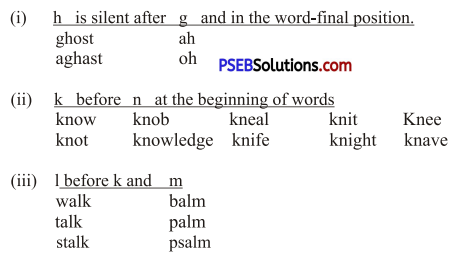
Note the silent letters in the words listed below. Say these words aloud.
Creative Writing and Extended Reading
Read the stories of any two of the following great Indians and write 10-12 lines on each.
- Bal Gangadhar Tilak
- Netaji Subhash Chandra Bose
- Lala Lajpat Rai
- Manga! Pandey
- Veer Savarkar
2. Would you like to become a great man ? How can you achieve that aim? Discuss the subject in your class with the help of your teacher.
Use Of Textual Words / Phrases
1. Witnessed – I witnessed the whole incident from a distance.
2. Valiant – The valiant fighter fought to the last breath.
3. Shot in prominence – A young actor, who has recently risen, shot in prominence.
4. Exhort – He exhorted his followers to speak the truth.
5. Foeticide – The government has banned female foeticide.
6. Send to the gallows – Many freedom-fighters were sent to the gallows by the British rulers.
7. To be cowed down -Our freedom-fighters were not cowed down by the cruelties of the British.
8. Warrior – India has given birth to many valiant warriors.
9. Impact – Her speech made a great impact on everyone.
10. Ballad – He wrote several ballads in his lifetime.
11. Indomitable – He showed an indomitable courage in the battle field.
12. Appreciate – They appreciated my views.
13. Martial art – He is an expert in martial arts.
14. Annex – Kalinga was formally annexed to Ashoka’s territory after his victory.
15. Regiment – The Gorkha regiment took control of the town.
16. Rebel – He finally rebelled against his cruel father.
17. Representative – He is the sole representative of the company.
18. Pursue – The robbers were hotly pursued by the police.
19. Inflicted – The hunter inflicted many injuries on the tiger.
20. Inseparably – He is inseparably joined with this institute.
21. Revenge – His opponent was thirsting for revenge.
22. Massacre – The bloody massacre of innocent people was condemned by one and all.
23. Suffocate – Many passengers were suffocated inside the burning train.
24. Villain – The police have caught the villains.
25. Sentenced – The thief was sentenced to six months imprisonment.
26. Revolutionary – The revolutionary leaders were arrested by the forces.
27. Associated – Tea is traditionally associated with Darjeeling.
28. Pledged – He pledged to seek a revenge on the enemy.
29. Avenge – He avenged his father’s murder.
30. Point-blank range – He fired at him from a point-blank range.
31. Solidarity – The international solidarity should not be undermined at any cost.
Three Great Indians Summary in English
Three Great Indians Introduction:
This chapter gives brief sketches of three great Indians. They are :
- Sri Satguru Ram Singh Ji,
- Rani Laxmi Bai and
- Udham Singh.
Sri Satguru Ram Singh Ji was a great patriot and a social reformer. He fought against many social evils. He asked his followers to fight for the freedom of the country. Laxmi Bai was the brave Rani of Jhansi. She opposed the British rule. She died fighting against the British forces. Udham Singh was one of the greatest martyrs of Mother India. He went to England and killed the villain of the Jallianwala Bagh massacre. He was arrested and sentenced to death. But his name will live for ever.
Three Great Indians Summary in English:
Mother India gave birth to many great men and women in the 19th and 20th centuries. They fought not only against the prevailing social evils but also against the British rule. They included such great souls as Bal Gangadhar Tilak, Tantya Tope, Rani Laxmi Bai, Dadabhai Naoroji, Khudi Ram Bose, Sri Aurobindo, Lala Lajpat Rai, Pandit Jawahar Lal Nehru, Mahatma Gandhi and Bhagat Singh.
Sri Satguru Ram Singh Ji of Punjab was also a great social reformer and supporter of complete independence. He was born on 3 February, 1816 in a village in Ludhiana district. He was a guru of the Namdhari Sikhs. He gave his first sermon on the day of Baisakhi in 1857. He asked his followers to lead a simple and honest life. He wanted them to help the poor and to be free from all evils. He also wanted them to work for the country’s freedom: He was strongly opposed to such social evils as child marriage, drinking, casteism, nonvegetarianism, cow-slaughter and religious fanaticism.
He was against the British policy of ‘Divide and Rule’. He gave his followers the slogan of ‘Unite and Fight’. He started a movement of non-cooperation against the British rulers. It was he who introduced the concept of ‘Be Indian, buy Indian’. The followers of Satguru Ram Singh Ji raised a loud voice against the British. That was why they came to be known as ‘Kukas? They vowed to follow the teachings of their guru. So they were named Namdharis.
The Namdharis became a great force. The British rulers could not tolerate this. They let loose a reign of terror against the Kukas. A large number of them were put to death. Sri Satguru Ram Singh Ji was arrested. He was sent to jail in an unknown foreign land. But his spirit continues to guide his followers even today.
Rani Laxmi Bai was another great Indian. She was the Rani of Jhansi. She fought bravely against the British rule. She became the most popular leader in the First War of Independence (1857). Even her enemies appreciated her courage and her love of freedom.
Laxmi Bai was born on 16th December 1834 in Varanasi. Her childhood name was Manikarnika or Manu. She was married to Raja Gangadhar Rao of Jhansi. In 1851, she gave birth to a son.
Unfortunately both her son and her husband died by 1853. She adopted a son to be the king’s heir. But the British refused to accept him as the king of Jhansi, and took over the control of Jhansi. On 4 June, 1857, the soldiers stationed in Jhansi revolted against the British control. The Rani took the command in her own hands. The British forces laid a siege on Jhansi. The Rani continued to command her forces from inside the fort. But, at last, she had to leave Jhansi. She joined the forces of Tantya Tope at Kalpi. The British forces surrounded her from all sides. The Rani tried to escape but she was badly wounded. She breathed her last on the battlefield, on 18 June, 1858.
Udham Singh was one of the greatest martyrs of Mother India. He was the man who took revenge on General O’Dwyer who was the villain of the Jallianwala Bagh massacre.
On the day of Baisakhi in 1919, a large number of people had gathered in Jallianwala Bagh. They were holding a peaceful meeting. The British General O’Dwyer ordered firing on them. Thousands of men, women and children were killed. Many jumped into a well in order to save themselves. They were suffocated to death.
Udham Singh waited for 21 years to avenge this national insult. He went to England in 1940. There he shot O’Dwyer dead in full view of large gathering. Udham Singh was arrested and sentenced to death. He was hanged to death on 30 July the same year.
Three Great Indians Summary in Hindi
Three Great Indians Introduction:
परिचय यह पाठ तीन महान् भारतीयों के संक्षिप्त चित्र प्रस्तुत करता है, वे हैं-
- श्री सतगुरू राम सिंह जी;
- रानी लक्ष्मी बाई तथा
- उधम सिंह।
श्री सतगुरू राम सिंह जी एक महान समाज सुधारक और देशभक्त थे। वे अनेकों सामाजिक बुराइयों के विरुद्ध लड़े। उन्होंने अपने अनुयायियों से कहा कि वे देश की आजादी के लिए लड़ें। लक्ष्मी बाई झांसी की वीर रानी थी। उसने अंग्रेज़ी राज्य का विरोध किया। वह अंग्रेज़ी सेनाओं के विरुद्ध लड़ती हुई मारी गई। उधम सिंह भारत माता के सब से महान् शहीदों में से एक था। उसने इंग्लैण्ड जा कर जलियांवाले बाग़ के खलनायक को मौत के घाट उतार दिया। उसे बन्दी बना लिया गया और मृत्यु-दण्ड दे दिया गया। किन्तु उसका नाम अमर रहेगा।
Three Great Indians Summary in Hindi:
भारत माता ने उन्नीसवीं एवं बीसवीं शताब्दी में अनेक महान् पुरुषों और स्त्रियों को जन्म दिया। उन्होंने न केवल समाज में व्याप्त बुराइयों के विरुद्ध लड़ाई लड़ी बल्कि उन्होंने अंग्रेज़ी शासन के विरुद्ध भी संघर्ष किया। इन लोगों में बाल गंगाधर तिलक, तात्या टोपे, रानी लक्ष्मी बाई, दादाभाई नॉरोजी, खुदीराम बोस, श्री अरविन्द घोष, लाला लाजपत राय, पंडित जवाहर लाल नेहरू, महात्मा गांधी और भगत सिंह जैसे महान् लोग शामिल थे।
पंजाब के श्री सतगुरू राम सिंह जी भी एक महान समाज सुधारक और पूर्ण स्वतन्त्रता के समर्थक थे। उनका जन्म 3 फरवरी, सन् 1816 में लुधियाना जिले के एक गांव में हुआ। वह नामधारी सिखों के गुरू थे। उन्होंने अपना पहला प्रवचन सन् 1857 में बैसाखी वाले दिन दिया। उन्होंने अपने अनुयायियों से एक सादा और ईमानदार जीवन जीने के लिए कहा। वह चाहते थे कि उनके अनुयायी निर्धनों की सहायता करें और स्वयं को सब बुराइयों से मुक्त कर लें। वह चाहते थे कि उनके अनुयायी देश की स्वतन्त्रता के लिए भी संघर्ष करें। वह बाल विवाह, मदिरापान, जातिवाद, मांसाहार, गौ-हत्या और धार्मिक अन्धविश्वास जैसी सामाजिक बुराईयों के सख्त विरुद्ध थे।
वह अंग्रेजों की नीति-‘फूट डालो और राज करो’ के सख्त विरुद्ध थे। उन्होंने अपने अनुयायियों को ‘एक बनो और युद्ध करो’ का नारा दिया। उन्होंने अंग्रेज शासकों के विरुद्ध असहयोग आन्दोलन छेड़ दिया। यह श्री सतगुरू राम सिंह जी ही थे जिन्होंने ‘भारतीय बनो और भारत का माल खरीदो’ जैसे विचार का परिचय कराया। उनके अनुयायियों ने अंग्रेजों के विरुद्ध ऊंची आवाज़ उठाई। यही कारण था कि उन्हें ‘कूकों’ के नाम से जाना जाने लगा। उन्होंने अपने गुरू की शिक्षाओं का अनुसरण करने की शपथ ली। इसलिए उनका नाम नामधारी पड़ गया।
नामधारियों की एक बहुत विशाल सेना बन गई। अंग्रेज़ी शासक इसे बर्दाश्त नहीं कर पाए। उन्होंने कूकों के विरुद्ध एक आतंक पैदा करने वाला शासन शुरू कर दिया। उनमें से कई नामधारियों को मौत के घाट उतार दिया गया। श्री सतगुरू राम सिंह जी को गिरफ्तार कर लिया गया। उन्हें किसी अज्ञात विदेशी जगह पर जेल भेज दिया गया। परन्तु उनकी आत्मा आज भी उनके अनुयायियों का मार्गदर्शन करती है।
रानी लक्ष्मी बाई एक अन्य महान् भारतीय थी। वह झांसी की रानी थी। उसने अंग्रेज़ी शासन के विरुद्ध बहुत वीरतापूर्वक लड़ाई लड़ी। वह स्वतन्त्रता के प्रथम युद्ध (1857) में सबसे अधिक लोकप्रिय नेता बनी। यहां तक कि उसके शत्रुओं ने भी उसके साहस और स्वतन्त्रता के लिए उसके प्रेम की प्रशंसा की। लक्ष्मी बाई का जन्म 16 दिसम्बर 1834 को वाराणसी में हुआ था। उसका बचपन का नाम मणिकर्णिका अथवा मनु था। उसका विवाह झांसी के राजा गंगाधर राव के साथ हुआ। सन् 1851 में उसने एक पुत्र को जन्म दिया। परन्तु दुर्भाग्यवश सन् 1853 तक उसके पुत्र तथा उसके पति दोनों की मृत्यु हो गई। उसने राजा के उत्तराधिकारी के रूप में एक पुत्र को गोद ले लिया।
परन्तु अंग्रेजों ने उसे झांसी का राजा मानने से इन्कार कर दिया, तथा झांसी को अपने अधिकार में ले लिया। 4 जून सन् 1857 को झांसी में नियुक्त सैनिकों ने अंग्रेज़ी शासन के विरुद्ध विद्रोह कर दिया। रानी ने प्रशासन की बागडोर अपने हाथ में ले ली। अंग्रेजी सेनाओं ने झांसी पर कब्जा कर लिया। रानी ने किले के अन्दर से अपनी सेनाओं को निर्देश देना जारी रखा। परन्तु अन्त में उसे झांसी छोड़कर जाना पड़ा। कल्पी में वह तांत्या टोपे की सेना में शामिल हो गई। अंग्रेज़ी सेनाओं ने उसे चारों ओर से घेर लिया। रानी ने बच निकलने का यत्न किया। परन्तु वह बहुत बुरी तरह से घायल थी। 18 जून सन् 1858 में उसने युद्ध के मैदान में अपनी आखिरी सांस ली। उधम सिंह भारत माता के महान् शहीदों में से एक था। यही वह आदमी था जिसने उस जनरल ओ’ डायर से बदला लिया जो जलियांवाला बाग़ के नरसंहार का खलनायक था।
सन् 1919 में बैसाखी वाले दिन जलियांवाला बाग़ अमृतसर में बहुत बड़ी संख्या में लोग एकत्रित हुए। वे एक शान्तिपूर्ण सम्मेलन का आयोजन कर रहे थे। अंग्रेजी जनरल ओ’ डायर ने उन पर गोली चलाने का आदेश दे दिया। हजारों स्त्री, पुरुष, बच्चे और बूढ़े मारे गए। कई लोग स्वयं को बचाने के लिए कुएं में कूद पड़े। परन्तु वहां भी दम घुटने से उनकी मौत हो गई।
उधम सिंह ने इस राष्ट्रीय अपमान का बदला लेने के लिए 21 वर्ष तक प्रतीक्षा की। सन् 1940 में वह इंग्लैंड गया। वहां उसने विशाल जनसमूह के सामने ओ’ डायर को गोली मार दी। उधम सिंह को गिरफ्तार कर लिया गया और उसे मौत की सजा सुना दी गई। उसी वर्ष 30 जुलाई को उसे फांसी पर लटका दिया गया।
Three Great Indians Translation in Hindi
Sri Satguru Ram Singh Ji
(Page 125-126) The historic period of …. …….. the British rule
कठिन शब्दार्थ-1. witnessed—देखा; 2. campaign-युद्ध; 3. prevailing-फैली हुई; 4. bannerझंडा; 5. revolt-विद्रोह; 6. valiant-बहादुर; 7. eradication—उन्मूलन, जड़ से उखाड़ फेंकना; 8. shot into prominence-एकदम से प्रसिद्ध होना; 9. sermon-धर्मोपदेश; 10. exhorted—बल दिया, 11. flocked—झुण्ड बना कर आना, एकत्रित हो कर आना; 12. foeticide-भ्रूण हत्या; 13. fanaticismउन्माद, 14. slaughter-हत्या। .
Text
The historic period of, 19th and 20th centuries witnessed the rise of many a great man in India who not only started a campaign against the social evils prevailing in the country but also raised a banner of revolt against the British Empire. “Freedom is our birthright,” declared Bal Gangadhar Tilak. Valiant fighters from all over the country—Tantya Tope, Rani Laxmi Bai, Dadabhai Naoroji, Khudi Ram Bose, Sri Aurobindo, Lala Lajpat Rai, Pandit Jawahar Lai Nehru, Mahatma Gandhi, Bhagat Singh to name just a few came to join the national struggle for freedom and the eradication of social ills.
An important name amongst them was that of Satguru Ram Singh of Punjab who gave birth to the great Kuka Movement that stood for social reforms and complete independence. Born on February 3, 1816 in the village Raiyan in district Ludhiana, this child shot into prominence when Guru Balak Singh Ji declared him a ‘gum’, a religious guide. From
his headquarters at Shri Bhaini Sahib in Ludhiana, the guru started preaching his divine message. His first sermon was delivered on the Baisakhi day in 1857. In his teachings, he exhorted the people to believe in one God, lead a simple, honest life free from any kind of evil, to help the poor and the needy and to work for the freedom of the country. Thousands became his followers and flocked to his discourses every day.
He strongly opposed child marriage, female foeticide, (The proper word should have been ‘infanticide‘ here.) taking of alcoholic drinks and non-vegetarian foods, dowry system, religious fanaticism, cow slaughter and casteism. He encouraged people to live like brothers and fight for the freedom of their country from the British rule.
अनुवाद
उन्नीसवीं और बीसवीं शताब्दी के ऐतिहासिक युग ने भारत में ऐसे कई महान व्यक्तियों का उदय देखा है जिन्होंने न केवल देश में व्याप्त सामाजिक बुराइयों के विरुद्ध युद्ध छेड़ा बल्कि अंग्रेजी साम्राज्य के विरुद्ध भी विद्रोह का झण्डा उठा लिया। “स्वतन्त्रता हमारा जन्मसिद्ध अधिकार है,” बाल गंगाधर तिलक ने घोषणा कर दी। समूचे देश भर से बहादुर योद्धा – कुछ एक का नाम लिया जाए तो – तांत्या टोपे, रानी लक्ष्मी बाई, दादाभाई नॉरोजी, खुदीराम बोस, श्री अरविन्द, लाला लाजपत राय, पण्डित जवाहर लाल नेहरू, महात्मा गांधी, भगत सिंह स्वतन्त्रता के लिए राष्ट्रीय संघर्ष में शामिल होने तथा सामाजिक बुराइयों को जड़ से उखाड़ फेंकने के लिए आगे आए।
उनमें से एक महत्त्वपूर्ण नाम था पंजाब के सतगुरू राम सिंह जी का, जिन्होंने महान् कूका आन्दोलन को शुरू किया जिसने सामाजिक सुधारों और पूर्ण स्वतन्त्रता के लिए अनेक कार्य किए। 1816 3 फरवरी, 1816 को लुधियाना जिले के गांव राईयां में जन्मा यह बालक एकदम से प्रसिद्ध हो गया जब गुरू बालक सिंह जी ने इसे ‘गुरू’, (अर्थात्) एक धार्मिक मार्गदर्शक, घोषित कर दिया। लुधियाना में अपने मुख्य
स्थल श्री भैणी साहिब में गुरू जी ने अपने अलौकिक संदेश का प्रचार करना शुरू किया। उनका पहला धर्मोपदेश (व्याख्यान) सन् 1857 में बैसाखी वाले दिन दिया गया। अपने उपदेश में उन्होंने लोगों पर एक ही ईश्वर पर विश्वास करने, सभी प्रकार की बुराइयों से मुक्त एक सादा और ईमानदार जीवन व्यतीत करने, निर्धनों और जरूरतमंदों की सहायता करने और देश की आज़ादी के लिए काम करने पर बल दिया। हजारों लोग उनके अनुयायी बन गए और उनके उपदेश सुनने के लिए प्रतिदिन झुण्ड के झुण्ड उमड़ पड़ते।
उन्होंने बाल विवाह, कन्या भ्रूण हत्या, (यहां उचित शब्द ‘शिशु हत्या’ होना चाहिए था।) नशीले पेयपदार्थों और मांसाहारी भोजन का सेवन, दहेज प्रथा, धार्मिक उन्माद, गौ हत्या और जातिवाद का विरोध किया। उन्होंने लोगों को भाइयों की तरह रहने और अंग्रेजी शासन से अपने देश की स्वतन्त्रता के लिए लड़ने को प्रेरित किया।
(Page 126-127) Against the British …………. and high thinking.
कठिन शब्दार्थ-1. slogan-नारा; 2. called upon-आह्वान किया; 3. came down-दबा दिया; 4. reckoned – पहचान स्थापित होना; 5. inspired-प्रेरित; 6. patriotic-देशभक्ति से भरपूर; 7. let loose a reign of terror-आतंक का राज्य शुरू करना; 8. sent to the gallows-जेल भेज दिया गया; 9. allegiance-भक्ति ; 10. severed-काट कर अलग कर दिए; 11. liberty:-स्वतन्त्रता; 12. repressionदबाव; 13. enthusiasm —जोश, उत्साह; 14. flourish -फ्लना-फूलना; 15. stewardship—नेतृत्व।।
Text
The British rulers could not tolerate the rise of such an inspired patriotic force against them. They let loose a reign of terror against the Kukas. Nine Namdhari sikhs were sent to the gallows in 1871 while another 65 were blown up by cannon fire in an open field in 1872 at Malerkotla (Punjab). Amongst these martyrs was a twelve year old boy named Bishan Singh.
He was offered pardon on the condition that he should deny his allegiance to the Kuka cause. He angrily pounced upon the British officer (Mr. C6wen) and pulled out his beard. The enraged officer got both his hands severed and then beheaded him. The lovers of liberty refused to be cowed down by this repression but continued to fight with greater enthusiasm. Sri Satguru Ram Singh Ji was arrested and sent to jail in an unknown foreign land. His spirit continues to guide his followers even today.
The followers of Sri Satguru Ram Singh Ji continue to flourish today under the able stewardship of their holy gurus (presently Satguru Sri Jagjit Singh Ji Maharaj) and spread the message of universal brotherhood, national unity, secularism, simple living and high thinking.
अनुवाद
उन्होंने अग्रेज़ी नीति ‘फूट डालो और राज करो’ के विरुद्ध भारत के लोगों को ‘एक बनो, और संघर्ष करो’ का नारा दिया। उन्होंने अंग्रेज़ी शासकों के विरुद्ध एक असहयोग आन्दोलन चलाया और लोगों का आह्वान किया कि वे अग्रेजों का बॉयकाट कर दें। यह वो ही थे जिन्होंने देश में भारतीय बनो और भारतीय माल खरीदो’ के विचार का प्रचार किया। अंग्रेज़ी शासकों ने उनके गर्जते अनुयायियों को बुरी तरह से कुचल दिया। पंजाबी शब्द ‘कूका’ का अर्थ है एक ‘गर्जना’। श्री सतगुरू राम सिंह जी के अनुयायी जिन्होंने अंग्रेजों के विरुद्ध जोरदार आवाज़ उठाई, वे ‘कूका’ के नाम से प्रसिद्ध हो गए। इस आन्दोलन
के अनुयायियों को नामधारी नाम दिया गया। नामधारी सिखों की शीघ्र ही एक वीर सेना के रूप में पहचान स्थापित हो गई। अंग्रेज़ी शासक अपने विरुद्ध ऐसी एक प्रेरित देशभक्त सेना के उदय को सहन नहीं कर सके। उन्होंने ककों के विरुद्ध आंतक का राज्य शुरू कर दिया। सन् 1871 में 9 नामधारी सिखों को फांसी पर लटका दिया गया जबकि 65 अन्यों को सन् 1872 में मलेरकोटला (पंजाब) में एक खुले खेत में तोपों से उड़ा दिया गया। इन शहीदों में बिशन 1872 सिंह नामक एक बारह वर्षीय बालक भी था। उसे एक शर्त पर माफ़ी की पेशकश की गई कि वह कूका लहर के प्रति अपनी भक्ति से इन्कार करे। उसने क्रोधपूर्वकअंग्रेज़ी अफसर (मिस्टर कोवन) पर आक्रमण कर दिया और उसकी दाढ़ी खींच ली।
गुस्से से उबलते अफसर ने उसके दोनों हाथों को कटवा दिया और फिर उसका सिर धड़ से अलग कर दिया। आजादी के प्रेमियों ने इस दबाव के आगे झुकने से मना कर दिया बल्कि उन्होंने और अधिक उत्साह के साथ संघर्ष करना जारी रखा। श्री | सतगुरू राम सिंह जी को गिरफ्तार कर लिया गया और उन्हें किसी अज्ञात विदेशी जगह पर जेल भेज दिया गया। उनकी आत्मा आज भी अपने अनुयायियों का मार्गदर्शन करती है। श्री सतगुरू रामसिंह जी के अनुयायी आज भी अपने सतगुरुओं (जो आज कल सतगुरू श्री जगजीत सिंह जी महाराज) के योग्य नेतृत्व में फल-फूल रहे हैं और सम्पूर्ण भाईचारे, राष्ट्रीय एकता, धर्मनिरपेक्षता, सादा जीवन और उच्च विचार का संदेश फैला रहे हैं।
Rani Laxmi Bai
(Page 127-128) No other woman ……….. on the battlefield.
कठिन शब्दार्थ-1. warrior-योद्धा; 2. impact-प्रभाव; 3. indomitable-अजेय, दृढ़; 4. adopted-गोद लिया; 5. recognize—प्रमाणित करना; 6. annexed-अपने में मिला लेना; 7. sepoy regiment-सैन्य दल; 8. representative-प्रतिनिधि; 9. besieged-घेर लिया; 10. inflicted defeat-हरा दिया; 11. retreat-जगह छोड़ कर कहीं और जाना।
Text
No other woman warrior in the history of India has made such a powerful impact on the minds of the Indian people as the Rani of Jhansi, Laxmi Bai. Her heroic battle against the British has become the subject of many folk songs and ballads all over the country. Her indomitable spirit as a fighter for the independence of her country was appreciated even by her enemies. Rani Laxmi Bai died fighting bravely for the sake of her country. The Rani of Jhansi became the most popular leader of the First War of Independence (1857).
Laxmi Bai was born on 16th November 1834, in Varanasi (U.P.). Her childhood name was Manikarnika or Manu. After the death of her mother she came to Bithur with her father. In Bithur, she learnt horse-riding and martial arts. When she was eight, she was married to Raja Gangadhar Rao of Jhansi and so she was called the ‘Rani of Jhansi’. In 1851, she gave birth to a son but by 1853, both her son and husband had died. The Rani of Jhansi adopted a son under the ‘Policy of Lapse’, but the British Government did not recognize the adopted son and annexed Jhansi in 1853. On 4th June 1857, the sepoy regiment stationed at Jhansi rebelled. The British control broke down in Jhansi, and the British representative himself asked the people to obey the Rani.
The British forces under the leadership of Sir Hugh Rose later besieged Jhansi. The Rani continued to command her forces from inside the fort but ultimately she was forced to leave Jhansi. She then managed to reach Kalpi where she merged her forces with those of the Nawab of Banda, Tantya Tope. The British forces pursued her at Kalpi also and inflicted defeat on Kalpi. The Rani was surrounded from all sides, and so, she now tried to organize a retreat. While doing so, she was fatally wounded on 18th June 1858. She breathed her last on the battlefield.
अनुवाद
भारत के इतिहास में किसी अन्य वीरांगना ने भारतीय लोगों के दिलों पर ऐसा शक्तिशाली प्रभाव नहीं छोड़ा है जितना कि झांसी की रानी लक्ष्मी बाई ने। अंग्रेजों के विरुद्ध उसका वीरतापूर्ण युद्ध देश भर में अनेकों लोकगीतों और लोक गाथाओं का विषय बन गया है। अपने देश की स्वतन्त्रता के लिए एक योद्धा के रूप में उसकी अजेय आत्मशक्ति की प्रशंसा यहां तक कि उसके शत्रुओं ने भी की। रानी लक्ष्मीबाई अपने देश की खातिर वीरतापूर्वक युद्ध करते हुए मृत्यु को प्राप्त हुई। स्वतन्त्रता के लिए हुए प्रथम युद्ध (1857) में झांसी की रानी सबसे अधिक लोकप्रिय नेता बनी।
लक्ष्मी बाई का जन्म 16 नवम्बर, सन् 1834 में 1834, वाराणसी (उत्तर प्रदेश) में हुआ। उसका बचपन का नाम था-मणिकर्णिका अथवा मनु। अपनी माता की मृत्यु के पश्चात् वह अपने पिता के साथ बिठुर आ गई। बिठुर में उसने घुड़सवारी और युद्ध कलाएं सीखीं। जब वह आठ वर्ष की थी तो उसका विवाह झांसी के राजा गंगाधर राव से कर दिया गया और इसीलिए उसे झांसी की रानी कहा जाता था। सन् 1851 में उसने एक पुत्र को जन्म दिया। परन्तु सन् 1853 तक उसके पति और पुत्र दोनों की मृत्यु हो चुकी थी।
झांसी की रानी ने ‘अवधि समाप्त होने की नीति’ के अन्तर्गत एक पुत्र को गोद लिया, परन्तु अंग्रेजी सरकार ने गोद लिए पुत्र को मान्यता नहीं दी और सन्1853 में झांसी को अपने साथ मिला लिया। 4 जून सन् 1857 को झांसी में स्थापित एक सैन्य दल ने विद्रोह कर दिया। झांसी में अंग्रेज़ों का नियन्त्रण टूट गया और अग्रेजों के प्रतिनिधि ने स्वयं लोगों से कहा कि वे रानी की आज्ञा का पालन करें। बाद में सर हग रोज़ के नेतृत्व में अंग्रेजी सेना ने झांसी को घेर लिया। रानी किले के भीतर से अपनी सेना का नेतृत्व करती रही परन्तु अन्त में उसे झांसी छोड़ने पर विवश कर दिया गया।
फिर वह किसी तरह कल्पी पहुंच गई और वहां उसने बन्द के नवाब, तात्या टोपे की सेनाओं के साथ अपनी सेनाएं मिला लीं। अंग्रेजी सेनाओं ने कल्पी तक उसका पीछा किया और कल्पी के मैदान में उसे हरा दिया। रानी चारों ओर से घिर चुकी थी और इसलिए उसने अब उस जगह से बच निकलने की कोशिश की। परन्तु ऐसा करते हुए 18 जून, 1858 को वह बुरी तरह घायल हो गई। उसने युद्ध क्षेत्र में अपनी आखिरी सांस ली।
Udham Singh
(Page 128-129) Udham Singh’s name …………….. of religion
कठिन शब्दार्थ-1. inseparably-अटूट रूप से; 2. revenge-बदला; 3. gathering-सम्मेलन, सभा; 4. massacre-नरसंहार; 5. suffocated-दम घुटना; 6. fiery-उग्र; 7. associated-जुड़ा होना; 8. outrage-अपमान, कलंक; 9. at a point blank range-अति निकट से; 10. solidarity–अखण्डता; 11. propagating-बढ़ावा देना, प्रचार करना; 12. divisive-विघटनकारी।।
Text
Udham Singhs name is linked inseparably with Jallianwala Bagh. Tiewas the man who took his revenge on General O’Dwyer, the British officer who had ordered firing on a peaceful gathering at Amritsar on the Baisakhi Day in the year 1919. Thousands of men, women, children and old men died in the massacre. Many tried to escape by jumping into a nearby well but were suffocated to death. Udham Singh waited for 21 years to avenge this national insult. He killed the villain of the show in England on 13 March 1940. Udham Singh was arrested and sentenced to death on 30 July the same year.
This fiery revolutionary was born on 18 December 1899 at Sunam in Sangrur district of the Punjab. He was already associated with the struggle for freedom. Before sailing for England, he had been sentenced to jail as many as five times during the freedom struggle for various anti-government activities.
For Udham Singh, the Jallianwala Bagh massacre was a national outrage and ought to have been avenged; so he pledged to take his revenge. In 1937, he reached England after travelling through Europe. In London, he shot General O’Dwyer at a point-blank range in full view of a large gathering. Udham Singh was all for the unity and solidarity of the country. His life bears a lesson for all those who are propagating divisive ideas in the name of religion.
अनुवाद
उधम सिंह का नाम जलियांवाला बाग से अट्रट रूप से जुड़ा हुआ है। यह वही व्यक्ति था जिसने जनरल ओ’ डायर से अपना बदल लिया था, वो अंग्रेज़ अफसर जिसने सन् 1919 में अमृतसर में बैसाखी वाले दिन हो रहे एक शान्तिपूर्वक सम्मेलन पर गोली चलाने का आदेश दिया था। इस ननसंहार में हजारों की संख्या में पुरुष स्त्रियां, बच्चे और बूढ़े मारे गए। कई लोगों ने निकट के एक कुएं में कूद कर जान बचाने की कोशिश की परन्तु वे दम घुटने से मर गए। उधम सिंह ने इस राष्ट्रीय अपमान का बदला लेने के लिए 21 वर्ष तक प्रतीक्षा की। उसने इस कहानी के खलनायक को 13 मार्च, 1940 में इंग्लैंड में मार गिराया। उधम सिंह को गिरफ्तार कर लिया गया और उसी वर्ष 30 जुलाई को उसे फांसी पर लटका दिया गया।
इस उग्र आन्दोलनकारी का जन्म 18 दिसम्बर, सन् 1899 में पंजाब के संगरूर जिले में सुनाम में हुआ। वह स्वतन्त्रता संघर्ष के साथ पहले से ही जुड़ा हुआ था। इंग्लैंड जाने से पहले, उसे स्वतन्त्रता संघर्ष के लिए विभिन्न सरकार-विरोधी गतिविधियों के कारण पांच बार तक जेल जाना पड़ा। उधम सिंह के अनुसार जलियांवाला बाग़ में हुआ नरसंहार राष्ट्रीय अपमान की बात थी और जिसका बदला अवश्य लिया जाना चाहिए था; इसलिए उसने अपना बदला लेने की दृढ़ प्रतिज्ञा की। सन् 1937 में वह यूरोप से होता हुआ इंग्लैंड जा पहुंचा। लंदन में, उसने एक विशाल जनसमूह के बिल्कुल सामने बहुत निकट से जनरल ओ’ डायर पर गोली चला दी। उधम सिंह पूर्ण रूप से देश की एकता और अखण्डता के पक्ष में था। उसका जीवन उन सब के लिए एक सबक है जो धर्म के नाम पर विघटनकारी विचारों को बढ़ावा दे रहे हैं।
English Main Course Book Class 9 Solutions PSEB Prose